
Beyond the Grandiose and the Seductive: Marie Thompson on Noise

Dr. Marie Thompson is currently a Lecturer at the Lincoln School of Film and Media, University of Lincoln. Her new book Beyond Unwanted Sound: Noise, Affect and Aesthetic Moralism has just been published by Bloomsbury. We’ve been following each other on Twitter for a while(@DrMarieThompson and @AbstractTruth) and I have become very interested in her ideas on noise. I’m David Menestres, double bassist, writer, radio host, and leader of the Polyorchard ensemble (“a vital and wonderfully vexing force of the area’s sonic fringes”) currently living in the Piedmont region of North Carolina.
—
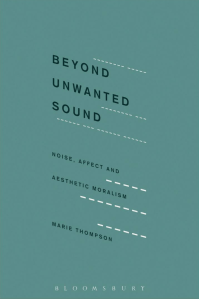
Cover of “Beyond Unwanted Sound Noise, Affect and Aesthetic Moralism,” By Dr. Marie Thompson
In her new book, Dr. Thompson covers a wide variety of ideas from Spinoza to Michel Serres’s cybernetic theory, acoustic ecology and the politics of silence to the transgressiveness of noise music, and many other concepts to show how we are affected by noise. Thompson is also the co-editor of Sound, Music, Affect: Theorizing Sonic Experience (Bloomsbury, 2013). Here is a conversation we had over email in February 2017 about Beyond Unwanted Sound.
David Menestres (DM): Why now? Why did you feel compelled to write this book? What do you hope this book will accomplish?
Marie Thompson (MT): I think my ‘academic’ interest in noise began as an undergraduate music student – I was interested in thinking ‘beyond’ distinctions of avant-gardism and popular culture and noise, as something that traverses such separations became an evermore appealing concept. So I’ve been circling some of these ideas for quite a while.
I felt compelled to write the book partly due to what I perceived as a gap between some of my ‘everyday’ experiences of noise and how noise was represented in discourse – particularly noise’s representation as an essentially negative phenomenon; or as a shocking, sublime, radical, overwhelming, transgressive force. Noise seems to be one of those topics that makes ordinarily quite progressive thinkers revert to quite uncritical and reactionary tropes – there’s something about it that ‘touches a nerve’. Consequently, much of the discourse around noise is underlined by an often-unacknowledged conservatism. I’ve always found the grandiose rhetoric of noise comparatively quite seductive but at the same time, more often than not, noise is quotidian and banal rather than overwhelming or sublime (which isn’t to say it can’t also be those things). Likewise, I felt like this grandiose rhetoric resulted in an amplification of certain sonic arts practices, while silencing others. I guess I was compelled by a desire to expand the (material and discursive) universe of noise while also trying to maintain some consistency in definition.
Quite simply, I hope the book will contribute something helpful to the recent discussions around noise in media theory, acoustic ecology and music.
DM: What is the difference between a subjective-oriented definition of noise vs. an object-oriented definition and how do both lead to the ethico-affective approach that you champion in the book?
MT: When I refer to subject- and object-oriented definitions I’m referring, quite simply, to noise being defined either in relation to the ear of the beholder, or in relation to the sound-itself. [MT also defines her “ethico-affective approach” as a perspective that “recognises the entanglement of the ethical and the affective: affective relations are also ethical relations.” –ed.]
What I think is useful about a subject-oriented definition is that it remains open to what noise might be, what form it might take – it might be your neighbour hoovering, it might be a fellow travelers mobile phone, or it might be a buzzing wasp. However, subject-oriented definitions of noise are typically wedded to liberal notions of subjectivity and the politics that carries. Noise becomes an issue of personal taste – one person’s music is another’s noise etc. Subject-oriented definitions also struggle to account for noise that isn’t ‘unwanted’, ‘bad’, ‘negative’, and so on; and for noise that might not be perceptible, or noticeable.

Noise as Negative. Sound Cancelling
Object-oriented definitions which treat noise as a type of sound are helpful insofar as there is a consistency of definition and it does not assume noise to be a solely negative phenomenon; however, to my mind, they risk losing sight of context: a particular sound is noise irrespective of how it is heard, what it does.
The ethico-affective approach I develop can be understood to maintain aspects of both these definitional approaches. It maintains the separation created by an object-oriented definition of noise between noise and negativity, so that noise’s ‘unwantedness’ becomes secondary and contingent. It also maintains the contextual focus of a subject-oriented definition, so that noise is not tethered to particular types of sound or sound sources.
DM: I’ve been very interested in the idea of noise as a weapon: the use of sound cannons to silence and sicken protestors, the use of the “Mosquito” device (which produces high frequency pitches thought to be audible only to teenagers in order to keep them from loitering), or the use of classical music to annoy young people.
You talk in one section about the noise of neighbors and the “policed silence of the suburbs.” I am also interested in the use of noise as protest. At the Women’s March in Raleigh on January 21, there were so many fascinating sounds: the sounds of thousands of voices bouncing off tall buildings, drummers, people leading chants with the crowd shouting back, the singing of classic protest songs (“A Change is Gonna Come,” “This Land Is Your Land,” etc.).
What do you think the role of noise will be in our current political climate? I can definitely see noise being used as a weapon by both sides: the government trying to use it as a weapon against the people and the people using noise to amplify their voice against the government. But there is a stark difference between these two sides: the use of sound weapons is clearly for their intended negative affect on people (both the physical effects of sound weapons and the psychological effects of the endless noise that comes from Trump’s press conferences and general bullshit), but I see the protestors intending to use sound in a positive way, to amplify their message, to make sure those in charge hear their voices, to ensure the message arrives intact.
MT: As a concept, noise seems evocative of much about our current political climate: be it the ‘noise’ of ‘fake news’, and ‘alternative facts’ (how does one determine ‘signal’ from ‘noise’, and who gets to determine that distinction); be it the ‘white noise’ of the Trump campaign administration (I recently saw a performance lecture with Barby Asante which effectively performed the ‘tuning out’ the noise of recently-bolstered white supremacy); or be it the collective noise of protest against the brutality of borders, white supremacy and police-state violence.
That noise can be both a force of domination and resistance is revealing of its ambiguity more generally – what I refer to as the ‘both-and’ of noise. Of course, that is not to conflate these uses of sonic force. One of the ways in which I’ve thought about this ethico-political difference in sonic forces is through the Spinozist distinction of power-over/power-to. The ethico-political entangles ethical questions (good-bad) with political questions (power over/power to).
So, when sound is weaponized to exert authority, to bring people into line, by diminishing their capacity to act and do, then this can be thought of as an exertion of power-over. Likewise, when sound becomes a means of collective resistance, or of connectivity (I’m thinking partly here of various ‘noise-protests’ at prisons and detentions centres, where sound is used to traverse walls and borders) then it might be understood as an expression of ‘power-to’ – a (collectivized) body’s capacity to act, to be, to do.
DM: You talk in the book of the “conservative politics of silence.” How does this conservativism affect both how people perceive sound and how we relate to it? Is there something at the other end of the scale, a “liberal politics of silence” so to speak?
MT: To my mind, the conservative politics of silence informs a number of assumptions that are frequently made about what are ‘good’ and ‘bad’ sonic environments; it relates to a preference for the simple over the complex, sameness over difference, past over present, predictability over unpredictability, the ‘synthetic’ over the ‘natural’ (whatever that might mean) and, ultimately, quietude over noise. This ideological framework underlines much ‘common sense’ about auditory experience, however it frequently remains unacknowledged.
We might consider a liberal politics in opposition to this conservative politics of silence, which recognises responses to sonic environments as ‘personal’ and therefore refuses overarching moral judgements about ‘good’ and ‘bad’ sound. However, I’m also wary of endorsing a politics that treats the individual, autonomous subject as the primary site of the political. Indeed, the conservative politics of silence that we see in the work of figures such as R. Murray Schafer is often indebted to a liberalism that prioritises control and the freedoms and rights of the individual – I’m thinking here of Schafer’s complaint that you can rid your private property of a physical intruder but not an aural one: “A property-owner is permitted by law to restrict entry to his private garden or bedroom. What rights does he have against a sonic intruder?” (1993, 214)
DM: One of the sections I particularly liked was the “What does noise do?” section where you delved into information theory through the work of Claude Shannon to show how noise was an essential part of a communications system, how noise can be a necessary, amplifying presence, needed to successfully transmit a message (voice over phone lines, data packets over the internet, etc.), how noise can enrich a system. I found myself thinking about this section a lot, often in relation to R. Murray Schaffer’s Platonic ideal state of silence. (“a Platonic, transcendent realm of a pure and ideal sonority, which paradoxically exists as undisturbed and eternal silence”).

Cosmic Radiation from the Big Bang- Sound Makes Up Our Universe
I was also thinking about Cosmic Microwave Background radiation, the residual signature of the Big Bang, the background noise that carried all the information that formed our universe. It seems like noise is an intrinsic part of our world, both human made and naturally occurring, and fighting against it seems like such a waste of energy.
MT: It strikes me that when Schafer and other acoustic ecologists talk about fighting noise, they’re fighting a symptom rather than a cause. In these discourses, there is much talk of noise and environmental destruction but very little on how these processes relate to capitalism and settler-colonialism. In that regard, while I don’t think fighting against noise in absolute terms is futile, I do maintain that there are still fights to be had against high levels of noise. While I am critical of liberal notions of privacy and control and the ‘right’ to silence, I do also recognise that noise can feel oppressive in some contexts. That said, more often than not high levels of noise is a symptom of bigger social and political problems – for example, of poor quality housing, and a lack of economic choice over where one lives.
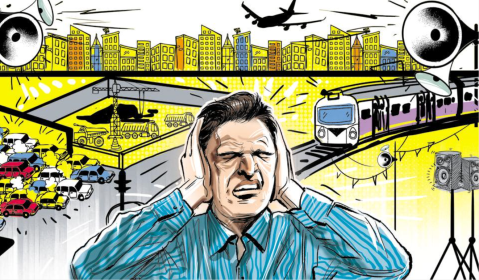
Noise Pollution, Sociological Restrictions, Sound Intrusion. From the Hindustan Times
DM: One of the themes explore in the book is the idea of the parasite, based on the work of Michel Serres. How does the parasite relate to your idea of noise?
MT: I take from Serres’ figure of the parasite the idea of noise as a relational, transformative and ambiguous in its necessity. In Serres’ reading, the parasite changes things, for better or for worse. Either way, the parasite does something, it adds something to the mix. In other words, it is affective. And yet, there is no ‘mix’ without it. Parasitic noise is the ‘excluded middle’ that must be included: it is the necessary ‘third term’, which pertains to the necessity of the material medium/milieu. From this perspective, there is no original state of calm, which is then broken by noise. If there is mediation there is noise, if there is the relation there is the parasite.
DM: Could you talk some about “the poetics of transgression” as you call it? How does this “transgression” relate to your ethico-affective approach?
MT: The poetics of transgression refers to the centrality of ‘line-crossing’ narratives in accounts of noise’s use in the sonic arts and art more generally. It’s predicated on what Henry Cowell calls the ‘time-honoured axiom’ that noise and music are opposites. Bringing noise into music, or music into noise relies on the crossing of boundaries, of material and discursive borders. This ‘line-crossing’ is often accompanied by a rhetoric of extremity and radicalism, shock and awe.
While different notions of transgression have certainly been influential for various noise music practitioners, I seek to decentre it as a way rather than the way of understanding noise’s use as an artistic resource. I argue that the dominance of the poetics of transgression has risked reducing noise music to its most ‘extreme’ manifestations. In light of the ethico-affective approach to noise that I develop throughout the book, which understands noise as a transformative force and necessary component of mediation, I suggest that noise music can be understood as an act of exposure, which, rather than bringing noise into music (or vice versa) exposes, extends and foregrounds the noise that is within the techno-musical system so as to generate new sonic sensations. With this approach, I hope to make more space for noise music practices that do not fit comfortably with the poetics of transgression and its aesthetics and rhetoric of extremity.
—
Featured Image: Noise Music
—

REWIND! . . .If you liked this post, you may also dig:
Sounding Out! Podcast #60: Standing Rock, Protest, Sound and Power (Part 1)–Marcella Ernest
The Noises of Finance–N. Adriana Knouf
Learning to Listen Beyond Our Ears: Reflecting Upon World Listening Day–Owen Marshall
Share this:

Echoes of Ian Curtis: Film and the Punk Voice
Image of Alice Bag used with her permission (thank you!)
For full intro and part one of the series click here. For part two, click here. For part three click here. For part four click here. For part five click here.
Our Punk Sound series implicitly argues that sound studies methodologies are better suited to understanding how punk works sonically than existing journalistic and academic conversations about musical genre, chord progressions, and/or genealogies of bands. Alexandra Vasquez’s sound-oriented work on Cuban music, for example, in Listening in Detail (2014) opens up necessary conversations about the “flashes, moments, sounds” in music that bear its meanings and its colonial, raced, classed, and gendered histories in material ways people can hear and feel. While retaining the specificity of Vasquez’s argument and the specific sonic archive bringing it forth, we too insist on “an ethical and intellectual obligation to the question: what do the musicians sound like” (12) and how do folks identifying with and through these musical sounds hear them?
In this series, we invite you to amplify varied historicized “details” of punk sound–its chunk-chunk-chunk skapunk riffs, screams, growls, group chants, driving rhythms, honking saxophones–hearing/feeling/touching these sounds in richly varied locations, times, places, and perspectives: as a pulsing bead of condensation dripping down the wall of The Smell in Downtown LA (#savethesmell), a drummer making her own time on tour, a drunk sitting too near the amp at a backyard party, a queer teenager in their bedroom being yelled at to “turn it down” and “act like a lady[or a man]”. . .and on and on. In today’s essay Landon Palmer shows us how film may be just as responsible as music for how we remember the punk voice.
SOUND!
–Aaron SO! (Sounding Out!) + Jenny SO! (Sounding Out!)
—
In Joy Division’s 1979 song “Transmission,” singer Ian Curtis embodied several aspects of what made the group’s post-punk sound unique with the chorus, “Dance, dance, dance, dance, dance, dance to the radio.” As a piece of music, its repetition is intense and rousing, working as a compelling instruction that, when played loud enough, can be felt to the bone via Curtis’s deep timbre. At the same time, Curtis’s voice is robotic and distant, the signature of the group’s bleak sound that signified the post-industrial alienation of Thatcher-era Manchester. A historically specific critique of media, “Transmission” plays out a loss of agency. In the 21st century, however, the song has circulated more as a self-referential testament to Joy Division’s – and Curtis’s – musical skill, a container and a summary of myth.
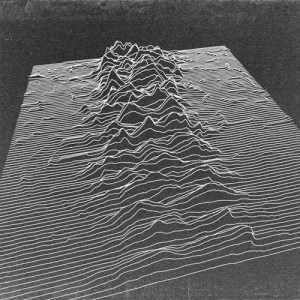
Image by Ho-Teng Chang @Flickr CC BY.
To adopt Alexandra Vasquez’s question that has framed this series, what happens to representations of punk sound as they change over time? I argue that the cinematic techniques employed in presenting Ian Curtis and his voice in both 24 Hour Party People (Michael Winterbottom 2002) and Control (Anton Corbijn 2007) help us to understand the construction of a mythic punk voice.
Punk’s avoidance of comprehensibility, identification, and what Dave Liang calls “the prettiness of the mainstream song” have existed in awkward relation to narrative cinema, which requires legibility as a central component of storytelling (70, 71). While displacing the voice through fragmentation and asynchronous sound work has proven vital to theorizing and subverting cinematic norms, rarely has depicting a well-known punk singer’s voice in cinema translated to a cinematic punk aesthetic, as Stacy Thompson argues regarding the narrative and documentary Sex Pistols biopics Sid & Nancy (Alex Cox 1986) and The Filth and the Fury (Julien Temple 2000) (49-50). Even the revered punk documentary The Decline of Western Civilization (Penelope Spheeris 1981) renders punk voices legible by providing lyric subtitles. However, the two most notable cinematic portrayals of Ian Curtis–24 Hour Party People and Control, released during the band’s resurgence in 21st century popular culture–demonstrate competing interpretations for a punk voice’s place within filmmaking and put into play the question of how to interpret it.

Image by a town called malice @flickr CC BY.
Despite Curtis’s short lifetime, his voice continues to be amplified throughout popular culture. These extended echoes of his voice have participated in shaping its meanings and myth. In his book Joy Division’s Unknown Pleasures, Chris Ott writes that Joy Division’s music “defied imitation” (xiii); however, imitation (and citation) have fueled public memory of the band and augmented the myth of Ian Curtis. By the time Joy Division’s two LPs were re-released by Rhino in 2007, several contemporary bands–The Killers, Editors, Interpol and She Wants Revenge–built music careers that are openly indebted to this Manchester sound but distinct from its socio-historical context. Public memory of the group has been interpreted through uses of their music in the 1980s-set period pieces like Donnie Darko (Richard Kelly 2001) and Netflix’s Stranger Things (2016). The contemporary circulation of Joy Division’s music has extended to films that resurrect Curtis himself.
To start, 24 Hour Party People self-consciously stages an inquiry into Ian Curtis’s meanings and his contemporary resonance as part of the post-punk scene writ large. Chronicling the ‘70s-‘80s Manchester music scene through Tony Wilson (Steve Coogan), the attention-seeking TV personality and unlikely underground music patron who formed Factory Records, the film fits several tenets of Thompson’s definition of punk cinema in its “engage[ment] with history” and “critique [of] its own commodification” (64). A tongue-in-cheek historical guide, Wilson narrates via a fourth-wall-breaking blend of mythmaking, footnotes, and commentary that reflects upon the film’s historiography as he articulates it, and in so doing overtly selects myth over “truth,” stating, “When you have to choose between truth and the legend, print the legend” (itself a quote dubiously credited to John Ford). The film’s self-conscious performance of history extends to its musical numbers, where Winterbottom liberally blends imitation with the genuine article through a mix of archival and staged footage, thus overtly staging encounters with key moments in Manchester musical history. The film’s play with historiography does not go so far as to trouble its reinforcement of a canonical timeline.
It is in this spirit that 24 Hour Party People brings actor Sean Harris’s portrayal of Ian Curtis to life. In re-creating Joy Division’s performance of “Digital” at the Hacienda Club, Harris invokes Curtis’s jittery-mechanical dance style while his “voice” remains Curtis’s. Additionally, the film mixes ambient crowd noises with a band of actors performing in synch to the song’s studio recording. 24 Hour Party People not only preserves Curtis’s voice as an inimitable icon of this history, but places the studio recording of “Digital” as the authoritative version of the song within the nascent period of the Manchester scene, thus mapping this studio recording onto the band’s live sound (rather than implementing an existing live recording). Curtis’s voice is reproduced only through the most valuable, resonant historical record of it–the recorded commodity.

Image by bixentro @Flickr CC BY.
The retrospective framing implied by this choice speaks to the film’s greater approach to Ian Curtis as a figure best understood (or perhaps inevitably shrouded) via his posthumous legacy, and thus foregrounds Curtis’s transformation into myth. Due to the timing of his passing, there exists a relatively limited media archive of the actual Curtis compared to other late-20th century rock singers of similar influence. Beyond official performances on television, music video, and records, scant recordings of Curtis performing and speaking are available via silent 8mm home movies and archival audio interviews. Thus, 24 Hour Party People cannot resort to the historical record(ing) in all instances, and thus Harris’s voice proves central to interpreting Curtis off-stage. In recalling Joy Division’s notorious first encounter with Wilson, 24 Hour Party People portrays Curtis as intimidatingly sure-footed, confronting Wilson through quick, direct speech and locked eyes. Harris conveys the actorly qualities that so often typecast him in villain roles. Further complicating Curtis’s public image, Coogan’s Wilson provides a counter-narrative of the singer following his suicide, asserting to the audience that Curtis was not exactly the “dark and depressive…prophet of urban decay and alienation” that his music suggested, and recounts a rousing collective rendition of “Louie Louie” with the band to prove his point. The only instance in which Harris’s actual voice is used as Curtis’s singing voice, this cacophonous chorus depicts a Curtis participating in a deliriously muddled punk sound. Yet even this counter-narrative does not challenge the mythmaking of Ian Curtis, for it reinforces Curtis’s suicide as central to his meaning and value as a musician.
Music biopics have long bolstered definitive interpretations of a popular performer’s biography. In contrast to 24 Hour Party People’s self-conscious approach to mythmaking, Control is adapted from Deborah Curtis’s autobiography and directed by a former Joy Division photographer. Control’s most conventional choices as a rock biopic are the narrative associations the film makes between events in Curtis’s life and his songwriting, connecting Curtis’s music directly to his troubled marriage and the distress caused by his epilepsy. Control juxtaposes Curtis’s interior life with his production of music, cutting to the recording of “She’s Lost Control” after he learns that a client in his unemployment office has died of epilepsy, and featuring a performance of “Love Will Tear Us Apart” following a scene in which he tells his wife (Samantha Morton) that he no longer loves her. Control thus connects the singer’s authorial voice to the film’s narrative voice, arguing that the sounds Ian Curtis left behind are legible remnants of his biography. In so doing, the film deterministically situates his life through the framework of his death, his music serving a seemingly inevitable path to his suicide and thus transformation into musical myth (staged at the end with a crane shot rising up to the Manchester skyline during “Atmosphere,” indicating a ubiquitous echo of Curtis that has transcended the corporeal).

Punks in Manchester. Image by agogo @Flickr CC BY.
The film’s voicing of Curtis is articulated through Sam Riley’s performance, not through archival audio of the singer. As with 24 Hour Party People, Corbijn initially planned to have Riley and the supporting actors mimic their performances. However, during preproduction the band of actors rehearsed together until they were confident enough to play live shows for Joy Division fans. This convinced Corbijn to utilize them as a sort-of legitimate cover band for the purposes of embodying Joy Division’s history. Riley’s voice is notably higher than Curtis’s and is thus distinctive enough that it resonates comfortably alongside the numerous bands of this century whose leads “sound like” Curtis. Indeed, the resonance of Curtis throughout contemporary alternative rock may have helped make Riley more palatable as an authorized substitute for Corbijn and Joy Division fans. Such homage through imitation is reinforced by Control’s end credits, which features The Killers’ cover of “Shadowplay.” Both of these invocations of Curtis locate his value in his contemporary influence, not his historic place, an approach evident in Control’s less overt interest in post-punk’s socio-cultural context than 24 Hour Party People.
Control is uninterested in recreating the details of Joy Division’s history with exacting verisimilitude, forgoing the archive for a resonant aura of the band’s history. This approach is evident in Corbijn’s visual decisions – shooting the film in black-and-white memorializes the band through the stark photography with which Corbijn captured them – as well as his musical ones. In Control’s depiction of the band’s breakthrough performance on Tony Wilson’s (here played by Craig Parkinson) Granada Television program So It Goes, for example, Corbijn’s Joy Division perform the enduringly popular “Transmission” rather than “Shadowplay,” the song they actually played. Joy Division’s breakthrough television moment was further recast through “Transmission” in a fan-made Playmobil animation that curiously combines introductory audio of Parkinson’s Wilson from Control with Joy Division’s 1979 performance of “Transmission” on BBC2’s Something Else. Control not only situates Curtis’s singing voice coherently within authorial and narrative legibility, but also reflects and participates in contemporary popular memorialization of Joy Division regardless of the historical accuracy of such choices.
Pamela Robertson Wojcik argues that the human voice and its mediation through recording technologies is an important but overlooked component of cinematic performance. It is also vital to consider how famous voices travel and gain meaning through processes of imitation and citation–tropes of authenticity which pervade the musical biopic. While 24 Hour Party People and Control avoid many clichés of the musical biopic, narrative cinematic imperatives of legibility, coherence, and individual-centered storytelling motivate each film to participate in the production of rock star myth despite efforts at historical critique in the former or the austere style of the latter. Even in punk, rock star death is the most compelling biographical framework. The punk voice has long held a discordant relationships to cinematic norms, and these two films demonstrate how the translation of punk sound into cinematic soundscapes presents the inherent problem of recounting punk’s history.
–
Featured image “scream” by be.refreshed @Flickr CC BY-NC-ND.
–
Landon Palmer is a PhD Candidate studying Film and Media in the Department of Communication and Culture at Indiana University and recently defended a dissertation on the cross-industrial history of casting rock stars on film titled “Rock Cinema: A Transmedia History, 1956-1986.” He has published on popular music and moving image media culture in Music, Sound, and the Moving Image, iaspm@journal: Journal of the International Association for the Study of Popular Music, and Celebrity Studies.
–
 REWIND! . . .If you liked this post, you may also dig:
G.L.O.S.S., Hardcore, and the Righteous White Voice – Chris Chien
If La Llorona Was a Punk Rocker: Detonguing The Off-Key Caos and Screams of Alice Bag – Marlen Ríos-Hernández
Riot-Grrrl, Punk and the Tyranny of Technique – Tamra Lucid
Share this:


Current Top Posts





April 2021

January 2020

November 2019

October 2019

August 2019

April 2014

November 2017

March 2015

December 2017

October 2015
 Sounding Out!
Recent Comments