
Afecto Caribeño / Caribbean Affect in Desi Arnaz’s “Babalú Aye”

Recently, the new biopic and telenovela Celia, La Serie on the life of Celia Cruz reminded me of how her iconic call “Azucar!”(translated as sugar) engaged audiences to feel the sabrosura of her music. The soap-opera included documentary footage of the larger iconic events in Celia’s career that could not be recreated, scenes that captured how Cruz and the audience connected. The scenes that best captured this are when Celia performs with Fania at Yankee Stadium in 1973 and in Zaire in 1974. When she felt the audiences’ joy in her performance she’d share that expressive sentiment of the sweetness in the moment, taking audiences to a deeper ecstatic place.
I also felt and witnessed this myself when I saw Cruz perform at the Hollywood Bowl decades ago. It’s akin to what I sensed when also hearing Damaso Pérez Prado’s guttural “Maaam-bO” in his “Mambo No 5.” While watching Celia, La Serie, I asked my mom if she had ever watched Desi Arnaz on I Love Lucy. Her response included a dislike for Arnaz, while I remembered enjoying his performance of “Babalú Aye.” Our exchange raised the question: can Arnaz’s performance, like Cruz’s expressive phrasing or Pérez Prado’s musical cue, unify a Latinx and African diaspora through sound and affect?
 I posit that Arnaz’s televised performances of “Babalú Aye” like Celia’s “Azucar” or Prado’s “Mambo” exemplify what Alejandra T. Vazquez calls in Listening in Detail “vocal armament and ornament” (132), a sound that cultivates an afecto caribeño among Spanish-speaking diasporic migrants and their descents. My use of afecto here is a key sonic detail, playing upon the Spanish meaning to show tenderness and emotion. I also appreciate affect theory as it provides a framework by which to explore the emotionality and connection to experiences that have not been named. For example, in “Feeling, Emotion, Affect,” Eric Shouse writes about affect as “the body’s way of preparing itself for action in a given circumstance by adding a quantitative dimension of intensity to the quality of an experience. The body has a grammar of its own that cannot be fully captured in language.” I attempt here to cultivate a language that address how Arnaz’s physical and sonic articulation sets an entry to examine contributions by members of the Latinx Caribbean diaspora and its reach to those of us hearing and seeing them in a US context.
Growing up bilingual and bicultural in Los Angeles, I saw how my mom retained a bit of her homeland by watching a variety show called Siempre en Domingo. Many of the artists who performed were also heard on the local Spanish language station K-Love. The ritual gathering on Sunday nights as we watched the show metaphorically united my mom with her family.I believe that viewing and hearing her Mexico made the distance away from her family soften. For me, listening to the songs I heard on Siempre en Domingo then replayed on the radio helped codify something more than Mexican; it was pan-Latino. These moments of engaging with television shows mediate my experience of sound and affect, which I’ve named afecto caribeño (translated to “caribbean affect”).
 My fondness of Desi Arnaz stems from a familiarity of Spanglish when I saw my first episodes of I Love Lucy (1951-1957) on Saturdays on KTLA. Its stars, Lucille Ball and Desi Arnaz, played a married couple, and the comedy of errors would inevitably involve “Lucy Ricardo” trying to scheme something. In real life, Ball and Arnaz were a Hollywood power couple who produced their show, establishing a practice of syndication rights paid to the actors. Arnaz played “Ricky Ricardo,” the owner of the Tropicana nightclub where he was also the bandleader. When scenes featured him at the club he would always play the congas, thus creating a continuum of his earlier career as a musician to now television star.
Hearing Desi Arnaz speaking inglés with a Cuban accent was familiar to my ears. I knew that sound of English blended with español because it was what I heard from my parents and their acquaintances. In the show, misunderstandings happened because one could not decipher what “Ricky” meant or said. The mistranslations led to some comedic moments and the establishment of a long-running comedic television trope at the expense of Latino characters and actors, as explored by Dolores Inés Casillas and Sebastien Ferrada in “Listening to Modern Family’s Accent.” However, in Life on the Hyphen, Gustavo Pérez-Firmat describes Arnaz’s nilingüe–someone who speak neither Spanish nor English—and argues his nilingüe-ism was personified through “Ricky Ricardo” as “Spanish utterances shot through anglicisms so that the monolingual viewer can understand what he was saying” (43). But, Arnaz did not reach only “English-only’ ears. To my pocha ears Arnaz spoke a familiar—and not incorrect—spoken Spanish. As a young viewer, I had no reference for his mistakes. Sonically “Ricky’s” familiarity came through when he complained about “Lucy” in Spanish. Hearing the español I spoke at home on “I Love Lucy” is how I connected to the hyphened Americano via tv. Nowhere was this more pronounced than with Ricardo’s frequent performances of “Babalú”.

Diosa Costello and Desi Arnaz in Too Many Girls (1939)
Before his film career, Arnaz was known as the mambo king. Due to his lackluster rise as a “Latin Lover” in Hollywood, Arnaz returned to work as a musician and began singing his signature “Babalú” around 1943. The song is attributed to Margarita Lecuona and published in 1939. “Babalú” conflates the popular 1940s-50s big band sound with a Cuban folksong (or son) sung to the Orishas (deities or gods). Babalú is an Orisha deity who oversees health and is revered because of his power over life and death, and is also known as San Lázaro within the pantheon of Catholic saints. By the time Arnaz made the song popular in the United States, the song had also been associated with Miguelito Valdés, who was known as “Mr. Babalú.” Other musical contemporaries like Damaso Pérez Prado were also making a name for themselves by developing a new sound that Latinized dance music in the U.S. According to Ed Morales in Living in Spanglish, it is in the 1950s that Prado creates his signature sound in Mexico City by “mixing North American swing and bebop” known as mambo (152). However, it is Arnaz’s performance that I reference because of its reach to a multi-generational audience through syndication of the “I Love Lucy” show.
 Each time Arnaz performs “Babalú” it serves as an offering to the Orisha to heal the longing for a homeland he left long ago, as experienced by many musicians like Cruz who live in exile. With each performance on the “I Love Lucy Show,” Arnaz reconnects to his cultura. Performing this on national television it’s not about the Anglo viewer who only sees Arnaz as the “Rhumba Rhythm King” (sic) (Pérez-Firmat, 52) made famous in movies; rather it is about Arnaz creating a space of agency through a prayer and healing ritual in song, thus an expression of Afecto Caribeño connecting the Latinx diaspora to something beyond national borders and generations.
For example, in Season 2 episode 21 “Lucy Takes a Job at the Bank,” Arnaz (as Ricky Ricardo) brings out his son Ricky Jr. to play the congas alongside him. Ricky as proud father shares his joy in this moment. The camera pans out to Lucille Ball and her co-star Vivian Vance sitting at the table. Arnaz instructs his son to “say thanks” and he replies in Spanish “gracias.” This exchange is profound because it accentuates the bilingualism and bicultural exchanges that happen in the home space now introduced to many via television. Arnaz continues, “Even though Little Ricky was born in America, there’s lots of Cuban in his heart.” The Cuban in his heart plays out in sonic beats through a father-and-son performance on the congas and the calling upon “Babalú Aye.” Both Lucille Ball and Desi Arnaz are happy parents, not just stage parents, who revel in this moment. As Ricky Jr. plays, his mother bangs on the table too and Arnaz looks up to the sky as if in gratitude for this moment to the Orisha Babalú.
Upon reflection, I am aware of how television informed my childhood search for something that reflected how I spoke and heard the world. In these linguistic-sonic moments I reconnected to my mother’s homeland and sought to make sense of my pocha identity when I heard English spoken with a Spanish accent. In Relocations, Karen Tongson names these moments of connection that occur through a technological network as “remote intimacies” that can “account both technically and affectively, for the symbiosis that can happen between disparate subjects. . .I like to think that these imaginary correspondences sometimes have to happen across greater distances, both conceptually and topographically with other ethnicities, accents, nations (130)” The conceptual and topographical correspondence informs afecto caribeño as a means to enable critical connections to a Latinx diaspora centered en el Caribe highlighting the mestizaje of African and Spanish heritage, thus expanding upon Paul Gilroy’s notion of the “black Atlantic” on how the Atlantic slave trade also impacted culturally el Caribe. Upon singing “Babalú Aye” Arnaz’s performance not only is a disruption to Anglo American viewers, but also “disrupts the myth of Cuban whiteness” (Vasquez, Listening in Detail, 150).
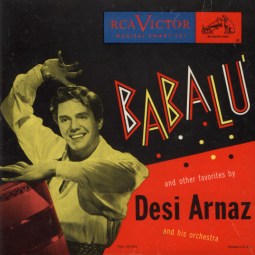 I am drawn to sonic experiences that can help unpack Latinidad and the multicultural roots that are informed by other migrations of Africans, Asians, and Spaniards to the Américas. I am a descendant of these mestizajes, as Gloria Anzaldúa writes in her canonical text Borderlands / La Frontera. A concept like afecto caribeño addresses the social and emotional exchanges that emanate from the complexity of these migrations and how they reveal themselves in momentary connections. When Arnaz performs as “Ricky,” he breaks that character upon playing the congas. Here he does not act as the nightclub owner; the reverberation of the conga mediates an embodiment of his true self exemplifying un afecto caribeño.
—
reina alejandra prado saldivar is an art historian, curator, and adjunct lecturer in the Women, Gender and Sexuality Studies Program and Liberal Studies Department at CSULA and in the Critical Studies Program at CALArts. As a cultural activist, she focused her earlier research on Chicano cultural production and the visual arts. Prado is also a poet and performance artist known for her interactive durational work Take a Piece of my Heart as the character Santa Perversa (www.santaperversa.com) and is currently working on her first solo performance entitled Whipped!
—
Featured Image: Desi Arnaz performing with Diosa Costello, 1948.
—

REWIND!…If you liked this post, you may also dig:
The Sweet Sounds of Havana: Space, Listening, and the Making of Sonic Citizenship – Vincent Andrisani
SO! Amplifies: Shizu Saldamando’s OUROBOROS–J.L. Stoever
SO! Reads: Dolores Inés Casillas’s ¡Sounds of Belonging! – Monica de la Torre
Share this:

SO! Amplifies: #hearmyhome and the Soundscapes of the Everyday
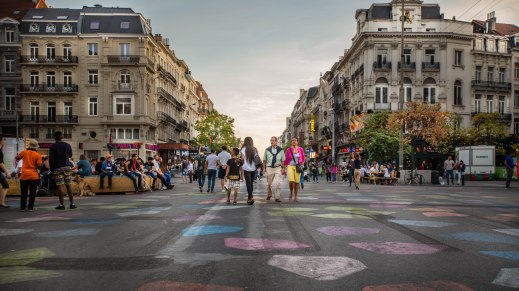
 SO! Amplifies. . .a highly-curated, rolling mini-post series by which we editors hip you to cultural makers and organizations doing work we really really dig. You’re welcome!
—
Pause for a moment.
Listen.
What do you hear?
Is it the quiet hum of a furnace or fan? Perhaps the muffled chatter of your colleagues or children down the hall? Can you hear sirens or birds or the passing of a car or train? Likely, these are sounds that, over time, you have learned to tune-out. Perhaps you have even complained about such ‘noise’ as something that distracts you from your work or disrupts you from your sleep.
But are these sounds really just noise? What would it mean to move beyond hearing such sounds as noise and instead (re)learn to listen to these soundscapes of the everyday as representative of community?
From February to April of 2016, #hearmyhome encourages users to play, innovate, and compose soundscapes through a series of eight sonic events. In doing so, our goal is to help users ‘tune-in’ to their everyday surroundings. By (re)learning to listen to the sounds that surround them, participants may begin to better understand community. In other words, #hearmyhome considers how hearing difference and listening to community may (re)educate our senses by attuning to the rhythms and reverberations of culture.
Prefer an Audio Overview? Listen here and follow us on SoundCloud!
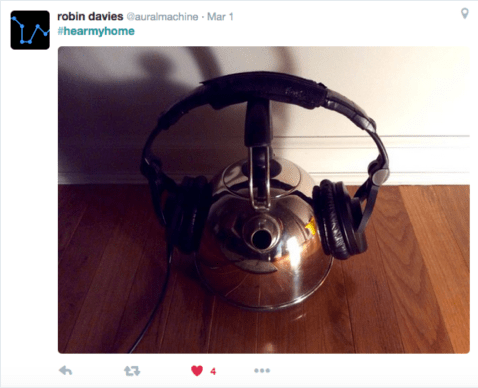
User example from Sonic Event #4: Visualizing Listening
Currently in its earliest phases, #hearmyhome, led by Jon M. Wargo and myself, explores how choosing to ‘tune-in’ facilitates not only an increased awareness of the acoustic territories and rhythmic rituals which surround us, but also the impact of such sonic experiences on our bodies. In doing so, #hearmyhome interrogates how, with and through sound, people write and compose community.
Each of us became interested in studying soundscapes through different avenues. For Jon, his interest in sound and sonic composition emerged from his longitudinal ethnographic examination of LGBT youth writing with mobile media. Sound was a medium used by many of the young people to architect experience and write community. As a traditionally neglected mode, he was curious how historically marginalized youth (LGBT youth of color) used sound to compose counter-narratives of self and community.
Sparked by travels abroad, I first began capturing soundscapes while in Indonesia during Ramadan. Using Snapchat’s video tool, I not only captured the sounds of the call to prayer, but also sounds across Southeast Asia—from the busy streets of Jakarta to the dropping of coins into the 108 bowls within the Temple of Reclining Buddha in Bangkok, Thailand. Through these sonic experiences, I began to question how sound might be used by educators and youth to explore difference and diversity amongst local and global communities.
Developing materials on a multitude of scales—from local community asset maps in teacher education classes to the larger collaborative of networked sounds—each is created with the goal of hearing, recognizing, and sustaining community. #hearmyhome takes heed of the frequencies and rhythms of culture in hopes to architect, design, and teach towards equitable landscapes for learning. Refracted through the aural perspective, we see sound re-teaching the senses by working with participants to compose constructs like ‘home’ and ‘place.’ Geared towards PK-16 teachers and students, #hearmyhome is a pedagogical endeavor. Yet, as a research project, we are interested in examining the following research questions: What are the soundscapes of a networked collaborative? How do users and participants compose with sound, attune towards difference, and write with place?
Towards a Networked Vision for Tuning-In to Sound
#hearmyhome’s vision is guided by three central tenets: collaboration, pedagogy/praxis, and research
Collaboration
Focusing on “everyday” cultural heritage, #hearmyhome invites youth and adult participants to “earwitness” community through expansive personal learning networks (PLN). At the conclusion of the sonic events, participants’ soundscapes and ambient acoustics will be archived on an open-networked soundscapes map. We hope that these will be accessed as curricular resources for youth and teachers globally. #hearmyhome is an “affinity space” wherein participants share both knowledge and life experiences (hosted and inspired through their sonic events series). Through this map, for instance, a teacher in Montana may have access to the sounds of Chicago’s subway while simultaneously youth in Michigan may opt to write with the sounds of a kookaburra captured by second graders in Australia. Ideally, an “affinity space” helps to form interpersonal relationships and collaboratively create a fuller understanding of community and culture for participants. As the community expands through new partnerships and members, we hope it serves as a hub connecting participants with research opportunities, (g)local initiatives—integrating and making the more global knowledge local—and online resources and tools.
Pedagogy/Praxis
One of #hearmyhome’s larger goals is to develop curricular materials for teachers via the collaborative network and shared space on writing with and through sound. As an “open” project, resources will be shared widely via the #hearmyhome website as well as across our social media platforms as we hope to develop powerful practices of hearing, listening, and witnessing sound across communities. Interested in contributing? While our sonic events are available now, throughout the summer #hearmyhome’s homepage will be updated with additional curricular resources. If you are an educator, please consider contributing to this crowd-sourced effort. Join us by signing up for our weekly emails here or like our page on Facebook for more information on each sonic event, or simply ‘lurk and learn’ by following the #hearmyhome hashtag across Instagram, Facebook, and Twitter!
Research
Supported by the Cultural Heritage Informatics Fellowship and the National Council of Teachers of English’s Conference on English Education Research Initiative, #hearmyhome explores the sonic possibilities of writing with sound. We use sound to amplify what Steph Ceraso calls “multimodal listening,” or attending to the bodily, material, and contextual aspects of sonic interactions and relations. Sound allows for more expansive understandings of space, place, and self. We decided to hang our research on the hashtag, #hearmyhome, to aggregate data because it allows us to index user-produced soundscapes while attending to the wider goal of exploring the multiple homes of our global participants. The research component of the project investigates how the acoustic territories of the everyday write culture. For example, how might the writing of a ‘Where I’m From…’ poem shift if one does not choose to write using alphabetic print, but instead chooses to use sound? However, #hearmyhome by its very nature is open to everyone regardless of participation in the formal “research” study. Researchers will always seek members’ consent before sharing any work beyond the online community networked collaborative. For more on this, please see our standards of research statement.
Follow Along with #hearmyhome’s Sonic Events
https://twitter.com/allievoigt/status/701785249454247936
Joining #hearmyhome is as simple as opting in to our sonic events. To do so, visit the #hearmyhome homepage and select “Sonic Events.” Then, after reading across the prompt, use your phone or another device to record the soundscapes that are the focus of the sonic event. You can easily upload and share your recording using Instagram, Twitter, or Soundcloud. By including the #hearmyhome hashtag as well as the appropriate hashtag for the sonic event you are responding to (ex. #SE5 for sonic event 5), your response will be indexed in the #hearmyhome stream. To later be included in our networked map, it is important to also turn on the geotag to demarcate your location. Your contribution will then be accessible to teachers and youth as they explore different communities and writing with and through sound!
While there is no right or wrong way to participate in #hearmyhome, we wanted to share an example from one of our participants, sound scholar Steph Ceraso. By clicking the Soundcloud link below, you can listen to how Steph responded to the prompt for our fifth #hearmyhome sonic event that asked participants to share the sounds of the ‘in-between’ moments of their day. We chose Steph’s example as it illustrates not only the beauty of noise, silence, and everyday hearings, but also for her ability to remix these sounds into a song all of their own.
Although the sonic events go “live” during the weeks listed on the homepage (February 7 to April 1 2016), we encourage you to use these sounds in any way and to join the #hearmyhome collaborative at any time. Reading across the soundscapes of networked participation, we ultimately believe attuning towards difference and “hearing” home and community will help (re)mediate learning about culture by voicing stories of the everyday, highlighting the rhythmic resonances of ritual, and attuning towards community difference.
—
Cassie J. Brownell is a Graduate Fellow in the Residential College in the Arts and Humanities and a doctoral student in Curriculum, Instruction, and Teacher Education at Michigan State University.
Jon M. Wargo, an International Literacy Association (ILA) 30 Under 30 awardee, is a University Fellow and doctoral candidate in Curriculum, Instruction, and Teacher Education at Michigan State University. In Fall 2016, Jon will join the Wayne State University faculty as an Assistant Professor of Reading, Language, and Literacy.
Follow #hearmyhome on Soundcloud, Twitter, and Instagram.
—
REWIND!…If you liked this post, you may also dig:
SO! Amplifies: Ian Rawes and the London Sound Survey–Ian Rawes
SO! Amplifies: Cities and Memory–Stuart Fowkes
Share this:


Current Top Posts





April 2021

January 2020

November 2019

October 2019

August 2019

April 2014

November 2017

March 2015

December 2017

October 2015
 Sounding Out!
Recent Comments