
Learning to Listen Beyond Our Ears: Reflecting Upon World Listening Day

DOI: https://doi.org/10.59350/n81ks-y7m77
World Listening Day took place last week, and as I understand it, it is all about not taking sound for granted – an admirable goal indeed! But it is worth taking a moment to consider what sorts of things we might be taking for granted about sound as a concept when we decide that listening should have its own holiday.
One gets the idea that soundscapes are like giant pandas on Endangered Species Day – precious and beautiful and in need of protection. Or perhaps they are more like office workers on Administrative Professionals’ Day – crucial and commonplace, but underappreciated. Does an annual day of listening imply an interruption of the regularly scheduled three hundred and sixty four days of “looking”? I don’t want to undermine the valuable work of the folks at the World Listening Project, but I’d argue it’s equally important to consider the hazards of taking sound and listening for granted as premises of sensory experience in the first place. As WLD has passed, let us reflect upon ways we can listen beyond our ears.
At least since R. Murray Schafer coined the term, people have been living in a world of soundscapes. Emily Thompson provides a good definition of the central concept of the soundscape as “an aural landscape… simultaneously a physical environment and a way of perceiving that environment; it is both a world and a culture constructed to make sense of that world.”(117) As an historian, Thompson was interested in using the concept of soundscape as a way of describing a particular epoch: the modern “machine age” of the turn of the 20th century.
Anthropologist Tim Ingold has argued that, though the concept that listening is primarily something that we do within, towards, or to “soundscapes” usefully counterbalanced the conceptual hegemony of sight, it problematically reified sound, focusing on “fixities of surface conformation rather than the flows of the medium” and simplifying our perceptual faculties as “playback devices” that are neatly divided between our eyes, ears, nose, skin, tongue, etc.
Stephan Helmreich took Ingold’s critique a step further, suggesting that soundscape-listening presumes a a particular kind of listener: “emplaced in space, [and] possessed of interior subjectivities that process outside objectivities.” Or, in less concise but hopefully clearer words: When you look at the huge range of ways we experience the world, perhaps we’re limiting ourselves if we confine the way we account for listening experiences with assumptions (however self-evident they might seem to some of us) that we are ‘things in space’ with ‘thinking insides’ that interact with ‘un-thinking outsides.’ Jonathan Sterne and Mitchell Akiyama, in their chapter for the Oxford Handbook of Sound Studies, put it the most bluntly, arguing that
Recent decades of sensory history, anthropology, and cultural studies have rendered banal the argument that the senses are constructed. However, as yet, sound scholars have only begun to reckon with the implications for the dissolution of our object of study as a given prior to our work of analysis.(546)
Here they are referring to the problem of the technological plasticity of the senses suggested by “audification” technologies that make visible things audible and vice-versa. SO!’s Jennifer Stoever-Ackerman has also weighed in on the social contingency of the “listening ear,” invoking Judith Butler to describe it as “a socially-constructed filter that produces but also regulates specific cultural ideas about sound.” In various ways, here, we get the sense that not only is listening a good way to gain new perspectives, but that there are many perspectives one can have concerning the question of what listening itself entails.
But interrogating the act of listening and the sounds towards which it is directed is not just about good scholarship and thinking about sound in a properly relational and antiessentialist way. It’s even less about tsk-tsking those who find “sound topics” intrinsically interesting (and thus spend inordinate amounts of time thinking about things like, say, Auto-Tune.) Rather, it’s about taking advantage of listening’s potential as a prying bar for opening up some of those black boxes to which we’ve grown accustomed to consigning our senses. Rather than just celebrating listening practices and acoustic ecologies year after year, we should take the opportunity to consider listening beyond our current conceptions of “listening” and its Western paradigms.
For example, when anthropologist Kathryn Lynn Guerts first tried to understand the sensory language of the West African Anlo-Ewe people, she found a rough but ready-enough translation for “hear” in the verb se or sese. The more she spoke with people about it, however, the more she felt the limitations of her own assumptions about hearing being, simply, the way we sense sounds through our ears. As one of her informants put it, “Sese is hearing – not hearing by the ear but a feeling type of hearing”(185). As it turns out, according to many Anlo-ewe speakers, our ability to hear the sounds of the world around us is by no means an obviously discrete element of some five-part sensorium, but rather a sub-category of a feeling-in-the-body, or seselelame. Geurts traces the ways in which the prefix se combines with other sensory modes, opening up the act of hearing as it goes along: sesetonume, for example, is a category that brings together sensations of “eating, drinking, breathing, regulation of saliva, sexual exchanges, and also speech.” Whereas English speakers are more inclined to contrast speech with listening as an act of expression rather than perception, for the Anlo-Ewe they can be joined together into a single sensory experience.

The ways of experiencing the world intimated by Geurts’ Anlo-Ewe interlocutors play havoc with conventionally “transitive,” western understandings of what it means to “sense” something (that is, to be a subject sensing an object) let alone what it means to listen. When you listen to something you like, Geurts might suggest to us that liking is part of the listening. Similarly, when you listen to yourself speak, who’s to say the feeling of your tongue against the inside of your mouth isn’t part of that listening? When a scream raises the hairs on the back of your neck, are you listening with your follicles? Are you listening to a song when it is stuck in your head? The force within us that makes us automatically answer “no” to questions of this sort is not a force of our bodies (they felt these things together after all), but a force of social convention. What if we tried to protest our centuries-old sensory sequestration? Give me synaesthesia or give me death!
Indeed, synaesthesia, or the bleeding-together of sensory modes in our everyday phenomenological experience, shows that we should loosen the ear’s hold on the listening act (both in a conceptual and a literal sense – see some of the great work at the intersections of disability studies and sound studies). In The Phenomenology of Perception, Maurice Merleau-Ponty put forth a bold thesis about the basic promiscuity of sensory experience:
Synaesthetic perception is the rule, and we are unaware of it only because scientific knowledge shifts the centre of gravity of experience, so that we have unlearned how to see, hear, and generally speaking, feel, in order to deduce, from our bodily organization and the world as the physicist conceives it, what we are to see, hear and feel. (266)
Merleau-Ponty, it should be said, is not anti-science so much as he’s interested in understanding the separation of the senses as an historical accomplishment. This allows us to think about and carry out the listening act in even more radical ways.
Of course all of this synaesthetic exuberance requires a note to slow down and check our privilege. As Stoever-Ackerman pointed out:
For women and people of color who are just beginning to decolonize the act of listening that casts their alternatives as wrong/aberrant/incorrect—and working on understanding their listening, owning their sensory orientations and communicating them to others, suddenly casting away sound/listening seems a little like moving the ball, no?
To this I would reply: yes, absolutely. It is good to remember that gleefully dismantling categories is by no means always the best way to achieve wider conceptual and social openness in sound studies. There is no reason to think that a synaesthetic agenda couldn’t, in principle, turn fascistic. The point, I think, is to question the tools we use just as rigorously as the work we do with them.
—
Owen Marshall is a PhD candidate in Science and Technology Studies at Cornell University. His dissertation research focuses on the articulation of embodied perceptual skills, technological systems, and economies of affect in the recording studio. He is particularly interested in the history and politics of pitch-time correction, cybernetics, and ideas and practices about sensory-technological attunement in general.
—
Featured image: “” by Flickr user woodleywonderworks, CC-BY-2.0
—
REWIND!…If you liked this post, you may also dig:
Snap, Crackle, Pop: The Sonic Pleasures of Food–Steph Ceraso
“HOW YOU SOUND??”: The Poet’s Voice, Aura, and the Challenge of Listening to Poetry–James Hyland
SO! Amplifies: Eric Leonardson and World Listening Day 18 July 2014–Eric Leonardson
—
Share this:

SO! Reads: Susan Schmidt Horning’s Chasing Sound: Technology, Culture and the Art of Studio Recording from Edison to the LP


DOI: https://doi.org/10.59350/4mqa3-jbp55
The recently published Chasing Sound: Technology, Culture & the Art of Studio Recording from Edison to the LP (Johns Hopkins Press, 2013) is historian Susan Schmidt Horning’s first book. Veering away from the usual sound recording suspects (like the phonograph), Chasing Sound shows the studio and the audio engineer as central to the cultural and technological changes associated with the production and reproduction of sound.
According to Schmidt Horning, such changes were reflected in the shifting ideal of recorded music as a representation of live performance to the ideal of recorded music as a studio-engineered creation. Using the accounts of those responsible for recording sound, Schmidt Horning constructs a rich narrative that manages to be accessible while still focused on the highly technical work required of studio workers. That said, by focusing so heavily on user practices and anecdotes she misses an opportunity to engage with the theoretical implications of the ways audio engineers imagine and describe the actual space in which they work. Still, I contend that Chasing Sound represents an indispensable and critical approach for historians of sound, one that is unafraid of reconfiguring the central players in a narrative as big as the history of recorded music.
As a contribution to sound studies, Chasing Sound follows in the footsteps of Trevor Pinch’s Analog Days, the first work to explicitly apply Science and Technology Studies (STS) approaches to the history of a musical instrument. For Pinch, a critical understanding of sound requires examining the ways in which society and technology produce historical sites of change and stabilization. This approach focuses on understanding the ways people engage with technologies of sound, in order to interrogate their cultural and historical meanings. A historian of science and technology by training, Schmidt Horning has thus devoted much of her academic career to writing about the production and reproduction of sound through the practices and tacit knowledge of engineers, producers, musicians and technicians at music studios. By following the breadcrumbs dropped by these actors, Chasing Sound reveals the rich history of commercial studios and the cultural ideals cultivated therein.
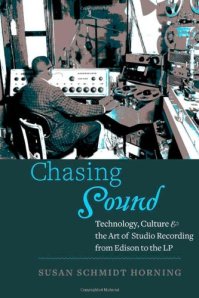
Methodologically, the author draws on a mixed bag of sources, which include oral histories from early recordists, interviews with more contemporary audio engineers, her own ethnomethodogical studio research, trade literature, and archival documents from big studios like EMI. The book proceeds in chronological order, with each chapter laying out changes in the physical and acoustic qualities of commercial studios as they shifted from bare-walled rooms with “the recording horn jutting through a wall at the far end of the room” (9) to multi-track studios complete with “Mission furniture, [and] hand-laid distressed wood floors.” (209) The author plots these changes alongside improvements in the science of acoustics, the importation of techniques and tools from the more well developed medium of radio broadcasting, the consolidation and growth of the recording industry, the rise of independent labels, the emergence of new attitudes and musical tastes, and the professionalization of audio engineering.
Chasing Sound, unlike many other books on the topic, places the studio in relation to a set of changing cultural expectations regarding recorded music. Where recordings were once understood as a reflection of live performance, they later were seen as a signature creation of music studios. Rather than focusing on the phonograph, gramophone, microphone, or magnetic tape, the author argues that the recording studio belongs at the center of recorded music because it was there that the ideal of music as a “technologically mediated art” was first engineered into cultural listening norms. Consequently the audio engineer, or recordist as he (or in rare cases, she) was known prior to the 1930s, must also be understood as central to narratives regarding recorded sound from its inception. In this way, Schmidt Horning aims to recontextualize and centralize the studio and its inhabitants within histories of the production and reproduction of sound.
Because the audio engineer represents an inextricable part of this history, each chapter devotes time to the technologies and practices cultivated by the amateur recordists and trusted professionals responsible for recording sound. Initially such practices formed the basis of their tacit knowledge regarding the proper “staging” of artists in relation to acoustic recording horns among other techniques, but by the 1950s, sound engineers were responsible not just for positioning artists, microphones, and the increasingly important work of “enhancing” recordings during post-production. The book concludes by charting the unfettered rise of independent studios as well as the consequent proliferation of (and backlash to) new sound manipulation technologies in the 1970s.
Throughout the text the author notes the ways in which audio engineers often lamented the increasing technological mediation involved in record production, even as it granted them more creative control and prestige.
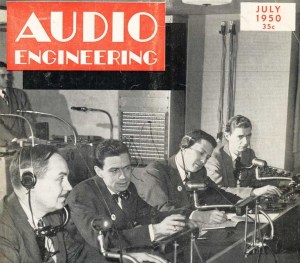
Schmidt Horning’s methodology represents Chasing Sound’s strongest quality. The rich narratives of the audio engineers allow the author to directly connect their technologically and culturally informed ideas about what constitutes good sound to the desires and expectations of listeners. In addition to this work, Schmidt Horning also highlights the ways in which advances in engineering technology did not necessarily overlap neatly with cultural norms. Throughout the text the author notes the ways in which audio engineers often lamented the increasing technological mediation involved in record production, even as it granted them more creative control and prestige. Such examples reveal the tightly knit relationship between ideas of liveness, talent, creativity, and authenticity. Chasing Sound is full of stories that detail the complex material, artistic, and ethical constraints around which recordists and engineers navigated in order to achieve the perfect sound.
The author’s methodological approach certainly helps to structure the narrative, but there are also ways in which it prevents her from digging in to important theoretical discourses regarding the studio. As Eliot Bates notes in his article, “What Studios Do,” the way audio engineers conceive of their workspaces is crucial for making sense of the power relations and social interactions that govern and are governed by studio spaces. Chasing Sound does not pursue these discourses. The author briefly mentions how the metaphor of flight is often used by sound engineers regarding the increasingly complex console controls of the 1950s and 60s but does not provide further elaboration on the implications of such a comparison. Even if the participants in her study did not reflect on their colloquial notes about the studio space, it would have been interesting to see Schmidt Horning consider what these metaphors reveal about the changing roles of the engineer.
These points aside, Chasing Sound is an important read both for those with a general interest in the history of sound production and reproduction as well as those scholars more specifically invested in understanding the role of recorded sound in society. Since I discussed the book’s limitations in “Making Music in Studio X,” Chasing Sound has become a foundational text in much of my research. Specifically, the author’s claim that the studio is (and has been) a critical site for examining broader industrial, technological, and cultural changes resonates deeply with me because it offers a critical methodology for considering issues of identity and power within studio spaces that are often neglected. In this regard, Chasing Sound is important not just for what it discusses, but also for what it does not. Noting the lack of female and black audio engineers discussed throughout the book, the author laments, “For the first century of sound recording, the field of audio engineering and recording studios in particular comprised a profoundly white male-centered culture that reflected corporate culture at large and technical professions in particular.” (9) The absence of these faces serves to remind us that while successfully “chasing sound” certainly relies on the cultivation of craft skill, and tacit knowledge, it also depends heavily on access.
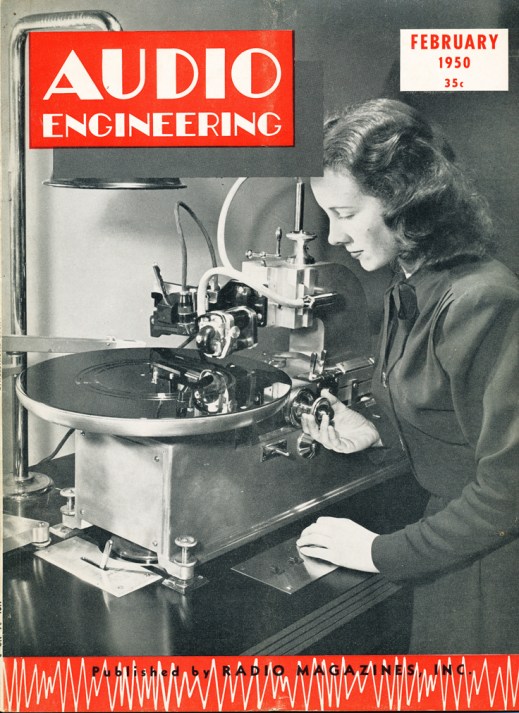
Chasing Sound stands out as the most exhaustive history of audio engineering available. Schmidt Horning’s user-focused narrative successfully ties together changes in studio configurations and audio engineering practices with cultural expectations regarding recorded music. This helps to show how the studio and audio engineer can easily be recognized as central figures in the history of sound reproduction. Chasing Sound’s intervention is necessary as the history of recording is often told through artifacts like the phonograph, microphone, and magnetic tape, not living spaces like the studio and its inhabitants. Schmidt Horning’s dedication to telling these neglected stories is what makes the book come to life. Her research promises to open up new avenues for others interested in these issues. For me, this means pursuing lines of inquiry related to the growing philanthropic interest in the recording studio as a site for engaging and “assisting” low-income communities. In this way Chasing Sound asks us to recognize the recording studio as a critical site for the production and reproduction of our assumptions about what counts as appropriate, good, or real in music and people.
—
Featured Image: My Recording Studio by Flickr User Fabio Dellutri
—
Enongo Lumumba-Kasongo is a PhD student in the Department of Science and Technology Studies at Cornell University. Since completing a senior thesis on digital music software, tacit knowledge, and gender under the guidance of Trevor Pinch, she has become interested in pursuing research in the emergent field of sound studies. She hopes to combine her passion for music with her academic interests in technological systems, bodies, politics and practices that construct and are constructed by sound. More specifically she would like to examine the politics surrounding low-income community studios, as well as the uses of sound in (or as) electronic games. In her free time she produces hip hop beats and raps under the moniker Sammus (based on the video game character, Samus Aran, from the popular Metroid franchise).
—

REWIND! . . .If you liked this post, you may also dig:
Making Music at Studio X: The Identity Politics of Community Studios— Enongo Lumumba-Kasongo
SO! Reads: Japanoise: Music at the Edge of Circulation— Seth Mulliken
SO! Reads: Isaac Weiner’s Religion Out Loud: Religious Sound, Public Space, and American Pluralism— Jordan Musser
—
Share this:




Current Top Posts





April 2021

January 2020

November 2019

October 2019

August 2019

April 2014

November 2017

March 2015

December 2017

October 2015


Recent Comments