
Fade to Black, Old Sport: How Hip Hop Amplifies Baz Luhrmann’s The Great Gatsby
When I heard of people flocking to recreate “Gatsby Dress” costumes for Halloween 2013, I couldn’t help but ponder the seemingly-perpetual cultural allure of F. Scott Fitzgerald’s The Great Gatsby, particularly its latest cinematic incarnation in spectacular Baz Luhrmann-style. More than a little of the momentum of the recent revival, however, had everything to do with the film’s soundtrack–executive produced by Jay-Z (who also executive produced the film)–that drew heavily on hip-hop. This sonic move was not without controversy, however, sparking intense debate when the film was released in May 2013. Take this line from Vice Magazine’s UK music blog Noisey (from a post snarkily entitled “Who Let The Great Gatsby Soundtrack Happen?”) that describes Kanye West and Jay-Z’s Watch the Throne album, from which many of the film’s songs are taken, as “a record that couldn’t be further removed from West Egg than a pauper trying to gain access to a Gatsby soiree.” This statement reveals more about this particular listener than it does about either the record or the film, which are intimately connected through the labor of Jay-Z and what I theorize here as a “sonic hip hop cosmopolitanism.”
I’ll admit that when I was first hip to The Great Gatsby my junior year of high school, I thought it was boring and couldn’t stand Tom or Daisy Buchanan or their rich white folk problems. I rooted for Jay Gatsby but couldn’t for the life of me understand why he was so sprung over Daisy, who wanted her daughter to be a “beautiful little fool” (17). But as I got older, I found myself returning to the novel time and time again, coming back to Gatsby like a forlorn lover and reconsidering what Jay Gatsby’s character represents: unrequited love, American idealism, (capitalistic) hustle, and (white) masculine performance. However, I’ve always been part of the camp that secretly hoped Gatsby was a black man passing for white, yearning for a life – and a woman – out of his grasp no matter how much “new money” he acquired.
It was not until Baz Luhrmann’s film adaptation of Gatsby that I realized how hip (hop) Gatsby really could be.

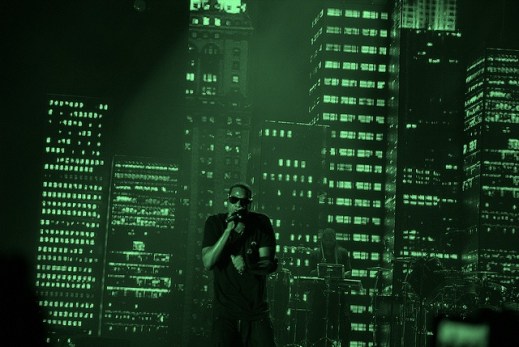
Image from Vulture’s “Quiz: Jay-Z Lyric or Line From The Great Gatsby?”
Luhrmann’s modernization of classic literary texts is not new; Romeo + Juliet (1996) got me through high school readings of Shakespeare’s play in ways Sparknotes could not. While Shakespeare’s words remained intact, the scenery and aura of the play burst to life on the big screen. Luhrmann uses in that film sonic cues of contemporary (youth) popular culture to make Shakespeare’s characters relatable. Verona is a hip, urban hub of violence that vibrates to grunge and pop artists such as Garbage, Everclear, and Quindon Tarver instead of mandolins and harps. The grittiness of grunge rock signifies the grittiness of Verona street life while Quindon Tarver’s angelic voice signifies the innocence and vulnerability of (first) love.
But Luhrmann’s Gatsby takes it up a notch, looking to hip hop culture as a bridge between the roar of the 1920s and the noise of the present. Aside from the literal presence of hip hop sound – mostly snippets from Jay-Z and West’s Watch the Throne – the materiality of hip hop sound also serves to update the Gatsby narrative. Consider how Gatsby’s parties are loud and bass-filled with a live jazz band. The loudness of the party and “surround sound” stereo sound of the film amplifies the vibrancy of the Jazz era while drawing in the audience with a contemporary interpretation of live parties seen and heard in contemporary hip hop culture. “The question for me in approaching Gatsby was how to elicit from our audience the same level of excitement and pop cultural immediacy toward the world that Fitzgerald did for his audience?” Luhrmann told Rolling Stone. “And in our age, the energy of jazz is caught in the energy of hip-hop.”
.
The film itself is stunning: vividly colored with panoramas and ground shots of New York City, Luhrmann’s film draws in an audience possibly unfamiliar with Fitzgerald’s novel. The film utilizes the more traditional jazz aesthetic that captures the novel’s initial element, but invokes hip hop to span a generational divide and update the (black) cool factor of the film. Indeed, both jazz and hip hop best signify black cool and its commodification into mainstream white America. For example, Norman Mailer’s discussion of the white hipster and Jazz aficionado as a “white Negro” is also tantalizingly useful in thinking of Gatsby as a black man passing for white. His affinity for Jazz and throwing jazzy parties incites the probability of Gatsby’s racial and social background. The film uses sound to create a hybrid of timeless black cool, while highlighting the presence of African Americans’ contributions to American culture. Hip hop’s birthplace and the portal for many immigrants into America, New York is arguably America’s most mythological city, grounded in both white and African American culture memory as such. Jay-Z’s own mythic rise to fame, wealth, and power in New York City–exemplified in some lines from 2009’s “Empire State of Mind,” “Yeah I’m out that Brooklyn, now I’m down in TriBeCa/ Right next to De Niro, but I’ll be hood forever/ I’m the new Sinatra, and since I made it here/I can make it anywhere, yeah, they love me everywhere”– grounds the film’s rags-to-riches mystique.
In addition to such extradiegetic associations, the film’s soundscape itself enthralls, with brassy, lively instrumented notes of jazz – which carried the sonic narrative of the 1920s – sounds of the hustle and bustle of urban spaces, particularly New York City, and hip hop. The film’s soundscape presents a hybrid of sonic black identities – jazz and hip hop – and uses their blended aesthetics to speak to the continued framework of black popular culture as a gauge of Americanism. In other words, the marginalized perspective is used to decide whether or not something is authentically American or not.
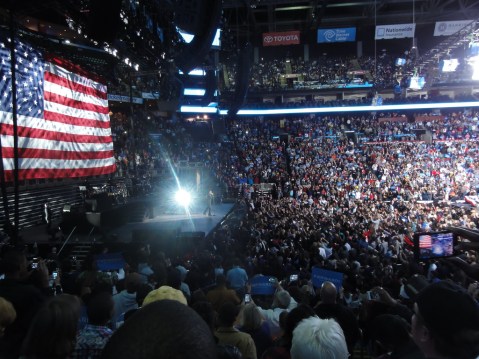
Jay-Z performs at Obama Pre-Election Rally 2012 in
Columbus, Ohio, w/ Bruce Springsteen, Image by Flickr User Becker1999
Hip hop aesthetics bridge old New York with the current New York as a foundation of Americanness. Gatsby bridges the old adage of New York as a space of opportunity with the familiar New York adage that Harlem-born and Mt.-Vernon-raised P. Diddy drops in Jermaine Dupri’s “Welcome to Atlanta,” “if you can make it here, you can make it anywhere,”a call back to Sinatra’s “New York, New York” that is also echoed by Jay-Z that forms a foundational trope of the film and the novel. A particular striking example of the merging of these adages is a scene in the novel where Nick and Gatsby are on their way to the city. They pass a car with black passengers and a white chauffeur:
As we crossed Blackwell’s Island a limousine passed us, driven by a white chauffeur in which sat three modish negroes, two bucks and a girl. I laughed aloud as the yolks of their eyeballs rolled toward us in haughty rivalry.
“Anything can happen now that we’ve slid over this bridge,” I thought; “Anything at all” (69).
While the novel does not describe a sonic accompaniment to Carraway’s observation of the black folks in the limousine, there is an inherent understanding of the “modish” fashion of the black folks as jazzy, as cool. In the film, there is an audible sound associated with the black folks. They are sipping champagne and listening to Watch the Throne. Although visibly symbolic of the 1920s – dressed in zoot suits and flapper dresses – the aural blackness associated with the scene suggests a merger of jazz and hip hop cool and cosmopolitanism.

Still from The Great Gatsby (2013)
In order to understand how hip hop updates the struggle for realness, entitlement, and respectability in the Gatsby film, it is important to return to the major sonic influence of the literal hip hop sound in the film: Jay-Z and Watch the Throne. Jay-Z’s work on the album raises questions of how hip hop culture impacts not only the American dream but the aspirations of mogul-dom seen and heard in the film and novel. Christopher Holmes Smith’s discussion of hip hop moguls in Social Text (Winter 2003) is particularly useful in teasing out the implications behind the hip hop mogul and such figures’ social-cultural responsibility to their respective communities. Holmes Smith argues:
The hip-hop mogul bears the stamp of American tradition, since the figure is typically male, entrepreneurial, and prestigious both in cultural influence and wealth. The hip-hop mogul is an icon, therefore, of mainstream power and consequently occupies a position of inclusion within many of the nation’s elite social networks and cosmopolitan cultural formations (69).
Jay-Z’s status as a hip hop mogul – serving both as a creative talent and corporate backer – lends credence to thinking about hip hop as a space of entitlement and a site of struggle to attain that entitlement. It is from this perspective that I think of Gatsby as a hip hop figure/mogul: his working class background, hyper-performance of white privilege, materialistic pursuit of wealth for visibility, and desperate need for approval as “authentic.” To borrow from rapper Drake, Gatsby “just wanna be successful.”
Mark Anthony Neal’s discussion of Jay-Z as a hip hop cosmopolitan figure in Looking for Leroy (2013) further enables an understanding of how Jay-Z lends his (sonic) hip hop cosmopolitanism to sonically navigate between hip hop’s working class aesthetics and his own sense of entitlement because of the way he mobilized those working class experiences to become wealthy. While the film does have performances by artists who are not considered hip hop – i.e. Lana Del Rey, Jack White, and Florence+the Machine – Jay-Z’s use of his own raps, including tracks from the Kanye West collaboration Watch the Throne suggests a “sonic hip hop cosmopolitanism” complements any sense of the film as a case study of white entitlement. Tracks like “100$ bill,” “No Church in the Wild,” and “Who Can Stop Me” both prop up and tear down Luhrmann’s visual rendition of Fitzgerald’s critique of the uppercrust of America as corruptibly entitled.
.
Baz Luhrmann’s adaptation of The Great Gatsby is an intriguing and useful tool through which to analyze the (in)consistencies of race and cultural authenticity in the United States. Both jazz and hip hop exist in the interstitial spaces that lie between black cultural expression and white entitlement to those expressions. Luhrmann uses hip hop’s sonic and cultural aesthetics to pump up the capitalistic and all-American narrative of “pull yourself up by the bootstraps” narrative in Gatsby by also declaring, “get yours by any means necessary.”
—
Featured Image adapted from Flickr User kata rokkar
—
Regina Bradley recently completed her PhD at Florida State University in African American Literature. Her dissertation is titled “Race to Post: White Hegemonic Capitalism and Black Empowerment in 21st Century Black Popular Culture and Literature.” She is a regular writer for Sounding Out!
—
 REWIND! . . .If you liked this post, you may also dig:
“‘I’m on my New York s**t’: Jean Grae’s Sonic Claims on the City”— Liana Silva
“I Like the Way You Rhyme, Boy: Hip Hop Sensibility and Racial Trauma in Django Unchained“– Regina Bradley
“The Victoria’s Secret Fashion Show and the Soundtrack of Desire“— Marcia Dawkins
Share this:

Calling Out To (Anti)Liveness: Recording and the Question of Presence

Editor’s Note: Even though this is officially Osvaldo Oyola‘s final post as an SO! regular–his brilliant dissertation on Latino/a identity and collection cultures is calling–I refuse to say goodbye, perpetually leaving the door open for future encores. He has been a bold and steadfast contributor–peep his extensive back catalogue here–and we cannot thank him enough for bringing such a whipsmart presence to Sounding Out! over the years. Best of luck, OOO, our lighters are up for you!–J. Stoever-Ackerman, Editor-in-Chief
—
As several of my previous Sounding Out! Blog posts reveal, I am intrigued by the way popular music seeks to establish its authenticity to the listener. It seems that recorded popular music seeks out ways to overcome its lack of presence as compared to a live performance, where a unified and spontaneous sense of immediacy seems to automatically bestow the aura of the “authentic”—a uniqueness that, ironically, live reproducibility engenders. Throughout my time as a Sounding Out! regular, I have explored how authenticity may be conferred through artists affecting an accent as a form of musical style, comparing their songs to other “less authentic” forms of music through a call to nostalgia, or even by highlighting artificiality through use of auto-tune.
One of the ways that artists and producers get past a potential lack of authenticity when recording is through call outs to “liveness.” I am not referring to concert recordings (though there are ways that they can be used), but elements like counting off at the beginning of songs or introducing some change or movement in a song. There is no practical need to count off “One, two, three, four!” at the beginning of a recording of a song if it is being pieced together through multiple tracks and overdubs. These days a “click track” or adjustment post-recording can keep all the players in time even if not necessarily playing at once; even if a song is being recorded as a kind of studio jam, the count off could be edited out. It is an artifact of the creation, not a sign of creation itself. Instead, the counting can become an accepted and notable part of the song, like Sam the Sham and the Phaorahs performing “Wooly Bully,” giving it an orientation to time—the sense that all these musicians were present together and playing their instruments at once and needed this unique introduction to keep them all in tempo.
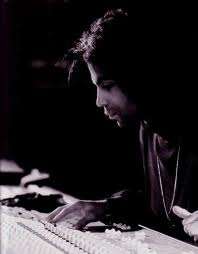 Similarly, sometimes artists call out to other musicians, giving instructions when no instructions are needed, assuming that most popular music is recorded in multiple takes using multiple tracks. In Parade‘s “Mountains,” Prince commands the Revolution, “guitars and drums on the one!” when clearly they had rehearsed when putting together the song, and ostensibly knew when the drum and guitar breakdown was coming up. Prince, furthermore, joins artists as varied as the Grateful Dead and the Beastie Boys in mixing concert recordings with studio overdubs to capture a “live” sound on songs like “It’s Gonna Be a Beautiful Night” and “Alligator.” Even something as ubiquitous as guitar feedback is a transformation of an artifact of live performance into a sound available for use in recording—something that was purposefully avoided until John Lennon’s happy accident when in the studio to cut “I Feel Fine.” Until then, playing with feedback was a way to demonstrate performance skills through onstage vamping.
These varied calls to liveness provide a sense of authenticity to music made via the recording studio, denoting what I understand as the spontaneous sociability of music. Count-offs and studio shout-outs provide a sense of unified presence to a performance, especially if the performance has actually been constructed piecemeal and over time. This is something of a remnant of an old-fashioned notion that recorded music is measured in quality in comparison to live performance. It’s any idea that hung around both implicitly and explicitly long after bands started experimenting in the studio with effects that ranged from the difficult to the impossible to replicate on stage, and reinforced through recordings by performers who purposefully referenced their lauded live performances.
.
For example, James Brown’s “Get Up (I Feel Like Being a) Sex Machine” is built on this conceit. The entire song is a conversation, a call and response between James Brown and his band, the J.B.’s. From the opening line, Brown introduces the song as moment in time in which he is compelled to do his thing, but he demands both encouragement and cooperation from the band in order to achieve it. When Brown asks Bobby Byrd, “Bobby! Should I take ’em to the bridge?” we as listeners are invited to play along with the idea that it has suddenly came into his head to have the band play the bridge—as it might’ve happened (and thus been practiced) countless times in his legendary live shows. It suggests a form of spontaneity that the reality of recording would otherwise drain from the song. Sure, according to RJ Smith’s The One: The Life and Music of James Brown (2012), “Get Up” was recorded in only two takes–already fairly amazing–but the very nature of the song makes it sound like it was recorded in one, even if it had to be broken up into two sides of a 7-inch. That reality doesn’t matter—what matters when listening is the feeling that we, as listeners, are being allowed to partake in the capturing of what seems like one unique, and continuous, moment.
The question then arises: What about recorded music that does the opposite, that makes a point of highlighting its artificial construct—the impossibility of its spontaneous performance? While there are examples that date back at least to the 1960s, does this shift highlight a difference in aesthetic concerns by the pop music audience? If calls to “liveness” suggest a spontaneous sociability to music, what do the meta references to their songcraft suggest about what is important to music now?
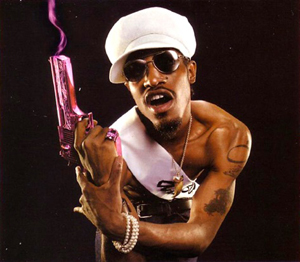
Andre 3000’s “Prototype” from 2003’s The Love Below includes chatter with his sound engineer.
The classic example is Ringo Starr’s bellow, “I GOT BLISTERS ON MY FINGERS!” at the end of the Beatles’ “Helter Skelter,” an exclamation made after umpteen takes of the song recorded on the same day, but there are more contemporary and even more obvious examples. Near the end of Outkast’s “Prototype,” (at 4:21) Andre 3000 can be heard talking to his sound engineer John Frye about the ad libs, “Hey, hey John! Are we recording our ad libs? Really? Were we recording just then? Let me hear that, that first one. . .” There is an interesting tension here between the spontaneity of an “ad lib” and listening back to pick the best one or further develop one when re-recording, and Andre in his role as producer decided to keep it in as part of the final product. The recording itself becomes part of the subject of the song as a kind of coda. The banter is actually a brilliant parallel to the content of the song, which undermines the typical “we’ll be together forever” love song trope for one that highlights the reality of serial monogamy common in American culture and lessons each relationship potentially provides us for the next. Rather than pretend that a romantic relationship is a unique and eternal thing, the song admits the work and changes involved, just as it admits that the seemingly special spontaneity of a song is developed through a process.
Of course, hip hop as a genre, with its frequent use of sampling, tends to make its recording process very evident. While it is possible to play samples “live” using a digital sampler or isolating sections on vinyl via the DJ as band member, the use of pre-recorded fragments means that rap music relies on the vocal dynamics of rap to carry the sense of spontaneity. Yet, in 1993’s “Higher Level,” KRS-One opens with a description of the time and place of the recording—“5 o’clock in the morning” at “D&D Studios,” establishing forever when and where and thus how the recording is happening. Five o’clock in the morning places the creation of the song with a context of working and rocking all through the night to get the album completed. The song may or may not have actually been recorded last, but its placement at the end of Return of the Boom Bap, gives it a sense of a last ditch effort to complete the collection of songs. The fact that “5 o’clock in the morning” is likely also among the cheapest available studio times potentially highlights budgetary concerns in the recording itself. This is a rare thing to include in recording, though the Brand New Heavies cap off the dissolution of their 1994 track “Fake” into pseudo-jazz-messing-around with one their members chiding, “a thousand dollar a day studio!” This is a different kind of call to authenticity, as a budgetary concern is an implicit to a “realness” defined by being non-commercial.
 One of my all-time favorite examples is a few years older than “Higher Level”—“Nervous” by Boogie Down Production: “written, produced and directed by Blastmaster KRS-One,” which includes an attempt to explain how a song is put together on the “48-track board.” Instead of calling instructions to a band, KRS points out that DJ Doc is doing the mixing and instructs him to “break it down, Doc!” just before a beat breakdown (listen at around 1:40). He explains, “Now, here’s what we do on the 48-track board / We look around for the best possible break / And once we find it, we just BREAK,” and then the pre-recorded beat seems to obey his command, breaking down to just the bass drum and a sampled electric piano from Rhythm Heritage’s “The Sky’s the Limit.” Later, he says, “We find track seven, and break it down!” and the music shifts to just the bass guitar and some tinny synth high-hats.
.
So how does highlighting the recording circumstances, or just bringing attention to the fact that the song being listened to is a multiple-step process of recording and post-production benefit the song itself? Is it like I mentioned in my 2011 “Defense of Auto-Tune” post, that this kind of attention re-establishes authenticity by making its constructed nature transparent? I’d say yes, in part, but I also think that–through its violation of the expectation of seamlessness–the stray track or reference to recording within a song is a nod to a different kind of skillfulness. Exhortations such as “Take it to the Bridge” give an ironic nod to the extemporaneous to call attention to the diligent workmanship and dedication demanded by studio songcraft. Traditionally, live audiences may appreciate a flawless or nearly flawless performance and understand a masterful recovery from (and/or incorporation of) error as the signs of a good show, but, these moments that call attention to the recording studio situation claim there something to appreciate in the fact that Ringo Starr endured 18 takes of “Helter Skelter” until he had painful blisters, or that KRS-One and DJ Doc worked out the proper way to “feel around” the mixing board to make a grooving collage of sounds as disparate as the theme from “Rat Patrol” and WAR’s “Galaxy.”
KRS may have once admonished other MCs to “make sure live you is a dope rhyme-sayer,” but clearly he believes liveness—whether implicitly or explicitly—is not the only measure of musical ability. Rather, the highlighting of labor in the construction of a recording becomes its own kind of (anti-)vamping and demonstration of skill, and of a different kind of sociability in making music that these conversational snippets and references to other people in the studio make clear. This kind of attention to the group labor is especially important as various recording technologies become increasingly available to the wider public and allow for an isolated pursuit of recording music. Just as calls to liveness in recording engage the listener in ways that suggest participation as a live audience, calls to anti-liveness also engage the listener, but by bringing them across time and space into the studio to witness to a different form of great performance.
—
Osvaldo Oyola is a regular contributor to Sounding Out! and a PhD Candidate in English at Binghamton University working on his dissertation, “Collecting Identity: Popular Culture and Narratives of Afro-Latin Self in Transnational America.” He also regularly posts brief(ish) thoughts on music and comics on his blog, The Middle Spaces.
—
REWIND! . . .If you liked this post, you may also dig:
Evoking the Object: Physicality in the Digital Age of Music–-Primus Luta
Experiments in Agent-based Sonic Composition–Andreas Pape
Musical Objects, Variability and Live Electronic Performance—Primus Luta
Share this:


Current Top Posts





April 2021

January 2020

November 2019

October 2019

August 2019

April 2014

November 2017

March 2015

December 2017

October 2015
 Sounding Out!
Recent Comments