
Pushing Record: Labors of Love, and the iTunes Playlist
DOI: https://doi.org/10.59350/1bmcz-z6745
Last month as my sister and I drove to the store, she started to joke with me. “You’re crazy,” she began, “you’re so high-tech, with your computers, and XBOX. You love music. But, you’ve got a cassette player in your car.” I shot her a look. “So what? I like it.” I said, hoping that she would back off. “So what!” she proclaimed in response, “don’t you want a CD player? Or a jack for your iPod?” I responded, “But how will I play my tapes?” She stared at me. “Who cares? They sound like crud. You’re crazy.”
Here at Sounding Out! we’ve featured a number of articles about analog tape. It persists in popular culture (Jennifer Stoever-Ackerman’s Play it Again (and Again), Sam: Part 1, Part 2, and Part 3), underground communities (Matt Laferty’s On Hand Made Music), and even our personal histories (Gus Stadler’s Pushing Play). Even though tape is generally understood to be obsolete, niche, and just plain noisy – I will insist that, despite my sister’s concerns, there is something special (even forgotten) about the medium itself. I had tried to articulate this in last year’s article What Mixtapes Can Teach Us About Noise. But, when I re-read it, I can’t help but think that I somehow missed the point. Let me try again with a new question: What is the difference between a mix on cassette tape and an iTunes playlist?
Care is the difference. The material limitations of the cassette recorder demand that care is taken during the act of inscription. In other words, cassette mixes cannot be automated like an iTunes playlist. The practice of recording a mix on cassette requires, at minimum, that some attention is paid to the moment a song begins (as record is pushed), and the moment a song ends (as stop is pressed). The cassette must be tended, as it were, during the encoding process. It is impossible to program a cassette mix otherwise.
After tracks have been chosen and messages encoded, frequently cassette mixes are shared, or gifted. If the receiver chooses to listen to the cassette, they must locate, first, a cassette player. This was not a problem in 1990 when cassette players were a more or less ubiquitous technology. But, in the present day, they are notably rare. Furthermore, even if some care has been taken to locate a listening platform, the tape is far more treacherous than the CD to navigate. Awkward transitions governed by the fast-forward and rewind buttons, encouraged listeners to listen through all but the most wretched sequences of a cassette mix. And, let us not forget, how leaving a cassette in the wrong player could result in a mangle of 1/8″ tape. Or, how speakers, magnets, and poor weather all eventually erode at the contents of poorly stored tape. Care had to be taken in maintaining and storing a good cassette mix; tapes are a fragile technology and that, for me at least, serves to valorize the labor at stake in their creation.
Am I giving the playlist enough credit? Even though the platform may not limit its listeners, and producers, in the same ways that cassette recorders have, who is to say that any less care is taken when producing a playlist? To this point, I must bring up a question of labor. While, the receiver of a cassette mix knows that at least an hour (as cassettes are generally 60 minutes or more) of work has been put into its construction, the receiver of a mix CD, or playlist, cannot be as certain. iTunes playlists can be constructed in five minutes or less. Implicated within this labor divide is both an emerging and ephemeral culture of listening.
As Sterne (2006) has argued in his paper, The MP3 as Cultural Artifact, our bodies respond to MP3s in a way that is fundamentally different than listening to a tape, or record. “[The MP3] represents a liberation of just-in-time sound production, where systems give listeners less and ask their bodies to do more of the work” (p.838). If the very compression algorithms that constitute MP3s make demands on the brains and bodies of listeners, it is interesting to think of the iTunes playlist in parallel. The iTunes playlist makes comparatively few demands on the body of the producer. This, paradoxically, results in a culture that does not valorize the labor of its constituent producers. Most apparent in the nebulous legal credibility of Mashups, the mix exists predominantly within an economy of care. Unfortunately, the digital turn toward playlisting conspires to render the labor of care, in this context, invisible.

Is there hope for iTunes? Can we trust our playlists to be received with the love that was put into them? Some theorists like Hardt (1999) see an upside to caring labor. As he points out in his essay, Affective Labor, “Caring labor is certainly entirely immersed in the corporeal, the somatic, but the affects it produces are nonetheless immaterial. What affective labor produces are social networks, forms of community, biopower” (p. 96). Sharing is caring, the accessibility and ease of production that playlisting provides, is, at least, a way to foster community. I am not so optimistic. For caring labor is not adequately valued, at least not in the context of building a playlist. Playlists rely on an audience to value them, they provide no guarantees. The labor at stake in their construction may only become visible to those who listen. The cassette mix, on the other hand, has care inscribed into its magnetic tape. The listener knows that some work has been put into making the mix, even before play is pressed.
Although cassette tapes may have all but disappeared as a way to share music, the caring labor involved in their production might be salvaged in other forms. Taking a page from Andreas Duus Pape’s recent, Building Intimate Performance Venue’s on the Internet, podcasts (produced on platforms like Garageband or Audacity), provide a viable alternative. Like cassettes, they subject their listeners to a linear play style. And, there is a certain degree of care taken by the producer when splicing, cross-fading, arranging, and sequencing a set of tracks. It is implicit in the construction of a Podcast that some degree of care was taken during its development. Of course, I will keep the cassette player in my car. I have a special tape adaptor, which lets it play music from my iPod.
—
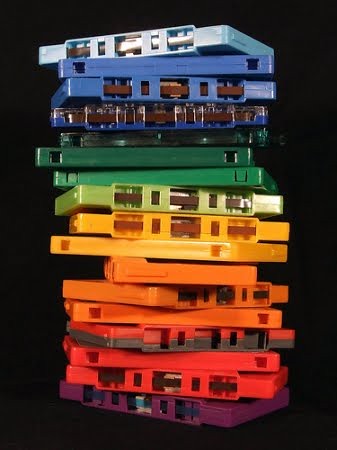
Featured image by Flickr User Generation Bass, CC BY 2.0.
–
Aaron Trammell is co-founder and multimedia editor of Sounding Out! He is also a Media Studies PhD student at Rutgers University.
—
Share this:

Post-Soul Pusherman: Curtis Mayfield’s “Pusherman” and The Hangover 2

DOI: https://doi.org/10.59350/b8y2w-d6q29
My husband and I looked forward to seeing The Hangover 2 for our weekly movie date. A sequel to the wildly popular The Hangover, The Hangover 2 centers around Stu’s wedding (played by Ed Helms), bachelor party and its aftermath. Following the first film’s bottom line, The Hangover 2 unfolds after a drugged and drunken stupor leaves the friends unsure of the previous night’s events—and a missing brother-in-law. Sleazy motels, drug deals, homosexual encounters, and a monkey are the friends’ only clues about what happened and where Stu’s missing brother-in-law is located. Considering the awkward and absurd plot trying to pass for humor in The Hangover 2, I wasn’t surprised to see the monkey was a drug dealer. I was struck, however, by one of the monkey’s scenes where he completes a drug transaction. Sitting atop a light pole, a buyer signals for the monkey’s attention. The monkey struts across the wire and completes the transaction. After taking the buyer’s money, the monkey drops it off to his masters (two French men), eats an apple, goes back to his post, and lights a cigarette. The dope boy, er, monkey worked to the sonic backdrop of Curtis Mayfield’s “Pusher Man.” My husband laughed. I cocked my head to the side.
One of the most recognizable tracks from Mayfield’s extensive body of work, “Pusher Man” (which is street slang for “drug dealer”) was on the Super Fly soundtrack released in 1971. In its original context, “Pusher Man” provided insight into the purpose and agency of drug dealing in the inner city. However, in The Hangover 2 “Pusher Man” is subverted for comic relief and consumption by a multicultural audience. The result is that the film neutralizes “Pusher Man” and overrides the cultural significance behind the song for the film’s comedic purposes.
In order to discuss the subversion of “Pusher Man” in The Hangover 2, one must consider its original context as a sonic complement to Super Fly. A blaxploitation film directed by Gordon Parks, Jr. (son of famed African American photographer and Shaft producer Gordon Parks, Sr.), Supafly focused on the tug-and-pull of poverty, drugs, and the urban black experience in the immediate aftermath of the Civil Rights and Black Power movements. The plot revolves around the narrative of Priest, a dope dealer who wants to reform his ways and “do good.” Priest is continuously tempted throughout the movie by associates and friends who see drug dealing as the only way out of a hard inner city life. The film highlights drug dealing as a coping mechanism instead of an illegal activity. Although critics argue that the film glorifies pathological blackness through drug culture, Mayfield’s soundtrack provided hard-hitting social commentary that followed suit of similar themed albums like Marvin Gaye’s What’s Going On (1971).
Borrowing from and building upon a blues aesthetic showcasing an instrumental ensemble of percussions, horns, and guitars Mayfield updates the “bad man” trope to reflect the post-Civil Rights urban black experience. (By post-Civil Rights I’m suggesting that urban blacks encounter in this period more subtle forms of discrimination that are deemed irrelevant or non-existent due to the Civil Rights legislation put in place.) The immediate update to the trajectory of the bluesy/folkloric trouble man to reflect this shift is the drug dealer, whom is celebrated and highlighted in many of the 1970s blaxploitation films. Previous manifestations of the bad man reflected an opposition to open racial discrimination held in place by Jim Crow laws and other forms of white supremacy. In blaxploitation films, this type of racism is signified by “The Man,” an anonymous, “hands off” yet omniscient body of white (male) supremacy.
“Pusher Man,” complicates an anonymous drug dealer’s narrative by weaving introspective thoughts with popular and accepted characteristics of a drug dealer. The track opens with the latter, essentializing the power of a drug dealer in the inner city:
I’m your mama
I’m your daddy
I’m that nigga in the alley
I’m your doctor when in need
Want some coke?
Have some weed
You know me
I’m your friend
Your main boy
Thick and Thin
I’m your pusher man
The pusher man’s depiction of himself as a universal power – parent, healer, friend, brother – is established through hard hitting percussion and guitars. His delivery, however, is “cool,” signified in Mayfield’s soft voice. Aside from direct suggestions of black cool, i.e. “Ain’t I clean/bad machine” and “super cool/super mean,” Mayfield’s voice is critical in establishing this coolness. His smooth delivery symbolizes the tension between popular definition and the drug dealer’s humanity as well as opposing the hardness of the song’s sonic backdrop. The steady, quiet aggression of Mayfield’s voice – he never raises his voice – further solidifies the coolness of the track. The drug dealer’s reasoning for pushing illegal drugs, “silent life of crime/a man of odd circumstance/a victim of ghetto demands,” is afforded space through Mayfield’s voice and delivery. The loudness and “noise” of the instrumentals substitutes Mayfield’s voice as a gauge of the chaos and instability of the inner city. The song signifies the frustration of being urban, poor, and black with few options in a moment where racial equality should be heralded but has not yet been achieved. “Pusher Man” is tethered to the understanding that the laws changed but the social practices remained intact.
Yet this connection between the song and the social context is distorted if not lost by how The Hangover 2 situates the track into the plot. While the film maintains the surface narrative – drug dealing – numerous other signifiers have shifted to reflect this more contemporary moment of American culture and history. The track is globalized by providing background to a drug deal taking place in Bangkok (which, I hope, is not strictly for comedic purposes). It helps situates the reality that poverty is not necessarily black or American but global. The African American male drug dealer is replaced with a chain-smoking monkey. While it is possible that the film uses the track to emphasize the monkey’s drug dealing ways, it is also quite possible that the track’s original intentions and context are watered down in order to resonate with a multicultural audience.
Instead of making the audience think about the angst of the African-American working class, the song becomes a comedic prop. The humanity of Mayfield’s drug dealing protagonist, emphasized through the juxtaposition of Mayfield’s cool voice and gritty lyrics is overwhelmed by the inhumanity of the drug dealing monkey—not to mention the absurd situations the characters face. Even more disturbing, “Pusher Man” serves as a sonic signifier of the audience’s racial and social-economic detachment from the seriousness of the scene (and song) instead of an indicator of its social relevance. Instead of the focus being Mayfield’s attempt to shed light on the drug dealer’s harsh realities, the focus shifts to the monkey’s illegal activities as humorous.
Indeed, Curtis Mayfield certainly wrote his fair share of songs for films – Claudine and Sparkle immediately come to mind – but this particular song was a sharp piece of social commentary put to music.“Pusher Man” is reduced to background noise instead of a complement to the discourse struggling to remain intact despite the film’s efforts.
–
R.N. Bradley is a PhD candidate in African American Literature at Florida State University. She writes about African American literature, race and pop culture, Hip Hop, and her own awesomeness. She earned her BA in English from the Unsinkable Albany State University (GA) and a MA in African American and African Diaspora Studies from Indiana University Bloomington. Her dissertation project looks at negotiations of white hegemonic masculinity and race consciousness in 21st century African American literature and popular culture. You can read her work atAllHipHop, Newsone, TheLoop21, or her monthly column “The Race to Post” over atPopMatters. Scholar by day, unapologetic Down South Georgia Girl 24/7/365. Catch up with her awesomeness via twitter: @redclayscholar and her blog Red Clay Scholar (http://redclayscholar.blogspot.com).
Share this:




Current Top Posts





April 2021

January 2020

November 2019

October 2019

August 2019

April 2014

November 2017

March 2015

December 2017

October 2015


Recent Comments