
Remixing Girl Talk: The Poetics and Aesthetics of Mashups
Peter DiCola’s analysis of Girl Talk is astute, on point, and insightful. So instead of quibbling with him about arcane or subjective matters, I’ll try to add a bit of aesthetic and cultural analysis to his legal and procedural observations.
Improvising vs. Composing
First of all, it’s important to point out that Girl Talk is not a typical mashup artist, and in fact many of the DJs I interviewed for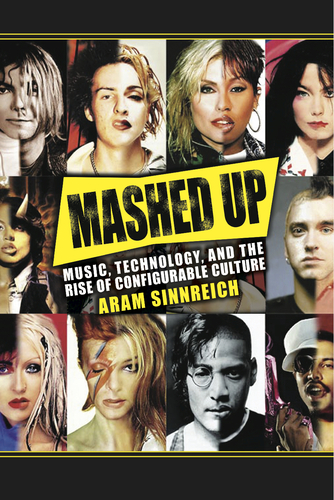 my book Mashed Up: Music, Technology, and the Rise of Configurable Culture (University of Massachusetts Press, 2010) don’t really view him as one of their own. This isn’t simply because he exceeds the standard, 2-song “A plus B” technique that serves as a basic template for the form; after all, Osymyso was mashing together hundreds of songs at a time back in the early 2000s, and he’s downright canonical. Rather, it’s because Girl Talk is more improvisatory, and less formalistic, than most other mashers.
Of course, improvisation has been a central element of DJing at least since Kool Herc first started beat juggling between two decks. And some contemporary mashup DJs, like Z-Trip and TradeMark G, are rooted in live, on-stage improvisation. But these are the exceptions, not the rule. If sample-based music describes a spectrum between what we traditionally think of as performance and composition, the vast bulk of mashup artists tend to see themselves on the composition side of the fence. They assemble the mashup in the studio, then play it “as is” in the club, just as they would play any other record. As DJ Earworm told me, “a good mashup artist is a good composer. Because, you know, you’re moving these parts around and giving it new form.” While Girl Talk certainly lives up to this description on albums such as “All Day,” his live, improvisatory performances are something else altogether.
Mashup vs. Cut-up
An interesting point DiCola raises is the prevalence of what he calls the “name-that-tune” critique of the mashup aesthetic, the claim that they “have no intertextuality or deeper meaning.” Not only is this claim unjustified, it completely misses the point. The problem is, these critics think of mashups as simply another example of paper-thin postmodernism. This couldn’t be further from the truth; in fact, you could call mashups post-postmodern.
To illustrate my point, let’s take a look at an earlier art form that looks a lot like mashup at first glance: the cut-up. Cut-ups were a kind of literary collage popular among avant-garde writers like William Burroughs and Brion Gysin in the mid-20th century. As the technique’s name suggests, writers would cut existing, finished texts into pieces, and then tape them back together in random fashion, thus generating surprising and provocative new juxtapositions and grammatical logics. The cut-up was the very essence of postmodernism: it aimed to disrupt the “master narrative” of linear thought and force the reader to confront its limits head-on. In other words, it was a reaction to, and an inoculation against, high modernism.
Mashups use similar techniques to achieve the opposite effect. We no longer live in a modern world, in which all information is forced to hew to a single, objectified model of reality. Postmodernism has not only successfully exposed and disrupted the hidden power dynamics of the master narrative, but produced a cultural environment in which an endless parade of symbols float unmoored in a sea of chaos and contradiction. The role of the mashup is to restore some semblance of order to this maelstrom, by stitching together the disparate symbols with a genealogical thread. Every sample in a mashup means something, and brings its entire cultural history trailing behind it. Thus, while the cut-up is named for its ability to sever signifier from signified, the mashup is named for its power to suture them back together (albeit in different combinations and permutations). This is the point that critics miss: the mashup isn’t an expression of postmodern nihilism, but an argument against it.
Whither Originality?
The final point of DiCola’s I’ll touch upon is the concept of originality, as it applies to a cultural form that consists entirely of “borrowed” work. As he observes, the question of whether a given mashup is original or not is almost moot when it comes to questions of transformativity and “fair use”; the very fact that people argue about it demonstrates that creative forces are at work.
Yet it’s also interesting to look at how the originality arguments play out. I devote an entire chapter of Mashed Up to exploring the various techniques DJs employ to differentiate between innovative and derivative work, as well as the ways in which they’ve moved beyond the distinction altogether. Commonly cited markers of originality in mashups include: how well a DJ selects his source materials; how the samples are arranged, both spatially and temporally; how the samples are transformed using digital processing techniques; and even textual interplay between the lyrics of the songs he’s chosen. In combination, these factors can describe a given DJ’s “signature” style, as distinctive as a saxophonist’s phrasing and tone, or a rapper’s rhyme and flow.
One could spend countless hours dissecting the mashup aesthetic and debating its legalities, and having done so myself, I can attest that it’s time well spent. Ultimately, however, the form’s significance outstrips even these weighty dimensions of analysis. What makes the mashup most interesting to me isn’t the question of what an individual work means, or whether it’s legitimate in the eyes of the copyright office, but rather how it’s produced (and reproduced) in the first place.
Our mode of musical production is always a harbinger of social changes to come, and the mashup has a lot to say about what lies in store for us as a globally connected, digital society. By blurring the lines between artist and audience, original and copy, the mashup fundamentally rejects the atomistic assumptions that undergird our legal, economic and political institutions. The millions of people who participate in the process of re-imagining a song comprise a kind of “collective subjectivity” as cohesive and amorphous as a storm cloud, and like a cloud, their actions only have meaning in aggregate.
This is why analyses that focus on a DJ like Girl Talk as though he’s a radical innovator or lone copyright renegade always tend to leave me cold. As Girl Talk himself would be the first to admit, his work neither begins or ends on his laptop; at best, he’s a highly entertaining conduit for an infinitely larger and more complex process. Or, to use his words (as I did in the epigraph to Mashed Up), “This shit is not about me, it’s about all of us, ’cause we’re the same motherfuckin’ person.”


Share this:

“Sensing Voice”*
*a longer version of this piece is forthcoming in Senses & Society 6 (2), July 2011.

Bathroom Recital 2007
In 2007, I received an invitation to a recital that would take place in my bathroom; the artist offered to present an underwater concert in my tub. My reaction? “Crazy,” I thought. “Why go to the trouble of singing in an element so far from ideal?” After a year of mulling it over, though, I finally realized that what I had dismissed for its hopeless impracticality might—precisely because it was impractical—offer fresh perspectives on singing and listening by resituating these familiar activities in vastly unfamiliar territory.
The underwater singing practiced by contemporary American soprano and performance artist Juliana Snapper challenges audiences to confront their unexamined assumptions about the relationships between the voice and materiality, the sensed and the singular. How do the physical and sensory properties of singers’ and listeners’ bodies affect and participate in the music we create and the sounds we hear? How do the physical space within and the matter through which sound travels shape what we hear? And how do the relations between these aspects affect what it feels like to sing, and what it is possible to hear?

The rooftop bar at the Standard Hotel, downtown LA
During the spring of 2010, while I was working on an article about Snapper’s project and teaching a seminar on the multi-sensory aspects of music, Snapper offered to mount a participatory version of her project for my class. She took us through some exercises in a large swimming pool in downtown Los Angeles. The first exercise paired us up; one person gently held the other under water, while the person underwater made sounds. I was paired with Natalia, who shouted––but with my ears above the water I couldn’t hear her voice.

The author with Natalia Bieletto (under water). Aquaopera #4/Los Angeles, 28 April 2010.
So we tried another strategy: one person made sounds underwater while the rest of us put our heads and ears in – and then we could hear her. We found that the deeper into the water we descended, the more difficult it was to sing high notes. Fast tempi were also difficult to maintain; Natalia’s attempt resulted in muddled sounds.
We found that the deeper into the water we descended, the more difficult it was to sing high notes. Fast tempi were also difficult to maintain; Natalia’s attempt resulted in muddled sounds. Surprisingly, while sung sounds didn’t seem very loud, small internal throat sounds were incredibly powerful. These exercises demonstrate how much the medium through which sound waves flow affects their characteristics: their speed, direction and so on. It also shows that in order to register sound, the listening body (including the head) must be immersed in the material through which the sound flows.

The next exercise linked the six of us together
The next exercise linked the six of us together by the arms; three participants stood in a line, with their backs against three others. We sang in a drone-like manner, playing with our voices above the water, at its surface, and then slowly sinking into it. We felt the sonic vibrations largely through direct contact with each other’s bodies. Of course sound also passed through the air and water, but because the most immediate path was from one body to another, this was the sensation that overpowered us.
At the end of the day, gathered around the poolside fireplace, we discussed how different singing felt in a liquid environment. We’d discovered that aural experience is predicated on physical contact with sound waves through shared media, in this case water and air, flesh and bone. We noted that the shared medium makes a great differenceto how we experience the voice, and that the sound we ultimately hear depends partly on what is sung, and partly on the medium through which it passes (and how our bodies interact with that medium). In other words, in Snapper’s workshop we discovered that sound is a multi-sensory experience, tactile as well as aural. It also became clear that sound and music involve much more than traditional theories and notation can capture. (For a more thorough discussion of the differences between singing and sound underwater and in air, please see my forthcoming article.)
-

- At the Standard poolside fireplace.
-

- Hyunjong Lee and Zachary Wallmark.
-

- Sam Baltimore and Alexandra Apolloni.
-

- Jill Rogers.
I would like to underscore here that the character of a given sound source is not stable. Instead it is dependent on specific material conditions, and on particular relationships between the elements involved. A sound signal will move with a given speed depending on the material––air, water, metal, glass, etc.––through which it is propelled. As humans register the sound it will move more or less directly through the ear drum or bones (and then transfer to the inner ear) depending on the relationship between the material through which it is propelled and the materiality of the ear. The part of the body that registers sound also plays a role in its apparent directionality.

Juliana Snapper.
For example, our ability to hear in “stereo”––two distinct signals, left and right––is the result of sound entering our bodies from two directions (two ears). Because we most frequently deal with sound as it is propelled through air, we take this as a given and adjust our musical and acoustic research (and thus our concert halls and (performance spaces accordingly).
By highlighting the material aspects of sound and their reception, Snapper reminds us that what we hear depends as much on our materiality, physicality, and cultural and social histories as it does on so-called objective measurements (decibel level, soundwave count, or score), which are themselves mere images. Our experience of sound is a triangulation of events in which physical impulses (sonic vibrations), our bodies’ encultured capacity to receive these vibrations, and how we have been taught to understand them are at constant play, and subject to negotiation. In the experience of sound, what becomes clear is not a stable explanation of what sound or music is. Instead we are led to understand that each such account is a composite manifestation of our perception of sound at a given moment in time and place.
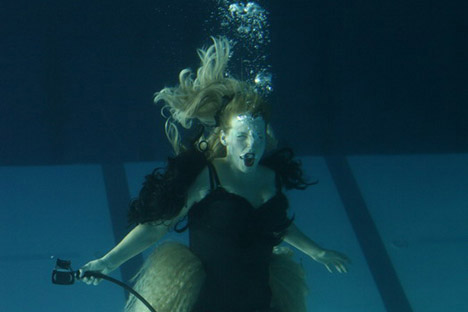
Juliana Snapper
Share this:


Current Top Posts





April 2021

January 2020

November 2019

October 2019

August 2019

April 2014

November 2017

March 2015

December 2017

October 2015
 Sounding Out!
Recent Comments