
Sounding Out! Podcast Episode #2: Building Intimate Performance Venues on the Internet
 The podcast is (or, can be) an intimate performance venue on the internet because it allows you to whisper into the ears of your fans. It allows you to grow close to communities of listeners. And podcasts also do one last thing, to be revealed at the end of this piece, after we’ve seen how far I can take you. For now, I will quote podcasters I admire to help explain these ideas in their own words. I also quote these podcasters in an audio format. I have recorded this essay as an episode of the Sounding Out! podcast. You can listen right here, and I suggest you do. Go ahead, press play:
The podcast is what’s happening if you’re listening to these words. Are you? Because remember: my central claim is that a podcast is an intimate performance venue on the internet. Keep that in mind.
I am a podcaster, musician, and assistant professor of Economics. I have released six episodes of my own podcast, The Lion in Tweed.

Me. (Photo by Hadassah Head)

The Lion in Tweed. (Drawing by Winston Rowntree)
My podcast is primarily a narrative, with music and sound effects interwoven. It is about a character, The Lion in Tweed, and his experiences as a musician and professor of economics. He is also a lion. The second half of each podcast episode is a references section where I cite my sources and leave the fictional Tweedoverse canon to discuss real things.
I am not the first podcaster to remark on the ability of podcasts to traffic in intimacy. Chris Hardwick, of the Nerdist podcast, has claimed that, due to their intimacy, podcasts are the best medium going. He stressed: “you’re talking directly into the ears of your listeners.” There is no doubt that Hardwick was referring to those white iPod earbuds, which are a primary method of listening to podcasts. Part of a podcast’s intimacy comes from the closeness of the earbud to the membrane in the ear. Listening to earbuds evokes the intimate, and physical, closeness of someone whispering in your ear. Hardwick’s style of podcast is also intimate: vocal storytelling, mostly three comedians talking about the funniest things that have happened recently. The fact that it is not visual accentuates the intimacy of “whispering in your ears.” Although I would like to argue that the visual always reduces a sense of intimacy, I may simply prefer the sonic over the visual. Nevertheless, I believe that, the intimacy to which Hardwick is refers, is tied to the fact it is only sonic.

Chris Hardwick.

The Nerdist Podcast.
COMMUNITY
Podcasts as performance have a strange kind of liveness, episode-to-episode interactivity. By this I mean that they are not immediate; they lack the urgency of a theater-goer’s applause, or a heckler’s retort. Though not immediate, they are still dynamic, with their episodic pacing. And, unlike heckling, almost completely positive. This sense of long-term interactivity provides a foundation for understanding a second way that podcasts are intimate: they can cultivate intimate and interconnected communities of listeners.
They [Stop Podcasting Yourself, hosted by Graham Clark and Dave Shumka] have a really good community of people, community interaction: people send them stuff, sometimes people send them stuff unprompted. And they have a phone number [for people to call in messages that they play].
To illustrate how interconnected this community is, let me describe to you where this quote came from. It is a clip of Dan Sai, recorded by Davin Pavlas at MaxFunCon (the annual convention of the MaximumFun.org podcast label). I know Davin because of our mutual love of MaxFun podcasts. When I brought The Lion in Tweed into the world, I advertised it on podcasts in the MaxFun network. When Davin heard the description, he began to listen to my podcast. Now we are collaborating on an episode of The Lion in Tweed, which will quote these very words when it comes out two weeks from now. Similarly, UK resident Will Owens and I exchanged tweets after he started listening to my podcast and I found out he reviewed various narrative media on his website, and now he has written a review of my podcast, which we both promote. Ours is a community in which a feeling of value comes with a sense of connectedness. The podcasts give a shared culture.
SO IN PODCASTS, WE FIND A MEDIUM that is both sonic and vocal. They provide a platform for intimate and interconnected communities, which are rooted in an alternative kind of interactivity (long-term liveness), to grow. The whisper-in-the-ear quality of podcasts, as well as the feeling of community, all but completely explain why podcasts are so intimate.
AUTHENTICITY
Podcasts may be hip and modern, but they are not ironic. Podcasts represent a distillation of what the podcasters genuinely love, and in that they find their authenticity. According to Paul F. Tompkins, a comedian and podcaster:
It’s very freeing to be able to say: “Here are all the things that I like; I’m going to put them all into this [podcast].”
That was at minute 50:32 of Nerdist podcast ep 33 hosted by Chris Hardwick, with Paul F. Tompkins as a guest.

Paul F. Tompkins
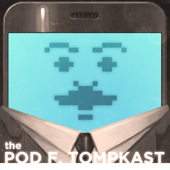
The Pod F. Tompkast
Here is Jesse Thorn, mastermind behind the aforementioned MaximumFun.org, in an interview by Neiman Labs:
I can mostly just do things that I am interested in, and so I don’t have to do something that is false to me, and I can let my guiding light be, “Do I like this and think it’s worth doing?”

Jesse Thorn.

The Sound of Young America.
And we see that authenticity completes the puzzle: podcasts are intimate because they feel so real. In podcasts it feels like you are listening to a real person because you are listening to the things that a real person loves…and interacting with real people is much more intimate than feeling like you are interacting with a marketing department (as you may when listening to a CD, or radio-show).
This is how I construct intimate performance venues: Audio-only, voice/storytelling focused, in which I try to build and exploit supportive, interconnected communities of fans with a shared culture (the podcasts). And, in doing so, I try to remain true to what I truly love. This authenticity, I believe, deepens the intimacy.
.
In the background of this podcast episode, Andreas plays an instrumental cover of “Bound for Hell” by Love and Rockets.
Share this:

What Are You Listening to When youarelistening.to/losangeles ?
 Earlier last week I came across this post by GOOD regarding a new site called youarelisteningtolosangeles.com. Eric Eberhardt’s (http://twitter.com/url2la) web creation uses an LAPD radio feed and plays Creative Commons-licensed music in the background. (According to Olsen Bright at NBC Los Angeles, the URL was registered only last week, but since it went live it has gone viral. As of this post, it has links for New York, Chicago, San Francisco, and Montreal). The site that has gotten more news coverage has been, by far, the Los Angeles site. Nicola Twilley from GOOD calls it “hypnotic, beautiful, and utterly compelling.” When I first tuned in, I couldn’t stop listening. It is certainly haunting and leaves behind a feeling of uncanniness: the disembodied voices of police dispatchers far away mesh with the soothing sounds of ambiance music.
What caught my eye about the article was Twilley’s description of what it was like to listen to LAPD’s radiofeed:
“To listen to it is to be plugged into the pulse of the city; lost in fragments of someone else’s story. Urgency alternates with frustration and low-level routine; some incidents are reported while others are resolved; and jaywalking tickets are issued in the same breath as lives are lost.”
I like her idea that the site allows you to tune into “the pulse of the city.” The feed is a sonic representation of what is happening on LA’s streets. I had the feeling that I was listening to some subversive channel of LA life, narrated by a police dispatcher. However, there are two things that come to mind: a) the sounds of urban life are being filtered through the police department, and b) what are the sounds we hear on the feed telling us about the sonic dimensions of cities?
This online radio station of sorts mashes up city sounds with background music, but once you pause the music what we get are conversations between police officers. The result is that those sounds (voices, codes, numbers, addresses) filter the soundtrack of the city. When we click on youarelisteningtolos angeles.com we are actually listening to the keepers of peace and order on the city streets. The city has already been distilled for us through a radio dispatcher and officers.
The sounds are haunting. Interestingly, what attracts some listeners is the fact that they can eavesdrop on the police feeds, like we’re tuning into what our neighbors are doing. Others point out how soothing the sounds meshed with the dispatcher feed can be. However, the site serves as an example of how city sounds are filtered to us. We don’t hear the actual people who the dispatchers talk about, but the stories of their actions. In that sense, what we hear about them is really a narrative of order, chaos, authority, and traffic violations. Who is stepping outside of the lines?
But…can we ever really listen to The City? This is why audio projects such as soundwalks are important, because they make that aural experience multisonoral. The same way we must reject single stories (like Chimamanda Ngozi Adichie pointed out in her TED talk) we must also bring to light different soundtracks of the city around us, lest the radio feed of a police dispatcher become the one that stands out.
This brings me to my second concern: what are we actually listening to? What was initially problematic for me was that we don’t actually hear urban sounds. We hear voices talking about citizen activity on the streets. Once you mute the music, what you get are voices narrating what is happening on the street level. But then I realized that I was be limiting what sounds are classified as city sounds. In that sense, youarelistening.to is opening up what it means to listen to cities. The citizens also make sounds; their voices are part of the soundscape of the city.
I’d love to hear from our readers from these different cities, see what their reaction to listening to the transmission is.
By the way: can we get a youarelistening.to/kansascity?
Bonus tracks:
Here is Soul Coughing’s “Screenwriter’s Blues,” whose line “You are listening to Los Angeles” provided inspiration for the title. (via laist.com)


Share this:


Current Top Posts





April 2021

January 2020

November 2019

October 2019

August 2019

April 2014

November 2017

March 2015

December 2017

October 2015
 Sounding Out!
Recent Comments