
Sounding Out! Podcast #12: Animal Transcriptions: Listening to the Lab of Ornithology
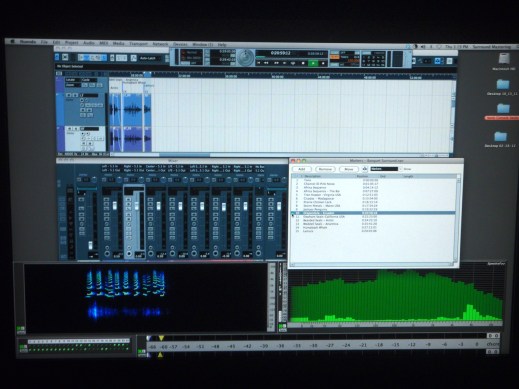
CLICK HERE TO DOWNLOAD: Animal Transcriptions: Listening to the Lab of Ornithology
SUBSCRIBE TO THE SERIES VIA ITUNES
This podcast culls material from seven hours of interviews about sound and animal life with scientists, engineers, programmers, archivists and other staff working in the Bioacoustics Research Program (BRP) and in the Macaulay Library of Natural Sounds (LNS) at the Cornell Lab of Ornithology. The interviews were conducted as part of a research project situated at the intersection between sound in poetry (prosody) and environmental sound (soundscape), specifically focused on animal vocalizations.
Poetry might help us to use, study, and deploy animal morphologies in ways that hope to better, rather than merely exploit, the human relation with such life forms, if not to improve the welfare of the species themselves. As Katy Payne, Mike Webster and others suggest, when we speak of animal “song,” we bring metaphors from the arts of poetry and music to complement our limited scientific understanding of the intricacies of animal communication.
At the same time, the process of capture, practiced by poets and recordists alike, heightens ethical choice in a time of accelerated species extinction: many of the techniques and resources developed at LNS and BRP are currently used for basic monitoring of conflict between animal life and human industry. This podcast explores both why and how the Macaulay LNS collects animal sounds (which some of the archivists refer to as “specimens”), and how such a collection is conceptualized, deployed and situated within a matrix of concerns (philosophical, aesthetic, ethical, and political) about human relations to other-than-human life forms.
This article continues the work on “rendering” I began here at Sounding Out! last spring. My interest in the Macaulay LNS, directed by Mike Webster and Greg Budney, introduced me to the vital, cutting-edge, and often mind-blowing work being done in BRP, under the leadership of Chris Clark as well as of a pioneer in animal communication and conservation such as Katy Payne, who founded the Elephant Listening Project and has also contributed to the podcast. Although I did not get Chris’s voice on record, his groundbreaking research, activism and leadership on behalf of a “singing planet” nevertheless loom large behind much of the work featured here. I was fortunate to be able to speak with Tim Gallagher, of Ivory-billed Woodpecker fame, in the Lab of Ornithology. The podcast also explores the crucial work of audio engineers Bill McQuay and Karl Fitzke, and of software analysts and research specialists LIz Rowland, Ann Warde, Laura Strickland, and Ashakur Rahaman, amongst others.
The staff at the Lab of Ornithology generously granted me a tour of their archive, showed me their gear, explained their sound visualization software, and sat me down in the surround sound listening room, where I heard some unforgettable recordings, which opened up my investigation to acoustic dimensions I had never before suspected. We sounded these dimensions in wide-ranging conversations about archiving, acoustics, field work, gear, communication, looking at sound, music, evolution, and conservation. This podcast offers, in a condensed form, some of the highlights of those conversations and experiences.
Thanks are due to the staff whose voices the podcast features: Mike Webster, Greg Budney, Bill McQuay, Liz Rowland, Alexa Hilmer, Ann Warde, Mary Winston, Tim Gallagher, Ashakur Rahaman, Katy Payne, Laura Strickland, and Karl Fitzke. Thanks are equally due staff who consented to be interviewed or otherwise helped out but whose voices didn’t make it onto the podcast: Chris Clarke, Christianne McMillan White, George Dillmann, Connie Bruce, Tammy Bishop. Thanks to Aaron Trammell for crucial editorial and technical help. Thanks finally to the Cornell Society for Humanities for the 2011-2012 research fellowship and the scholarly community that made this research possible.
Animal Transcriptions: Listening to the Lab of Ornithology – Contents and Credits
Intro
Mike Webster
Winter Wren, at normal and at one-half speed (Greg Budney, from The Diversity of Animal Sounds, Macaulay Library of Natural Sounds sampler CD)
Sound: Greg Budney and Musician Wren (Cyphorhinus arada, LNS 8897, Peter Paul Kellogg)
Archive 2:40
Mike Webster
Greg Budney
Bill McQuay
Sound: Ashakur Rahaman and Blue Whale (Balaenoptera musculus, played back at eight times normal speed, LNS 128263, Paul Thompson)
Acoustics 5:45
Liz Rowland
Bill McQuay, Greg Budney: Africa Sequence (The Bai)
Alexa Hilmer
Ann Warde
Sound: Greg Budney and Townsend’s Solitaire (Myadestes townsendi, LNS 50192, Geoffrey Keller) and Brown-backed Solitaire (Myadestis occidentals, LNS 136544, Michael Andersen)
Field 11:00
Bill McQuay
Greg Budney
Mary Winston
Tim Gallagher
Liz Rowland
Sound: Ann Warde and Beluga Whale (Delphinapterus leucas, LNS 126105, Donald Ljungblad)
Gear 14:30
Ann Warde
Ashakur Rahaman
Greg Budney: Beluga multi-array recording
Liz Rowland
Sound: Katy Payne (Humpback Whale)
Communication 20:05
Greg Budney: Madagascar lemur family group
Bill McQuay
Ann Warde
Laura Strickland
Bill McQuay: Treehopper sequence (NPR Radio Expedition)
Katy Payne
Tim Gallagher
Sound: Mike Webster and Crested Oropendola (Psarocolius decumanus, LNS 12830, Ted Parker), Common Potoo (Nyctibius griseus, LNS 59964, Paul Schwartz)
Looking at Sound 27:25
Liz Rowland
Laura Strickland
Alexa Hilmer
Ashakur Rahaman
Katy Payne
Sound: Alexa Hilmer and Humpback Whale (Megaptera novaeangliae, LNS 110847, Paul Perkins)
Music 36:05
Bill McQuay
Ann Warde
Laura Strickland
Katy Payne
Karl Fitzke
Alexa Hilmer
Sound: Laura Strickland and Wood Thrush (Hylocichla mustelina, LNS 11316, Arthur Allen; LNS 125223, Michael Andersen)
Evolution 40:10
Greg Budney (Spot-breasted Oriole duet, LNS 164045, David Ross)
Mike Webster (Black-throated Blue Warbler, LNS 27208, Randolph Little)
Katy Payne (Humpback whale group singing, LNS 118147, William Steiner)
Sound: Alexa Hilmer, Katy Payne with Common Loon (Gavia mimer, LNS 107964, Steven Pantle)
Conservation 47:05
Greg Budney: Attwater’s Prairie Chicken lek
Ashakur Rahaman
Tim Gallagher
Liz Rowland
Sound: Karl Fitzke and European Starling (Sturnus vulgaris, recording by Greg McGrath)
Recordings used with permission of Macaulay Library, Cornell Lab of Ornithology.
Starling recording used with permission of Greg McGrath.
–
Jonathan Skinner founded and edits the journal ecopoetics, which features creative-critical intersections between writing and ecology. Skinner also writes ecocriticism on contemporary poetry and poetics: he has published essays on Charles Olson, Ronald Johnson, Lorine Niedecker, Mei-mei Berssenbrugge, Bernadette Mayer, Cecilia Vicuña, translations of French poetry and garden theory, essays on bird song from the perspective of ethnopoetics, and essays on horizontal concepts such as the Third Landscape and on Documentary Poetry. Currently, he is writing a book of investigative poems on the urban landscapes of Frederick Law Olmsted, and a book on Animal Transcriptions in contemporary poetry. He teaches poetry and poetics in the Department of English and Comparative Literature at the University of Warwick.
—
 REWIND! . . .If you liked this post, you may also dig:
Listening to Disaster: Our Relationship to Sound and Danger— Maile Colbert
Animal Renderings: The Library of Natural Sounds— Jonathan Skinner
Six Years in Nodar: Sound Art in a Rural Context— Rui Costa
Share this:

Six Years in Nodar: Sound Art in a Rural Context
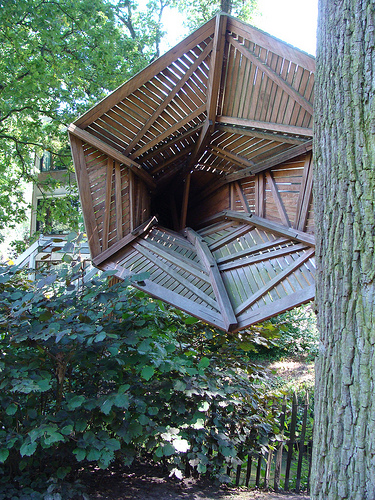
My family comes from a tiny village called Nodar in northern Portugal, part of the European Union-funded project “Tramontana” which focuses on preserving the immaterial heritage of mountain regions of southern Europe. In Nodar, centuries of isolation and self-sufficiency have created a unique blend of cultural expressions, ways of living, and inhabited landscapes. Like much of the Portuguese countryside, Nodar is undergoing a process of abandonment, which leaves rural communities with a weakened sense of identity. The agrarian paradigm, which has been central to the history and social fabric of rural communities, is arriving to an almost hopeless vanishing point, and the guardians of that memory are also disappearing. With this as formative part of my background, and considering my artistic interest in community-oriented projects, I felt almost a duty to direct much of my work to Nodar, a place that means so much to me and where I thought I could make a difference. In 2004 my brother Luis and I founded Binaural/Nodar, an arts collective based in the village and operating in the surrounding region of the Gralheira mountain range.
Since March 2006, the Nodar Rural Art Lab has invited both local and international artists who work in the areas of sound, video, and intermedia arts to address issues such as collective memory, identity, gender, age, life, death, geography, topography, music, sound heritage, landscape, vegetation, consumption and leisure dynamics, myths, traditions, crafts, agriculture, and shepherding. During their stay, the resident artists give public presentations in the region and are encouraged to establish interactions with the place and its inhabitants, geographic spaces, and social memory. Many of the artworks held in Nodar cross different artistic practices, often blending borders.
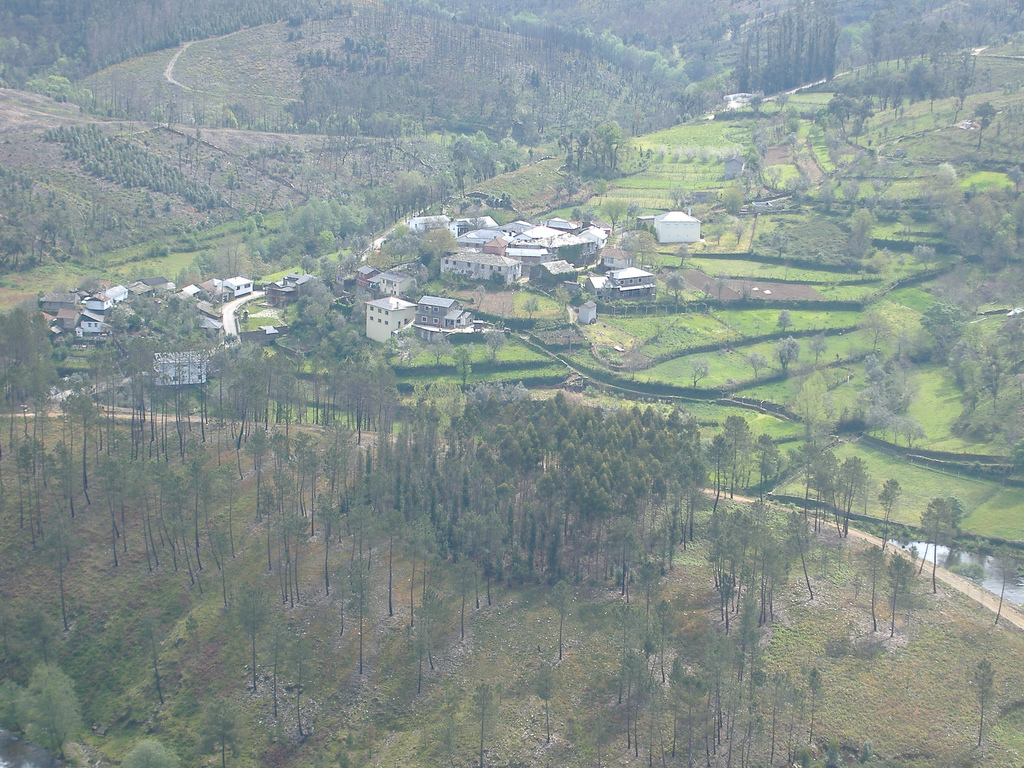
Nodar, Portugal. Photo by Carina Martins. All rights reserved by Binaural/Nodar
The decision to initiate an artist residency center in Nodar was motivated by my desire to deepen the investigation of exploratory artistic practices in close interaction with a specific rural context and its social and cultural possibilities. Throughout the year, the Nodar Rural Art Lab programs various residency modules in order to stimulate a collaborative environment between artists from different artistic fields and geographic origins. During the course of the residencies, several parallel activities are organized, such as conferences, lectures and educational activities, namely youth-oriented. At the end of each residency module, there is a public presentation organized in the village in which the art projects are presented and discussed by the artists and the organization.
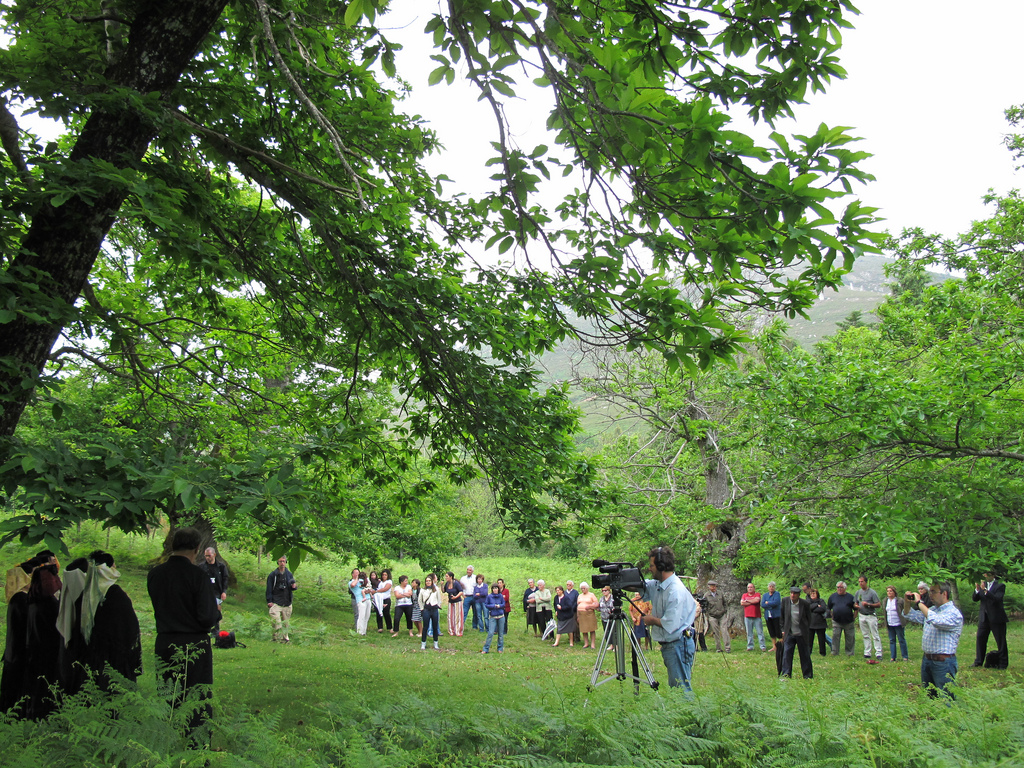
Public presentation of an art project in Nodar. Photo by Carina Martins. All rights reserved by Binaural/Nodar
The sonic dimension has a critical role in the model we have developed in Nodar, especially because it operates as a powerful metaphor for the intimate and personal discovery of a place. Artists have documented the area’s soundscapes and oral heritage in Nodar since 2006. There are three central lines of artistic interaction that converge here: Sound, Space and People:
SOUND (Interaction with the acoustic environment): Some sound artists, who work with the acoustic dimension in an experimental way, are part of the team that runs the Nodar Rural Art Lab. The Lab has always been active in the international theoretical and artistic domains of the so-called soundscapes, and it has hosted some of the most respected sound artists of today, who–using idiosyncratic techniques for sound capturing, editing and manipulation–have created works based on particular aspects of the local acoustic context.
One of our approaches is what we call “sound interventions,” where we use field recordings and performance in order to “activate the space” and establish a dialogical approach between what is activated and what just “is,” which can incorporate body, gesture, sound, object, space and voice in this process. An example of this approach was the “Revenant : Paiva” project, conceived in 2009 by Patrick McGinley, Marjia-Liisa Plats, Luís Costa and Tiago Carvalho, in which a series of performative actions were staged in a section of the river Paiva that crosses Nodar. Using materials found in-situ as instruments, in addition to the artists’ own voices, to generate sounds that interacted with the acoustic environment itself, all activity was purely acoustic, with no amplification. The resulting work was presented live with the artists and audience spread out across the space with no preferential “point of listening”, which created subtle overlaps between the artists’ work and the space.
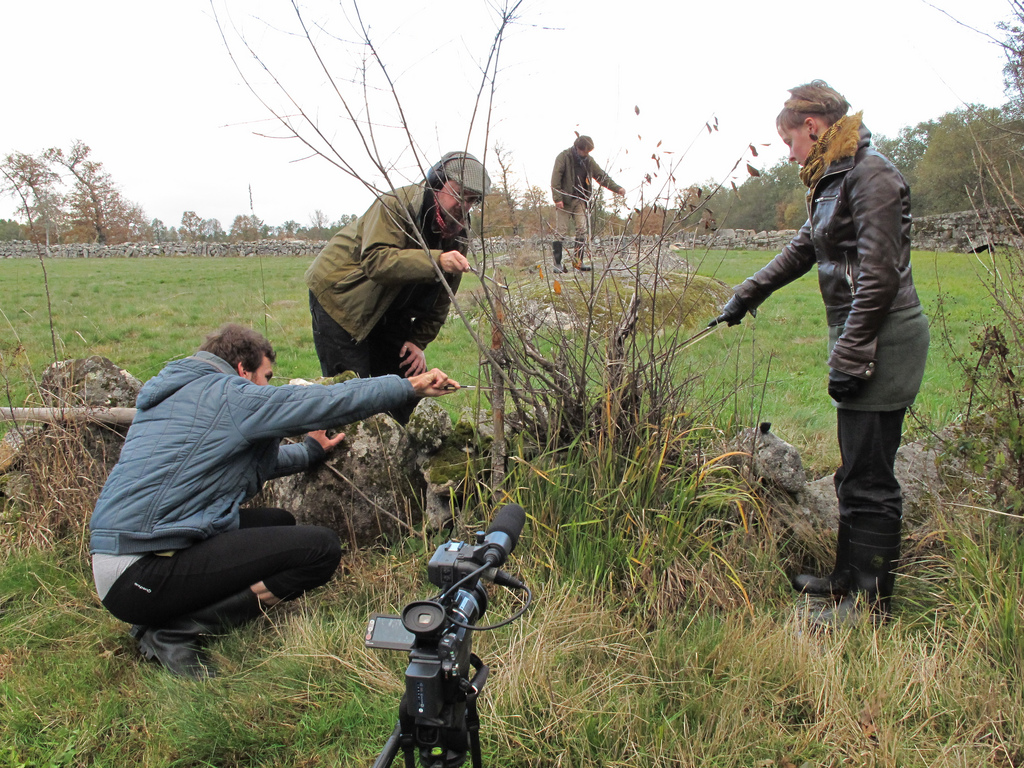
Working on “Revenant : Paiva.” Photo by Carina Martins. All rights reserved by Binaural/Nodar
SPACE: Interaction with the geographic space. The landscape surrounding Nodar is beautiful and diverse; there are mountains, rivers, caves, slate stone architecture, terraced fields, and so much more. Moreover, we are witnessing an irreversible process of transformation of rural space. These two elements form fertile ground for the creation of works within nature, which either capture the dreamlike and timeless aspects of the landscape or question possible future uses for the same landscape.
Of particular interest to us is the use of geography as a means for projecting sound in which specific variables of the territory, such as topography and meteorology, intersect with instrumental or subjective aspects of artistic creation, namely the position occupied in the space and the choice of sound recording and reproduction tools and techniques. A good example of this approach was Lisa Premke’s project “Aural Lookout,” developed in 2012, in which she built a canvas lookout on the top of a hill that allowed the visitors to be sheltered from the environment while listening to the nature sounds acoustically amplified, as if being inside a large drum.
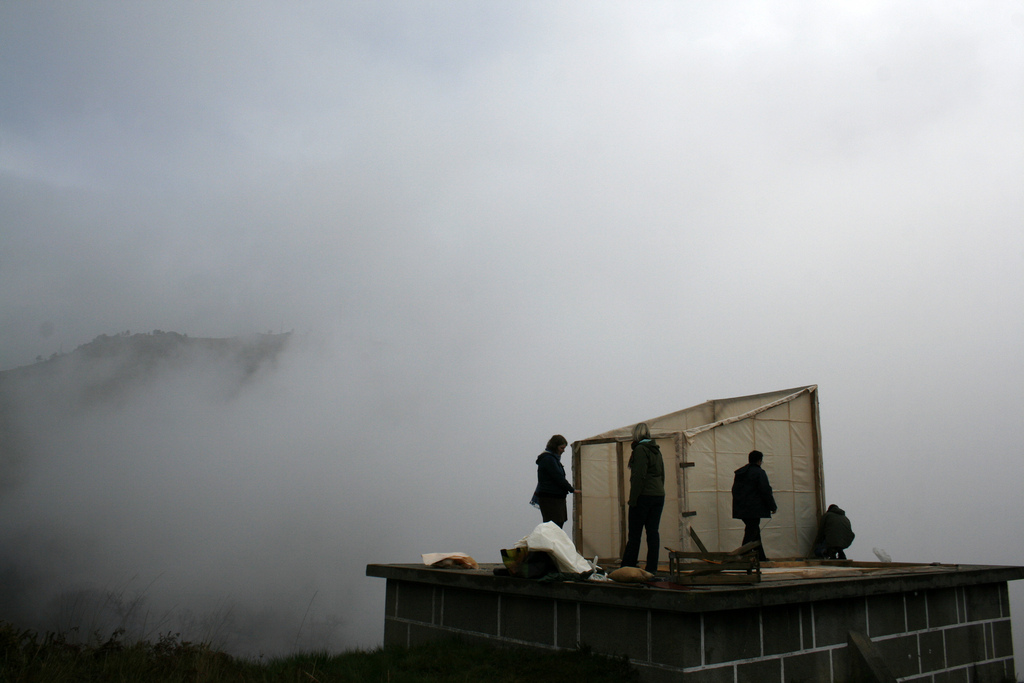
Working on “Aural Lookout.” Photo by Carina Martins. All rights reserved by Binaural/Nodar
PEOPLE: Interaction with local inhabitants. Since the beginning of our activities, we have been encouraging artists to interact, question and to some extent “provoke” local populations. As a result of these communication processes, various art projects have been developed reflecting and expressing aspects of the region’s collective memory and new habits and experiences.
Working on the subject of the anthropological voice may involve direct conversation with the local communities based on topics proposed by the artists and related to everyday life and local memory, as well as it may focus on linguistic aspects such as accents, musicality of the voice, etc. Maile Colbert’s “Over the Eyes,” created in 2007, was a very successful example of this sort of “conversational” project, where she organized a knitting circle with the village women, recorded the conversations with them, their songs and stories and incorporated them into the sound design of a multimedia installation, along with field recordings of the area, and text on physiological, biological, and psychological aspects to memory creation and destruction in humans. The projection screen was composed of raw wool and the knitted cloths made during the circle, which created an interesting dialogue with the immaterial nature of the audiovisual element of the piece.
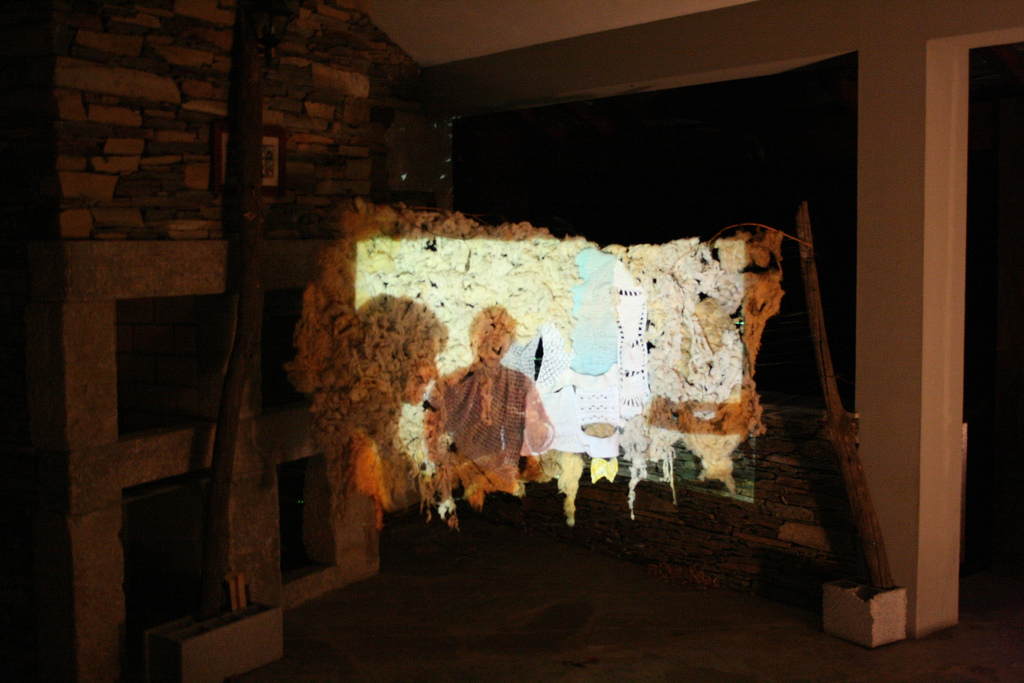
Maile Colbert’s “Over the Eyes.” Photo by Carina Martins. All rights reserved by Binaural/Nodar
We have always emphasized a type of sound art that enhances the context within which a specific sound work is produced, escaping a purely acoustic, or “sound-in-itself” approach. We believe that this emphasis on subjectivity and context is necessary, because sound–and the practice of field recording in particular—sometimes carries a burden of “objectivity” because it stems from the documentation of reality. The subjectivity inherent to the sound recollection –for instance, the choice of the point of listening and of the technological means of sound capturing–is often not sufficient to alleviate this burden.
When we host sound artists in Nodar, we always try to convey the idea that the region’s landscape is fundamentally an “inhabited landscape.” Trying to avoid the human presence in order to get “wilder and more natural” recordings is purely illusory. The landscape is inhabited in several simultaneous ways: by the marks of historical occupation of the territory, by the existence of vital spaces for each inhabitant–often lying far beyond the boundaries of the villages–by the very presence of the artists and by the audiences of the art works’ final presentations.
In summary, there are several methodological, instrumental and aesthetic approaches that Binaural/Nodar is working to further in the area of sound art. These approaches are anything but sealed; intersections, complementarities, unions and differences exist, which make each work of art unique.
—
Featured Image: “Oor van Noach” by Flickr user ines saraiva under Creative Commons 2.0 License.
—
Rui Costa is a sound artist from Lisbon, Portugal. He is a founding member and artistic director of Binaural/Nodar, an arts organization founded in 2004 and dedicated to the promotion of context-specific and participatory art projects in rural communities of the Gralheira mountain range, northern Portugal. Rui has been performing and exhibiting his work since 1998 in festivals, galleries and museums across Portugal, Spain, Italy and the United States and has been collaborating regularly with the Italian vocal performer Manuela Barile and the American intermedia artist Maile Colbert. Rui Costa is also a regular speaker in conferences and gives workshops dedicated to sound art. For more from Binaural/Nodar, please check out the organization’s soundcloud, vimeo, and flickr.
Share this:


Current Top Posts





April 2021

January 2020

November 2019

October 2019

August 2019

April 2014

November 2017

March 2015

December 2017

October 2015
 Sounding Out!
Recent Comments