
The Top Ten Sounding Out! Posts of 2017!
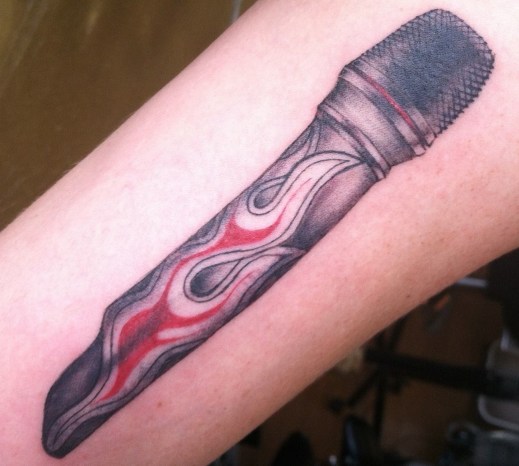
For your January reading pleasure, here are the Top Ten Posts of 2017 (according to views as of 12/28/17). Visit this brilliance today–and often!–and know more fire is coming in 2018!
***
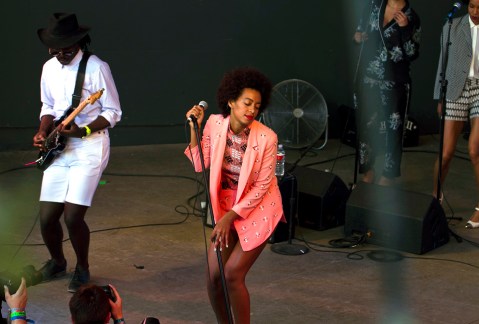
10). Unlearning Black Sound in Black Artistry: Examining the Quiet in Solange’s A Seat At the Table
Kimberly Williams
On May 18th, 2017, Solange Knowles took viewers on an expedition as she glided, danced and “agonized” in a “joyful praise break” on the floor of New York City’s Guggenheim museum. Drawing from the museum’s narrative of introspection and multi-sensory connection, Solange’s performance of “An Ode To. . .” prompted viewers to relearn and reorient the melodies of A Seat at the Table (2016). Solange’s performance in this setting hearkened listeners to new concepts and emotions in the record they didn’t catch before as they consumed it. This begs the question– what other sonic elements have we neglected to identify in A Seat at the Table? And why?
A Seat at the Table integrates topics like race, depression, and empowerment. Although the younger sister of powerhouse Beyoncé Knowles, Solange has managed to carve out her own legion of dedicated listeners from her infusion of Minnie Ripperton-esque vocals, hip-hop production and Gil Scott-Heron storytelling. Thematically, the album incorporates issues of Black Lives Matter and cultural self-preservation. However, Solange weaves personal elements such as vulnerability, futurism and paternity throughout the record as well, which buoy the album to praise but are hardly discussed in the album’s many reviews. Instead, writers and listeners have largely focused on resistance, anger and reactionary concepts. [. . .Click here to read more!]

9) The Listening Body in Death
Denise Gill
My voice melds with the sound of the water pouring from the hose, as I gently massage the waste, blood, and tears from the body of the deceased. In the act of washing the dead, water is simultaneously sound, spirit, and sensory experience for the deceased and for the washer herself.
Washing the deceased in groups of three, our individual solo voices punctuate space at our own paces and intensities. Our sound soothes and cleanses the deceased as much as our washing. The melodic recitations we provide when gently holding the deceased are the most important components of ritual cleansing before one is buried. We repeatedly sound “Forgiveness, o Teacher [e.g., God]” while exhaling and inhaling. Often we recite the Tekbir—which articulates God’s greatness—adding a melodic architecture to our textured calls for forgiveness. [. . .Click here to read more!]
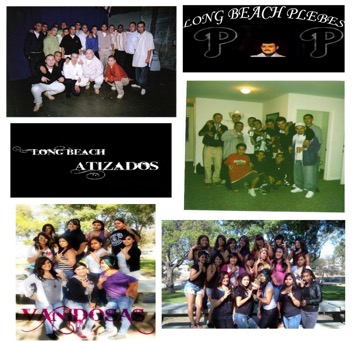
8). Unapologetic Paisa Chingona-ness: Listening to Fans’ Sonic Identities
Yessica Garcia Hernandez
I am a self-identified Paisa, a Paisa Girl from Playa Larga – my home – in the Eastside of Long Beach, California. The term paisa/s is slang for paisanos (homies) and it references someone who takes pride in listening, dancing, and attending nightclubs where Banda music, corridos, and norteños are performed. I am part of a generation that has been referenced as the Chalinillos; youth with an urban gangsta aesthetic that was influenced by Chalino Sanchez, The Riveras, Saul Viera, Adan Sanchez, Los Dos Grandes, Tigrillo Palma, Los Amos; later came the Alterado, Progressivo (DEL) and now people like El Fantasma, Lenin Ramirez, Alta Consigna, Grupo Codiciado, Jesus Mendoza, and Los Perdidos de Sinaloa.
As they say, “Fierro Parriente!” “Andamos al Millon,” “Pa que vayan y digan” and “Puro Pa Delante!”
In the mid 2000s, besides partying hard in the paisa nightclub music scene, I also partied with several paisa party crews in Long Beach. The songs, “Las Malandrinas,” “Parrandera,” “Rebelde, y Atrevida,” and “Mi Vida Loca” by Jenni Rivera were my anthems. These songs described the music scene we were a part of, and how we situated ourselves within a male-dominated subculture. “La Malandrinas” for instance says that we make a lot of noise, we drink, ask for corridos at clubs (a masculine tradition) and do not care about what people say about us. [. . .Click here for more!]

7). If La Llorona Was a Punk Rocker: Detonguing The Off-Key Caos and Screams of Alice Bag
Marlen Rios-Hernandez
Mexican cultural theorist Carlos Monsiváis looked at various aspects of Mexican youth subcultures in the early 80s and revealed how youth relied on “caos” or chaos as a way to attain pleasure within disruption, spontaneity, and noise (68-79). How does the scream emerge through caos as a instrument of resistance? Alongside scholars like Fred Moten, I argue that the scream ruptures caos and allows us to glimpse the pleasure of resistance. In Alice Bag’s scream we find this medley of pleasure, interruption, and spontaneity. Bag explains, “once the Bags hit the stage and the music started, ego checked out and id took over, channeling my libido, my inner rage, whatever… I was free to be myself with no holds barred. It was the ultimate freedom” (221). These elements epitomize what I consider a queer Chicana feminist exorcism of tonality.
As explained in Bag’s memoir, particular to punk, there is a general reliance on informal/community-based ear training where musicians teach each other (183). European traditions of musical analysis both negate the horizontal learning central to punk while also normalizing the historical colonial presence within the Borderlands. In order to reveal how Bag’s scream exorcises these Eurocentric traditions, I consider her performance of “Violence Girl” at the Whiskey (1978), footage of “Gluttony” from The Decline of Western Civilization Part 1 (1981), and a brief clip of The Bags’ “Survive” in What We Do is Secret (2007). Because of how the scream disrupts formal analysis, there is an urgency to understand how it works against the grain. [. . .Click here for more!]

Mala Muñoz and Diosa Femme aka Locatora Radio
This podcast focuses on the sonic landscapes of unwelcome which women and femmes of color step into when we walk down the street, take the bus, and navigate public and professional spaces. Women of color must navigate harassment, violent, and sexually abusive language and noise in public space. While walking to the market or bus, a man or many might yell at us, blow us an unwanted kiss, comment on our bodies, describe explicit sexual acts, or call us “bitch.” The way that women and femmes do or do not respond to such unwelcome language can result in retaliation and escalated violence. A type of harm reduction, women often wear headphones and listen to music while in public for the specific purpose of cancelling out the hostile sonic landscape into which we are walking. The way that women and femmes make use of technology and music as a tool of survival in hostile sonic landscapes is a form of femme tech as well as femme defense. What sort of psychological and emotional effect does constant and repeated exposure to abusive noise have on the minds and bodies of women of color? [. . .Click here to listen to the podcast!]

5) “Don’t Be Self-Conchas”: Listening to Mexican Styled Phonetics in Popular Culture*
Sara Hinojos and Inés Casillas
The Cinco de Mayo season showcases troubling instances of Spanish being mocked. Corporate ‘merica profits from Drinko de Mayo when menus advertise “el happy hour”; words like “fiesta” and “amigo” are overused; and Spanish hyperanglicized for laughs (one of the worst: “COM-PREN-DAY”). These acts of linguistic privilege, according to Jane Hill, elevate whiteness in public spaces. What is heard as playful for the dominant ear is simply an acoustic representation of the racist appropriation of mustaches, sombreros, and sarapes.
CinKO de Mayo(naise)
Fiesta like there’s no mañana
Said no Juan ever
That said, bilennials have struck back.
Last year, the Latino digital platform, we are mitú, published a list that resonated with its young, bicultural readers, those long accustomed to hearing Spanish Accented English (SAE) as part of their everyday speech: 17 Popular Brand Logos If They Looked The Way Your Parents Pronounce Them. This humorous phonetic play in the face of complaints about foreign accents being unintelligible or moral indignation over immigrants who do not learn Englishwith native-like proficiency re-directs our attention to digital, engaged Spanish-English bilingual communities. Like Chicana/o listening practices, these digital memes, gifs, and lists embrace how these accents invoke sounds of survival, solidarity and place making. [. . .Click here for more!]
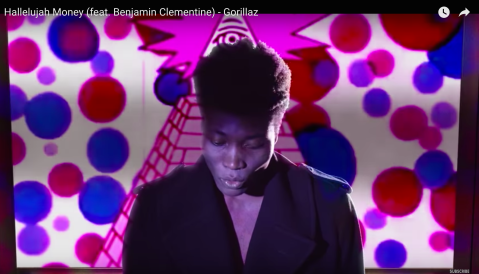
4) Singing The Resistance: January 2017’s Anti-Trump Music Videos
Holger Schulze
The US presidential campaigns in 2016 were escorted by a number of songs regarding the person who was recently inaugurated as president. These songs served mostly as a kind of dystopic, fear-indulging, angsty “comedy music”—to reference Frank Zappa’s 1971 “Dental Hygiene Dilemma”—with a perverted thrill, or functioned in the retro manner of balladesque storytelling in songform. Performance art band Pussy Riot’s rather blunt “Make America Great Again” falls in the former category, while many examples from the brave and radiating 30 Days, 30 Songs project fall in the latter, summoning indie-rock icons as Death Cab For Cutie, R.E.M., Bob Mould, EL VY, Jimmy Eat World and Franz Ferdinand.
Lesser known tracks like “Trump,” produced by German DJ and producer WestBam, used a collage with sampled footage organized on a 4/4-beat to uncover Trump’s lies and remodel them into articulations of the vocal intentions of this subject: “We need drugs. We need crime.” However, as horrific and uncanny as this video seems, this subject as head of government then figured only in an unthinkable, impossible world. [. . .Click here for more!]
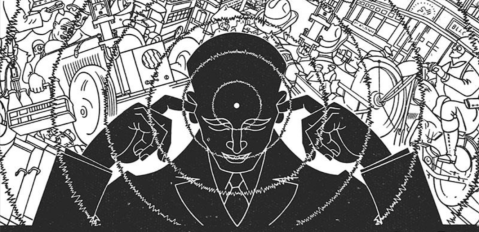
3) Beyond the Grandiose and the Seductive: Marie Thompson on Noise
David Menestres and Marie Thompson
Dr. Marie Thompson is currently a Lecturer at the Lincoln School of Film and Media, University of Lincoln. Her new book Beyond Unwanted Sound: Noise, Affect and Aesthetic Moralism has just been published by Bloomsbury. We’ve been following each other on Twitter for a while(@DrMarieThompsonand @AbstractTruth) and I have become very interested in her ideas on noise. I’m David Menestres, double bassist, writer, radio host, and leader of the Polyorchard ensemble (“a vital and wonderfully vexing force of the area’s sonic fringes”) currently living in the Piedmont region of North Carolina.
—
In her new book, Dr. Thompson covers a wide variety of ideas from Spinoza to Michel Serres’s cybernetic theory, acoustic ecology and the politics of silence to the transgressiveness of noise music, and many other concepts to show how we are affected by noise. Thompson is also the co-editor of Sound, Music, Affect: Theorizing Sonic Experience(Bloomsbury, 2013). Here is a conversation we had over email in February 2017 about Beyond Unwanted Sound.
David Menestres (DM): Why now? Why did you feel compelled to write this book? What do you hope this book will accomplish?
Marie Thompson (MT): I think my ‘academic’ interest in noise began as an undergraduate music student – I was interested in thinking ‘beyond’ distinctions of avant-gardism and popular culture and noise, as something that traverses such separations became an evermore appealing concept. So I’ve been circling some of these ideas for quite a while.
I felt compelled to write the book partly due to what I perceived as a gap between some of my ‘everyday’ experiences of noise and how noise was represented in discourse – particularly noise’s representation as an essentially negative phenomenon; or as a shocking, sublime, radical, overwhelming, transgressive force. [. . .Click here for more!]
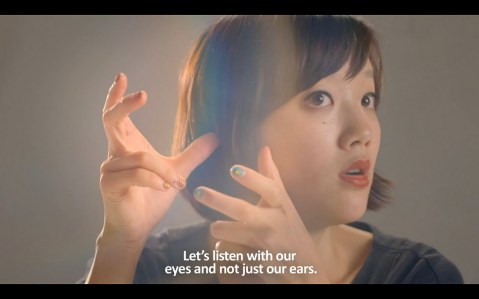
2)Re-orienting Sound Studies’ Aural Fixation: Christine Sun Kim’s “Subjective Loudness”
Sarah Mayberry Scott
A stage full of opera performers stands, silent, looking eager and exhilarated, matching their expressions to the word that appears on the iPad in front of them. As the word “excited” dissolves from the iPad screen, the next emotion, “sad” appears and the performers’ expressions shift from enthusiastic to solemn and downcast to visually represent the word on the screen. The “singers” are performing in Christine Sun Kim’s conceptual sound artistic performance entitled, Face Opera.
The singers do not use audible voices for their dramatic interpretation, as they would in a conventional opera, but rather use their faces to convey meaning and emotion keyed to the text that appears on the iPad in front of them. Challenging the traditional notions of dramatic interpretation, as well as the concepts of who is considered a singer and what it means to sing, this art performance is just one way Kim calls into question the nature of sound and our relationship to it.
Audible sound is, of course, essential to sound studies though sound itself is not audist, as it can be experienced in a multitude of ways. The contemporary multi-modal turn in sound studies enables ways to theorize how more bodies can experience sound, including audible sound, motion, vibration, and visuals. [. . .Click here for more!]
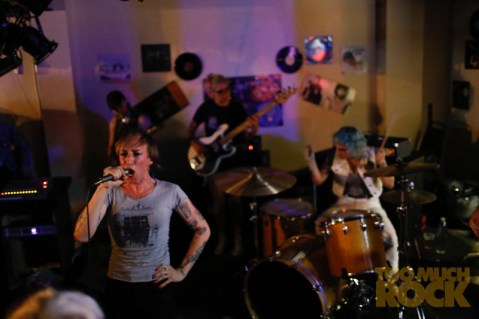
1) G.L.O.S.S., Hardcore, and the Righteous White Voice
Chris Chien
In a 2015 interview with Terry Gross on NPR, Toni Morrison recounts the time her father threw a drunken white man down the stairs because he thought the man was coming for his daughters. She concluded that it made her feel protected. Gross circuitously questions this rationale, implying that her father’s act, his black violence, must have been terrifying for Morrison and her sister to see. Morrison responds, “Well, if it was you and a black man was coming up the stairs after a little white girl and the white father threw the black man down, that wouldn’t disturb you.” Chastised, Gross adds, “I think it’s a product of being in this, like, not-very-violent, working-class, middle-class family where I didn’t see a lot of violence when I was growing up, so any violent act would probably have been very unnerving to me.” Gross’ response to Morrison’s childhood memory of black fatherly love and protection, coded to elevate her white, middle-class upbringing, left me wondering: whose violence is acceptable, and whose is not?
This question remains pressing in today’s climate. In the past year, state-sanctioned violence against indigenous, black, brown, queer and trans people, which has run like rich, nourishing marrow through the backbone of this country, is once again being openly and actively fomented throughout the public sphere by the figures at the apex of state power. In reaction, antifa anarchist groups, responsible for the much-publicized #PunchANazi meme have revived the use of black bloc tactics; along with the rise of “left-leaning” gun clubs, these responses have given renewed currency to the notion of arming up to fight back out of fear, disgust, and rage.
Olympia queer and trans hardcore band G.L.O.S.S. embodies many of these impulses, especially in their most recent (and now final) EP, Trans Day of Revenge. Through calls to direct action and explicit violence, the band rages against every oppressor that has ever crossed its path. On the whole, popular and critical reception to the EP has been positive, even celebratory, due in part to the preceding lineage of music criticism in which the violence of hardcore music is neutralized or intellectualized because of the implicit whiteness of the genre. And, in mirroring both critical and popular reactions to the work of Black Lives Matter and other black social movements, the calls to direct action in rap and hip hop are either discredited or disavowed. In other words, certain white genres of music, and the violence therein, appear to require intellectual analysis or even possess an inherent rationalization. [. . .Click here for more!]
—
Featured Image: “Mic: Sounding Out! Por Vida” by Shizu Saldamando, courtesy of Jennifer Stoever
—
 REWIND! . . .If you liked this post, you may also dig:
The Top Ten Sounding Out! Posts of 2016!
The Top Ten Sounding Out! Posts of 2015!
Blog-o-versary Podcast EPISODE 62: ¡¡¡¡RESIST!!!!
Share this:

Beyond the Grave: The “Dies Irae” in Video Game Music
For those familiar with modern media, there are a number of short musical phrases that immediately trigger a particular emotional response. Think, for example, of the two-note theme that denotes the shark in Jaws, and see if you become just a little more tense or nervous. So too with the stabbing shriek of the violins from Psycho, or even the whirling four-note theme from The Twilight Zone. In each of these cases, the musical theme is short, memorable, and unalterably linked to one specific feeling: fear.
The first few notes of the “Dies Irae” chant, perhaps as recognizable as any of the other themes I mentioned already, are often used to provoke that same emotion.
Often, but not always. The “Dies Irae” has been associated with death since its creation in the thirteenth century, due to its use in the Requiem Mass for the dead until the Second Vatican Council (1962–65). Its text describes the Last Judgment, when all humanity will be sent to heaven or hell. But from the Renaissance to today, the “Dies Irae” has also come to symbolize everything from the medieval church and Catholic ritual to the sinister, superstitious, or supernatural, even violence and battle—and any combination of the above.
Because of its unique history not only within its original liturgical context but also within later musical genres, this chant has become largely divorced from its original purposes, at least in modern popular imagination. Instead, it now holds a multiplicity of meanings; composers manipulate these meanings by utilizing this chant in a new setting, and thus in turn continue to reinforce those meanings within modern media. Since its use within the Mass, concert music, and films has already been well documented, this blog post explores its presence in an as yet unexamined medium: video games.

By Willem Vrelant (Flemish, died 1481, active 1454 – 1481) 1481 – illuminator (Flemish) Details of artist on Google Art Project [Public domain], via Wikimedia Commons
Beginning in the late eighteenth century, the text was set in Requiems for the secular stage by composers such as Mozart, Verdi, and Britten. But due to both its evocative text and its memorable melody (often just the first sixteen, eight, or even four notes), the “Dies Irae” chant soon was incorporated into secular instrumental works, where it signified the past, the supernatural, the oppressive, the demonic, and death. No work is more responsible for this than Hector Berlioz’s Symphonie Fantastique, where the chant symbolizes the composer’s own death and the depravity of the demons and witches who dance at his funeral.
The history of this chant, together with its use in film, has been explored by scholars such as Linda Schubert and John Haines. Because the “Dies Irae” was already a well-known symbol of the aforementioned characteristics, and because early silent film musicians borrowed musical ideas from previously composed works, the chant segued quickly into early film, where its symbolic possibilities were reinforced. Thus, even in newly composed soundtracks, composers utilized this chant as an aural shortcut to a host of emotional and psychological reactions, especially (as James Deaville and others discuss) within horror films. It appears in scenes depicting inner anguish, fear, the occult, evil, and imminent death in films from It’s a Wonderful Life, The Seventh Seal, and The Shining to Disney’s The Lion King and Star Wars, in musicals like Sweeney Todd, and in literary works such as Gaston Leroux’s The Phantom of the Opera, but it also symbolizes power and even heroism, such as in this Nike shoe commercial.
The “Dies Irae” appears analogously in video game soundtracks, where it communicates the same symbolic meanings that it does in film scores and concert music. Its recognizability also lends itself to parody, as it did in Monty Python and the Holy Grail. Yet, unlike in film music, the evolution of its use in game music speaks also to the evolution of game music technology.
In the earlier years of video games, technology could not create continuous soundtracks. The first such was in Space Invaders (1978), although it consisted only of four descending notes looped indefinitely. Additionally, while voice synthesis was used in game soundtracks as early as 1982, reproduction of musical voices was limited even into the 1990s. William Gibbons describes how early systems had a limited number of channels (40); as a result, Baroque-style counterpoint worked well texturally, and reproducing music from earlier composers such as Bach was not only permissible by copyright but also demonstrated the capabilities of their systems (201–204). As such, earlier games were less interested in a monophonic chant, although several (such as Fatal Fury) did use Mozart’s setting of the “Dies Irae.”
The “Dies Irae” chant is first used in game music in the late 1980s and early 1990s, by which point most systems had five or more channels, allowing for improved timbres and sound synthesis. The opening theme song to F-19 Stealth Fighter (1988–92, DOS/PC/Amiga/Atari) subtly references the first phrase of the chant. Composer Ken Lagace sets the first eight pitches evenly in the lower voice before moving them to a higher, rhythmicized register. The chant is accompanied by a consistent percussive element and several higher, chordal voices, which splinter off into fast arpeggios before restating the opening. There is as yet no action, nor is the plot either spiritual or supernatural, so the chant here actually works in a somewhat anomalous way. It heightens the player’s tension through its aural connotations of fear and death, thus setting the stage for the battles still to come in the game itself.
Indiana Jones and the Fate of Atlantis (1992, PC) is another early instance of the “Dies Irae,” which appears at the end, when Indiana and his companion Sophia confront the malevolent Doctor. The chant again increases tension but also indicates the presence of evil. Musically, the first two phrases of the chant appear in long, low tones, accompanied by several high, sustained, dissonant pitches. New voices enter, reminiscent of the opening phrase, before the chant returns in full in all registers. The system’s capability for thicker textures allowed the composers to stack the monophonic “Dies Irae” against itself, further emphasizing the threat of imminent danger in this final encounter.
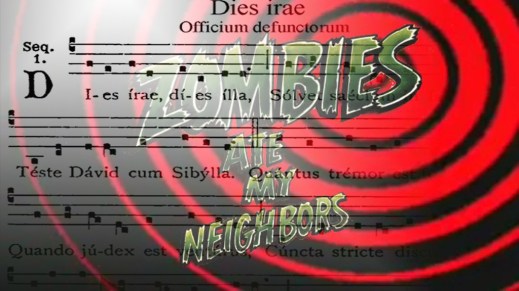
The last of the early case studies is Zombies Ate My Neighbors (1993, SNES/Genesis). These systems featured multiple channels capable of emulating a variety of acoustical settings. The game is a parody of 1950s horror films; the protagonists race through standard horror settings such as malls and castles to rescue their neighbors from demonic babies, vampires, zombies, and other stock creatures. The soundtrack also mimics the musical tropes in such films: chant itself, especially the “Dies Irae,” but also timbres such as tremolo, stingers, extreme ranges, and dissonance. The track “Curse of the Tongue,” which plays upon encountering the final boss, Dr. Tongue’s Giant Head, emulates a Gothic pipe organ. The low organ drone sustains underneath the first sixteen notes of the chant, which sound in a shrieking, vibrato-heavy register. The voices then move in parallel fifths as in medieval polyphony. The “Dies Irae” here brings to mind an entire film genre while also overtly characterizing the final battle against the otherworldly, sinister, evil Head. In this case, the chant works literally to signify the current battle and threat of death, but also parodically to indicate the absurdity of the situation.
The development of video game audio technology allowed first for voice emulation, then voice reproduction. Vocal samples were used as early as the 1980s, but were often confined to theme songs. Yet even after voices were reproduced within soundtracks, it is the “Dies Irae” melody alone that is most frequently sampled, strikingly paralleling its earlier use in film and concert music. When the “Dies Irae” text is used, it is set to newly composed music or borrowed from the Mozart or Verdi Requiems. Moreover, as in earlier media, all that is needed as an aural mnemonic is the first phrase, even just the first four notes, of the chant melody.
For example, two games released for PC in 1999—Heroes of Might & Magic III and Gabriel Knight 3: Blood of the Sacred, Blood of the Damned—both use just the first portion of the “Dies Irae.” In “Burying the Manuscript” from Gabriel Knight, pizzicato violins first allude to the first four or five notes of the chant (1:25); the full first phrase is then presented in parallel motion in the brass. The remainder of this theme alludes to the first few notes, making the “Dies Irae” a constant presence here and underscoring the secrecy, even the occult nature, of the manuscript in this scene.
Heroes III uses even less melodic material. In the Necropolis, composer Paul Romero uses the first four notes of the “Dies Irae” to underpin the entire theme. The bass plays the first four notes in a low register before seguing into newly composed material, but the contour of that phrase returns throughout the theme. The full chant phrases do not appear until the very end. The chant hints constantly at the overwhelming metaphor of death in this area, as well as to the presence of supernatural creatures such as vampires, zombies, and wraiths.
Unusual for many reasons, then, is the last case study: the game Dante’s Inferno (2010, PS3/Xbox360). It is the sole example here to use voices, but the text appears to be newly composed. As John Haines noted, the presence of Latin or pseudo-Latin is in and of itself a trope of the diabolical or demonic, which adds further nuance to this scene (129). The familiar melody is presented by a choir of mixed voices, accompanied by a roar of low brass, ambient noise, and a descant voice singing on open vowels, all signifiers of horror or the medieval. Moreover, the “Dies Irae” is not reserved for a final battle, as in previous examples, nor does it characterize supernatural creatures. Rather, it is the first theme heard in the game, reinforcing not only the medieval setting and the constant presence of death but also the ultimate trajectory of Dante, and the gamer, into Hell.
While the “Dies Irae” has been well studied as an aural signifier within film and concert music, its use in video games has, before now, been largely ignored. As in earlier musical genres, this chant brings to games a host of culturally accepted, musically mediated meanings that allow composers to immediately flesh out a character or scene. In so doing, game composers acknowledge that sound is not just sound, but rather it is (to borrow a phrase from Elizabeth Randell Upton) “a complex interaction of experiences and expectations on the part of the audience.” These experiences are continuously shaped by new compositions, scores, and soundtracks, which in turn continuously shape the audience’s expectations for future works.
As such, game soundtracks, along with other kinds of media, continue to transform the “Dies Irae” out of its original context and into an ever-growing set of pop culture symbols. The chant now signifies everything from the medieval to the present day, from judgment, battle, and death to demons, witches, and the occult. Within games in particular, though, it acts as a “memento mori,” a reminder of the mortality that game characters, and thus game players, seek to avoid through play. As such, it may instill fear in a player, but also suspicion, alertness, tension, even excitement, spurring the player to react in whichever manner suits the individual game.
The iconic status of the opening phrases of the “Dies Irae” chant marks it as a particularly useful polyvalent symbol for composers. Yet the utilization of this well-known trope is not without its problems. As I discuss in a forthcoming article, this chant, and indeed all plainchant, originates in a particular sacred, liturgical tradition. When a chant such as “Dies Irae” is used as a signifier of a general sense of spirituality, or of the medieval, or even of horror, then by default those characteristics are reified, if subtly, as Christian. Moreover, linking a chant such as the “Dies Irae” to the supernatural or the occult serves to perpetuate early modern stereotypes of Catholicism as nothing more than superstitious magic; see, for example, the purported origins of the phrase “hocus pocus.” Such anachronistic uses further obfuscate chant’s continuous role within Catholic (and other) liturgy; it is both a historic and a very modern practice.
Given that the “Dies Irae” is certainly not the only musical means to the aforementioned symbolic ends, perhaps these concerns are not pressing. Still, as Anita Sarkeesian points out, we can enjoy modern media while simultaneously critiquing facets that are problematic. There is no clear-cut way, at this point, to overturn hundreds of years of accumulated symbolic meaning for a musical icon such as the “Dies Irae,” but it behooves us as participants in auditory culture to become better aware of the multiple, and occasionally challenging, meanings within what we hear.
[Other games that also use the “Dies Irae” chant include Gauntlet Legends (1999, N64/PS/Dreamcast), Final Fantasy IX (2000, PS), EverQuest II (2004, MMORPG), Heroes of Might and Magic V (2006, PC), Sam & Max: Season 2 (2007–8, Wii/PC/PS3/Xbox 360), Ace Combat: Assault Horizon (2011, PS3/Xbox 360), and Diablo 3 (2012–4, PC/PS3/Xbox/PS4). My thanks go to VGMdb and Overclocked Remix for bringing several of these games to my attention, and to Ryan Thompson and Dana Plank for comments.]
–
Featured Image: A mashup of the first lines of the Dies Irae and the Zombies Ate My Neighbors title screen. Remixed for purposes of critique.
–
Dr. Karen Cook specializes in medieval and Renaissance music theory, history, and performance. She is currently working on a monograph on the development of rhythmic notation in the fourteenth and early fifteenth centuries. She also maintains active research interests in popular and contemporary music, especially with regard to music and identity in television, film, and video games. She frequently links her areas of specialization together through a focus on medievalism, writ broadly, in contemporary culture. As such, some of her recent and forthcoming publications include articles on fourteenth-century theoretical treatises, biographies of lesser-known late medieval theorists, and the use of plainchant in video games, a book chapter on medievalist music in Harry Potter video games, and a forthcoming co-authored Oxford Bibliography on medievalism and music.
–
 REWIND!…If you liked this post, you may also dig:
SO! Amplifies: Mega Ran and Sammus, The Rappers With Arm Cannons Tour–Enongo Lumumba-Kasongo
Video Gaming and the Sonic Feedback of Surveillance: Bastion and the Stanley Parable–Aaron Trammell
Playing with the Past in the Imagined Middle Ages: Music and Soundscape in Video Game–James Cook
Share this:




Current Top Posts





April 2021

January 2020

November 2019

October 2019

August 2019

April 2014

November 2017

March 2015

December 2017

October 2015
 Sounding Out!
Recent Comments