
Aurally Other: Rita Moreno and the Articulation of “Latina-ness”
 Dear Listeners,
This year, my first book—Dance and the Hollywood Latina: Race, Sex, and Stardom (Rutgers UP: 2011)—was born. The writing process required nearly a decade of thought and development, a gestation period that reminded me how to listen as well as see.
As a sound recordist in film school, I became acutely aware of the hierarchization of the visual over the aural: it was a challenge to claim space for sound when the director wanted to yell “Action” as soon as camera was ready. Me (covered in grime, Nagra deck over one shoulder and boom pole in hand): “What’s the frame line? Is my mic—or the shadow of my boom pole—in the shot? And, maybe I can get a level-check before we shoot—so the audio levels are as pretty as your exposure? Maybe?”
Yet, most of those instincts and that tenacity dissipated during graduate school. As I honed the language of film and television analysis, I, too, began to privilege the visual over the aural. Over time—and with the help of colleagues like Jennifer Stoever-Ackerman—Dance and the Hollywood Latina reminded me how to listen.
And so, I present a moment from the book that reinforced the scholarly importance of watching with my ears. In the following excerpt, I analyze Rita Moreno’s aural Otherness in West Side Story. The scene, like many others of Moreno’s career, illustrates the tension between the “look” and the “sound” of the Hollywood Latina. While my book is primarily organized around the ways that racialized sexuality is encoded in the dance of the Latina body in Hollywood film, the chapter “Rita Moreno, the Critically Acclaimed ‘All-Round Ethnic'” helps clarify how the Hollywood Latina has been read as both “easy on the eyes, but hard on the ears,” a phrase used to describe Moreno during her appearance on The Muppet Show in 1976.
The excerpt explores a pivotal scene in the film, where Anita (Moreno) confronts Maria (Natalie Wood), whom she discovers has just slept with Tony—the murderer of Bernardo (George Chakiris), Anita’s boyfriend and Maria’s brother:
[T]he nondance musical number “A Boy Like That” illuminates how the Hollywood Latina has also been aurally imagined and reproduced. [The song] expresses Anita’s anger and sense of betrayal, and eventually builds into a powerful duet (“I Have a Love”) between the women. As a backdrop, the setting and bodies of the scene are visually coded as Latino/a: the apartment matches the purples, blues, and reds associated with the Sharks in the film, while the two Latinas in the frame—one real and one diegetic—are colored Puerto Rican through the use of brown makeup. These stylized signifiers set the tone for Moreno’s aural representation in the scene. As the only Puerto Rican in the film cast, Rita Moreno gave a performance that became a touchstone of aural authenticity for non-Puerto Rican actors such as George Chakiris (Bernardo). In one interview, Chakiris notes that he and the Shark actors used Moreno as their sonic “guide” (Gross 2001). [Interestingly, the West Side Story shooting script available in the Bob Wise Collection at the University of Southern California Cinematic Arts Library includes written dialect for the Jets but not the Sharks, suggesting that the sonic expectations of the Latino/a characters were self-evident].
Both Natalie Wood and Rita Moreno lip-synch to prerecorded tracks, but unlike Wood, Moreno performs her other songs herself; “A Boy Like That” is Moreno’s only song that does not feature her real singing voice. While the dubbed vocal performance compensates for Moreno’s higher vocal range, it undercuts the ferocity of her physical performance. As Moreno’s facial expressions and posturing exhibit an angry and forceful delivery, singer Betty Wand’s vocal interpretation of the lyrics overly amplifies the supposed sound of a Latina body in lieu of the emotional urgency of the song. Moreno’s assertive body language is thus mismatched with the generic quality of Wand’s artificial accent, a kind of aural brown-face that flattens the scene’s intensity.
In a 2001 interview, Moreno expressed her disapproval of the vocals in “A Boy Like That,” claiming that Wand’s lack of acting skills resulted in a restricted interpretation that did not match the physical intensity of the scene. She explains: “[Wand] just couldn’t get it the way I wanted it…to sound. It should have almost been a growl…you know, barely sung. And she ended up sounding…almost like a cliché Mexican” (Gross 2001). Despite Moreno’s coaching, Wand could only articulate the song’s Latina-ness, a sonic interpretation that solely relied on a stereotypical accent to tell its story. This racialized vocal performance is incompatible with the emotional depth Moreno produces onscreen because it was only—always, and already—aurally Other. [This shift is most noticeable at the moment in “A Boy Like That” when Rita Moreno’s dialogue as Anita suddenly shifts to the lyrics of the song].


Rita Moreno’s career enabled me to hear the Hollywood Latina, an experience that enhanced my analysis of Dolores Del Rio, Carmen Miranda, Rita Hayworth (Rita Cansino), and Jennifer Lopez—the other women I study in Dance and the Hollywood Latina. I am thankful for Moreno’s (creative/political/critical) voice and hope that she continues to help me listen anew.
And thank you, dear listeners, for your time and attention. I hope to hear from you soon.
Sincerely,
priscilla.
PS: Dance and the Hollywood Latina: Race, Sex, and Stardom
😉


Share this:

Y2K, Collective Ritual, and Sound in the New Millennium
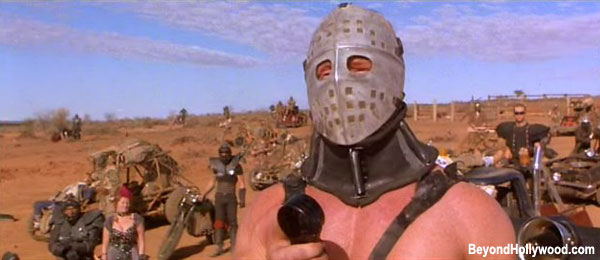 The recent New Year brought back some slightly embarrassing memories of past ball-droppings, 1999 in particular. That was the year, you’ll remember, when the world as we know it was to end due to all the clocks in all computers reading 0000 instead of 2000 – nuclear plants were to implode, bank accounts would be scrambled and a month later, the world would resemble some scene from The Road Warrior. I’ll fess up. I bought into the Y2K hype hook-line-and-sinker. I hunkered down in my living room with some old friends playing Risk that New Year’s Eve, I awaited an event of cataclysmic proportions. As the countdown droned on TV, it seemed every dice roll took me one step closer to the end . . . 10, 9, 8, 7, 6, 5, 4, 3, 2, 1. Upon zero, nothing changed and anxiety slowly began to leak from my body. Sting appeared on TV and introduced the new millennium with his jazzy “Brand New Day.” With lyrics about time and second chances, I grew to associate the song with a sense of profound relief. No matter how hokey Stings lyrics were (he uses the term “fuddy-duddy” at one point), “Brand New Day” will forever remind me of second-chances and possibility. Part of a clever advertising coup designed to reinvigorate Sting’s flagging career, the gospel tropes used in “Brand New Day” fit as a discursive response to the apocryphal (and apocalyptic) conversations circulating about Y2K at the time.
The history of technology is filled with utopian and dystopian visions of the future. Famously depicted in Apple’s “1984” commercial, the technocratic American narrative (Think Reaganomics) goes something like this: While developments in technology can allow for an increased sense of autonomy and individuality, they are unerringly used for evil. This evil strongly resembles a stereotypical Soviet culture where individuality is sacrificed for the good of the collective whole. Therefore, good technology promotes the individual while evil technology supports the collective.
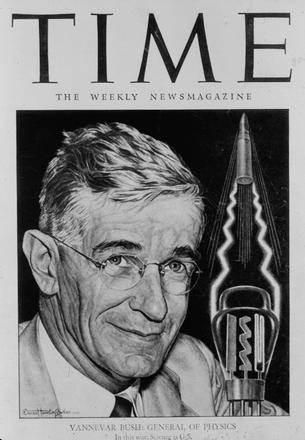 If this seems a little heavy handed, it should be noted that the whole endeavor of mass computing has its roots in American Cold War history. After the atomic catastrophes of Hiroshima and Nagasaki, Vannevar Bush, then Director of the Office of Scientific Research and Development, predicted the Internet with the “memex machine” in his article to The Atlantic, “As We May Think.” Written to an unassuming audience, Bush suggests the destructive potential of atomic weaponry heralded a concrete limit to traditional methods of warfare, because of this the next battlefronts would be informatic. Y2K is a dystopic variation on this theme, atomic blow up by-way-of nuclear power had even become incorporated into some of its myths. These myths were a fantasy, to be sure, but they were rooted in the collective fears of a confused and dysphoric America, an America which had recently overcome Communism and lauded its rapidly developing technological sector as a new source of economic capital on the world stage. Y2K was scary because it played on a cultural fear of technology, which was paradoxically one of America’s key exports at the time.
It is an interesting contrast between the cultural environment of post-Cold War America and the loose backup calls of “brand new day,” with its rhythmic pleas to “stand up!” increasing in frequency and intensity as the song continues. Though the song has nothing to do with Y2K, or even technology, its position as a televised event after the ball dropped December 31, 1999, had solidified it forever in my imagination as a spiritual reaction to the technological paranoia of the time. Sting conveys a baptism narrative; as a country we had mysteriously been absolved of our technocratic sins. I was (and am) a believer. As I sit writing this on my iMac, I consider the many marketing strategies Apple has used in the last decade to convince me of the ways their software and hardware could define me as an individual. Sting redeems the pursuit of individuality through the use of gospel tropes. Instead of an almighty passing the judgement of heaven or hell, a technocratic neoliberal economy threatened the wrath of Y2K to nonbelievers at the turn of the millennium. As the proverbial gates to a new era of prosperity opened, Sting climbed higher in falsetto, “Stand up and be counted every boy and girl/Stand up all you lovers in the world/We’re starting up a brand new day.”
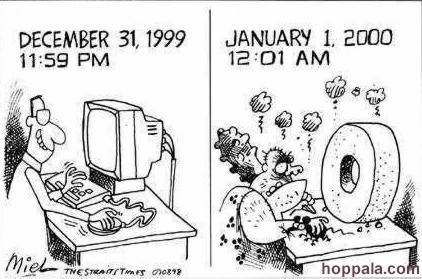
This year, as I watched a web steam of the ball drop January 31, 2010, I was able to later navigate to the MTV website and enjoy a Flaming Lips concert in Oklahoma City live from my computer. In this transition, something struck me. The potentials of computing, particularly video and sound editing (iMovie, Garageband and their disseminatory middle-man YouTube) still rely on an earlier Cold-War rhetoric of individualism and creative innovation to express the potential strengths of technology. Meanwhile any sense of collective ritual is set to the whim of a mouse-click, from New York to Oklahoma in a heartbeat. These new rituals compete with the old in a new context of hyper-individuality; ironically “Brand New Day” has become stuck once more in my head, as it has been routinely on New Years for the past 10 years. From these changes in collective ritual, what will it mean to celebrate the new year in 2011?


Share this:


Current Top Posts





April 2021

January 2020

November 2019

October 2019

August 2019

April 2014

November 2017

March 2015

December 2017

October 2015
 Sounding Out!
Recent Comments