
Sounding Out! Podcast Episode #2: Building Intimate Performance Venues on the Internet
 The podcast is (or, can be) an intimate performance venue on the internet because it allows you to whisper into the ears of your fans. It allows you to grow close to communities of listeners. And podcasts also do one last thing, to be revealed at the end of this piece, after we’ve seen how far I can take you. For now, I will quote podcasters I admire to help explain these ideas in their own words. I also quote these podcasters in an audio format. I have recorded this essay as an episode of the Sounding Out! podcast. You can listen right here, and I suggest you do. Go ahead, press play:
The podcast is what’s happening if you’re listening to these words. Are you? Because remember: my central claim is that a podcast is an intimate performance venue on the internet. Keep that in mind.
I am a podcaster, musician, and assistant professor of Economics. I have released six episodes of my own podcast, The Lion in Tweed.

Me. (Photo by Hadassah Head)

The Lion in Tweed. (Drawing by Winston Rowntree)
My podcast is primarily a narrative, with music and sound effects interwoven. It is about a character, The Lion in Tweed, and his experiences as a musician and professor of economics. He is also a lion. The second half of each podcast episode is a references section where I cite my sources and leave the fictional Tweedoverse canon to discuss real things.
I am not the first podcaster to remark on the ability of podcasts to traffic in intimacy. Chris Hardwick, of the Nerdist podcast, has claimed that, due to their intimacy, podcasts are the best medium going. He stressed: “you’re talking directly into the ears of your listeners.” There is no doubt that Hardwick was referring to those white iPod earbuds, which are a primary method of listening to podcasts. Part of a podcast’s intimacy comes from the closeness of the earbud to the membrane in the ear. Listening to earbuds evokes the intimate, and physical, closeness of someone whispering in your ear. Hardwick’s style of podcast is also intimate: vocal storytelling, mostly three comedians talking about the funniest things that have happened recently. The fact that it is not visual accentuates the intimacy of “whispering in your ears.” Although I would like to argue that the visual always reduces a sense of intimacy, I may simply prefer the sonic over the visual. Nevertheless, I believe that, the intimacy to which Hardwick is refers, is tied to the fact it is only sonic.

Chris Hardwick.

The Nerdist Podcast.
COMMUNITY
Podcasts as performance have a strange kind of liveness, episode-to-episode interactivity. By this I mean that they are not immediate; they lack the urgency of a theater-goer’s applause, or a heckler’s retort. Though not immediate, they are still dynamic, with their episodic pacing. And, unlike heckling, almost completely positive. This sense of long-term interactivity provides a foundation for understanding a second way that podcasts are intimate: they can cultivate intimate and interconnected communities of listeners.
They [Stop Podcasting Yourself, hosted by Graham Clark and Dave Shumka] have a really good community of people, community interaction: people send them stuff, sometimes people send them stuff unprompted. And they have a phone number [for people to call in messages that they play].
To illustrate how interconnected this community is, let me describe to you where this quote came from. It is a clip of Dan Sai, recorded by Davin Pavlas at MaxFunCon (the annual convention of the MaximumFun.org podcast label). I know Davin because of our mutual love of MaxFun podcasts. When I brought The Lion in Tweed into the world, I advertised it on podcasts in the MaxFun network. When Davin heard the description, he began to listen to my podcast. Now we are collaborating on an episode of The Lion in Tweed, which will quote these very words when it comes out two weeks from now. Similarly, UK resident Will Owens and I exchanged tweets after he started listening to my podcast and I found out he reviewed various narrative media on his website, and now he has written a review of my podcast, which we both promote. Ours is a community in which a feeling of value comes with a sense of connectedness. The podcasts give a shared culture.
SO IN PODCASTS, WE FIND A MEDIUM that is both sonic and vocal. They provide a platform for intimate and interconnected communities, which are rooted in an alternative kind of interactivity (long-term liveness), to grow. The whisper-in-the-ear quality of podcasts, as well as the feeling of community, all but completely explain why podcasts are so intimate.
AUTHENTICITY
Podcasts may be hip and modern, but they are not ironic. Podcasts represent a distillation of what the podcasters genuinely love, and in that they find their authenticity. According to Paul F. Tompkins, a comedian and podcaster:
It’s very freeing to be able to say: “Here are all the things that I like; I’m going to put them all into this [podcast].”
That was at minute 50:32 of Nerdist podcast ep 33 hosted by Chris Hardwick, with Paul F. Tompkins as a guest.

Paul F. Tompkins
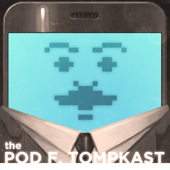
The Pod F. Tompkast
Here is Jesse Thorn, mastermind behind the aforementioned MaximumFun.org, in an interview by Neiman Labs:
I can mostly just do things that I am interested in, and so I don’t have to do something that is false to me, and I can let my guiding light be, “Do I like this and think it’s worth doing?”

Jesse Thorn.

The Sound of Young America.
And we see that authenticity completes the puzzle: podcasts are intimate because they feel so real. In podcasts it feels like you are listening to a real person because you are listening to the things that a real person loves…and interacting with real people is much more intimate than feeling like you are interacting with a marketing department (as you may when listening to a CD, or radio-show).
This is how I construct intimate performance venues: Audio-only, voice/storytelling focused, in which I try to build and exploit supportive, interconnected communities of fans with a shared culture (the podcasts). And, in doing so, I try to remain true to what I truly love. This authenticity, I believe, deepens the intimacy.
.
In the background of this podcast episode, Andreas plays an instrumental cover of “Bound for Hell” by Love and Rockets.
Share this:

Hearing Queerly: NBC’s “The Voice”

“Brittany and Santana Lesbian Kissing Scene from Glee” by Flickr user LesMedia available under Creative Commons license 2.0
Tuesday, April 26, 2011 turned out to be a red-letter day for prime time Sapphism. The Fox smash, Glee, continued its hamfisted campaign against teen bullying with a subplot about the label-averse Santana scheming to bring her lesbian (or “Lebanese”) love for Britney to fruition. Airing opposite this “Born This Way”-anchored, supersized Glee, was the debut of the vocal reality competition series, The Voice on NBC. Remarkably, not one, but two out lesbians survived the first elimination round of the show’s blind auditions: Vicci Martinez from Tacoma, WA, and Beverly McClellan from Ft. Lauderdale, FL.
The Voice pitches itself as the democratic alternative to FOX’s American Idol. Whereas Idol’s early audition rounds derive considerable schadenfreude from oddball characters excluded from the expansive realm of what is deemed “pop hot”–remember Kenneth Briggs, the infamous “Bush Baby”?–The Voice eliminates looks altogether from the audition process, including the panel’s ability to look at the singers onstage. Seated in hydraulically-controlled swivel chairs evocative of Dr. Evil’s high-backed perch, the celebrity panel of coaches (not “judges”)–Christina Aguilera, Cee Lo Green, Adam Levine of Maroon 5, and country hunk, Blake Shelton–have their backs to the stage at the beginning of each performance. Only when the singer’s voice sufficiently moves a coach does he or she press a button to swing around and face the talent. If none of the four coaches turns around before the song ends, the singer is eliminated and sent away with only two-and-a-half glorious minutes on national TV as a consolation prize.

Vicci Martinez
While latter-day Idol has increasingly focused on the “total package,” sometimes excusing vocal defects for good looks, performance prowess, and passion (“I had fun with it” is the mantra of anyone who’s suffered a tepid response from the judges, and “you look great tonight” is what a judge says when someone biffs their vocals), The Voice purports to strip away the smoke and mirrors of performance—at least in the live selection process—in order to focus exclusively on vocal talent. Furthermore, as “coaches,” the celebrity panel is meant to cultivate talent rather than simply eviscerate bad performers for the audience’s amusement. As Cee Lo opines in the premiere episode: “it’s not about the judgment; it’s about the journey.” (Has reality competition taken a critical turn from the critical turn? But that’s another topic.) Idol has been explicitly called out on the show, from Adam Levine’s reassurance to dejected contestants that “The people we are not turning our chairs around for could win American Idol,” to the sensational rehashing, ad nauseum, of Frenchie Davis’s disqualification from the Idol competition for nude photos nearly a decade ago.
As the anti or alterna-Idol, The Voice–complete with kitschy, faux Futurist set pieces–would have us believe that truly anyone from anywhere could be a vocal superstar, whether they’re fat, thin, chinless, hirsute, gorgeous, hideous, straight, gay, Mormon, or dykey. The disparate optics offered by Vicci Martinez and Beverly McClellan, the two lesbians who won the celebrity panel over with their raw-throated rock vocals (right in the pocket of what we might call the Etheridgean mode), would seem to affirm the show’s “blind” ethos. Martinez’s audition was shot so that just like the coaches, the TV audience couldn’t see the singer until she was selected. In the package leading up to her performance, we are made privy to her coming out story, offered a glimpse of her skinny jeans and boots, and invited to “listen along with our coaches and see if you would pick Vicci Martinez.”
As it turns out, Martinez is quite a little hottie: a lesbian heartthrob in the making with a cute asymmetrical shag, winning smile and sensibly curated fashion (think PacNorthwest sportif meets urban hipster enclave).
McClellan, meanwhile, offers an “edgier” look that complements her ethos of fighting–in her own words–“against the man.”
TV audiences see McClellan before hearing her, creating some element of narrative suspense: we anxiously await “the reveal” should one of the coaches select McClellan for their team, only to swivel around to confront a bald, bad-ass dyke with ample tattoos, piercings and leather wrist accoutrement, chewing on Janis Joplin’s “Piece of My Heart” with barroom tenacity.
The queer blogosphere has certainly picked up on Martinez and McClellan’s success on the show. (As of this writing, Martinez has already advanced passed the “Battle Rounds” to the live shows where audience members are are allowed to vote). After Ellen and Unicorn Booty posted items immediately, encouraging queer audiences to tune in, while After Ellen followed up with extended interviews, first with Martinez, then with McClellan. Both were asked about whether or not the format of The Voice made it “easier” for queer contestants to succeed without being judged for their appearance. Martinez famously bowed out of the Hollywood rounds of American Idol because producers asked her to buy a new wardrobe (read, “femme up” a bit), so she offered a more affirmative response in line with The Voice’s own rhetoric of leveling the playing field. McLellan, meanwhile, offered a goofy “one love” answer to the question, evoking a universal vibe of human generosity. Different as their public temperaments may be, both have been praised for amplifying lesbian visibility on network television.

Levine listens to McClellan on
Though some robust, “score two for the team” chest-bumping is surely in order after the success of these Sapphic sirens, how might we actually move past the greater frenzy for queer visibility to better grasp how lesbianism fits, or inevitably fails to fit, within the pop landscape? In other words, what would happen if we weren’t so quick to celebrate these “aren’t-we-GLAAD?” moments of prime time visibility, but instead took to heart The Voice’s premise about prioritizing listening?
Throughout the institutional life of queer studies, debates about lesbian visibility have unfurled in elaborate fugue-like variations. Rather than rehash them here, allow me to commit the theoretical heresy of constructing a binary in order to highlight some key positions. In the “real” world of mainstream LGBTQIA organizations and cultural producers, quantifying positive representations of queer folk qualifies as measuring progress. The more gays and lesbians we see on screens big and small, the logic goes, the better the world gets. In the more rarified realms of queer theory (my own habitat), this desire for representation and belonging calls forth the very crisis inherent in politicizing visibility as an end in itself. Film and media scholar, Amy Villarejo, explains this dynamic best when she remarks in Lesbian Rule that “the common sense of visibility is that it does both [parlays representation’s double meaning as ‘portrait’ and ‘proxy]: by appearing, so it would go, we belong…[but]…to present lesbian as image is to arrest the dynamism such a signifier can trigger” (14).
What, then, would be the sonic dynamism of lesbianism? Is it a transformative “grammar” that modifies the terms with which it becomes intimate? (Villarejo explores this possibility in her book.) Is it in the grain of a voice?
Far be it from me to theorize the “butch throat” here, as my dear pal and colleague Elena Glasberg already has with more eloquence and profundity than my mind can muster these days; but even if we hadn’t been primed by the show’s intro packages, might we not have heard the lesbianism in Martinez and McClellan’s throats? In their urgent, tremulous and toothsome strivings through the repertoires of “fierce females” like Adele and Janis Joplin?
There is something marked, and remarkable, in the yearning and temporal drag (see Elizabeth Freeman’s work) modeled by Martinez and McClellan’s respective vocalities, voices that could only break the surface in a format that (at least initially), thwarts the edicts of visibility: of fashion, generic niches, and the avant sensibility demanded by pop. Instead of being one step ahead, Martinez and McClellan constantly pull us back to something we’ve heard before, often in a half-empty bar that reeks of Bud and Marlboros (both Light). And for letting us hear this again, I’m willing to give The Voice the benefit of the doubt, despite its unwieldy format, liberal use of Carson Daly, and trumped up feud between Adam Levine and the real Xtina. Just maybe in this singing competition’s overdetermined relationship to blindness, we will find enough insight to hear queerly.


Share this:


Current Top Posts





April 2021

January 2020

November 2019

October 2019

August 2019

April 2014

November 2017

March 2015

December 2017

October 2015
 Sounding Out!
Recent Comments