
Sonic Lessons of the Covid-19 Soundscape
It’s understandable to resist reading or thinking about Covid in late-2021, even as the Delta variant’s new surges are making headlines around the world. Covid has surrounded and overwhelmed us for over a year, and many people’s reluctance to engage meaningfully with it at this time is fueled by feelings of fatigue, mental exhaustion, and frustration. However, I urge in this post that we have a continued responsibility to sustain our sonic engagement and listen to what the Covid-19 soundscape teaches us.
Covid-19, as most of us now know now, is a virus caused by the coronavirus strain SARS-CoV-2. While the symptoms of Covid-19 are many and varied, one symptom seemed most vital and censorious—a nagging and persistent dry cough that became referred to as the “Covid cough” in everyday vernacular. The Covid cough became an intrusive and yet all too familiar presence in the Covid soundscape—an isolated acoustic environment that allows us to study its characteristics. For instance, investigations within the Covid soundscape have studied the noise annoyances of traffic, neighbors, and personal dwellings; have recorded the quieting of the usually bustling streets of New York City; have researched whale stress hormones linked to less noise pollution in our ocean waters; and have analyzed the reception and aural imagery of sirens. I seek to add to this research by bringing the sounds of the Covid body (or a body perceived to have Covid) into the larger soundscape conversation.
It is of vital importance to attend to the Covid soundscape while we are still in it because the Covid soundscape is bound by time and place and is ever-changing. Once Covid is eradicated, our access to the sounds surrounding it disappear as well. So, I dwell in the soundscape where the Covid cough is still an everyday reality. With the Covid cough present in approximately sixty percent of Covid cases according to WebMD, the cough quickly became the virus’s warning bell, identifying who might be infected with the virus. In the early days of the viruses’ rapid spread in the United States, coughing became an acoustic red flag—a sign that danger could be near. So much about the virus and its spread was unknown, and the uncertainty heightened desires for control and reassurance. Because of this, we attended to coughing in ourselves and others, consciously and unconsciously, in ways we probably never had before.
All of this auditory attention focused on coughing is a process of listening. Different from hearing—perceiving sounds—listening requires attentiveness and consideration. Listening to sounds, as Ceraso states, “influences our feelings and behaviors as we move through the world” (176). I, like Eckstein and other sound scholars, insist that sound is an argument and that sounds have persuasive power. Sounds can evoke different responses from different people—perhaps your favorite song elicits painful memories for someone else. Listening then, can be personal. However, sound studies scholars know, and Covid-19 has amplified, that listening is also shaped by social and cultural contexts (Rice, “Listening”). During the pandemic, people listened to bodies in ways that were shaped by the news, the medical community, the culture, and the environment. While listening as a medical practice is used to diagnose and treat, the listening I refer to here is not one of compassionate care, but rather a practice of fear, surveillance, and othering.
For many people—in the United States, particularly white, hetero, cis-gendered, able-bodied, people—their bodily sounds came under social and cultural scrutiny for the first time——bringing up issues of autonomy and self-control. “It’s just allergies,” folks muttered while passing someone in the grocery store, just as a cough that could no longer be suppressed escaped their lips. Suddenly, as suspicious eyes were cast every which way, people felt compelled to disclose their medical histories to complete strangers in order to have their coughs—their bodily sounds—be deemed socially acceptable and their public presence allowable. Shildrick reminds us that bodies are leaky, but Western medicine and practice reinforce European-descended cultural teachings that our bodily boundaries should be secure (i.e. not leaky) and that otherness should be excluded. The “Covid cough” taught many of us for the first time that our bodies are leaky, noisy, and permeable, and they are not always under our command. Listening to our bodies took on an all-new meaning as we attended to our bodily sounds in hyper-vigilant ways.
Attending to the leaky, noisy nature of bodies, however, was certainly not new to everyone. Stoever’s The Sonic Color Line details the hypervigilance and rigid compliance long demanded of Black and brown bodies—often violently—by the white listening ear’s norms regarding “propriety” and personhood. Ehrick’s concept of the “gendered soundscape” thinks through surveillance in regard to female-presenting bodies and vocal gender. Casillas’s notion of “listening loud(ly)” while Chicanx, Martin’s Black feminist soundwalk methodology , and Blake’s discussion of the “gas station voice” many trans people take on to protect themselves from attack reminds us that the stakes for surveillance are higher at the intersection of race, gender, class, sexuality, accent, and citizenship status, but that resistance can also be also quite powerful.
For individuals with health conditions, impairments, or disabilities, too, concerns about control and disclosure are not recent issues, as their bodies have long been listened to in ways non-disabled bodies simply have not. For example, for a time after my mother had emergency surgery for colon cancer, her body required the use of a colostomy bag. One day she and I were shopping in a department store when a sales clerk heard my mother’s body leak (i.e. make sounds that we’ve been taught to believe are only acceptable in private spaces and bathrooms). The sales associate listened to my mother’s body in a way that bordered on disgust and looked at her in a way that beckoned my mom to justify her leaky, fallible body.
This kind of listening—the surveillance of others’ bodies—is used to regulate and control bodies, and is a long-standing tradition in disability history. For instance, St. Pierre highlights the embodied act of stuttered speech that is not only constructed by cultural norms but that challenges our cultural fantasy of the body as an invisible channel for communication and disrupts the disabled/able-bodied binary. Mills’s research on deafness and hearing technologies explores the irony and paradox that hearing aids and cochlear implants were invented to “treat” the invisible disability of deafness, but yet visibly mark their wearers. And while not explicitly writing of disabled bodies, Booth and Spencer contend that non-vocal bodily sounds are rhetorical and therefore create rhetorical challenges and provoke us into attempted management of the sounds our body produces. Individuals with impairments, diseases, and disabilities have long been listened to, scrutinized, and surveilled in these ways. Such listening is culturally bound and rooted in the ableist myth that bodies should be self-contained and controlled at all times.
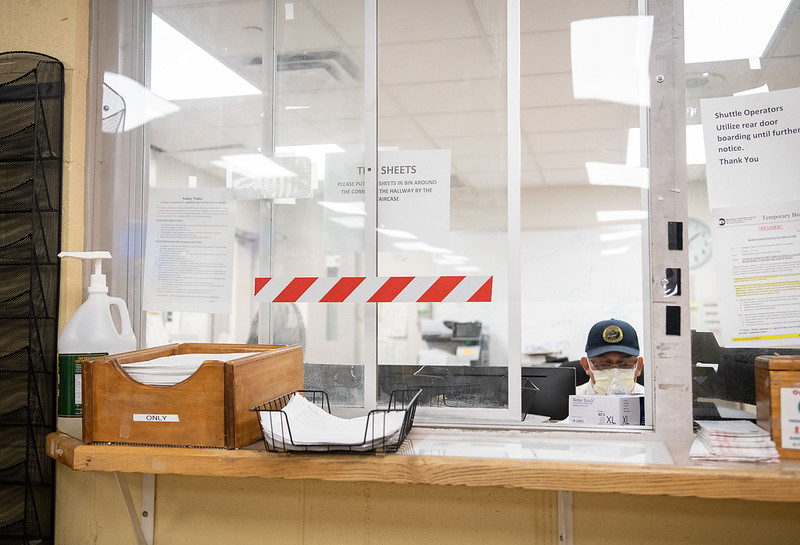
As the Covid-landscape meant that our ability to visually surveil bodies was diminished due to masks, barriers, and plexiglass partitions, our impulse to sonically surveil became heightened. Thus, many of us listened differently. Our fears of being surveilled were heightened by the fear of the Other—in this case, the fear of being othered as unwell. Our anxiety about the Covid cough was attached to ableism and the horror of being perceived as sick because, as Davis states, the “nightmare of the body is one that is deformed, maimed, mutilated, broken, diseased” (Normalcy: Link 7). The Covid cough reminded all of us that we are not as self-controlled and autonomous as we would like to think, and that we are all capable of being–or of becoming–a dissed (diseased or disabled), othered body, if we are not already.
But what if we could revisit the Covid cough and consciously listen to it in other, less fear-driven ways? If we move from listening to the cough as a surveillance practice and situate our listening as a critical rhetorical practice–a practice that examines the relationship of discourse and power and advocates for social change–then we can begin to think about what the Covid cough can teach us. Novak and Sakakeeny claim that sound only becomes known through its materiality. The Covid cough is indelibly material and embodied; it requires lungs and airways, breath and mucus. The Covid cough, distinguishable from other coughs, was described similarly by medical professionals around the world, reminding us that while listening is a highly cultured act, our sound bodies are comprised of blood, bones, and organs—substance that tethers our listening practices to a material body. We are, as Eidsheim claims in Sensing Sound, interconnected in material terms: “we cannot exist merely as singular individuals” (20). The stuff and guts of our material bodies reminds us of our connectivity, of our shared humanity, of our oneness.
The sound of the Covid cough, then, assures us of our vulnerability—a vulnerability precipitated by our lived, material body. It is important to note that not all individuals have been equally vulnerable. Individuals who are immunocompromised and essential workers, for instance, were much more susceptible to being exposed to the Covid-19 virus, as was anyone unable to work to home and many Black and brown Americans made more vulnerable by years of racist neglect by the nation’s health care system. But, still, no one is invincible. The sounds of the Covid-19 soundscape reify this truth and reinforce that through our material bodies, we are interconnected; we are all sound, and sounding, bodies.

Covid-19 brought, and is still bringing, daily horrors. The sounds of the Covid-19 soundscape are not yet absent from our consciousness or our communities. My hope is that by re-immersing ourselves into its soundscape, we can continue to remember that our fight against Covid-19 is a collective one and that we all have a shared responsibility toward our fellow humans. It is also important for sound studies to think critically and rhetorically about normalized listening practices and how those practices shape cultural understandings of what it means to be sick or disabled. Listening is not only an embodied practice; it also has bodily implications. While the Covid-19 soundscape heightened our awareness of our own vulnerability and, for some, their fears of “the other”—and (hopefully) some reflexivity on how one’s own listening can drive practices of othering—it also reassured many of our connectivity, for better or worse.
We remember those whose lives were lost to Covid-19. We listen to honor them and we listen to learn. . .and hopefully we can listen to one another with renewed empathy to build new collectivities that will forever change the Covid soundscape, along with the many other intersecting inequities that collectively brought us here too.
—
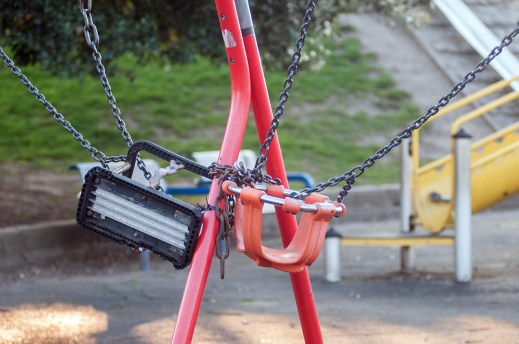
Featured Image: Coronavirus, Playground on Lockdown, Sheffield, UK, Image by Tim Dennell (CC BY-NC 2.0)
—
Sarah Mayberry Scott (Ph.D., University of Memphis) is Assistant Professor of Communication Studies at Arkansas State University in Jonesboro, Arkansas. Her research centers on representations and rhetorics of deafness. Scott is particularly interested in how sound impacts the Deaf community and how multi-modal literacies can be of particular interest and utility. She explores these issues in her works, “Re-Orienting Sound Studies’ Aural Fixation: Christine Sun Kim’s ‘Subjective Loudness,’” (2017), “Disability Gets Dissed: How Listening Rhetorically with Cultural Humility Amplifies the Concerns of Disability Culture,” (2021), and “Toward a More Just Rhetorical Criticism Through Situated Listening” (in press).
—

REWIND! . . .If you liked this post, you may also dig:
my mother’s voice, my father’s eye, and my other body: the sound of deaf photographs— Cara Cardinale
SO! Reads: Steph Ceraso’s Sounding Composition: Multimodal Pedagogies for Embodied Listening--Airek Beauchamp
SO! Podcast #79: Behind the Podcast: deconstructing scenes from AFRI0550, African American Health Activism – Nic John Ramos and Laura Garbes
Queer Timbres, Queered Elegy: Diamanda Galás’s The Plague Mass and the First Wave of the AIDS Crisis– Airek Beauchamp
Share this:

“Vous Ecoutez La Voix du Peuple”: The Kreyol Language Pirate Radio Stations of Flatbush, Brooklyn

Radyo Ayisyen
Learning from other scholars’ work on Haitian radio was, and still is, one of the greatest pleasures in the process of writing Isles of Noise: Sonic Media in the Caribbean (UNC 2016). People living in or from Haiti widely acknowledged and almost took for granted radio’s outsized role in public and political life. Edwidge Danticat and Jonathan Demme also understood this and paid tribute in Claire of the Sea Light and The Agronomist respectively, but historians remained largely fixated, understandably, on pivotal moments in Haiti’s rich history. Radio is different. Not pivotal, but witnessing the pivotal. Less dramatic and more long lasting and adhering to the same format for days, years, decades. It speaks to people who wouldn’t read newspapers or books. It floods private and public space with the sounds of music, talking, ruling, dissenting, explaining, satirizing, creating, crying, testifying, lying. But it leaves few archival traces. This is why the work of the five scholars in this series is so important. They allow us to hear a little and honor the listeners who make the medium what it is.
To start the series, Ian Coss gave a finely tuned account of a “day in the life” of a radio station in Cap Haïtien that follows the programming rhythm of days and nights. Then, Jennifer Garcon recounted one of the pivotal points in the relationship—its near breakdown and ultimate survival—also a turning point for a 19-year-old Jean Claude Duvalier, newly proclaimed President for life. Last week, Laura Wagner, who listened to each recording Radio Haïti-Inter and its archive (now at Duke University) and wrote its archival descriptors, writes of the work itself, the emotional, financial and intellectual challenges involved, and the reason this archive is essential to anyone interested in Haiti, or radio, or racial justice.
We continue the series in Brooklyn this week, where amidst gentrification and millennials seeking upscale vegan quesadillas, the ‘culture of the transistor’ is alive and well. Pirate radio stations broadcasting music and news in Haitian Creole have loyal followings, mostly of an older generation for whom radio was the primary medium during their youth. Listening brings back memories of a prosperous 1940s and 50s Haiti that recent narratives centered on catastrophe tend to bury. David Goren, who has not just written about but also mapped Brooklyn’s pirate stations, reminds us that these aural communities connect past and present, and perhaps future as well.
Guest Editor– Alejandra Bronfman
Click here for the full series!
—-
‘A lot of these stations, especially the Haitian stations, they have such an extensive music library that a song will come on the radio and all of a sudden my mom is like, ‘Oh my God! Your grandma used to have this record and she played it every Saturday!’ says Joan Martinez, a young Haitian-American born in the US and a former program host on some of the unlicensed Kreyol language stations. “Now she’s transported back to being on the island, with the big radio that’s a piece of furniture in the living room. People are chatting, little drinks are flowing about, my grandmother milling about in a gorgeous dress. It’s kind of like that whole nostalgia era that unfortunately was probably lost because of the political turmoil in Haiti. So it’s harkening back to a good time, to a simpler time, a better time, a more carefree era.”
Every day, the skies of New York City fill up with unseen clouds of radio signals spreading over immigrant neighborhoods. These culturally charged clouds of radio energy burst with a flow of content that continually shifts and transforms, following the lifecycle and rhythm of the streets.
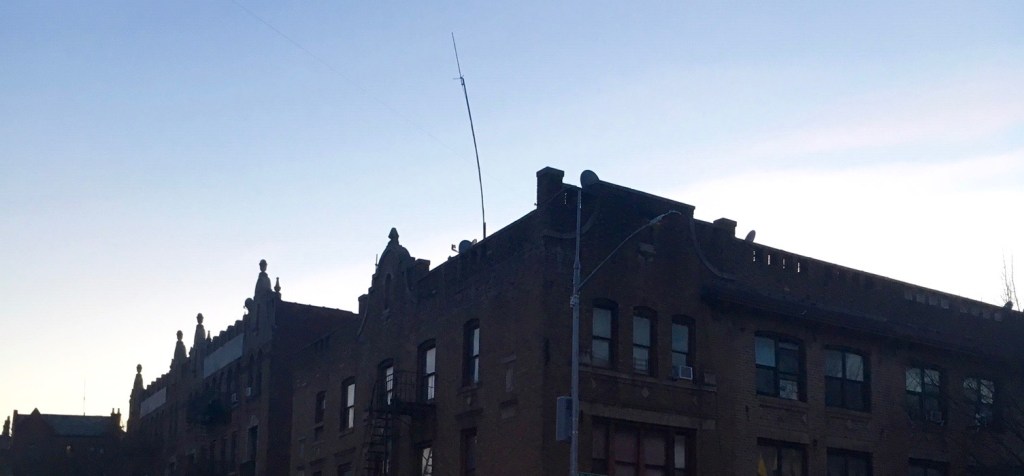
From clandestine studios tucked behind store fronts, DJs transform time and physical space with Konpa, Reggae and Soca music, mixing the sounds of ancestral homes with the thump and challenge of adapting to a new life in the United States. Jolted by electrified fingers of Signal, the old radio poetry of hiss and hum leaps from a scattered forest of antennas connected to transmitters hidden away inside rooftop sheds. In Brooklyn, the signals alight on Flatbush Avenue, blasting from radios in dollar vans, bakeries, churches and on street corners and kitchen tables. By accessing an analog technology that (outside of the radio itself) is essentially free for the listener, economically marginalized communities avoid the subscription and data fees built in to the conveniences of the digital life. Listeners, often the elders of the community, extend metal antennas and position the radios just so, trying to catch the elusive vibrations of crucial music, news and information that are seldom felt in New York City’s legal and mostly corporate owned media soundscape.
“These underground, unlicensed or pirate stations have been around for as long as there has been radio,” Martinez says. The legality of radio stations stems from The Communications Act of 1934, legislation that created the Federal Communications Commission (FCC), the agency tasked with penalizing unlicensed stations and shutting them down. “The focus really was on the listeners.” says Rosemary Harold, chief of FCC Enforcement ‘because what had happened before licensing became what we know as today, was that listeners weren’t able to consistently hear radio broadcasts. And now we’re kind of in a modern iteration of that.”
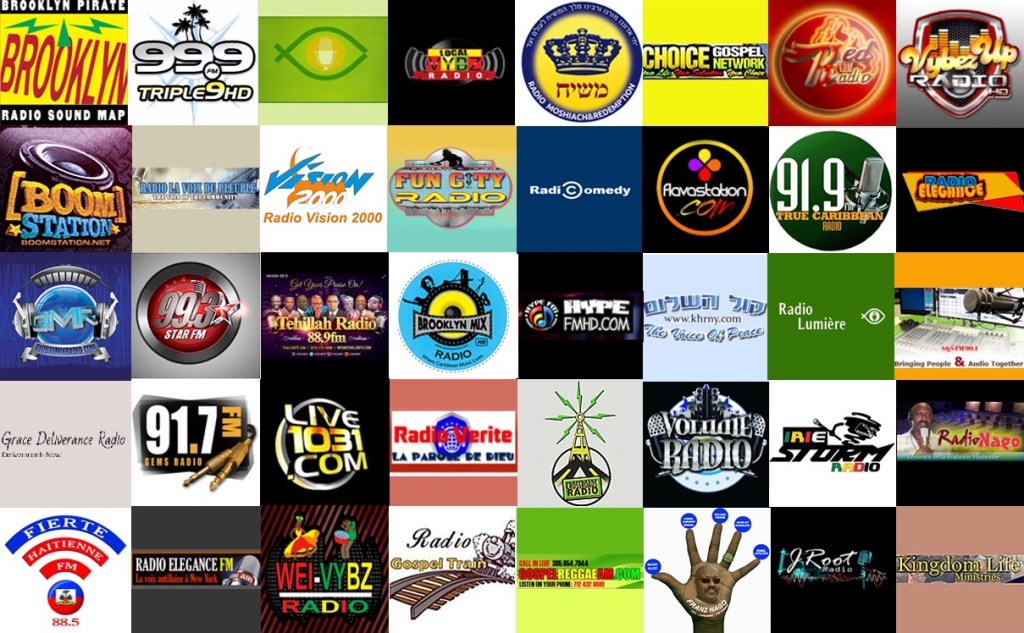
Others, like pirate radio historian John Anderson, see the Act as unfairly slanted towards commercial interests, awarding “the highest powers and clearest channels” to stations that sold advertising, tilting the medium away from serving specific communities. “By privileging commercial speech over non-commercial speech and by basically saying if you are a special interest, we will not award you a license.” Anderson says. “You create the conditions for there to be dissension over the media policy, which will lead people into radical actions, like putting stations on the air without permission.” In Flatbush, stations broadcast primarily to Haitians, Jamaicans, Trinidadians, Grenadians and Orthodox Jews. The Haitian stations are particularly active in East Flatbush with just under a dozen broadcasting daily in Kreyol to the large Haitian community.


“I came across it at a very young age. There was this really popular station back in the late 80s, Radio Guinee, and it was based in Brooklyn.” Joan Martinez says. “Nobody knows where it was, there are suspicions. But all I know is from Friday night all the way to Sunday night, you would just hear a series of these stations every weekend and it would be the place where you could listen to the latest in Haitian pop music, rap music. It was also the news, my parents and their friends would all sit around the radio and they would just be politicking in the living room getting really loud, you know, dancing, singing along that sort of thing. It was just like a meeting ground and the radio was guiding it.”
This phase of New York City pirate radio rose from the ashes of a previous scene dating to the late sixties: a dozen or so stations sporadically run mostly by white teenagers: a mix of hippies, radicals and electronically inclined misfits. By 1987, this loose collective of friends and rivals devolved into infighting after a short-lived attempt to broadcast from international waters off Jones Beach. This created room for new pirate radio voices from diverse communities that were increasingly being pushed off the legal airwaves by high costs, format consolidation, and “the low power desert”, an FCC-led phaseout of small community broadcasters. The local pirates joined a growing national wave of progressive pirate radio activity taking advantage of a new generation of cheap FM transmitters imported from China or homebrewed in makeshift workshops by free radio activists.
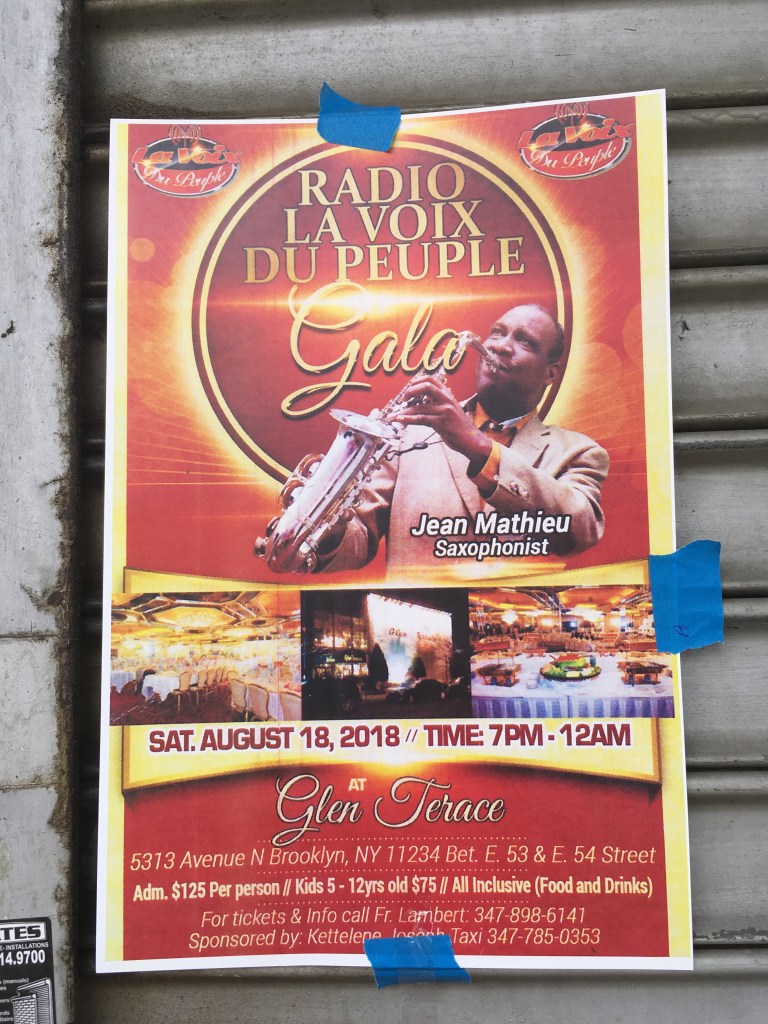
Image by Author
By the early 90’s, immigrant community-focused broadcasters In New York City flipped the unspoken rules of the earlier pirates who broadcast mainly late at night on a few pre-determined “safe” frequencies, instead filling the FM dial from bottom to top, day and night. In 2000, under pressure from a nationwide increase in pirate radio activity, the FCC introduced a new license class: Low Power FM (LPFM) but opposition from National Public Radio and the National Association of Broadcasters shut down the issuing of new licenses. That severely limited LPFM’s availability in major urban markets due to rules requiring LPFM’s to be “three click aways” from existing stations. Local pirates felt they had no alternative but to continue broadcasting and some stations in Flatbush have been on the air for decades. Despite the passage of the Local Community Radio Act in 2011, opening a new licensing window with relaxed spacing requirements, few new frequencies were available in NYC due to an already crowded dial. The continued pirate presence is enabled by a sort of safety in numbers, an FCC enforcement team hampered by a low budget and a bureaucratic process of enforcement.
Though the stations exist to serve their communities with news and culture and maybe make a little money for their owners and dj’s, they can and do cause interference for listeners of licensed stations, particularly low-powered non-commercial broadcasters like WFMU, a beloved freeform music station. Interference near their frequency has inspired the Brooklyn Pirate Watch Twitter group to keep a wary eye on pirate operations.
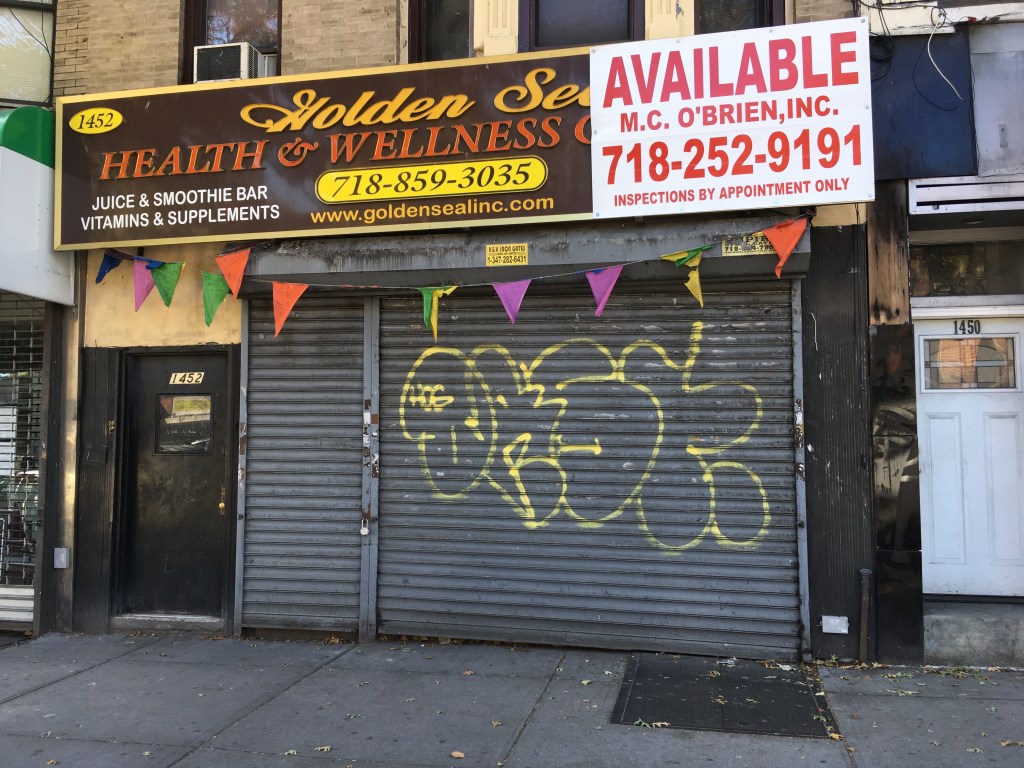
Interference aside, FCC commissioners and staff publicly fume at the pirates for a range of potential public safety violations, some more theoretical than others and claim they are somehow harming their own communities, and wonder finally, why don’t they just stream on the internet. By viewing radio piracy purely from a legal perspective, critics miss the cultural and historic forces driving the Haitian pirates. During the Duvalier dictatorship (1957-1986) Haitians had access to only two stations broadcasting in Kreyol, rather than French, the language of the elite. One was Radio Lumiere, a religious station and the other Radio Haiti-Inter, a fiercely independent voice whose director Jean Dominque was assassinated in 1999.
“The peasant in Haiti, while he’s working on his farm you know he had a transistor.” Says Dr. Jean Eddy St. Paul, Director of the Haitian Studies Institute at the City University of New York. ‘And many peasants, they don’t have money to buy tobacco to smoke, but they will have money to buy the battery to put in the transistor. The first generation of migration, in the US, was during the 1960s and for many of those people the culture of transistor was part of their everyday life, so they’re still maintaining the culture of transistor. For them, having a radio station is very important.’
In July 2019, on a side street in East Flatbush, I met a man calling himself “Joseph” aka “Haitian” (“because I’m a pure Haitian!”), part of a group that keeps Radio Comedy FM on the air. “There’s no owners and committee. It’s a bunch of young guys”. Joseph says, “We have to do something positive for our community. Right now the Marines are in Haiti and we don’t know what’s next! CNN don’t show you this! BBC don’t show you this! So what we do, we have people in Haiti that call us and tell us what’s going on and will send us pictures. This is how we get our information. And bring it to the people…. I have family over there, my mother’s still there. So I have to know what’s going on.
At this point in the digital age, it’s an open question how long these analog pirate stations will remain relevant, as their audiences age, neighborhoods gentrify and younger listeners gravitate to social media platforms. The answer seems to lie with their elderly and impoverished listeners. “They don’t have enough money to buy the newspapers understand?.” Joseph says.” For him that makes it worth it to keep Radio Comedy on the air despite a crackdown from the FCC backed by the PIRATE Act signed into law in 2020 that increases fines to $100,000 a day up to $2 million. But the legislation lacks funding to enforce the new regulations. With a federal statute still in place reducing fines down to the ability to pay, it’s unclear whether the PIRATE Act will be anything more than another in an escalating series of scare tactics.
“If they don’t want us to do it just make it easy for us. Let’s make a meeting with those guys [the FCC],” Joseph says. ‘We’re going to provide the air for you. A frequency. You’re going to pay for example, $500 a month even $1,000 a month.’ We will be more than happy to do it. “
Though the FCC has recently suggested the possibility of a new round of LPFM licenses in the future, the already crowded nature of NYC’s FM band makes it unlikely that new frequencies will be made available to the current pirate stations. In addition the FCC doesn’t want to be seen as rewarding illegal activity by granting a license to former pirate broadcasters, which was a prohibition in LPFM’s earlier licensing periods. And for the moment, Joseph, who’s been running unlicensed stations since 1991 (‘it’s an addiction’) is equally unlikely to cede the airwaves. He sees Radio Comedy as not just a radio station, but a community lifeline.
“You know many children we save? There was a bunch of guys…Jamaican, Trinidadian, Haitian trying to form a gang. We talked to them, bring them to the station. Most of them have a diploma now. Without the radio, most of them probably get locked up or dead.”
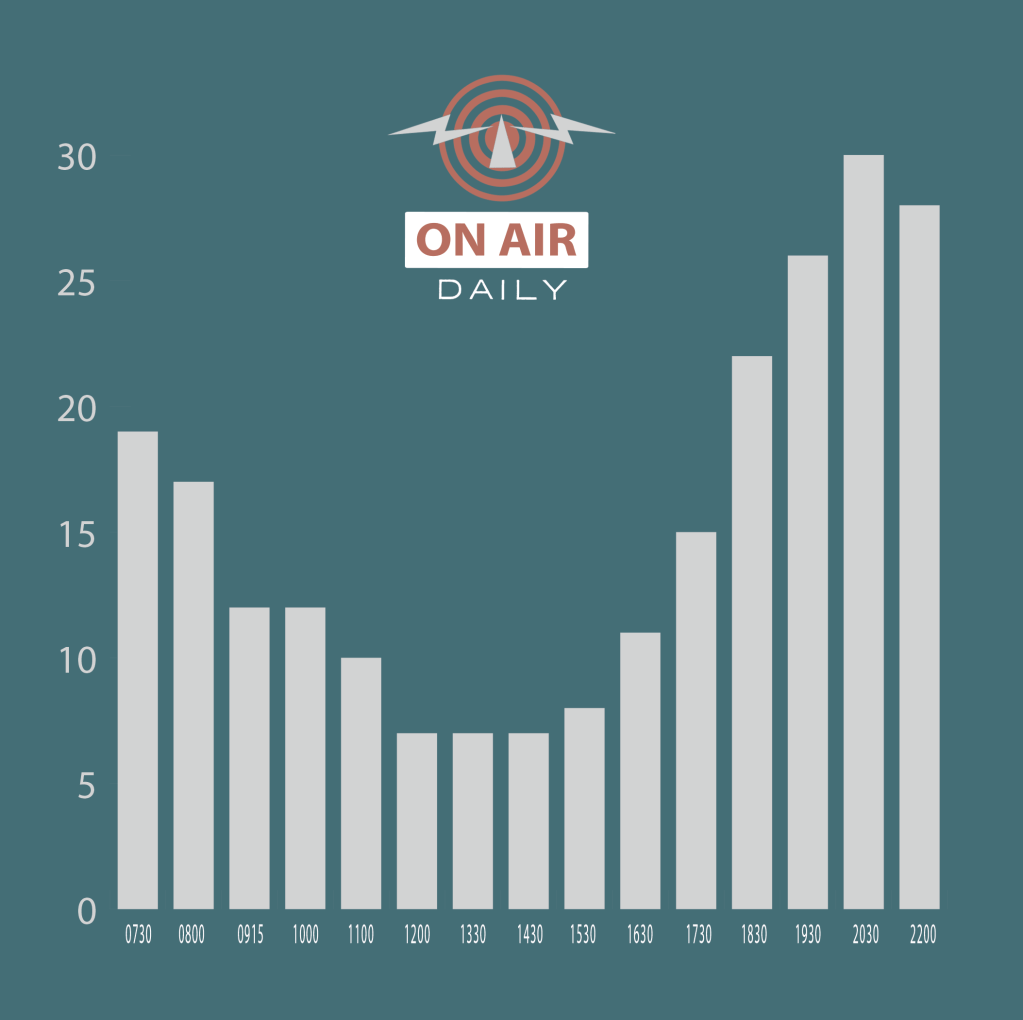
Even with the PIRATE act on the books, the number of stations on the air in Brooklyn has remained steady with an average of about 25 per day and the advent of the Coronavirus pandemic has only sharpened their mission. In March 2020 as the spread of Covid-19 lead to NYC’s lockdown, the unlicensed Haitian broadcasters and the other West Indian stations in Brooklyn took a step closer to their listeners, increasing their air time and enhancing their formats to deliver information about the virus both in New York and in their countries of origin amid the heavy toll it took on the community.
Click here to hear Station IDs for Radio Lumiere, Radio Independans, and La Voix du Peuple!
—
Featured Image: Antenna in Flatbush, courtesy of David Goren
—
An award-winning radio producer, David Goren has created programming for the BBC, Jazz at Lincoln Center Radio, the Wall Street Journal Magazine, and NPR’s “Lost and Found Sound” series, as well as audio-based installations for Proteus Gowanus Radio Cona and the Ethnographic Terminalia Collective. In 2016, he was an artist-in residence at Wave Farm, a center for the transmission arts.
Since 2014, David has been recording New York City’s prodigious pirate radio activity and researching the evolution of this grassroots community radio movement resulting in the release of “Outlaws of the Airwaves: The Rise of Pirate Radio Station WBAD” (2018) for KCRW’s “Lost Notes” podcast, New York City’s Pirates of the Air for the BBC World Service (2019) and the “Brooklyn Pirate Radio Sound Map 2.0” (2020) which was featured in The New Yorker. He presented “Tracing Neighborhoods in the Sky,” as part of the Fall 2019 Franke Lectures at Yale University. In January 2021, the Brooklyn Pirate Radio Sound Map became a partner of the Library of Congress’ Radio Preservation Task Force.
—

REWIND! . . .If you liked this post, you may also dig:
Archivism and Activism: Radio Haiti and the Accountability of Educational Institutions–Laura Wagner
Listen to yourself!: Spotify, Ancestry DNA, and the Fortunes of Race Science in the Twenty-First Century–Alexander Cowen
SO! Amplifies: Marginalized Sound—Radio for All–J Diaz
Share this:




Current Top Posts





April 2021

January 2020

November 2019

October 2019

August 2019

April 2014

November 2017

March 2015

December 2017

October 2015
 Sounding Out!
Recent Comments