
Impaulsive: Bro-casting Trump, Part I
But first. . .
An Introduction to Bro-casting Trump: A Year-long SO! Series by Andrew Salvati
“The Manosphere Won.”
That is how Wired succinctly described the results of the 2024 election the day after Americans went to the polls.
Among the several explanations offered for Donald Trump’s stunning victory over Kamala Harris, the magazine’s executive editor Brian Barrett argued, one surely had to acknowledge the crucial role played by that “amorphous assortment of influencers who are mostly young, exclusively male, and increasingly the drivers of the remaining online monoculture.”
Sure, there might be some validity in saying that Trump’s election had to do with inflation, with immigration policy, or with Joe Biden’s “doomed determination to have one last rodeo.” But his appearance on several popular male-centered podcasts in the months and weeks leading up to November 5 likely did much to mobilize support for his candidacy among their millions of viewers and listeners. Talking to Theo Von, the Nelk Boys, Andrew Schulz, and Shawn Ryan “cement[ed Turmp’s] status as one of them, a sigma, a guy with clout, and the apex of a model of masculinity that prioritizes fame as a virtue unto itself,” Barrett wrote.
Indeed, during the president-elect’s victory speech, given in the early morning hours of the 6th, his longtime friend and ally Dana White, president of the UFC, took to the speaker’s lectern to acknowledge the contributions that these podcasters and their audiences had evidently made in elevating Trump to the presidency for the second time. “I want to thank the Nelk Boys, Adin Ross, Theo Von, Bussin’ with the Boys, and last but not least, the mighty and powerful Joe Rogan,” he said.
As a media strategy, this was something of an evolution of Trump’s approach in 2016, in which the former reality TV star had used Twitter to such great effect to bypass legacy media institutions and bring his unfiltered message directly to voters. This time around, and reportedly at the direction of his 18-year-old son Barron, Trump again leveraged the massive reach of new media platforms to speak directly to his target demographic of Gen-Z men.
But the strategy was also of a piece with Trump’s frequent assaults on the press, which he typically characterizes as the “enemy of the people.” Appearing in some of the friendlier precincts of the podosphere allowed Trump to skirt around mainstream journalists with their “nasty” questions and cumbersome norms of neutrality and objectivity, and to bask in the mutual admiration society that some of these interviews became. Indeed, as Maxwell Modell wrote in The Conversation not long after the election, podcasters, in contrast to professional journalists, “tend to opt for more of a friendly chat than aggressive questioning, using what research calls supportive interactional behavior … this ‘softball’ questioning can result in the host becoming an accomplice to the politicians’ positive self-presentation rather than an interrogator.”
Podcasts, in other words, provided Trump with a congenial space to self-mythologize, to ramble, and whitewash some of his more extreme views.
In total, Trump appeared on fourteen podcasts or video streams during his 2024 campaign (Forbes compiled a full list, including viewership numbers, which can be found here), which together earned a combined 90.9 million views on YouTube and on other video streaming platforms (it should be noted, first, that these are not unique views – there is likely an overlap between audiences; second, that these numbers do not include audio podcast listens, which, because of the decentralized nature of RSS, are notoriously difficult to pin down).
For her part, meanwhile, Kamala Harris also made the rounds on podcasts popular with women and Black listeners – key demographics for her campaign – including Alex Cooper’s Call Her Daddy, former NBA players Matt Barnes and Stephen Jackson’s All the Smoke, and Shannon Sharpe’s Club Shay Shay. It has been suggested, however, that the Harris camp’s failure (or perhaps unwillingness) to secure an appearance on The Joe Rogan Experience was a significant setback, and could have provided an opportunity to reach the young male demographic with whom she was struggling. In any event, while the counterfactual “what-if-she-had-done-the-show” will likely be debated for years to come, Rogan eventually endorsed Trump on November 4, throwing his considerable clout behind the once and future president.
While a comparison between Trump and Harris’s podcast strategy during the 2024 campaign would make for an interesting academic study, in the following series of posts, I will be particularly concerned with Trump’s success with the so-called podcast bros – partially because my own research interests are in the area of mediated masculinities, but also because they may have put him over the edge with a key demographic – with Gen-Z men.
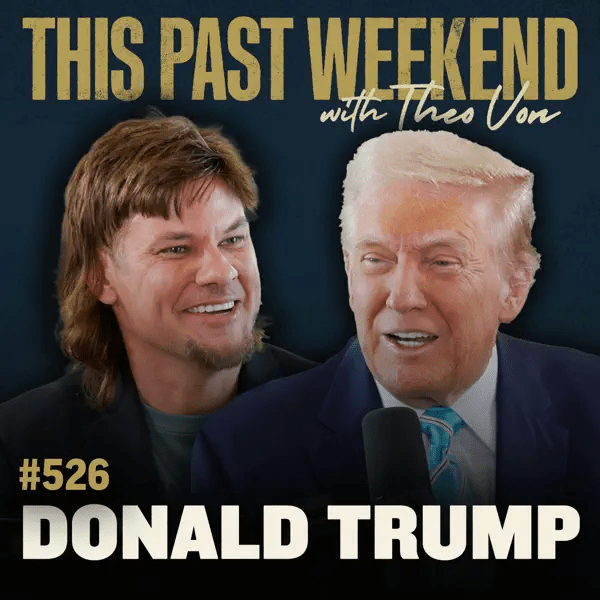
Over the next few posts, I will examine several of Trump’s appearances on largely apolitical “bro” podcasts during the 2024 campaign season, including his interviews with Logan Paul, Theo Von, Shawn Ryan, Andrew Schulz, the Nelk Boys, and Joe Rogan. In the course of this examination, I will pay attention not only to what Trump said on these shows, but also to the way in which they established a sense of intimacy, and how that intimacy worked to underscore Trump’s reputation for authenticity. Along the way, I will also discuss the podcasts and podcasters themselves and attempt to locate them within the broader scope of the manosphere. Finally, given the passage of time since Trump’s appearances, I will consider to what extent, if any, individual hosts have become critical of his administration’s policies and actions – as Joe Rogan famously has.


Before I begin, however, I want to make a quick note about the sources: Following what is quickly becoming standard practice in the field, each of the “podcasts” that I analyze in this series has a video component, and in fact, may very well have been conceived of as a video-first project with audio-only feeds added as a supplement, or afterthought. For this series, though, my interest has centered on podcasting as a listening experience, and so the reader may assume that when I discuss this or that episode of Theo Von’s or Andrew Schulz’s podcast, I am referring specifically to the audio version of their shows. This is also why Trump’s interview with Adin Ross will not appear in this series – it was livestreamed on the video sharing platform Kick, and was subsequently posted to Ross’s YouTube channel (and thus is it technically not a podcast).
With that being said, let’s dig in. I will proceed chronologically, with Trump’s first podcast appearance on the boxer/professional wrestler Logan Paul’s show, Impaulsive, which dropped on June 13, 2024.
****
With about 13 minutes remaining in Logan Paul’s roughly hour-long interview with Donald Trump, the conversation turned to aliens. “UFOs, UAPs, the disclosure we’ve seen in Congress recently,” Paul explained, “it’s confusing and it’s upsetting to a lot of Americans, because something’s going, there’s something happening. There are unidentified aerial phenomena in the sky, we don’t know what they are. Do you?”
For his part, Trump responded gamely, and after respectfully listening to Paul, proceeded to tell a story about how, as president, he had spoken with Air Force pilots, “perfect people,” who weren’t “conspiratorial or crazy,” who claim that “they’ve seen things that you wouldn’t believe.” Still, Trump admitted that he had “never been convinced.”
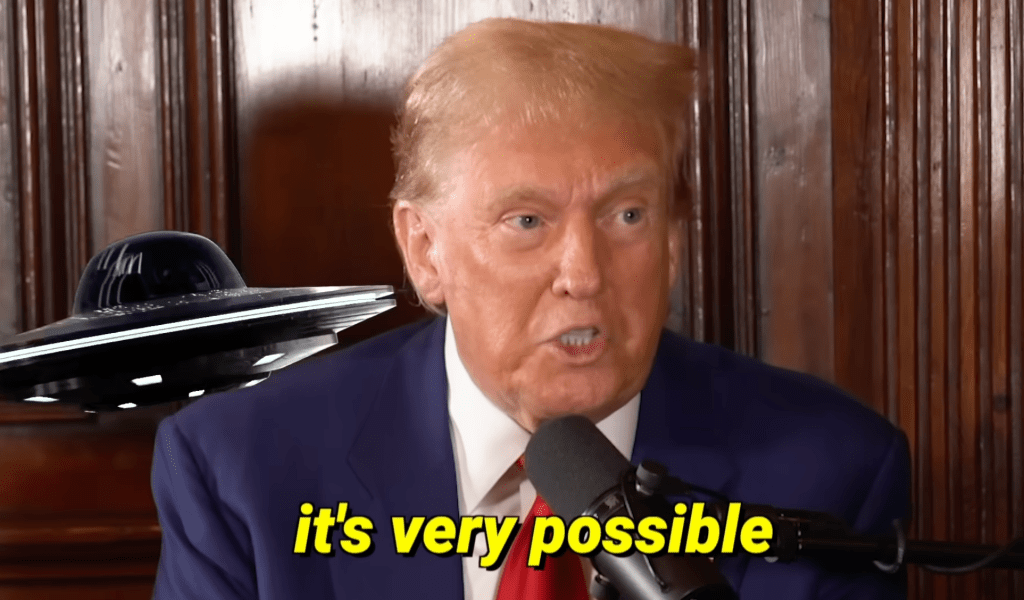
I start with this turn in the conversation not necessarily to dismiss the 29-year-old Paul as a conspiratorial thinker or an unserious interviewer, but rather to highlight the overall tone of the Trump episode, which was overwhelmingly chummy and fawning. It was clear from their deferential posture that Paul and his co-host Mike Majlak were in awe of the former president, and asking such questions was a way of keeping it light and easy.
Logan Paul, after all, is not known for his incisive political commentary. Indeed, in the 17 episodes of Impaulsive that were released in the six months preceding the Trump interview (all of which I have listened to for this piece), political issues hardly featured at all. One exception came during the December 19, 2023 episode with his brother Jake Paul (also a professional boxer, who was recently knocked out in a fight against Anthony Joshua), in which Logan and Majlak discussed the prevalence of right-wing or MAGA content and signifiers as the inevitable backlash to the excesses of the left and the “woke mind disorder,” as Majlak put it. Another example was the January 31, 2024 episode with former co-hosts Mac Gallagher and Spencer Taylor, in which Majlak went on a self-described “rampage” about the problems at the U.S. southern border (in particular, he referenced the Shelby Park standoff, though without naming it), and in which Paul’s father, Greg Paul, got on the mic to declare his support for “Trump 2024.” But other than these incidental moments and superficial takes, the show is not really the place for nuanced discussions of public policy or electoral politics. (Indeed, in the January 31 episode, Paul even attempted to stop Majlak’s rant by noting that listeners didn’t really tune into the show for political discussion).
Nor does Impaulsive, despite all its testosterone-fueled bro-iness, seem to fit comfortably within the manosphere, as I understand that term and what it signifies. Indeed, though Paul and Majlak seem to have fixed ideas about gender and about the differences between men and women, absent from their discussions (at least during the six month sampling of episodes that I listened to) is the kind of misogynistic and reactionary “Red Pill” rhetoric that characterizes manosphere discourses.
This isn’t Andrew Tate, after all, and it’s important that we keep track of the distinction.

Impaulsive, rather, serves as a venue for Paul and Majlak to have informal, free-wheeling conversations with their guests – which have included fellow wrestlers, sports stars, internet personalities, rappers, pastors, and even Chris Hansen – on a range of other topics of interest to the hosts. If there is a throughline in all of this (aside from Paul and Majlak’s interest in how guests navigate their social media presence), it is certainly the relationship between the two co-hosts, their similar immature (we might more charitably say “goofy”) sense of humor, their mutual interest in combat sports, and their past history of online and offline hijinks all providing the basic framework for much of their conversation. It also gives Impaulsive listeners a sense of intimate connection with the pair, a sense that they are in the room as a silent participant in the hang.
And Paul has had a decade’s worth of experience in making comedic content. Having first earned a following by posting short videos on Vine as a college freshman in 2013, he dropped out of school and moved to Los Angeles to pursue a full-time career as a social media content creator. Fortunately for him, the gambit worked, and his content was soon reaching hundreds of thousands of followers across Twitter, Instagram, and Facebook in addition to Vine, and a compilation of his videos posted to YouTube amassed more than 4 million viewers in its first week. A number of TV and movie appearances followed, and in 2018, Paul began what would eventually become a professional boxing career with a white-collar match against the British influencer KSI.
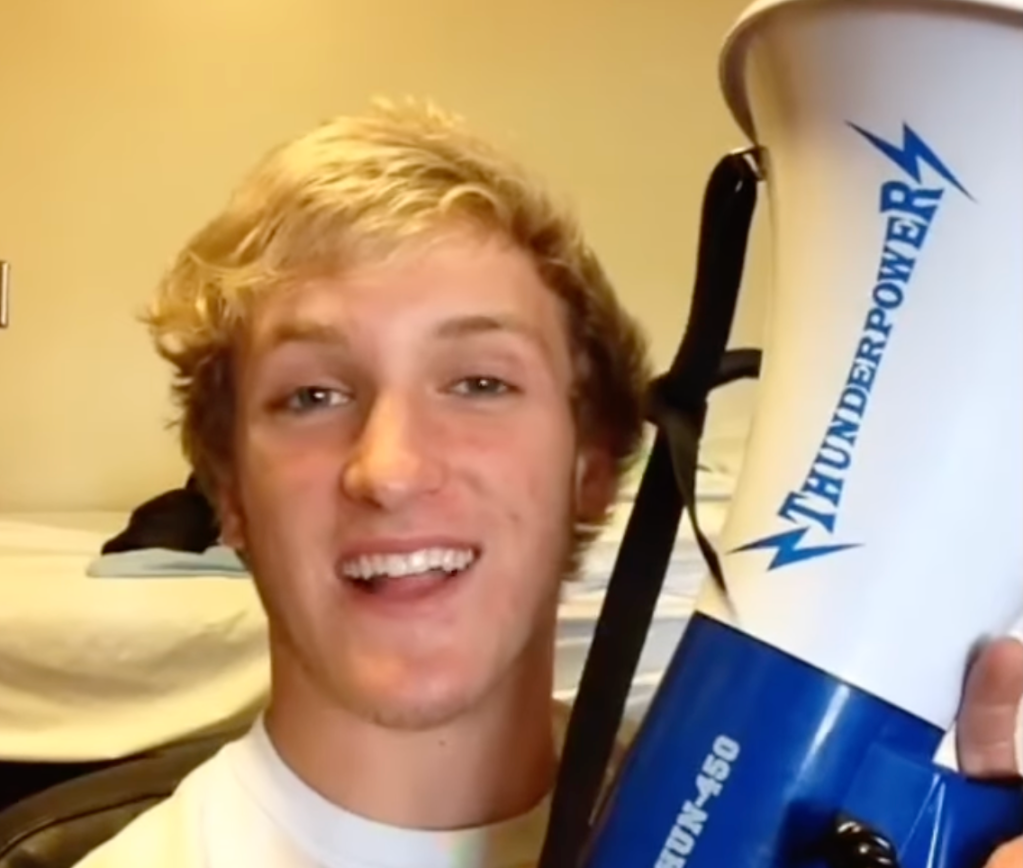
Paul’s rise to notoriety wasn’t unmarked by controversy, however. In late December 2017, at a time when he had something like 15 million YouTube subscribers, Paul earned widespread condemnation for his insensitivity after he posted a video to the site showing the body of an apparent suicide victim in Japan’s infamous Aokigahara Forest, and making light of the situation. As a result of the backlash on social media – which included a Change.org petition urging YouTube to deplatform the creator that garnered over 700,000 signatures – Paul removed the video and issued an apology for his actions (this apology was itself criticized for being disingenuous and self-serving, and Paul was later compelled to issue another). For their part, YouTube took disciplinary measures against Paul, which included removing the creator’s channel from the Google Preferred advertising program, and removing him from the YouTube Red series Foursome, among other things.
But that wasn’t all. About a month later, YouTube announced that it would temporarily suspend advertisements on Paul’s channels (the revenue was estimated to be about a million dollars per month) due to a “recent pattern of behavior,” which, in addition to the Aokigahara Forest controversy, now included a tweet in which he claimed that he would swallow one Tide Pod for every retweet he received, and a video in which he tasered a dead rat. The suspension seemed to be little more than a slap on the wrist, however, and two weeks later, in late February of 2018, ads were restored on Paul’s channels.
The controversies continued after the launch of Impaulsive in November 2018. In an episode released the following January, as Paul and Majlak and their guest, Kelvin Peña (aka “Brother Nature”) were discussing their resolutions to have a “sober, vegan January” followed by a “Fatal February” (vodka and steaks), Paul chimed in and suggested that he and Majlak might do a “male only March.” “We’re going to go gay for just one month,” he announced. “For one month, and then swing … and then go back,” Majlak concurred. The implication that being gay was a choice drew sharp criticism online, including a tweet from the LGBTQ+ organization GLAAD, which pointed out, “That’s not how it works @LoganPaul.”
We could continue. But it’s also worth mentioning that in early 2019, Paul underwent a brain scan administered by Dr. Daniel G. Amen, which revealed that a history of repetitive head trauma from playing football in high school had damaged the part of his brain that is responsible for focus, planning, and empathy. Such a revelation may explain some of Paul’s poor decision-making. But it has also been suggested that this may be an excuse for the creator to not own up to his shortcomings. And the diagnosis hardly stopped him from starting a boxing career, which he freely admitted “is a sport that goes hand-to-hand with brain damage.”
But even while Paul’s head injuries may have, to some extent, affected his ability to form human connections, it hasn’t completely severed the possibility. On Impaulisve, Paul often shows a genuine curiosity about his guests, a desire to understand their perspectives, and displays a sense of esteem for those, like the WWE superstars Randy Orton and John Cena, whom he knows personally and professionally outside of the context of the podcast. Even amid the raucous Morning Zoo atmosphere of the show, Paul’s tone when speaking to his guests is usually deferential and flattering, and creates a space not only for sharing intimate revelations about, say, the challenges creators face while living so much of their lives in public (a common topic), but also allows guests an opportunity to present themselves and their work in the best possible light.

This kind of dynamic was at play during the Donald Trump interview, in which Paul and Majlak offered the former president plenty of opportunities to boast about the historic accomplishments of his first term and of his 2024 campaign, and to air his many grievances – against Joe Biden, the media, the Democratic Party, and the lawyers prosecuting the many cases against him. Impaulsive, in other words, became a platform for Trump to remediate his typical campaign rhetoric, a means of delivering familiar content in a way that privileged quiet intimacy rather than grandstanding performances.
This sense of intimacy derived, in large part, from the setting in which the episode was recorded: Paul and Majlak were sat close to Trump in a wood-paneled room at his Mar-a-Lago estate. But it also stemmed from the kinds of questions that the co-hosts asked Trump. At one point in particular, the conversation turned, as it often does on Impaulsive, to combat sports, and to Trump’s love of the UFC. Opening up on this non-political and heavily masculinized subject – and casually mentioning the cheers he receives when he attends UFC events in person – likely increased the former president’s appeal among Impaulisve listeners, who, according to Paul and Majlak, are mostly wrestling and UFC fans themselves.
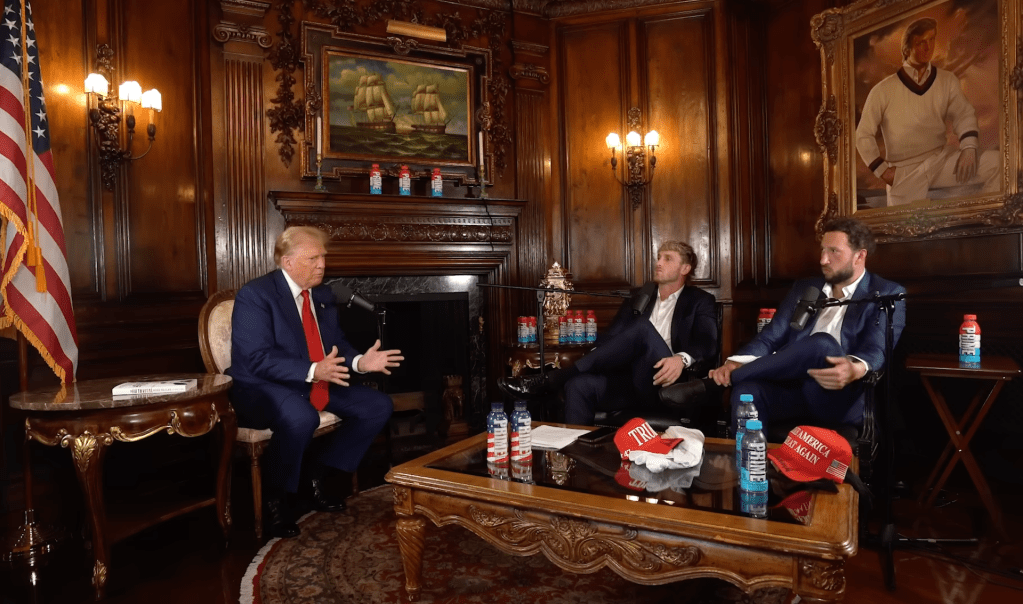
Other questions about combat sports – like whether Paul’s brother Jake could win an upcoming fight with Mike Tyson – further cemented the sense that Trump was a fan among fans, and thus created conditions for what podcast researcher Alyn Euritt calls “recognition,” moments in which listeners may feel a sense of intimate connection with a speaker/host and with the larger listening audience.
But what stuck out to me when listening to the episode and thinking about intimacy and podcasting, was the way in which the calm and deliberate pacing of the conversation, with help from the co-host’s gentle guidance, largely prevented the former president from straying into the kind of stream-of-consciousness delivery that characterizes much of his public discourse, and which has come to be known as the Trump “weave.” Kept on course by a friendly interlocutor pitching softball questions, Trump can sound lucid, even rational – and one can see how, in listening to this, his supporters, and even those apolitical listeners in the Impaulsive audience, can get swept up and taken along for the ride.
This is perhaps true for those moments, which occur often, where Trump touts his own successes and popularity. At the beginning of the episode, for instance, after Trump gave Paul a shirt emblazoned with his famous mugshot (which Paul called “gangster” and said “it happened, and might as well monetize it”), the former president launched into a string of familiar complaints about how his prosecution in that case had been an “unfair” miscarriage of justice, and how it had nevertheless resulted in a fundraising boon for his campaign. “I don’t think there’s ever been that much money raised that quickly,” he declared. Uncritically accepted by the co-hosts – and even encouraged by their muffled chortling – such defiant but matter-of-fact posturing may have seemed reasonable to Impaulsive listeners, an understandable response to what was presented as a blatant act of political persecution.
But the apparent honesty and reasonableness of Trump’s views even seemed to extend to his inevitable criticisms of Joe Biden and the American news media, criticisms which were likewise encouraged by Paul and Majlak’s laughter. When Majlak, for instance, asked Trump whether he was “starting to come around or soften your views on some of the networks that you may have not gotten along with in the past?” Trump’s blunt response, “no, they’re fake news,” was met with legitimating chuckles, and with Paul’s concurring statement, “yeah, fake news.” It was Trump’s follow-up, however, in which he put special emphasis on his May 2023 town hall with CNN’s Kaitlan Collins, that he elaborated his position, revealing that though he had thought the network had turned a corner in terms of its friendliness, or at least neutrality, toward him, they were instead “playing hardball.” Delivered almost in a tone of resignation, Trump seemed to give the impression that his poor (in his eyes) treatment by the press was a given, that their hostility, though unfair, was something that simply had to be endured. Again, this explanation, communicated in such an intimate conversational setting, seemed to suggest a cool and reasonable assessment of the situation and prepared listeners to later accept his more extreme view, expressed less than a minute later, that CNN was “the enemy.”
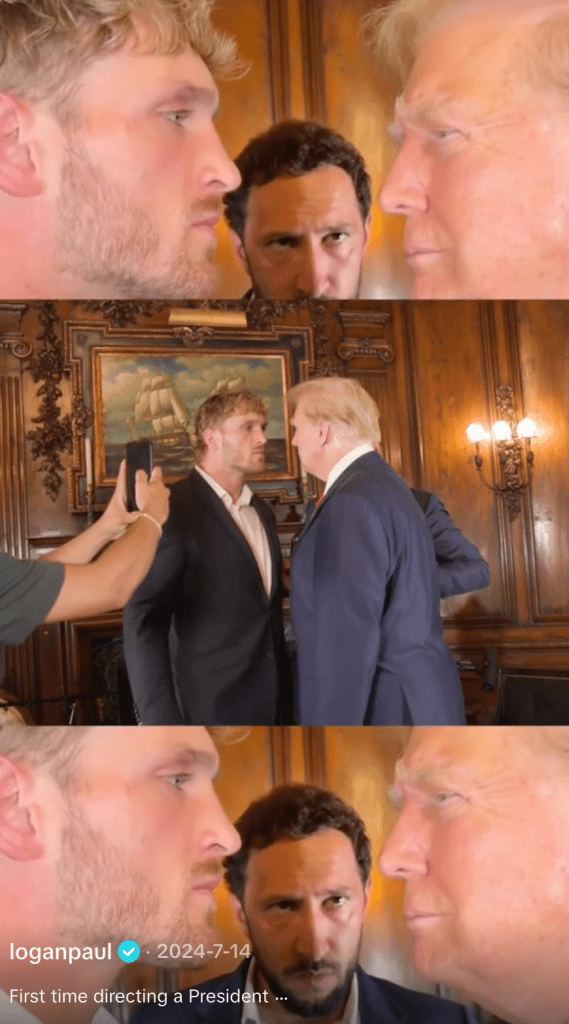
Overall, then, the episode, which ended with Paul, Majlak, and Trump filming a TikTok video in which the podcaster and presidential candidate squared off face-to-face as if shooting a fight promo, offered Trump a platform to connect with other combat sports fans, to burnish his reputation for authenticity, and to legitimize his many grievances. And while the number of new MAGA converts his appearance earned is an open question, what is clear is that Impaulsive afforded Trump an opportunity to directly speak to a demographic that was increasingly important to both campaigns.
—
Series Icon Image Adapted from Flickr User loSonoUnaFotoCamera CC BY-SA 2.0
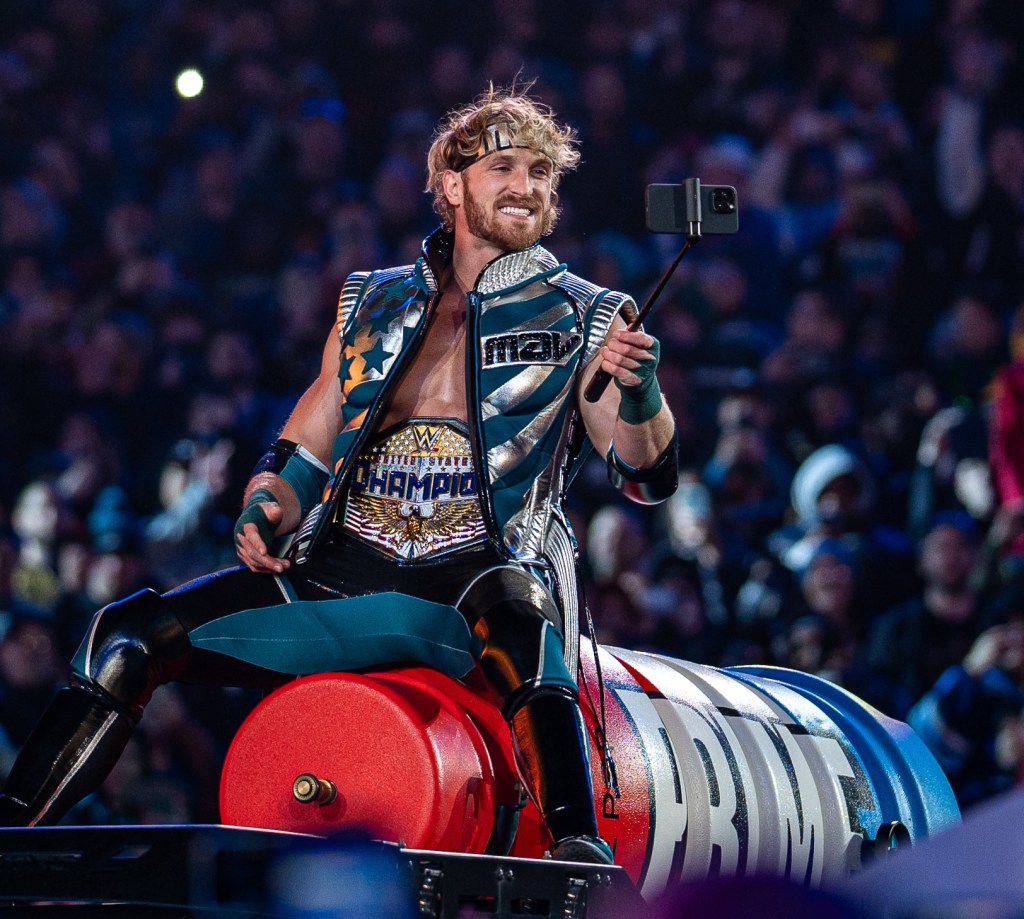
Featured Image: Paul making his entrance as the WWE United States Champion at WrestleMania XL, CC BY-SA 2.0
—
Andrew J. Salvati is an adjunct professor in the Media and Communications program at Drew University, where he teaches courses on podcasting and television studies. His research interests include media and cultural memory, television history, and mediated masculinity. He is the co-founder and occasional co-host of Inside the Box: The TV History Podcast, and Drew Archives in 10.
—
REWIND! . . .If you liked this post, you may also dig:

Taters Gonna Tate. . .But Do Platforms Have to Platform?: Listening to the Manosphere—Andrew Salvati
Robin Williams and the Shazbot Over the First Podcast–Andrew Salvati
“I am Thinking Of Your Voice”: Gender, Audio Compression, and a Cyberfeminist Theory of Oppression: Robin James
DIY Histories: Podcasting the Past: Andrew Salvati
Listening to MAGA Politics within US/Mexico’s Lucha Libre –Esther Díaz Martín and Rebeca Rivas
Gendered Sonic Violence, from the Waiting Room to the Locker Room–Rebecca Lentjes
Share this:

Taters Gonna Tate. . .But Do Platforms Have to Platform?: Listening to the Manosphere

In March 2025, shortly after returning to the United States from Romania, where he and his brother Tristan had been held under house arrest for two years after being charged with human trafficking, rape, and forming a criminal group to sexually exploit women, the social media influencer and self-described misogynist Andrew Tate’s podcast, Pimping H**s Degree was removed from Spotify for violating that platform’s policies.
According to the technology media outlet 404 Media, which first reported the news, some Spotify employees had complained in an internal Slack channel about the availability of Tate’s shows on their platform. “Pretty vile that we’re hosting Andrew Tate’s content,” wrote one. “Happy Women’s History Month, everybody!” wrote another. A change.org petition to call on Spotify to remove harmful Andrew Tate content, meanwhile, received over 150,000 signatures.
When asked for comment by the U.K. Independent, a Spotify spokesperson clarified that they removed the content in question because it violated the company’s policies, not because of any internal employee discussion. These policies state, in part, that content hosted on the platform should not “promote violence, incite hatred, harass, bully, or engage in any other behavior that may place people at risk of serious physical harm or death.”
Still, there is a veritable fire hose of Tate content available on Spotify. A search for the name “Andrew Tate” on the platform yields upwards of 15 feeds (and a music account) associated with the pro kickboxer-turned-self-help guru, many of which seem to be updated on a sporadic basis or not at all. Apple Podcasts, meanwhile, features an equally wide spectrum of shows with titles like Tatecast, Tate Speech, Andrew Tate Motivation, and Tate Talk [Ed. Note: Normally there’d be links to this media–and the author has provided all of his sources, but we at SO! does not want to drive idle traffic to these sites or pingbacks to/from them. If you want to follow Andrew Salvati’s path, all these titles are readily findable with a quick cut-and-paste Google search.–JS]
With so many different feeds out there, wading into the Andrew Tate audio ecosystem can be a bewildering experience. There isn’t just one podcast; there’s a continuous unfolding of feeds populated by short clips of content pulled from other sources.
But this may be the point exactly.

As I learned from this article in the Guardian and these interviews with YouTuber and entrepreneur MrBeast (“MrBeast On Andrew Tate’s MARKETING” and “MrBeast Reveals Andrew Tate’s Strategy”), Tate achieved TikTok virality, in part, by encouraging fans to share clips of video podcast interviews – rather than the whole interview itself – on the platform.
“Now is the best time to do podcasts than ever before,” MrBeast said in one interview. “Now it’s like the clips are re-uploaded for months on months. It gets so many views outside of the actual podcast … I would call it the ‘Tate Model’ … Like I think if you’re an influencer, you should go on like a couple dozen podcasts. You should clip all the best parts and just put it on a folder and just give it to your fans. Like literally promote you for free.” Though it can be hard to tell exactly who uploaded a podcast to Spotify, it seems that something like this is happening on the platform – that fans of Tate are sharing their favorite clips of his interviews and monologues pulled from other sources.
In its “About” section, for instance, a Spotify feed called Andrew Tate Motivational Speech declares that “this is a mix of the most powerful motivational speeches I’ve found from Andrew Tate. He’s a 4 time [sic] kickboxing world champion and he’s been having a big impact on social media.” In another Spotify feed called Tate Therapy, posters are careful to note that they “do not represent Mr. Tate in any way. We simply love his message. So we put together some of his best speeches.”
Given that Spotify is increasingly a social media platform, rather than simply an audio streaming service–users can collaborate on playlists and see what their friends are listening to–it follows that this practice of clipping and sharing Tate content may potentially expand the influencer’s online footprint. It may also serve as insurance against the company’s attempts to remove content or completely deplatform Tate: surely Spotify can’t police all the feeds that it hosts
So, what is it that Andrew Tate is saying – and how is he saying it?

To get a sense of why he has been called the “King of Toxic Masculinity,” and a “divisive social media star,” I had a listen to several of the interviews and monologues posted to Andrew Tate Speech Daily on Apple Podcasts, which, of all of the Andrew Tate audio feeds, is the most consistently updated.
The first thing to take note of is his voice. It’s brisk and aggressive and carefully enunciated – it’s like he’s daring you to take issue with what he, an accomplished and eloquent man, is saying. Above all, listening to Tate feels like being spoken to like an inferior, because that is precisely what he preys on. His accent, moreover – now British, now American – is unique, lending itself to some unusual pronunciations that can be considered as a part of his system of authority and charm.
One of Tate’s main arguments about what ails men today – and it is clear from his mode of address that he assumes he is talking to men exclusively – is that they are trapped in a system of social and economic “slavery” that he unimaginatively calls “The Matrix” after the film series of the same name. Though he is somewhat vague in his descriptions, in the podcast episode “Andrew Tate on The Matrix,” he explains that power, as it actually exists in the world, is held by elites who rely on systems of representation (language, texts) to effect their will. These systems of representation, however, are prone to abuse because they are ultimately subject to human fallibility. Tangible assets, like wealth, he reasons, are susceptible to control by “The Matrix,” as they can be taken away arbitrarily by the redefinition of decisions and the printing/signing of documents. His example, though it is a little hard to follow, is that if someone says something that the government doesn’t like, a judge can simply order that their house be taken away. Instead, Tate argues that individuals can escape “The Matrix” by building intangible assets (here, he gives no examples), which cannot be taken away by elites and their bureaucracy. It is a difficult path, he cautions (and here, he sounds sympathetic), and one that not everyone has the discipline to endure.

Tate gets a little more specific in the episode “Andrew Tate on The Global Awakening. The Modern Slave System,” in which he asserts that elites are using the system of fiat currency – a term that cryptocurrency supporters like to use to disparage government-issued currencies – to keep individuals “enslaved.” In this modern version of enslavement, he explains, individuals are forced to work for currency, but, since fiat currency is subject to inflation and other forms of manipulation, only end up making the bare amount they need to survive. The result, he argues, is a system in which the rich get richer and the poor get poorer (of course this ignores the real possibility of shitcoin and other crypto manipulation schemes). It’s quite a populist message for a guy who is famous for his luxurious lifestyle. Still, his message here is consistent: with the proper amount of discipline, a willingness to speak truth to power, and faith in God (he converted to Islam in October 2023) will result in an awakening of consciousness that will finally end the stranglehold that elites have on power – will finally break “The Matrix.”
On the other hand, Tate deems women incapable of the discipline required to break out of “The Matrix” – he seems to think that they are too materialistic, too distractible, too enamored of the chains that elites use to bind individuals to the system to see beyond them (see “Andrew Tate on ‘Fun’”). In his view, women are better off at home bearing children or fulfilling male sexual desires. (In an apparent demonstration of male dominance, Tate’s “girlfriends” often appear in the background of his videos cleaning house).
For his part, Tate claims that his own legal troubles, and his own vilification in the press, are part of a coordinated campaign of persecution against him for exposing the way that the world really works (see, for example, “Andrew Tate: Survival, Power, and the System Exposed”). From this vantage, Tate seems to be acting as what the ancient Greeks called a parrhesiastes, someone who, as Michel Foucault writes, not only sees it as his duty to speak the truth, but takes a risk in doing so, since what he says is opposed by the majority. Indeed, often congratulating himself on his bravery in the face of “The Matrix,” Tate has suggested that his role as a truth teller might get him sent to jail (“Andrew Tate on the Common Man”), or worse (“Survival, Power, and the System Exposed.”) In such moments, he plays the martyr, adopting a quiet, yet defiant voice.

Aside from the aspirational lifestyle he purveys – the fast cars, the money, the women, the flashy clothes, the jets, the mansions, the cigars, and the six pack – it seems to me that this parrhesia is a key part of what makes Tate popular among men and boys (as of February 2025, he had over 10 million followers on X [formerly Twitter]). What he reveals to them, though it is often muddled, is the way in which elites maintain social control under advanced capitalism. It’s all rather Gramscian in the sense that it is concerned with the hegemony of a dominant class, though, ironically, Tate seems too much of a capitalist himself to engage in Marxian social critique. Instead of offering a politics of class solidarity, Tate merely rehearses familiar neoliberal scripts about pulling oneself up by the bootstraps (see “You Must Constantly Build Yourself”), getting disciplined, going to the gym, developing skills, and starting a business. For Tate, life is a competition, a war, though most men don’t realize it.
And I think this is the key to understanding Tate’s parrhesia – it’s not only that he is speaking truth to power in his criticism of “The Matrix”; he also sees himself as speaking an uncomfortable truth to his listeners, truths that they might not be ready to hear. As in the movie, The Matrix, he says in “Andrew Tate on the Global Awakening,” some minds are not ready to have the true nature of reality revealed to them. In his perorations, therefore, Tate often takes a sharp and combative tone, accusing his listeners of being guilty of complacency and complicity in the face of “The Matrix.”
“If I were to explain to you right here, right now, in a compendious and concise way, most of you wouldn’t understand,” he says in “Andrew Tate on The Matrix.” “And those of you who do understand will not be prepared to do the work it takes to then actually genuinely escape. But those of you who are truly unhappy inside of your hearts, those of you who understand there’s something more to life, there’s a different level of reality you’ve yet to experience … But if your mind is ready to be free, if you’re ready to truly understand how the world operates and become a person who is difficult to kill, hard to damage, and escape The Matrix truly, once and for all, then I am willing to teach you.”

For those persuaded by this line of thinking, or who are otherwise made to feel guilty about their complicity in “The Matrix,” Tate offers a special “Real World” course at $49 per month, which teaches students how they can leverage AI and e-commerce tools to earn their own money and finally be free.
And that’s really what it’s all about – all the social media influencing, all the clip sharing, all the obnoxious antics, and deliberately controversial statements – they are all calculated to raise his public profile (good or bad) so that he can sell the online courses that have made him and his brother Tristan fabulously wealthy.
It is for this reason that I don’t think that Spotify’s deplatforming of one of Tate’s shows will ultimately do anything meaningful to stem his popularity. If anything, the added controversy will likely confirm to his fans that he has been right all along – that the elites who are in control of “The Matrix” are so threatened by the truth that he tells about the world and about women that they will first deplatform him and then send him to jail.
No, we will only rid ourselves of Tate when he becomes irrelevant. This may happen if he ends up going to prison in Romania or in the UK (where he also faces charges of rape and human trafficking). But even then, there are many vying to take his place.
—
Featured Image: Close-up and remixed image of Andrew Tate’s mouth and arm, Image by Heute, CC BY 4.0
—
Andrew J. Salvati is an adjunct professor in the Media and Communications program at Drew University, where he teaches courses on podcasting and television studies. His research interests include media and cultural memory, television history, and mediated masculinity. He is the co-founder and occasional co-host of Inside the Box: The TV History Podcast, and Drew Archives in 10.
—
This post also benefitted from the review of Spring 2025 Sounding Out! interns Sean Broder and Alex Calovi. Thank you!
—
REWIND! . . .If you liked this post, you may also dig:
Robin Williams and the Shazbot Over the First Podcast–Andrew Salvati
“I am Thinking Of Your Voice”: Gender, Audio Compression, and a Cyberfeminist Theory of Oppression: Robin James
DIY Histories: Podcasting the Past: Andrew Salvati
Listening to MAGA Politics within US/Mexico’s Lucha Libre –Esther Díaz Martín and Rebeca Rivas
Gendered Sonic Violence, from the Waiting Room to the Locker Room–Rebecca Lentjes
Share this:


Current Top Posts





April 2021

January 2020

November 2019

October 2019

August 2019

April 2014

November 2017

March 2015

December 2017

October 2015
 Sounding Out!
Recent Comments