
Listening to Kansas City
The reality of our time is that we listen more readily and with greater interest to the mediated treatment of soundscapes [by artists] than to the material in its original form and context.–R. Murray Schafer, “Sensing the City” (Lecture)
For this month’s post I want to walk you through my current urban home, Kansas City, as I try to listen to it in its “original form and context” as Schafer encourages us to do. I consider myself a city gal (notwithstanding one who grew up in the country) and I love cities; the fact that I have been able to return to a city fills me with joy. I am a new transplant to Kansas City, so there is a lot that is new to me. One of the ways I am exploring Kansas City is through sound.
I wanted to do a sound walk because I felt my point of view was that of an outsider, tourist: I just moved to Kansas City over the summer, so my sound memories of Kansas City are almost like a clean slate (more on that later). You might say I’m somewhat of a soundscape tourist, as Schafer calls it. Also, part of my research focuses on how our listening practices help construct our homespaces—and those listening practices are not limited to simply the music we listen to. I believe we construct our “home” through the way we listen to it, the sounds we create, and how we remember sounds. For example, some of my memories of growing up in Puerto Rico are related to sound. I remember going home for the weekend when I was in college, and lying in bed awake listening to all the sounds of the countryside. It amazed me that we were surrounded by sounds (night birds, crickets, cars, horses, cows, dogs, snores, bugs) even though the country was remarkably quieter from the city I lived in during the week. Now that I live in Kansas City, I want to keep a close eye/ear on my sonic surroundings.
For those of you unfamiliar with sound walks, it is a method conceived by Schafer, composer and acoustic ecologist, to explore the soundscape. It consists in walking through a particular area and taking stock of the sounds around you. Schafer helped develop the World Soundscape Project at Simon Frasier University, a project that wanted to research the sonic environments we live in. Interestingly enough, Schafer was not a fan of the sounds of cities, and went so far as to state that “noise pollution is one of the main problems in urban life.” I am familiar with this now-common complaint of urban locations. However, my sound walk yielded a different result.
My sound walk took place this past Saturday, December 11. The day started out cool, but the temperatures dropped quickly past midmorning. The cold, added to the wind chill factor in the single digits, cut my sound walk short. Since part of what I want to do with this sound walk project is take stock of the sounds of my home, I started by walking along streets close to my apartment that I usually drive along. I walked along the thoroughfares I use the most: 39th Avenue/Street (we live close to the Kansas/Missouri border), Adams Street, and 43rd Street. (See the map below.)
As I prepared myself to face the dropping temperatures, I thought to myself about Kansas City’s sounds. One of the first memories I have of Kansas City is the sound of the cicadas. I came in early September 2009 to visit my boyfriend, who lived by Country Club Plaza. The sounds of bell chimes, horns, cars, and people didn’t seem out of the ordinary to me. What irked me was the loud biiiiiiiiiiiiiiiizzzzzzzzzzzzz of the cicadas late at night, when the Plaza was still and quiet. When I woke up at night, that sound haunted me. I did not expect the deafening sound of the cicadas when I came here. I hadn’t noticed it when we first parked in front of the building, but once I had settled into bed I couldn’t ignore them. The bizz followed me that long weekend, and even when I returned to New York I could remember clearly the sound. I found it annoying at first; I could barely sleep that first night. But now that I am here I think of it as part of the sounds of my new home. It’s nice to know that there’s a sound that’s exclusively Kansas Citian for me. (Here is a link to an NBC Action News clip on the cicadas. Click on the video to hear them loud and clear.)
I started by jotting down the sounds I noticed as I walked. At the beginning I wanted to jot down every single sound, and it got to the point where I wasn’t listening anymore; I was analyzing instead of listening. After I turned onto Genesee Street and I noticed some of the sounds kept on repeating, I decided to just listen for now and write later. The sound walk was a lot more enjoyable when I could listen unfettered.
There were few people out on Saturday. I shouldn’t be surprised because it was cold outside (26 degrees with a wind chill of 13 when I checked a few blocks away from the apartment), but I missed hearing the sounds of humans, not sounds manufactured by humans, but sounds emanating from human bodies: coughing, talking, singing, walking…However, I tried to not listen to my own sounds. It sounds silly, but I was trying to listen to sounds other than my own. When I noticed this, it shocked me: why should I not write down the sounds I make, unconsciously or consciously? I am a part of the soundscape; why not keep track of the sounds I make? All of a sudden I felt like I was a lot louder than I actually was. My boots hitting the sidewalks, my pant legs rubbing up against each other, and my mouth chewing gum.
There were a lot of chimes out there. This was interesting to me; I have three windchimes on my terrace, and this is a sound that has become part of my soundscape. I like how sometimes I go to bed and in the still of the night I can hear my chimes shaking in the wind. Now that I think of that I wonder if other my neighbors find them annoying.
Some other sounds I heard repeatedly were: flags flapping against poles, cars zipping past me, wind blowing in my ears, gum smacking, boots against pavement, leaves rustling. The sound of the wind seemed to envelope me, and it howled louder between the branches and the houses. But once the wind died down and the leaves stopped rustling and the sound of my shoes faded into the background, I could hear a hum, barely audible but still existent. I wonder if it’s the hum of the expressway (1-35), or the hum of the air filters at the hospital (KU Med). I could hear it when I was at my farthest from my house but also when I was closest. I think of it as the hum of the city. If when we are super quiet we can hear our bodies breathe, the hum can be the city breathing, all of its sounds coming together as one. I’d like to think so.
I plan on doing three more walks, one per season coming up, as a way to get to know my new city and to continue exploring city sounds. It would be awesome if we could put together a sound walk project of Kansas City, similar to other sound projects in other urban locations. (New York seems to be a popular location for sound walks.) If anything, a sound walk is a great way to get to know your area, rediscover it with new ears.
Bonus track: After the map you will find a link to an audio clip from my sound walk. Also, if you’re interested in doing a sound walk of your own, click on the following links to find out more.
http://www.cityinasoundwalk.org/
http://soundslikestatenisland.com/take-soundwalk
http://www.coldstare.50megs.com/old%20soundwalk/Pagetwo.html


Share this:

“Ain’t Got the Same Soul”
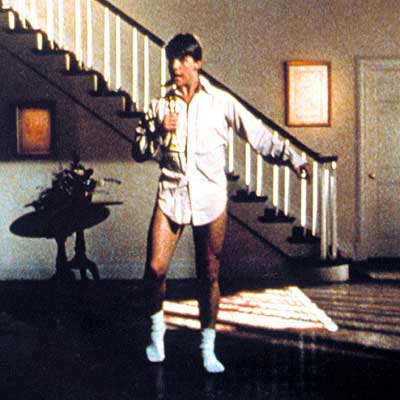 Bob Seger’s “Old Time Rock n’ Roll” has bothered me for a long time. I first heard it in Risky Business in 1983, four years after its initial release, as the soundtrack to a young Tom Cruise frolicking in his tightie-whities to his father’s sacrosanct (and expensive) hi-fi, expressing his repressed white suburban middle-class masculinity and sexuality. It was the song’s vague appeal that got me wondering even back then, how Cruise’s character was even old enough to remember the “old times” that Seger sang of. Hearing it on a “classic rock” station on a recent drive, it suddenly hit me – for many young people the song is a representation of what it clearly isn’t: “old time” rock n’ roll itself.
The song performs a form of hyper-nostalgia, not only eliding all potentially negative aspects of the “old times”—such as the racial erasure at rock n’ roll’s emergence into the mainstream—but eschewing any kind of specificity about “old time rock n’ roll” altogether. The song’s lyrical and sonic vagueness, punctuated by bland guitar solos and cheesy piano rolls, hearkens to an undefined sense of authenticity that casts doubt on other musical forms and implicitly marks itself as legitimate and authentic – laying a kind of homogeneous claim on rock itself.
The key phrase to Seger’s song, “Today’s music ain’t got the same soul / I like that old time rock n’ roll,” is leavened with irony, because it could be used as an example of “today’s music” itself – at least contemporary to the release of the song in 1979. And let’s face it, “Old Time Rock ‘n Roll” itself seems to be lacking in the soul department. Now, “soul” is a shibboleth. It is a call to a form of racial authenticity that many assume blacks have a natural, essential access to. When whites allegedly have it–it is something worthy of a NY Times article. However, when used by Seger, “soul” becomes a way of defining authentic music as having an unchanging “feel” anchored in a particular vision of the past. So distant it seems, that the lyrics can give us no real hint as to what constitutes “soul”; listeners are just supposed to know it when they feel it.
And yet, “Old Time Rock n’ Roll” arguably lacks that feel; leaving aside the happy accident of the repeated piano intro and the grain of Bob Seger’s voice, I’d make the argument that any close listening to the musical portions themselves makes the lack of “feeling” in the song evident. The song’s music can only be described as an attempt to present a generic portrait of rock n’ roll sounds, with Chuck Berry guitar licks deprived of all gusto and a sax so filtered it may have come from a late seventies synth. This could be attributable to the fact that Seger is singing over a demo meant as a model for his band to record its own version, but the fact remains that is the cut that was kept and that we all know.
The questions then arise: why so generic? Why the lack of specificity in sound and content?
The answer, I feel, can be found in the two listening practices described in the song and the preference of one over the other. The speaker’s unwillingness to be taken “to a disco / you’ll never even get [him] out on the floor” seems to be putting down a genre of music that emerges from a line of descent in the development of popular music in America that can be traced from the “blues and funky old soul” he claims he’d rather hear – Black American music. “Old Time Rock n’ Roll” can be seen as a kind of anthem of the disco wars, where rock fans violently objected to disco.
The rejection of disco then becomes part of a conflict at the time between “rock” as a dominant mainstream white musical form and disco, which Alice Echols has described in her recent book, Hot Stuff: The Remaking of American Culture, as a heterogeneous site that was black, queer, women-friendly and social and that eschewed the centrality of a ineffable “authenticity” that rock n’ roll always strove for. In order for Bob Seger’s “Old Time Rock n’ Roll” to establish its authenticity, it must contrast itself to disco, accomplishing this not only by pulling rock n’ roll into a personal listening sphere, but by eliding the sexual energy present in early rock n’ roll and still evident in the disco of the 70s. To heap upon this irony, the fact the high-hat cymbal moves into a disco off-time beat at several points in the song provides “Old Time Rock n’ Roll” with what catchy-rhythm it does have.
Leaving the disco after 10 minutes along with the opening lines of the song “Just take those old records off the shelf / I sit and listen to them by myself” one gets a sense of an anti-social listening practice that divorces the music he claims to love from its cultural context and transform it into a solitary act. Like nearly all forms of nostalgia, Seger’s view of the past of the music is problematic in its glossing over the complexities and specificities of the time he is ostensibly singing about.
 Another one of Seger’s hits may claim that “rock n’ roll never forgets,” but it seems like forgetting might be what it does best. Looking at Bob Seger’s professed influences— Little Richard and Elvis — we can see some of that forgetting in action. If the former suggests that the shifting, slippery, and flamboyant sexuality of disco has been present from rock’s very beginning, then the crowning of the latter as the “King of Rock n’ Roll” highlights just the kind of erasure that allows for a song like “Old Time Rock n’ Roll” to make sense as an anthem of whitewashed “heartland” rock. Seger’s clarion call to old timey-ness strips it of its sex even as he evokes a particular kind of “blackness” through the grain of his voice – a throaty howl full of a representation of sonic authenticity profiting of a vague sense of racial marking. In other words, Seger’s voice performs soulfulness through a growly working-class sound (typified in his “Like a Rock” Chevy commercials), itself a placeholder for race which is verboten in this construction of rock n’ roll. This kind of rock star class passing functions because of the racial erasure the songs enacts by means of white privilege.
Richard’s slippery sexuality and the way in which his most famous songs, like “Tutti Frutti” emphasize dance–and dancing as a euphemism for sex: “she rocks it to the east/she rocks it to the west/but she’s the girl that I know best”–brings me back to Seger’s denial of dance and the solitude of his idealized rock n’ roll, and thus back to Tom Cruise in his tightie-whities dancing around by himself in his parents’ fancy suburban Chicago house.
It makes sense that the scene in Risky Business is so isolated, middle-class and white – idealized rock n’ roll has been hijacked out of the heterogeneity of urban centers, and into the mythic American Heartland where white masculine sexuality can be extolled without threat. Seger’s reactionary song makes a world where it is safe for a teen-aged Cruise to enact his youthful rebellion by unproblematically participating in a form of class-passing of his own – lest we forget, the plot of Risky Business has his character playing the part of pimp to earn his way into Princeton – and yet retain his privileged position insulated from further influence of Black America on his music and on his life.


Share this:


Current Top Posts





April 2021

January 2020

November 2019

October 2019

August 2019

April 2014

November 2017

March 2015

December 2017

October 2015
 Sounding Out!
Recent Comments