
Digital Analogies: Techniques of Sonic Play

 Editor’s Note: Welcome to Sounding Out!‘s fall forum titled “Sound and Play,” where we ask how sound studies, as a discipline, can help us to think through several canonical perspectives on play. While Johan Huizinga had once argued that play is the primeval foundation from which all culture has sprung, it is important to ask where sound fits into this construction of culture; does it too have the potential to liberate or re-entrench our social worlds? Here, Roger Moseley challenges us to rethink the philosophical discourses of both sound and play and locates the moments in which they intersect and interface. From games of Telephone to Guitar Hero, Moseley considers the ways in which sonic play can help us understand the phantasmic binaries of the analog and digital.–AT
—
Throughout the distinguished intellectual lineage of play (where it is touched on by notable philosophers such as Plato, Montaigne, Kant, Schiller, Gadamer, Derrida, and Baudrillard), little attention has been paid to the parallels that can be drawn between sound and play as both media and phenomena. The very name of today’s most prominent cultural and technological locus of play, the video game, overtly privileges the eye at the expense of the ear. As recent research and creative work by such figures as Aaron Oldenburg, Aaron Trammell, George Karalis, and Enongo Lumumba-Kasongo indicates, a surge of interest in audio games, as well as video games that emphasize the importance of sound while eschewing or minimizing visual stimuli, is acting as a salutary corrective to this oculocentrism. In what follows, I suggest that bringing sonic and musical techniques to bear on this history might afford new insights into play and its myriad configurations. Conceiving of play sonically entails thinking of sound playfully. This intersectional logic can, I argue, unpick binarisms that enforce problematic distinctions and constrict thought. To demonstrate this, I conclude by deploying the concept of play to redefine the relationship between the digital and the analog—and vice versa.
How can play be defined in a manner that encompasses its farrago of meanings and associations? For video game designers and theorists Katie Salen and Eric Zimmerman, the answer is deceptively simple: play is “free motion within a more rigid structure” (Rules of Play, 304). To illustrate the flexibility of this definition, Salen and Zimmerman allude to the phenomenon of light playing upon the ocean waves. They leave unexamined, however, the intimacy and richness of the relationship between play and sound. From a scientific perspective, the patterned oscillation of which a sequence of sound waves is constituted consists of free motion within the limits set forth by the laws of physics. When disciplined and deployed as a cultural technique–take the play of musical instruments for example–sonic play is humanized and rendered transitive. But, we might also suggest that instruments play people, citing the sensation of automation with which fingers flash over fretboard or keyboard. Moving further away from anthropocentrism, we can observe how sonic technologies render play intransitive once more. From the barrel organ to the iPod, sound plays without human aid when mechanically reproduced. This way of framing reproduction invokes and extends Roger Caillois’s playful category of mimicry, which can be construed as faithful imitation, deceptive fakery, or even a Baudrillardian attempt to simulate a phenomenon that never existed.
In order to pay due attention to both the technologies through which sonic play is mediated as well as the cultural techniques imbue it with significance, I suggest that we supplement Salen and Zimmerman’s definition by thinking of freedom, motion, and structure in both digital and analogical terms. To an extent, the adoption of this modish epistemological framework acknowledges that conceptions of play are always constrained by their prevailing intellectual context. More importantly, however, I contend that technologies of sonic generation and representation from the seventeenth to the nineteenth centuries can be understood to play with the categories of the digital and the analog avant la lettre (ou le chiffre). The two categories are not mutually exclusive and to treat them as such would be to subjugate the granularity of the analog to the binary logic of the digital. Rather, they co-exist as modes between which sounds and players freely oscillate.
The origins of digital sonic play lie within the human body. As Johan Huizinga put it, “the link between play and instrumental skill is to be sought in the nimble and orderly movements of the fingers.” In the course of musical performance, human digits perform innumerable calculations. At its crudest level, musical performance from a score can be construed as a sort of algorithmic play through which mimetic fidelity is evaluated (and wrong notes relentlessly tallied). This ludic logic is at its most visible in rhythm-action video games such as Guitar Hero in which the score is no longer a text but rather a quantitative analysis. The iconography of these games usually indexes a set of digital technologies used primarily for the recording, editing, and playback of music. On the one hand, this relationship can be traced back to Leibniz’s exposition of ars combinatoria and his “invention” of binary; on the other, it is realized by the hydraulic organ and composing machine devised and programmed by the Jesuit polymath Athanasius Kircher, both of which are depicted in his Musurgia universalis (1650). In media-archaeological terms, the combination of Leibniz’s concepts and Kircher’s mechanisms gave rise to the hardware and software of Joseph Marie Jacquard’s revolutionary loom, Charles Babbage’s prototypical Analytical Engine, the player piano, the IBM punch card, and the MIDI sequencer before resurfacing in Guitar Hero, a piece of software that, in purely algorithmic terms, enlists the player’s digits to verify checksums.

An example of Kircher and Schott’s Organum, an early example of the digitization of music.
Such digital grids may constitute the field and the rules of sonic play, but they must be supplemented by analog elements if play is to flourish. As detailed in C. P. E. Bach’s Versuch über die wahre Art das Clavier zu spielen (1753/62), the clavichord and its descendants distinguished themselves from the harpsichord and the organ by endowing the keyboard with an infinite sensitivity to touch, thereby enabling a mimetic spectrum of emotional flow with unprecedented verisimilitude. Analogicity also provides another perspective on Caillois’s concept of mimicry, according to which one object or activity playfully stands in for another via imitation, deception, or make-believe. Additionally, the curves of Ernst Chladni’s figures, which materialized sound as sand, exemplify this sonic and mimetic trajectory as they rely on both Hermann von Helmholtz’s pioneering work on acoustics and the complex history of phonography to the development of analog synthesis.
In terms of sonic play, digital and analog elements can be chiastically recombined and reconfigured. A sonic communication game such as Telephone relies on the human propensity for analogy and its corrupting influence on the integrity of information transfer, playfully inverting the conditions and functions of the “real” telephone (which was engineered to compress informational content digitally without jeopardizing meaning). In much electronic dance music, the digital latticework, simultaneously visualized and rendered audible by the sequencer’s grid, constitutes a field of play overlaid with vocals, sweeps, and other analog elements that, in turn, have been captured via digital sampling. As a kind of meta-game, a mash-up plays with sonic elements whose relations can be parsed in the digital terms of Leibnizian recombinatorial play, but equally important are the unintended associations and analogies which inevitably emerge. And while games such as Guitar Hero foreground digital techniques of sonic reproduction, they simultaneously foster diverse forms of analogical play involving the player’s manipulation of the sonic (and social) behavior of her on-screen avatar—and vice versa.

Playing telephone. Image borrowed from diamondmanga @Wikimedia.
There is no doubt that the status of sound and its mediation through and as play have too often gone unacknowledged. As well as seeking to rectify this state of affairs by stressing the importance of sound in relation to the playful operations of other media, we might also dwell on the distinguishing features that set it apart: sound and the techniques that shape it are unique in the ways they simultaneously trace and are traced by the materials, technologies, and metaphors of play.
–
Roger Moseley is an Assistant Professor in the Department of Music at Cornell University. His most recent research brings a media-archaeological perspective to bear on musical performance and improvisation. He is particularly interested in how the concept of play informs sonic practices and cultural techniques. Active as a collaborative pianist on both modern and historical instruments, he has recently published essays on digital games in the contexts of musical and visual culture. His current book project is entitled Digital Analogies: Interfaces and Techniques of Musical Play.
—
 REWIND! . . .If you liked this post, you may also dig:
Papa Sangre and the Construction of Immersion in Audio Games– Enongo Lumumba-Kasongo
Playing with Bits, Pieces, and Lightning Bolts: An Interview With Sound Artist Andrea Parkins— Maile Colbert
Experiments in Aural Resistance: Nordic Role-Playing, Community, and Sound— Aaron Trammell
Share this:

Calling Out To (Anti)Liveness: Recording and the Question of Presence

Editor’s Note: Even though this is officially Osvaldo Oyola‘s final post as an SO! regular–his brilliant dissertation on Latino/a identity and collection cultures is calling–I refuse to say goodbye, perpetually leaving the door open for future encores. He has been a bold and steadfast contributor–peep his extensive back catalogue here–and we cannot thank him enough for bringing such a whipsmart presence to Sounding Out! over the years. Best of luck, OOO, our lighters are up for you!–J. Stoever-Ackerman, Editor-in-Chief
—
As several of my previous Sounding Out! Blog posts reveal, I am intrigued by the way popular music seeks to establish its authenticity to the listener. It seems that recorded popular music seeks out ways to overcome its lack of presence as compared to a live performance, where a unified and spontaneous sense of immediacy seems to automatically bestow the aura of the “authentic”—a uniqueness that, ironically, live reproducibility engenders. Throughout my time as a Sounding Out! regular, I have explored how authenticity may be conferred through artists affecting an accent as a form of musical style, comparing their songs to other “less authentic” forms of music through a call to nostalgia, or even by highlighting artificiality through use of auto-tune.
One of the ways that artists and producers get past a potential lack of authenticity when recording is through call outs to “liveness.” I am not referring to concert recordings (though there are ways that they can be used), but elements like counting off at the beginning of songs or introducing some change or movement in a song. There is no practical need to count off “One, two, three, four!” at the beginning of a recording of a song if it is being pieced together through multiple tracks and overdubs. These days a “click track” or adjustment post-recording can keep all the players in time even if not necessarily playing at once; even if a song is being recorded as a kind of studio jam, the count off could be edited out. It is an artifact of the creation, not a sign of creation itself. Instead, the counting can become an accepted and notable part of the song, like Sam the Sham and the Phaorahs performing “Wooly Bully,” giving it an orientation to time—the sense that all these musicians were present together and playing their instruments at once and needed this unique introduction to keep them all in tempo.
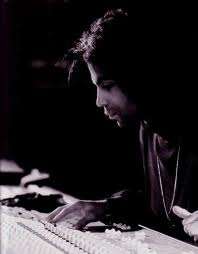 Similarly, sometimes artists call out to other musicians, giving instructions when no instructions are needed, assuming that most popular music is recorded in multiple takes using multiple tracks. In Parade‘s “Mountains,” Prince commands the Revolution, “guitars and drums on the one!” when clearly they had rehearsed when putting together the song, and ostensibly knew when the drum and guitar breakdown was coming up. Prince, furthermore, joins artists as varied as the Grateful Dead and the Beastie Boys in mixing concert recordings with studio overdubs to capture a “live” sound on songs like “It’s Gonna Be a Beautiful Night” and “Alligator.” Even something as ubiquitous as guitar feedback is a transformation of an artifact of live performance into a sound available for use in recording—something that was purposefully avoided until John Lennon’s happy accident when in the studio to cut “I Feel Fine.” Until then, playing with feedback was a way to demonstrate performance skills through onstage vamping.
These varied calls to liveness provide a sense of authenticity to music made via the recording studio, denoting what I understand as the spontaneous sociability of music. Count-offs and studio shout-outs provide a sense of unified presence to a performance, especially if the performance has actually been constructed piecemeal and over time. This is something of a remnant of an old-fashioned notion that recorded music is measured in quality in comparison to live performance. It’s any idea that hung around both implicitly and explicitly long after bands started experimenting in the studio with effects that ranged from the difficult to the impossible to replicate on stage, and reinforced through recordings by performers who purposefully referenced their lauded live performances.
.
For example, James Brown’s “Get Up (I Feel Like Being a) Sex Machine” is built on this conceit. The entire song is a conversation, a call and response between James Brown and his band, the J.B.’s. From the opening line, Brown introduces the song as moment in time in which he is compelled to do his thing, but he demands both encouragement and cooperation from the band in order to achieve it. When Brown asks Bobby Byrd, “Bobby! Should I take ’em to the bridge?” we as listeners are invited to play along with the idea that it has suddenly came into his head to have the band play the bridge—as it might’ve happened (and thus been practiced) countless times in his legendary live shows. It suggests a form of spontaneity that the reality of recording would otherwise drain from the song. Sure, according to RJ Smith’s The One: The Life and Music of James Brown (2012), “Get Up” was recorded in only two takes–already fairly amazing–but the very nature of the song makes it sound like it was recorded in one, even if it had to be broken up into two sides of a 7-inch. That reality doesn’t matter—what matters when listening is the feeling that we, as listeners, are being allowed to partake in the capturing of what seems like one unique, and continuous, moment.
The question then arises: What about recorded music that does the opposite, that makes a point of highlighting its artificial construct—the impossibility of its spontaneous performance? While there are examples that date back at least to the 1960s, does this shift highlight a difference in aesthetic concerns by the pop music audience? If calls to “liveness” suggest a spontaneous sociability to music, what do the meta references to their songcraft suggest about what is important to music now?
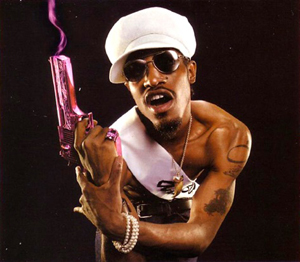
Andre 3000’s “Prototype” from 2003’s The Love Below includes chatter with his sound engineer.
The classic example is Ringo Starr’s bellow, “I GOT BLISTERS ON MY FINGERS!” at the end of the Beatles’ “Helter Skelter,” an exclamation made after umpteen takes of the song recorded on the same day, but there are more contemporary and even more obvious examples. Near the end of Outkast’s “Prototype,” (at 4:21) Andre 3000 can be heard talking to his sound engineer John Frye about the ad libs, “Hey, hey John! Are we recording our ad libs? Really? Were we recording just then? Let me hear that, that first one. . .” There is an interesting tension here between the spontaneity of an “ad lib” and listening back to pick the best one or further develop one when re-recording, and Andre in his role as producer decided to keep it in as part of the final product. The recording itself becomes part of the subject of the song as a kind of coda. The banter is actually a brilliant parallel to the content of the song, which undermines the typical “we’ll be together forever” love song trope for one that highlights the reality of serial monogamy common in American culture and lessons each relationship potentially provides us for the next. Rather than pretend that a romantic relationship is a unique and eternal thing, the song admits the work and changes involved, just as it admits that the seemingly special spontaneity of a song is developed through a process.
Of course, hip hop as a genre, with its frequent use of sampling, tends to make its recording process very evident. While it is possible to play samples “live” using a digital sampler or isolating sections on vinyl via the DJ as band member, the use of pre-recorded fragments means that rap music relies on the vocal dynamics of rap to carry the sense of spontaneity. Yet, in 1993’s “Higher Level,” KRS-One opens with a description of the time and place of the recording—“5 o’clock in the morning” at “D&D Studios,” establishing forever when and where and thus how the recording is happening. Five o’clock in the morning places the creation of the song with a context of working and rocking all through the night to get the album completed. The song may or may not have actually been recorded last, but its placement at the end of Return of the Boom Bap, gives it a sense of a last ditch effort to complete the collection of songs. The fact that “5 o’clock in the morning” is likely also among the cheapest available studio times potentially highlights budgetary concerns in the recording itself. This is a rare thing to include in recording, though the Brand New Heavies cap off the dissolution of their 1994 track “Fake” into pseudo-jazz-messing-around with one their members chiding, “a thousand dollar a day studio!” This is a different kind of call to authenticity, as a budgetary concern is an implicit to a “realness” defined by being non-commercial.
 One of my all-time favorite examples is a few years older than “Higher Level”—“Nervous” by Boogie Down Production: “written, produced and directed by Blastmaster KRS-One,” which includes an attempt to explain how a song is put together on the “48-track board.” Instead of calling instructions to a band, KRS points out that DJ Doc is doing the mixing and instructs him to “break it down, Doc!” just before a beat breakdown (listen at around 1:40). He explains, “Now, here’s what we do on the 48-track board / We look around for the best possible break / And once we find it, we just BREAK,” and then the pre-recorded beat seems to obey his command, breaking down to just the bass drum and a sampled electric piano from Rhythm Heritage’s “The Sky’s the Limit.” Later, he says, “We find track seven, and break it down!” and the music shifts to just the bass guitar and some tinny synth high-hats.
.
So how does highlighting the recording circumstances, or just bringing attention to the fact that the song being listened to is a multiple-step process of recording and post-production benefit the song itself? Is it like I mentioned in my 2011 “Defense of Auto-Tune” post, that this kind of attention re-establishes authenticity by making its constructed nature transparent? I’d say yes, in part, but I also think that–through its violation of the expectation of seamlessness–the stray track or reference to recording within a song is a nod to a different kind of skillfulness. Exhortations such as “Take it to the Bridge” give an ironic nod to the extemporaneous to call attention to the diligent workmanship and dedication demanded by studio songcraft. Traditionally, live audiences may appreciate a flawless or nearly flawless performance and understand a masterful recovery from (and/or incorporation of) error as the signs of a good show, but, these moments that call attention to the recording studio situation claim there something to appreciate in the fact that Ringo Starr endured 18 takes of “Helter Skelter” until he had painful blisters, or that KRS-One and DJ Doc worked out the proper way to “feel around” the mixing board to make a grooving collage of sounds as disparate as the theme from “Rat Patrol” and WAR’s “Galaxy.”
KRS may have once admonished other MCs to “make sure live you is a dope rhyme-sayer,” but clearly he believes liveness—whether implicitly or explicitly—is not the only measure of musical ability. Rather, the highlighting of labor in the construction of a recording becomes its own kind of (anti-)vamping and demonstration of skill, and of a different kind of sociability in making music that these conversational snippets and references to other people in the studio make clear. This kind of attention to the group labor is especially important as various recording technologies become increasingly available to the wider public and allow for an isolated pursuit of recording music. Just as calls to liveness in recording engage the listener in ways that suggest participation as a live audience, calls to anti-liveness also engage the listener, but by bringing them across time and space into the studio to witness to a different form of great performance.
—
Osvaldo Oyola is a regular contributor to Sounding Out! and a PhD Candidate in English at Binghamton University working on his dissertation, “Collecting Identity: Popular Culture and Narratives of Afro-Latin Self in Transnational America.” He also regularly posts brief(ish) thoughts on music and comics on his blog, The Middle Spaces.
—
REWIND! . . .If you liked this post, you may also dig:
Evoking the Object: Physicality in the Digital Age of Music–-Primus Luta
Experiments in Agent-based Sonic Composition–Andreas Pape
Musical Objects, Variability and Live Electronic Performance—Primus Luta
Share this:


Current Top Posts





April 2021

January 2020

November 2019

October 2019

August 2019

April 2014

November 2017

March 2015

December 2017

October 2015
 Sounding Out!
Recent Comments