
Could I Be Chicana Without Carlos Santana?

DOI: https://doi.org/10.59350/8h53d-7nr15
This may be a given but I have to ask: Why is the music of Carlos Santana considered “Chicano music?”
It’s true; I am a fan. And as a fan I never question why I love the music, but I often ask myself what it is specifically about the music that resonates so strongly with me. I could say that I love Santana because I love a soulful electric guitar voice, because I admire the musicianship of the band, because I feel the “sabor” they sing about, because I’ve always loved Santana. But these parts surely do not make up a satisfying the “whole.” There is something else, something about listening to the music that amplifies my sense of identification as a Chicana with other Chicanos and Mexicanos. This happens whether I’m among raza, in the various communities I call home, or whether I find myself feeling very far from Aztlán. I’ve witnessed the effect of the music – maybe you have too – when it comes on the car radio, at backyard family BBQs, and friend’s living room dance floors, the music gets your body up and connects you to your Chicano roots.
In this sense, Santana is forever part of the Chicano sounded imaginary. For Chicanos, identifying with the music of Carlos Santana may have a special meaning that has something to do with a particular Chicano/Mexicano subjectivity. Yet, for non-Chicanos, Santana still retains their quintessential American rock band status. Most of their airplay is on mainstream radio, rarely if ever on Spanish-language stations. So Santana can be thought of at once as “puro” Chicano or “classic rock,” except that Santana is a straight up fusion band. This is why I have to ask, is the music of Santana “Chicano” music? And I further wonder, could I be Chicana without Carlos Santana?
…Oye Como Va…
Before the Rob Thomas & Carlos Santana collaboration on the Grammy award-winning album Supernatural (1999), before the phenomenon of “Smooth,” there was classic Santana. The Santana that produced the self-titled debut album Santana (1969) and Abraxas (1970). The songs “Evil Ways,” “Black Magic Woman,” and “Oye Como Va” from these two albums are on constant rotation on “classic rock” stations well after forty years since they first hit the airwaves. Even if you’re not a fan or a music connoisseur, when listening to “Oye Como Va” or “Smooth” it’s easy to recognize a distinct “Latin-ness” about them. In part, this is because of the fusion of Spanish and English lyrics with rock, blues, jazz, and Afro-Latin musical styles. For Chicanos, this particular fusion of language and sound might also resonate as something familiar and close to home – if sound can be a home. A quick search on YouTube will lead you to the classic 2000 Grammy Awards Performance of “Smooth” and a wealth of competing claims by fans (and foes) in the comments section.
Fan 1: “SANTANA ERES LO MAXIMO, VIVA MEXICO!!!!!!!!”
Fan 2: “Salsa baby, Oye Como Va is universal, Carlos is the man!!!!”
This was a special and high-profile performance so these comments are exceptionally spirited. But, YouTube is full of spontaneous, impassioned, (albeit anonymous) examples like this on any given day. I highlight these two as sort of placeholders for the idea of how sound and music mighty carry significant meaning toward subject formation in an everyday sense. These fans claim Santana both for Mexico and for the world, respectively, because they reflect a strong sense of Mexican or Chicano pride. In the first comment, the very enthusiastic fan could easily be a Mexico City native, maybe a Chicano wanting to sound like a Chilango –“ERES LO MAXIMO” is not a Chicano Spanish expression. The second fan’s comment is all in English and could be Chicano simply based on that—but those are slightly secondary points. As I suggested earlier, for Chicanos, Santana’s music has the potential to reflect a sense of ethnic history and culture. Sound can be a home. After all, the first comment claims Santana’s music for a whole country with “VIVA MEXICO!” helping to affirm the feeling that this fan and Carlos are Mexicanos together, across time and place.
When I was studying music in college, Mexican, Chicano, or Latino music was not part of the curriculum. Instead, in my private piano lessons, I would gravitate toward pieces by Spanish or Latin American composers as a sort of “good enough” way to stay in touch with my latinidad. This helped, but the fact is that Latin American art songs have much more in common with the Western musical canon than they do with my experiences and Chicana consciousness. In other words, it was a reach to identify with these composers solely because we shared a language. What would I miss in a too quick move to identify with the Latin-ness of Santana’s music this way? Would I hear only the Spanish spoken in the song? If so, then gaining a sense of my Chicana/o subjectivity by claiming “Oye Como Va” (for Aztlán?) relies on partially subsuming the specific Caribbean contexts and poetics of the song. Is this song originally Cuban, Puerto Rican? It’s really just a party song. “Oye como va, mi ritmo, bueno pa’ gozar, mulatta” Eso! Does it really matter now if Santana’s version has re-defined it for all time?
In a way, the second fan expresses a more complex desire: “Oye Como Va is universal.” Everyone knows that Carlos Santana is Mexican, some know that he is also an immigrant, and still others may have read that he grew up in Tijuana. As part of American rock music history, Santana’s roots are firmly planted in San Francisco and the Bay Area and it is well known that Santana played at the historic Woodstock Festival of 1969. Clearly, amongst other identities, Santana is a classic American rock band with long and wide appeal. But from the beginning, along with creative fusions of rock, jazz, blues, and salsa, it has been the distinctly Afro-Latino percussion core that defines their emblematic sound. And this is exactly how and why dwelling on these details in the sound of Santana matters. If Santana comes to mean or signify something like “pur0 Mexicano” or “pur0 Chicano” (in a brown pride or brown power sense) then that purity is already so productively and interestingly troubled because there is nothing remotely “pure” about Santana’s music.
Therefore, to identify with the music means confronting those complex fusions of language, race, and music that make up the Santana “sound.” To partly answer my earlier question, “Oye Como Va” is a composition by the renowned Puerto Rican timbalero and band leader Tito Puente, but the musical form, a basic cha-cha-cha, is Cuban. The song has other authors as well, that both Santana and Puente name. But ultimately, this song and indeed much of Santana’s music, comes in wake of much older histories of African diaspora, migration, colonization, artistry and spirituality.
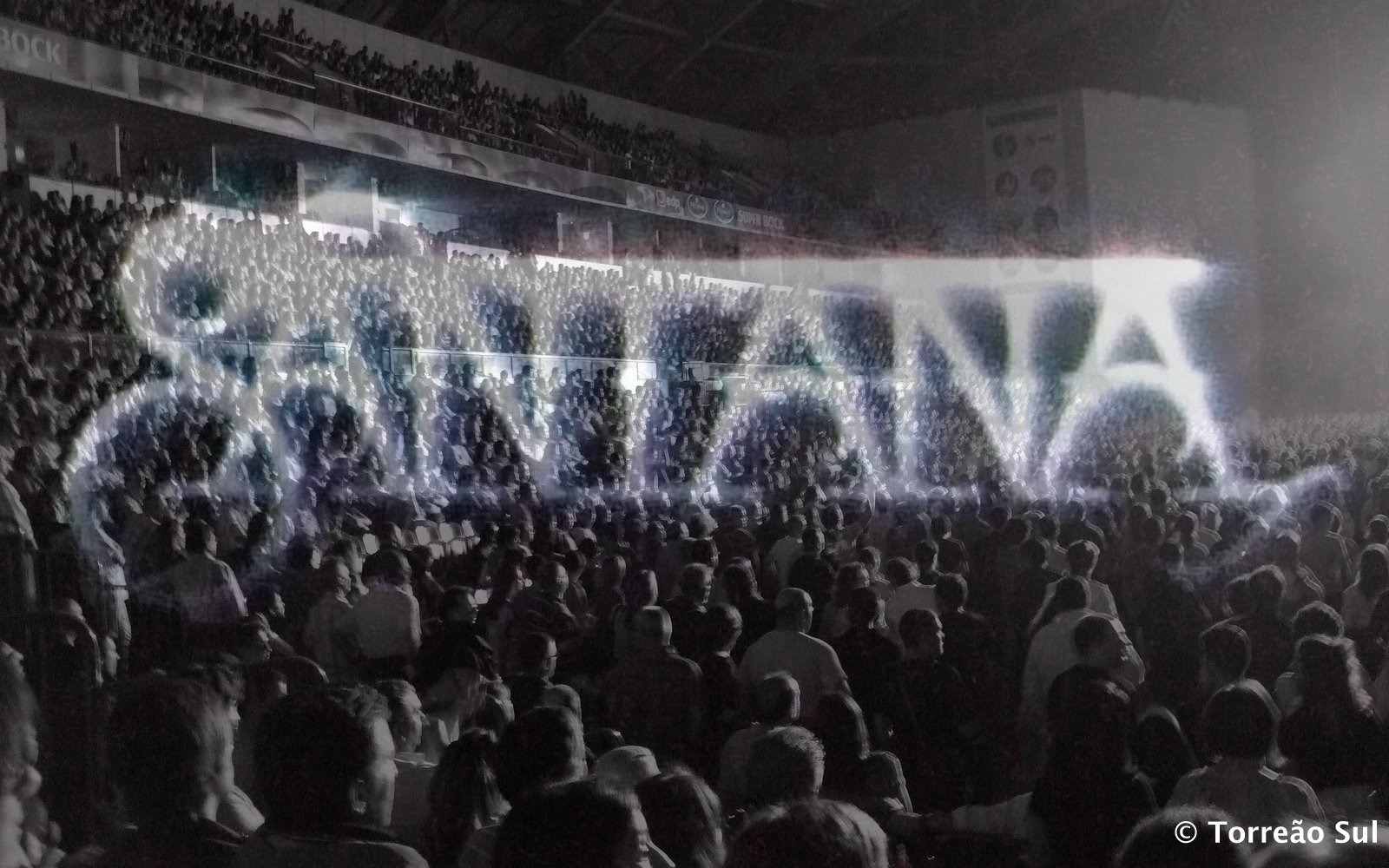
…Sounding Home…
In a way, I’ve always felt that Santana’s music was making a black/brown connection, that racial boundaries were necessarily crossed or brought together because of the many histories that flow through the music. As a child of Mexican immigrant parents, I grew up listening to a wide repertoire of Afro-Latino music – elegant danzónes, romantic boleros, joyous cumbias, mad mambos, as well as more traditional Mexican music. Maybe that is also part of why listening to Santana reminds me of home. But this is perhaps too simple a response.
Santana’s music and popular image has been engaged in positive but also problematic ways in Chicana/o cultural production. Most recently, I noted this in a performance of the play New Fire, by Cherrie Moraga, in San Francisco. At a critical point in the drama, the evocative love song “Samba Pa’ Ti” is used to introduce a male character and a difficult, sexually violent scene. Moraga’s larger critique is of violent Chicano patriarchy and masculinity. The play is offered as a healing ceremony. But the association of this song, which features a famous guitar solo, with that specific scene is profoundly jarring. My sense was that Moraga selected Santana for the play’s soundscape it served as a shorthand for “Chicano.” Here, it was made to bear the history of violence of brown men against brown women and girls. This made it difficult for me to identify as a Chicana–queer and feminist–with Carlos Santana at that moment, and some time after. Surely this is also part of what “home” means.
Santana’s music interests me for these reasons, which go beyond the sounded Chicano imaginary in my headphones. What I find worthwhile in thinking further about Santana’s “sound” is how in the many acts of claiming Santana for oneself, one’s country, or one’s community, I can trace the way in which Chicano and Caribbean histories, both racialized and gendered, touch and cross in the music. That is, I see this as an invitation for the listener to reimagine notions of race, nation, gender, and sexuality even while dancing and singing along. In these ways, I see meaningful possibilities for imagining Chicana/o as a sounded subjectivity. I am certain that my sense of who I am, how I think, and how I walk in the world has been shaped by a life-long relationship with music and sound. And although being “Chicana” to me is not the same for anyone else, Santana’s music helps me to imagine a connection, a musical lineage I can trace and take part in. Santana is not my parent’s music. It’s not even my generation’s music. And, it’s not my only musical identity. But, even so, I couldn’t imagine being Chicana without Carlos Santana. Because when I listen, I do hear it, I hear how it all goes, together, and that is so, so good. “Give me your heart, make it real, or else forget about it!”
—
Wanda Alarcón is a PhD student in Ethnic Studies at UC Berkeley where her research involves reading Chicana and Caribbean “stories” together in a decolonial feminist vein. When she’s not living the glamorous grad student life she likes to make zines about po’try, learning new songs on her childhood piano, cooking for her loved ones, and exploring NorCal with her main squeeze. A native Los Angelena, she is beginning to appreciate thinking and writing about her beloved hometown from afar. Music helps bridge that distance. So do the trees and ocean breezes. She lives and loves kibbutz-style in Santa Cruz with her partner por vida, Cindy, their two sassy cats Lucy & Mona, and dear housemate, Ella.
—
Share this:

I Can’t Hear You Now, I’m Too Busy Listening: Social Conventions and Isolated Listening
Editor’s Note: I hate to interrupt our busy readers, but I just wanted to mention that today’s post by Osvaldo Oyola marks our last entry in SO!‘s July Forum on Listening. For the full introduction to the World Listening Month! series click here. To peep the previous posts, click here. Also, look for our #Blog-O-Versary 3.0 post coming up on July 27th, a multimedia celebration of three years of Sounding Out! awesomeness (complete with a free, downloadable soundtrack compiled by our editors and writers for your listening pleasure). Now for some pure, uninterrupted reading (we hope!).–JSA
—-
DOI: https://doi.org/10.59350/56hpx-gcv26
In calling attention to listening as an activity, July 18th’s World Listening Day made me think about our social conventions around listening. While it is not uncommon for folks to pay lip service to listening’s value, this ignores the variety of ways that listening is actually socially prioritized (and the multiple meanings housed in the term “listening”). Case in point, the officiant at my recent wedding exhorted my about-to-be-wife and me to listen to each other: “listen for what is consistent and familiar, but also for what is new, emergent, even sweetly radical in your partner.” When used in this sense, listening refers to a focused attention to the meaning of sound, particularly language. His words suggest that our relationship would be strengthened by listening’s ability to convey interpersonal knowledge.
While listening is certainly crucial to social bonds, my own experience as a careful and engaged listener of music suggests that some of the most crucial listening we do happens as an isolated–and isolating experience–especially when listening involves recorded sound. However, its importance to our individual well being often seems directly inverse to the (lack of) seriousness other people seem to give it. Not my now-wife, of course, but uninterrupted musical listening was not an official part of our vows, either. There is an inherent tension between social and isolated forms of listening.
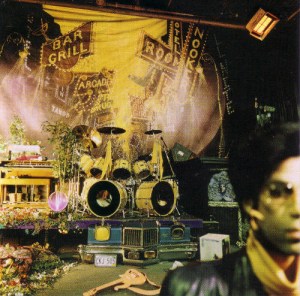
As a teenager, for example, whatever my arguments with my mom might have really been about, a frequent instigator of a blow-up was her reaction to my annoyance when she’d interrupt my listening at her whim. I’d be sitting in my room listening in anticipation for what I have often called my favorite recorded human sound–that moment in Prince’s “Adore” on Sign o’ the Times around 2:55 (music nerd correction: on the album version it is actually at 2:48) when Prince makes a little moan before the second time he sings “crucial”–and mom would burst into the room to ask me a question, giving no heed to the stereo. I often responded to this in the same way: “If I were reading or watching TV, you’d say ‘excuse me,’ to get my attention, just like you always taught me a polite person should do. But when it is music you just go ahead and interrupt as if I weren’t doing anything, but I am doing something. I’m listening to music. It’s an activity.” (Of course, you have to imagine that response laden with all the snottiness only a teenager could muster). You would’ve thought she’d understand, since my obsessive love of music was influenced in no small part by her huge collection of salsa records, but my mom’s listening is mostly predicated on embodying the music through dance. This kind of listening is not so much about close attention to the details of the sound, but rather on a visceral reception of its physicality. Again, like listening to speech, the form of listening given to dance commonly reinforces social bonds—between dance partners, among dancers in a crowd, between dancers and DJ or band.
The kind of listening I am describing cuts us off from the immediate social world. It requires that people who want your attention must rudely interrupt your listening pleasure or ask forgiveness for the interruption. Theoretically, they could wait patiently, but this rarely happens, so the listener often feels forced to downplay the annoyance that comes along with interruption, lest they break a social bond and/or belie how important this kind of listening really is to them.
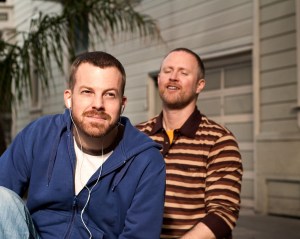
Of course, the ubiquity of headphones suggests that there are many people who want to be focused enough on their listening as to avoid interruption. (Though, that may be a chicken-and-the-egg situation, as I can’t help but wonder to what degree the headphones become an excuse for social disengagement.) Either way, it is noteworthy that the wearing of headphones become a visual clue for a desire to be isolated in the listening practice, even when in an otherwise public environment. If you are going to ask a stranger on subway for directions, you are less likely to choose the person with headphones on, and if you do choose to ask them, the headphones direct the form of social action required to get their attention and ask. It calls for a visual signal, like a gesture to remove the headphones, or even polite physical contact, like a tap on the shoulder—but you certainly would not pull the headphones off their ears and just start talking at them, as you might talk at someone listening to music through speakers if you happen to walk into the room. The invention of things like the Doffing Headphone handle, which allows headphone listeners to greet others by “doffing” their headphones like one used to do with a hat, arises from the need for isolated listeners to interact with the social world even while enmeshed in their portable bubble of personal space. However, be that as it may, the handles have not exactly caught on.
Perhaps headphones are the just the logical evolution of crafting a listening space. They are certainly much more feasible than the ‘Yogi Enclosure’ Kier Keightley discusses in his article “’Turn It down!’ She Shrieked: Gender, Domestic Space, and High Fidelity, 1948-59.” The “Yogi enclosure” was High Fidelity magazine’s tongue-in-cheek (and highly gendered) 1954 solution to a man’s inability to enjoy his hi-fi in a space where he is likely, the article suggests, to be harangued by his wife and annoyed by his children. This masculinizing of listening speaks to the social contours of what is ostensibly an individual practice. In the case of my teenaged self and my mother, I wanted my 1000th listen to Dark Side of the Moon to dictate her behavior in the way that other individual activities in a shared space dictate behavior through social conventions. Looking back, I was also trying to claim space in her home. I never considered how as a mom she was expected to always be available, never free from interruption no matter what she was doing. Keightley’s article demonstrates this through explaining the construction of listening technologies as a domain of men that requires women and children to be quiet in order to allow him the pleasure of his equipment. I could imagine my right to be uninterrupted, for my listening to be taken seriously, considered a productive activity, by virtue of my gender and my youth. While, now that I think of it, even the majority of my mom’s record-listening and salsa dancing accompanied household chores that fierce adherence to gender roles demanded time she might have preferred to dedicate to listening alone.
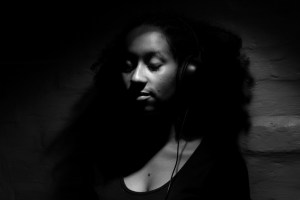
While gender politics have changed significantly since 1954, careful music listeners of any gender still seek to define the use of space through the use of sound, intentionally or unintentionally. There is a satisfaction that comes with filling a space with sound that I feel cannot be matched by even the highest quality noise-canceling headphones. Sound emerging from speakers and moving through the air creates a presence. It demands attention. It dictates behavior. It is a kind of power.
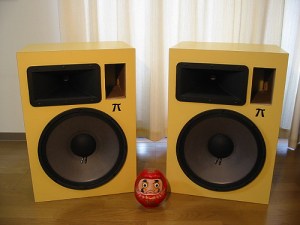
Another case in point: I can remember my college roommate and I (the same fellow who’d end up being the officiant at my wedding, coincidentally enough) traveling from store to store to try out different stereo speakers, carrying a CD copy of This Mortal Coil’s Filigree & Shadow and getting salesmen to play the soft sounds on tracks like “Thias (II),” as a test. These were the days before online comparison shopping, so in order to achieve this idealized listening experience–which for us meant the loudest and softest sounds were equally clear–we had to annoy salesmen with our self-important discussion of miniscule differences in sound quality and failure to actually purchase the costly speakers we were trying.
.
What I am trying to convey with this anecdote is that, while the idealized listening experience we imagined was an isolated one (probably something involving staring at the glow-in-the-dark star stickers on the ceiling of our darkened dorm room), it was born of the sociality and power I mentioned above. We were exercising a form of privilege (or at least practicing for an imagined future masculine power over the domestic sphere). This imagined idealized listening not only required a developed understanding of what we were listening for, but a shared sense of the ideal circumstances for those focused, uninterrupted, close listening sessions. And those ideal circumstances required a freedom from the responsibilities of social bonds, that we, as young men, never doubted we could access. There is no part of listening (as opposed to merely hearing) that isn’t social, and both isolated and more explicitly interpersonal forms of listening feed each other, but only when both are valued, nurtured, and made possible.
I thought by exploring these isolated listening experiences that I might come closer to understanding the primacy of the visual in the social etiquette of interruption, but I am no closer. Instead, I am left to consider the dynamics of power that (dis)allow that space for close listening. All I have learned about the matter since those teenaged arguments with my mom is that, if I plan to do some real listening, I either need to be alone in the house or that the onus is on me, the listener, to make an announcement: “I will be listening to music now.” Still, more often than not, I put on my headphones. The fact remains that without the visual signals that let others know that listening is occurring–headphones, dancing–listening as a solo activity is so often devalued and interrupted. Sound alone is not enough.
Now if you’ll excuse me, I just got Jonathan Lethem’s book on Fear of Music, and I plan on closely listening to each track of the Talking Heads’ record before and after the associated chapter in Lethem’s book. Let’s hope I won’t be interrupted.
—
Osvaldo Oyola is a regular contributor to Sounding Out! and ABD in English at Binghamton University.
—
Share this:




Current Top Posts





April 2021

January 2020

November 2019

October 2019

August 2019

April 2014

November 2017

March 2015

December 2017

October 2015


Recent Comments