
Top Ten Sounding Out! Posts of 2025!

.
16 years in, we’re still here, listening hard for each thump, rasp, and rattle of the drum to amplify for our readers. Keep the pressure coming louder and louder for us to propagate, and look out for our print edition, Power in Listening: The Sounding Out! Reader to drop in August 2026 from NYU Press! –JS, Ed-in-Chief
Here, beginning with number 10, are our Top 10 posts released in 2025 (as of 12/13/25)!
—

(10). The Sonic Rhetoric of Quincy Jones (feat. Nasir Jones)
By Jaquial Durham
“The passing of Quincy Jones has left a silence that feels almost impossible to fill. Every time I play Thriller at home now, it’s no longer just a celebration of his unparalleled artistry. It’s a ritual to sit with his legacy, listen more closely, and honor how his music shaped the sound of memory itself. With each spin of the record, my family and I find ourselves inside his arrangements, held by their richness, precision, and sense of story as though the music is breathing with us, speaking back across time. Jones’s work was never just production; it was communication. A language of sound connected us to melody and beat and the fuller spectrum of emotion, culture, and memory that lives in Black music.. .”
[Click here to read more]
—

(9). The Techno-Woman Warrior: K-pop and the Sound of Asian Futurism
By Hoon Lee
“As a ’90s kid, I remember too well us school kids singing and dancing to the songs at the top of the charts on music shows such as Ingigayo (인기가요) and Music Bank (뮤직뱅크). It was what one might call the “pre-K-pop” era: there were a lot of solo artists performing in various genres, and the notion of idol culture as we know it now was only fledgling. Without the mass production system or the global distribution that has come to be the norm in today’s K-pop, first generation idol groups around the new millennium—H.O.T., Fin.K.L, god, Sechs Kies, S.E.S.—not only set up these business models and standards, but also inspired the music and aesthetics of later generations. The group aespa’s cover of “Dreams Come True” by S.E.S. is an exemplar case, and NewJeans, with their unflinching Y2K aesthetics and sound, take us back to the millennial through and through. . .”
[Click here to read more]
—
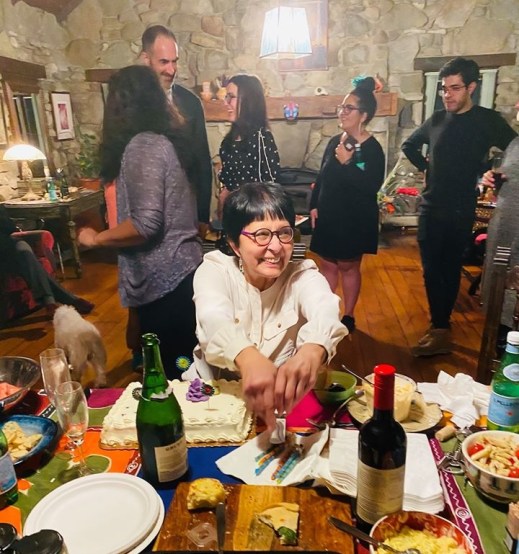
(8).Finding Resonance, Finding María Lugones
By Daimys García
“I am always listening for María: I find her most in the traces of words.
Trained as a literary scholar, I relish in the contours of stories; I savor the nuances found between crevices of language and the shades of implication when those languages are strung together. It is no surprise, then, that since the death of my friend and mentor María Lugones, I have turned to many books, particularly her book, Pilgrimages/Peregrinajes: Theorizing Coalition Against Multiple Oppression, to feel connected to her. I have struggled, though, to write about her, talk about her, even think about her for many years. It wasn’t until I found a passage about spirits and hauntings in Cuban-American writer and artist Ana Menéndez’s novel The Apartment that I found language to describe a way through the grief of the last five years. . .”
[Click here to read more]
——

(7). The Sounds of Equality: Reciting Resilience, Singing Revolutions
by Mukesh Kulriya
“When the pandemic hit the world in late 2019, the concept of lockdown ceased the social life of the people and their communities. In these unprecedented circumstances, a video from Italy took the internet. People in Italian towns such as Siena, Benevento, Turin, and Rome were singing from their windows and balconies, which raised morale. The song “Bella Ciao,” an old partisan Italian song, became an anthem of hope against adversity. This anti-fascist song was popularized during the mid-20th century across the globe as a part of progressive movements. Following this, people in many countries around the world created their renditions of “Bella Ciao” in Turkish, Arabic, Kurdish, Persian, French, Spanish, Armenian, German, Portuguese, Russian, and within India in languages such as Punjabi, Marathi, Bangla, and even in sign language renditions. It was such an apt moment that captured the idea of empathy, solidarity, and the human need for community. This moment was still resonating with me when I was approached by Goethe Institut, New Delhi, to work on music and protest, and create The Music Library. I knew what I needed to do. . . .”
[Click here to read more]
—

(6).SO! Reads: Zeynep Bulut’s Building a Voice: Sound, Surface, Skin
—by Enikő Deptuch Vághy
“Voice and sound theorist Zeynep Bulut’s Building a Voice: Sound, Surface, Skin (Goldsmiths Press, 2025) is a remarkable work that reconfigures the ways we define “voice.” The text is organized into three sections—Part 1: Plastic (Emergence of Voice as Skin), Part 2: Electric (Embodiment of Voice as Skin), and Part 3: Haptic (Mediation of Voice as Skin)—each articulating Bulut’s exploration of the simultaneously personal and collaborative ways voice evolves among various sonic entities and environments. Through analyses of several artistic works that experiment with sound, Bulut successfully highlights the social effects of these pieces and how they alter our expectations of what it means to communicate and be understood.”
[Click here to read more]
—
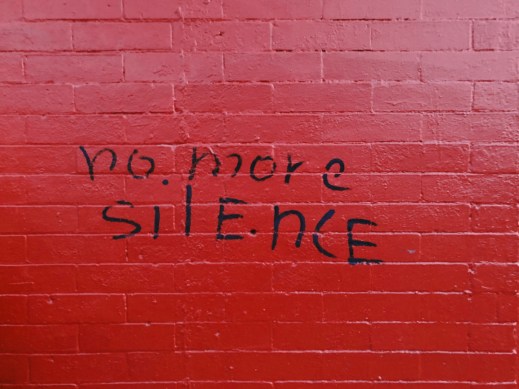
(5). Clapping Back: Responses from Sound Studies to Censorship & Silencing
by MLA Sound Studies Executive Forum
“The MS Sound Forum invites papers for a guaranteed session at the Modern Language Association’s annual conference in Toronto, Canada in January 2026. The session responds in part to the MLA Executive Council’s refusal to allow debate or a vote on Resolution 2025-1, which supported the international “Boycott, Divest, and Sanction” (BDS) Movement for Palestinian rights against the ongoing genocide in Gaza. In light of the Council’s suppression of debate, some of the Sound Forum Executive Committee members decided to resign in protest while others remained to hold the MLA accountable for its undemocratic procedures. To acknowledge and respect the decision of those who left, the remaining members chose not to immediately fill the vacancies to let the parting members’ silence speak.. . .”
[Click here to read more]
—

—(4). “Just for a Few Hours, We Was Free”: The Blues and Mapping Freedom in Sinners (2025)
by Juston Burton
“In the 2025 blockbuster Sinners, Ryan Coogler has a vampire story to tell. But before he can begin, he needs to tell another story—a blues one. Sinners opens with a voiceover thesis statement performed by Wunmi Mosaku (who plays Annie in the film—more on her below) about the work the blues can do, then rambles the narrative through and around 1932 Clarksdale, eventually settling into a juke joint outside of town. Here, the blues story builds to a frenzied climax, ultimately conjuring the vampires propelling the film’s second half. It’s those vampires that most immediately register as cinematic spectacle, but Coogler’s impetus to film in IMAX and leverage all of his professional relationships for the movie wasn’t the monsters—it was to showcase the blues at a scale the music deserves. In Sinners, the blues takes center stage as a generative sonic practice, sound that creates space to be and to know in the crevices of the material world, providing passage between oppression and freedom, life and death, past and future, and good and evil. . .”
[Click here to read more]
—

—(3). “Keep it Weird”: Listening with Jonathan Sterne (1970-2025)
by Benjamin Tausig
“Dr. Jonathan Sterne passed away earlier this year. He was, in many ways, a model scholar and colleague.
The intellectual ferment of the field now called “sound studies” is often traced to the sonic ecologists of the 1960s, but the theoretical energy of the early 2000s, generated by figures such as Ana Maria Ochoa, Alexander Weheliye, Emily Thompson, Trevor Pinch (1952-2021), and of course Jonathan Sterne, was necessary for the field to gain interdisciplinary traction in the twenty-first century. Sterne’s The Audible Past: Cultural Origins of Sound Reproduction (Duke University Press: 2003) was perhaps the single-most important book in this regard.
Trained in communications, and working in departments of communication, first at Pitt and later McGill, Sterne oriented his work toward media studies, and indeed, The Audible Past is principally about mediation. It poses questions about the role of sound in the history of mediation that earlier generations of sound studies had tended to elide, especially regarding the contingent and often cultural role of the human ear in reception. These questions opened the door for anthropologists, historians, communications scholars and ethnomusicologists in particular to think and even identify with sound studies, and many of us who were trained in the 2000s did so enthusiastically, with Sterne’s writing a lodestar.. . .”
[Click here to read more]
—

(2). Faithful Listening: Notes Toward a Latinx Listening Methodology
by Wanda Alarcón, Dolores Inés Casillas, Esther Díaz Martín, Sara Veronica Hinojos, Cloe Gentile Reyes
“For weeks, we have been inundated with executive orders (220 at last count), alarming budget cuts (from science and the arts to our national parks), stupendous tariff hikes, the defunding of DEI-anything, the banning of transgender troops, a Congressional renaming of the Gulf of Mexico, terrifying ICE raids, and sadly, a refreshed MAGA constituency with a reinvigorated anti-immigrant public sentiment. Worse, the handlers for the White House’s social media publish sinister MAGA-directed memes, GIFs across their social channels. These reputed Public Service Announcements (PSAs), under President Trump’s second term, ruthlessly go after immigrants.
It’s difficult to refuse to listen despite our best attempts.. . .”
[Click here to read more]
—

(1). SO! Podcast #82: Living Sounds: Rhythms of Belonging
“CLICK HERE TO DOWNLOAD: SO! Podcast #82: Living Sounds: Rhythms of Belonging
SUBSCRIBE TO THE SERIES VIA APPLE PODCASTS
FOR TRANSCRIPT: ACCESS EPISODE THROUGH APPLE PODCASTS , locate the episode and click on the three dots to the far right. Click on “view transcript.”
It’s been a minute for the SO! podcast but we are glad to be back–however intermittently–with a podcast episode that shares a discussion between women sound studies artists and scholars. The panel “Living Sounds: Rhythms of Belonging,” was held on September 19 at 6-7pm EDT at The Soil Factory arts space in Ithaca, New York. Moderator Jennifer Lynn Stoever, sound studies scholar and our Ed. in Chief, talks with four women sound artists about their praxis: Marlo de Lara, Bonnie Han Jones, Sarah Nance and Paulina Velazquez Solis.. . .”
[Click here to read more]
—
Featured Image: “microphone on the bass drum of the drummer for No Age” by Flickr User Dan MacHold CC BY-NC-SA 2.0
—

REWIND! . . .If you liked this post, you may also dig:
The Top Ten Sounding Out! Posts of 2024
The Top Ten Sounding Out! Posts of 2023!
The Top Ten Sounding Out! Posts of 2020-2022!
The Top Ten Sounding Out! Posts of 2019!
The Top Ten Sounding Out! Posts of 2018!
The Top Ten Sounding Out! Posts of 2017!
The Top Ten Sounding Out! Posts of 2016!
The Top Ten Sounding Out! Posts of 2015!
Share this:

Finding Resonance, Finding María Lugones
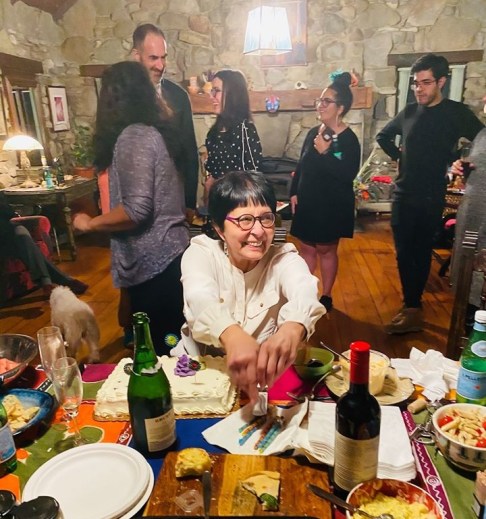
I am always listening for María: I find her most in the traces of words.
Trained as a literary scholar, I relish in the contours of stories; I savor the nuances found between crevices of language and the shades of implication when those languages are strung together. It is no surprise, then, that since the death of my friend and mentor María Lugones, I have turned to many books, particularly her book, Pilgrimages/Peregrinajes: Theorizing Coalition Against Multiple Oppression, to feel connected to her. I have struggled, though, to write about her, talk about her, even think about her for many years. It wasn’t until I found a passage about spirits and hauntings in Cuban-American writer and artist Ana Menéndez’s novel The Apartment that I found language to describe a way through the grief of the last five years.

Menéndez’s novel follows many characters that all, at some point in time, come to live in apartment 2B in Miami Beach. While each person is seemingly disconnected from the next, they all leaves sonic traces of themselves for the next person’s arrival. Each new tenant leaves behind the creak of a dented floorboard, or the rumbling of the air conditioner, the faint melody of a piano, or the swish of spirits looking for a place to sit down. The climax of the novel revolves around Lenin García, a young Cuban migrant who commits suicide in the Miami apartment shortly after arriving. Anna, a journalist who migrated to the US from the Czech Republic during their communist regime, prepares the apartment for rental after the suicide. When looking through Lenin’s belongings she explains that the “Spirits pressed down on her, and again and again she rejects them. Sends them packing, back to the pre-rational past. Not a haunting, but an echo. The boy’s life a gesture pointing back to her own. A dream of a thousand iterations” (131). These spirits that surround her, that remind her of her own life’s ghosts, provide a particularly sonic connection; the tethers that connect one migration tragedy to another is an echo of commonality that creates a kin experience.
The three years I learned with and from María are overshadowed by the physical distance the pandemic required of me in her final moments. When I try to write about her, my hair stands on end, my eyes water, my nose drips, and I stretch out my hand toward a presence I feel, just out of reach. I know it’s her, I just can’t seem to touch her. I have described María’s death as a haunting—as something that haunts me. I defined this haunting as a physical presence that I could not see, but I could feel, sense. But what if, like Anna, I am feeling, not a haunting, but an echo; or more accurately, the resonances of María that echo around me constantly? What Menéndez’s passage provides is the necessity of reinterpreting my awareness of María from one of general sensing to one of specific aural attunement. If I am listening for her, how, then do I keep her with me?

Lenin, from The Apartment, provides a potential answer: when meeting with a curandera in Cuba, she tells him “The ancestors speak to you from the home of your inner life. When your inner life is spare, there is nowhere for the ghosts to sit. When you furnish your spirit, the ancestors will once again find rest in you” (143). Echoes become an analytic that provide furnishings ‘in the soul’ for sustained company of those who have passed. The reverberation of echoes—reverberations as a prolonged sense of resonance that stretches the meeting of two energies—can, quite literally, allow a reader to connect back to people across space and time. My tether to María is a resonance that simultaneously locates and disperses spatially and temporally. I hear this connection as my harmony to her melody. To further the metaphor, that resonance is the strumming of a guitar, where I am the guitar and she is the musician, and that moment where we both hear for each other, even when we do not know the other exists, is the note.
What happens when I use literary methods of analysis to find people in the interstices of sound? To search for María in what she calls the “enclosures and openings of our praxis” as a reader of her text? Now that I had to search the histories of her echo, I turned to her book, Pilgrimages/Peregrinajes.
When María recommends “to women of color in the United States that we learn to love each other by learning to travel to each other’s ‘worlds’,” (78) I imagine our first few encounters; encounters that were strange, difficult, and lessons in learning to listen to her on her terms. I had been invited to her home in Binghamton, New York for a meeting of a political-intellectual group she hosted, and was nervous to meet the woman I had written my Master’s thesis on, and who was the reason I applied to Binghamton for a PhD program. Her voice rang through the room, slow and clear; her mouth pursed a bit as she thought through her next sentence, her finger pointed as she spoke her next idea. In trying to stay out of her way, I became a barrier when she moved backward; she bumped into me and said simply ‘you must be careful not to trip me’ and moved along. I was mortified.
Our next few encounters were similarly odd, and lead me to think that, maybe, María was not the right choice for my mentoring needs. A few months into this first year in graduate school—where tenured male professors were violent toward me, and I was not sure I should stay in academia—I confessed to a friend in the same political-intellectual group that I was not sure María liked me or that I should work with her. Her response changed everything: this friend, who had worked with María many, many years said: “don’t do that. Don’t make her mother you. It’s not who she is. Travel to her, learn her.” I finally understood that traveling to María’s world meant listening to her from her perspective, not my own. That shift in me “from being one person to being a different person” (89) is how I first found María in the haptic world. I learned to listening to her: I learned the catch in her throat meant she wanted tea; I learned the increase in sighs meant she was in more pain that usual; I learned the shuffling of papers probably meant she was looking for her handkerchief to wipe her forehead as she had a hot flash. Each of these sonic gestures, I could respond to—could show up for her.

But with María’s death, this kind of listening is no longer available to me; I could not listen for hem or hmm or tchps. I had to learn to listen differently. In re-reading Pilgrimages/Peregrinajes I learn that it does not just contain her philosophical interventions for liberatory futures. It is a series of stories; her stories of the echoes that resonate inside of her; stories that she weaves together that happen to name philosophical practices of relationality. It is through the coerced placement of her by her father in an asylum that she finds other woman who teach her to resist; this resistance is sonic: a woman repeating over and over “I am busy, I am busy” as they electroshock her (i). It is through wanting desperately to love her mother that she finds ways her mother taught her to listen differently in order to name the capacity of ‘world’-traveling. What I had felt when I first read her work over a decade ago was a resonance; a sonic reverberation across space and time that connected my to her before our physical meeting, during our time as friends and mentor/mentee, and now after her physical death.
Connecting to María through echoes feels effortless now that I have the language. I hear now María’s warning against the dangers in the primacy of the visual. In “Hablando Cara a Cara/Speaking Face to Face: An Exploration of Ethnocentric Racism,” she explains:
I exercise this playful practice. The appreciation of my playfulness and its meaning may be realized when the possibility of becoming playful in this way has been collectively realized, when it has become realized by us. It is here to be appreciated or missed and both the appreciation and the missing are significant. The more fully this playfulness is appreciated, the less broken I am to you, the more dimensional I am to you. But I want to exercise my multidimensionality even if you do not appreciate it. To do otherwise would be to engage in self-mutilation, to come to be just the person that you see. To play in this way is then an act of resistance as well as an act of self- affirmation (41).
What she taught me here is that being herself meant a practice that was more than being seen. To be what others could only see was an act of mutilation to her multidimensionality. That reminder was crucial to becoming her friend during my time at Binghamton, but even more crucial now that she is gone from this world.

I’ll leave you with the most important story she left behind: she provided a method of learning that was based on the senses and focused primarily on the sonic—what she called “tantear.” This tantear has become instrumental in my own research. It is a fumbling around in the dark, a feeling around tactically that focuses on searching “for meaning, for the limits of possibility; putting our hands to our ears to hear better, to hear the meaning in the enclosures and openings of our praxis” (1). The embodied experience of stumbling, of careful and intense feeling for and with others, requires a capacity of listening deeply. It is listening that undergirds the learning. The language of the sonic provides the understanding of the feelings within the body. Listening becomes a profound practice of relationality; echoes become a mechanism of connection; and resonance becomes the confirmation that I can still be with María.
—
Images courtesy of the author, except where noted.
—
Daimys Ester García is a Latinex writer, artist and educator from Miami. She earned her PhD in Comparative Literature at SUNY Binghamton. She is currently an Assistant Professor in English at the College of Wooster, where her research and teaching is at the intersections of Latinx literatures & studies, Native literatures & studies, women of color feminisms, and decolonial praxis with a focus on coalitional politic. She is working on a book manuscript, tentatively titled Comfort is Colonialism: Coalitional Commitments for Cuban-American Women Writers, which offers a repertoire of practices to re-connect Cuban-Americans with other histories of resistance in the US.
—
Thank you to Wanda Alarcón for care in the form of editorial labor.
—

REWIND!…If you liked this post, you may also dig:
Faithful Listening: Notes Toward a Latinx Listening Methodology–Wanda Alarcón, Inés Casillas, Esther Díaz Martín, Sara Veronica Hinojos, and Cloe Gentile Reyes
Enacting Queer Listening, or When Anzaldúa Laughs–Maria Chaves Daza
“Oh how so East L.A.”: The Sound of 80s Flashbacks in Chicana Literature–Wanda Alarcón
Xicanacimiento, Life-giving Sonics of Critical Consciousness–Esther Díaz Martín and Kristian E. Vasquez
Share this:


Current Top Posts





April 2021

January 2020

November 2019

October 2019

August 2019

April 2014

November 2017

March 2015

December 2017

October 2015
 Sounding Out!
Recent Comments