
Sound at ASA 2010
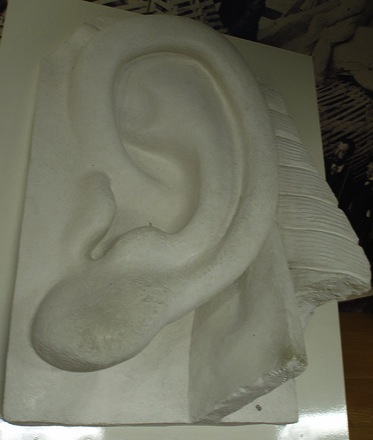
A Cast of the Statue of Liberty’s Ear
Normally you would see a brand-new post from Sounding Out! on a Monday like this one, but this week I am traveling to the American Studies Association Conference in San Antonio, Texas, where I will be speaking on what promises to be an excellent sound studies roundtable on Thursday morning. I am excited to be part of a growing sound studies presence at ASA and I would love to facilitate an even larger auditory footprint. So as to bring the conference experience a little closer to those that cannot be down in TX, I will be. . .
A) posting my opening gambit to my roundtable “Huhh!..Hahh!..Huhh!..Hahh!..: Sound, Working, Chain” Thursday evening and welcoming your thoughts and responses
B) Tweeting real-time sound-related thoughts and ideas inspired by the panels I attend at our twitterfeed: http://twitter.com/soundingoutblog; follow us for the scoop!
& C) Listing all of the sound related panels below–which are full of lovely hotlinks to full abstracts. If you are planning to attend ASA, please come give these folks a listen. If you can’t make it, participate via Sounding Out!
See you Thursday! If I somehow missed you, please let me know!: jsa@binghamton.edu
Access the full searchable program here: This years’s theme is “Crisis, Chains, and Change.”
Thursday, 11/18

“Lightnin’” Washington, an African American prisoner, singing with his group in the woodyard at Darrington State Farm, Texas, Alan Lomax, photographer, April, 1934
Scheduled Time: Thu, Nov 18 – 10:00am – 11:45am
Building/Room: San Antonio Convention Center / Room 206B
Chair: Bryan Wagner (University of California, Berkeley (CA))
Panelist: Roshanak Kheshti (University of California, San Diego (CA))
Panelist: Shana Redmond (University of Southern California (CA))
Panelist: Gustavus Stadler (Haverford College in Pennsylvania (PA))
Panelist: Jennifer Stoever-Ackerman (State University of New York, Binghamton (NY)
Panelist: Tara Rodgers (McGill University)
Abstract:
In his hit song “Chain Gang” sledge hammer clangs against railroad tie as Sam Cooke’s honey-dipped voice narrates a sonic scene in which men “moanin’ their lives away” lose themselves in a choral anguish, each grunt metronomically marking the passage of servile time, their spirits carried off to an imagined homeland inhabited by loved ones, a place of possibility and hope. “Give me water, I’m thirsty, my work is so hard” the collective body reveals a fundamental yearning for a material and spiritual quenching that is not yet. Riding the refrain “Huhh!..Hahh!..Huhh!..Hahh!,” the working men carry on in a sonic meditation, hovering just above their toiling bodies in sound worlds of redemptive, libratory possibility.
Cooke’s evocative lyrics and guttural howls along with his bands rhythmic precision set to record in an RCA studio by Hugo Peretti and Luigi Creatore’s production skills represents a synergy of sonic performances and events. This panel brings together scholars working on similar synergies in which sound reaches just beyond its boundaries exceeding its perceptual mode to create contact with other worlds, times, places and possibilities. Whether in the context of commodity chains, chains of signification, busking for change or disruptions to the chain of command, sound can function as medium, message, massage, weapon, prison and fantasy. This panel explores the poetics of sound, examining its capacity as a vehicle of time travel, distraction, alarm, liberation, restraint and pleasure.
Scheduled Time: Thu, Nov 18 – 4:00pm – 5:45pm
Building/Room: San Antonio Convention Center / Room 214C
Licensed Begging: Mayor La Guardia’s Street Music Ban and Noise Abatement as Labor Surveillance: Robert Hawkins (Saint Louis University (MO))
A Short History of American Wiretapping: David Suisman (University of Delaware (DE))
Anarchy in the U.S.A.: Immigrant Punk, Hybridity and the Incarceral Politics of American National Identity: Megan Turner (University of California, San Diego (CA))
Double Voices of Musical Censorship: Martin Scherzinger (New York University (NY))
Scheduled Time: Thu, Nov 18 – 4:00pm – 5:45pm
Building/Room: San Antonio Convention Center / Room 213B
Chair: Barry Shank (Ohio State University, Columbus (OH))
Paisagem Útil : Modernity and the Nation in Brazilian Popular Song: Brendan McGillicuddy (University of Minnesota, Twin Cities (MN))
The Punk Event: The CBGB’s Scene and Avant-Garde Aesthetics: Shaun Cullen (University of Virginia (VA))
Can’t Quit Your Day Job: The Liminal Space of the Semiprofessional Musician: Colin Helb (Elizabethtown College (PA))
Comment: Barry Shank (Ohio State University, Columbus (OH))
Friday, 11.19
Scheduled Time: Fri, Nov 19 – 10:00am – 11:45am
Building/Room: San Antonio Convention Center / Room 201
Chair: Ben V. Olguin (University of Texas, San Antonio (TX))
The Sounds of Shackles: African American Work Songs on Texas Prison Farms : James Deutsch (Smithsonian Institution)
Promises, Problems, and Cultural Crises: The Reverberating Sounds from Gideon v. Wainwright: Mary Seliger (University of California, Santa Barbara (CA))
Radio Raheem’s Broken Boom-Box: Artistic and Musical Responses to Police Brutality and Racial Violence: Johanna Almiron (University of Hawaii, Manoa (HI)
Comment: Ben V. Olguin (University of Texas, San Antonio (TX))
Scheduled Time: Fri, Nov 19 – 10:00am – 11:45am
Building/Room: San Antonio Convention Center / Room 214C
Chair: Ulrich Adelt (University of Wyoming (WY))
The Ethical Vision of “el Adios Tejas” in El Corrido Pensilvanio Jaime Javier Rodriguez (University of North Texas (TX))
Making Face, Making Space: The Aesthetics of Brown Identity in Jim Mendiola’s Girl In A Coma Universe Alexandra Mendoza Covarrubias (University of Minnesota, Twin Cities (MN))
Asian American Hip Hop and the Inter-national Christopher Ramos (University of Florida (FL))
Comment: Alexandra Vazquez (Princeton University (NJ))
Scheduled Time: Fri, Nov 19 – 12:00pm – 1:45pm
Building/Room: San Antonio Convention Center / Room 206A
Chair: Lawrence La Fountain Stokes (University of Michigan, Ann Arbor (MI))
Sonic Crisis: Girl in a Coma: Deborah R. Vargas (University of California, Irvine (CA))
Si tú creías que yo no venía: NuYoRico, Salsa, and Puerto Rican “National” Culture: Marisol Negrón (University of Massachusetts, Boston (MA))
Censúrarme: Underground Rap and Neoliberal Policing in Puerto Rico: Marisol LeBrón (New York University (NY))
Sexing the Game: Black Women and the Sexual Politics of Hip-Hop Pornography:Mireille Miller-Young (University of California, Santa Barbara (CA))
Comment: Lawrence La Fountain Stokes (University of Michigan, Ann Arbor (MI))
Scheduled Time: Fri, Nov 19 – 2:00pm – 3:45pm
Building/Room: San Antonio Convention Center / Room 203B
Chair: Aaron Lecklider (University of Massachusetts, Boston (MA))
Jazz Subjectivities in Neoliberal Culture: Dale Edward Chapman (Bates College (ME)
Where’s the Gig At?: Taking Missions and Creating Space with Punk Rock on the Greater Eastside: Jonathan Daniel Gomez (University of California, Santa Barbara (CA)
Comment: Aaron Lecklider (University of Massachusetts, Boston (MA))
Saturday, 11.20
Scheduled Time: Sat, Nov 20 – 10:00am – 11:45am
Building/Room: San Antonio Convention Center / Room 207A
Chair: Sherrie Tucker (University of Kansas (KS))
Fine Art/Black Art: Roy DeCarava and the Jazz Image: Benjamin Cawthra (California State University, Fullerton (CA))
Monterey and Ray: The Impact of the Jazz Image on American Consumerism: Heather Pinson (Robert Morris College (PA))
Impressions of America in the Tropics: Jazz, Creolization, and the Racial Imagination: Jerome Camal (Washington University in St. Louis (MO))
Comment: Sherrie Tucker (University of Kansas (KS))
Sound-Related Individual Papers:
- The Aural Border Patrol?: Migracorridos, Movidas, and Migrant Subjectivity at the U.S.-Mexico Border, Israel Pastrana, University of California, San Diego (CA), Scheduled Time: Sat, Nov 20 – 8:00am – 9:45am Building/Room: San Antonio Convention Center / Room 213B, In Session “Negotiating Nationalisms in Popular Culture”
- Embodying Collapse, Performing Change: Of Tango and Jazz as “Effects”, Marcela Fuentes, University of California, Los Angeles (CA), Scheduled Time: Sat, Nov 20 – 10:00am – 11:45am, Building/Room: San Antonio Convention Center / Room 213B, part of panel, “In the Event of Emergence: Revolutionary Politics and the Hemispheric Crisis State”
- Jews, Catholics, and the Color Line in Jazz Age Houston, Tyina Steptoe, University of Washington, Seattle (WA), Scheduled Time: Sun, Nov 21 – 8:00am – 9:45am Building/Room: San Antonio Convention Center / Room 207B, In Session “Internationalism in the Americas”
- The Sound of Authority: Aural Observation and Hallucinatory Culture at the Government Hospital for the Insane, 1895-1905: Kathleen Brian (George Washington University (DC)), Scheduled Time: Fri, Nov 19 – 2:00pm – 3:45pm Building/Room: San Antonio Convention Center / Room 214D in session, “ASA Students’ Committee. Spotlight on Student ASA Regional Award Winners”
Receptions:
Journal of Popular Music Studies | JPMS
Friday, November 19 · 3:00pm – 5:00pm
Location Zinc Bar and Bistro (in the Charles Courtyard)
207 N. Presa, San Antonio, TX
Come meet the new editorial team of the Journal of Popular Music Studies and learn more about JPMS. Gnosh, drink, mingle, debate the merits of “Like a G6.”
Editors in Chief:Gustavus Stadler (Haverford) and Karen Tongson (USC)
Associate Editors: Anthony Kwame Harrison (Virginia Tech)Wayne Marshall (M.I.T.)David Suisman (U of Delaware) | book reviewsAlexandra Vazquez (Princeton) | performance reviews Eric Weisbard (U of Alabama)Mina Yang (USC)
SnacksOpen bar for the first hour (or until our tab is full) and cash bar. Good Company!


Share this:

Como Now?: Marketing “Authentic” Black Music
With all the excitement over the new release of Mavis Staples’s You Are Not Alone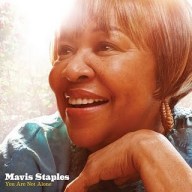 (Anti-, produced by Wilco’s Jeff Tweedy), I can’t help but be skeptical of the outpouring of Indie love for the album, even as I have been spinning (and enjoying) it myself. It isn’t the positive reaction to Staples’s talent that is surprising—at 70-plus years, Mavis has been exquisite for quite some time now—but rather the way in which critics have freighted her newest record with the “uplift” (AV Club) of a whole lot of souls that haven’t ever been to church (at least not in a good long while). Her voice is described as alternately “raw” (Paste) and full of a “depth, power, and warmth that seem increasingly rare in music today” (hear ya); Consequence of Sound, who cites Tweedy’s hand at the boards as the reason for all the current music blog attention, calls her voice “empathetic. . . powerful. . .soulful. . .touching” and “wise.” If the blogosphere is to be believed, Staples’s voice, “as authentic as it gets” (buzzine), could really save us all in these tough times. Come to think of it, the fervor of (white) faith in “authentic” black music shouldn’t be that surprising either, given the way in which race has always been entangled with popular music history in the United States.
Authenticity and the immediacy of experience it implies, have had a long history in the music industry—especially in reference to black artists—stemming back at least to the Fisk Jubilee Singers in the 1870s, an all-black acapella troupe celebrated for  powerful live performances whose breakthrough concert also happened to be for a crowd of hipsters: the wealthy congregants of Henry Ward Beecher’s Brooklyn church in 1871. Beecher gave the band his enthusiastic support, namely because he felt their sound gave listeners direct access to “the inner lives of slave hearts expressed in music” even after slavery had formally ended.
While the sound of You are Not Alone differs greatly from the Jubilee Singers, the reviews of the record belie and inflame a similar desire for unmediated access to the emotive qualities (a)historically associated with black life and sound in the U.S.: namely suffering, faith, and catharsis. And Staples’s record is indeed not alone in this. Many of the sentences from the Staples reviews could easily have been lifted from those of another recent gospel record to capture the indie imagination, Daptone Records’s 2008 release Como Now. Starkly different from the breezier, countrified sounds of You Are Not Alone, Como Now is an acapella gospel recording made in a small town in Panola County, Mississippi. The record was a risky release for Daptone, a Brooklyn-based label that has consistently produced new funk and soul records since its inception in 2002 by the likes of Sharon Jones and the Dap-Kings and The Budos Band. Although old school sound has always been a part of the label’s ethos—its engineers use primarily analog equipment, for example, a major reason Amy Winehouse recorded her throwback Back in Black album at Daptone studios in 2006—marketing stripped-down gospel to its audience of predominately white hipsters would nonetheless prove a daunting task. Treating Como Now as a labor of love and a paying of dues, Daptone attempted to spark interest in the release by relying on the familiar marketing strategies of immediacy, authenticity, and nostalgia.
 While Como Now’s tagline boldly proclaims that the music was “Recorded Live at Mt. Mariah Church on July 22, 2006”—and, thus, emphasizing the Now of the title—the cover’s vintage civil-rights era design evokes the Como of yesterday, or more accurately, encourages listeners to hear Como now and Como yesterday as one and the same through the vehicle of “raw gospel testimony.” Como Now’s depiction of the sounds of the past as echoes within the present is as ambiguous as it is uncanny, a sonic window thrown open to simpler times happening somewhere out there, “deep in the heart of Mississippi” right now.
The introductory promotional video from Como Now’s website (also uploaded on Youtube) represents the record as an aural time machine to a land and a people isolated from and largely unchanged by technology, modernity, and history.
Producer Michael Reilly’s voiceover locates rawness, emotional release, and “real religion” in the sound of black voices, in no small part because the video places his measured Yankee pacing in sonic tension with the song that accompanies it, Mary Moore singing “When the Gates Swing Open.” Over Moore’s impassioned singing, Reilly assures listeners in a muted deadpan that they will hear “no pretty piano playing or clever guitar picking, just voices. Pure soul stirring fire from the heart.” Reilly’s sentiments not only evoke the gushing Jubilee Singers’ press, but also the ethos of the infamous folklorist John Lomax, who made field recordings in Southern prisons in the 1930s because he sought “negro singers untainted by white musical conventions” (as he wrote in 1934’s “Sinful Songs of the Southern Negro”); singers in Como were actually recorded by John’s son Alan in the 1940s. Reilly’s voiceover goes on to frame the Como singers as practitioners of what the senior Lomax called “the real art of simplicity,” as stripped-down, natural singers who are artful mainly in their artlessness. While Reilly’s webcopy mentions how “children and grown folks alike have been living and breathing gospel for as long as they can remember,” for example, he fails to mention how the residents of Como have also been writing, rehearsing, and performing it.
Thus, Como Now’s marketing disavows the real artistry of the Como singers, even as it seeks to celebrate it. The simple, natural quality endowed to the singers of Como is visually accentuated by stark imagery representing the town as a down-at-the-heels, living museum of the black life of yesteryear. In the youtube clip, Moore’s soaring and spirited singing animates stills of blooming cotton fields, vintage RCA microphones, and splintering upright pianos.  Save for the album cover and one blurry still of a child, there are no shots of the people of Como in the introductory promo, effectively isolating Moore’s voice from her corporeal and historical body. This isolation allows listeners to supply their own fantastic imagery and forces them to rely on historical stereotypes about the naturally sonic qualities of black people. By choosing to disembody Como’s voices, the promotional video represents the album’s music as emanating from, and even haunting, Panola County’s lush green fields and battered strip-malls rather than showing it to be a hard-fought creation of the residents themselves. To quote Lomax again: “[The Negro’s] songs burst from him, when in his own environment, as naturally as those of a bird amid its native trees.”
Although the impulse to make the album reflects a progressive desire to respectfully pay tribute to the black gospel tradition in American popular music—and to provide quality artists like The Como Mamas with critical renown and monetary compensation—Como Now relies on well-worn racial tropes to do so. It also points to the continued presence in American culture of an essentialized “black voice” that is naturalized as more emotive, truthful, and soulful than other voices. While this phenomena is socially constructed and the sounds thought of as “black” have shifted considerably—when I play early recordings of the Jubilee Singers my students consistently tell me that they sound “white” like a “glee club”—I find it fascinating that the language used to describe them has largely remained the same. While Como Now’s producer at least acknowledges that, in Como, “no one has to pick up cotton anymore, thankfully,” the marketing trades on the possibility that, while slavery and sharecropping have ended, its sonic labors have not only endured, but are readily available for download.

Share this:


Current Top Posts





April 2021

January 2020

November 2019

October 2019

August 2019

April 2014

November 2017

March 2015

December 2017

October 2015
 Sounding Out!
Recent Comments