
From Spanish to English to Spanish: How Shakira’s VMA Performance Showcases the New Moment in Latin Music “Crossover”

***This post is co-written by Petra Rivera-Rideau and Vanessa Díaz
On the night of September 12, Colombian pop star Shakira made history as the first predominantly Spanish-language artist to be honored as MTV’s Video Vanguard at the Video Music Awards (VMAs). The award recognizes artists who have had a major and innovative impact on music videos and popular music. Shakira played a 10-minute medley of Spanish and English hits from her three-decades long career. Her performance demonstrated her breadth as an artist as she shifted from pop to rock to reggaetón.
Not only did she demonstrate her impressive musical range, but of her 69 singles, Shakira selected those that represent two significant crossover moments for Latin music. She sang hits like “Wherever, Whenever,” “Hips Don’t Lie,” and “She Wolf” from her English-language crossover in the early 2000s as part of the so-called “Latin Boom.” She sang 2001’s “Objection (Tango)” with the same samba/rock music arrangement she used at her very first VMA performance in 2002.
During this “Latin Boom” of the late 1990s and early 2000s, Shakira and other established Latin stars who had previously performed in Spanish, such as Ricky Martin, Marc Anthony, and the late Selena Quintanilla, dominated the charts with English-language albums. Despite their successful global careers in the Latin market—and the long history and influence of Latinx musicians in U.S. pop music–U.S. media consistently portrayed these artists as exotic newcomers to the scene, praised more for being “Latin lovers” than established musicians. The Latin boom stars were valued as spicy foreigners there to expose Americans to new, exotic Latin sounds – conga beats, flamenco-style guitar riffs, and festive horns – even as many of these songs draw from familiar rock/pop references. Draco Rosa, one Ricky Martin’s co-writers, remembers “channeling [Jim] Morrison” and “elements of big band … a little bit of surf guitar” in the 1999 smash “Livin’ La Vida Loca.”

Despite the Latin Boom’s English-language crossovers, the images and sounds associated with the moment underscored the artists’ foreignness, something that continues today. This year’s Grammys’ botched treatment of superstar Bad Bunny’s performance and acceptance speech, in which, in lieu of translations, the subtitles merely declared that his words were “non-English.” Spanish has long been used to signify Latinxs’ alleged foreignness and inability to assimilate into US life and culture despite the fact that Latinx communities have been part of the fabric of the US for centuries. In the context of increased anti-immigrant sentiment, the popularity of Spanish-speaking artists like Bad Bunny and Shakira takes on even greater significance.
Following the Grammy’s disastrous handling of Bad Bunny’s performance and speech, backlash ensued. A plethora of popular memes and even t-shirts proudly claiming non-English popped up almost overnight. New York Times’ critic and Princeton professor Yarimar Bonilla proclaimed that “Bad Bunny is [Winning in Non-English].” Celebrities from comedian Cristela Alonzo to rapper 50 Cent admonished CBS. Even California Congressman Robert Garcia sent a letter directly to the CBS president and CEO George Cheeks, writing that the incident “display[ed] a lack of sensitivity and foresight. For too many Spanish-speaking Americans, it felt disrespectful of our place in our shared society, and of our contributions to our shared culture.” CBS eventually released a tepid statement saying that their vendor was not adequately equipped to manage Benito’s Spanish-language speech and performance, and Cheeks took “full responsibility” for the incident. Overall, the Grammys snafu reflects the ways in which the American mainstream still is incapable of embracing the status of Latin artists as equal players in the US and global music markets, in any language.
Compared to this year’s Grammys, however, MTV’s VMAs offered a much more inclusive approach, with a historic perspective that demonstrated exactly how we were able to arrive at this new moment in Latin music. When Puerto Rican and Cuban American rapper Fat Joe and Mexican pop star Thalia presented the award for Best Latin video, Thalia reminded the audience that “in the 2000s’ first Latin explosion, we had a song together, and now we’re here celebrating again this new Latin explosion.” This new Latin explosion refers to the numerous Spanish-language artists like Shakira, Bad Bunny, Karol G, and Peso Pluma who have recently broken out in the US mainstream.
But, unlike the previous Latin Boom, these artists have maintained their Spanish and their musical style. Bad Bunny’s Grammy performance included plena, reggaeton, and merengue rather than the kitschy styles of his Latin Boom predecessors. In addition to selling out stadiums around the country, Karol G drew 15,000 fans, the largest crowd in the Today Show’s history, for her reggaetón performance as part of the program’s Summer Concert Series in Rockefeller Center. Just this past September, Eslabon Armado became the first Mexican regional music group to ever perform on Good Morning America with their chart-topping hit “Ella Baila Sola” (the first Mexican regional song to ever hit number one on Billboard’s Global 200 chart). Whether it is the percussive dembow beat of reggaetón or the syncopated horns of corridos tumbados, all of these musicians have maintained the sounds of their respective genres, foregoing the stereotypical “Latin” sonic signifiers historically associated with Latin music.
Shakira herself reflected this moment in her Video Vanguard performance. She performed her new Spanish-language songs as 2022’s “Te Felicito,” and 2023’s “TQG” and “Bzrp Music Sessions: Volume 53” (the latter having broken four Guinness world records, including the most streamed Latin track in 24 hours). All of these songs have been part of this new Latin music movement. In fact, her “TQG” collaborator Karol G also performed her Spanish hits at the show. Mexican regional phenom Peso Pluma sang “Lady Gaga” on a small stage, surrounded only by his band, and called out “¡arriba México!” at the end. Brazilian artist Anitta performed a multilingual medley from her Funk Generation: A Favela Love Story. In addition, Shakira and Karol G won the award for best collaboration for “TQG.” Not only did the women give their acceptance speech in Spanish, shouting out their home country of Colombia, but they also won in a category otherwise populated by mainstream English-language artists like Doja Cat with Post Malone, and Metro Boomin with The Weeknd, 21 Savage, and Diddy. The interchangeable, tropical Latinidad of the earlier Latin boom was replaced with shout outs to specific countries and regions, and the crowd proudly waved Mexican, Puerto Rican, and Colombian flags. At the VMAs, Latin musicians were not isolated in Latin awards categories or depicted as exotic novelties. They were central to the show – nominated for major awards, and celebrated for some of the night’s most memorable performances.
Much like this year’s Coachella, which featured Bad Bunny and K-Pop sensation Black Pink as headliners, this year’s VMAs reflects a more global approach to pop music. Tuesday night’s award show also featured two performances by K-Pop groups, and MTV offered its first ever award in Best Afrobeats. In this context, it makes sense that Latin music would have a significant presence in the program. But the dominance of Latin music right now makes it so that no part of the music industry can leave Latin music out anymore. Not the VMAs, not the Grammys, not Coachella. As Thalia proudly declared on stage, “this last year for the first time in the US Latin music made a billion dollars in streaming.” Bad Bunny has been the most streamed artist on Spotify for three years in a row, has the longest-running Spanish-language album at the top of the Billboard chart, and in 2022 became the only artist in history to stage two separate $100 million-grossing tours in less than 12 months. Karol G became the first woman to have a Spanish-language debut at number one, and came to the VMAs after a string of historic performances at her Mañana Será Bonito stadium tour. Latin music’s global appeal is undeniable and the industry has to respond accordingly.
This is among the most important times in history for Latin music, and honoring artists like Shakira center stage at the VMAs helps underscore the musical evolution we are lucky enough to witness. Twenty years ago, Shakira had to crossover into the US market in English; now she performs in her native Spanish and is more relevant than ever. The global success of stars like Peso Pluma, Karol G, and Bad Bunny means we need to completely reevaluate the concept of the crossover. Latin artists today did not crossover, the market crossed over into them. They are not compromising their language, their identity, or their culture. They do not have to kowtow to industry expectations that they perform the exotic, sexy Latin other. So while the VMA Vanguard Award winner Shakira may have had to crossover into English to make it during the ‘90s Latin boom, she can proudly return to her roots and, this time, the market will follow her.
—
Featured Image: Screen shot by SO! from Shakira’s MTV 2023 Video Vanguard acceptance speech
—
Petra Rivera-Rideau is Associate Professor of American Studies at Wellesley College, and the author of Remixing Reggaetón: The Cultural Politics of Race in Puerto Rico and the forthcoming book Fun, Fitness, Fiesta: Selling Latinx Culture in Zumba Fitness. Vanessa Díaz is Associate Professor of Chicana/o and Latina/o Studies at Loyola Marymount University, and the author of Manufacturing Celebrity: Latino Paparazzi and Women Reporters in Hollywood. Díaz and Rivera-Rideau are the co-creators of the Bad Bunny Syllabus.
—

REWIND!…If you liked this post, you may also dig:
Ronca Realness: Voices that Sound the Sucia Body—Cloe Gentile Reyes
Contra La Pared: Reggaetón and Dissonance in Naarm, Melbourne—Lucreccia Quintanilla
Unapologetic Paisa Chingona-ness: Listening to Fans’ Sonic Identities–Yessica Garcia Hernandez
SO! Podcast #74: Bonus Track for Spanish Rap & Sound Studies Forum
Listening (Loudly) to Spanish-Language Radio– D. Inés Casillas
Share this:

The Sounds of Selling Out?: Tom Zé, Coca-Cola, and the Soundtrack to FIFA Brazil 2014
 Welcome back to our summer series on “Sound and Sport.” In today’s post, Kariann Goldschmitt discusses the gamechanging controversy over Brazilian musician Tom Ze’s commercial for Coca-Cola’s FIFA 2014. For an instant replay of July’s post click Josh Ottum‘s “Sounding Boards and Sonic Styles: The Music of the Skatepark” or of June’s post, click Tara Betts‘s “Pretty, Fast, and Loud: The Audible Ali.” For May’s post, click Melissa Helquist‘s “Goalball: Sport, Silence, and Spectatorship.” This Thursday’s grand finale will continue our discussion of Brazil, with a podcast by Andrea Medrado entitled “The Sounds of Rio’s Favelas: Echoes of Social Inequality in an Olympic City” AND keep you on the edge of your seat with a bonus Olympic doubleheader post excerpted from David Hendy‘s recent Noise broadcasts for BBC Radio 4 on the sounds of Olympic crowds. And now. . .the sounds of FIFA’s sponsors. —J. Stoever-Ackerman, Editor-in-Chief
—
Tensions in Brazil have been running high as the the country ramps up preparations for next year’s FIFA World Cup. Brazil’s economy is one of the world’s strongest, but its middle class has suffered as economic growth has stagnated amid rapidly rising costs of living. Yet, FIFA demands that Brazil’s government spend large amounts of money to renovate stadiums and further bolster tourism-based services at the expense of everything else. This last June, news of another hike in transit fees was the final straw for many citizens and they took to the streets to protest corruption and the routing of public funds to tournament preparations while basic services suffered. Protesters argue that the country is burnishing its international brand on the backs of its citizens. It is thus no surprise that much of the Brazilian public is fed up with FIFA and its multinational partners. As a consequence, musicians who participate in World Cup-related ad campaigns risk damaging their relationship with the public.
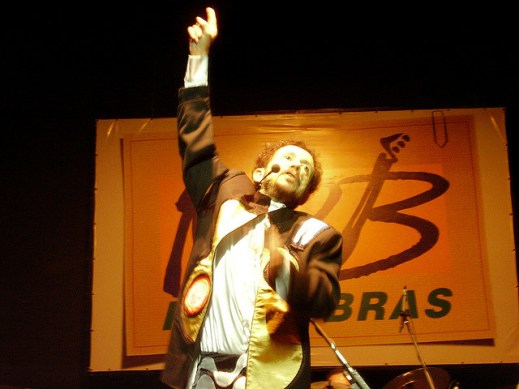
In Spring 2013, the Facebook page of one of Brazil’s most eccentric musical iconoclasts, Tom Zé, was bombarded by negative comments. Unforgivably to some of his most ardent fans, Zé had lent his vocal talents to a Coca-Cola commercial that sought to connect Brazil’s oft-mythologized cultural diversity to the universals of the World Cup and Coca-Cola’s alleged populism. Zé inflected his delivery of the ad copy with an especially musical speaking cadence and rhythm. It was a peculiar take that drew on his signature vocal eclecticism.
The ad opens with Zé stating,
Muita gente se pergunta como vai ser a copa
A coca-cola vai falar como ela não vai ser
[Many people are asking themselves what this cup will be like
Coca-Cola is going to tell you what it won’t be like]
as the shot features a group of people smoothing out a giant kite with the Brazilian flag. There is a strong syncopated rhythm to Zé’s voice that matches the carnival samba drums (especially the caixa) that accompany the ad throughout. As it continues, the imagery matches what Zé describes, in either stills or brief shots, often recalling the frenzy surrounding world cups of the past. In a rapid cadence, he says:
não vai ser só a copa de vuvuzela, do vidente, da celebridade
da menina bonita, do jogadores com cabelo da moda…”
[it won’t be the Cup of the vuvuzela, the psychic, nor of celebrity
of beautiful women, nor of players with fashionable hair]
The synchronization of Zé’s rapidly rhythmic delivery over archetypal images of Brazil’s tournament excitement is crucial to the ad’s message. This passage mentions two icons of the 2010 tournament, the vuvuzela and the psychic (vidente) octopus, with accompanying images. In under four seconds, the camera jumps from a man holding a celebrity magazine (celebridade), a woman cheering (menina bonita), some player figurines (jogadores) and a boy with an elaborate buzz cut. By aligning himself with an official sponsor of the upcoming tournament through ad copy that valorizes Brazil’s present, Zé also lent the sound of his voice to the sports-industrial complex, thereby opening himself up to accusations that he was a “sell-out” (vendido).
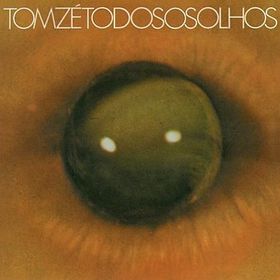
Tom Zé – Todos os Olhos (1973)
Zé is famous for taking part in the tropicália of the late 1960s – a cultural movement that was most effective through popular music. Tropicália musicians bucked Brazilian musical conventions by blending imported rock ‘n’ roll with national music protest songs during a period when musical taste often indicated one’s support or disapproval of the military dictatorship. While most involved in tropicália eventually became Brazilian musical mega-stars (Caetano Veloso, Gilberto Gil, Gal Costa, Os Mutantes, and Mara Bethânia), Zé drifted to obscurity by rejecting many of the machinations of the record industry. He only found an international audience when David Byrne’s Luaka Bop Records released some of his music in the 1990s, the most successful of which was Fabrication Defect [Com Defeito de Fabricação] (1998). Due to his peculiar status, Zé disrupted fan expectations and threatened his brand when he embraced a corporate power so intricately connected to an increasingly unpopular athletic tournament.
The controversy surrounding the Coca-Cola ad took a turn towards farce when, on April 22nd, 2013, Zé released a free 5-song EP on his website titled Tribunal do Feicebuque – a clear play on the way that Brazilians tend to pronounce “Facebook.” Accompanying the songs was a parody of tribunal orders listing the performing and collaboration credits along with lyrics to the songs. Zé’s actions exposed how the incident was a different kind of sonically-driven sports spectacle – this time it was played out over social media, in Brazil’s most influential newspaper, in Tribunal references and fights with fans during his shows at Rio’s famed Circo Voador, and in the ensuing blog reviews of his shows.
The chaotic structure of the EP’s title track, while typical of Zé catalog, disrupts his fans’ claims of “selling out.” He employs a variety of sonically disjunct approaches, opening with the startup sound for Microsoft’s Vista OS before jumping into a psychedelic samba-rock tune with a staccato guitar and a brass section. Zé recorded his vocals over multiple tracks, at times simultaneously sung/spoken at a low pitch and sung at a high pitch. The first half is familiar – the voices trade between Zé and a female companion in something sounding like a duet over a samba-rock beat. The lyrics directly reference infamous moments when Brazilian audiences have turned on their musical icons thought to be too involved in international business influences.
Vendido, vendido, vendido!
A preço de banana
Já não olha mais pro samba
Tá estudando propaganda
[Sell-out, sell-out, sell-out!
The price of a banana
He no longer looks to samba
He’s studying advertising]
At the mid-point, rock gives way to a serious march and more voices enter (including famed São Paulo hip-hop artist Emicida) making the song’s structure more like a trial, complete with competing arguments, before returning to samba-rock under Emicida’s rapping. The song is creative and fun, but it is far from Brazil’s top-40 fare which often favors smoother genre blends and urban pop hits.
Given all of the attention paid to musicians’ efforts to supplement their meager income from digital sales and streaming royalties by forging partnerships with a variety of multinational corporations, it is a little surprising that Tom Zé’s participation in a Coca-Cola commercial would be this controversial. It is difficult to find a musician in Brazil that hasn’t benefitted from some kind of corporate sponsorship. Most artists accept funding from a granting arm of a national corporation (oil company Petrobras, major bank Itaú), license music to national ad campaigns, or embark on a more direct co-branding effort from the likes of mobile phone providers and skin care companies.
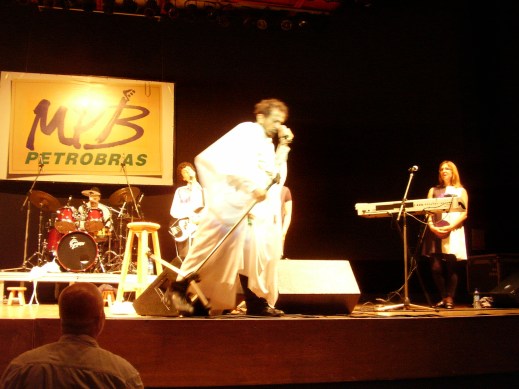
Tom Zé in 2008 performing in front of a Petrobras sign, photo used by CC license, Neto Silveira
One of the hallmarks of the recent changes that have affected the music industry is that musicians rarely refuse opportunities for their music to be used as the soundtrack for mainstream audio/visual entertainment and advertisements. The practice is so common that one of the best-regarded music industry survival books explains possible changes to a musician’s brand when they participate in the advertising of other products. Instead of “don’t license your music,” musicians should license their music in a way that will benefit their brand. It is rare for a song’s success among World Cup spectators to harm musicians; anthems that reflect well on the host nation(s) and express the energy of cheering crowds are a central feature of the tournament. Shakira’s “Waka Waka” actually bolstered her credibility among music fans across the African continent because it sampled Golden Sounds’ hit “Zamina Mina,” a popular song among hip-hop artists in Camaroon and Senegal. In Zé’s case, he misjudged how the tournament and its corporate sponsors were being read by the Brazilian public just weeks before tensions exploded in protest. Indeed, as compared to other Brazilian artists who have recorded potential 2014 World Cup anthems, the reaction to Zé is unique.
As others have noted, television advertising played an important role in the June protest soundtrack. Protesters appropriated the song from a Fiat commercial (released just weeks after Zé’s Facebook episode) that explicitly connects cheering soccer crowds in the street to a new car.
The meaning of “torcer,” a common expression for “cheer” in both advertisements’ copy, is transformed back to its original meaning to wrench or twist thereby exposing the conflicts that have been exacerbated by Brazil’s preparations for the tournament and the sports industrial complex.
These crowds twisted an ad’s soundtrack to challenge the role of multinational agencies and corporations in Brazil’s skewed socio-economic priorities. Indeed, as Leo Cardoso wrote in Sounding Out! a year ago, some of these priorities include regulating sound in Brazil’s largest cities.
For both of these cases involving sonic responses to advertisements that explicitly seek to capitalize on excitement for the soccer tournament, their original intended meaning was twisted and wrenched, forcing musicians to re-evaluate their publics. In the current political climate, Zé found that musical sounds can be aligned with the FIFA World Cup, so long as they are about celebrating sport rather than its multinational sponsors.
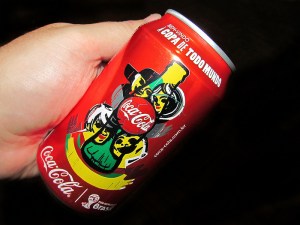
Promotional FIFA 2014 Can, Photo used by CC license, José Roitberg
—
Featured Image: Tom Zé in 2008 performing in front of a Petrobras sign, photo used by CC license, Neto Silveira
—
Kariann Goldschmitt is an Adjunct Assistant Professor at New College of Florida and Ringling College of Art and Design. She holds a Ph.D. in Musicology from UCLA (2009) and was the 2009-2011 Mellon Fellow of Non-Western Music at Colby College in Maine. Her scholarly work focuses on Brazilian music, modes of listening, and sonic branding in the global cultural industries. She has published in The Journal of Popular Music Studies, American Music, Yearbook for Traditional Music, and Luso-Brazilian Review and contributes to the South American cultural magazine, Sounds and Colours.
—

REWIND! . . .If you liked this post, you may also dig:
“Sound-politics in São Paulo, Brazil”–Leonardo Cardoso
Quebec’s #casseroles: on participation, percussion and protest–Jonathan Sterne
Hello, Americans: Orson Welles, Latin America, and the Sounds of the “Good Neighbor”–Tom McEnaney
Share this:


Current Top Posts





April 2021

January 2020

November 2019

October 2019

August 2019

April 2014

November 2017

March 2015

December 2017

October 2015
 Sounding Out!
Recent Comments