
This is What It Sounds Like . . . . . . . . On Prince (1958-2016) and Interpretive Freedom
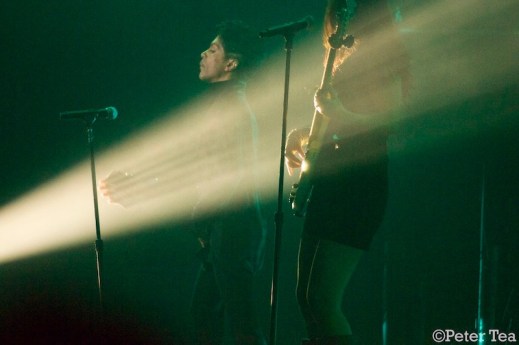
Can you imagine what would happen if young people were free to create whatever they wanted? Can you imagine what that would sound like?–Prince, in a 2015 interview by Smokey D. Fontaine
Prince leaves an invitingly “messy” catalog—a musical cosmos, really—just as rich for those who knew it well as for those encountering it with fresh ears. He avoided interviews like he avoided conventions. He made few claims. Read him as you will.
We are free to interpret Prince, but not too free. Yes, art is open, and perhaps Prince’s art especially. And yet many eulogies have described him as indescribable, as if he were untethered by the politics of his world; he wasn’t. Some remembrances assume (or imagine) that Prince was so inventive that he could escape stultifying codes and achieve liberation, both as musician and human being. For example, Prince has often been called “transcendent”—of race, of musical genre, even of humanity itself. This is overstated; he was rooted in all of these. Better to say, maybe, that he was a laureate of many poetics, some musical and some not. He responded to race, genre, and humanity, all things that he and we are stuck with. He was a living artwork, and these, by way of sound, were his media.
Prince was not transcendent. He was just too much for some to assimilate.

Since Prince’s passing last month, I’ve been struck by the idea that his career might have been, deliberately or not, an elaborate quotation of the career of Little Richard, who anachronistically has outlived him. Or, a sonic version of what Henry Louis Gates Jr. calls “signifyin(g)” in the African American artistic tradition in The Signifying Monkey: repetition with a difference, a re-vision—and, especially appropriate here—a riffing (66). Both Prince and Richard in their way defined rock music, even as rock—as a canonized form—held them at a distance. They were simultaneously rock’s inventive engine and its outer margins, but never, seemingly, its core—at least from the perspective of its self-appointed gatekeepers.

Rock and race have, to put it mildly, an awkward history. African-American rock artists rarely get their due from labels and taste-making outlets, in money or posterity, a phenomenon not at all limited to the well-known pinching of Elvis and Pat Boone. One might consider, for example, Maureen Mahon’s anthropology of the Black Rock Coalition, a group home to Greg Tate, Living Colour, and others dwelling on rock’s periphery. Canons are one way to understand how this denial works.
To be sure, some black artists have been canonized in rock, but always with a handicap, as Jack Hamilton has explained lucidly. In, for example, best-of lists (which I have browsed obsessively since Prince died, as if enshrinement there might confirm something about him; he is usually #40 or #50), there are only so many slots of color: Hendrix is the black guitar god; Little Richard the sexual sentinel rising in a repressed era; James Brown the lifeline to funk; Big Mama Thornton the grandmaternal footnote. Best-of lists published by major magazines and websites such as Rolling Stone and VH1, tend to name about 70% white artists, as well as 90-95% male ones. These lists have become just a smidgen more inclusive in the past decade or so. Still, only the Beatles and Rolling Stones are regular contenders to be named history’s greatest rock band.
We are free to interpret greatness, but not too free.
For those who care about lists enough to comment on them, much of the point is in the arguing, the freedom to declare an opinion that cannot be challenged on logical grounds. I certainly wouldn’t argue for more “correct” best-of lists, either for aesthetics or inclusivity. Lists have every right to be subjective. But they are also fascinatingly unmoored by any explicit standard for judgment. As a result, the debates that surround their ordering are full of unvarnished pronouncements of truth (and falsity), even for those who acknowledge the subjectivity of lists, which I observed first hand as I joined and posted on a Beatles forum and an Eagles forum to research this article (“…putting the Police and the Doors ahead of the Eagles is absurd, IMHO”). But why would anyone declare certainty about a question such as the best rock artist of all time, when it is so plainly open to personal interpretation?
Yes, lists are subjective. But who are the subjects that invest in them?
Prince’s career began in the late 1970s, a musical moment deeply reflective of what Robin DiAngelo calls “white fragility.” The Beatles were gone after the 1960s and guitar music stood under their long shadow. Led Zeppelin were bloated and breaking up. Disco was in ascent. Rock had somehow convinced itself that it was neither rooted in nor anchored by queer, female, and racially marked bodies, as it indeed was and in fact had always been. White male rock critics and fans were busily constructing the “rock canon” as a citadel—impenetrable to “four on the floor beats” and diva-styled vocals—and there was nothing in its blueprint to suggest that there would be a door for someone like Prince.
Just one month after Prince finished recording his breakthrough, self-titled album in July 1979—the record gave us “I Wanna Be Your Lover” and “I Feel For You,” which Chaka Khan would take to chart topping heights in 1984—Chicago “shock jock” Steve Dahl staged an infamous event at Comiskey Park called Disco Demolition Night. The fascistic spectacle, which took place between games of a White Sox doubleheader, asked fans to bring disco records, which would be demolished in an explosion and ensuing bonfire on the field.
It was a release of pent-up frustration and a wild-eyed effort to rid the world of the scourge of disco, which many listeners felt had displaced rock with plastic rhythms, as Osvaldo Oyola discussed in a 2010 SO! post “Ain’t Got the Same Soul,” a discussion of Bob Seger, who famously sang in 1979, “Don’t try to take me to a disco/you’ll never even get me out on the floor.” Excited, drunk defenders of the “rock canon” rioted around the fire. The nightcap was cancelled.
These are the subjects who invest in lists.
Many who witnessed the event, both in person and on television, experienced its personal, racially charged, and violent implications. Aspiring DJ Vince Lawrence, who worked as an usher at the Disco Demolition Night game, was later interviewed for a BBC documentary entitled Pump Up the Volume: The History of House Music: [see 9:00-10:15 of the clip below]:
It was more about blowing up all this ‘nigger music’ than, um, you know, destroying disco. Strangely enough, I was an usher, working his way towards his first synthesizer at the time, what I noticed at the gates was people were bringing records and some of those were disco records and I thought those records were kinda good, but some of them were just black records, they weren’t disco, they were just black records, R&B records. I should have taken that as a tone for what the attitudes of these people were. I know that nobody was bringing Metallica records by mistake. They might have brought a Marvin Gaye record which wasn’t a disco record, and that got accepted and blown up along with Donna Summer and Anita Ward, so it felt very racial to me.
Lawrence notes that blackness was, for rock’s canonizers, part of a mostly inseparable bundle of otherness that also included queer people, among others. Although the disco backlash is often regarded as mainly homophobic, in fact it points to even deeper reservoirs of resentment and privilege.
When music companies decided to mass-market the black, queer sound of disco, they first called it “disco-rock”; two words that American audiences eventually ripped apart, or demolished, perhaps. Black and queer people—and women too, of all races and sexualities—represented the hordes outside of rock’s new citadel, whose walls were made from the Beatles’ cheeky jokes, Mick’s rooster-strut, Robert Plant’s cucumber cock, and Elvis’s hayseed hubris.
Little Richard, for example, was black and queer like disco; what to do with him? His drummer invented the straight eight rhythm, perhaps the genre’s most enduring motif. Here’s Little Richard was rock incarnate, total frenetic energy; Richard’s brilliant, singular approach to the piano would launch a thousand rock tropes in imitation. But in canonization he could only be the nutrient-rich soil of rock—say, #36 on a best-of list—never its epitome, somehow.
I don’t know if Prince—a lifelong resident of Minneapolis, who came of age in the volatile Midwestern American milieu of white disco demolitions AND underground black electronic music culture—cared to consider this history, but he floated in it. He effectively signified on Little Richard not so much by quoting his music (though he owed a debt to him just like everyone who played rock), but by reproducing his position in the music industry. He was a queer noncomformist, never in the business of explaining himself, obsessed with control, whose blackness became a way of not flinching in the face of an industry that would never embrace him, anyway.

I interpret Prince’s musical personae as queer, not in the sense of inversion, as the anti-disco folks had it, but as a forever-exploration of sexual life. Prince’s queerness was not, strictly speaking, like Little Richard’s, but Prince took it on as an artistic possibility nonetheless. If Richard dwelled on this particular fringe as a consequence of his body, his desires, and the limits of social acceptance and religious conviction, Prince chose it as his identity. But Prince also lived and worked within limits of morality and, also like Little Richard, religion.
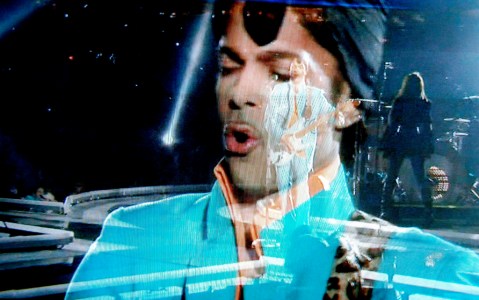
Image by Flickr User Ann Althouse, 2007
Touré writes in a New York Times obit of Prince’s “holy lust,” the “commingling” of sexuality and spirituality. Jack Hamilton writes of the doubt and moral uncertainty that coursed through songs like “Little Red Corvette.” Holy lust is arguably the central pursuit of rock; the term “rock and roll” is etymologically linked either to intercourse or worship, appropriately, emerging in both cases from African-American vernacular. Prince’s queer play with sex, sexuality identity, and religion is as rock and roll as it gets.
As punk sputtered, Simon Reynolds writes in Rip it Up and Start Again, funk appeared to rock fans as a racially tinged, politically and sexually charged savior. Bass, the heart of funk, was key to punk becoming post-punk around 1980. The instrument was suddenly charged with new symbolic and structural importance. During the same period, it is remarkable how many of Prince’s songs either have no bass, or rework bass’s role entirely. “When Doves Cry,” from Purple Rain (1984), Prince’s 6th studio album, is the best-known example of an ultra-funky track that withholds bass entirely, but “Kiss” lacks it, too, as well as “Darling Nikki.”
Earlier on Purple Rain, the bass on “Take Me with U” plays almost as a drone, buzzing like a minimalist’s organ.“Kiss,”from 1986’s Parade and Prince’s second-biggest hit —yet only #464 on the Rolling Stone list of the 500 Greatest Songs of All Time—is so tight, so locked in, so populated by alluring timbres that suggest an alien plane of instrumentation, that you forget it’s even supposed to have bass by rock top 40 convention. On much of 1980’s Dirty Mind, it is difficult to know which carefully tweaked synthesizer tone is supposed to index the bass, if any. Prince’s funk was even funkier for being counterintuitive, as Questlove notes. This gesture wasn’t rejection, of course, it didn’t “transcend” funk. Prince was still playing inarguably funky music, and the lack of bass is so unusual that it’s almost even more apparent in its absence. Free, but not too free.
Prince approached rock iconicity much as he approached bass, which is to say that he embraced clichés, but performed them inside-out, calling attention to them as both limits and possibilities, as constraint and freedom. “Raspberry Beret,” from 1985’s Around the World in a Day, is a boppy “girl group” song with sly allusions to anal sex, that uses exotic instruments and is written in an obscure mode. The virtuosic riff on “When Doves Cry,” instead of going where guitar solos go, comes right at the beginning of the track, before the drums, both seemingly isolated from the rest of the song and yet heralding it, too.
All of this worked very well, of course. His songs are just idiomatic enough to give listeners a foothold, but brave enough to evoke a world well beyond idiom. In retrospect, this is precisely what Little Richard had done. This is also what Hendrix and George Clinton and Tina Turner and OutKast have done, from where they rock out—way beyond the citadel, mastering many idioms, then extending them, at once codifying and floating away from genre.

Andre 3000 of OutKast rocking outside the box at Lollapalooza 2014, Image by Flickr User Daniel Patlán
Prince’s career calls back to the personal and artistic concerns, as well as the innovations, of Little Richard and other artists’ sonic expressions of blackness that both built rock’s house and sounded out the tall, white walls of the citadel that would exclude them. All of these artists, I suspect, find little point to hanging out near the citadel’s gates; there are other, funkier places to live. Prince himself was perfectly comfortable working athwart Warner Brothers, the press, stardom. He did more than fine.
We are free to interpret Prince, but not too free. Creative as he was, he lived in his time; he was no alien. The greatest testament to his genius is not that he escaped the world, nor that he rendered a new musical landscape from scratch, but rather that he worked in part with rock’s sclerotic structural materials to create such beautiful and fluid work.
—
Featured Image by Peter Tea, July 12, 2011, under Creative Commons license No Derivatives 4.0 International (CC BY-ND 4.0)
—
Benjamin Tausig is assistant professor of ethnomusicology at Stony Brook University, where he works on sound studies, music, and protest in Bangkok and other urban spaces. He is on Twitter @datageneral
—
 REWIND!…If you liked this post, you may also dig:
Enacting Queer Listening, or When Anzaldúa Laughs–Maria Chaves
Learning to Listen: The Velvet Underground’s “Once Lost” LPs–-Tim Anderson
Music Meant to Make You Move: Considering the Aural Kinesthetic-Imani Kai Johnson
Black Mourning, Black Movement(s): Savion Glover’s Dance for Amiri Baraka–Kristin Moriah
Share this:

How not to listen to Lemonade: music criticism and epistemic violence

With the premier last month of Lemonade, her second visual album, Beyoncé didn’t make the world stop so much as she make it revolve: around her, around her work, around black women. For all of the limitations of pop music as a medium (it’s inherently capitalist, for one) and Lemonade’s various feminist strategies (“Formation,” with its “Black Bill Gates” language, can be heard as a black parallel public to white corporate feminism), the album nevertheless re-centered mainstream media attention on black women’s cultural and creative work.
As the conversation about Lemonade revolved around black women and black feminism, two white men pop critics writing for major publications responded with “So What About The Music?” articles. The description to Carl Wilson’s Slate piece asks “But how is it as strictly music?,” and Kevin Fallon’s Daily Beast piece asks both “But is the music any good?” in the title and “But is the music worth listening to?” in the dec. Each time, the “but” sounds like the antecedent to its implied mansplainy consequent “actually…” And just as “but actually” recenters men as authorities and experts, these three questions decenter features prioritized in black women’s pop performance traditions, and in Lemonade itself. As posed in these two articles, the “so what about the music?” question frames “music” so narrowly that it both obscures or at best trivializes what the album does musically. Wilson and Fallon’s essays are good examples of how not to listen to Lemonade.

Borrowed from “Let’s Talk About Sex(ism)” from Twin Geeks
I want to read Wilson and Fallon carefully so we can think about when this question makes for both technically correct and ethically/politically responsible theory and criticism, and when it makes for technically incorrect and ethically/politically irresponsible theory and criticism. My aim here isn’t to argue that Wilson and Fallon are bad people. My focus is the definition or concept of “music” that’s at the heart of the method they use in these two articles (and methods are bigger than individual writers). In more academic terms, I’m asking about research ethics. If, as Wilson’s and Fallon’s articles prove, the “so what about the music?” question can be a power move that establishes the critic’s or theorist’s authority, how can we–especially the mainstream we–ask about the music parts of pop music without making that power move?
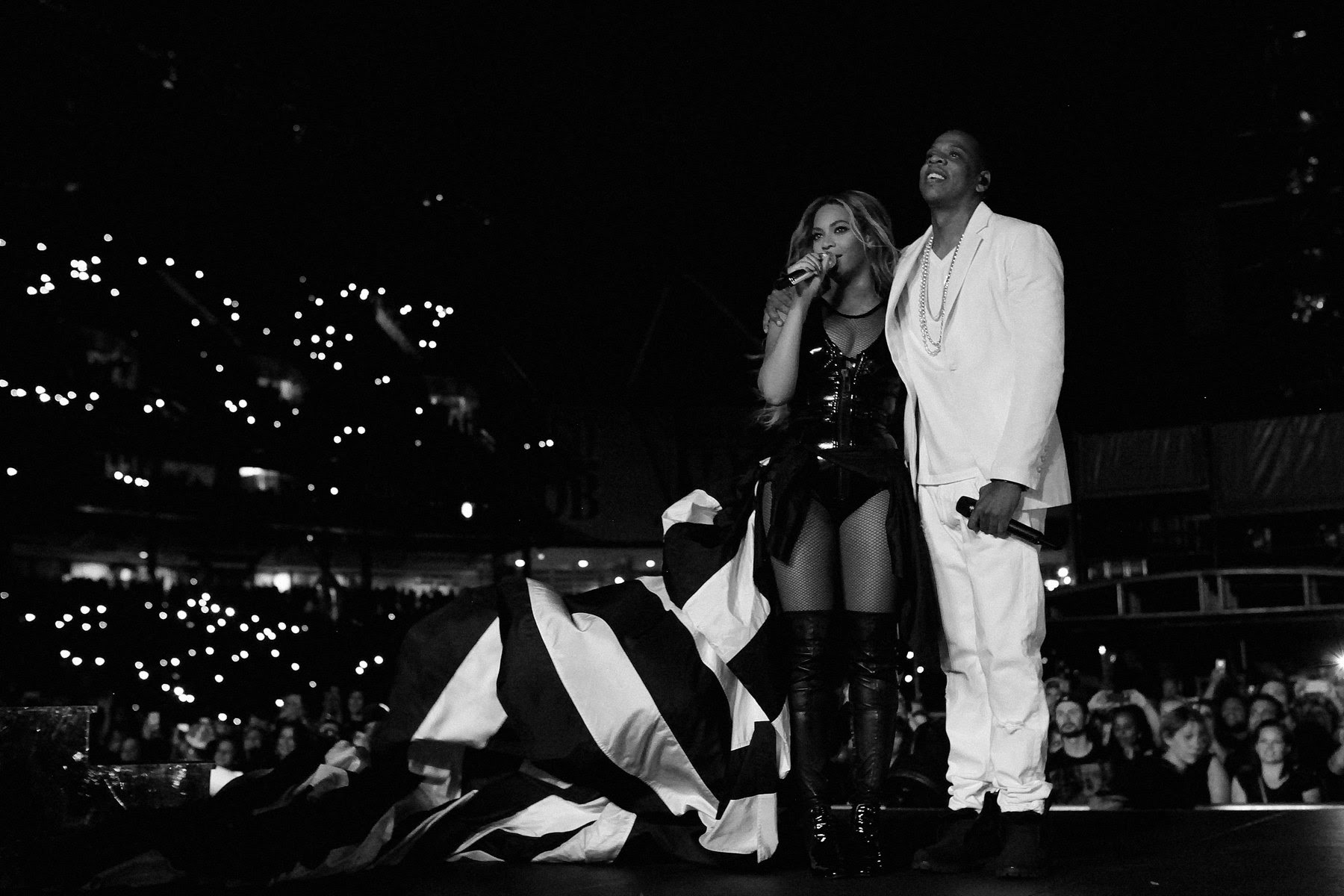 Firstly, both articles apply fairly conventional European fine art aesthetics to the album. Wilson invokes pre-Enlightenment European aesthetics to argue that the “reality show aspect” of the album is somehow aesthetically inconsistent with great pop music. Prior to the 17th century, it was commonly thought that the status of a work’s form or medium ought to correspond to the status of its representational content: painting, the most highly regarded art form, should have subject matter of equal stature–gods and royalty. Wilson’s claim that “the other distraction is the way that the album’s central suite of music interacts with tabloid-style gossip (and a certain elevator video clip) about Beyoncé and her husband Jay Z” echoes that centuries-old sentiment, a sentiment which is about as alien to Lemonade’s aesthetic as, well, Boethius is.
Fallon begins his article with a genuflection to Prince (as does Wilson), scrunches its nose at the gossipy lyrical and narrative content, and then twice scoffs at the very idea of a visual album, “whatever that is,” as though we in the West don’t have precedents for this sort of Gesamtkunstwerky (the total artwork combining music, visuals, and lyrics) thing going back to Wagner and the Florentine Camerata (the collective attributed with inventing opera in the 17th century). He does talk more extensively about the sounds and music than Wilson does, but given the rapid turnaround he also faced, there’s not a lot of close listening to specific musical figures, performances, or compositional techniques, mostly just a survey of the different genres on the album.
Wilson says that the cheating story detracts from the album’s musical quality because it’s an unoriginal narrative:
a drama of jealousy, betrayal, and reconciliation, one of the most ancient and common of human experiences, and of songwriting fodder…that issue of thematic freshness may render some of the songs here less distinctive and invigorating than Beyoncé was.
I find this an odd criticism to level at a pop album, or even an artwork. Nobody would say that West Side Story or Romeo & Juliet were aesthetically diminished because they recycled that tired old theme of jealousy, betrayal, and (failed) reconciliation. Moreover, as Angela Davis argued in Blues Legacies and Black Feminism, these themes of jealousy, betrayal, and reconciliation are the foundation of black feminist pop music aesthetics in a personal-is-political kind of way. Both articles force a contextually incorrect definition of “politics” onto the album, one which sees the most intimate details of relationships, sex, and kinship as merely personal and apolitical. Fallon, for example, says “there’s no doubt that the music on the album is far more personal than it is political.” Both critics fail to consider it in terms established in black women’s pop performance traditions.
Even in Wilson’s attempt to focus strictly on the music, he spends most of the time talking about visuals and lyrics. He hears a wide range of sonic references in Lemonade, from Dolly Parton to Donna Summer to the Lomax recordings to calypso. But he thinks this makes it sound derivative: “as an aural album, Lemonade is a little less fascinatingly singular and eccentric than Beyoncé” (Wilson). Fallon makes an almost identical remark in his article: “Lemonade doesn’t hurl itself toward any genre in a statement of artistry. Instead it masters… um, all of them, but in turn doesn’t make the same powerful statement of Beyoncé’s artistic mission, like her last album did.” Contrast this with the way Jonathan Shecter talks about Diplo’s post-genre eclecticism as “fresh and cutting-edge,” part of an “ongoing artistic evolution.” As philosopher Christine Battersby has argued, the habit of thinking that flexibility is a sign of innovation when attributed to white men, but a sign of regression when attributed to anyone else, is a habit that goes back to the 19th century. It’s not surprising that Beyoncé gets dinged for the same thing that garners Diplo praise: in her case, what Fallon calls “the most daringly genre-hopping music she’s ever produced” is evidence of unoriginality, whereas in Diplo’s case post-genre eclecticism is evidence of his ability to distinctively transcend provincialism. Even when Wilson’s article does manage to talk about sounds and music, it trivializes Beyoncé’s other artistic achievements on the album.
Both articles rely on some gendered and racialized interpretive habits to address the song’s aesthetic value, lyrical content, and Beyoncé’s artistry. But what about their discussion of the music?

“listen” by Flickr user Robyn Jay, CC BY-SA 2.0
These same racialized, gendered habits tune Wilson and Fallon’s listening and mask the sonic dimensions of Lemonade that don’t fit their narrow concept of music. Both critics make a conceptual move that separates musical practice from black feminist practice. Fallon uses some parentheses and a “but…?” question to put rhetorical and grammatical space between Lemonade’s black femininity and its musical and sonic features: “(By the way, it’s powerful, and feminist, and unapologetically black, and transfixing, and gorgeous, and assured, and weird, and confusing, and dumb, and groundbreaking.) But hey: Is the music any good?” This framing defines “the music” as something distinct and independent of the album’s black femininity, as though black women’s and black feminist musical traditions didn’t infuse the album’s music…or, to the extent they do, they don’t count as “music.”

“Listening” by Jens Schott Knudsen, CC BY-NC 2.0
Wilson makes an identical move. Following the white liberal feminist aesthetics that influence lots of contemporary post-feminist pop, Wilson’s piece locates treats the black feminist message primarily in the video. “In video form…it’s more evident that [Lemonade] is equally the cyclical story of generations of black women dealing with men and balancing their struggle for R-E-S-P-E-C-T (as well as S-E-X) against the violations and injustices of race and gender.” He sees the politics in the visuals, but doesn’t consider the sounds as having anything to say or do about that story and that struggle.
This approach isn’t limited to well-meaning but ignorant white men pop critics: even bell hooks’ now (in)famous essay on Lemonade looks at but doesn’t listen for its politics. She argues that it is a “visual extravaganza” whose “radical repositioning of black female images does not truly overshadow or change conventional sexist constructions of black female identity.” Locating the politics entirely in Lemonade’s visuals, hooks’s essay treats black feminism as something contested solely in terms of images. (And divorcing the images from the sounds fails to consider the fact that the sounds impact how viewers interpret what they see.)

Screenshot from Lemonade
This is the wrong method to use for thinking about Lemonade and Beyoncé’s work as a whole (and pop music in general). Sounds on this album don’t operate independently of black femininity, black women’s performance traditions, or individual artists’ black feminist politics. On the one hand, thinking with Daphne Brooks and Regina Bradley, it’s more accurate to say that Beyoncé’s sound game has generally led the way and been more politically cutting-edge than her visual game. On the other hand, sound can also be what does the heavy lifting for patriarchy and other systems of domination, as I argue here. Separating the music itself out from the political content misrepresents what music is and how it works. And it is a particularly gendered misrepresentation: critics are not so eager to separate Kendrick’s sounds from his politics. In both white and black philosophical traditions, dominant concepts of politics and the political are normatively masculine (just think about the gendered public/private distinction, for example), so from these perspectives feminine and feminized sounds don’t feel or seem “political.”
But in these two cases the divorce between music and politics is also what lets white men pop critics have authority over black feminist music. If they can distill Lemonade down to its “solely musical” aspects, then they can plausibly present themselves as experts over generic, depoliticized sound, sounds disconnected from knowledges and values tied to particular lived experiences and performance traditions. Problem is, in the same way that there is no generic ‘person’ without a race or a gender, there is no generic, depoliticized sound. As Jennifer Stoever has argued, even though Western modernity’s occularcentric epistemology obscures the sonic dimensions of white supremacist patriarchy and the subaltern knowledges developed under it, sounds nevertheless work politically. Digging deep into the music on Lemonade or any other pop song does not involve abstracting the music away from every other aspect of the work and its conditions of production. Digging deep into the music part of pop music means digging deeper into these factors, too.
When Regina Bradley, Dream Hampton, Laur M. Jackson, Zandria Robinson, and Joan Morgan talk about how Lemonade makes them feel, what affects and knowledges and emotions it communicates, they are talking about the music–they just work in a tradition that understands music as something other than ‘the music itself’ (that is, they don’t think music is abstracted away from visual and cultural elements, from structures of feeling common to black women with shared histories and phenomenological life-worlds). As I have tried to show in my own work, the sounds and musical performance are central to Beyoncé and Rihanna’s work because they engage traditions of black women’s and black feminist knowledges. Aesthetic practices develop and emerge as types of implicit (i.e., non-propositional or non-verbal) knowledge, knowledge created in response to lived experiences in a particular social location. Aesthetic practices can communicate and perform knowledges that reinforce systems of domination, and they can also communicate and perform subordinate knowledges that map out strategies for survival amid domination. Dominant institutions (like the music industry) and people from dominant groups (like Iggy Azalea or Eric Clapton) separate the aesthetic practice from the implicit knowledges that make it meaningful, and thus neutralize those knowledges and make the aesthetic practice fungible and co-optable. Talking about “the music itself” or “solely music” does the same thing: it is a form of what philosophers call epistemic violence.

Screenshot from Lemonade
So, asking “but what about the music?” is a way to dig into those implicit knowledges to show where much of this epistemic work is happening. And that’s good analysis that isn’t (necessarily) epistemically violent. It demonstrates what Stoever calls “an ethical responsibility to hear African American cultural production with…assumptions about value, agency and meaning” (31) that are appropriate to them. But you can also ask “but what about the music?” in a way that abstracts away from these implicit knowledges. That’s what Wilson’s and Fallon’s pieces do, and that’s why they’re both epistemically violent and objectively poor methods of musical interpretation. But we can and do better when we write about and theorize the music part of pop music. And, to riff on Mariana Ortega’s argument in her article on the type of epistemic violence she calls “loving, knowing ignorance,” doing better means listening to and with black women, black women’s music, and black feminist aesthetics. You can’t divorce music or listening from politics; listening better can and will follow from practicing more just politics.
—
Robin James is Associate Professor of Philosophy at UNC Charlotte. She is author of two books: Resilience & Melancholy: pop music, feminism, and neoliberalism, published by Zer0 books last year, and The Conjectural Body: gender, race and the philosophy of music was published by Lexington Books in 2010. Her work on feminism, race, contemporary continental philosophy, pop music, and sound studies has appeared in The New Inquiry, Hypatia, differences, Contemporary Aesthetics, and the Journal of Popular Music Studies. She is also a digital sound artist and musician. She blogs at its-her-factory.com and is a regular contributor to Cyborgology.
—
REWIND!…If you liked this post, you may also dig:
I Been On: BaddieBey and Beyoncé’s Sonic Masculinity-Regina Bradley
Listening to Sounds in Post-Feminist Pop Music-Robin James
Of Resilience and Men: How Bieber, Skrillex, and Diplo Play with Gender in “Where Are Ü Now”-Justin Burton
Share this:


Current Top Posts





April 2021

January 2020

November 2019

October 2019

August 2019

April 2014

November 2017

March 2015

December 2017

October 2015
 Sounding Out!
Recent Comments