
The Sounds of Selling Out?: Tom Zé, Coca-Cola, and the Soundtrack to FIFA Brazil 2014

DOI: https://doi.org/10.59350/m7zjr-2ww67
Welcome back to our summer series on “Sound and Sport.” In today’s post, Kariann Goldschmitt discusses the gamechanging controversy over Brazilian musician Tom Ze’s commercial for Coca-Cola’s FIFA 2014. For an instant replay of July’s post click Josh Ottum‘s “Sounding Boards and Sonic Styles: The Music of the Skatepark” or of June’s post, click Tara Betts‘s “Pretty, Fast, and Loud: The Audible Ali.” For May’s post, click Melissa Helquist‘s “Goalball: Sport, Silence, and Spectatorship.” This Thursday’s grand finale will continue our discussion of Brazil, with a podcast by Andrea Medrado entitled “The Sounds of Rio’s Favelas: Echoes of Social Inequality in an Olympic City” AND keep you on the edge of your seat with a bonus Olympic doubleheader post excerpted from David Hendy‘s recent Noise broadcasts for BBC Radio 4 on the sounds of Olympic crowds. And now. . .the sounds of FIFA’s sponsors. —J. Stoever, Editor-in-Chief
—
Tensions in Brazil have been running high as the the country ramps up preparations for next year’s FIFA World Cup. Brazil’s economy is one of the world’s strongest, but its middle class has suffered as economic growth has stagnated amid rapidly rising costs of living. Yet, FIFA demands that Brazil’s government spend large amounts of money to renovate stadiums and further bolster tourism-based services at the expense of everything else. This last June, news of another hike in transit fees was the final straw for many citizens and they took to the streets to protest corruption and the routing of public funds to tournament preparations while basic services suffered. Protesters argue that the country is burnishing its international brand on the backs of its citizens. It is thus no surprise that much of the Brazilian public is fed up with FIFA and its multinational partners. As a consequence, musicians who participate in World Cup-related ad campaigns risk damaging their relationship with the public.
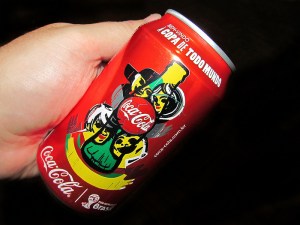
In Spring 2013, the Facebook page of one of Brazil’s most eccentric musical iconoclasts, Tom Zé, was bombarded by negative comments. Unforgivably to some of his most ardent fans, Zé had lent his vocal talents to a Coca-Cola commercial that sought to connect Brazil’s oft-mythologized cultural diversity to the universals of the World Cup and Coca-Cola’s alleged populism. Zé inflected his delivery of the ad copy with an especially musical speaking cadence and rhythm. It was a peculiar take that drew on his signature vocal eclecticism.
The ad opens with Zé stating,
Muita gente se pergunta como vai ser a copa
A coca-cola vai falar como ela não vai ser
[Many people are asking themselves what this cup will be like
Coca-Cola is going to tell you what it won’t be like]
as the shot features a group of people smoothing out a giant kite with the Brazilian flag. There is a strong syncopated rhythm to Zé’s voice that matches the carnival samba drums (especially the caixa) that accompany the ad throughout. As it continues, the imagery matches what Zé describes, in either stills or brief shots, often recalling the frenzy surrounding world cups of the past. In a rapid cadence, he says:
não vai ser só a copa de vuvuzela, do vidente, da celebridade
da menina bonita, do jogadores com cabelo da moda…”
[it won’t be the Cup of the vuvuzela, the psychic, nor of celebrity
of beautiful women, nor of players with fashionable hair]
The synchronization of Zé’s rapidly rhythmic delivery over archetypal images of Brazil’s tournament excitement is crucial to the ad’s message. This passage mentions two icons of the 2010 tournament, the vuvuzela and the psychic (vidente) octopus, with accompanying images. In under four seconds, the camera jumps from a man holding a celebrity magazine (celebridade), a woman cheering (menina bonita), some player figurines (jogadores) and a boy with an elaborate buzz cut. By aligning himself with an official sponsor of the upcoming tournament through ad copy that valorizes Brazil’s present, Zé also lent the sound of his voice to the sports-industrial complex, thereby opening himself up to accusations that he was a “sell-out” (vendido).
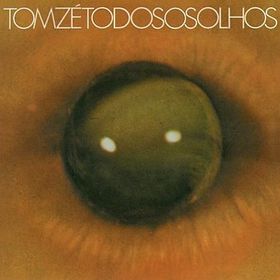
Zé is famous for taking part in the tropicália of the late 1960s – a cultural movement that was most effective through popular music. Tropicália musicians bucked Brazilian musical conventions by blending imported rock ‘n’ roll with national music protest songs during a period when musical taste often indicated one’s support or disapproval of the military dictatorship. While most involved in tropicália eventually became Brazilian musical mega-stars (Caetano Veloso, Gilberto Gil, Gal Costa, Os Mutantes, and Mara Bethânia), Zé drifted to obscurity by rejecting many of the machinations of the record industry. He only found an international audience when David Byrne’s Luaka Bop Records released some of his music in the 1990s, the most successful of which was Fabrication Defect [Com Defeito de Fabricação] (1998). Due to his peculiar status, Zé disrupted fan expectations and threatened his brand when he embraced a corporate power so intricately connected to an increasingly unpopular athletic tournament.
The controversy surrounding the Coca-Cola ad took a turn towards farce when, on April 22nd, 2013, Zé released a free 5-song EP on his website titled Tribunal do Feicebuque – a clear play on the way that Brazilians tend to pronounce “Facebook.” Accompanying the songs was a parody of tribunal orders listing the performing and collaboration credits along with lyrics to the songs. Zé’s actions exposed how the incident was a different kind of sonically-driven sports spectacle – this time it was played out over social media, in Brazil’s most influential newspaper, in Tribunal references and fights with fans during his shows at Rio’s famed Circo Voador, and in the ensuing blog reviews of his shows.
The chaotic structure of the EP’s title track, while typical of Zé catalog, disrupts his fans’ claims of “selling out.” He employs a variety of sonically disjunct approaches, opening with the startup sound for Microsoft’s Vista OS before jumping into a psychedelic samba-rock tune with a staccato guitar and a brass section. Zé recorded his vocals over multiple tracks, at times simultaneously sung/spoken at a low pitch and sung at a high pitch. The first half is familiar – the voices trade between Zé and a female companion in something sounding like a duet over a samba-rock beat. The lyrics directly reference infamous moments when Brazilian audiences have turned on their musical icons thought to be too involved in international business influences.
Vendido, vendido, vendido!
A preço de banana
Já não olha mais pro samba
Tá estudando propaganda
[Sell-out, sell-out, sell-out!
The price of a banana
He no longer looks to samba
He’s studying advertising]
At the mid-point, rock gives way to a serious march and more voices enter (including famed São Paulo hip-hop artist Emicida) making the song’s structure more like a trial, complete with competing arguments, before returning to samba-rock under Emicida’s rapping. The song is creative and fun, but it is far from Brazil’s top-40 fare which often favors smoother genre blends and urban pop hits.
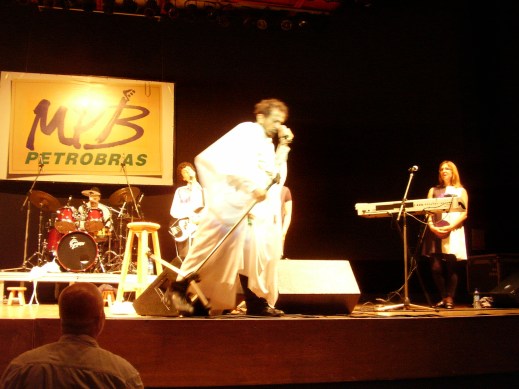
Given all of the attention paid to musicians’ efforts to supplement their meager income from digital sales and streaming royalties by forging partnerships with a variety of multinational corporations, it is a little surprising that Tom Zé’s participation in a Coca-Cola commercial would be this controversial. It is difficult to find a musician in Brazil that hasn’t benefitted from some kind of corporate sponsorship. Most artists accept funding from a granting arm of a national corporation (oil company Petrobras, major bank Itaú), license music to national ad campaigns, or embark on a more direct co-branding effort from the likes of mobile phone providers and skin care companies.
One of the hallmarks of the recent changes that have affected the music industry is that musicians rarely refuse opportunities for their music to be used as the soundtrack for mainstream audio/visual entertainment and advertisements. The practice is so common that one of the best-regarded music industry survival books explains possible changes to a musician’s brand when they participate in the advertising of other products. Instead of “don’t license your music,” musicians should license their music in a way that will benefit their brand. It is rare for a song’s success among World Cup spectators to harm musicians; anthems that reflect well on the host nation(s) and express the energy of cheering crowds are a central feature of the tournament. Shakira’s “Waka Waka” actually bolstered her credibility among music fans across the African continent because it sampled Golden Sounds’ hit “Zamina Mina,” a popular song among hip-hop artists in Camaroon and Senegal. In Zé’s case, he misjudged how the tournament and its corporate sponsors were being read by the Brazilian public just weeks before tensions exploded in protest. Indeed, as compared to other Brazilian artists who have recorded potential 2014 World Cup anthems, the reaction to Zé is unique.
As others have noted, television advertising played an important role in the June protest soundtrack. Protesters appropriated the song from a Fiat commercial (released just weeks after Zé’s Facebook episode) that explicitly connects cheering soccer crowds in the street to a new car.
The meaning of “torcer,” a common expression for “cheer” in both advertisements’ copy, is transformed back to its original meaning to wrench or twist thereby exposing the conflicts that have been exacerbated by Brazil’s preparations for the tournament and the sports industrial complex.
These crowds twisted an ad’s soundtrack to challenge the role of multinational agencies and corporations in Brazil’s skewed socio-economic priorities. Indeed, as Leo Cardoso wrote in Sounding Out! a year ago, some of these priorities include regulating sound in Brazil’s largest cities.
For both of these cases involving sonic responses to advertisements that explicitly seek to capitalize on excitement for the soccer tournament, their original intended meaning was twisted and wrenched, forcing musicians to re-evaluate their publics. In the current political climate, Zé found that musical sounds can be aligned with the FIFA World Cup, so long as they are about celebrating sport rather than its multinational sponsors.
—
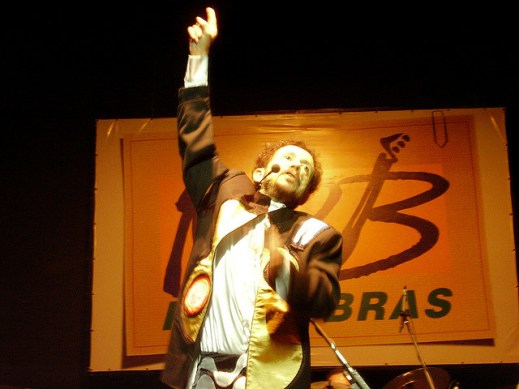
Featured Image: Tom Zé in 2008 performing in front of a Petrobras sign, photo used by CC license, Neto Silveira
—
—

REWIND! . . .If you liked this post, you may also dig:
“Sound-politics in São Paulo, Brazil”–Leonardo Cardoso
Quebec’s #casseroles: on participation, percussion and protest–Jonathan Sterne
Hello, Americans: Orson Welles, Latin America, and the Sounds of the “Good Neighbor”–Tom McEnaney
—
Share this:

“We wanted to tell stories about sound”: Opening Ears Through the “Everything Sounds” Podcast
DOI: https://doi.org/10.59350/k708m-kk431
This is the fourth and final post in Sounding Out!’s July forum on listening in observation of World Listening Day on July 18th, 2013. World Listening Day is a time to think about the impacts we have on our auditory environments and, in turn, its affects on us. To read last week’s post by Nicole Furlonge, click here, for Maile Colbert‘s piece click here and for Regina Bradley’s post (and to read more about World Listening Day) click here.
This week we have something a little different in store for our readers. The good folks from Everything Sounds, Craig Shank and George Drake Jr., wrote a post for us on the role of listening in their podcast. However, they approached it as a transcript of their podcast. One of the things we like about Everything Sounds is that their approach to discussing sound is like a conversation, and so listeners feel like they are hanging out with the hosts as they go on sonic adventures. Moreover, they have recorded the post as an Everything Sounds podcast episode, so that you can choose how to experience this blog post: either as a written/visual text, audio text, or read along while you listen. Also, feel free to respond in our comments section to the listening challenge they present at the end of the post. We want to hear your stories about sound too!–Liana Silva, Managing Editor
—

Craig Shank (CS): I’m Craig Shank
George Drake Jr. (GDJr): …and I’m George Drake Jr.
CS: This is an Everything Sounds blog post.
GDJr: If you’re not familiar with Everything Sounds, it’s a podcast and public radio show about the ways that sound plays a role in art, science, history, and culture.
CS: Everything Sounds covers stories about instruments made of meteorites, voicemail confessions, microphone museums, and dozens of other topics.
GDJr: Don’t forget about the time that we somehow managed to get on the subject of using music to encourage…you know…tortoise-love.
CS: Obviously, radio shows use sound to tell stories. How else would they do it? However, we wanted to tell stories about sound. The best way to reign in our slightly unwieldy premise was by asking questions. How do artists use sounds? What sounds result from the natural world, daily life, and industry? Why is sound important? What can we learn about our own experience through sound?
GDJr: Sound plays an important role in our lives. It makes sense that it would, right? Sound is everywhere. Complete silence is virtually impossible. There’s always something generating a sound somewhere. That’s good news for us since we’ll always have something to talk about on the show.
CS: When Sounding Out! approached us about contributing to the blog for World Listening Day, we were flattered. Then the reality set in. We’re just two guys that make a podcast. It’s unlikely that anyone would consider us experts. Our education involved studying sound and music, but it was mostly in the context of creating radio.
GDJr: We were initially drawn to radio because of music, but over time we began to appreciate how songs, voices, and sounds were used to share information and tell stories. Radio is a medium that spoke to our curiosity about the world as well as the role that sound plays in it. After spending so much time working with and around sound, you can’t help but notice all of the ways it can influence everyday life.
CS: We aren’t scientists, inventors, acousticians, artists, or anything other than radio producers, but Everything Sounds allows us to speak with experts and creative people that can help us learn about the influence that sound has on us.
GDJr: This may be the exact reason why the show resonates with listeners. In many cases, we’re learning something new right along with you. We’re able to ask questions and make sense of new information. After we gather the information we organize everything to make more sense, find supporting information, check the facts, and try to reassemble all of it in a way that is fun and engaging.
CS: The reaction to the show is humbling and beyond our expectations. When we started producing the show we were unaware that it could have a real-world impact. However, we’ve heard from listeners that thank us for opening up their ears and helping them reconsider the role of sound in their daily lives. We’ve been touched by stories from listeners with vision difficulties that tell us how much they appreciate the show and its treatment of sound.
GDJr: One of our listeners commented that their ability to recognize and classify sounds was well-developed as a result of their condition. They said our show made them want to find ways to record some of their experiences with sound and share it with others. We’re always delighted to hear that the show generates any kind of reaction, but it’s especially meaningful when it makes listeners want to create, investigate, or learn after the show ends.
CS: …and inexplicably, some people actually think we’re funny. I’m not even convinced we’re funny.
GDJr: If we are, it’s probably not intentional. Let’s get back to your point. Making a connection helps to spark an interest in learning about and exploring sound. If people think Everything Sounds is funny, informative, entertaining, or “ear-opening,” then we have managed to get people to think about sound and hearing more deeply. Even if it’s only for a few minutes each week, sound becomes the center of attention. If we make the show enjoyable for listeners, then we open doors to topics that they may not have considered in the past.
CS: The wonderful thing about learning is that you don’t have to be an expert to do it. You just have to be curious. Even the experts use their imagination and curiosity to solve problems and explore unanswered questions. Accessibility is extremely important when it comes to creating an intellectual spark that encourages people to stop , think, pick up a book, or search on the internet for more information. Even though we are sharing information that is new to us, we try to make it entertaining and less intimidating.
GDJr: We don’t want to overstate our contributions to listeners’ lives. We’re fully aware that we’re competing for their time and attention. Everything Sounds has probably become background noise for many hours of laundry folding, dinner preparing, or late-night driving. Despite this, we value all listening and levels of engagement.
CS: By listening to podcasts or radio programs the world can come to you through your headphones or speakers. If someone can’t make a trip, then we can provide the material to construct the scene in ears and minds.
GDJr: So, what are the scenes that we’ve created? Well, in the very beginning, episode 1 in fact, we talked to a sound artist named Jesse Seay. Craig and I had no idea what the show would sound like, how it would be structured, or if anyone would even care. The only thing we knew is that we wanted to do a feature on her “Mechanical Tide” piece. Sculpture is inherently visual art form that sometimes may be difficult to translate on the radio. So, we were interested to learn more about one of many artists that has found a way to incorporate sound elements into their work. A simple interview with Jesse would have probably given us enough to work with, but to bring some life into the story we decided to see the piece in person with her.
CS: At the University of Chicago we were able to capture Jesse interacting with the piece, talk to students, and run into tour groups that reacted to Mechanical Tide. This episode taught us a valuable lesson. Capturing honest, real, and unscripted moments is essential to telling stories about sound.
GDJr: All of the time and writing in the world couldn’t create moments as memorable as when we simply keep the tape rolling and listen for the surprising sounds of the real world. We need some consistency for the sake of telling coherent stories, but including surprising and unexpected audio adds a great deal to our episodes.
CS: In the first episode of our second season we spoke to Nick Zammuto. He’s a musician that has performed with The Books and more recently Zammuto. Over the years, Nick simply kept the tape rolling whenever he could to capture as much of the world around him as possible. Many of these clips ended up being used in his music.
GDJr: Nick said, “It’s an obvious rule of physics that, you know, the more you record, the more you get.” Listening works the same way. The more time you spend listening to the world, the more you get out of it.
CS: A striking example of this involved a trip to the The Aquarium of the Pacific in Long Beach, California. Nick was recording in front of the jellyfish tank and captured part of an unsettling conversation with a father and daughter. This conversation eventually made its way into a song called “Motherless Bastard” by The Books.
GDJr: Nick has a knack for finding ways to use the sounds of everyday life in his musical pieces. The results are sometimes uncomfortable, humorous, confusing, or odd, but taking sound from its original context allows us to reconsider its place in the real world and in art. Although Nick often has a use for his recordings, listening itself often doesn’t need to have a goal to be beneficial.
CS: Being open to those experiences of everyday life is what makes good listeners. Most of us are born with the ability to hear the world around us. However, it takes patience and practice to develop better listening habits. We can learn about other people, the natural world, our surroundings, and the things we care about by taking a closer listen. Everything Sounds isn’t meant to encourage a blanket approach to listening, but we do think it encourages people to consider the way that they listen to the world and what they are neglecting.
GDJr: When was the last time you put away your phone, turned off the TV or radio, and listened to the sounds in your neighborhood? If you’ve been in nature recently, did you take a moment to close your eyes and listen to the birds while the wind rustled the leaves on the trees? Have you thought about how different all of your friends’ laughs sound?
CS: Listening isn’t just about encountering and acknowledging the cacophony of daily life. Listening is about taking the time to notice the role that many different sounds play in a soundscape. Taking the time to process the sounds around you gives you an increased awareness of the world and your place in it. There is a wealth of information carried in sound waves. Neglecting that information would be like eating a wonderful meal and not allowing any of it to touch your taste buds.
GDJr: Deep listening serves practical purposes. It helps us appreciate our favorite music, enjoy the environment, and understand the people we love. Sounds can bring us joy, alert us to danger, keep us connected, and help us navigate our world. Listening closely allows you to hear the subtle details that many others will overlook or ignore. It helps you to become more mindful, in the moment, and intellectually engaged.
CS: So, take a moment now to listen to the sounds that you may have been blocking out while reading this post. Consider other times in your life where you may not be paying attention to the sounds around you. Make an effort to appreciate all that your ears have to offer.
(6-7 second pause)
GDJr: It’s easy to be distracted by bright colors, motion, and other attention-grabbing visual elements in our culture, but if you make the effort to listen, you’ll be able to hear diverse and nuanced examples of sounds that can create just as much excitement everywhere.
CS: In the introductory episode of the show we talked about the way sounds shaped us and led us to create Everything Sounds. In that episode we stated that the goal of the show is not to just share our own experiences with sound. We want the show to encourage listeners to have their own journeys with sound. With this blog post, even if you never listen to the show, we hope that you will recognize your own listening habits and consider ways that you can have a closer relationship with sound.
GDJr: I think that’s pretty much the whole ball of wax.
CS: Thanks for listening…or reading. Whichever one you’re doing.
GDJR: Or Both!
CS: Thanks to Sounding Out! for giving us this platform to share our enthusiasm for sound.
GDJr: We love meeting other audiophiles and geeking out, so feel free to reach out. We’d love to hear from you.
CS: I’m Craig Shank.
GDJr: And I’m George Drake, Jr. Thanks for reading or listening to this Everything Sounds blog post.
—
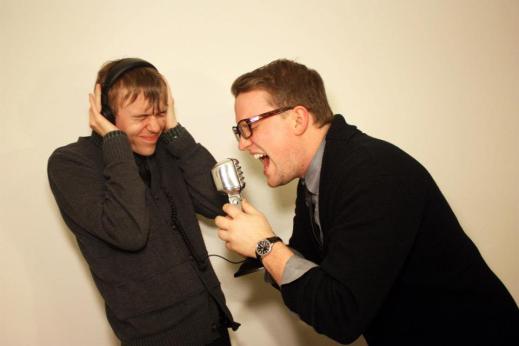
Featured image photo credit: Everything Sounds duo Craig Shank and George Drake, Jr., image courtesy of the authors.
—
The hosts of Everything Sounds:
Craig Shank is an Indiana native that developed a passion for music and broadcasting at an early age. While in college, Craig balanced internships, part-time jobs, and volunteer opportunities that allowed him to spend most of his time outside of the classroom in broadcast facilities. His interest in sound and digital media paired with extensive broadcasting experience led Craig to produce Everything Sounds with his longtime friend and collaborator, George Drake Jr. He is fascinated by the cosmos and begrudgingly acknowledges his lactose intolerance.
George Drake Jr. grew up in Chicago, but spent time in Indiana and London before returning to the Windy City. His passion for music and background in theatre as a teenager made George a perfect fit in the world of radio. Following his involvement at WIUX, WXRT, and WTTS George took his dedication to his craft to the next level when he traveled overseas to pursue his Masters in Radio at Goldsmiths College, U. of London. George has consistently allowed his ears and intuition to find and promote sounds that will have an impact. His favorite band is The Books, he enjoys a spicy Bloody Mary, and finds any excuse to wear a tie.
—
REWIND! . . .If you liked this post, you may also dig:
Sounding Out! Podcast Episode #2: Building Intimate Performance Venues on the Internet—Andreas Pape
The Sound of Radiolab: Exploring the “Corwinesque” in 21st Century Public Radio–Alex Russo
Park Sounds: A Kansas City Soundwalk for Fall—Liana Silva
—
Share this:




Current Top Posts





April 2021

January 2020

November 2019

October 2019

August 2019

April 2014

November 2017

March 2015

December 2017

October 2015
 Sounding Out!
Recent Comments