
Hello, Americans: Orson Welles, Latin America, and the Sounds of the “Good Neighbor”
DOI: https://doi.org/10.59350/2rdy5-n1z19

And now, we interrupt this broadcast for a message from Guest Editor Neil Verma: At 9:00 pm on July 11, 1938, the Columbia Broadcasting System unfurled a plush Tchaikovsky concerto to welcome 23 year-old wunderkind Orson Welles and his Mercury Theater troupe to national airwaves for a show destined to become the most famous dramatic radio anthology ever aired.
The Mercury Theater on the Air came with hype. Welles was fresh off a streak of innovative stage adaptations of Shakespeare’s “Julius Caesar,” Shaw’s “Heartbreak House,” and Marlowe’s “Doctor Faustus,” pledging in a New York Times article to “treat radio with the intelligence and respect such a beautiful and powerful medium deserves.” A jab at his rivals? Maybe. Legends tell of 17-hour writing sessions, of rows minutes before airtime between Welles, producer John Houseman and composer Bernard Herrmann, of sound men abusing baskets, watermelons, toilets, lawnmowers to make audio. Time described Mercury’s ambition as “bounded north and south by hope, east and west by nerve.”
Welles was by then a radio veteran, the hero of The Shadow and impersonator of newsmakers from Sigmund Freud to Fiorello laGuardia on The March of Time. Hundreds of extant recordings link Welles to rousing Norman Corwin pageants, Columbia Workshop experiments, strident war shows like Ceiling Unlimited, buffoon turns on the Jack Benny and Fred Allen Shows, picaresque Harry Lime adventures, dense thrillers on Suspense, romances on Lux Radio Theater, diplomacy on Hello Americans, and on and on. Welles gave radio new forms, as radio informed his filmmaking profoundly – the sound of Citizen Kane (1941) the characters in Mr. Arkadin (1955), the vocals in Touch of Evil (1958) the theme of F is for Fake (1974). Welles invented a cinema that is, among other things, a kind of radio play you can see.
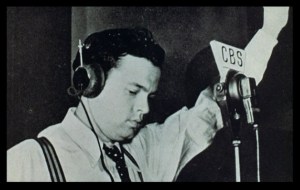
Mercury (and the Campbell Playhouse it became) undertook plays like “Dracula,” “Treasure Island,” “The 39 Steps,” “Rebecca,” “Jane Eyre,” and “The Magnificent Ambersons” and dozens of others. But none would be remembered were it not for the “War of the Worlds,” adapted from H.G. Wells’s novel by Howard Koch. In October of 1938, WOTW aired to six million listeners, hundreds of thousands of whom misheard it as news. The “Panic Broadcast” became a series of fables: listeners treated for shock in Newark; families on Boston rooftops watching the fires of New York in the distance; an Indianapolis church service interrupted by a parishioner telling congregants “you might as well go home to die;” bomb threats and a police raid on CBS headquarters. Three quarters of a century later many agree with the New York Tribune’s Dorothy Thompson, who declared the Invasion “one of the most fascinating and important events of all time,” but the meaning of that event also feels unclear, growing more ambiguous with time. Today, the alien invasion is itself increasingly alien.
To confront that issue and to open Mercury to new kinds of critical practices in sound studies, Sounding Out! is partnering with Antenna over the next six months to bring you a 12-part series entitled From Mercury to Mars: Orson Welles on Radio after 75 Years. I’m honored to serve as Sounding Out!‘s Guest Editor. We’ll be bringing you authors who engage aesthetic, historical and political aspects of Welles’ radio work with a depth and intensity unusual in Welles studies.
That’s especially true of this inaugural post by Cornell Comparative Literature Professor and SO! contributor Tom McEnaney, who has been working on a book project involving radio and the “neighborhood” of the Americas. I’m thrilled welcome Tom’s nuanced and provocative take on Welles’s adaptation of Joseph Conrad’s Heart of Darkness and his Hello, Americans program, and I hope it will encourage you to stay with us as the series unfolds.
Like Welles, we’ve got a few tricks up our sleeve. Stay tuned. — nv
—
When WNYC’s Radiolab aired their live celebration of War of the Worlds five years ago, the odd laugh line was reserved for a moment at the start of the radio play when an announcer interjects “now we return to the music of Ramón Raquello and his orchestra.”
Raquello, as the Radiolab team makes clear, didn’t exist, and his “orchestra” was just an anonymous phonograph recording of the famous tango “La cumparsita.” Welles apparently chose the song for its “tedium,” hoping it would make believable the lunacy to come. That the music of the Southern Cone set up listeners in the United States for the greatest hoax in history might have been yet another of the inside jokes Welles left us to listen for.
The sounds of Ramón Raquello and the settings of some of Welles’s most famous films—The Lady From Shanghai (1947); Touch of Evil (1958)—remind us how Latin America, and its relationship to the United States, fascinated Welles in the late 30s and 40s. Five years after War of the Worlds, he began the final episode of his CBS program Hello Americans by recalling the show’s mission: “It is important for the people of this hemisphere to get better acquainted, and the Mercury [Theater] has been given the job of helping out with the introductions.”
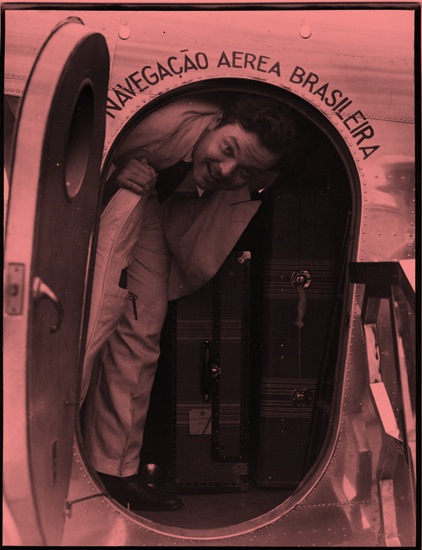
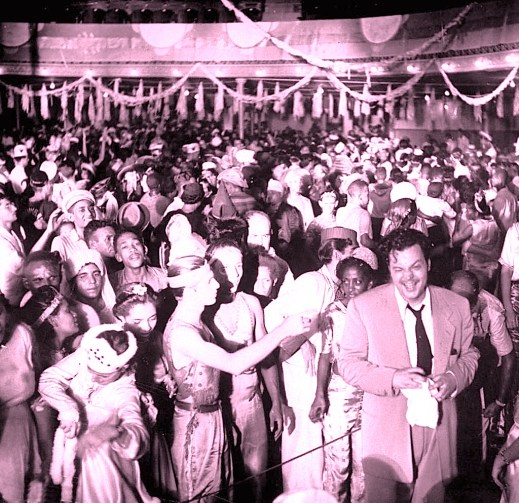
An artful propagandist, Welles told Nelson A. Rockefeller, FDR’s head of Inter-American Affairs and Welles’s boss at RKO studios, that radio and film were the best way “to sell South America to North America.” Between 1938 and 1943 his technical innovations in film and radio, in addition to a 1942 stint as a “good will ambassador” to Latin America, created for him by Rockefeller, were meant to convince U.S. audiences of FDR’s claim in his first inaugural that the United States should follow the policy of the “Good Neighbor.” Whether listening, watching, or reading his work during World War II, Welles’s U.S. audiences were constantly reminded that they were residents of the Americas, rather than an exceptional and isolated America.
To assess the aesthetics and politics of Welles’s engagement with Latin America, it’s worth returning to the October 30, 1938 broadcast of War of the Worlds. Presented as a live news report of an alien invasion on the East Coast of the United States, War of the Worlds sent its mass audience into hysterics, proving to Marshal McLuhan that radio was “a tribal drum,” capable of calling forth the “archaic forces” of “the resonating Africa within” (301). The primitivist and racist logic in McLuhan’s Understanding Media (1964) sought to explain away the irrationality he (and his Frankfurt School forebears) identified as the enlightenment’s dialectical twin by exiling it to Africa. In this, he might have merely followed Welles’s Mercury Theater, which aired a production of Joseph Conrad’s Heart of Darkness a week after War of the Worlds, thus linking an allegory about fascism (and radio’s dangerous complicity with irrational politics) to a Conrad adaptation that critic Michael Denning calls “a fascist parable” exalting “power for power’s sake” (376).
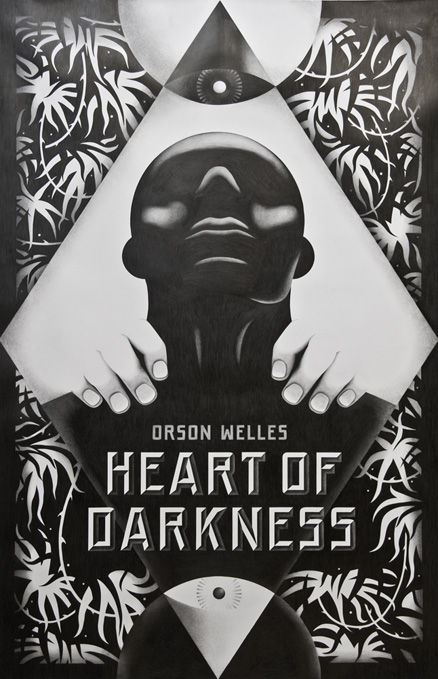
Yet these radio works concern themselves with fascism from very different narrative and social positions. While War of the Worlds depicts an alien invasion, his Heart of Darkness describes a journey towards the alien racial Other, presenting listeners with what had become by 1938 the more mundane miracle of radio—to bring them close enough to hear Kurtz’s haunting repetition: “the horror, the horror.”
Welles, who plays both Kurtz and Marlow in the conversation that leads up to these climactic lines, depicts here the seductive power of his own voice, able to encapsulate the story’s most important characters, and, as Kurtz, to impress even himself, as Marlow.
“Mr. Kurtz,” Marlow / Welles says with awe, “is a remarkable man.” Repeating a line heard throughout the play, Marlow’s words are slyly deflated when they are echoed, with a tone of critical distance, in the voice of one of the ivory company’s employees, a voice that stands in for the listening audience, and encourages their own distrust of Marlow’s naïve faith in Kurtz’s lust for power.
Meanwhile, the play tells a complimentary story of proximity and distance: as the boat moves back down the river, the music shifts from tribal drums to spiritual laments to a meandering jazz saxophone, tracing, in basic and exoticist fashion, a capsule history of African diasporic music.
One year later, Welles also attempted to adapt Heart of Darkness as his cinematic directorial debut for RKO, shifting the frame narrative to New York City, while planning to shoot on location in Panama, where expansion had begun that year on the Panama Canal to allow for the transportation of US warships. For this project, Welles planned a first-person camera technique, mimicking his radio work with first person address. The Mercury Theater’s program, originally named “First Person Singular,” placed listeners on the scene. In film the technique became even more immersive, plunging the audience into uneasy, inescapable identification with Marlow’s point of view.
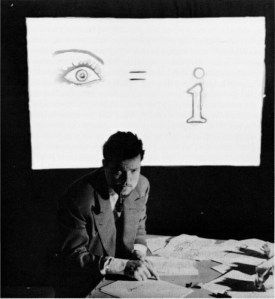
The first person in Welles’s screenplay combines Heart of Darkness’ journey into alien territory with War of the Worlds’ alien invasion—the sense that the audience was under attack. Forced to look out through the eyes of the imperialist adventurer Marlow, the audience surprisingly became the object that everyone in the film watches. The technique could prove threatening to the predominantly white and male movie audiences in the United States of 1940, as Welles planned to enlist 3,000 African American actors to play the so-called natives on the shores of the river—2500 more black extras than worked in Hollywood at the time. When the audience fell under the black gaze in the Canal Zone, where African American men increasingly worked as part of the defense industries, the story’s imperialist theme would have pointed back to the United States’ own racist working conditions, revealing the nation’s complicity and subordination to the imperialist pursuit whose destiny is the primitivist conditions it creates.
RKO rejected Welles’s screenplay, as they did his later documentary project, It’s All True, which sought to transform his 1942 trip throughout Latin America into a tale that fused “the story of samba” with “the story of jazz” to situate African American and Afro-Brazilian musical cultures at the heart of Pan-American culture. Welles soon repurposed the material from It’s All True for a radio program entitled “Hello Americans” that attempted to complete the shift in representation towards a more lateral and dialogic notion of adjacency, positioning U.S. and Latin American culture on the same plane. The means to make these introductions included interviews with and recordings by musicians from Cuba, Brazil, and Mexico, historical tales about Montezuma, Toussaint L’Ouverture, Benito Juárez, Atahualpa and others.
In the show’s most experimental section, Welles simultaneously reinforces and mocks the idea that radio’s ability to collapse distances and transcend borders makes it the medium to communicate the idea of neighborliness.
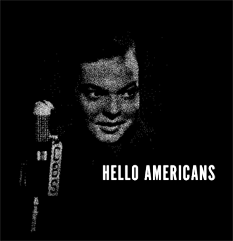
Transporting his audience to “a clay hut somewhere in South America,” Welles introduces a small family in which the son, Juan, builds radios at a new factory, and his father, José, listens to the device. Once the broadcast begins, the listening audience within the frame—Juan, José and his mother—share the same space as the audience listening to “Hello Americans.” All listen together as a broadcast voice introduces Roosevelt’s inaugural address, then Roosevelt’s recorded voice announces his policy of the Good Neighbor, and finally static interrupts Roosevelt’s voice, and a German accented voice takes over to complain about “the republic of the Jew Franklin Roosevelt.” When José comments that the broadcast seems strange, his son Juan answers, “Oh no, they’re all like that. Señor Schmidt at the factory told us it’s uh, it’s because we’re closer to Germany.” Then, a musical curtain falls and Welles returns to reassure his audience that “Juan has learned. Today he works in another factory and he’s a member of the Latin American Confederation of Workers.”
The passage distinguishes between voices—José, Juan, the US broadcaster, Roosevelt, and the German propagandist—and reflects the imagined proximity implicit in Roosevelt’s idea of the Good Neighbor. But the technique also reveals how “Señor Schmidt” and his countrymen take advantage of the geographical confusion made possible by radio’s transcendence of borders to imply that Germany is actually more of a “neighbor” than the United States. These types of confusion between imagination and reality had once launched listeners into panic, but now Welles steps in to calmly and condescendingly reassure the audience that Juan “has learned.” Learned, that is, to join the left leaning Confederation: an untenable statement on US radio less than a decade later.
And yet, the unnamed obstacle impeding both foreign transmissions is language itself. Because everything filters through English, with accents marking the space between Spanish and German, Hello Americans imagines Pan-Americanism through one language alone. Radio’s monolingualism highlights one of the medium’s limitations. Whereas It’s All True could employ subtitles, and allow audiences to listen to a subject’s voice while reading what they said, radio faltered on its most medium-specific component – words.
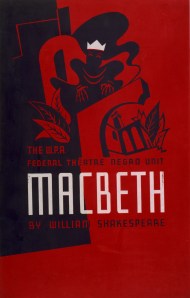
Furthermore, while Welles imagines a “neighborhood” for all Americans, listeners lose the more radical racial politics he had once placed at the center of his Haitian Macbeth (1936), Heart of Darkness (1938), his theatrical production of Richard Wright’s Native Son (1941) and It’s All True (1942). Together these works place the African diaspora at the center of U.S., Pan-American, and world culture. They insist that the attack on fascism abroad must include a change in race relations at home. More ambivalently, they reveal Welles participating in acts of love and theft – a New Deal Kurtz, he draws the power to criticize fascist power from exoticized images of Afro-Caribbean, Afro-Brazilian, and African American cultures, supporting and appropriating the art and struggles of the African diaspora to bill himself as the cultural leader of, not just the ambassador for, Pan-Americanism.
—
Tom McEnaney is an Assistant Professor of Comparative Literature at Cornell University. His work focuses on the connections between the novel and various sound recording and transmission technologies in Argentina, Cuba, and the United States. He is currently at work on a manuscript tentatively titled “Acoustic Properties: Radio, Narrative, and the New Neighborhood of the Americas.”
—

REWIND! . . .If you liked this post, you may also dig:
DIANE… The Personal Voice Recorder in Twin Peaks—Tom McEnaney
On the Lower Frequencies: Norman Corwin, Colorblindness, and the “Golden Age” of U.S. Radio–J. Stoever
The Sound of Radiolab: Exploring the “Corwinesque” in 21st Century Public Radio— Alex Russo
—
Share this:

Listening to the A. D. White House: Cornell’s Society for the Humanities’ Year in Review
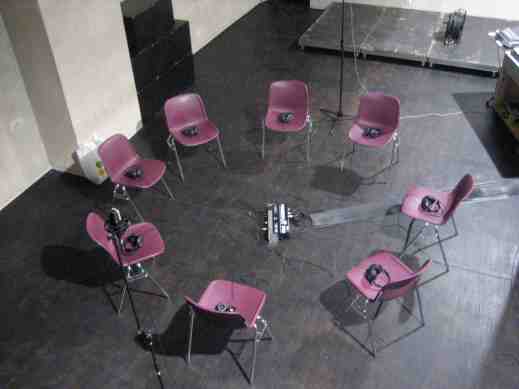

Today, Society for the Humanities Director Timothy Murray sings us back home with a meditation on the soundscapes of study at the A.D. White House this year, closing out our spring “Live from the SHC” series covering new research on “Sound: Culture, Theory, Practice, Politics.” The 2011-2012 Fellows have got to say goodbye for the summer–and sadly beyond–but we all hope that next years’ Fellows (2012-2013 Theme: Risk @ Humanities) enjoy all the good vibrations we will leave behind, and that you, Dear SO! readers, have enjoyed our broadcast! Our summer series, “Tuning In the Past,” on radio and legacy of broadcaster Norman Corwin, featuring Neil Verma, Shawn VanCour, and Alex Russo begins at the end of June. And, of course, every Monday in between and beyond, we’ll keep giving you something you can feel. –JS, Editor in Chief (and 2011-2012 SHC Fellow)
—
DOI: https://doi.org/10.59350/xfep8-syc96
Many thanks to Jennifer Stoever for hosting “Live from the SHC” on Sounding Out! What a fantastic experience it’s been to have Jennifer screening and tweaking Sounding Out! from her garret office overlooking the gardens behind the A.D. White House, the Cornell home of the Cornell’s Society for the Humanities. Readers of “Live from the SHC” have read various strains of this year’s focal theme, “Sound: Culture, Theory, Practice, Politics.” The aim of this year’s residential research project was to contemplate and analyze the resonance of historical and contemporary representations, movements, ideas, and negations of sound.
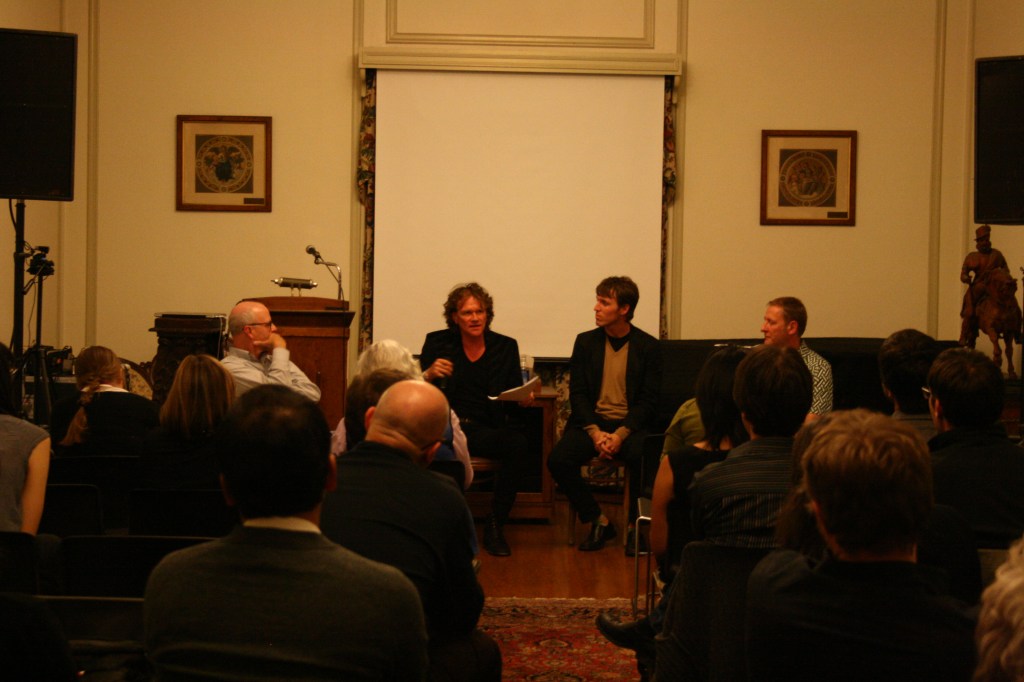
Open to study of the broadest cross-cultural range of contexts and media that cross the boundaries of time and space–from East and West/South and North–the Fellows’ research delved into the complex ways that sound abounds in visual, textual, and aural realms. From “voicing” to “listening,” sound shaped the framework of our critical and philosophical analyses of the body, affect, and social publics. Sound came to be appreciated for its shaping of the parameters of psycho-cultural imaginaries, social practice, religious ritual, and political regulation throughout history and across the globe. Just as sound differs in the global context of capitalism and cosmopolitanism, not to mention the specificities of ethnic difference and cultural diversity, “voice,” “hearing,” and “listening” frame the humanities disciplines in relation to their aesthetic properties and political ramifications.
The Fellows found themselves reflecting on several key issues. Which criteria differentiates natural from artificial sounds? Does sound challenge disciplinary distinctions between the visual and the oral/aural/tactile? Can the loud noises of industrial culture be distinguished from the synthetic sounds of electronic music, the stammerings of performance and the vibrations of philosophical manifestos? It should come as no surprise to followers of Sounding Out! that sound marks the passage of time, the correlation of the aural to the movement of the body in dance and performance, the sonic promise of cartographic projects of social movements and migrations, and the cultural and ethnic specificities of acoustic fields and rhythms in the age of sampling and mixing, not to mention the gender, racial, and ethnic import of voice and spoken narrative.
Adding vibrant texture to our year-long discussions were the three weeks spent in extended dialogue with the Society’s Senior Invited Fellows. Emily Thompson (The Soundscape of Modernity) charted the histories of the architectonic sounds of cinema houses as well as the untraceable wealth of the historical sounds of New York City as its peripheries morphed from country estate to urban zone. Brandon LaBelle came from Norway to take us on a journey of artistic imagination and phenomenological hopefulness as he cruised his writings on Acoustic Territories and Site Specific Sound while sampling the background noises of his multimedia installations. Then Norie Neumark, fresh off the release of VOICE: Vocal Aesthetics in Digital Arts and Media (co-edited with Ross Gibson and Theo Van Leewen), arrived from Australia to follow up on our 2003 online seminar on Sound Cultures. She reminded us of the deep history of sound studies down under, while focusing our attention on voicings and her own multimedia art practice that blends spoken narrative, synthetic noise, mouthed breath, and shocks in the ear. [The “Live From the SHC” logo is a piece from Neumark and Maria Miranda’s “Shock in the Ear”–ED].
.
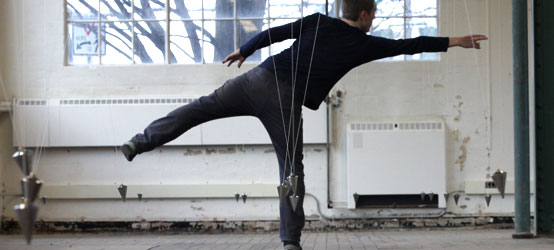
Various other visitors throughout the year included multimedia artists Mendi and Keith Obadike whose “not” Afrofuturism walked us through their exciting series of performance works,“Four Electric Ghosts,” Caitlin Marshall from Berkeley who brought cyborg speech to life with her prosthetic soundings, and renowned choreographer William Forsythe, whose four-hour choreography piece “Nowhere and Everywhere at the Same Time“–performed amidst amidst over 150 hanging pendulums–combined dance and environment as a means of physically manifesting the process of thought. Marjorie Garber from Harvard rode our acoustic wave to reflect on the future of the humanities while Norma Coates came down from Western Ontario to sensitize us to the mixes of pop sound and culture.
In listening back to the echoes of the year past, rather than here retracing the specific projects of our Fellows (you can consult the critical tales already Sound[ed] Out! by Damien Keane, Tom McEnaney, Nina Sun Eidsheim, Jonathan Skinner, Eric Lott, Jennifer Stoever, and Jeanette Jouili), I find myself sampling the sounds, noises, and glitches that provided unexpected reverbs for the academic writing happening behind closed office doors throughout the A. D. White House.
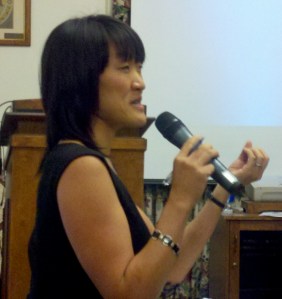
Sounds of glee, delight, and play first arrived on the scene at the end of August with gaggles of laughing and screaming kids running wild and climbing trees in the gardens, surrounded by bemused adults and envious dogs. Accompanying partners brought to the mix the diverse soundings of African film, suspicious packages, software beats, performance art, critical geography, and real estate hawking. No wonder the assembled Fellows strayed so readily, if not unconventionally, from the promised strictures of already exceptional research projects that brought to our weekly seminar table the street sounds of Egypt, Turkey, Korea, early modern Germany, contemporary Islam, American hip hop, contemporary art, circuit bending, gaming, German, Irish, U.S. and Latin American radio, voices of performers, animals, and posthumans, urban soundscapes, and, here making a loud call out to one Stoever-Ackerman, sonic color-lines.
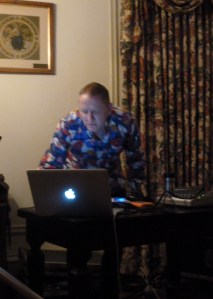
Resounding throughout the year to give cadence and timbre to our serious ponderings were the spontaneous soundings that seemed always to give ample depth to the provocative interstices of intellectual life. There were the noises of glitch, circuit-bending, and Guitar Hero that stretched and extended the purpose of music and machinics. There were spontaneous voice lessons that turned anxious performers into wild choreographic objects. Singing above in the hidden alcoves–when not streaming through the high Victorian ceilings of the A. D. White House–were our flying mammal friends whose echolocation extended beyond the reach of our mere human ears. Then were the sudden noisy reminders of the vulnerability of our corporeal organs. Who could forget the reported imaginary of the crunch of human leg against car as two of our Fellows found themselves under assault from a crazed pizza delivery guy – luckily no lasting damage?
Our fellows will carry away the subliminal lacings of the lighter sounds of improvisation and camaraderie. There were the poundings of feet and slappings of bodies dancing late into the night after hours of laborious conferencing to the beats of DJs Marcus Boon, Art Jones, and Earmuffs.
.
At the end of the year, Fellows grooved to the beat of Tom McEnaney playing bass with The Vix Krater out at the Rongo in Trumansburg, NY (down the road from the home of Moog), before retreating to the bowels of the A. D. White House basement for another dusty, late night jam session with drums, synthesizer, guitars, bass, and various acoustics, led by the ultimate sound blogger herself, the guitar heroesse, Jenny S-A. [Well, I’m learning. So far I know E-Minor. It was Trevor that really broke my strings in! –ED].
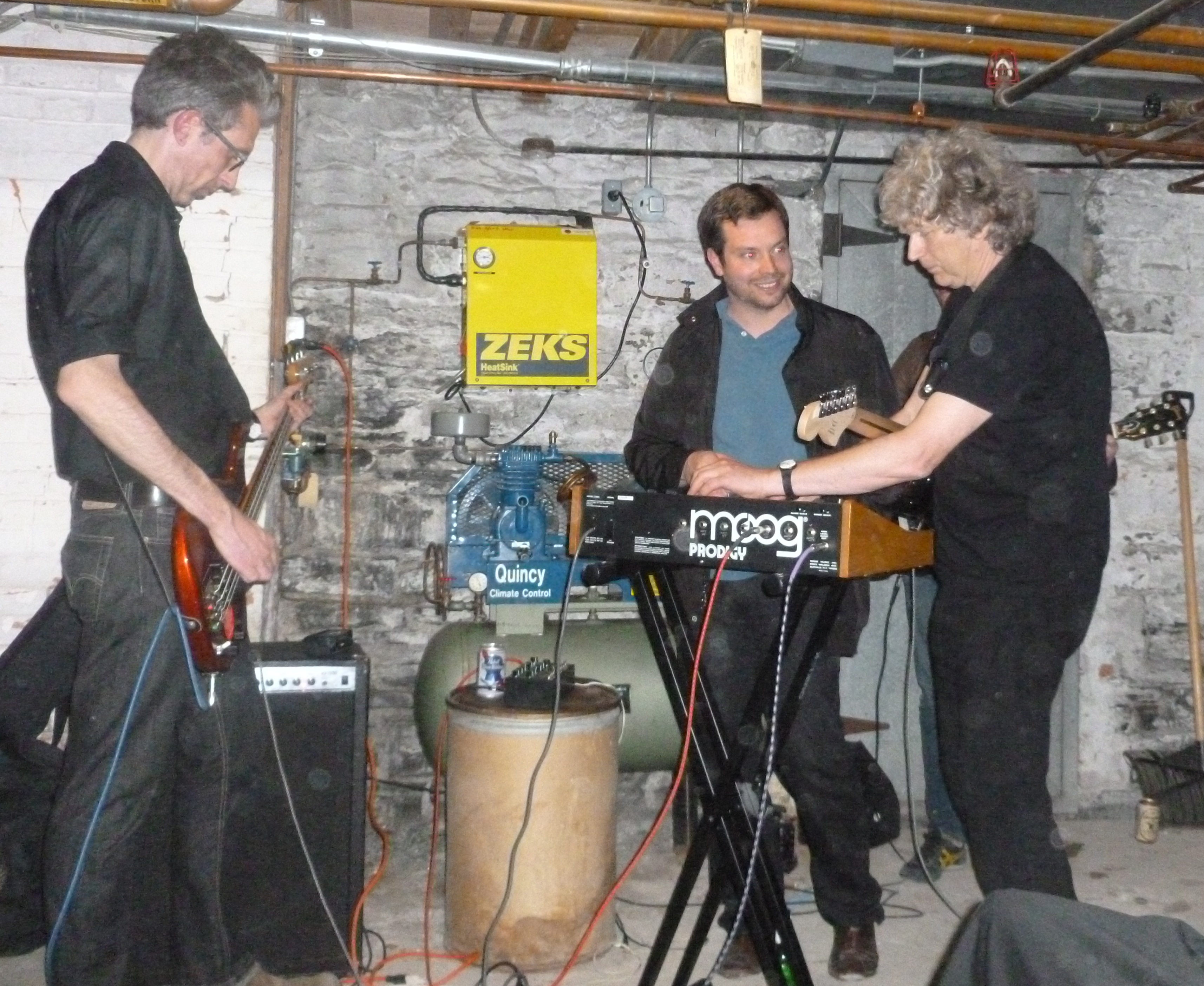
And, yes, there was always the accompaniment of the clinks of glasses and bottles bearing the liquid life blood of any noisy crew.
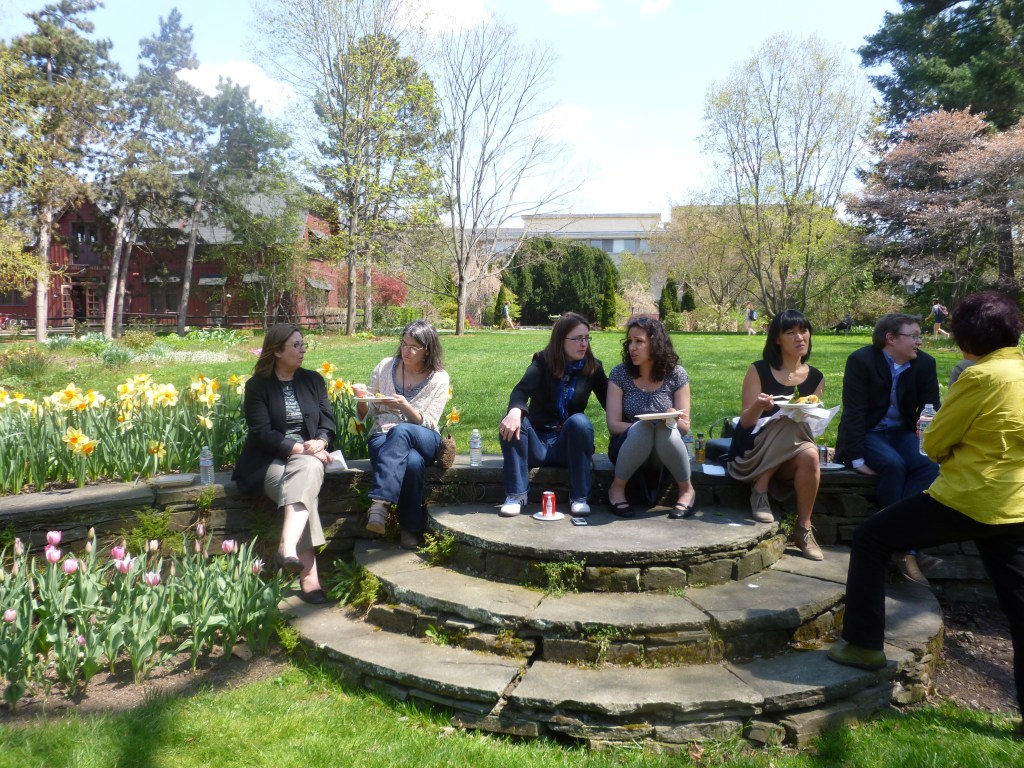
The French philososopher, Jean-Luc Nancy, reminds us in Listening (2007) that the shared space of noise and sound entails “a totality of referrals: from a sign to a thing, from a state of things to a quality, from a subject to another subject or to itself, all simultaneously. Sound is also made of referrals: it spreads in space, where it resounds while still resounding ‘in me'” (7). What resounded and referred this year at the Society for the Humanities was the very immaterial and inchoate touch of sound, which is a-live in intensity and force. But who would have imagined the intensity of the noise of referral that remained so constant throughout the year to envelop the solid academic work of our Fellows in the wilding vibrations of jouissance? Indeed, perhaps the best lesson of the year, at a moment when the humanities finds itself threatened and in transition by the supposed certainty of metric and assessment, is that the Society’s scholarship in sound was driven by the relentless noise of referral and the unpredictable delight of the commune.
—
Featured Image Credit: Brandon La Belle, Duck Duck Goose Installation, Ausland, Berlin
—
Timothy Murray is Professor of Comparative Literature and English and Curator of the Rose Goldsen Archive of New Media Art. He is the Cornell Principal Investigator of the Central Humanities Corridor, generously supported by a grant from the Andrew W. Mellon Foundation, and he sits on the International Advisory Board of the Consortium of the Humanities Centers and Institutes (CHCI) and the Steering Committee of the Humanities, Arts, Science, and Technology Advanced Collaboratory (HASTAC). He is Co-Moderator of the –empyre- new media listserv and the author of Digital Baroque: New Media Art and Cinematic Folds (Minnesota 2008); Zonas de Contacto: el arte en CD-ROM (Centro de la imagen, 1999); Drama Trauma: Specters of Race and Sexuality in Performance, Video, Art (Routledge, 1997); Like a Film: Ideological Fantasy on Screen, Camera, and Canvas (Routledge, 1993); Theatrical Legitimation: Allegories of Genius in XVIIth-Century England and France (Oxford, 1987). He is editor of Mimesis, Masochism & Mime: The Politics of Theatricality in Contemporary French Thought (Michigan, 1997) and, with Alan Smith, Repossessions: Psychoanalysis and the Phantasms of Early-Modern Culture (Minnesota, 1997). His curatorial projects include CTHEORY MULTIMEDIA and Contact Zones: The Art of the CD-Rom.
—
Share this:




Current Top Posts





April 2021

January 2020

November 2019

October 2019

August 2019

April 2014

November 2017

March 2015

December 2017

October 2015


Recent Comments