
Sonic Salvation: A Story of How Listening Can Change Over A Lifetime
DOI: https://doi.org/10.59350/f85hy-fak26
By the age of six, I could circumscribe my world in song. I was not particularly precocious — my world was just small. Ultimately, it would be fractured by its own rebellious genesis.
Two genres of folk music marked out the poles of my preciously tiny planet. Heaven’s jubilee rang in one ear: a cappella gospel, sturdily founded upon the biblical injunction to make melody in the heart. In the other ear, however, was the music of the devil himself: alcohol-drenched, two-stepping, hell-raising honky-tonk, enticing one to sin not just in the heart, but with the entire body. Together, they formed an eternally reciprocal refrain: Saturday night sin prompted Sunday morning renewal. There was little room for anything else, particularly dissent.
Sunday morning resounded with four-part harmony based on a shape-note system of musical notation, widely referred to as Sacred Harp. We sang again at our Sunday evening and mid-week services. Throughout the year, we also hosted regional “singings,” bringing together folks from other congregations, swelling our own sound by double. It was an easy form of music to learn by design, with its origins in early 19th-century America. Its strongest base was in the American South, and I inherited at least two generations’ worth of experience. It set the tone for my interactions with the world for the first three decades of my life.
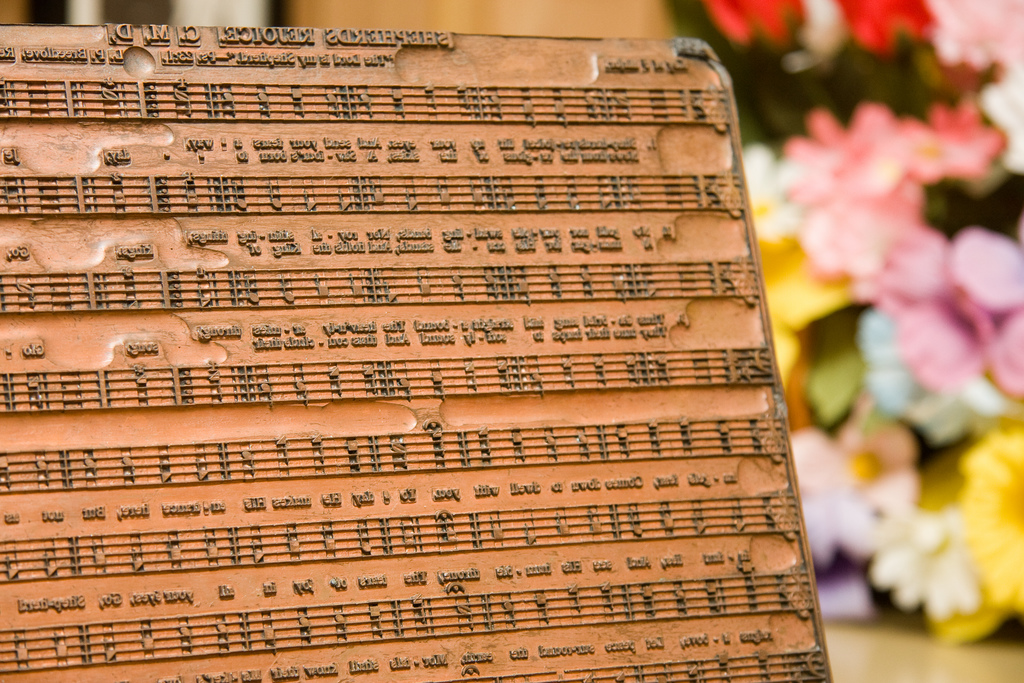
Musicologists have documented and analyzed Sacred Harp thoroughly, with Alan Lomax having had a particular fascination for it. He considered it as not only an extension of four-square Anglo forms but also as the crossroads where the Reformation met the Democratic Experiment. In Lomax’s view—expressed in a 1982 interview at the Sacred Harp Convention at Holly Spring, Georgia—European migration to colonize America broke the established authority of the church, leaving every person to forge a singular relationship with God. This supposition harmonizes perfectly with the views of the congregational church I attended. We had no hierarchy, no choir, no piano. Every man, woman, and child added their voice, as best they knew how, to raise an egalitarian song of praise. Songs such as “This World is Not My Home,” “The Glory Land Way,” and “Blessed Assurance” exemplify the form: simple rhyme schemes; closely-yoked shifts in harmony and rhythm; and southern gospel’s initial shunning of poly-rhythms or syncopation.
For me, Sacred Harp music created an immersive and experiential soundscape; emotionally and spiritually motivating, it was the sound of temporal and eternal life. Like our singing style, our church service presented a model for our lives outside the sanctuary. “Trust and Obey” was a frequently sung hymn—and it summed up our approach to life in all matters. Obedience was expected, deviation discouraged.
Worlds away from my sheltered existence, leaders of the Civil Rights Movement embraced a cappella singing as a powerful means to encourage, motivate, and activate. In the 2009 documentary Soundtrack for a Revolution, U.S. Representative and civil rights icon John Lewis said, “It was the music that created a sense of solidarity.” His a cappella community was connected to the church and the streets, challenging the status quo, and seeking greater brotherhood. Mine was by the book, increasingly authoritarian, very narrow in scope and population.

To us, the New Testament authorized one and only one instrument for offering songs to God: the unaccompanied human voice. The root of this belief was a concise motto coined in the early 1800s by Alexander Campbell, a leader in the Second Great Awakening: “Where the Scriptures speak, we speak; where the Scriptures are silent, we are silent.” Applying this principle, then, the apostle Paul, in his epistles to the Ephesians and the Colossians, encouraged Christians to sing. But nowhere did he or another New Testament writer suggest using an instrument. This silence equals prohibition. It sets its own reality, ignoring abundant biblical evidence to the contrary: the Old Testament presents many examples of instruments used in worship, as does the New Testament’s Book of Revelations.
Our a cappella song service was, therefore, more than a sound—it was a belief system, a worldview in which other sounds or ideas were alien. We applied Campbell’s principle across-the-board, backing ourselves into corners: slaves were to obey their masters; wives were to submit to their husbands; children were to be fully subject to their parents. Questioning authority, let alone defying it, was strongly condemned by Paul in his letter to Christians in Rome: “Let every soul be subject unto the higher powers. For there is no power but of God: the powers that be are ordained of God. Whosoever therefore resisteth the power, resisteth the ordinance of God: and they that resist shall receive to themselves damnation.”
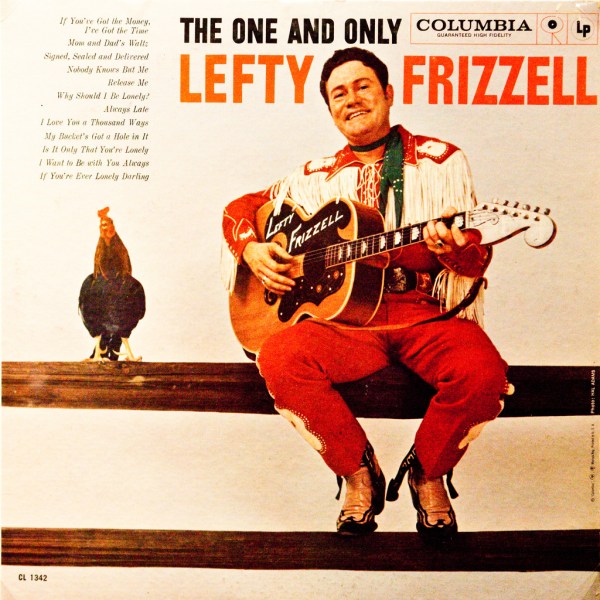
Alternately, classic honky-tonk’s twangy resistance seemed to defy the innovations and complexity of modern life. As I was growing up, the sinful songs of Ray Price, Lefty Frizzell, Webb Pierce, and George Jones flowed like wine from my family’s record collection and radio settings. Songs of murder, drunkenness, alienation, revenge, adultery, and the workingman’s blues are staples of the honky-tonk catalog. Its celebrated ethic of “three chords and the truth” favored a rural do-it-yourself ethic. My church’s music was both challenged and validated by this unlikely and unruly roommate; honky-tonk was a matched bookend for Sacred Harp.
For in the background of many of those honky-tonk sounds, whether they were about larceny, war, or revenge on the boss, I heard the same harmony that filled my church. In the 1950s or so, southern gospel groups such as the Jordanaires, Blackwood Brothers, and the Statler Brothers, began backing country music artists including Johnny Cash, George Jones, Tammy Wynette, and Gary Stewart. Their sonic presence lent an almost holy sanction to the commission of sin, as if Jesus and Satan met after-hours to share a drink and balance the books.
This sonic emulsification of sin and salvation formed my youthful identity and bracketed a very small existence. My world consisted of very gendered personal struggles: man vs. temptation; man vs. alcohol; man vs. boss; woman vs. womanizer. The solution provided for these struggles was always the same: the efficacious grace of God. All failings and victories were personal, not structural or systemic. The fight against personal sin was the only fight.
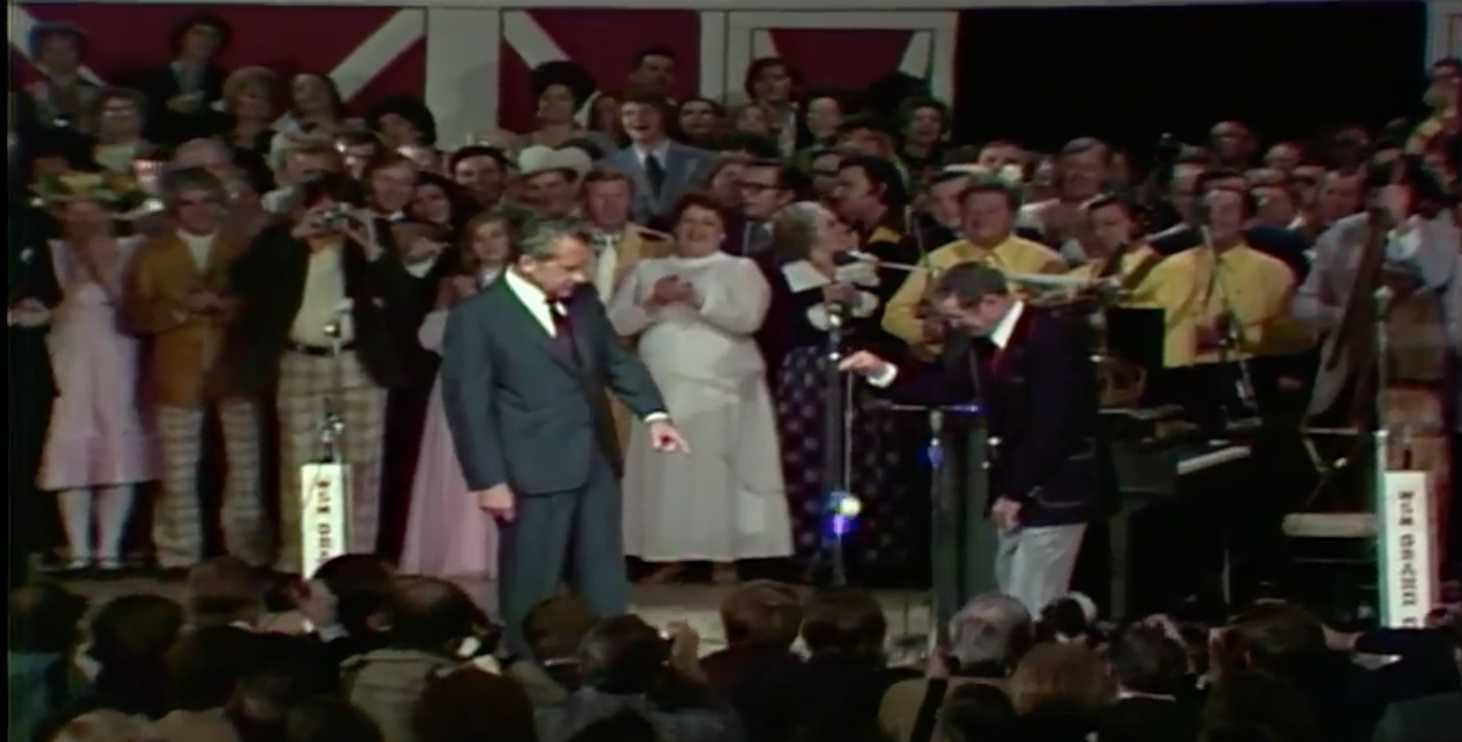
Southern gospel music and honky-tonk have enjoyed an institutional relationship since the founding of the Grand Ole Opry in 1920s, sanctioning the blending of reprobation and redemption. Though initially politically ambivalent, the Opry listed towards social conservatism during the 1960s—Johnny Cash’s nascent social awareness notwithstanding. In 1970, however, the Opry and the industry it represented found itself an unlikely accessory to Richard Nixon’s “southern strategy.” He declared October 1970 to be Country Music Month, and a few years later blessed the Grand Ole Opry with its first presidential visit.
Politically conservative messages had entered country airwaves during the late 1960s, epitomized, if not pioneered, by Bakersfield stalwart Merle Haggard. His “Okie From Muskogee” ridiculed hippies, dope smokers, draft dodgers, long-hairs, flag burners, and college activists, all within a 3-minute single format. Though ostensibly written as a joke, it struck a chord among conservative, Christian, country music fans. Sensing a market, Haggard followed up with the flag-waving “Fightin’ Side of Me,” wherein he further shames pacifists.
These songs contained the truth as I believed it in grammar school: protestors, adulterers, and dope smokers were all in defiance of God. Haggard’s refrain in “Fightin’ Side”—“if you don’t love it, leave it”—made sense to me, and was safely non-challenging. Conveniently, the religious body of which I was a member had, a generation prior to me, actively opposed pacifism.
A world composed only of personal demons, however, leaves little room for social issues. Being so long accustomed to seeing the sin in man left me unable to recognize the sin in the system. Sam Cooke’s great risk in recording “A Change is Gonna Come,” for example, was lost on me, even though we both shared a battle between religious and secular personas.
I never heard his call to address greater systemic problems such as racism, audibly or socially. Even as I entered my 20s, my white patriarchal religious sonic defense system kept the freedom struggles of people of color at bay. Even if dissenting sounds managed to sneak through–Marvin Gaye’s struggles in “Inner City Blues” for example—I quickly dismissed them as exaggeration or the natural outcome of personal sin. I could not process a sound which conflicted with my God-given world view. I saw only men and women avoiding their duty and surrendering to temptation.
My mother frequently said that the lives portrayed in honky-tonk songs were not her life. But in another sense, those desperate lives, and the more hopeful ones portrayed in gospel music, were our lives collectively. We were part of a greater social identity: Southern, white, Fundamentalist, change-averse, full of latent conflicts. Those sounds, rich with heritage and lived-in context, formed us. In other words, our vernacular limited our hearing. Our world was formed within a fixed sonic boundary, and we ignored, resisted and sometimes even combatted discordant sounds.
Within this soundscape, I had never heard of any march from Selma to Montgomery, not from church, family, the radio, or, sadly, even school. The larger movement of which it was a part—perhaps the biggest social movement of the 20th century—was inaudible and therefore irrelevant to me. When I did begin to hear of protests against white racial violence, I could only condemn anyone who defied authority. I did not know what to say about authority which abused the people. Raised to function in a law-and-order world, I could only repeat the Apostle Paul’s instruction that we all must obey authority or incur the wrath of God.

But thankfully, sound travels in subversive ways, such as through the transmitters of listener-supported community radio.
I found Dallas’ KNON completely by chance. Commuting to work through the city’s legendary rush hour, I’d get fidgety. While searching the dial, I heard a familiar song in an unfamiliar arrangement. I don’t recall the song now, but do remember its force: a honky-tonk classic played through a stack of Marshall amps, turned up to the proverbial ’11.’ Perhaps it was Leon Payne’s Lost Highway as rendered by Jason and the Scorchers—anarchistic, upending, challenging, it still carried enough familiarity to keep me listening. I stayed tuned in for the next song, then another. When the DJ, Nancy “Shaggy” Moore, signed off her show, I gave a listen to the next show—at least until they said something a bit too dissonant.
But the next day, I tuned in to Shaggy again. And I listened a bit longer when the next show came on. And even longer the day after that. Dallas at that time was wracked by racial strife, some of it focused on the politicized deaths of two police officers, one white and one black, in separate incidents. I had tuned out the duplicity, but KNON gave me reason to reconsider. City council member Diane Ragsdale, an African-American woman representing one of the city’s most trod-upon districts, refused to let the issue go. KNON provided the venue for her to express her outrage unmitigated, and to explain the inconsistencies in a way that an entitled white male suburbanite, such as I, could understand.
Tim Rice suggests that we are not free agents in the creation of our identities—but given the right stimuli, we will resist, to the point of rebellion, the personhood prepared for us. The latent heretical ethics of Sacred Harp and Honky-tonk finally responded to the sonic stimuli flowing through the breach, triggering an insatiable devil’s advocacy: “Prove yourself to me,” I said to everything I had once believed, religious faith included. St. John wrote in his First Epistle: “Beloved, believe not every spirit, but try the spirits whether they are of God.” This was to be the last biblical directive I would follow.
My radical shift in musical listening also greatly impacted my political, and cultural beliefs and listening practices, something which continued throughout my life. For example, I ended my professional career as well, having understood the devastating effects that high tech industries have on the environment and workforce. I traded a six-figure salary for minimum wage in foodservice. Not once have I looked back.

Kitchen work comes with immersive sound: machines hum and sometimes roar; the radio blasts through the static; humans must shout to be heard. Working throughout the western US, in a variety of independent restaurants, I learned to understand and speak Spanish. I participated in defying a language ban placed on my colleagues by an overbearing owner: I noted that she forbade speaking in Spanish, but not singing in Spanish. So sing we did, about needing a potato peeler, taking out the trash, and what we were going to do over the weekend.
As I worked my way up the ranks and crossed the country from California to Manhattan, I listened to the stories told me by immigrants from Mexico, Guatemala, Dominica, Morocco, South Africa. They shared their music with me, via radio, iPod, cassette, or any object we could plug into an overcooked boom box. Every song and conversation has pulled me into greater participation in their lives and the systemic issues faced by most of the world around me.
Dismantling one’s identity, regardless of how deliberately it is done, happens amidst lots of noise: illusions shatter, idols crash to the ground, walls tumble into rubble. Dissent comes in myriad expressions, and for me, it has come via my own three-chords-and-the-truth and through a multimedia socially-progressive dining event which I call Peace Meal Supper Club. Its very raison d’etre is to illuminate dissonance on issues such as the right to sanctuary, our diminishing seed supply, the plight of the rural poor, and other devastating threads of intersectionality. Music is a critical component of each event, as Otis Taylor, Lila Downs, and Caetano Veloso share playlist space with Manecas Costa and Majida El Roumi Baradhy. Old favorites like “Sixteen Tons” get their say, as well—for behind that song’s well-earned swagger is a system of devastating intersectional oppression that demands our action.
_
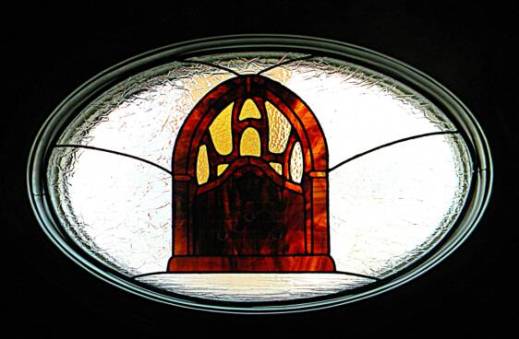
Featured Image: Image of a Stained Glass Crosley Cathedral, Image by Tubular Bob
Kevin Archer is a multi-media artist who left corporate security for a DIY life as a farmer, activist, educator, and chef. He’s planted gardens coast-to-coast, and washed his own sauté pans from Denver to Mendocino, Santa Fe to NYC, and random locations in between. Kevin’s current project is Peace Meal Supper Club, a series of immersive dining events which explore ecojustice, human rights, the capitalistic conquest of the seed and soil, and the power of progressive movements. He has written for Civil Eats, No Depression, Secular Web, and the Museum of Animals & Society. He has spoken on the intersection of food and social issues at numerous conferences within the Eastern US.
_

REWIND! . . .If you liked this post, you may also dig:
What is a Voice? – Alexis Deighton MacIntyre
“HOW YOU SOUND??:” The Poet’s Voice, Aura, and the Challenge of Listening to Poetry – John Hyland
The Sounds of Anti-Anti-Essentialism: Listening to Black Consciousness in the Classroom – Carter Mathes
The Listening Body in Death – Denise Gill
—
Share this:

Sounds of Life: Fetal Heartbeat Bills and the Politics of Animacy

DOI: https://doi.org/10.59350/zamzf-k2531
June 2018 was marked by the amplification of distant warning sounds regarding the fate of abortion rights in the United States. Although within recent months there have been positive steps forward, such as in Ireland and Argentina, within a broader politics of abortion, the medical procedure remains illegal and inaccessible across large swaths of the globe. Since abortion was legalized in the U.S. in 1973, anti-abortion advocates have chipped away at the constitutional “right” such that its current status is more of a “privilege.” After a recent victory for “crisis pregnancy centers” (fake clinics), in combination with the resignation of Justice Anthony Kennedy from the Supreme Court, the past few weeks have sounded further alarms within the decades-long “abortion wars.” These wars have included not only devastating anti-abortion legislation such as the Hyde amendment, but violence against abortion clinics (including 11 murders and 26 attempted murders) and the quieter yet just as nefarious technologization and romanticization of the fetal heartbeat.
***
The “Heartbeat Protection Act” of 2017 (H.R. 490) would make it illegal for physicians to “knowingly perform an abortion: (1) without determining whether the fetus has a detectable heartbeat, (2) without informing the mother of the results, or (3) after determining that a fetus has a detectable heartbeat.” Introduced by the 115th United States Congress, the bill is a nation-wide version of existing, state-level “heartbeat bills” promising to “protect every child whose heartbeat can be heard.” The “Heartbeat Protection Act” would effectively make it illegal for doctors to terminate pregnancies after six or seven weeks’ gestation, at which time a heartbeat typically can be detected. The bill makes it clear that the abortionist, and not the pregnant person, is the moral agent within the context of pregnancy termination: “A physician who performs a prohibited abortion is subject to criminal penalties—a fine, up to five years in prison, or both,” while “A woman [sic] who undergoes a prohibited abortion may not be prosecuted for violating or conspiring to violate the provisions of this bill.” As of May 2018, a total of 59 heartbeat bans have been proposed over the past seven years.
“Heartbeat” bills not only articulate the subjecthood of physicians and the objecthood of pregnant bodies; they also rely on the animating capacity of sound in their efforts to enliven embryos and fetuses. In Animacies: Biopolitics, Racial Mattering, and Queer Affect, Mel Chen describes “animacy” as a “slippery” value problematizing the contemporary biopolitical boundaries between ontological categories dividing “the living” from “the dead” (9). Hierarchies of animacy indicate the ways in which entities perceived to be nonhuman or nonliving, such as monkeys, lead, and toxins, are endowed with racialized and/or gendered “human” qualities through the politicization of language and figuration (The 2007 “lead panic” in the U.S., in which Chinese-manufactured toys were viewed as unidirectional transmitters of racialized toxicity, is an example). The sounds of fetal heartbeats are implicated in the construction of a hierarchy of animacy as they render pregnant bodies less animate. Drawing from Chen in exploring a politics of animacy can help us understand the animating and silencing capacities of reproductive healthcare legislation and restrictions. Within this politics, the fetal heartbeat becomes so loud that it silences the pregnant person.

This silencing and objectification of pregnant bodies occurs not only through anti-abortion legislation but in the sphere of the everyday. The pregnant body becomes animated with the capacity (and expectation) for nurturing and selflessness, while its contents are animated with qualities of potentiality and personhood. As feminist phenomenologist Iris Marion Young points out in an essay on pregnant embodiment (which can be found in her collection On Female Body Experience), the pregnant body not only becomes a synecdochal figuration for heteropatriarchal structures and narratives, but is experienced as “Other” even from a first-person perspective: “in pregnancy I literally do not have a firm sense of where my body ends and the world begins” (50). Pregnant people can expect to be stared at, to get asked personal or even inappropriate questions, and to have their bodies touched without consent as they move through public space. The presumed ownership over female-presenting bodies is magnified when these bodies are perceived as housing another living being presumed to be the progeny and property of a male “father figure.” The blurred line between internality and externality allows for a further window through which the surveillant male gaze can stare, and through which the sounds of sonic patriarchy can be broadcast.

The concept of the “male gaze” is at this point well recognized; “sonic patriarchy” can be heard to be its aural counterpart. Sonic patriarchy is a concept I have theorized in order to give name to the domination of a sound world in gendered ways, as well as to the control of gendered bodies via sound. In public space, sonic patriarchy can be heard in the catcalls and whistles and mansplaining that grope their way into the aural space of female and feminine bodies. And, as Christine Ehrick points out, masculine voices can be heard as a signifier of power within a “gendered soundscape.” Sonic patriarchy can be heard within private space, too; recently, a friend texted me about a roommate’s boyfriend who never bothers to use headphones when listening to music in the living room “even though he doesn’t even live here!” Both the male gaze and sonic patriarchy are misogynist and objectifying forces that shape and control space, demarcating boundaries of safety, mobility, and accessibility for many female and gender-nonconforming bodies. However, these modes of surveillance and control have been discussed primarily through a visual lens within the realm of feminist and queer theory.
The sonification of the male gaze manifests in mundanities, such as the daily catcalls women are subjected to in literally every corner of the world, and in more disturbing contexts such as anti-abortion rhetoric, which I’ve observed through my ethnographic work at abortion clinics throughout the United States. At these demonstrations, the bodies of clinic patients are invaded both literally, with the shouting of the protesters, and figuratively, in the making-public of the figure of the fetus with four-foot-tall posters depicting mangled fetal body parts. Ironically, these inanimate posters animate the figure of the fetus as they lend more humanity and visibility to the imagined contents of a pregnant body; meanwhile the pregnant person fades into a mere backdrop for this spectacle. This voyeurism also occurs sonically, as the protesters ‘give voice to’ imaginary fetuses by yelling “Mommy, mommy don’t kill me!” In the space of the clinic protest, feminized ears exist as gendered and sexualized organs in which masculine vocalizations can penetrate and reverberate. Just as misogynist conceptions of female sexual receptivity frequently ignore the word “no” and the concept of consent itself, these vocalizations ignore the active non-consent of the patients as they persistently rupture their aural space.
The patriarchal control of the sound world, whether on the sidewalk outside an abortion clinic or in a doctor’s office, is a reminder of broader schemes of biopolitical control that have been at play in the U.S. since the late 1970s, when previously apolitical evangelical Christians were drawn into political conversations through the transformation of abortion access into a “moral issue.” Within this discourse, the politicized female body is assumed to be perpetually pre-pregnant, a muted object housing a potential subject. At abortion clinic protests, the seemingly mundane act of “exercising free speech” vocalizes not only an opposition to abortion as a medical procedure, but also an assertion of the four decades of “moral authority” that have limited access to and availability of this medical procedure through a sustained regulation of the bodily autonomy of female citizens. The fetus is animated in service of this authority through tactics that range from fetal heartbeat bans to the amplification of an “acousmatic fetus” at a North Carolina abortion clinic protest:
When it comes to anti-abortion politics, the rhetoric hinges on the making public of the internal space of the womb in order to more effectively level the male gaze (and its listening ear) at the figure of the fetus. Anti-abortion rhetoric relies on the dissolution of boundaries between the public and the private; remember that the right to an abortion was eventually won in 1973 not on the grounds of bodily autonomy but on the constitutional “right to privacy.” These boundaries perpetuate gendered divisions of space that deem public space the space of men, while relegating women to the “private space” of the home. Female-presenting bodies are therefore seen (and heard) to be out of place in public space, even when the contents of their bodies are not. And when the focus always lies on these possible contents, female-presenting bodies are always assumed to be pregnant. Their bodies come to represent what Lauren Berlant, in her 1994 essay titled “America, ‘Fat,’ the Fetus,” describes as “fetal motherhood” (147). Within this representation, the female body possesses value only through the promise of its eventual maternal status. Within a patriarchal economy of reproduction and citizenship, the female body accrues value through its capacity to sustain and revitalize “the nation”; Berlant points out that pro-life rhetoric has in its turn revitalized the female body as a symbol of nation-formation.
Berlant argues that political and cultural rhetoric in the U.S. transforms pregnant people into babies and unborn babies into full-on “persons” through this process of “fetal motherhood.” She details this process and its implications within a broader sociopolitical discourse that hinges not only on dehumanizing tactics that reduce women to objects, but on the expectation and exploitation of the all-too-human capacity for nurturing and motherhood that society demands from women. This rhetoric is meant to mobilize the figure of the fetus in what Berlant refers to as “the nationwide competition between the mother and the fetus that the fetus, framed as a helpless, choiceless victim, will always lose” since “the fetus has no voice” (150-151). Providing a voice for the fetus has been a primary tactic in anti-abortion strategies within this “competition.” Animating the fetus’s body and voice therefore always involves the erasure and silencing of the pregnant person, who, in the state of “fetal motherhood,” is flattened into an entity as two-dimensional as an anti-abortion protester’s photoshopped poster. And just as dominant narratives and vocabularies for sonic reproduction frequently neglect the gendered implications of the term, broader political concepts of “reproduction” listen more closely to the product of motherhood than to mothers themselves.

The heartbeat bans are only one component of the anti-abortion trend in the U.S., where 288 abortion restrictions have been enacted since 2010. These bills typically deny the agency of pregnant people, while affirming the moral agency of doctors and the “personhood” of embryos and fetuses. Yet that has not stopped pregnant people, and particularly pregnant people of color, from enduring punishment. The most well-known case is probably that of Purvi Patel, an Indian American woman who self-aborted in 2015 and was subsequently sentenced to 20 years in prison after an Indiana jury found her guilty of feticide (She served about a year and a half before a judge reduced her sentence to eighteen months, resulting in her release). Within the dominant hierarchy of animacy in contemporary reproductive rights, the agency of potential persons is amplified so loudly that it drowns out the agency of actual people existing in the world. Control of the sound world doesn’t just mirror visual control over bodies and the worlds they move through, it enacts new and arguably more invasive limits on these bodies. Whether clamoring for an audience on the sidewalks of public space, or quietly sonifying potential life via Doppler technology, the sounds of sonic patriarchy continue to interrupt feminist endeavors for autonomy and agency.
—
Featured Image: March for Life, Washington DC 2015 by Flickr User American Life League, (CC BY-NC 2.0)
—
Rebecca Lentjes is an NYC-based writer and gender equality activist. Her work has appeared in VAN Magazine, Music & Literature, TEMPO Quarterly Review of New Music, Bachtrack, and I Care If You Listen. By day she researches anti-abortion protests as an ethnomusicology PhD student at Stony Brook University and works as an editor and translator at RILM Abstracts of Music Literature; by night she hatches schemes to dismantle the patriarchy.
—

REWIND!…If you liked this post, check out:
A Tradition of Free and Odious Utterance: Free Speech & Sacred Noise in Steve Waters’s Temple–
Gabriel Salomon Mindel and Alexander J. Ullman
Gendered Sonic Violence, from the Waiting Room to the Locker Room–Rebecca Lentjes
Sounding Out! Podcast #63: The Sonic Landscapes of Unwelcome: Women of Color, Sonic Harassment, and Public Space–Locatora Radio
—
Share this:




Current Top Posts


April 2021
January 2020

November 2019

October 2019

August 2019

April 2014

November 2017
March 2015

December 2017

October 2015


Recent Comments