
Unsettling the World Soundscape Project: Soundscapes of Canada and the Politics of Self-Recognition


— Guest Editor Randolph Jordan
—
In October of 1973, two young sound recordists embarked on an ambitious field trip across Canada, traversing over 7000 kilometers to commit the national soundscape to tape. From St. John’s, Newfoundland to the harbor of Vancouver, British Columbia, Bruce Davis and Peter Huse pointed their microphones at the things they felt best exemplified their vast country.
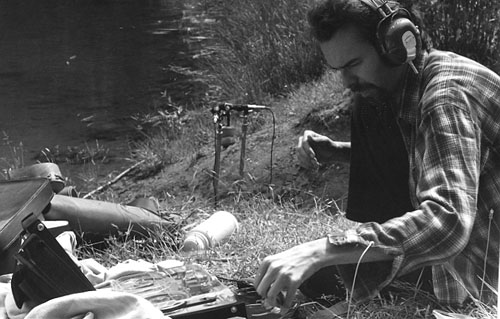
These recordings would become the backbone for Soundscapes of Canada, a series of ten hour-long radio programs carried across the country by the national broadcaster, the CBC. Conceived and produced by the World Soundscape Project (WSP)—a research group formed at Vancouver’s Simon Fraser University in the late 1960s and helmed by the composer and sound theorist, R. Murray Schafer—in its entirety Soundscapes of Canada was an impressively sprawling, eclectic document. Comprised of guided listening exercises and avant-garde sound collages, the program’s stated goal was to open the ears of Canadian listeners to the importance of sonic experience, and to alert them to what they warned was the degradation of the soundscape thanks to the mounting din of industrial modernity.
But there was much more happening out of earshot. Created at a time when Canada’s cultural identity was rapidly changing thanks to an unprecedented swell in immigration from non-European countries, the WSP’s portrait of the nation all but ignored its First Nations and its “visible minorities,” as they would come to be known. While the series was an important statement in the WSP’s larger efforts to bring sound to the forefront of cultural conversation, it is arguably more important to listen to Soundscapes of Canada for what it leaves out, for voices silent and silenced.
For Schafer, the industrialized world had grown measurably louder and qualitatively noisier, which troubled him for both environmental and social reasons. In his 1977 book, The Tuning of the World, Schafer would write, “For some time, I have…believed that the general acoustic environment of a society can be read as an indicator of social conditions which produce it and may tell us much about the trending and evolution of that society” (7). Given the worryingly poor state of the soundscape, for Schafer it followed that society was in bad shape. He was wistful for quieter times, for the days of Goethe, when the cry of the half-blind night watchman of Weimer was within earshot of every one of the town’s inhabitants. Unstated, but implied, here, was the notion that as communities expanded beyond every member’s ability to hear a familiar sound, their common identity would necessarily be eroded. And for Schafer, this was precisely what was happening to Canada.
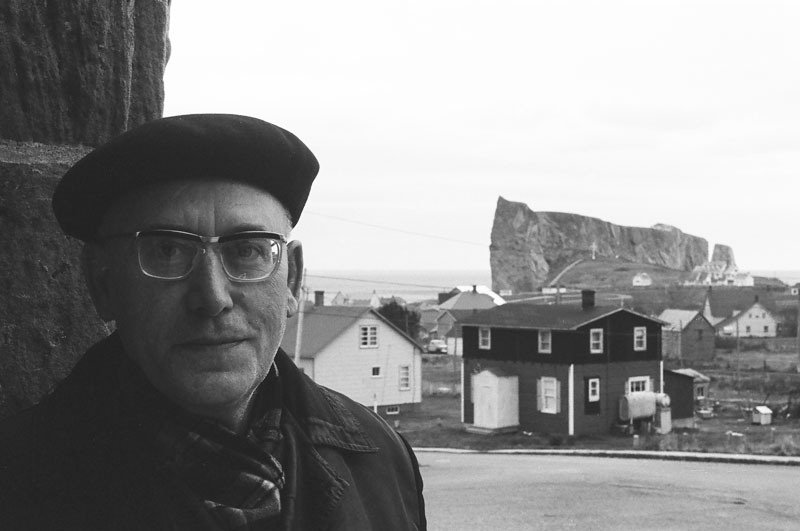
The WSP’s discussion of “soundmarks” in parts three and four of the series was perhaps their most powerful statement about the stakes for preserving and promoting the nation’s sonic heritage. A “soundmark” is, in the WSP’s lexicon of neologisms, roughly analogous to a landmark: it’s a sound that is supposedly instantly recognizable to members of a community, an irreplaceable acoustic feature of a particular place. In the conclusion to program three, “Signals, Soundmarks and Keynotes,” Schafer intoned, “It takes time for a sound to take on rich, symbolic character—a lifetime perhaps, or even centuries. This is why soundmarks should not be tampered with carelessly. Change the soundmarks of a culture and you erase its history and mythology. Myths take many forms. Sounds have a mythology too. Without a mythology, a culture dies.”
So it seems fair to ask: exactly whose mythology stood to be snuffed out? For Schafer, Canadian culture was (or ought to be) synechdochal with the land, with the nation’s vast, largely uninhabited expanses that stretched all the way to the North Pole. Canadians were (or ought to be) a rugged, self-reliant people—stoic pioneers who shunned cosmopolitan (read ethnic) urban centers, opting for a quiet life in harmony with the country’s settler heritage. This was certainly reflected in program four, “Soundmarks of Canada.” Over the course of an hour CBC listeners would have heard an austere montage almost entirely comprised of mechanical alarms (foghorns and air sirens) and church bells. Each sound presented, carefully, discreetly as though displayed in a museum, free from any traffic noise or sidewalk bustle that might distract the listener. Anyone unfamiliar with the Canadian soundscape would be forgiven for coming to the conclusion that the world’s second largest nation was a bastion of early industrial machinery, a sanctuary for quiet, self-reliant, God-fearing folk.
“Soundmarks of Canada” not only omitted the soundmarks of Canadian cities, it also excluded any sonic trace of the country’s vibrant ethnic and First Nations communities. Produced in the years following the passage of the 1971 Multiculturalism Policy of Canada—which had been adopted in response to a boom of immigration from non-European nations—their portrait of a pastoral, post-colonial British outpost shunted the country’s sizeable non-Christian, ethnic population squarely out of earshot. It should also go without saying that the soundmarks they so prized were deeply entangled with a silencing of Canada’s indigenous population; of a protracted, often violent and brutal, campaign of assimilation that replaced one set of sonic practices with another. For generations of Indigenous Canadians, the sounds of church bells would likely not have connoted community or belonging, but would have rather reverberated with echoes of the “reeducation” in settler religion and language that many were forced to endure in Canada’s residential schools—church-run institutions to which countless children were spirited away against their parents and communities’ wishes.

This is not to say that any of this was intentional, that the WSP deliberately plugged their ears to Canada’s marginal communities, or that they intended to slight these groups in any way. It may be more accurate to ascribe ignorance and omission to the project, structural forms of inequality that dog even the most well meaning white settlers. Regardless of intent, however, the result is the same.
Soundscapes of Canada shows a troubling politics of self-recognition in action that is far too common throughout the nation’s history. By disproportionately representing the voices and sounds of European Canadians the series necessarily supported the idea that they were, if not the only ones, then at least “ordinary” and incumbent. Projects like these promote and condition a sense of unity and similarity that constitute the nation’s imagination of itself. Benedict Anderson famously observed that nations come into being and are maintained through the cultural work that leads its citizens to identify with the state. Institutions and practices from censuses, maps, nationally available print journalism, etc. all allow people in far-off locales to imagine themselves constituting a limited and sovereign community. In his classic book, Imagined Communities, Anderson proposes that nations have also historically been conceived, created, and ratified through sound. Writing specifically of national anthems, Anderson coins the term “unisonance” to describe the power that sound can have to seemingly erode the boundaries between self and other: “How selfless this unisonance feels! If we are aware that others are singing these songs precisely when and as we are, we have no idea who they may be, or even where, out of earshot, they are singing. Nothing connects us all but imagined sound” (149).
It is significant that the WSP chose the radio—the CBC in particular—as the vehicle for their ambitious project. In the mid-1970s, not only did radio offer the widest reach of any sonic medium, but it also had a particular cultural resonance for Canadians. A nation as vast and varied as Canada could have only come about thanks to mediation; its vastness has always required means of traversing or shrinking space to secure its borders, both psychic and geographical. The westward expansion of the post-indigenous nation was accomplished first by canoe, then by rail, and, beginning in the 1920s, by radio. Appropriately, it was the Canadian National Railway (CNR) that produced the first transnational radio broadcast in 1927—the national anthem performed by bells on the carillon of the Peace Tower—broadcasting the event to railway passengers and home listeners alike. Since the middle part of the 20th century, the national broadcaster has been understood as something of a bulwark against encroaching American culture.
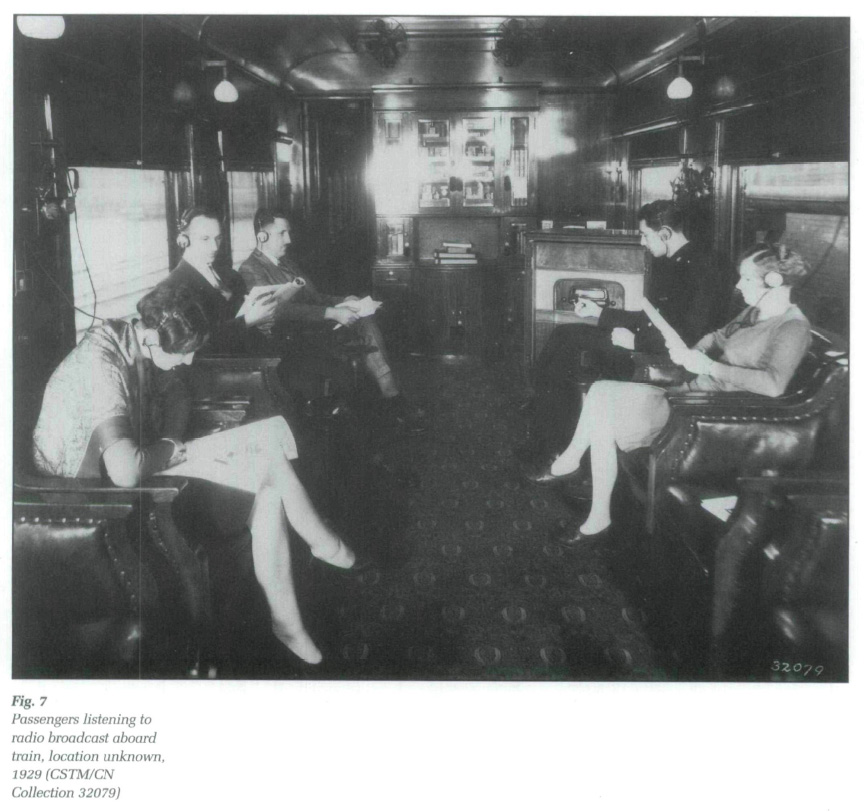
The history of the Canadian airwaves is profoundly mired in struggles to promote, produce, and foster content that might keep the national identity from being completely subsumed under the sprawl and heft of the American culture industry. Schafer had mixed feelings about the medium. On the one hand, he was skeptical of his one-time teacher and mentor, Marshall McLuhan’s, analysis that radio, by its very nature, enfolded listeners in a shared acoustic space, effectively “retribalizing” society. Schafer felt that the airwaves had been packed to such a dense and frenetic level that they actually created “sound walls” that effectively isolated listeners in their own solipsistic, acoustic bubbles. But there was hope for the radio in that it could also facilitate a return to a more wholesome and connected state of being and of listening. Schafer noted this duality in his essay “Radical Radio,” writing, “If modern radio overstimulates, natural rhythms could help put mental and physical well-being back in our blood. Radio may, in fact, be the best medium for accomplishing this” (209). Sonic technology was a source of ambivalence for Schafer; he coined the term “schizophonia” to describe the separation of sound from source that recording effected. He believed that it was problematic to populate the world with copies he deemed inherently inferior to the “original” sonic event. Given the opportunity to reach such a wide swath of the Canadian public, Schafer swallowed his distaste for the schizophonic medium and offered a sonic missive on how to compose a healthy and prosperous nation.
Forty years on, Soundscapes of Canada still stands as a unique experiment in imagining how to build and maintain a nation through sound. But in the same regard it also serves as a troubling reminder of how sonic media can work to occlude the voices of marginal citizens, thereby preventing them from fully finding the place in the national soundscape, simply by ignoring their soundmarks and aural practices. If a nation needs a myth, it can do better than telling stories about the necessity of shoring up a colonial legacy whose time has come.
Readers interested in listening to the full series can stream all ten episodes through the website of the Canadian Music Centre.
—
Mitchell Akiyama is a Toronto-based scholar, composer, and artist. His eclectic body of work includes writings about plants, animals, cities, and sound art; scores for film and dance; and objects and installations that trouble received ideas about perception and sensory experience. Akiyama recently completed his Ph.D. in communications at McGill University. His doctoral work offers a critical history of sound recording in the field and examines an eclectic range of subjects, from ethnographers recording folksongs in southern American penal work camps to biologists trying determine whether or not animals have language to the political valences of sound art practices.
—
Featured image: “Toronto” by Flickr user Kristel Jax. All other images via the author.
—

REWIND! . . .If you liked this post, you may also dig:
À qui la rue?: On Mégaphone and Motreal’s Noisy Public Sphere — Lilian Radovac
Sounding Out! Podcast Episode #7: Celebrate World Listening Day with the World Listening Project — Liana M. Silva
Within a Grain of Sand: Our Sonic Environment and Some of Its Shapers — Maile Colbert
—
Share this:

Aural Guidings: The Scores of Ana Carvalho and Live Video’s Relation to Sound
DOI: https://doi.org/10.59350/sz87z-bdd67
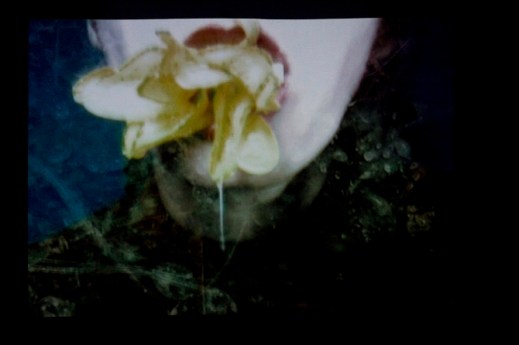
If you were to choose to watch live video composer and performer Ana Carvalho’s work silent, your brain would be easily guided into a synesthetic experience, assigning sounds to each rhythmic change in color, pace, frame. Her images oscillate…they dance, they breathe. As you experience this, there might be a sense that you have lost your ability to hear the outside world, as these images are clearly attached to, woven with, a part of sound.
There is a history of composers such as Iannis Xenaxis and Cornelius Cardew using graphic scores and notation in place of traditional methods and symbols, as a way to reach a deeper expression through allowing greater interpretation, chance, and improvisation with their musicians. They concentrate more on conveying information on how a work is played, rather then what notes to play when. Carvalho uses the graphic score much in the same way, but also as a method of communication between live audio and live video performances, instructing a dialog between two disciplines that are often side-by-side or leaning on each other, but rarely woven together in the manner I have experienced both as audience, and as an audio composer, with her work.
The following interview has been edited for style.
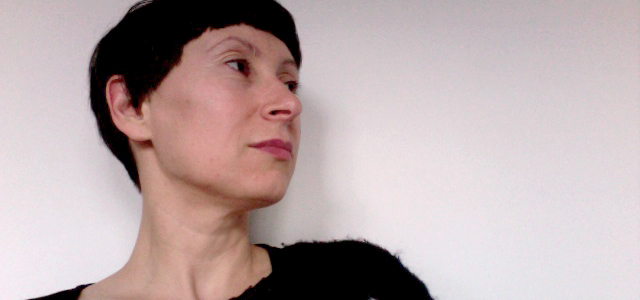
Maile Colbert: Hi Ana, how are you today? And what are you working on currently?
Ana Carvalho: I am good. I’m working on a performance to present at the solstice, with Neil Leonard, and a text about the possibility of expansion of the mind through performing and fruition of being in an audiovisual performance.
At the moment the performance is still involved into misty possibilities of what we know of each other’s work, and what we have been developing individually and talking about. There will be saxophone, electronics, and visuals made of strange landscapes.
MC: At this stage in the process, when working with a sound maker such as Leonard, how do you think about the images’ relationship with the sound?
AC: Images come to be as they appear on the screen in two ways: first there is the introspection about what have I learned from the previous performances, what I want to explore further and what I don’t want to repeat. Secondly, there is the encounter with the other person and his or her work and how do I translate their sound into moving image. At some point my ideas change through the exchange and becomes something else, a visual performance that could only be presented with that sound, with that person, at that place and time.
Regarding the sound in particular, sometimes I propose a structure, or a score, to be followed by sound and image. Other times it is improvised. As I enjoy very much the process, I tend to like to make structures for the performances, which develop along drawings and texts.

MC: Your scores of text and image are quite beautiful, and of course I am personally lucky to both have some of the published ones, and have had a chance to work with them as well.
As a sound maker, I find they have a flow and almost narrative that feels both intentional and intuitive, no matter how abstract. When you make these, how much of a clear idea of how the audio would sound in relation to the images is in your mind? Do your images always or often follow the same score? Do the results surprise you?
AC: My state of arriving at the point of starting to make a composition is very much the same I described about working with a sound artist towards the presentation of a performance, that is, what do I want to develop further and what I want to leave behind? Then, what is particular to this new situation/performance/collaboration? The composition is a sort of a vehicle that connects process and performance, and that connects sound and image.
The composition is for the two mediums, sound and image, and they are considered in terms of composition as a unity made of two parts. They have to work in a conversational way. Imagine two close friends and how they would be talking to each other. I have in my imagination how it would be ideally two people in that position. That is how sound and image relate on the composition. I think in the most generic terms, more of intensity and flow rather than sonic results. For this reason any musician, with any possible (or invented) instrument, with whichever image or sound database, is able to play a score. It’s required though that the performers take time to reflect, that the composition is understood and incorporated in the way each one plays their instrument. The results are always a surprise.
MC: What inspired you to start working in this way with the scores, and when?
AC: My interest in making compositional scores, and from them documents related to my performance, has been inspired by conceptual and process based art and by my research on documentation of the ephemeral. The focus on the process highlights the need for other representations that are not the finished art object per se. These other ways of representation use available media to describe the making and the reflection while making. Mary Kelly’s Post-Partum Document (1973-79) is a very interesting example of what I am describing. She is expressing her feelings, the growing process of a child and an external perspective through visual objects displayed both as an exhibition and in book formats. Within audiovisual practice, I have been researching for the past five years on creative ways to make documents of the process. My attention was directed to composition in music. The influence of the composer Cornelius Cardew has been great, especially his work Treatise and his idea of directed improvisation. John Cage was also very important for his structures (in talks, texts and music), the use of the I Ching, and for bringing chance into composition.
Simultaneously, while studying and reflecting on these and other subjects, I realized that intuitively I make drawings, texts, and take photographs as a way to detach from the everyday and immerge into a creative process which eventually will lead to the concept and content of a performance.

Systematic Illusion – The Subtle Technique in an Earthquake Detector Construction has been so far the most complex project to include a score, as well as a series of photographs and the performance. It was presented in its complete form just once in the curatorial project Decalcomania. Organizing these elements as composition, creating a score, and from all this to make little books has been a way of putting into practice my research interests.
A result from the construction of the score has been that the process doesn’t stop with one performance, as I then use the same scores to perform with different artists. For example with the score from this project I created the Earthquake Detector performance series within which we presented the performance together in São Paulo in 2013 at the event Arranjos Experimentais.
MC: As you speak about your work, I keep thinking about Robert Bresson’s Notes on Sound and how most of his notes refer to variations of not letting sound or image take over each other, but to weave them together within the composition. In his Notes on the Cinematographer, he also wrote number “10. not to use two violins when one is enough”. What might this mean to you in relation to your collaborations?
AC: One very inspiring event in the attempts I make to construct a formal grammar and way for me to address collaborations has been to see the film Passage Through: A Ritual by Stan Brakhage. The film was screened at Serralves Museum, here in Porto, Portugal, in June 2011. The event addressed the collaboration and improvisation of music in relationship with cinema from the work of the composers Malcolm Goldstein and Philip Corner and their music in the film work of Daïchi Saïto and Stan Brakhage.
The most amazing thing in Passage Through: A Ritual was to watch such a beautiful film made of an abundance of black screen, that is, an absence of visual form, of light and movement. Each appearance of image was a precious moment. What I learned is that the visual emptiness, and sonic as well, contains information when stimulated through glimpses of image, making the experience of seeing and listening very deep. (In his Notes), Bresson sums up this appropriateness of means and complex connections in a simple and clear sentence.
On the scores I make most of the information can be used for both sound and image. On the Refractive Composition, the scale of greys is for image. That was its purpose when the score was performed the first time. But if someone decides to play from the score without knowing anything about it beforehand, and lacking this intention (which was relevant when it was made, but afterwards there was the decision to not leave it as a declared instruction), that person can also interpret the same information as sound.
MC: Alchemy has been described as: “…the chemistry of the subtlest kind which allows one to observe extraordinary chemical operations at a more rapid pace; ones that require a long time for nature to produce” (Paul-Jacques Malouin, Alchimie). Looking from a history of cinema, there is a tradition and pattern of picture coming before sound, a hierarchy that is both in process and production. You often feel this as an audience. Your work and collaboration have a quality of sound and image having been born together. Having worked with you using your scores, I was likening it to being given a recipe where you have before you ingredients and suggestions, but there is room for your own improvisations and reading. Perhaps that is where that feeling of both disciplines coming together in a manner that feels like they are one part of a whole, rather then separate but leaning on each other, comes from.
Is there an alchemical element to this work, or are you seeking one out? And in that regard, are your scores like a recipe?
AC: What I am seeking with my work can relate to alchemy as experiments and attempts in the quest for depth in all things at the point where differences and frontiers become undefined and irrelevant (in communication between beings, in areas of knowledge, between matter and energy). This quest for depth is based on stubborn curiosity towards evolution as a person, and as part of the world. Perhaps there isn’t an alchemical element to the work, but rather a connection with alchemy, in the ways scores relate to the experiments as recipes to be shared with others in construction and change. This takes me to another aspect of composition. It is difficult for me to understand live image as just accompaniment to a music performance, and vice versa. This is perhaps central to my composition, and the reason why I am doing it for sound and image, to be able to perform that intertwined.
If we look at compositions as recipes, it aim will be to set the performers in tune with each other in the construction of a performance, to set sound and image in dialogue, and to permit a multisensory experience. I have been trying to get other artists interested in performing my scores. To perform from another artist’s score may be very common in music but is unheard of in live visuals. I have as an objective to make a change in that, but for now I perform the scores with sound artists. With the Earthquake Detector series I asked sound artists to read from the score and perform with me. So far, I have presented this as performance with Jeremy Slater, Ben Owen, and with you. Because each artist has a very different approach to the score and reads it in its own way, the processes have been very different. For example, Ben Owen made visual reinterpretations of the structure, and you experimented with and without voice (reading of the text in the score), the results are therefore equally different.
MC: Aside from your scores, you could speak about your relationship to the sound you work with, and sound makers you work with, in the live moment of performance?
AC: Looking for a sound artist to work together on a specific piece or to interpret with me a composition comes from a need to transcend my individual perception of the world and to perceive it with others. It is, again, the curiosity to know the world. The only time I made a complete sound piece on my own was for the performance Vista II – Montanha presented last May (as part of Semana Andrómeda, in Maus Hábitos, Porto). Aside from this really interesting experience, each collaboration is different, every process is different, because each musician is a different person with different skills and sees the relationship between sound and image in different ways.
I am very thankful for everything I have learned with each collaboration and all the intensity with each performance but, as always, it’s the curiosity and the need to explore new frontiers that makes me move from previous project to next project. It is also the possibilities that intuitively present themselves as challenges and the “what if…” in variations.
—
Ana Carvalho is a live video composer and performer, and writes on subjects related to live audiovisual performance. She is a doctor of Communication and Digital Platforms from FLUP (Faculdade de Letras da Universidade do Porto). Her thesis is “Materiality and the Ephemeral: Identity and Performative Audiovisual Arts, its Documentation and Memory Construction.” Currently, she holds a position as invited lecturer at the ISMAI (Instituto Universitário da Maia). For more on her work, visit: http://cargocollective.com/visual-agency/About.
—
Maile Colbert is a multi-media artist with a concentration on sound and video who relocated from Los Angeles, US to Lisbon, Portugal. She is a regular writer for Sounding Out!
—
All images courtesy of the author.
—
REWIND! . . .If you liked this post, you may also dig:
Playing with Bits, Pieces, and Lightning Bolts: An Interview with Sound Artist Andrea Parkins — Maile Colbert
Sound as Art as Anti-environment — Steven Hammer
Live Electronic Performance: Theory and Practice — Primus Luta
—
Share this:




Current Top Posts





April 2021

January 2020

November 2019

October 2019

August 2019

April 2014

November 2017

March 2015

December 2017

October 2015


Recent Comments