
Your Voice is (Not) Your Passport
In summer 2021, sound artist, engineer, musician, and educator Johann Diedrick convened a panel at the intersection of racial bias, listening, and AI technology at Pioneerworks in Brooklyn, NY. Diedrick, 2021 Mozilla Creative Media award recipient and creator of such works as Dark Matters, is currently working on identifying the origins of racial bias in voice interface systems. Dark Matters, according to Squeaky Wheel, “exposes the absence of Black speech in the datasets used to train voice interface systems in consumer artificial intelligence products such as Alexa and Siri. Utilizing 3D modeling, sound, and storytelling, the project challenges our communities to grapple with racism and inequity through speech and the spoken word, and how AI systems underserve Black communities.” And now, he’s working with SO! as guest editor for this series (along with ed-in-chief JS!). It kicked off with Amina Abbas-Nazari’s post, helping us to understand how Speech AI systems operate from a very limiting set of assumptions about the human voice. Last week, Golden Owens took a deep historical dive into the racialized sound of servitude in America and how this impacts Intelligent Virtual Assistants. Today, Michelle Pfeifer explores how some nations are attempting to draw sonic borders, despite the fact that voices are not passports.–JS
—
In the 1992 Hollywood film Sneakers, depicting a group of hackers led by Robert Redford performing a heist, one of the central security architectures the group needs to get around is a voice verification system. A computer screen asks for verification by voice and Robert Redford uses a “faked” tape recording that says “Hi, my name is Werner Brandes. My voice is my passport. Verify me.” The hack is successful and Redford can pass through the securely locked door to continue the heist. Looking back at the scene today it is a striking early representation of the phenomenon we now call a “deep fake” but also, to get directly at the topic of this post, the utter ubiquity of voice ID for security purposes in this 30-year-old imagined future.
In 2018, The Intercept reported that Amazon filed a patent to analyze and recognize user’s accents to determine their ethnic origin, raising suspicion that this data could be accessed and used by police and immigration enforcement. While Amazon seemed most interested in using voice data for targeting users for discriminatory advertising, the jump to increasing surveillance seemed frighteningly close, especially because people’s affective and emotional states are already being used for the development of voice profiling and voice prints that expand surveillance and discrimination. For example, voice prints of incarcerated people are collected and extracted to build databases of calls that include the voices of people on the other end of the line.

“Collect Calls From Prison” by Flickr User Cobalt123 (CC BY-NC-SA 2.0)
What strikes me most about these vocal identification and recognition technologies is how their appeal seems to lie, for advertisers, surveillers, and policers alike that voice is an attractive method to access someone’s identity. Supposedly there are less possibilities to evade or obfuscate identification when it is performed via the voice. It “is seen as a solution that makes it nearly impossible for people to hide their feelings or evade their identities.” The voice here works as an identification document, as a passport. While passports can be lost or forged, accent supposedly gives access to the identity of a person that is innate, unchanging, and tied to the body. But passports are not only identification documents. They are also media of mobility, globally unequally distributed, that allow or inhibit movement across borders. States want to know who crosses their borders, who enters and leaves their territory, increasingly so in the name of security.
What, then, when the voice becomes a passport? Voice recognition systems used in asylum administration in the Global North show what is at stake when the voice, and more specifically language and dialect, come to stand in for a person’s official national identity. Several states including Denmark, the Netherlands, the United Kingdom, Switzerland, Sweden, as well as Australia and Canada have been experimenting with establishing the voice, or more precisely language and dialect, to take on the passport’s role of identifying and excluding people.

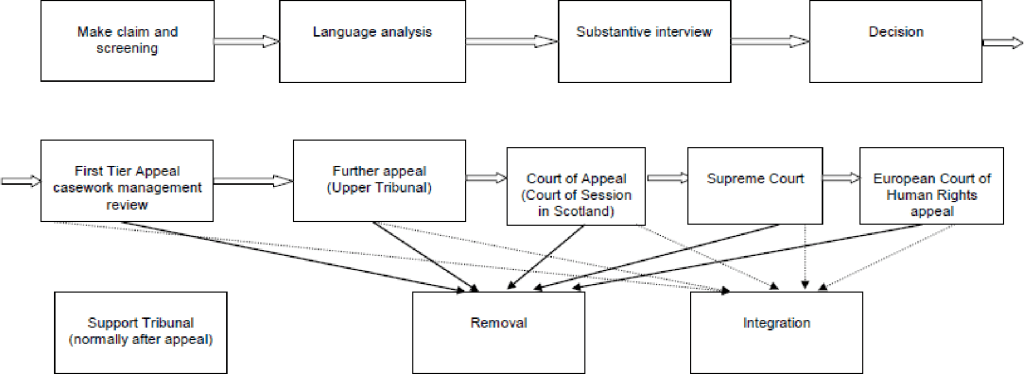
In the 1990s—not too far from the time of Sneakers release—they started to use a crude form of linguistic analysis, later termed Language Analysis for the Determination of Origin (LADO), as part of the administration of claims to asylum. In cases where people could not provide a form of identity documentation or when those documents would be considered fraudulent or inauthentic, caseworkers would look for this national identity in the languages and dialects of people. LADO analyzes acoustic and phonetic features of recorded speech samples in relation to phonetics, morphology, syntax, and lexicon, as well as intonation and pronunciation.
The problems and assumptions of this linguistic analysis are multiple as pointed out and critiqued by linguists. 1) it falsely ties language to territorial and geopolitical boundaries and assumes that language is intimately tied to a place of origin according to a language ideology that maps linguistic boundaries onto geographical boundaries. Nation-state borders on the African continent and in the Middle East were drawn by colonial powers without considerations of linguistic communities. 2) LADO thinks of language and dialect as static, monoglossic and a stable index of identity. These assumptions produce the idea of a linguistic passport in which language is supposed to function as a form of official state identification that distributes possibilities and impossibilities of movement and mobility. As a result, the voice becomes a passport and it simultaneously functions as a border, by inscribing language into territoriality. As Lawrence Abu Hamdan has written and shown through his sound art work The Freedom of Speech itself, LADO functions to control territory, produce national space, and attempts to establish a correlation between voice and citizenship.
I’ll add that the very idea of a passport has a history rooted in forms of colonial governance and population control and the modern nation-state and territorial borders. The body is intimately tied to the history of passports and biometrics. For example, German colonial administrators in South-West Africa, present day Namibia, and German overseas colony from 1884 to 1919 instituted a pass batch system to control the mobility of Indigenous people, create an exploitable labor force, and institute and reinforce white supremacy and colonial exploitation. Media and Black Studies scholar Simone Browne describes biometrics as “digital epidermalization,” to describe how surveillance becomes inscribed and encoded on the skin. Now, it’s coming for the voice too.
In 2016 the German government took LADO a step further and started to use what they call a voice biometric software that supposedly identifies the place of origin of people who are seeking asylum. Someone’s spoken dialect is supposedly recognized and verified on the basis of speech recordings with an average lengths of 25,7 seconds by a software employed by the German Ministry for Migration and Refugees (in German abbreviated as BAMF). The now used dialect recognition software used by German asylum administrators distinguishes between 4 large Arabic dialect groups: Levantine, Maghreb, Iraqi, Egyptian, and Gulf dialect. Just recently this was expanded with language models for Farsi, Dari and Pashto. There are plans to expand this software usage to other European countries, evidenced by BAMF traveling to other countries to demonstrate their software.

This “branding” of BAMF’s software stands in stark contradiction to its functionality. The software’s error rate is 20 percent. It is based on a speech sample as short as 26 seconds. People are asked to describe pictures while their speech is recorded, the software then indicates a percentage of probability of the spoken dialect and produces a score sheet that could indicate the following: 74% Egyptian, 13% Levantine, 8% Gulf Arabic, 5 % Other. The interpretation of results is left to the caseworkers without clear instructions on how to weigh those percentages against each other. The discretion left to caseworkers makes it more difficult to appeal asylum decisions. According to the Ministry, the results are supposed to give indications and clues about someone’s origin and are not a decision-making tool. However, as I have argued elsewhere, algorithmic or so-called “intelligent” bordering practices assume neutrality and objectivity and thereby conceal forms of discrimination embedded in technologies. In the case of dialect recognition the score sheet’s indicated probabilities produce a seeming objectivity that might sway case-workers in one direction or another. Moreover, the software encodes distinctions between who is deserving of protection and who is not; a feature of asylum and refugee protection regimes critiqued by many working in the field.
The functionality and operations of the software are also intentionally obscured. Research and sound artist Pedro Oliveira addresses the many black-boxed assumptions entering the dialect recognition technology. For instance, in his work Das hätte nicht passieren dürfen he engages with the labor involved in producing sound archives and speech corpora and challenges “ the idea that it might be feasible, for the purposes of biometric assessment, to divorce a sound’s materiality from its constitution as a cultural phenomenon.” Oliveira’s work counters the lack of transparency and accountability of the BAMF software. Information about its functionality is scarce. Freedom of information requests and parliamentary inquiries about the technical and algorithmic properties and training data of the software were denied as the information was classified because “the information can be used to prepare conscious acts of deception in the asylum proceeding and misuse language recognition for manipulation,” the German government argued. While it is not necessarily deepfakes like the one Brandes produced to forego a security system that the German authorities are worried about, the specter of manipulation of the software looms large.
The consequences of the software’s poor functionality can have drastic consequences for asylum decisions. Vice reported in 2018 the story of Hajar, whose name was changed to protect his identity. Hajar’s asylum application in Germany was denied on the basis of a dialect recognition software that supposedly indicated that he was a Turkish speaker and, thus, could not be from the Autonomous Region Kurdistan as he claimed. Hajar who speaks the Kurdish dialect Sorani had been instructed by BAMF to speak into a telephone receiver and describe an image in his first language. The software’s results indicated a 63% probability that Hajar speaks Turkish and the caseworker concluded that Hajar had lied in his asylum hearings about his origin and his reasons to seek asylum in Germany who continued to appeal the asylum decision. The software is not equipped to verify Sorani and should not have been used on Hajar in the first place.

Why the voice? It seems that bureaucrats and caseworkers saw it as a way to identify people with ease and scale language analysis more easily. It is also important to consider the context in which this so-called voice biometry is used. Many people who seek asylum in Germany cannot provide identity documents like passports, birth certificates, or identification cards. This is the case because people cannot take them with them as they flee, they are lost or stolen on people’s journeys, or they are confiscated by traffickers. Many forms of documentation are also not accepted as legitimate by state authorities. Generally, language analysis is used in a hostile political context in which claims to asylum are increasingly treated with suspicion.
The voice as a part of the body was supposed to provide an answer to this administrative problem of states. In response to the long summer of migration in 2015 Germany hired McKinsey to overhaul their administrative processes, save money, accelerate asylum procedures, and make them more “efficient.” In July 2017, the head of the Department for Infrastructure and Information Technology of the German Federal Office for Migration and Refugees hailed the office’s new voice and dialect recognition software as “unrivaled world-wide” in its capacity to determine the region of origin of asylum seekers and to “detect inconsistencies” in narratives about their need for protection. More than identification documents, personal narratives, or other features of the body, the voice, the BAMF expert suggests is the medium that allows for the indisputable verification of migrants’ claims to asylum, ostensibly pinpointing their place of origin.
Voice and dialect recognition technology are established by policy makers and security industries as particularly successful tools to produce authentic evidence about the origin of asylum seekers. Asylum seekers have to sound like being from a region that warrants their claims to asylum: requiring the translation of voices into geographical locations. As a result, automated dialect recognition becomes more valuable than someone’s testimony. In other words, the voice, abstracted into a percentage, becomes the testimony. Here, the software, similarly to other biometric security systems, is framed as more objective, neutral, and efficient way of identifying the country of origin of people as compared to human decision-makers. As the German Migration agency argued in 2017: “The IT supported, automated voice biometric analysis provides an independent, objective and large-scale method for the verification of the indicated origin.”
The use of dialect recognition puts forth an understanding of the voice and language that pinpoints someone’s origin to a certain place, without a doubt and without considering how someone’s movement or history. In this sense, the software inscribes a vision of a sedentary, ahistorical, static, fixed, and abstracted human into its operations. As a result, geographical borders become reinforced and policed as fixed boundaries of territorial sovereignty. This vision of the voice ignores multiple mobilities and (post)colonial histories and reinscribes the borders of nation-states that reproduce racial violence globally. Dialect recognition reproduces precarity for people seeking asylum. As I have shown elsewhere, in the absence of other forms of identification and the presence of generalized suspicion of asylum claims, accent accumulates value while the content of testimony becomes devalued. Asylum applicants are placed in a double bind, simultaneously being incited to speak during asylum procedures and having their testimony scrutinized and placed under general suspicion.
Similar to conventional passports, the linguistic passport also represents a structurally unequal and discriminatory regime that needs to be abolished. The software was framed as providing a technical solution to a political problem that intensifies the violence of borders. We need to shift to pose other questions as well. What do we want to listen to? How could we listen differently? How could we build a world in which nation-states and passports are abolished and the voice is not a passport but can be appreciated in its multiplicity, heteroglossia, and malleability? How do we want to live together on a planet increasingly becoming uninhabitable?
—
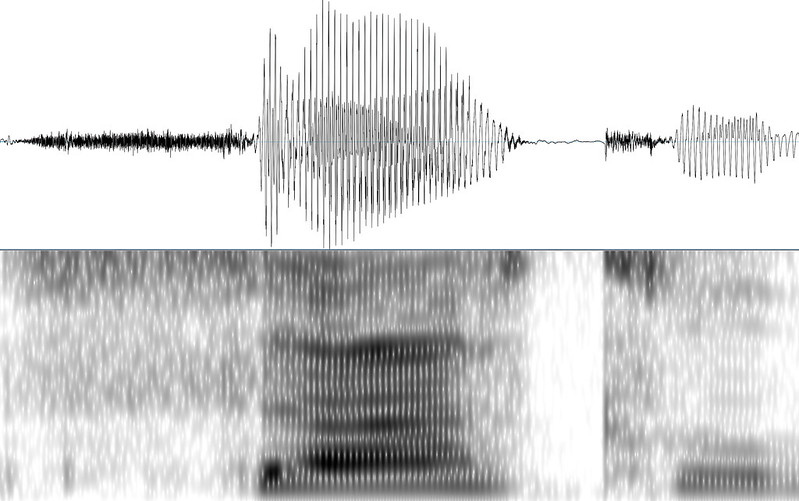
Featured Image: Voice Print Sample–Image from US NIST
—
Michelle Pfeifer is postdoctoral fellow in Artificial Intelligence, Emerging Technologies, and Social Change at Technische Universität Dresden in the Chair of Digital Cultures and Societal Change. Their research is located at the intersections of (digital) media technology, migration and border studies, and gender and sexuality studies and explores the role of media technology in the production of legal and political knowledge amidst struggles over mobility and movement(s) in postcolonial Europe. Michelle is writing a book titled Data on the Move Voice, Algorithms, and Asylum in Digital Borderlands that analyses how state classifications of race, origin, and population are reformulated through the digital policing of constant global displacement.
—

REWIND! . . .If you liked this post, you may also dig:
“Hey Google, Talk Like Issa”: Black Voiced Digital Assistants and the Reshaping of Racial Labor–Golden Owens
Beyond the Every Day: Vocal Potential in AI Mediated Communication –Amina Abbas-Nazari
Voice as Ecology: Voice Donation, Materiality, Identity–Steph Ceraso
The Sound of What Becomes Possible: Language Politics and Jesse Chun’s 술래 SULLAE (2020)—Casey Mecija
The Sonic Roots of Surveillance Society: Intimacy, Mobility, and Radio–Kathleen Battles
Acousmatic Surveillance and Big Data–Robin James
Share this:

Tuning In to the Desi Valley: Getting to Know a Community via Radio

Sound has a peculiar relationship to mindfulness; zoning in and out, active and passive forms of listening while we situate our listening practices alongside other daily activities. Especially when it comes to driving, listening to something or someone or just singing aloud by myself, I have realized, helps me drown out other noises of alertness. Over the years I have come to value background music or chatter and especially radio programming that takes the burden of curation and scheduling off my back, in all sorts of tasks that require deep concentration. Enough and more has been said about the visual-bias in various forms of ethnographic inquiry (see Andrew C. Sparkes’s “Ethnography and the senses” for a good example). Without belaboring these arguments, I also find that knowing through listening and listening as a mode of non-haptic yet immersive and intimate engagement can also prove to be a fruitful method of inquiry, especially in our post-pandemic worlds, where it feels a lot harder to establish intimacy. The United Nations noted that radio, in particular, “provided solace” during that period of physical distancing and social isolation.
For me, radio sparked my accidental realization and foregrounding of sonic methods as an itinerant means of getting to know new things, people and surroundings in life and research when I moved from New York to the San Francisco Bay Area in mid-2022 to start a new position as a postdoctoral researcher. Knowing that I would continue living in California for the near future, after eight long years of having deferred driving in America, I decided to learn driving and buy a car. I was also especially excited to be moving to Sunnyvale, a city in the Southern Peninsula, located between more known places like Palo Alto and San Jose. Sunnyvale is often jokingly called the desi capital, perhaps the most Indian of any ‘Little India’ you could find in America. As shorthand, desi, a Hindi word,refers to anyone and everything with ties to the South Asian subcontinent. In more recent years, the term has gained currency especially among South Asian diasporic communities to self-refer to culture, music, food, often to signify the presence and strength of transnational ties (between India and their countries of settlement).
What I hadn’t anticipated was that driving brought about a new connection to the medium of radio, as I started tuning in to take my mind off the jitters that come with the new sounds of an automobile-dependent region: fast moving rubber hitting the freeway tarmac and the lane changes and the scalar adjustments that demand driving tens of miles to ensure you still have a social life stitched together across the vastness of California. I began to find the act of tuning in and out of stations fascinating, especially how the radio as a device holds the parallel realities of so many people with different interests, languages and politics together but separate. Scholarship and even casual listening shows that non-English radio stations catering to various immigrant and other communities have existed for a long time in the US and elsewhere (I wish pondering the sonic geographies of Radio Garden, a web-based map interface that allows listeners to access any free-to-air radio stations across the world, wasn’t beyond the scope of this post!). Both as an ethnographer and as an insider-outsider within the larger Indian immigrant and diaspora community (but a newcomer to the Bay Area), tuning into the local desi radio station while driving offered me a good way to enter the desi community of the Bay Area, to know what it means to be desi and perform Indianness in 2022, in a place where I regularly see so many Indians and South Asians every single day.
As a friend who recently visited me in Sunnyvale remarked as we waited for our table at the always-busy Madras Cafe, Sunnyvale feels so much like India! And I felt it too; what she was referring to was not only the very visible presence of Indian people all around town or the abundance of restaurants catering to various sub-regional cuisines from India. What felt different to me here was how relaxed everyone looked in grocery stores, restaurants and elsewhere, how utterly remade Sunnyvale is as a pan-Asian but mostly Indian space that even the smallest performances of fitting in feel unnecessary. In fact, shopping her reminded me of a point Purnima Mankekar’s Indian narrators made in her iconic essay on Indian grocery shopping in the San Francisco Bay Area (2010), that Indian stores in Sunnyvale and Milpitas as places where “white people look out of place” as compared to the ones in Berkeley.
The juxtaposition of the non-performances and the weight of being comfortably in place in a community like Sunnyvale only settles on the mind and body very slowly, like a faint but familiar smell from home. Words and demands often stumble out of my mouth at the grocery store, as if I am allowed and I will be completely understood. Immigrant life in America is steeped in language acrobatics, balancing being understood with becoming deliberately opaquely incomprehensible, using one accent for the ones from home, one for those who make you feel at home, and then the American accent for the Americans outside. The contrast of places like Sunnyvale, Fremont, Milpitas and other similar Northern California cities that have been transformed by immigrant presence is not just one of tangible and observable things, but sonic markers too, like Bolly 92.3FM.

Bolly 92.3FM is the default desiradio station that services the entire San Francisco Bay Area. As the name suggests, for the most part the station plays popular Bollywood songs from recently released movies and albums, but just as other stations do in India, Bolly92.3FM leverages its listener demographics at different times of the day to also play classics and hits from older Hindi films during late night slots. Interestingly, as the presenters repeat the station name and jingle time and again, they also remind you that you are listening to Bay Area’s Bollywood station owned by the Silicon Valley Asian media network. The name Bolly92.3FM is a play on the broad familiarity with Bollywood in the US even as Indian audiences globally have moved away from the older connotations of Bollywood as North Indian cinema with song, dance and people dressed in flashy clothes. Much like the hyper-authentic Indian restaurants that serve regional cuisines such as Andhra, Tamil, Gujarati, Rajasthani and Marathi food to their loyal and affording immigrant patrons, Bolly92.3FM has also configured its programming to cater to different regional and linguistic communities from India in the Bay Area. For instance, Saturday morning and afternoon slots are dedicated to Telugu programs—everything is in Telugu (language) from the hosts discussions to the songs being played as well as the actual topics being discussed—as if the station turns into a different station with the implicit acknowledgement of the substantial cultural presence and possibly the sonic and financial power of Telugu listeners among the wider Indian community here. There are similar slots dedicated to Gujarati language programming.
In addition to language and topical interests, listening to Bolly92.3FM has been instructive in getting a feel for communal desires, aspirations and anxieties through its advertisement. There are fellow desi real estate agents, tax planners, dentists, travel agencies and coaching centers, each signaling to why they are trustworthy. Some remind their audiences of their shared cultural background as key to them being able to understand their customers’ needs, others also indicate their familiarity with America: one realtor is the only Indian-origin person to feature in a top realtor list, another tax planner’s family has been in the US for three generations and thus he is well aware of the nitty-gritties of transnational estate planning. A known Indian-origin realtor in the area even sponsors his own radio show on the weekends where he takes questions from prospective home buyers and sellers. Before and beyond giving them financial advice, he often explains how fellow Indian immigrants think about financial opportunities, investments, how they might seek social validation from fellow Indians who might see their home and so on. He weaves in such exposition before talking dry financial facts about mortgages. The same tax planner and his co-host occasionally offer historical accounts of changing real estate trends, how certain places used to be affordable for Indian immigrant buyers and how new places are becoming of interest as vacation homes for more affluent Indian immigrants.

Hearing the tax planners and real estate agents plot these dynamic and speculative maps of South Asian financial, cultural and political futures week-after-week felt like witnessing what many historical texts on migration within the Bay Area have described as waves in the past. As I mentioned earlier, Sunnyvale is not the only ‘Little India’ in the Bay Area, let alone in California, but rather, is a more recent iconic place in the Indian and South Asian diaspora map where the younger and newer immigrants are finding homes. Fremont, Milpitas, and Hayward in the East Bay closer to Oakland, and San Jose in the South Bay, saw similar waves of Indian immigrant settlements in the past, many of whom now far more affluent than their younger counterparts. In my short time since moving here, I learned both from conversations with friends who grew up in the area as well as from communication scholar Anne Marie Todd’s work on the past and present of Santa Clara Valley, this region has not only seen waves of migration from settlers across the world but with each incoming wave and turn in occupational trends from farming to railroads to IT work. Multiple communities have remade cities in the Bay Area over the decades.
I also find advertisements as well as talk shows interesting because they offer a more proximate and concentrated triangulation of otherwise scattered, overheard communal talk – I’ve heard things about Indian immigrants and real estate, their aspirations for their children to get into Ivy league colleges. I have also been asked at the grocery store if I know people looking to get married; I’ve overheard aunties at the grocery store consulting each other about dealing with death, financial loss, planetary alignments and more. But it is through the radio that these private interests, anxieties and futures take more collective and articulate forms.
To speak, to be heard, and to be understood as intended are as important as visual representation to allow for feeling in place in the world and for feeling at home in the United States. Very simply put, in the American context, while Black and Brown vocal expression and volume or the stereotype of loudness have been historically stigmatized as a part of the larger racist depiction of ‘unruly’ bodies, various forms of Asian speech, languages and expression including loudness but also silence and the absence of vocality, have also been racialized against the backdrop of white socio-linguistic normativity. Specifically, Indian and South Asian immigrants have been repeatedly represented in popular American culture as muted characters whose interiority is either irrelevant to the plot or cannot be accessed. Think of Raj Koothrappali from the show The Big Bang Theory, an accomplished scientist at the prestigious Caltech university who loses his voice around women. In accounts of Indian tech workers in the US from the Y2K era, one finds multiple articles casting them as the back-office worker – good at laborious and boring work but not presentation material. Some of these stereotypes have changed and splintered as more South Asians technologists have gone on to become successful executives and leaders in US companies, but vocality as a form of publicity can be crucial to sonic forms of belonging.
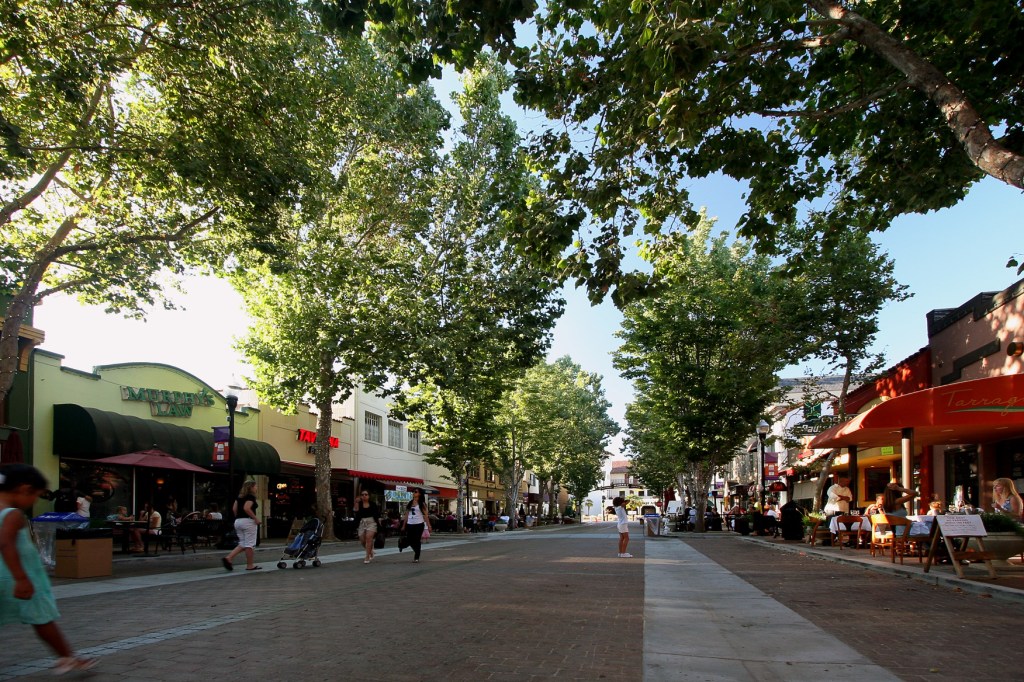
When I arrived in the Bay Area, I was still trying to figure out how to form a community and how to immerse myself in the desi community here, somewhat selfishly to get a glimpse of how Indian presence is remaking the Valley, not only through IT work but also through cultural and political performances. But I also wanted to get to know people, be known by people around. Olakhita means “people known to us” in Gujarati, my mother tongue; in Hindi jaan-pehchaan means to be in each other’s knowing that gives you some claim and affiliation over others without deep intimacy, not quite acquaintances or neighbors like in the American context. Apart from the numerous Whatsapp and Facebook groups aimed at desifolks living in the same neighborhood or city, Bolly92.3FM acts as a beacon for Indians and South Asians spread across San Francisco, the East Bay and the South Bay areas, offering a medium for the various Indian associations and event organizers to reach out to thousands and invite them to Diwali, Dussehra and other festival celebrations as well as any major concerts by visiting Indian artists in the area.
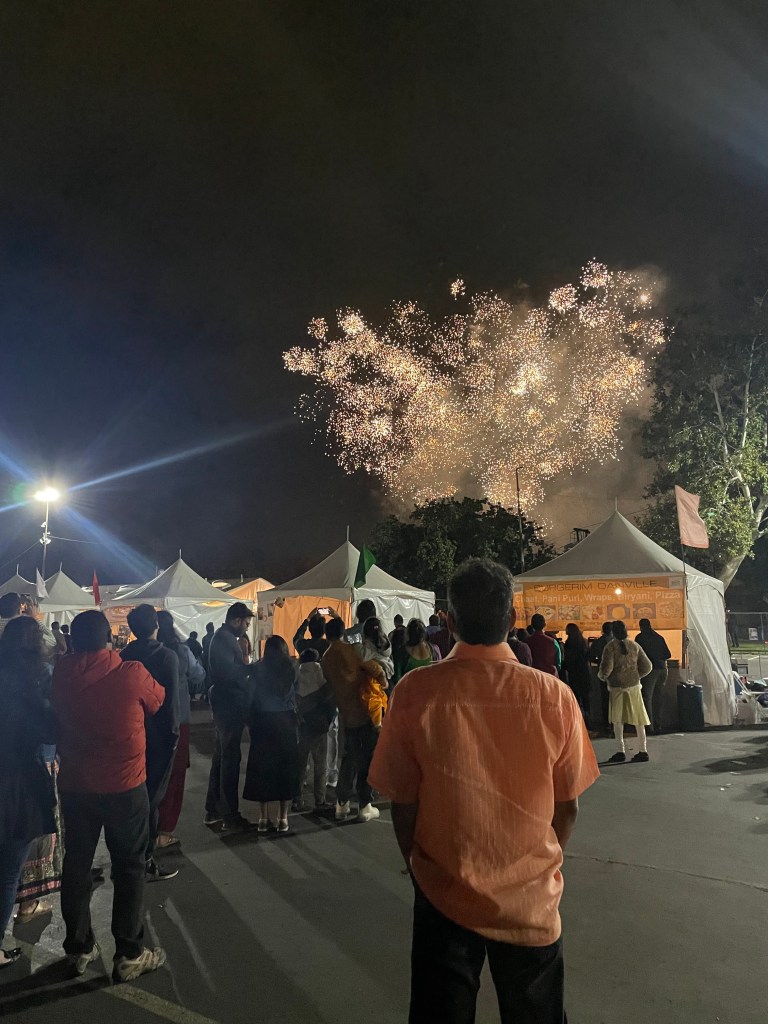
This is the far from the first or only time that a radio station has facilitated the forging of affective ties and social and material connections in diaspora. Rather this post recounts how active and passive listening to and through the station revealed over time how much South Asian presence has transformed the Bay Area. I attended the massive Diwali and Dussehra events advertised on 92.3, and once there, I could recognize so many of the organizers and sponsors’ names – some of them were the same tax planners and realtors that also run ads and sponsored segments on the station. One week in late September, an ad played on the radio, announcing that a famous hotel in downtown San Jose was now able to accommodate more than a thousand guests and offer a special entryway for the baraat procession (when the groom’s party of a few hundred comes dancing up to the wedding venue). The ad ended with the contact details of a South Asian representative of the hotel who could handle all queries related to Indian wedding arrangements! Bolly92.3FM mediates and shapes the collective desi identity through its programming and advertising, in turn also stitching, materializing and rendering visible a map of the Indian community spread across dozens of non-contiguous cities and neighborhoods in the Bay Area.

It bears noting, however, that the idea of Indianness or desi-ness (an imagined brotherhood among all the expats here) advanced through the radio programs, advertisements as well as the cultural celebrations, is very much a nationalistic and Hindu-dominant one. Although India is an ethnically, linguistically and culturally diverse country and not all people of Indian origin in the Bay Area are Hindu, the radio announcers never really celebrate or discuss Eid, Christmas, or Thanksgiving as events of possible interest. Just based on what is said and what is left unsaid, the dominant self-imagination of the Bay Area desi community as advanced through the radio station feels like it quietly aligns with the dominant religious and political imagination of India as Hindu, middle-class, post-religious and post-caste.
In the process of seeing this map render in my own imagination through regular listening, I also realized how this form of distant listening replicated the mode of jaan-pehchan (getting to know) for the itinerant immigrant-ethnographer. There is always the pre-fieldwork moment, the slightly promiscuous exploratory moment of getting to know and immersing oneself before one can articulate stakes and research questions. It is also often a period of deep uncertainty and ambivalence, since, as ethnographers, responsibility for and towards our field, communities, and interlocutors is always at the center of every project. We are always reminded not to be extractive and to think deeply about power relations even as we attempt to forge meaningful ties with those whom we want to observe and learn from and write about. Much like other visa-workers and international scholars in US academia, being a non-citizen ethnographer engenders multiple kinds of precarities—there is no straightforward or replicable guidebook on how to establish rapport, gain access, build trust and more with a community. More importantly, the itinerant-immigrant ethnographer’s relationships are also always interrupted, prone to arbitrary border restrictions and chronic deracination.
In the early days of digital ethnography, Kate Crawford powerfully argued to reframe acts of lurking (silently and passively hanging out in online communities) as forms of listening and by extension, listening as a concomitant and constitutive practice when we consider participation as speaking or having a voice. In the case of diasporic radio, as I realized, not only is the act of listening quite literal but it also affords and reinforces the vitality of different modes of agentic power and participation, those marked by ambivalence, yet-to-be gained legitimacy; forms of minor participation if you will. Via Crawford, listening and/as lurking also emerges as specifically racially inflected modes of agentic participation against the backdrop of media policy and the emphasis on free expression and speech as the ultimate realization of democratic power.
Among diasporic communities and further among itinerant immigrants within those communities, listening, overhearing and eavesdropping become the de facto modes of democratic and communitarian participation. Listening to the radio as a way of immersion is not a solution to these enduring dilemmas of ethical ethnography but to borrow from the analogy of Californian driving, listening to the radio, just like other forms of digital and analog lurking, allowed me an ‘on-ramp’ to gradually merge and embed myself in the larger South Asian diasporic community.
—
Featured Image: “Driving” by Flickr User AnnaNakami (CC BY-NC 2.0)
—
Noopur Raval is an interdisciplinary researcher interested in understanding global futures of work, the life and work decisions made by immigrant workers in tech companies, changing values and moral norms and projects of personhood especially in postcolonial settings. Noopur received a PhD in Informatics from University of California Irvine (UCI) in September 2020 and, through July 2022 was a postdoc researcher at the AI Now Institute at New York University. Noopur is currently a postdoctoral researcher at UC Santa Cruz – Silicon Valley Extension in the Computational Media department, working with Dr Norman Su. In Fall 2023, Noopur will join the Department of Information Studies at UCLA as an assistant professor.
—

REWIND! . . .If you liked this post, you may also dig:
“Gendered Soundscapes of India, an Introduction“–Monika Mehta and Praseeda Gopinath
The Queer Sound of the Dandiya Queen, Falguni Pathak–-Pavitra Sundar
“Out of Sync: Gendered Location Sound Work in Bollywood“—Priya Jaikumar
SO! LA: Sounding the California Story–Bridget Hoida
“Vous Ecoutez La Voix du Peuple”: The Kreyol Language Pirate Radio Stations of Flatbush, Brooklyn–David Goren
Listening (Loudly) to Spanish-language Radio–Dolores Inés Casillas
Share this:




Current Top Posts





April 2021

January 2020

November 2019

October 2019

August 2019

April 2014

November 2017

March 2015

December 2017

October 2015
 Sounding Out!
Recent Comments