
How Many Mics Do We Rip on the Daily?
A woman’s voice to this game right now is so extremely necessary in order to save it.–MC Lyte, My Mic Sounds Nice: A Truth About Women in Hip-Hop
On Monday August 30th, BET premiered My Mic Sounds Nice: A Truth About Women in Hip Hop, a documentary that traces the rise of female MCs within hip hop and that strives to challenge the view that hip hop is a “man’s game.” Although the rappers interviewed–for example Medusa, Salt N Pepa, Trina, Eve–all agreed that men are a strong presence in hip hop, they are proof that they are not living in the shadow of male rappers (perhaps in the shadow of Lauryn Hill? Yes? No? Maybe?). The documentary helped bring me back to questions I had about women and hip hop, questions that arose while doing my research on hip hop and representations of urban space.
I come to hip hop not just as a music fan, but as a cultural studies critic. I like hip hop, but I really started paying attention when I saw the connections between the music I was bopping my head to and the stuff I was reading and thinking about. It started with Kanye West, one of my favorite rappers, and his song “My Way Home” (from Late Registration). At the time I was taking a course on African American realist fiction and the City, and thinking through what the idea of home meant for all of the migrants who had come from the South to the North. Chicago weighed heavily on my mind as I drove up from New York City back to Upstate NY one weekend, and listened to Late Registration along the way. The opening sample, from Gil-Scott Heron’s “Home Is Where The Hatred Is,” came on, and I had one of those serendipitous moments researchers dream of: “Chicago is home for Kanye. Chicago is the place where many of these characters live. But is it home for them? Can this city ever be a home?”
My questions led me to revisit my iTunes and my boyfriend’s CDs (we’re both big music fans, and one of the bonuses of moving in together was that our music collections became one big collection) in search of other songs about cities. I started building a playlist for my paper and buying songs like no one’s business. I was drawing connections between the African American fiction I was reading and the songs I was listening to. They both underscored the importance of urban spaces in the development of a post-migration identity–a very urban one at that. And hip hop is an inherently urban genre. However, amidst Kanye and Mos Def, Jay-Z and Gil-Scott Heron, Murs and Ice Cube, I noticed a big, dark, deep hole: where were the female MCs? It had been easy to find plenty of songs about cities by male rappers, but songs by female rappers? Not so much.
After I got over my initial embarrassment that I had gone so long without noticing this lack in my iTunes playlist, I started to search for female MCs rapping about the city. I collected names and songs. I looked up obscure remixes online, and downloaded songs by female rappers I’d never heard of before. (My favorite from that search? “Philly Philly” by Eve. Once I start humming, I can’t get it out of my head.) But there was less of a variety, and they talked about urban space differently. Whereas many male rappers put the grit, the violence, and the dangerous streets of the city front and center in their music, this was not so for the female rappers I looked at. A good example of this is Lauryn Hill’s “Every Ghetto, Every City” where she reminisces about her childhood in Jersey, but says that “every ghetto, every city” brings her back to the streets where she grew up. I used to think that I didn’t have enough of a sample to say what was the tone of female MCs toward urban space; now I wonder if the sample issue had anything to do with the lack of female MCs nowadays.
However, the documentary ends on a positive note: after calling into question whether Nicki Minaj’s popularity is helping or hurting rap (see adurhamtamu’s post on The Crunk Feminist Collective for a more thoughtful look at Nicki Minaj’s performances), we have Glenisha Morgan from The Fembassy, who argues that if you want to listen to female MCs all you have to do is look for them. She provides viewers a long list of female rappers out there, albeit underground: Medusa, Jean Grae, Tiye Phoenix…Maybe my problem wasn’t that I couldn’t find female rappers rapping about cities, but that I was looking in all the wrong places. I am looking forward to checking out these female rappers and seeing what they have to say about their relationship to urban space through their music. Thanks, BET, for caring.


Share this:

The Role of Sound in Video Games: Pong, Limbo and Interactivity
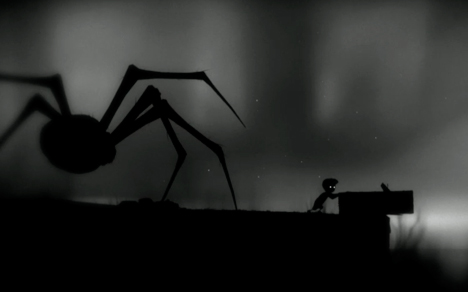
Recently, I’ve been amazed by how well the sound design of the new Xbox LIVE game Limbo has been able to coax me into various degrees of panic. Visually, the game is monochrome – black, white and various shades of grey sink into and out of the television as I guide the main character, a little boy, through the landscape of his nightmares. Tension builds as sound is used to announce off-screen dangers as they slowly creep across the screen. The muffled thud-thud of a giant spider on the left prompted me to run to the right where I suddenly encountered the deadly scream of a buzz-saw roaring toward me. It’s scary stuff. An ambient sound-layer is interrupted only by an occasional feedback crescendo or the rustling of the world’s many dangerous occupants. The soundtrack of Limbo says a lot about the game, which in turn says a lot about our culture. Video games are rarely the object of analysis for sound culture studies, this is fairly counterintuitive considering both their social impact and technological nature. Should sound studies take a closer look at video games – where would it start?
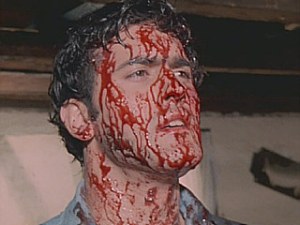
One option is to consider the game historically, as the convergence of several media discourses. First, there is cinema: The soundscape of Limbo borrows the formula that set the stage of desolation for so many low-budget horror movies. Consider the eerie silence of a horror movie like The Evil Dead and how there is a deliberate quiet within it’s conversation and music. These sonic memes are intended to invoke tension and surprise within the audience. Bruce Campbell, who plays the hapless protagonist, Ash, creeps through a similarly nightmarish landscape, inviting the listener into the soundscape of leaves, creaks, and screams. In a tradition, indebted to the aesthetics of Hitchcock, quiet soundscapes allow for broad dynamic shifts, juxtaposing safety and danger.
Another important discourse is that of video game history. Broad dynamic shifts in video games, have not always been the result of a deliberate horror aesthetic. Video games lacked sound until the release of Computer Space in 1971. A year later, the same creative team, Nolan Bushnell and Ted Dabney, would later found Atari and release Pong. Though Pong was a clone of an electric ping-pong game for 1966’s Magnavox Odyssey, Bushnell convinced Al Alcorn, the lead engineer, to hack-in sound. Silence, blips and beeps were for almost 25 years a result of hard technological limits in video games. As CD driven consoles were released in the mid-nineties, game sound was able to become more sophisticated, eventually integrating popular music seamlessly into games like Tony Hawk Pro Skater. Although game soundtracks were no longer constrained by the draconic limitations of console circuits (The Atari VCS was often unable to set its two lead voices to a similar scale – Karen Collins describes this more fully in her article “In the Loop”), game sounds still depend on the limitations of programming code. Limbo offers the latest technology, sound designer Martin Stig Anderson, has explained how advances in programming language have helped him to accommodate dramatic shifts in player control.
Game sound has always focused on the interactive, and Limbo is a great example of this development. Although games like Super Metroid and Portal have used ambient sound to emulate cinema, Limbo presents a living soundscape. Able to freely traverse the world, players can control the score of Limbo, a sign that music is becoming interactive in new ways. Is this a meaningful sign of technological convergence, or simply a reiteration of the existing aesthetic tropes? You decide.
AT


Share this:


Current Top Posts





April 2021

January 2020

November 2019

October 2019

August 2019

April 2014

November 2017

March 2015

December 2017

October 2015
 Sounding Out!
Recent Comments