
The Sound of Feminist Snap, or Why I Interrupted the 2018 SEM Business Meeting
I begin this essay with an apology, addressed to the Society for Ethnomusicology President Gregory Barz:
I am sorry that I interrupted your opening remarks at least year’s SEM Business meeting. In the moment that I chose to make my intervention, I underestimated the pain that it has clearly caused you. Furthermore, I have come to realize that it was unskillful of me to locate my frustration and anger with you as an individual. The affective release of my voice in that moment could have been better directed towards positive change in a time of great need for many of us. I fully intend to work towards doing better in the months to come, urging anyone who occupies the office of President of this organization to use the power and standing inherent in this position office to take direct steps to address the harms many of its members are experiencing.
Because my intervention arose so quickly and unpredictably—for readers outside of the Society for Ethnomusicology who may not know, I stood up and yelled “You’re a hypocrite!” then left the meeting—it seems worthwhile to explore my actions in a more thoughtful space of written discourse. I want to clarify that my sonic interruption was not premeditated; as I explain below, it arose out of a deep anger and longing for justice. As SEM 2019 convenes in November in Bloomington, Indiana on November 7th, I hope that my disruptive event can be better understood as a call to collective inquiry into the structural factors that constrain our Society from functioning in a healthy way.
Indeed, I am already encouraged by steps that have been taken since the meeting—by President Barz and others—to address some of these concerns. And in the aftermath of this intervention, I have been heartened by the positive and supportive responses I have received from friends and colleagues. Although I had to leave the room in that moment, something meaningful remained just outside.
***
Some backstory: This was the first time I had attended a business meeting; at previous conferences, they had always seemed like a formality that did not concern me. Serving on the Committee for Academic Labor, the Ethics Committee, and as Chair of the Improvisation Section, however, helped me to understand the importance of these formal structures and rituals for the health of our Society. I attended in 2018, therefore, with a sense of curiosity and a longing for positive change, particularly in regard to some of the work coming out of the committees on which I was serving. This longing also arose from a sense of frustration at the lack of receptivity to new ideas by Board leadership—as experienced through a pattern of poor communication around implementation of this work between committees and Board—as well as what I perceived to be a lack of transparency and accountability among Board leadership.
Much of this frustration stemmed from the Board’s failure to implement a minor procedural proposal put forward by the Ethics committee nearly two years prior: that the committee be restructured to be elected rather than appointed. After the first deadline to put the amendment to the full membership passed without comment from the Board, we had to expend a great deal of energy even to receive acknowledgement that our proposals had been received. By the time the committee met again, we had been through over a year of exhausting back-and-forth by email with nothing actually getting done.
Then, in the weeks leading up to the 2018 meeting, a member publicly came forward about experiences of sexual abuse by a now-deceased ethnomusicologist who had served as a senior member of SEM during his lifetime. As a member of the Ethics Committee, I witnessed the email exchange in which her requests for space to address this at the 2018 meeting were first accommodated, then revoked at the last minute; she was finally allowed space to speak in a confusing, unmoderated, ad-hoc session to which the Board assented only after the conference was already underway.
So, when President Barz chose to begin his opening remarks with a paean to civility, lamenting how conflict over social media was causing us to lose our ability to engage in healthy discourse as a unified Society, I became concerned. Many in the audience were aware that both the sexual assault allegation and another credible allegation of ethical misconduct by SEM leadership had been circulating on Facebook in previous months. I heard President Barz’s remarks as a use of his prominent position in SEM to categorize these complaints as “noise.” As Mark Brantner points out in his thoughtful critique of John Stewart’s 2010 “Rally to Restore Sanity,” the idea that sanity operates through “indoor voices” is a deeply ingrained assumption for many.
But in the wake of recent upheavals in the status quo, catalyzed by movements like #blacklivesmatter and #metoo, many hear these “indoor voices” as signifiers of an oppressive status quo. Others have written about the problems inherent in invoking civility in the face of dissent: In a recent piece for The Atlantic, Vann Newkirk argues that in many cases, “the demands for civility function primarily to stifle the frustrations of those currently facing real harm” (2018). In Vox, Julia Azari points out that “Civility is not an end on its own if the practices and beliefs it upholds are unjust” (2018). In these cases, calls for civility came in response to calls by those whose voices are met with silence by the prevailing order.
And allow me to state in no uncertain terms: many of us in the field are currently facing real harm. Since earning my doctorate in Ethnomusicology just over a year ago, I spent eight months without health insurance and now qualify for the federal Supplemental Nutrition Assistance Program. I’ve strongly considered leaving the Society many times over the past year.

“snapped stick” by Flickr user masterbutler (CC BY 2.0)
I’m also aware that my personal experience is only the tip of the iceberg: so many peers and colleagues have left the Society altogether because of sexual harassment, abuse of power by senior members or advisors, and economic precarity, experienced alone or in horrific combination. These harms are also compounded for my peers who do not share my positionality as a heterosexual, cisgender, white-presenting man with a U.S. passport and a bourgeois class background.
As President Barz continued to speak, my concern—which had lodged itself as a feeling of discontent somewhere in my stomach area—began to rise into my chest as anger, particularly when President Barz began to invoke his authority as a champion of democratic practice within the Society to justify his call to civility. If he truly believed in consensus-building and democracy, I thought, certainly he wouldn’t have opposed an effort to increase democratic accountability on the Ethics Committee. This contradiction generated my experience of what woman of color feminist Sara Ahmed calls “feminist snap” in 2017’s Living a Feminist Life. She described “feminist snap” like this in a May 2017 blogpost:
It is only when you seem to lose it, when you shout, swear, spill, that you have their attention. And then you become a spectacle. And what you brought out means you have to get out. When we think of such moments of snap, those moments when you can’t take it anymore, when you just can’t take it anymore, we are thinking about worlds; how worlds are organised to enable some to breathe, how they leave less room for others. You have to leave because there is nothing left; when there is nothing left.
In other words, I noticed that I seemed to be losing it. In that moment, I drew on my background as an improvising musician to decide how to relate to this intense energy. After exchanging incredulous glances with two colleagues sitting nearby, I decided that I couldn’t sit quietly and let my toxic feeling fester throughout the meeting—I needed to leave, but I didn’t want to leave without registering to people in the room why I had to leave, and there was no space in the official meeting to do so. At the same time, I was aware of the risks inherent in this strategy—especially because I have witnessed how the sound of my voice—a man’s—snapping like this can itself be a trauma trigger for anyone who has been shouted down in a meeting, or otherwise. Thus, the material nature of the spectacle here was different from that described by Ahmed in that it carried with it a timbre of patriarchal violence. Oddly enough, the worlds that I felt were being organized to make it difficult to breathe still afforded me the air for this particular form of breathed expression: a fiery shout. And that sound brought unintended consequences.

“break” by Flickr user David Lenker (CC BY 2.0)
I had wanted there to be no doubt that my departure was a response to President Barz’s remarks, but the power arrangement in the room meant that it would have been difficult to offer a lengthy articulation of my reasoning, given that any utterance would have been received as disruptive and that I did not have access to sound amplification in the large room. (I am reminded here of R. Murray Schafer’s point in The Soundscape : “A man with a loudspeaker is more imperialistic than one without because he can dominate more acoustic space” (1977:77). Schafer’s sexist assumption that only men speaking through loudspeakers is worth noting—as I see it, both men’s and women’s voices could transmit imperialistic sound in this way, but a “snap response” would also be gendered.)
Within a few seconds, I settled on the form my move would take: stand up, shout something concise, and leave the room. The words “You’re a hypocrite!” flowed spontaneously from there—words grounded in my direct experience of the disconnect between Dr. Barz’s present remarks and previous actions. Immediately upon leaving the room, an adrenaline rush flowed out of my body and I staggered towards a nearby bench, where I collapsed to catch my breath.
Again, I regret that these remarks focused on President Barz as an individual. Had I more time to think through what I would have stated, perhaps “This is unacceptable,” “These actions are hypocritical,” or “Please don’t ignore us” would have been what came out. And yet, by this point, the sound of this intervention had already been determined by the immediate constraints of the situation: had I chosen to sound in a way that was coded as “civil”, I literally would not have been heard by more than a few people in the room.

“broken cedar” Image by Flickr user Erik Maldre (CC BY 2.0)
Even after this intense incident, my experience of the conference in Albuquerque was very positive overall. SEM is full of brilliant emerging scholars asking extremely important questions; it was especially encouraging to see more attention being brought to the imperatives of decolonization and anti-racism. At the same time, in order for these inquiries to be truly productive, we still need to turn our analysis towards the ways in which the status quo of our governance practices unintentionally reproduce systems of oppression and create harm. Tamara Levitz, in her recent article “The Musicological Elite,” sheds light on how this has been the case within an adjacent academic organization, the American Musicological Society. She writes, “My premise is that musicologists need to know which actions were undertaken, and on what material basis, in building their elite, white, exclusionary, patriarchal profession before they can undo them.” (2018:43). Despite some evident wishful thinking to the contrary, SEM reproduces harm in similar ways and would benefit from similar institutional self-reflection.
By yoking itself to the project of the North American university system, the Society for Ethnomusicology has created strong incentives for members to go along with what Abigail Boggs, Eli Meyerhoff, Nick Mitchell, and Zach Schwartz-Weinstein call the “Modes of Accumulation” of these institutions. We must urgently turn towards critical institutional self-examination to consider how we can change our practices to resist complicity with these forms of professionalized domination and control.
In order to do so, we need better mechanisms for dissent and communication, especially when we have the rare opportunity for face-to-face communication. We must address what seems like an increasing tension between preserving the institutions of tenure-track music academia and the broader needs of the Society’s full membership. Crucially, Ahmed turns to listening as a key methodological practice for locating “feminist snap”:
To hear snap, one must thus slow down; we also listen for the slower times of wearing and tearing, of making do; we listen for the sounds of the costs of becoming attuned to the requirements of an existing system. To hear snap, to give that moment a history, we might have to learn to hear the sound of not snapping. Perhaps we are learning to hear exhaustion, the gradual sapping of energy when you have to struggle to exist in a world that negates your existence. Eventually something gives.
In this case, listening for the silences—and silencing—that preceded this instance of “snap”may be useful. To my ear, they index the “sound of not snapping”: the unanswered emails, averted eye contact, unreturned phone calls—these are the sounds of a snap to come. These silences are empowered by our collective reliance on a discourse of “civility,” propped up by formal procedures like Robert’s Rules of Order, that deems certain types of sounds and communication to be out of bounds. Indeed, as Hollis Robbins has observed, “Under Robert’s Rules, silence equals consent.” Listening for feminist snap would require a commitment to naming these silences—and allowing space for them to be spoken into.

I sincerely hope that my moment of becoming a spectacle can spark more productive conversations and deeper listening. Still, the magnitude of the challenges that we face to align our governance practices with shared institutional values will require creative solutions. I am confident that our experience and training as listeners can bring us to a fuller engagement with democratic processes—and that this can lead us towards productive solutions. This work is already being done by many groups and individuals within the Society, such as the Committee for Academic Labor, the Crossroads Committee, the Disability and Deaf Studies Special Interest Group, the Diversity Action Committee, the Ethics Committee, the Gender and Sexualities Task Force, the Gertrude Robinson Networking Group, the Section on the Status of Women, and many others. I am confident that members of these groups are actively working to build spaces that allow for us to listen into the structural and cultural changes we desperately need.
In the meantime, I remain committed to seeking out collaborative solutions to the challenges we face. Please feel free to reach out to me by email with any feedback you feel compelled to share. Furthermore, if you would like to contact the Ethics Committee about any issues of ethical import to the Society, you may do so here. Anonymous submissions are also possible through this portal.
I’d like to close this essay with an apology, as well—addressed to all of my peers who have experienced harm or abuse through their involvement with SEM: I am truly sorry that I have not done more to work towards redress for the harms that you have experienced. I am also deeply sorry that I have not done more to examine how my own desire to see projects through in this community has led me to ignore signs of harm taking place. I’ve had the good fortune of being able to express this to a few of you in person, and I am tremendously grateful for the opportunity. For anyone else who would like to reach out, I will commit to listening. For us to do better, I need to do better.
Thank you for taking the time to read this statement—I look forward to continuing our work together to create a sustainable future for the practice of ethnomusicology.
—
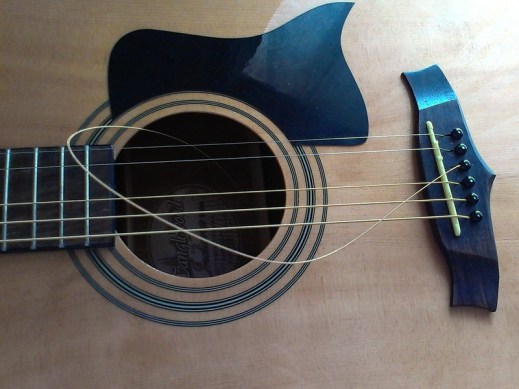
Featured Image: “I Broke a String” by Flickr User Rowan Peter (CC BY-SA 2.0)
—
Alex W. Rodriguez is a writer, improviser, organizer, and trombonist. He holds a PhD in Ethnomusicology from UCLA, where his research was based on fieldwork conducted in Los Angeles, California from 2012-2016, Santiago, Chile from 2015-2016, and Novosibirsk, Siberia in fall 2016. Alex is currently based in Easthampton, Massachusetts, USA.
—
 REWIND! . . .If you liked this post, you may also dig:
My Music and My Message is Powerful: It Shouldn’t be Florence Price or “Nothing” –Samantha Ege
becoming a sound artist: analytic and creative perspectives–Rajna Swaminathan
Sounding Out Tarima Temporalities: Decolonial Feminista Dance Disruption–Iris C. Viveros Avendaño
On Whiteness and Sound Studies–Gustavus Stadler
Canonization and the Color of Sound Studies –Budhaditya Chattopadhyay
Share this:

SO! Amplifies: Die Jim Crow Record Label
 SO! Amplifies. . .a highly-curated, rolling mini-post series by which we editors hip you to cultural makers and organizations doing work we really really dig. You’re welcome!
Die Jim Crow (DJC) is the first US record label dedicated to recording formerly and currently incarcerated musicians. The mission of DJC is to provide formerly and currently incarcerated musicians a high-quality platform for their voices to be heard. DJC sprang from Executive Director Fury Young’s communications with currently incarcerated individuals by letter and was originally slated to be a single concept album, inspired by Michelle Alexander’s The New Jim Crow and Pink Floyd’s The Wall. The project quickly grew into much more than that.
For me, death to Jim Crow means a death to stereotypes, to misconceptions of the ‘Other.’ There is no Other. The term ‘Jim Crow’ comes from a song which satirizes a slave. I see much parallel to the way our society views those incarcerated: that they are ‘lesser than;’ merely criminals. We are changing this narrative through music. – Fury Young
DJC records, produces, and releases music written and performed by formerly and currently incarcerated individuals. Prison staff and others working inside, such as volunteers or other program facilitators, refer incarcerated collaborators to DJC. Executive Director Young and Deputy Director BL Shirelle correspond by mail or digitally with these individuals to help prepare their musical contributions for in-prison recording sessions. Young, Shirelle, and other producers identify promising Project Managers inside each facility who help guide the music creation and recording process.
Music is recorded in prisons, homes of the formerly incarcerated, and Brooklyn studio revolutionsound, produced in the same studio, and then widely released through digital and physical channels. We currently have ongoing programming at 2 prisons in South Carolina and have recorded at a total of 5 prisons since 2015, 3 of which we are seeking to regain access to because of prison administration changes.
Our Board of Directors comprises 40% formerly and currently incarcerated individuals, ensuring that Die Jim Crow is steered by those who have direct lived experience with the issues informing our work. Deputy Director Shirelle is a formerly incarcerated musician acting as co-Label Manager with Young, bringing her unique set of experiences and talents to Die Jim Crow.
Over the past several years, Young has formed solid relationships built on trust with a number of formerly and currently incarcerated artists and has learned how to navigate the challenging process of gaining access to prisons to work with incarcerated individuals. As Fury told SO!’s Managing Editor Liana Silva,
Gaining access is tough. It can take months, even years to navigate through to the right people and get an Okay. Once you’re in, you’re in. But then you need to deal with censorship from the top brass and navigating through that. There are all types of unforeseen challenges that pop up when you least expect them to — but it really comes from above. In terms of recording on the inside, besides the typical band shit like “this guy’s ego is getting in the way” or “this guy won’t play with the band,” the making music part is the fun part.
Earlier this year–March 2019–Young took a trip to Louisiana, Mississippi, and South Carolina, the experience inspired a big shift In Die Jim Crow toward founding the non-profit label. The journey began in New Orleans with a home recording of Albert Woodfox, who lent his voice to music for the first time. Mr. Woodfox spent 43 years in solitary confinement in Louisiana, the longest of any solitary prisoner in US history. Fury also recorded a video interview with Albert about his experiences with music while inside.
From NOLA, Fury picked up co-producer and engineer Doc (aka Dr. Israel) in Mississippi–who has been part of the DJC team since 2015– where they spent two days recording four rappers at a juvenile prison — Central Mississippi CF Youthful Offender Unit. They spent the next 10 days in South Carolina recording a total of 22 artists at a men’s and a women’s prison: Allendale CI and Camille Griffin Graham CI. When they got home, Fury noted at a Board of Directors meeting: “This is becoming a record label.” He had already discussed it with Shirelle and senior advisor Maxwell Melvins, both DJC artists and board members, and the consensus was clear. A similar reaction was palpable at the board meeting. Stefanie Lindeman, a non-profit veteran and board member, brought up, “OK, we need to put together a three year strategic plan immediately.” And from there, Die Jim Crow Records was born.
And what will Die Jim Crow records sound like? Fury told SO! that
There’s a lot of hip hop and soul. Most of our artists are black and that is the music many of them grew up on. But as we transition into a record label and open up to new projects, we’re becoming more of a melting pot. All types of influences go into the stew. Right now we’re working on a straight hip hop EP at a women’s prison in South Carolina — kinda like a Lauren HIll/Rapsody vibe, and then a project called The Masses at a men’s SC prison — which has a full band and several emcees. They’re sorta like The Roots meets Wu Tang in a southern prison. But in other states we’ve recorded plenty of rock and even Native American chants. If you listen to the EP, you’ll get a sense of the sundry sounds.
Young has already recorded and released a high-quality EP with these musicians and recorded a significant library of unreleased music.
Over the next few years, DJC will continue to grow through re-releasing and repackaging existing content, cultivation of current and new artists, and development of new projects, as well as live shows, events, and tours. DJC will release 1 EP and 1 mixtape per year. The first release will be the Die Jim Crow LP, accompanied by a book and feature film documentary in 2022. By November 2020, DJC will release The Masses EP. On May 1, 2020, DJC will re-release the Die Jim Crow EP, release the “First Impressions” single and video from the EP, and begin the “Single of the Month” initiative, putting out both prerecorded songs and new works.
Die Jim Crow is currently engaged in a Kickstarter campaign for their project through 8 pm tonight, Monday 28, 2019– click here to donate to launch the label and/or read (and hear) more about the project!
—
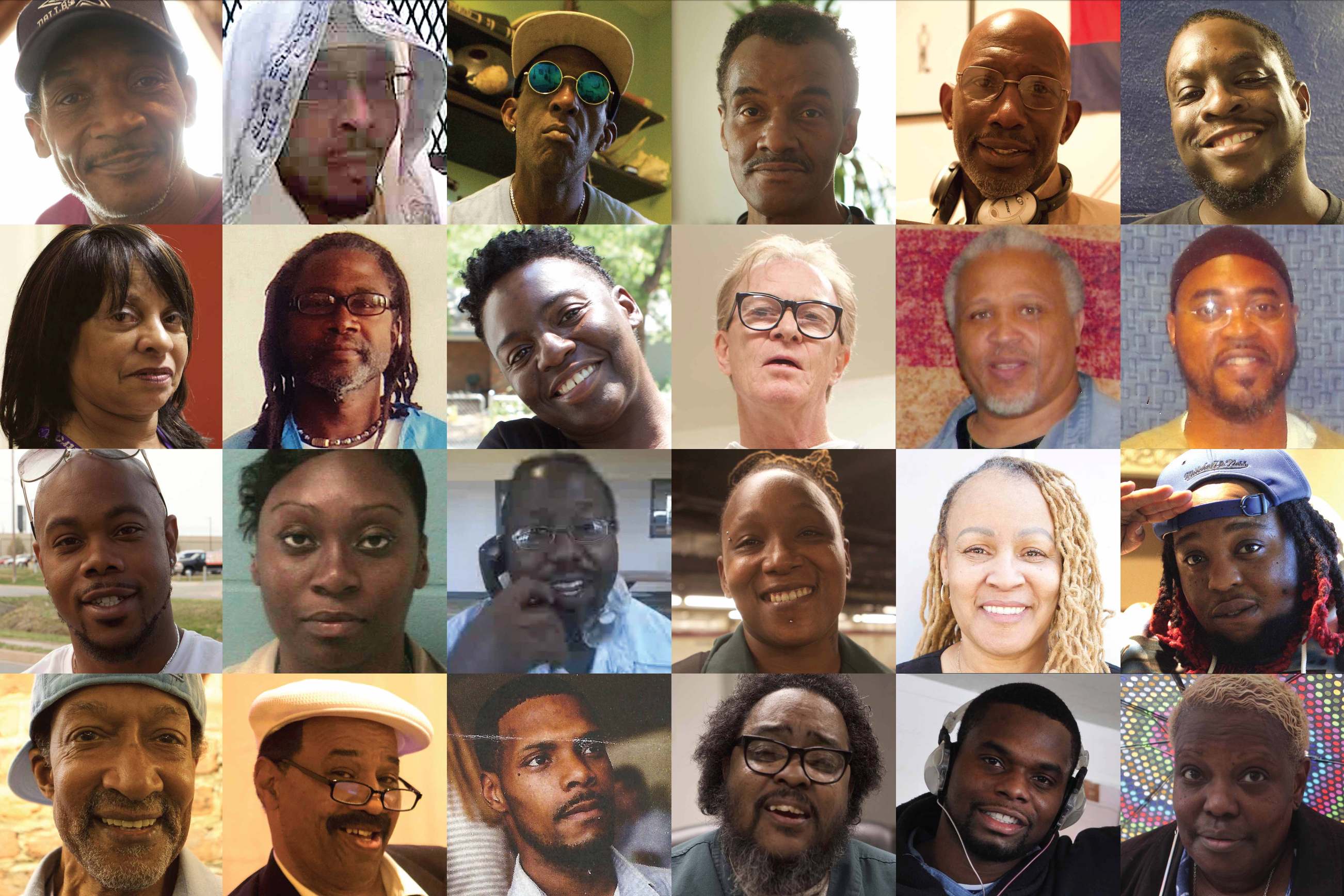
Featured Image: Some of the artists Die Jim Crow has worked with in GA, OH, IN, CO, PA, CA, NY, NJ, MD, KS, AL, TX, and LA. (L-R each row): Johnnie Lindsey, Leon Benson, Malcolm Morris, Maxwell Melvins, Michael Austin, Dexter Nurse, Valerie Seeley, Spoon Jackson, Tameca Cole, Michael Tenneson, Mark Springer, Obadyah Ben-Yisrayl, Cedric “Versatile” Johnson, Lee Lee, Anthony “Big Ant” McKinney, Ezette Edouard, Pastor Anna Smith, BL Shirelle, Carl Dukes, Norman Whiteside, Sedrick Franklin, Charles “C-Will” Williams, Apostle Heloise
—
 REWIND!…If you liked this post, you may also dig:
Regulating the Carceral Soundscape: Media Policy in Prison—Bill Kirkpatrick
Prison Music: Containment, Escape, and the Sound of America—Jeb Middlebrook
SO! Podcast #75: Wring Out Fairlea—Emma Russell
SO! Amplifies: Carleton Gholz and the Detroit Sound Conservancy
Share this:


Current Top Posts





April 2021

January 2020

November 2019

October 2019

August 2019

April 2014

November 2017

March 2015

December 2017

October 2015
 Sounding Out!
Recent Comments