
SO! Amplifies: An Interactive Map of Music as Ukrainian Resistance to the 2022 Russian Invasion
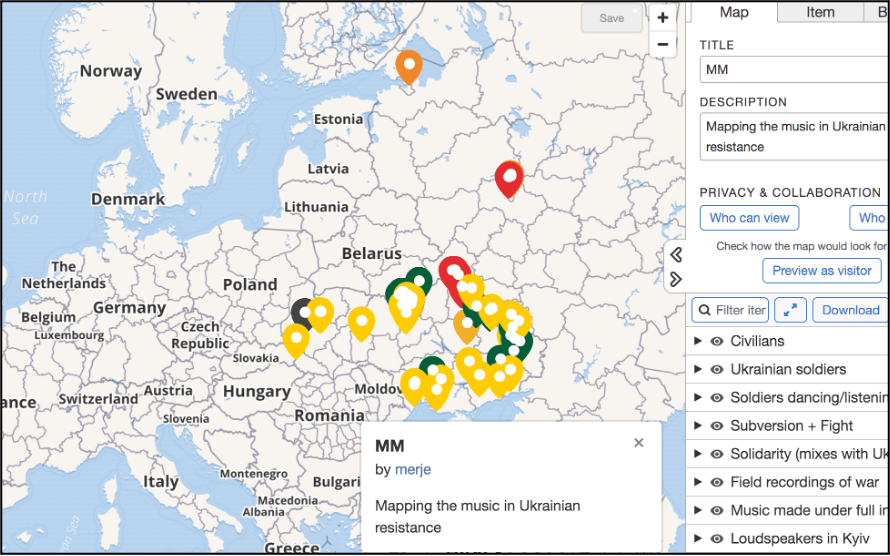
https://maphub.net/merje/mm

SO! Amplifies. . .a highly-curated, rolling mini-post series by which we editors hip you to cultural makers and organizations doing work we really really dig. You’re welcome!
—
BONUS POST: Directly following Merje’s introduction to her music mapping project, SO! has also published is her analysis of the observational research she conducted during the first 55 days of the 2022 Russian invasion of Ukraine, drawing from the collection of videographic material from online sources she embedded on this public interactive map. To go directly to that post, click here.
As an Estonian national, I have a regional interest in the relationship between music and cultural identity in Eastern Europe. Popular music has been foundational in building and sustaining Estonian national identity, through the Song Festival tradition which started in 1869, and the Singing Revolution at the end of the 1980s. In the Baltic states, Poland and Ukraine, there are similarities in how music has facilitated resistance to an oppressive regime or invasion.
While other cultural forms can articulate and show off shared values, only music can offer the immediate experience of collective identity (Frith 2007, 264). Looking into the sensitive representation of music in conflict, therefore, is about exercising hapticity with the precarity and suffering in the videos, and ultimately a work of not only academic, but affective labour.
The map format helps visualise the video evidence as it continues to appear in different parts of Ukraine. For accurate analysis, understanding the context, region, and the phase of war in which a musical event originates, is vital. In different parts of the country on the same date, one city can embody a collective feeling of resistance, while the other grief. The map is useful in analysing regional differences in the types of songs performed, and in ‘placing’ the international cases of solidarity. I decided to map the solidarity mixes that directly engage with the musical footage from Ukraine, and to exclude the high number of global fundraising concerts. All map entries depict in some way the role of music in Ukrainian resistance.
The map function is made redundant in posts where the location should not be disclosed for safety reasons, such as this video of soldier Yuriy Gorodetsky performing ‘How Can’t I Love You, My Kyiv’ in a military camp. Additionally, I decided not to embed posts that could inform the Russian military of civilian and humanitarian targets, for example a video from Lviv showing the Philharmonic concert space being used for humanitarian storage.
The focus has been on mapping songs and music, rather than the wider soundscape of war, although sounds such as air raid sirens do appear in some videos. The map includes sections on recorded music, such as this wartime ska track by Mandry, field recordings, and ways in which music has been used in online warfare. Most map entries fall under the civilian resistance category, exploring the following questions:
- What kind of music appears in this resistance? In terms of genre, is it folk, rock, hip hop, or national patriotic song? Is it Ukrainian or ‘Western’? How do the different examples embody national feeling and safeguarding of a culture?
- What is the power of these musical moments, for the artists, for Ukrainians, and for the world? What can music achieve in a conflict environment, and how does it evoke moments of solidarity?
- How does the music reflect the different phases and emotions of the war, from mobilisation, resistance, support, contemplation, to grief?
Similar research questions have been posed by Arve Hansen et al. in A War of Songs (2019) about the 2013-14 Euromaidan protests, in which music carried much of the revolutionary feeling. Adriana Helbig wrote about the Orange Revolution of 2004-05 in Hip Hop Ukraine: Music, Race, and African Migration when the Internet played a huge role in circulating political messages through music, especially as Ukraine’s media was controlled by president Yanukovich (2014). Maria Sonevytsky’s Wild Music (2019) looks at both revolutions and the vernacular Ukrainian discourses of ‘wildness’ as they manifested in popular music during this politically volatile decade.
When looking at Ukraine, we are studying a repeatedly colonised region, where, as part of the former Russian Empire, serfdom was abolished in 1861. Ethnographic research and promotion of a national culture in the decades that followed led to a brief window of independence for Ukraine in 1917, only to be occupied and incorporated into the Soviet Union as the Ukrainian Soviet Socialist Republic in the same year. Unlike Poland and the Baltic states, Ukraine was not independent between the two world wars, which adds depth to Soviet propaganda that permeated the region throughout the 20th century – important context to consider when analysing its struggle for autonomy.
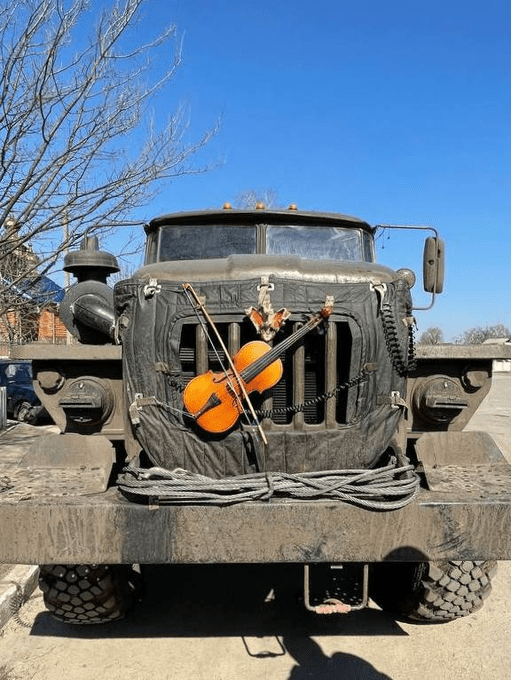
Drawing from Parkes, the relationships of domination and subordination are particularly marked and articulated through music in colonised groups (Parkes 1994). Often, Ukraine is portrayed as a country of two opposing regions: the pro-European West and the pro-Russian East. While there have been two sides opposed to each other since the 2014 Crimean occupation, the linguistic, ethnic, historical and religious divisions in Ukraine cannot neatly fit into this East-West dichotomy. In addition to complicated ethnic boundaries that define and maintain the region’s cultural identities, Ukraine is dealing with a post-colonial struggle to protect its independence from imperialist Russia.
The ‘places’ constructed through Ukrainian music embody these complex issues, notions of difference and social boundaries – the very reason why music is socially meaningful: it provides means by which people recognise identities, places and the boundaries which separate them (Stokes 1994). In a war situation, beyond political and social alliances, we are also looking at music as survival (Stokes 2020).
—
Merje Laiapea is a curator, artistic programmer and writer working across sound, music and film. She is completing her Master’s in Global Creative and Cultural Industries in the Music Department at SOAS, University of London. Within the broad realm of music and cultural identity, her research interests include the expressive power of the sound-image relationship, forms of frequency, and multimodal approaches to research itself. She assists with event production and community engagement at SOAS Concert Series and works as Submissions Advisor for the 2022 Film Africa festival. Merje also broadcasts the occasional radio show and DJ mix. To find out more about Merje’s motivation behind the project, click here to read an interview by the University of London.
—

REWIND!…If you liked this post, you may also dig this:
Mapping the Music in Ukraine’s Resistance to the 2022 Russian Invasion–Merje Laiapea
SO! Amplifies: Wu Tsang’s Anthem (2021)—Freddie Cruz Nowell
SO! Amplifies: Marginalized Sound—Radio for All–J. Diaz
SO! Amplifies: Die Jim Crow Record Label
SO! Amplifies: Cities and Memory–Stuart Fowkes
Share this:

Archivism and Activism: Radio Haiti and the Accountability of Educational Institutions


Radyo Ayisyen
Learning from other scholars’ work on Haitian radio was, and still is, one of the greatest pleasures in the process of writing Isles of Noise: Sonic Media in the Caribbean (UNC 2016). People living in or from Haiti widely acknowledged and almost took for granted radio’s outsized role in public and political life. Edwidge Danticat and Jonathan Demme also understood this and paid tribute in Claire of the Sea Light and The Agronomist respectively, but historians remained largely fixated, understandably, on pivotal moments in Haiti’s rich history. Radio is different. Not pivotal, but witnessing the pivotal. Less dramatic and more long lasting and adhering to the same format for days, years, decades. It speaks to people who wouldn’t read newspapers or books. It floods private and public space with the sounds of music, talking, ruling, dissenting, explaining, satirizing, creating, crying, testifying, lying. But it leaves few archival traces. This is why the work of the five scholars in this series is so important. They allow us to hear a little and honor the listeners who make the medium what it is.
To start the series, Ian Coss gave a finely tuned account of a “day in the life” of a radio station in Cap Haïtien that follows the programming rhythm of days and nights. Last week, Jennifer Garcon shows how the long marriage between Haitian politics and Haitian radio has endured, despite multiple and conflicting alliances, high drama, and attacks from all sides. The powerful and the powerless have even in their enmity presumed that if they could harness radio’s power they would ascend to political power. Her story recounts one of the pivotal points in the relationship—its near breakdown and ultimate survival—also a turning point for a 19-year-old Jean Claude Duvalier, newly proclaimed President for life.
The sweeping stories of Radio Haïti-Inter and its archive (now at Duke University), its more than 5300 recordings fully digitized and described in English, French and Haitian Creole) come together in this all too brief account. Laura Wagner, who listened to each recording and wrote the descriptors, writes of the work itself, the emotional, financial and intellectual challenges involved, and the reason this archive is essential to anyone interested in Haiti, or radio, or racial justice.
Guest Editor– Alejandra Bronfman
Click here for the full series!
—-
For four years, I spent forty hours a week in a cubicle in a converted tobacco warehouse with noise-cancelling headphones over my ears, listening to and describing the entire audio archive of Haiti’s first independent radio station, Radio Haïti-Inter. Though my title was “project archivist,” I am not an archivist by training. But I am compelled to compile, assemble, and preserve stories from lost people and lost worlds. Sound is more intimate than printed words or video. With sound, voices are inside your head, as close as another person can be. As I processed the Radio Haiti collection, I would forget that many of the voices I heard every day belonged to people I never knew in life. Sometimes in my dreams I would see the station’s director, Jean Dominique, alive and laughing.
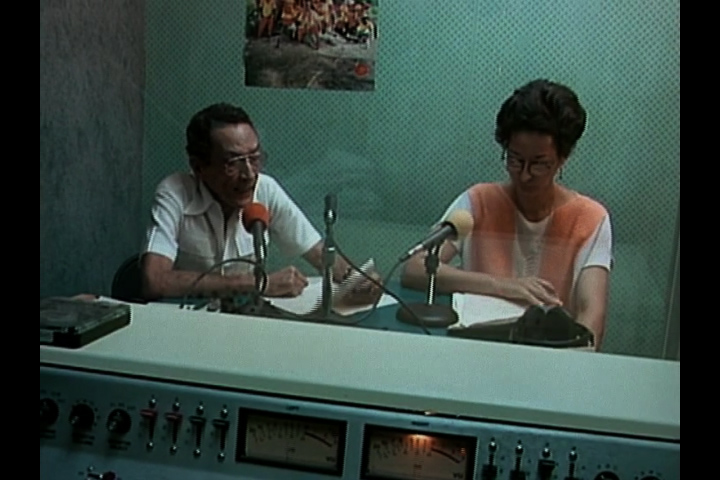
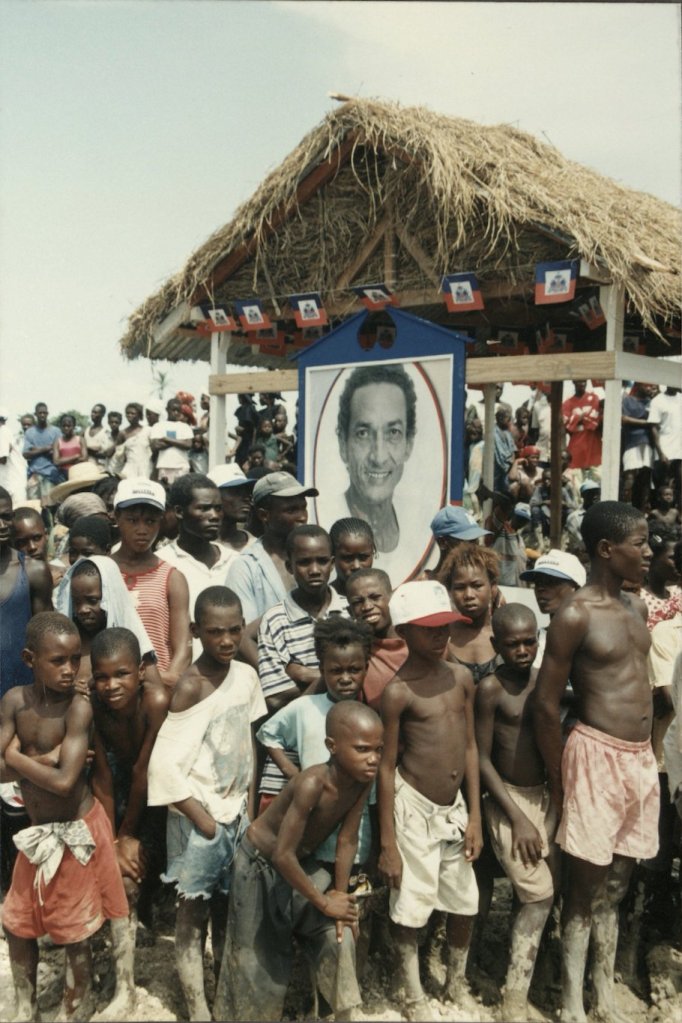
Radio Haïti-Inter was inaugurated in the early 1970s. Dominique, an agronomist by training, quickly became the most recognized journalist in Haiti. His professional partner and wife, Michèle Montas, Radio Haiti’s news editor, was a Columbia Journalism School graduate who trained several generations of Haitian journalists. Dominique was part Ida B. Wells, part Edward R. Murrow, part Sy Hersh, part Studs Terkel, part Hunter S. Thompson. He was an investigative journalist who uncovered human rights abuses, government corruption, and corporate malfeasance. He was an activist who possessed the charisma of a theater star, the crackling wit of a satirist, and the public intellectual’s gift for insight and analysis. After Dominique was assassinated on April 3, 2000, more than fifteen thousand mourners attended his funeral.
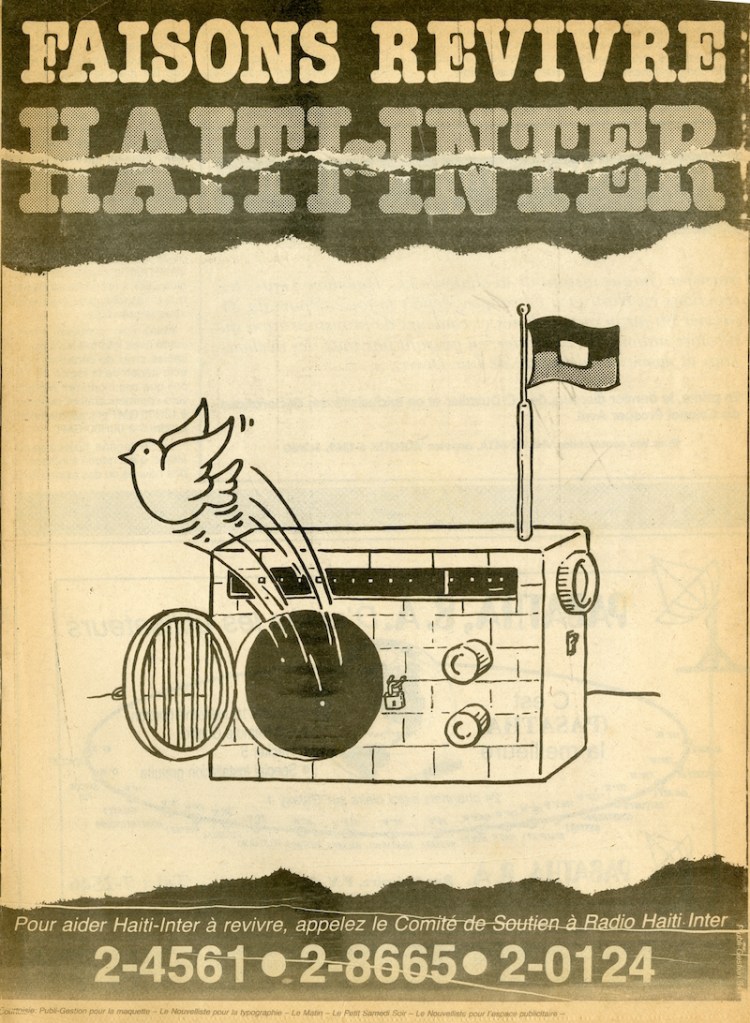
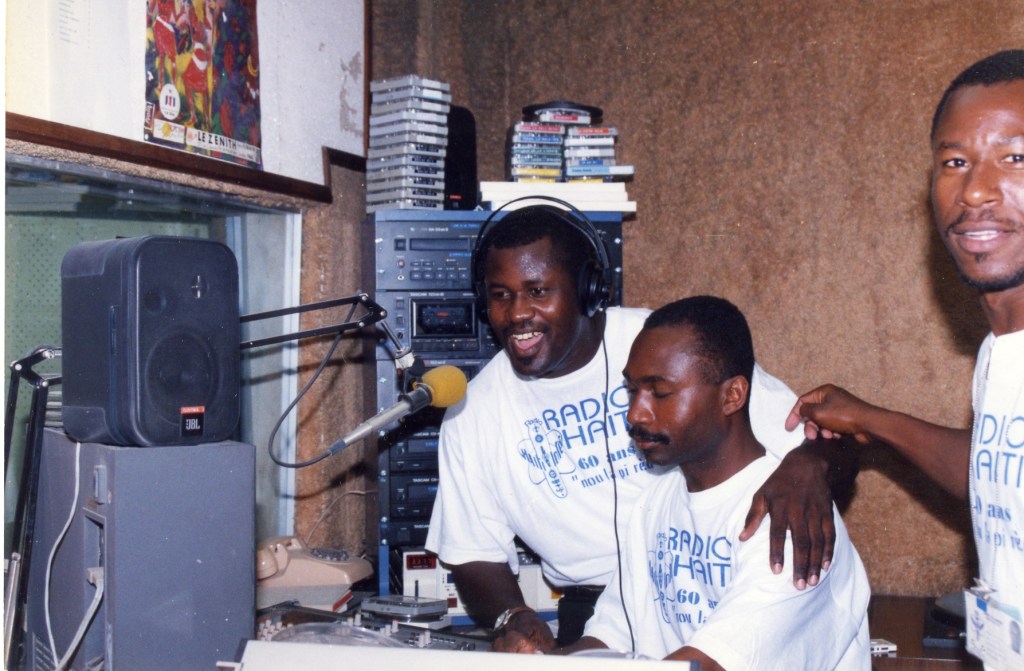
In 2013, Montas donated the archive of Radio Haïti-Inter — more than 1600 open-reel tapes, more than 2000 audio cassettes, and approximately 100 linear feet of paper records — to Duke University’s Rubenstein Rare Book & Manuscript Library, under the condition that it be digitized and made available to the widest possible public in Haiti. Thanks to support from the National Endowment for the Humanities and the Council on Library and Information Resources, today the Radio Haiti Archive is a free, publicly accessible, trilingual digital collection. Its over 5300 audio recordings represent the most comprehensive archive of late 20th-century Haitian history. Radio Haiti still speaks, despite government repression, multiple exiles, the assassination of Dominique, the attempted assassination of Montas in December 2002, the closure of the station in 2003, and the 2010 earthquake. That the archive exists is a miracle.
According to its mission statement, the Rubenstein Library “builds distinctive collections of original materials and preserves them for use on campus and around the world. In support of Duke University’s mission of ‘knowledge in service to society,’ we collect a diversity of voices in a wide range of formats… We invite students, scholars, and the general public to explore the world through our unique collections.” the library seeks to preserve the voices of marginalized people, and make various kinds of materials (including sonic media) available to audiences beyond Duke, beyond the United States, and beyond academia.
In Radio Haiti’s broadcasts, rural farmers, activists from poor urban neighborhoods, sex workers, marketwomen, Vodou patriarchs, and refugees narrate vivid stories of their lives and worlds. The aurality of radio allowed speakers and listeners who were not traditionally literate to participate in the political life of Haiti. Likewise, the aurality of the Radio Haiti collection makes it a trove of information that appears nowhere else. It is invaluable for academic researchers and ordinary audiences alike. It is a people’s history of Haiti, told through voices that are silenced in the written record.
Most libraries in poor countries like Haiti lack the resources to restore, digitize, and process audiovisual materials, but wealthy institutions in wealthy countries tend to neglect sonic archives. Unlike written records, audio is difficult to skim, and therefore harder for researchers to use. The rights considerations are often fraught. Audiovisual archives are expensive and difficult to preserve, digitize, and process; as a result, many projects, including Radio Haiti, depend on highly competitive external grants. While these days many universities prize Black archival collections (sometimes to the point of commodification, as Steven G. Fullwood argues), it’s another matter when those collections are audio, especially non-English language audio. In Radio Haiti’s case, the audio is in Haitian Creole and French. All of these factors made Radio Haiti a complex project. But I believe the complexity of a project like Radio Haiti could be mitigated if institutions were to truly make custodianship of marginalized collections a priority. In other words, some of the complexity isn’t inherent to the collection, but rather to the system that was not built to accommodate it.
As I processed Radio Haiti, I ached for the cane-cutters that the Duvalier dictatorship effectively sold to the Dominican Republic, former political prisoners describing horrific torture, and migrants risking their life at sea. But it was not my trauma. In some ways, this project was challenging because I am not Haitian, but it was also easier because the anguish was not my own. I understood the archive’s importance, but I did not feel the pain in my bones.
So, yes, the material in the archive could be heavy, but the project was difficult mainly because the current practices of US academic libraries are incompatible with a project like Radio Haiti. For the last year and a half of the project, there was no remaining grant money or internal funding for an intern fluent in Haitian Creole or French to earn a living wage. When I proposed seeking additional funding to support an intern to help describe the audio, I was told it would be unfair to other staff who are likewise underpaid. In order to finish before my own grant-funded salary ran out, I listened to and created multilingual narrative description for an average of ten recordings a day. Every day was a race against time. I was reprimanded for “overdescribing” the audio, and told, “Don’t do the researcher’s job for them.” Library leadership and I did not share the same objectives. Despite their stated commitment to digitize Radio Haiti and make it available to the Haitian public, they still considered traditional academic researchers the target audience, while I was thinking of ordinary people in Haiti, trying to access the audio on a secondhand smartphone with a limited data plan.
Michelle Caswell and Marika Cifor ask, “what happens when we scratch beneath the surface of the veneer of detached professionalism and start to think of recordkeepers and archivists less as sentinels of accountability… and more as caregivers, bound to records creators, subjects, users, and communities through a web of mutual responsibility?” They call for empathy between the archivist and the creators, subjects, users, and audience of the archive. I believed that “slow processing” — providing detailed, trilingual description of each Radio Haiti recording — was a necessary act of empathy, and the only way to honor the voices in the archive and make the collection truly available to Haitian audiences. If I provided only “minimal description,” Radio Haiti’s audio would remain lost.
The work was exhausting. I began to have panic attacks. One administrator encouraged me to develop “strategies for self-care.” “Self-care,” which places the responsibility onto the individual worker, is not a solution to burnout. What I needed were more resources.
Like everyone else in the neoliberal US university, archivists are bound by concrete considerations of political economy. They are being asked to do more with less: they must eliminate backlogs and process more collections more quickly, without improvements in salary, staffing, or workspace. Library work remains a feminized profession, one that downplays and erases the intellectual labor of those workers who “merely” process collections. The archivist is the invisible technician, while researchers discover. And so my intent is not to impugn any individual. Rather, I point to the structural factors and cultural attitudes — including institutional white supremacy — that make traditional archives inhospitable to collections like Radio Haiti.
Former archivist Jarrett Drake contends that “the purpose of the archival profession is to curate the past, not confront it; to entrench inequality, not eradicate it; to erase black lives, not ennoble them.” As a white American woman, my personal experiences were obviously not comparable to those of archivists and scholars of color who endure racism regularly, but my time as the Radio Haiti project archivist revealed to me how Black archival collections are subjected to structural racism. The Radio Haiti collection was created by and for Black people. It centers the voices, perspectives, and experiences of Black people. It is a sonic archive, in a field that prioritizes traditional paper collections. It is largely in Haitian Creole, a disparaged language spoken mostly by Black people. It is from a country that has been colonized, exploited, invaded, occupied, vilified, pitied, embargoed, evangelized, and intervened upon for centuries. And finally, its primary audience is not anglophone academics, but Haitian people.

Many library workers at predominantly white institutions make extraordinary efforts to combat systemic white supremacy, but low-level staff cannot create change when the larger institution remains hidebound. Bringing Radio Haiti back to Haiti required intellectual work, passion, and love. To represent diverse voices and make a collection like Radio Haiti truly accessible to a worldwide public, traditional archival institutions must undergo a radical transformation. They must confront assumptions about what makes a collection “difficult to process,” commit resources to collections that foreground the voices of marginalized people, and support the work of staff who give those collections the care they deserve.
Editor’s Note: Minor changes have been made since publication for clarity and to add links to sources. Nothing substantive has been changed. 12:48 PM EST, 5/3/2021
—
Featured Image: Picture of a painting of Radio Haiti tied to a cross with the inscription (in translation): “The proverb goes: each firefly lights the way for itself [every man for himself]. We say: unity makes strength. Let’s help Radio Haiti-Inter lay its cross down so that it is not crucified.” Radio Haiti Collection, David M. Rubenstein Rare Book & Manuscript Library, Duke University CC BY-NC-SA 4.0
—
From 2015 to 2019, Laura Wagner was the project archivist for the Radio Haiti Archive at the David M. Rubenstein Rare Book & Manuscript Library at Duke University. She holds a PhD in cultural anthropology from UNC Chapel Hill, where her research focused on displacement, humanitarian aid, and everyday life in the aftermath of the 2010 earthquake in Haiti. Her writings on the earthquake and the Radio Haiti project have appeared in Slate, Salon, sx archipelagos, PRI’s The World, and other venues. She is also the author of Hold Tight, Don’t Let Go, a young adult novel about the earthquake and its aftermath, which was published by Abrams/Amulet in 2015. She is currently working on a book about Radio Haïti-Inter and its archive.
—
REWIND! . . .If you liked this post, you may also dig:
Radio de Acción: Violent Circuits, Contentious Voices: Caribbean Radio Histories–Alejandra Bronfman
Black Excellence on the Airwaves: Nora Holt and the American Negro Artist Program–Chelsea M. Daniel and Samantha Ege
SO! Amplifies: Marginalized Sound—Radio for All–J Diaz
Share this:


Current Top Posts





April 2021

January 2020

November 2019

October 2019

August 2019

April 2014

November 2017

March 2015

December 2017

October 2015
 Sounding Out!
Recent Comments