
Soundscapes of Narco Silence
DOI: https://doi.org/10.59350/pkf6t-ghy89
Since the drug war began, the lives of approximately 95,000 people have been claimed, with an estimated total of 26,000 disappearances (“Continued Humanitarian Crisis at the Border” June 2013 Report). At the University of Texas, Pan American – an institution located 25 miles north of Reynosa, Mexico (a Mexican city that has been hard hit by drug violence in recent years) – I teach students who have been dramatically impacted by drug war violence. Many have close relatives affected or hear horrific stories of those who have been kidnapped by the cartels; many fear traveling to Mexico to visit loved ones as a result and, in some cases, they report having relatives involved in the drug cartel business. Dinorah Guerra, psychotherapist and head of the Red Cross in Reynosa, describes the devastating psychological and physical toll: “There is a huge risk for people’s self esteem. They cannot speak about what they have seen or what they have heard. [They] lose [themselves] and lose [their] identity” (qtd. in Pehhaul 2010).
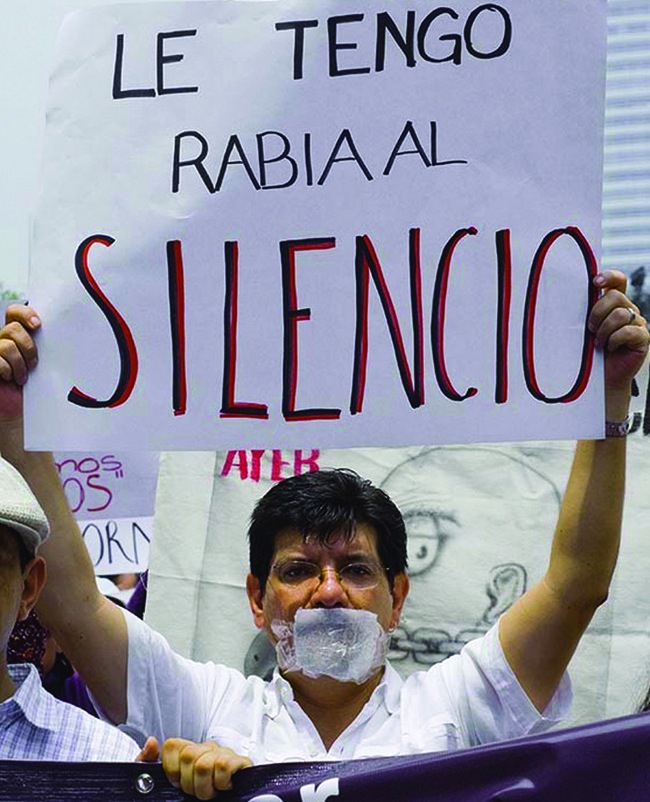
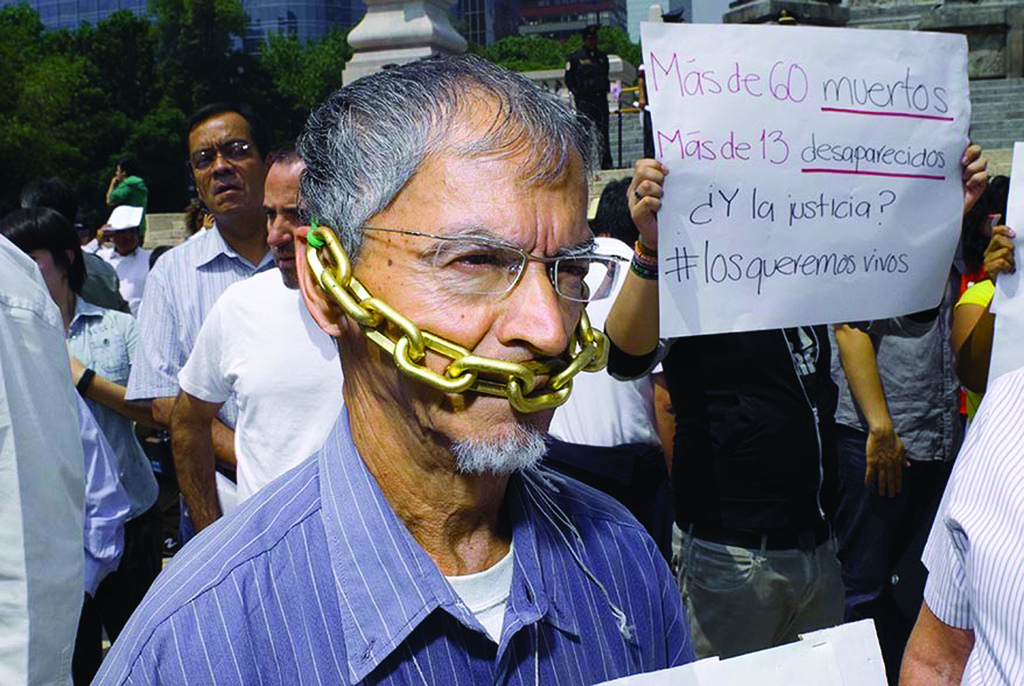
I name the space of the drug war and its resulting terror in the U.S.-Mexico border the “soundscape of narco silence.” This soundscape includes death and intimidation, from the brutal killings of news reporters by cartel members to the decapitation of citizen-activists who use online media to alert communities of narco checkpoints. It also consists of those powerful acts that call attention to silence as a tactic of terror. The Movement for Peace with Justice and Dignity, for instance, brought together tens of thousands of people in Mexico to speak out against drug violence through silent marches. Cultural productions, such as narcocorridos, or contemporary drug ballads that document the cross-border drug economy, also become part of the soundscape. The narcocorridos function as a powerful critical response to silence and fear because they enable those in Mexican society, as Jorge Castañeda, author of El Narco: La Guerra Falllida, explains, “to come to terms with the world around them, and drug violence is a big part of that world. The songs are born out of a traditional Mexican cynicism: This is our reality, we’ve gotten used to it” (Qtd. in Josh Kun 2010).
In this blog post, I focus on the role of U.S. Latina/o theater produced in the South Texas border region as it responds to the soundscape of narco silence. Building on David W. Samuels, Louis Meintjes, Ana Maria Ochoa, and Thomas Porcello’s definition of “soundscapes” in “Soundscapes: Towards a Sounded Anthropology” as “the material spaces of performance and ceremony that are used or constructed for the purpose of propagating sound” (330), I suggest that soundscapes of silence in theater function as material spaces of performance that focus the public’s attention on silence – with the intent of intervening in acts that propagate silence and fear. Soundscapes of narco silence are characterized not only by violence and terror, but by cultural productions that function as forms of critical resistance – those works that focus the publics’ attention on the economy of silence and fear that fuels the drug war, and in the process, enable communities to cope with narco violence.
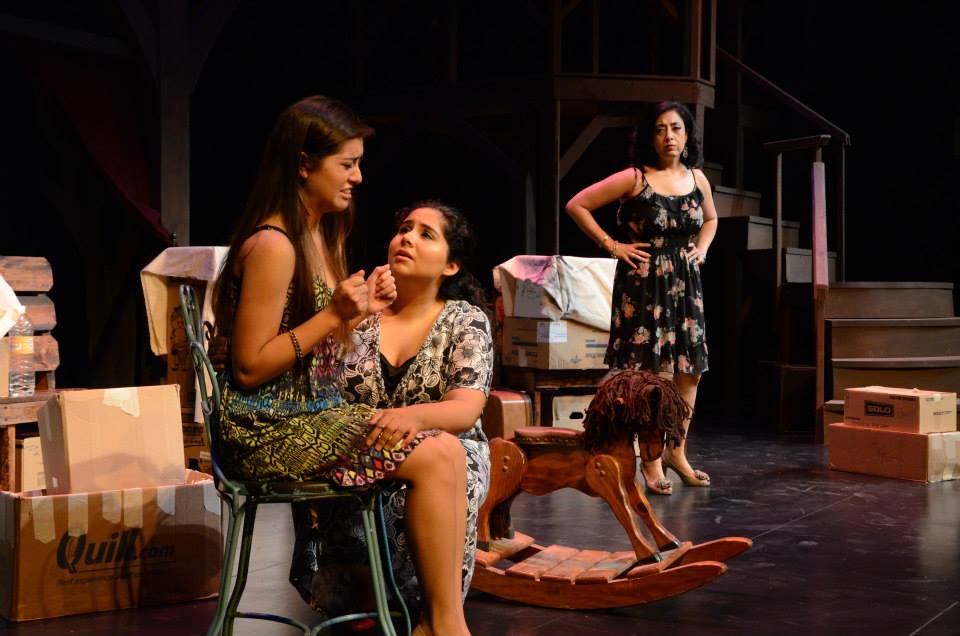
To closely listen to the soundscape of narco silence, I engage with the play script and production of Tanya Saracho’s play El Nogalar at South Texas College Theatre (STC) under the direction of Joel Jason Rodriguez in McAllen, Texas in June 2013. The play was first produced at the Goodman Theater in Chicago in April 2011, with a West Coast premiere at the Fountain Theater in Los Angeles in January 2012. I critically analyze the STC Theatre production’s incorporation of a multi-genre soundtrack that included narcocorridos, rancheras, and nortec (norteño + techno). I argue that this soundtrack focused audiences’ attention not only on the devastating effects of silence, but also the function of silence as a form of capital for those most excluded in society. I also offer a brief critical listening of the script’s rendering of silence through character dialogue and stage directions.
El Nogalar tells the story of an upper-class Mexican family comprised of three generations of women (Maité, Valeria, and Anita) whose land and home in the fictionalized estate of Los Nogales in Nuevo Leon, Mexico, and its adjacent nogalar (pecan orchard), are under threat by the maña (drug cartels) moving into the region. The play focuses on the women’s responses to the drug war economy as a result of their different relationships to home (both their estate and the space of Mexico). It also centers the experiences of Dunia, their maid, and López, a former field worker who now works for the maña.
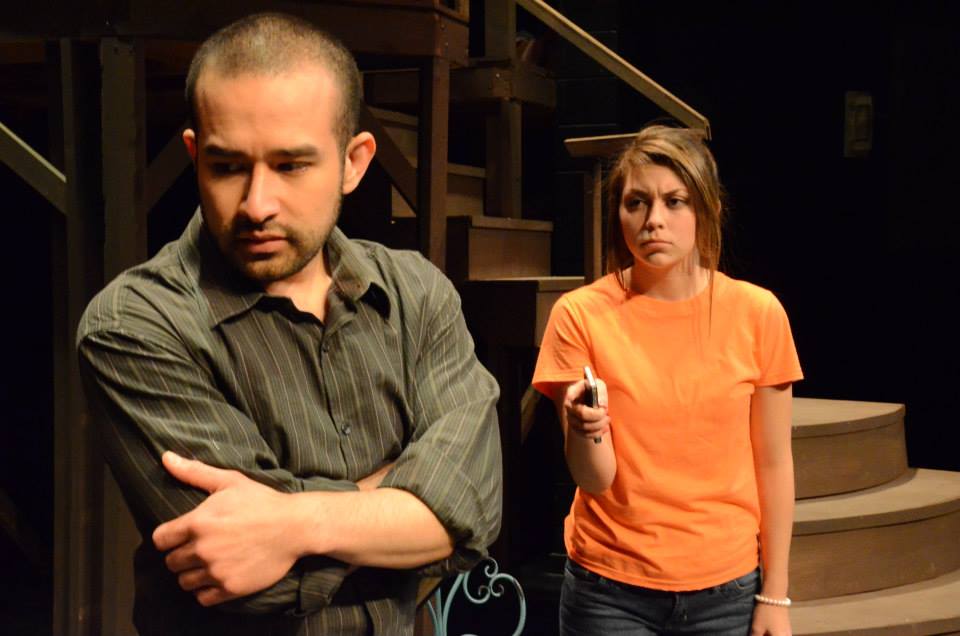
Cecilia Ballí, in her article “Calderón’s War: The Gruesome Legacy of Mexico’s Antidrug Campaign,” explains the particular circumstances of marginalized men in this society: “The worst casualties of this ‘civil war’ were the estimated 7 million young men to whom society had closed all doors, leaving them the options of joining a drug gang or of enlisting in the military, both of which assured imprisonment of death” (January 2012, 48). With the characters López and Dunia, the play asks audiences then to listen to the impact of the drug war on the most vulnerable populations in Mexico and the US-Mexico border region.
The play script conveys how “narco silence” can be used by those who either seek to preserve traditional class hierarchies (the story of the matriarch Maité) or to survive and profit in the new drug economy (the story of López). “Narco silence,” a term coined by reporter Jonathan Gibler in his book To Die in Mexico, refers to “not the mere absence of talking, but rather the practice of not saying anything. You may talk as much as you like, as long as you avoid the facts. Newspaper headlines announce the daily death toll, but the articles will not tell you anything about who the dead were, who might have killed them or why. No detailed descriptions based on witness testimony. No investigation” (2011, 23). In an early exchange between López and Dunia, López defends “narco silence” as a strategy of survival:
DUNIA: Why are you the only one they leave alone, Memo?
LÓPEZ:….
DUNIA: All the men your age. Killed. Why Memo? (Beat).
LÓPEZ: Because I know when to keep my mouth shut which is not something I can say for you….
DUNIA: So that’s all it takes to be best of friends with the Maña? That doesn’t seem so hard to do? (American Theatre Magazine July/August 2011, 74).
Later in the play, Dunia, heeding López’s advice, offers a powerful observation of how “narco silence” enables her community to cope with death: “We all just walk around like we’re a movie on mute. You can see people’s mouths moving but all you hear is the static (my italics)” (American Theatre Magazine July/August 2011, 73-74).
The STC Theatre production enhanced the script’s soundscape of narco silence through its sound design, with a soundtrack that included rancheras, narcocorridos, norteño and nortec. This music provided audiences with a connection to the world of Los Nogales and captured each character’s process of coping with narco violence. For example, Maité’s soundtrack consists of several rancheras, such as Lola Beltran singing “Los Laureles” and Chavela Vargas’s powerful rendition of “Que te vaya Bonito.” Beltran’s “Los Laureles” – a cancion ranchera that includes Beltran’s powerful female vocals and mariachi orchestra instrumentation – invites audiences to hear Maité’s nostalgia and desire for an idealized Mexican society and her wish to preserve traditional class hierarchies.
.
Vargas’s powerful rendition of “Que te vaya Bonito” captures Maite’s pain and suffering as she loses her home to the cartels. In Vargas’s version of “Que te Vaya Bonito” – a song about love and abandonment – audiences hear Vargas’s choking and sobbing voice, accompanied by a single guitar.
.
Vargas’s voice conveys, what Lorena Alvarado powerfully argues, is “the body’s dilemma between the hysteria of sobbing and the intelligibility of words, between resignation and retribution” (2010, 4). Vargas’s powerful singing also conveys, as Alvarado further describes, “un nudo en la garganta,” a common expression in Spanish that describes “the knot in the throat, when one cannot speak because words will not come out, but the desperate, or quiet, breath of tears” (Alvarado 2010, 5).
To sonically register the drug cartel economy and lifestyle underlying the “new” Los Nogales, the soundtrack also included narcocorridos. The first sounds we hear in the play are from the narcocorrido “El Carril Número Tres” – which includes two acoustic guitars and an electric bass – by Los Cuates de Sinaloa.
.
“El Carril Número Tres” – tells the story of a secret “lane number three” that allows a Mexican drug lord to freely go back and forth between the US and Mexico because he makes a deal with the CIA and DEA. With this focus on the US government’s involvement in the drug trade, the song centers how silences north of the US-Mexico border have perpetuated drug violence.
The music also included nortec, with songs by the Mexican Institute of Sound, particularly the track “Mexico,” which is a critique of the Mexican government’s complicity with the narcos.
.
With “Mexico,” audiences hear a fusion of norteño, electronic, and hip-hop with lyrics that use the symbols of Mexican national identity and culture to focus the public’s attention on violence and terror. With the lyrics “green like weed, white like cocaine, red your blood” (referencing the Mexican flag) and “at the sound of the roar of the cannon” (alluding to the national anthem), the song powerfully invokes the visual and sonic soundscape of violence that terrorize Mexican residents. With this charged critique of government corruption, “Mexico” momentarily interrupts the soundscape of narco silence rendered in the play script and rest of the soundtrack.
Ultimately, the production’s combination of rancheras, narcocorridos, and nortec captured the class tensions in Mexican society and emphasized the play’s critique of class structures that have enabled drug war violence to persist. With this range of music, the director explains he wanted to “maneuver between the [various] aspects of [the story]: the nostalgia, the corridos, the narcocorridos, and also this fusion of saying ‘we want something more,’ and so that was the whole aspect of it; the blending of the old, the new, and what the present is” (Interview with author July 2013).
The production also deliberately incorporated the sound of silence, particularly in the final scene. By the end, López buys the Los Nogales estate, thereby increasing his class status and social power. Saracho’s stage directions in this final moment indicate “an interpretive sound of trees falling. Now don’t go cueing chainsaws because it’s not literal. Just make me feel trees are falling. Along with the upper class” (87). The play’s reference to the staging of “an interpretive sound of trees falling” brings to mind the philosophical question: “If a tree falls in a forest and no one is around to hear it, does it make a sound?” We might then interpret the final sounds of El Nogalar as inviting audiences to listen attentively to the soundscape of narco silence, implicating audiences as social actors in the politics of the drug war that continue to devastate Mexican society.
—
Featured Image: Journalists Protest against rising violence during march in Mexico, Courtesy of the Knight Foundation
—
Marci R. McMahon received her Ph.D. from the University of Southern California with affiliations in the Department of American Studies and Ethnicity. She is an assistant professor at the University of Texas, Pan American, where she teaches Chicana/o literature and cultural studies, gender studies, and theater and performance in the Departments of English and Mexican American Studies. She is the author of Domestic Negotiations: Gender, Nation, and Self-Fashioning in US Mexicana and Chicana Literature and Art published by Rutgers University Press’ Series Latinidad: Transnational Cultures in the United States (May 2013). Her essays on Chicana literature and cultural studies have been published in Aztlán: A Journal of Chicano Studies; Chicana/Latina Studies: The Journal of MALCS; and Frontiers: A Journal of Women’s Studies. Her second book project, Sounding Latina/o Studies: Staging Listening in US Latina/o Theater explores how contemporary Latina/o drama uses vocal bodies and sound to engage audiences with recurring debates about nationhood, immigration, and gender.
—

REWIND! . . .If you liked this post, you may also dig:
Listening to the Border: “’2487’: Giving Voice in Diaspora” and the Sound Art of Luz María Sánchez–D. Ines Casillas
Quebec’s #casseroles: on participation, percussion and protest–Jonathan Sterne
Deejaying her Listening: Learning through Life Stories of Human Rights Violations— Emmanuelle Sonntag and Bronwen Low
—
Share this:

Chicana Radio Activists and the Sounds of Chicana Feminisms
DOI: https://doi.org/10.59350/8j6z6-mty25
The power of hearing Chicana voices on the air is loud and clear. Indeed, when I heard Chicana feminist scholar Gloria Anzaldúa discussing her theory of hybridity and borderlands on the program The Mexican American Experience (1977) I was not only moved by the sound of Anzaldúa’s voice, but also by my intimate interaction with this influential feminista made possible through analog radio and digital technologies. Such experiences made me want to trace my own genealogy and find other Chicanas involved in radio production. I began to listen for Chicana radio activism on the airwaves, and document when, where and how Chicanas utilize radio not just as a tool for the transmission of sound, but also as a feminist community-building platform.
My entry into radio came about when I joined Soul Rebel Radio—a radio collective composed of college students, environmentalists, musicians, comics, poets, and community activists in the Los Angeles area. A youth-centered radio program, Soul Rebel Radio airs monthly on KPFK 90.7 FM in Los Angeles and focuses on themes—such as the environment, war, and young women’s issues—and current events through comedy, youth voices, opinion pieces, editorials and interviews. With no prior radio or production experience, I joined the collective in October of 2007 hoping to fulfill my life long ambition of being on the radio. This experience of collective collaboration, which is both inspiring and challenging, became a cornerstone in my thinking about the empowering nature of media making, especially community radio. I cultivated the power of my voice through my participation in Soul Rebel Radio by learning how to write, edit and produce radio segments.
Now, as a Chicana feminist scholar and community radio practitioner, I am interested in collective, community-centered research projects that help transform the neoliberal, corporate institutionalization of media production and higher education. Although the content of my research is rooted in analog technologies, I work to ground the analysis of Chicana/o radio production through a digital Chicana feminista praxis, which includes the use of digital tools such as radio, digital film and open source software. This digital Chicana feminista theory and method may help uncover the ways in which community radio production constitutes an epistemological soundtrack to Chicana feminist activism, asking what are the sounds Chicana feminisms? Who are the Chicana activists of the 1970s and 1980s that utilized radio to build community, while incorporating an important aural element to their activism?
In answering these questions, I explore the ways in which digital tools can be utilized to uncover and reclaim subjugated knowledges. However, I am in no way suggesting that digital technologies should supersede or replace face-to-face community building. In fact, my current project—from which this blog post is drawn—documents and creates an archive of Chicana radio activists, including radio station managers, producers, news directors and on-air hosts. I discuss how community radio production provides Chicanas and other marginalized groups the space to harness digital technologies and engage in the process of producing traveling sounds that speak back to discriminatory and oppressive practices. While my methods include digital film production, online archive building and curation, my writing here focuses on oral history collection, particularly my documentation of Radio KDNA.
Radio KDNA
On December 19, 1979, Radio KDNA (pronounced cadena, meaning chain) transformed the airwaves becoming the first full-time Spanish-language, non-commercial radio station in the United States (Radio Bilingüe KBBF 89.1 FM, in Santa Rosa, founded by farmworkers and Sonoma State undergraduates, was the first bilingual radio station, going on air in 1973). Located in Granger, WA, Radio KDNA’s goal was to utilize the accessibility of radio to build community while serving as a resource for the mostly Mexican and tejano migrant farm workers in the Yakima Valley. The founders of Radio KDNA believed radio was an accessible tool for Mexican and Latino farm worker communities who had little access to other media. Beginning in 1942, Mexican workers entered the United States under the Bracero Program whereby mostly agribusinesses contracted Mexican workers in response to labor shortages of World War II, which in turn caused the lowering of wages. Thus, many Mexican American and tejano farmworkers migrated to places such as Idaho, Oregon and Washington. With a growing population of a Mexican Spanish-speaking community, Radio KDNA used its Spanish-language radio platform to reflect the sociopolitical needs of this shifting demographic.

The oral history I conducted with Rosa Ramón—the only female co-founder of Radio KDNA who served as the station manager from 1979 to 1984—uncovers the radio station’s historical significance within community radio production, specifically as a site of Chicana feminist activism. Rosa’s testimonio reveals the process by which many Mexican-American, and specifically tejano families migrated from the Southwest to the Northwest in search jobs, many ending up in Washington’s Yakima Valley, an area in need of labor to harvest its crops. The migration of Mexican and tejano families served not only as a vital labor force in Yakima’s fields, it also created a community that needed and greatly benefitted from a radio station that addressed the needs of this community, both in content and language. Although Rosa was born in Arizona, her Mexican mother and tejano father decided to migrate north, stopping in Arizona and California before settling down in Eastern Washington where her family purchased a small farm. As Erasmo Gamboa illustrates in his monograph Mexican Labor and World War II, “After 1948, northwestern farms used fewer braceros as they stepped up the recruitment of Mexican Americans from the Southwest” (123). Rosa’s family is one of many families that migrated to the Northwest, a region that needed and greatly benefited from their labor.
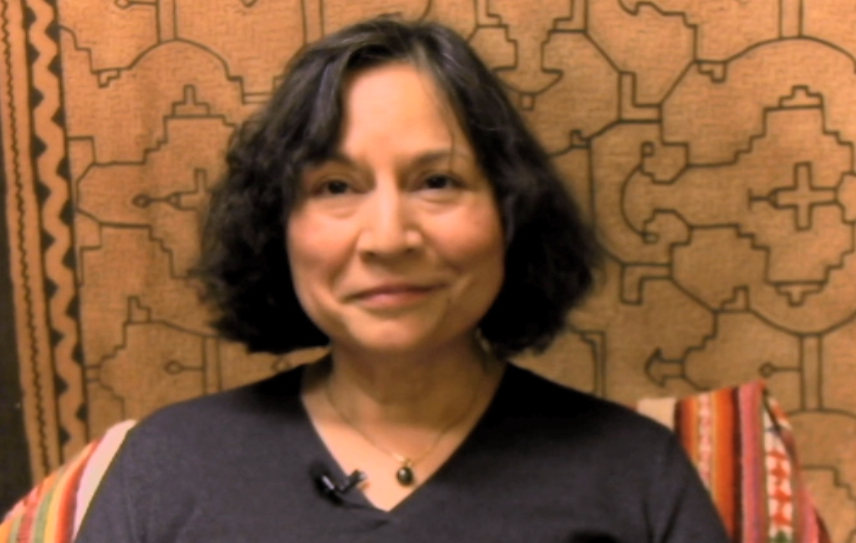
Although the small community where Rosa grew up was mostly comprised of Mexican and tejano families, she experienced and witnessed racism and discrimination, especially at school where she was reprimanded for speaking Spanish and mocked for eating tacos instead of bologna sandwiches. Rosa was only one of four Latinos that graduated from Grandview High School. These early experiences of marginalization and her family history served as an impetus for Rosa to work in non-profits that benefitted her community, including Northwest Rural Opportunities, a community based organization set up in 1968 to provide services to seasonal and migrant farm workers in Washington state. Here she met Ricardo Garcia, another co-founder of Radio KDNA.
In an effort to bring Spanish language radio programming to the Pacific Northwest, in particular for the migrant farm workers in Eastern Washington, Rosa and Ricardo, along with Daniel Roble, and Julio Cesar Guerrero, worked tirelessly for five years to obtain a broadcasting license for a community radio station in the Yakima Valley. However, Radio Cadena was producing radio content even before opening the doors of their Granger, Washington studio in 1979. In 1975, Northwest Rural Opportunities began a training program for farm worker youth to learn radio production skills in Linden, Washington. They also began an educational training program for Spanish-speaking individuals who were learning English. In May of 1976, Radio Cadena began broadcasting on a subcarrier signal provided by Seattle-based community radio station KRAB FM, with the assistance of its station manager Chuck Reinsch. The use of this signal meant that listeners could only tune in through a special home receiver, which limited the number of people who could actually tune-in to Radio Cadena’s programming.
Ramón’s oral history reveals the importance and central role women played in the founding and development of this station, particularly in its focus on programming for, by, and about women. Her family’s migratory trajectory is an example of how Mexican and tejano communities who moved to the Yakima valley to work in the fields established a community that needed and benefited from community radio. Radio Cadena is an example of the ways in which the migration of people created the conditions for the founding of a community radio station that traversed sonic borders and infused its airwaves with stories of resistance.
Mujer(es)
As part of its community building activities, Radio KDNA trained women, especially farmworker women, to produce radio content. As Rosa shared with me during her oral history, Radio KDNA and the show Mujer (woman) were instrumental in centering women within the radio production process, by playing music by women like Mercedes Sosa and Lydia Mendoza, interviewing local women, creating news content, and training women to actually produce radio programs. Indeed, this model of Chicana radio production was instrumental in the founding and day-to-day activity of Radio KDNA, and it represents a vital technological component of the Chicano Movement era. Chicanas such as station manager Ramón, producer Estella del Villar, and news director Berenice Zuniga, not only held positions of power at KDNA, but they also produced Mujer, which aired weekly and whose goal was to provided farm worker women with news stories, music and other informative pieces addressing their distinct subjectivities. These female producers and their audience demonstrate the transformative power of community radio production and the role of women in a movement that often downplays their contributions.
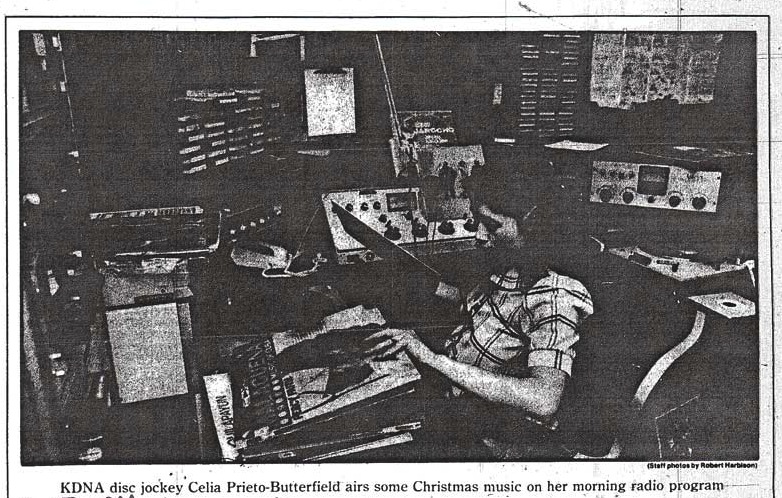
By deploying Chicana historian Emma Pérez’s concept of the decolonial imaginary within Radio and Sound Studies to uncover the hidden voices of Chicanas within radio production, I document stories that compel scholars to conceive of a new framework that listens to the sound migrations of Chicana media activism, the third spaces and technological tools of the Chicano Movement not just in the Pacific Northwest, but throughout the country. The historical significance of Radio KDNA as the first full-time, Spanish language non-commercial radio station in the United States recasts Chicana/os as technologically adept and as active participants in the development of community radio. Moreover, Rosa Ramón’s oral history provides another example of the ways in which Chicana feminist activism emerged in conjunction with other social justice movements, further challenging the idea that Chicanas came to feminism after their white or African American counterparts. My historical analysis of Chicana radio production contextualizes current participation in media making, as radio can provide women of color and other marginalized groups the space to harness digital technologies to speak back and broadcast their concerns. When remixed with other components of Chicana feminisms, the sounds of Chicana radio activism constitute yet another track of resistance to the narratives that seek to silence these movements..
—
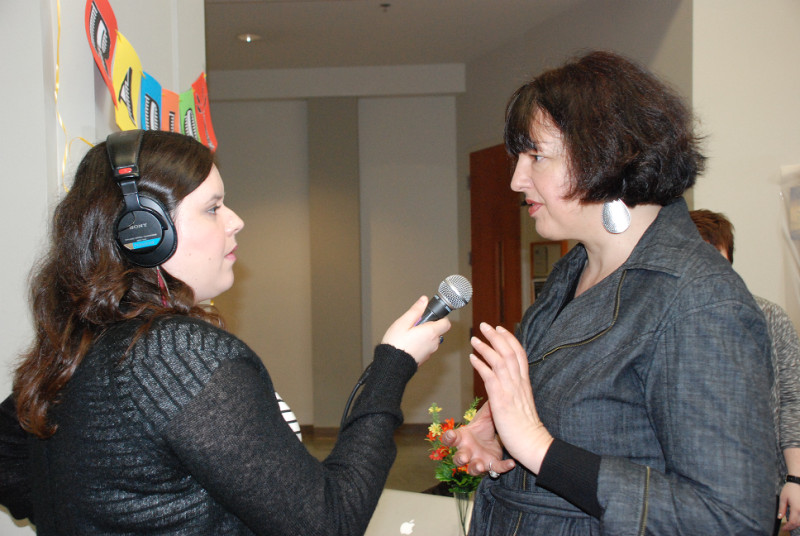
Featured Image by Angelica Macklin: Monica De La Torre interviews J. Kehaulani Kauanui at the radio kiosk, No. 2, Women Who Rock 2011 conference, Seattle University Pigott Building, February 18, 2011, From the Women Who Rock Collection, University of Washington Libraries, Special Collections Division, University of Washington Digital Libraries.
—
Monica De La Torre is a doctoral student in the Department of Gender, Women and Sexuality Studies at the University of Washington. Her scholarship bridges New Media and Sound Studies by analyzing the development of Chicana feminist epistemologies in radio and digital media production. A member of Soul Rebel Radio, a community radio collective based in Los Angeles, Monica is specifically interested in the ways in which radio and digital media production function as tools for community engagement. She is an active member of the UW Women of Color Collective and the Women Who Rock Collective. Monica earned a B.A. in Psychology and Chicana/o Studies from University of California, Davis and an M.A.in Chicana/o Studies from California State University, Northridge; her master’s thesis was entitled “Emerging Feminisms: El Teatro de las Chicanas and Chicana Feminist Identity Development.” Monica received a 2012 Ford Foundation Predoctoral Fellowship, which recognizes superior academic achievement, sustained engagement with communities that are underrepresented in the academy, and the potential to enhance the educational opportunities for diverse students.
—
REWIND! . . .If you liked this post, you may also dig:
Eye Candy: The Absence of the Female Voice in Sports Talk Radio–Liana Silva
Listening to the Border: “’2487’: Giving Voice in Diaspora” and the Sound Art of Luz María Sánchez–Dolores Inés Casillas
Yellow Rain and The Sound of the Matter: Kalia Yang’s Sonorous Objection to Radiolab–Justin Eckstein
—
Share this:




Current Top Posts





April 2021

January 2020

November 2019

October 2019

August 2019

April 2014

November 2017

March 2015

December 2017

October 2015


Recent Comments