
Canonization and the Color of Sound Studies

DOI: https://doi.org/10.59350/erjjr-jm733
Last December, a renowned sound scholar unexpectedly trolled one of my Facebook posts. In this post I shared a link to my recently published article “Beyond Matter: Object-disoriented Sound Art (2017)”, an original piece rereading of sound art history. With an undocumented charge, the scholar attacked me personally and made a public accusation that I have misinterpreted his work in a few citations. I have followed this much-admired scholar’s work, but I never met him personally. As I closely read and investigated the concerned citations, I found that the three minor occasions when I have cited his work neither aimed at misrepresenting his work (there was little chance), nor were they part of the primary argument and discourse I was developing.
What made him react so abruptly? I have enjoyed reading his work during my research and my way of dealing with him has been respectful, but why couldn’t he respect me in return? Why couldn’t he engage with me in a scholarly manner within the context of a conversation rather than making a thoughtless comment in public aiming to hurt my reputation?
Consider the social positioning. This scholar is a well-established white male senior academic, while I am a young and relatively unknown researcher with a non-white, non-European background, entering an arena of sound studies which is yet closely guarded by the Western, predominantly white, male academics. This social divide cannot be ignored in finding reasons for his outburst. I immediately sensed condescension and entitlement in his behavior.
This is not new to me. Both my artistic work and a number of my scholarly works have been purposely ignored or undermined in previous occasions, perhaps due to my non-white, non-European background and epistemology. During the assessment of my doctoral dissertation in a well-known Scandinavian University, for example, the three-member committee harshly attacked the very foundations of my project because of my claim that case studies in Indian cinema could produce important new knowledge in the field of sound studies, media art and film history. However, Indian cinema, the largest producer of films in the global industry, is equally a part of world cinema as European and American cinemas, and studying its sound production would indeed add dimensions to the field of sound studies. Their resistance towards my object of study implied that choosing European cinema would immediately make my hypotheses acceptable.
If we take the field of sound studies as both a context for such objection and a case for observation, notable works such as The Oxford Handbook of Sound Studies (2012), The Sound Studies Reader (2012), and Keywords in Sound (2015) have been canonized in the global community of sound researchers by the sheer amount of citations and reviews but have a negligible number of non-White, non-Western contributors. Furthermore, there is a serious lack of representation from the non-White, non-Western scholars and researchers in the bibliographic resources and reference list of these works, which are now considered classics.
In his essay “On Whiteness and Sound Studies,” Gustavus Stadler lamented that scholars of sound studies are overwhelmingly white, and this racial conservatism is limiting the fields’ research as well as social outreach. It is indeed an act of complacent ignorance not to engage with African and Asian thinkers regarding their sonically rich cultures; indeed, many of their works are available, such as in the Harvard Oriental Series. John Stuart Mill noted, “He who knows only his own side of the case, knows little of that.”
I am inspired by my fellow colleagues and peers (of all colors) and personally grateful to some of them for their sympathetic ears, but as a young researcher I cannot help but be concerned about an unfair social divide upheld in sound studies that I feel must be addressed. In my work, both as a sound artist and sound researcher, I have endeavored to bridge this gap in my capacity. Much work needs to be made in pushing the horizons and shifting the perspectives of the field of sound studies. However, the untoward resistances my kind of young scholars from “other” cultural and intellectual traditions met make it difficult to be read widely, let alone be canonized.
I am discussing here my experiences as a case for critical observation. Throughout the development of my doctoral project, “Audible Absence” in the aforementioned Scandinavian university, I had to face a recurring question in most departmental meetings and seminars: what’s the point in supporting my project in the context of European knowledge production? I suspect this constant questioning of an original research contribution comes from a disdain for a non-Western subject. Also, more often than not, in many scholarly gatherings, I observed a tendency by the white-Western scholars to pigeonhole my work as “southeast Asian studies” or “Indian studies,” identifying it only with mere cultural background, therefore deeming it ancillary to the larger fields of Arts and Humanities within which my research aspires for a general and more universal recognition.
Such divisive and sectarian attitude towards my work has perhaps been aiming to impose identity politics so that an overt sense of difference is underscored. This deliberate production and proliferation of difference has been the tool to marginalize the voice of the “other” in the realm of knowledge formation, which, in actual practice, is yet enjoyed and protected mostly for a certain class, color, and/or race. These social and prejudicial borders have been built on the politics of inclusion and exclusion by what cultural theorist Kandice Chuh calls “avoiding engagement with ‘difference,’ and especially with racialized difference.”
In a recent interview, the renowned professor of psychology at Harvard Steven Pinker has argued that “identity politics is the syndrome in which people’s beliefs and interests are assumed to be determined by their membership in groups, particularly their sex, race, sexual orientation (…) when it spreads beyond the target of combatting discrimination and oppression, it is an enemy of reason and Enlightenment values.” No wonder, the resistance to accepting the scholarly perspectives from non-White scholars and non-Western intellectual traditions has perhaps made the field of sound studies insular to the formation and practicing of new knowledge. The protectionism embedded in encouraging and practicing color and racial difference is a great disservice to humanistic scholarship and enemy of an equal knowledge sharing. With the excuse of tradition and community, the safeguarding of certain groups while ignoring others based on their racial identities has resulted in grave ignorance.
How to engage with such an institutionalized and well-fed “White Canon” coming from outside of it? How to intervene substantially and fruitfully so that the color bias of scholarship is destabilized and there is equal recognition and interest for all intellectual traditions irrespective of color, race, culture and nationality?

As some historians have argued, this so-called “White Canon” is a social and political construct to push the non-White scholarship and knowledge production on the margin. Claimed to be a child of reason and Enlightenment values, the European intellectual tradition was deliberately posed with a “holier than thou” attitude for the imperialist and colonial (mis)adventures Europe had been making in the non-West. In his seminal work Provincializing Europe: Postcolonial Thought and Historical Difference renowned historian Dipesh Chakrabarty states: “In the social sciences, these are invariably thinkers one encounters within the tradition that has come to call itself ‘European’ or ‘Western.’ I am aware that an entity called “the European intellectual tradition” stretching back to the ancient Greeks is a fabrication of relatively recent European history.”
The European intellectual tradition has been a fabrication of a recent history, as Professor Chakrabarty notes. Many postcolonial scholars like Chakrabarty have argued that the writing of this history had deep political and hegemonic implications, which was hard to avoid following the colonization of many part of the non-West by Europeans with violent oppression of other thoughts. Philosopher Bryan W. Van Norden, in his new book Taking Back Philosophy: A Multicultural Manifesto (2017), have claimed that the general disdain, disrespect and ignorance most European scholars have shown to their non-Western counterparts, demonstrates that the European intellectual tradition, which is so obsessed with its communal whiteness and paranoid about the other (non-West), is narrow-minded, unimaginative, and even xenophobic.
Indeed, the most remarkable privilege that white European scholars enjoy—besides, of course, an empowered access to better jobs in the universities and institutional funding–is the entitlement to universal identification and canonization of their work in the respective fields of work, while non-white scholars are all too often pushed into the margins on the excuse of their racial, cultural or mere national identities. The scholars of postmodern studies have stated that the body of scholarship in the Arts and Humanities is biased because the traditional focus of academic studies of Western culture and history has predominantly been on works produced by Western white men. It is no surprise, philosopher Jay Stevenson argues: “[t]raditional literature has been found to have been written by ‘dead white males’ to serve the ideological aims of a conservative and repressive Anglo hegemony […] In an array of reactions against the race, gender, and class biases found to be woven into the tradition of Anglo literature.” Non-white scholars find it much harder to posit their research in the universal canonical consideration; if these scholars are also women-identified and/or queer, it’s even more difficult. This is not only an astoundingly unfair position, but also a dangerous bias.

In the field of sound studies such biases can be found if looked through the lens of an outsider. The awkward silences in response to a new publication, lack of reviews, reluctance to include in canonized reading lists, repeated refusals by western publishing houses, and a lack of citation in mainstream publications, add to this the sporadic incidents of trolling such as the one that I described in the beginning of this piece – all these that I, and many other scholars who come from other background and intellectual traditions, constantly face, act against the foundation of knowledge production, sharing and scholarship.It is not difficult to observe that this vision has major contradictions with the very reason and Enlightenment values from where the tradition claims to originate. This is a serious charge, but one that tries to explain why the rich philosophical traditions of China, India, Africa, and the Indigenous peoples of the Americas are ignored by almost all philosophy departments in Europe and the larger West.
As my story shows, the paranoia with which the other voices are greeted in the white canonized community reveals how new voices capable of talking in ‘their’ language freak them out. Heard from this perspective, the social media outburst of the scholar mentioned earlier is not surprising. It is a question of privilege that bothers many of the Eurocentric and white-obsessed scholars, who don’t seem to like–or feel that they even have to acknowledge–that the other voices from outside of the protected areas aim to enter the field and eat the proverbial “cake.”My work–among many other (re)emerging Asian, African and other non-Western researchers–does not seek to snatch part of this same limited “cake,” however, but rather aims to build an improved and larger plate and a wider table altogether, capable of hosting a multiplicity of tastes, colors, and splendors, and holding great pleasure in sharing knowledge among ever-curious and open minds.
—
Featured Image: White Baffling Material, Stock Image
—
Budhaditya Chattopadhyay is an Indian-born media artist, researcher, and writer, with a PhD in sound studies from Leiden University, The Netherlands. Prior to his PhD, Chattopadhyay has graduated from the national film school of India specializing in sound, and received a Master of Arts degree in new media from Aarhus University, Denmark researching on sound art. Focussing on sound as his primary medium, Chattopadhyay produces works for installation and live performance broadly dealing with contemporary issues such as climate crisis, human intervention in the environment and ecology, race and migration. Chattopadhyay has received numerous fellowships, residencies and international awards, and his works have been exhibited, performed or presented across the globe. Chattopadhyay has an extensive list of scholarly publication in the areas of contemporary media, cinema and sound studies in leading peer-reviewed journals.Chattopadhyay will be joining the American University of Beirut from 30 August 2018 as a Mellon Postdoctoral Fellow in sound studies.
—
REWIND! . . .If you liked this post, you may also dig:
My Music and My Message is Powerful: It Shouldn’t be Florence Price or “Nothing”–Samantha Ege
becoming a sound artist: analytic and creative perspectives–Rajna Swaminathan
SO! Amplifies: Mendi+Keith Obadike and Sounding Race in America
Gendered Soundscapes of India, an Introduction –Praseeda Gopinath and Monika Mehta
—
Share this:

Mixtapes v. Playlists: Medium, Message, Materiality
DOI: https://doi.org/10.59350/n1wvy-5fz39
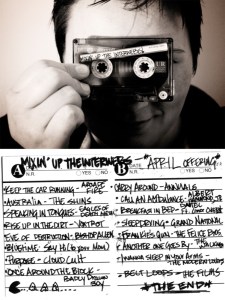
The term mixtape most commonly refers to homemade cassette compilations of music created by individuals for their own listening pleasure or that of friends and loved ones. The practice which rose to widespread prominence in the 1980s often has deeply personal connotations and is frequently associated with attempts to woo a prospective partner (romantic or otherwise). As Dean Wareham, of the band Galaxie 500 states, in Thurston Moore’s Mix-Tape: The Art of Cassette Culture, “it takes time and effort to put a mix tape together. The time spent implies an emotional connection with the recipient. It might be a desire to go to bed, or to share ideas. The message of the tape might be: I love you. I think about you all the time. Listen to how I feel about you” (28).
Alongside this ‘private’ history of the mixtape there exists a more public manifestation of the form where artists, most prominently within hip-hop, have utilised the mixtape format to the extent that it becomes a genre, akin to but distinct from the LP. As Andrew “Fig” Figueroa has previously noted here in SO!, the mixtape has remained a constant component of Hip Hop culture, frequently constituting, “a rapper’s first attempt to show the world their skills and who they are, more often than not, performing original lyrics over sampled/borrowed instrumentals that complement their style and vision.” From the early mixtapes of DJs such as Grandmaster Flash in the late ’70s and early ’80s, to those of DJ Screw in the ’90s and contemporary artists such as Kendrick Lamar, the hip-hop mixtape has morphed across media, from cassette to CDR to digital, but has remained a platform via which the sound and message of artists are recorded, copied, distributed and disseminated independent of the networks and mechanics of the music and entertainment industries. In this context mixtapes offer, as Paul Hegarty states in his essay, The Hallucinatory Life of Tapes (2007), “a way around the culture industry, a re-appropriation of the means of production.”
More recently the mixtape has been touted by corporations such as Spotify and Apple as an antecedent to the curated playlists which have become an increasingly prominent factor within the contemporary music industry. Alongside this the cassette has reemerged as a format, predominantly for independent and experimental artists and labels. The mixtape has also reemerged as a creative form in experimental music practice – part composition, part compilation, this contemporary manifestation of the mixtape is located somewhere between sound art and the DJ mix.
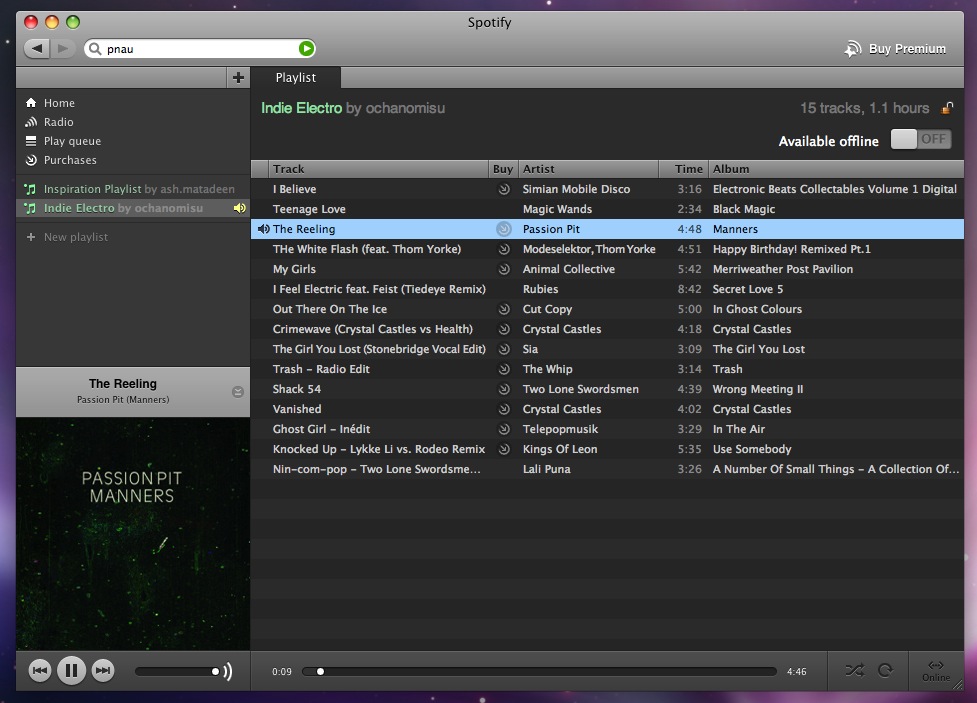
This article explores these current manifestations of the mixtape. It analyses Spotify’s curated playlists and identifies some of the worrying factors that emerge from the ‘playlistification’ of recorded music. It goes on to discuss contemporary cassette culture and the contemporary mixtape identifying a set of characteristics which warrant the use of the term “mixtape” and distinguish it from forms such as the playlist. These characteristics, I suggest, may be adopted as strategies to address some of the contemporary crises in how we create, distribute, listen to, and consume music.
Playlists
The mixtape has been presented as something of a forerunner to the music industry’s current streaming and subscription model and, in particular, of the curated playlists which Spotify sees as its, “answer to product innovation.” For Kieran Fenby-Hulse, writing in Networked Music Cultures: Contemporary Approaches, Emerging Issues, “the mixtape’s aura has underpinned the development of music streaming services such as Spotify and Apple Music” (174). Spotify’s corporate literature makes this connection explicitly via multiple references to mixtapes. The press release announcing the launch of its Discover Weekly playlist, for example, promises, “our best-ever recommendations delivered to you as a weekly mixtape of fresh music,” stating, “It’s like having your best friend make you a personalised mixtape every single week.”
Where the mixtape’s audience of one however, is the favoured other, friend, loved one, lover, Spotify’s curated and algorithmic playlists shift the focus inward. They are not created by someone for another, nor gifted to someone by another. They are created algorithmically for me and me alone. The promise of Spotify is that of “every playlist tuned just to you every single week.” Spotify delivers on this promise via its vast accumulation and exploitation of user data. The labour of the Spotify playlist thus is not the labour of love often associated with the mixtape, but rather it is an example of the increasingly prominent practice of corporations and service providers benefiting from unremunerated fan labour via, as Patrick Burkart notes in an essay entitled Music in the Cloud and the Digital Sublime , commodification of the “comments, playlists, recommendations, news, reviews, and behavioral profiles,” of music fans.
Analysis of Spotify For Brands’ corporate literature provides more insight into how Spotify utilises this data. Amongst millennials, for example, Spotify identifies “seven key audio streaming moments for marketers to tap into” – working, chilling, chores, gaming, partying and driving – and advises that “for marketers, this is a chance to reach millennials through a medium they trust and see as a positive enhancer or tool.” Spotify’s party playlists thus are an opportunity for brands to “think about enhancing the party moment by learning your audience’s favorite genres and subgenres and matching the beat” or “think audio for connected speakers and mobile display ads for that obsessive DJ always checking on their next song to further drive your message.” Spotify’s party playlists also seek to dispense with the unexpected juxtapositions and sonic clashes that have formed such a vital and valued component of DJ/sampling culture and the amateurism, imperfections, and crude edits of their supposed mixtape forebear. Thus ‘the mix,’ what Paul Miller (DJ Spooky) refers to as the process whereby “different voices and visions constantly collide and cross-fertilize one another” is replaced with promises of “professionally beat-matched music [where] every song blends smoothly with the next.” The hybrid of the mix thus is homogenised in the playlist.
In seeking to provide a music mix that is smooth, adaptable and perfectly transitioned, Spotify’s mood based playlists (“Your Coffee Break,” “Sad Songs,” “Songs To Sing In The Car”) are more closely aligned with the aura of Muzak and the Muzak Corporation than with that of the “mixtape” (a comparison previously made by Liz Pelly in her article The Problem with Muzak). The Muzak Corporation provided background music for the workplace from the 1920s and public spaces such as hotel elevators and shopping malls from the 1940s onwards aiming, as Brandon Labelle states in Acoustic Territories: Sound Culture and Everyday Life, to provide “a form of environmental conditioning to aid in the general mood of the populace.” (173)
Spotify’s promise of smoothly blended sound, for example, recalls Muzak’s mission, as quoted in Joseph Lanza’s, Elevator Music: A Surreal History of Muzak, Easy-Listening and Other Moodsong, to eliminate, “factors that distract attention – change of tempo, loud brasses, [and] vocals.”(48) Spotify’s stated desire, “to be the soundtrack of our life, […] to deliver music based on who we are, what we’re doing, and how we’re feeling moment by moment, day by day,” assigns a utilitarian function to its archive of recorded sound, recasting it, like Muzak, as quoted by Lanza again, as, “functional music,”(43) or, “stimulus progression program.” (49)
Cassette and the Contemporary Mixtape
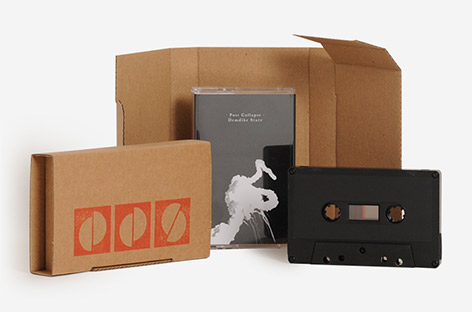
Alongside the commercial playlists’ channeling of the mixtape’s aura there has been a reemergence of cassette, and the mixtape itself, as creative media. Cassette has become a prominent format for a host of underground labels attracted by its low manufacturing and distribution costs as well as its aesthetic qualities. Labels such as The Tapeworm, Opal Tapes, Fort Evil Fruit, and Nyege Nyege Tapes release short-run cassettes (typically 100-150 copies) encompassing noise, field recording, improv, drone, ambience, modular electronics, psychedelia and there ‘out there’ sounds. As Paul Condon of Fort Evil Fruit explains, “producing vinyl is prohibitively expensive and CDs often feel like landfill nowadays. The cassette format is a low-cost means of presenting albums as beautiful physical artifacts when they might otherwise only exist as downloads.”
As well as the economy and physicality of cassette, many enthusiasts are attracted by its sonic characteristics. The tendency of cassettes towards distortion, saturation and phasing are for many positive characteristics. Gruff Rhys of the band Super Furry Animals, for example, has observed that “listening to a cassette tape is not an exact science. Some cassette players play them a little faster. Others distort and phrase the music, changing the sound on the cassette forever.”
Since 2013 the experimental electronic duo Demdike Stare have released a series of cassette only limited edition mixtapes which form a body of work both linked to and distinct from their “official” album and EP releases. Whittaker of the duo has said of their aesthetic that, “Demdike Stare is all about records and the archive of aural culture from the last 50 years.” Where the Spotify playlist seeks to reconfigure the musical archive as functional or background music, artists such as Demdike Stare may be said to explore the recombinant potential of the archive as a vast body of aural culture which can be utilised to create hybrid works spanning temporal and cultural barriers. This reconfiguration of the aural archive arguably attains its most direct distillation on the duo’s mixtapes. These releases combine and overlay original and sampled sound in such a manner that the distinction between one and the other is obscured. They create a hybrid sound world in which sounds from multiple genres, cultures and timeframes overlap and interact, demonstrating what Joseph Standard in Wire magazine has described as, Demdike’s ability to employ sampling “as a means to release the hidden potential they detected in obscure and forgotten records.”
Dissecting 2013’s The Weight of Culture, unsubscribedblog detects:
a wave of static which quickly recedes to usher in a fine piece of Ethio-jazz from Mulatu Astatke…..a burst of the brief Les Soucoupes Volantes Vertes by French electronic prog band Heldon….a minimal rhythm track…overlaid with radio interference, muted voices, cymbals and all manner of audio artefacts before being subsumed by a wavering drone, vinyl static, plucked strings and finger bells.
While The Weight of Culture may be likened to a DJ mix (though one which exists distinct from the rhythm based, dance floor focused requirements which often determine the content of that form) elsewhere Demdike’s mixtapes serve as companion pieces to, or re-imaginings of their more mainstream releases (though again distinct from the more common forms of the remix or dub album). Circulation (2017) is “an hour-long mixtape/sketchbook of ideas and influences for…[their] Wonderland album, contrasting its heavily rhythmic stylings with this largely ambient-affair comprising archival tracks, bespoke edits and re-contextualised classics.” The Feedback Loop (2018) meanwhile reassembles elements of the catalogue of Italian improv collective Il Gruppo Di Improvvisazione Nuova Consonanza into a new collage composition and performance. As the duo themselves explain:
Tasked by the Festival Nuova Consonanza for a live performance at their 53rd Edition, with the remaining gruppo members in attendance, (Ennio Morricone, Giancarlo Schiaffini, Giovanni Piazza, Alessandro Sbordoni) we apprehensively dived into our collections for pieces by Gruppo and it’s members in order to create this homage. Using samplers, synths and effects we looped and layered chosen sections to create new pieces which we had to then play in front of the mighty Il Gruppo, captured here for posterity.
The German electronic composer Hainbach also reimagines the mixtape as a recombinant performance/composition hybrid. His YouTube series of C45 Lo-Fi Ambient mixtapes utilises his own self-made cassette loops, manipulated using modified cassette recorders and custom technology, and mixed amongst those of artists drawn from the contemporary underground cassette scene. The artist describes the first of these, C45 #1 | Lo-Fi Ambient Mixtape, as, “a grungy, half-speed lo-fi mix I made in one take with two cassette recorders, the Koma Electronics Fieldkit and a delay.”
What Hainbach calls mixtapes are audio visual records of live studio performances with the artist documenting the creation of the piece via video. They contain a participatory element and viewers/listeners are invited to send their own tapes to be, “mangled,” while the techniques and equipment employed are detailed in videos such as Tape Ambient Music Techniques | Making Of C45, and modification specs for some of the equipment used, such as Gijs Gieskes’ modified walkman are also available online.
Defining the Mixtape
Analysis of these works, along with more historical forms of the mixtape, suggests a set of characteristics which may be said to warrant the use of the term mixtape, even in a context wherein there is no engagement with the original material form of the medium, the cassette tape, which gave rise to the term.
- Hybridity: The mixtape is a uniquely hybrid form, part composition, part compilation. It combines elements from multiple sources, media and timeframes and frequently blurs lines between read and write cultures, or cultural consumption and production.
- Distribution: Mixtapes are distributed via non-mainstream methods. This may be via personal exchange, mail order, download from non corporate/commercial websites, purchase from merch stands at gigs, or via non-mainstream formats (in which category the cassette tape may now be placed).
- Intervention: The creator of a mixtape must be able to intervene in the recording process and to attain control over what is heard, to affect where sounds begin and end, to overlay material, and to combine elements from multiple sources.
- Labour: The creation of a mixtape involves an investment of labour at least equal to that required to listen to it in full. This time, effort, and investment of labour differentiates the mixtape from the playlist, mix CD, or disc drive filled with MP3s, often created simply by dragging and dropping file references from one window to another or via algorithmic selection.
Why set parameters around the mixtape as a genre? These characteristics may also form a series of strategies to counteract contemporary crises in how we create, distribute, listen to, and consume music – some of which are identified in the consideration of Spotify playlists within this article. The creation of hybrid works which are not easily defined or categorised, for example, might push back against the drive to assign a utilitarian function to music – to reframe it as something that happens in the background while we chill or do our chores. It might also serve as a form of resistance to the homogenisation of music and of DJ culture while also giving rise to new forms and practices.
Consideration of how and by whom music is distributed could help sustain a culture that supports independent artists and labels as opposed to corporations, brands and their marketing teams. Maintaining the ability to intervene in and act upon recorded sound sustains the ability to ‘play’ with sound and retains the potential for new forms in the lineage of the mixtape, or genres such as turntablism to emerge. Awareness of how the labour of musicians and music lovers is utilised and of who benefits from it may also serve to diminish the capacity for the exploitation of this labour.
—
Featured Image: “Untitled” by Flickr user Jenna Post (CC BY-NC-ND 2.0)
—
Mike Glennon is a Dublin based composer, audio visual artist and academic. His compositions and audiovisual works have featured in digital arts exhibitions and at music and film festivals in locations including the Venice, Paris, New Orleans and Dublin. He has been commissioned as a composer by organisations including the National Museum of Ireland and Dublin City Council. As a member of the band the 202s his music has been released to positive critical notice across Europe by Harmonia Mundi / Le Son du Maquis making him labelmates with artists including Cluster, Faust and A Certain Ratio. Mike is currently a PhD Research Scholar in the Graduate School of Creative Arts & Media (GradCAM) at the Dublin Institute of Technology where his research focuses upon the aesthetics of post-digital electronic music. He recently premiered new work stemming from his research at the Research Pavilion of the Venice Biennale thanks to the support of Culture Ireland.
—
REWIND! . . .If you liked this post, you may also dig:
Pushing Play: What Makes the Portable Cassette Recorder Interesting?–Gus Stadler
Evoking the Object: Physicality in the Digital Age of Music–-Primus Luta
Tape Hiss, Compression, and the Stubborn Materiality of Sonic Diaspora–Christopher Chien
—
Share this:




Current Top Posts





April 2021

January 2020

November 2019

October 2019

August 2019

April 2014

November 2017

March 2015

December 2017

October 2015


Recent Comments