
Sounding the Motor City: Chrysler and Detroit’s Legacy
DOI: https://doi.org/10.59350/cbdh3-38c86
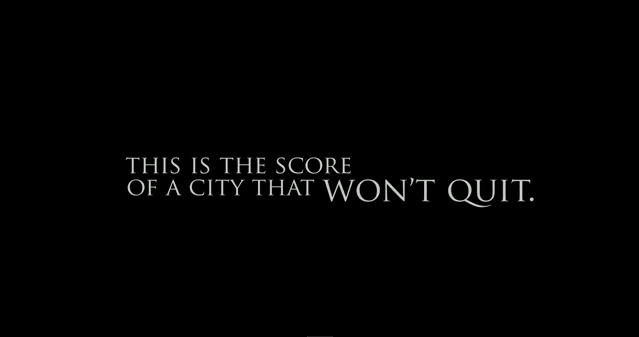
Last February, Chrysler premiered during the Super Bowl its “Imported From Detroit” campaign with a stunning 2-minute ad that showcased Detroit to the soundtrack of Eminem’s “Lose Yourself.” Helen Freund and David K. Li at The New York Post called Eminem the star of Super Bowl XLV’s ads. MyFOXDetroit.com mentioned how the people of Detroit showed their love for the ad on social media. Jeff Karoub and Mike Householder from The Associated Press said the ad “sent shivers of pride through the battered city.” Although the ads are, ultimately, about cars, they also sell us stories of the Motor City.
The commercial starts with scenes from a grey day in Detroit. We see streets, factories, and street signs. The voice-over helps weave a story of a working-class city: “What does this city know about luxury? What does a town that’s been to Hell and back know about the finer things in life?” From the vantage point of a Chrysler, we see shots of Detroit as it drives through the city and the suburbs. At the end, Eminem, a Detroit native, parks the Chrysler 200 in front of the Fox Theater and walks in to finda choir singing along to “Lose Yourself.” Ultimately, the video is a declaration of pride in American craftsmanship but also a statement of the strong will of an American city with working-class roots; this is emphasized when Eminem looks straight at the camera and states, “This is the motor city. And this is what we do.”
Although I tend to be critical of the messages advertising sends viewers, this commercial drives chills up my spine every time because it shows pride in an American city. However, what moved me to write this post was one of the most recent ads from the “Imported from Detroit” series. The commercial for the Chrysler 300 (2012 model) uses a sample of Bobby Blue Bland‘s “Ain’t No Love in the Heart of the City” (Dreamer, 1974) from Jay-Z’s 2001 hit “Heart of the City (Ain’t No Love)” (found on his album The Blueprint). The commercial starts with a panoramic view of Detroit, followed by the Chrysler 300 emerging from an underpass. The camera moves on to shots of different areas of Detroit as well as people on the street and street signs (for example, one of the signs we see is the sign for 8 Mile). Also, whereas most car commercials show cars without license plates, this ad proudly display the cars’ Michigan tags.
The music in both of these ads acts as a way of reminding us about Detroit (the first a song by a Detroit native, the second a song that makes us think about cities), but the music also calls into question the luxurious excess of the automobile. The ads try to draw attention away from the automobiles and toward the working-class community that keeps Chrysler running; they emphasize their ties to the Motor City. However, as Angie Schmitt points out in her blog post “The Hypocrisy of Chrysler’s ‘Imported from Detroit’ Campaign,” the ads betray the viewer:
Chrysler is selective about the Detroit it celebrates. Absent is the ruin that now accounts for a large share of the city. Invisible is the crushing poverty, constantly present in the urban landscape. The driver in the most recent installment, traveling out from the center of Detroit to its suburbs, is in control of his fate (thanks to his snappy ride) in a way few in the region really are.
Despite the defiant sentimentality of its ads, Chrysler, as well, is selective about its commitment to the city of Detroit.
Although the ads are visually stunning (but many of the ads produced by Wieden+Kennedy advertising company are–just look at their roster of clients and click on some of the brands), the ads also stage a conflict between race and class through the soundtrack. What is the message these commercials are trying to communicate through their music and their cars? On the one hand, they affirm the presence and reemergence of an American car company, one of the major car companies that was hit hard in the most recent U.S. recession. On the other hand, the ads use a discourse of class (also race) to sell a luxury product. The commercials want to connect Chrysler to Detroit’s working-class identity, and the soundtrack is supposed to act in service of that through the choices of artists and music.
A good example of this is the John Varvatos “Attitude” ad for Chrysler (less popular than the Eminem ad and the more recent Chrysler 300 ad).
Varvatos is a designer from Detroit, located in New York. The commercial shows us Varvatos at the Dope Jams record store in Brooklyn, on his way to his Manhattan studio. The voiceover tells us the key to his success is that he was “surrounded by the perfect combination of rock and roll and heavy industry.” The working-class theme is emphasized in this commercial, especially in the last line uttered by the narrator: “that’s what a blue collar attitude can do in a white collar world.” (It also creates a dichotomy where New York is the “white collar world” to Detroit’s “blue collar attitude.”) Unfortunately, the ads commodify class struggles and class values. The ads use working-class values to appeal to the consumer.
Music is not far removed from the automobile industry in Detroit. The Motor City not only exports cars, but is also an exporter of music. Suzanne Smith, in her book Dancing in the Street: Motown and the Cultural Politics of Detroit (2000), traces the development of Motown within the sociocultural context of Detroit in the 1960s. She explains how the automobile industry in Detroit benefited from African American labor, meanwhile excluding them from “controlling the means of production” (15). On the other hand, Smith also points out that Motown profited from the introduction of the transistor radio in 1953, for drivers could now listen to music in their cars. Motown execs were very aware of the new market that this would provide them. “Both the musical form and the audio fidelity of Motown hits such as ‘My Girl’ and ‘Shop Around’ were well suited and often produced with a car radio audience in mind” (123). The ads remind us how listening to music has become part of the experience of driving–and how that was not coincidental.
Ultimately, these ads remind us of how sound can act as a door into the social and cultural context surrounding the cars. However, I want to leave my readers with a thought: the ads are also about Detroit. If car ads require, in general, remarkably non-specific setting, Chrysler goes in the opposite direction and makes it all about the location. The ads, although problematic, remind us of the power and importance of place, whether in its Detroit ads or in its Portland, Oregon ad or its Los Angeles ad. If Jay-Z and Bobby Blue Bland sing “ain’t no love in the heart of the city,” these Chrysler ads show that the city has plenty of love to give.
–
Liana M. Silva is co-founder and Managing Editor of Sounding Out! She is also a PhD candidate at Binghamton University.
—
Share this:

‘Corn-ing’ the Suburbs on Halloween, a Sonic Trick and Treat

DOI: https://doi.org/10.59350/vyrdf-50936
It was a crisp Saturday night in late-October. I was probably seven or eight. My brother and I were sitting on the couch watching “It’s the Great Pumpkin, Charlie Brown” for the zillionth time.
And then we heard it.
To our stunned ears, it seemed as though my parents’ bay window, situated directly behind us, had shattered to pieces. But, mysteriously, it was still there, in tact.
Our tiny nervous systems were not prepared for this sonic assault, especially because it didn’t make sense. We stared in disbelief at the window for a minute, waiting for it to spill its shards. When we got enough courage to get up and peer out the front door, we saw the lanky silhouettes of teenagers running away into the dark of the trees. Piles of dried out corn kernels were scattered all over the porch like empty shells. We had been corned.

“Corn-ing,” a longstanding Halloween tradition in the suburbs of western Pennsylvania, is a popular prank in which kids sneak up to houses after dark and throw pre-hardened corn kernels at their windows, producing a truly startling sound effect. Corn-ing’s treat lies in the sonic trick—corn is able to convincingly sound like something else entirely. Thinking back on my experiences as both a victim of and participant in corn-ing, it occurs to me that this prank is sonic through and through—from listening for farmers in the corn fields before snatching husks from their crops, to locating one’s corn-ing partners in pitch black environments by the sound of the kernels bouncing rhythmically in their backpacks.
When early October rolled around each year, it was like an alarm went off in the heads of the kids that lived in my neighborhood. October meant it was time to procure ears of corn from the farms located on the outskirts of our Wonder-Years-ish suburb. In the days before we had our drivers’ licenses, this was an arduous task. We’d have to ride our bikes on the hilly back roads in mid-day (night time was too scary after we’d seen Children of the Corn), ditch them in the woods near the fields, and listen carefully for any signs of life in the corn—farmers, animals, blood-thirsty fundamentalist Christian children named Malachi, etc.
We couldn’t rely on our sight in these instances because the corn was so tall. We had to stop filling our backpacks every so often and listen for sounds of danger—for the rustles and crunches of stalks.

After our backpacks were filled to the brim, the preparation process began. The corn would sit for weeks in our garage, getting harder and harder. Once it became pebble-like in consistency, we’d shuck it back into our backpacks, listening to the pinging sound as it accumulated. On Friday afternoons, anxiously waiting for the sun to go down, we’d talk strategy. We decided that corning old people was out of the question. Even in our pseudo-delinquent state, we realized that sound had consequences—that spooking someone could give them a heart attack. So we mostly stuck to mean neighbors like old man Haybee, who was notorious for the unsightly cursive green “H” that was bolted to his chimney like a garish fast food sign. He never gave out candy to trick or treaters, so he was basically asking for it. Once a plan of attack was developed, it was time to suit up in all-black clothing and put on our packs. As soon as the streetlights came on, we were off.
My memories of these adolescent adventures are predominately sonic—the crunch of the fallen leaves, pounding hearts and nervous breathing, barely muffled laughter, and of course the sound of corn making contact with glass. Indeed, the success of the prank was measured in sound. The louder the sound the corn produced, the louder the aftermath tended to be. It was a true victory if dogs barked, or if people came out of their houses to yell. “You damn kids better run!” they would scream, sometimes only half seriously. And we did. We ran for our lives, despite the oppressive weight of the corn on our backs.
Click for the sound of sorn-ing: corn-ing

I wanted to capture the sounds of a real corn-ing experience to include here, but I quickly realized what an incredibly stupid idea that would be (what you heard, by the way, was the sound of me and my neighbor corning our own apartment building). As an almost 30-year-old Pittsburgher living in a fairly rough neighborhood, sneaking up to people’s houses at night in order to produce startling noises would most likely result in an encounter with police or violence of some kind. In the suburban environment of my adolescence, the sound of corn-ing was associated with a silly prank. Neighbors came to expect (and even get a kick out of) this Halloween tradition. In an urban environment in which the corn-ers are no longer in their teens, however, the sound of corn-ing would most almost certainly be interpreted as an aggressive or threatening act.
This just goes to show that different configurations of sound, spaces, and bodies (particularly raced and classed bodies) can result in vastly different understandings about what it means to share sound in a community. In Pittsburgh, I find myself constantly bombarded with the sounds of emergency and panic—police and ambulance sirens, firetrucks, helicopters. In my community’s soundscape, loud, startling noises are definitely not associated with fun and folly. Rather, they are a constant reminder of the looming danger that apparently surrounds me, as well as the incessant surveillance and policing of the city. This does not leave much room for sonic play.
This is not to say that there was no danger in corn-ing the burbs. For instance, this recent tragedy, in which a corn-er accidentally was hit by a car, happened in a suburb not far from the one where I grew up. Back when I was pitching corn, my best friend Courtney was once tackled by a man who thought she was slashing the tires of his truck (she was really just hiding behind a tire with a fistful of corn). And my brother Matt and I often found ourselves taking cover in the neighbors’ shrubbery waiting for the town patrolman to finish his watch. But I’d imagine that these war stories would not even come close to the dangers of corn-ing in the city. It is clear that the effectiveness of corn-ing as a prank is contingent upon the specific time, season, location, and culture in which its sounds occur.
Perhaps the real trick of sound, then, is that the context of its sounding can completely transform its effects and affects. But if you can get the sounds in sync with the right context, well, then you’ve got yourself a real treat.
—–
Steph Ceraso is a 4th year Ph.D. student in English (Cultural/ Critical Studies) at the University of Pittsburgh specializing in rhetoric and composition. Her primary research areas include sound and listening, digital media, and affect. Ceraso is currently writing a dissertation that attempts to revise and expand conventional notions of listening, which tend to emphasize the ears while ignoring the rest of the body. She is most interested in understanding how more fully embodied modes of listening might deepen our knowledge of multimodal engagement and production. Ceraso is also a 2011-12 HASTAC [Humanities, Arts, Science, and Technology Advanced Collaboratory] Scholar and a DM@P [Digital Media at Pitt] Fellow. She regularly blogs for HASTAC.
—
Share this:




Current Top Posts





April 2021

January 2020

November 2019

October 2019

August 2019

April 2014

November 2017

March 2015

December 2017

October 2015


Recent Comments