
When I Think of Home*
*title comes from a line in the song “Home” from the film The Wiz
This month I want to share with Sounding Out’s readers part of an essay that is very dear to me: an essay on home and African American urban identity in hip hop. In my longer essay I look closely at several hip hop songs and discuss the representations of urban space present in them. It is very dear to me because it is my first venture into what would eventually become my dissertation topic (dissertation in the works). As I am revising the essay for publication, I am eager to hear from our readers what they think about this excerpt and suggestions for expansion.
***

Home: it is a small word, but it opens up such a big world full of meanings. When people ask me, “where’s home for you?” I cannot help but feel confused. What home do they mean? Do they mean my home town in Puerto Rico, where my parents live? Do they mean Kansas City, where I live now, where I move around and do my grocery shopping? Or do they mean New York City, which started out as home? For me, home can be a household, a town, a family, a community; this would explain the confusion on my face when they ask me that question.
One example of the different meanings that home can have is seen in Dave Chappelle’s Block Party. The film takes the viewer to Bedford-Stuyvesant, a neighborhood in Brooklyn NY, where the comedian congregates friends, neighbors, and fans for a day of hip-hop music, food, and comedic skits. Interestingly enough, Dave Chappelle is not from Brooklyn, but from Washington DC—unlike Mos Def and Talib Kweli, both born and raised in Brooklyn, who pepper their performances with shout-outs to the borough. Dave and director Michel Gondry (according to the DVD extra for the film, titled “September in Brooklyn: The Making of Block Party“) chose Bed-Stuy for the block party because of the borough’s legacy as the birthplace of hip-hop. Their hip-hop coordinates are slightly off, since hip-hop’s roots are found in the South Bronx—even though many of hip-hop’s stars have come from Brooklyn.
However, a young man from Ohio’s Central State University’s marching band sheds some light on the question of location: “It’s wonderful, it’s great, being out here in New York for my first time. I feel kind of like I’m at home. Seeing all these people out here with locks, it’s comfortable. It’s nice though.” The young man from Ohio has never set foot in New York City before, but he claims to feel a sense of comfort from being surrounded by people who look like him. This can be read as just another iteration of the perceived sense of freedom and openness associated with urban locations, but it could also be read as a comment on the racial/ethnic composition of the city and his sense of comfort because of this. Dave Chappelle mentions earlier in the film, “5000 black people chillin’ in the rain, 19 white people peppered in the crowd…hard to find a Mexican.” New York–and Brooklyn in particular–represent a kind of home for the band member because of the historic presence of blacks in the city and its hip-hop legacy. However, the urban African American experience, at least as it is seen in the documentary, seems to equate an experience that African Americans across the country can relate to.
Of course, there is no such thing as a single contemporary African American experience; there are as varied experiences as there are towns, as there are shades of brown. However, both the marginality and community that African Americans in urban locations have historically felt resonates with many across the United States, no matter if they live in the South or the Midwest or the Northeast. Urban places have proven to be a key source of inspiration for African American musical artists, like Stevie Wonder (“Living for the City”) and Marvin Gaye (“Inner City Blues [Make Me Wanna Holler]”). But it has gained more visibility in hip-hop music, from songs like “Heart of the City” by Jay-Z to “L.A.” by Murs. Different representations of urban space abound in black cultural production, but the one that stands out for me is that of the city as home.
Even though some hip-hop artists depict the city as a center of crime and danger, there are others who talk about it as home and describe it as a locus for community, for cultural memory, and for emotional nourishment. The hip-hop artists I look at in my longer piece (Kanye West, Common, Lauryn Hill, and Mos Def) do not locate this home in a household but rather in urban locales. The representation of cities as locations for home is a way to reclaim urban space, and this act of claiming is crucial for the development of a contemporary African American urban identity. In this excerpt, I present Mos Def as an example of that reclaiming.
Mos Def’s “Habitat” was issued on his album Black on Both Sides (1999). Mos, like Common and Kanye West, uses the city as inspiration for many of his songs. (Examples of this are Common’s “Southside” and West’s aptly titled “Homecoming.”) In fact, on Black on Both Sides he not only has “Habitat” but also “Brooklyn,” in which he pays homage to his borough and to the day-to-day occurrences on the street. “Brooklyn” starts out with a few lines taken from the song “Under the Bridge” by The Red Hot Chili Peppers, but in reference to his neighborhood. The sentiments conveyed in those first few lines resonate with the theme of “Habitat”: “Sometimes I feel like I don’t have a partner, sometimes I feel like my only friend, is the city I live in, it’s beautiful Brooklyn.” This emphasizes a cross-genre trend of calling out one’s hometown (city).
“Habitat” starts with the chorus stating, “We’ve all got to have a place where we come from, this place that we come from is called home.” (I should point out that before the chorus comes in, we can hear Mos Def singing the line, “When I think of home, I think of a place,” which comes from the song “Home,” cited earlier in this post. The musical was an adaption of L.Frank Baum’s The Wonderful Wizard of Oz with an all-black cast. The film version of The Wiz was set in New York City.) Over the chorus we can hear Mos Def defining the word “home,” very much like you would find in a dictionary, although with a twist:
Home: a place where someone lives; a residence; the physical structure within which one lives, such as a house; a dwelling place with the social unit that occupies it; a household; an environment offering security and happiness; a valued place; a native habitat; a place where something is discovered, founded, developed, or promoted; a source; a headquarters; a home-base; of or relating to a team’s place of origin; on or into the point at which something is directed to the center of the heart.
After the definition, the speaker talks about their childhood in the city: sometimes nice, sometimes dangerous, sometimes sad. In juxtaposition to this is the fact that one of the motifs of the song is the motif of travel. Images of travel and mention of different cities pepper the bridge of the song; the protagonist seems to connect its neighborhood with other cities. The speaker talks from another location, he/she is not right now at home. However, the speaker repeats throughout the song, as if to insist, “it ain’t where you from, it’s where you at.”
By starting the song with a definition, the speaker seeks to identify what home is for him/her. Habitat, which connotes dwelling instead of a homespace, is put in juxtaposition with home. The song sets place against space, and the speaker correctly tries to take home outside of its stable, fixed location. Even though the subject begins by privileging place in the definition, he/she points out the emotional ties that people may have with the house—ultimately these ties are what make a house a home, like the saying goes. By displacing those ties form the household to urban space, the speaker is moving from place to space. The definition resonates with the OED entry for “home”: The Oxford English Dictionary (online) states that home is a physical residence, a place where someone lives, as well as the region from which one comes. However it also asserts that home is a “place of one’s…nurturing, with the conditions, circumstances, and feelings which naturally and properly attach to it, and are associated with it…a place, region, or state to which one properly belongs, in which one’s affections centre, or where one finds refuge, rest or satisfaction.” Here, the home embodies community, nurturing, and the cultural memory of the street.
Another reason why the subject of the song privileges place in this definition is because the rest of his song presents the listener the mean streets of the home: “I came up in the streets ‘round some real wild brothers…Got more than one enemy and more than one gun.” The violence and crime we see in the first section of the song constructs the city as a dangerous place. Later on the speaker claims them when he says, “Regardless where home is, son, home is mine.” The fact that the protagonist of the song knows his/her way around this dangerous place points to his/her dominance of this urban space, a dominance that holds cultural significance for the African American urban community.
Even though the environment the subject presents here is not a healthy or secure one, there is a sense of attachment to it because of having grown up there. In the next verse the protagonist goes over childhood memories: “When I think of home, my remembrance of my beginning, Laundromat helping ma fold the bed linen, chillin’ in front of my building with my brother.” The personal development on the streets is juxtaposed with the development within the actual household, but neither one nor the other is given predominance. The circumstances the speaker has faced and the racial politics witnessed at work in this neighborhood (“funeral homes packed with only dark bodies”) have influenced his/her outlook on life. Murray Forman, in The Hood Comes First: Race, Space, and Place in Rap and Hip-Hop argues, “members of the hip-hop culture articulate notions of subjective and collective identities, urban experience, racial consciousness, and spatially structured patterns of power” (xviii). Home is not only an empty location that one inhabits; rather, where one lives is the intersection of so many other spaces and identities, but from this location the speaker has learned how to navigate the urban space.
The protagonist of “Habitat” does not romanticize the pain and struggle taking place on the streets of Bushwick, like other hip-hop artists do. Regarding the ghetto Michael Eric Dyson argues in an interview with Meta Du Ewa Jones, “A lot of people in the ghetto are trying to get the hell up out of there. They don’t want to romanticize it. So it’s not the ghetto that’s being romanticized—its physical geography—so much as the intellectual attachment and intimacy that it breeds, a bond established with those who are fellow sufferers and fellow strugglers who long for an exit from its horrible limits” (Callaloo 29.3, 2006; 794). The speaker shows the social relationships that intersect on the city streets, and the connections that arise from those interactions. Those connections become significant, for when the protagonist travels around the world, they keep him/her grounded as seen in the last verses of the song: “we’ve traveled this big earth as we roam….it ain’t where you from, it’s were you at, it’s where you hang your hat.” No matter where the speaker may be located, home can be retrieved for comfort and solace (embodied in the phrase “it’s where you hang your hat.”)
, via Wikimedia Commons”] Mos Def is positing here the home and the city streets as an urban “[site] of significance.”(Forman xix). Through his experiences on the streets in Brooklyn he has constructed a new site of knowledge of oneself and one’s community for those who live in that area. He has taken the ghetto, commonly conceived as a site of extreme poverty and crime, and elevated in the song to a much more noble location: home. At the same time he has complicated the idea of home; to what point can a person hold a neighborhood in high esteem when you are not sleeping “cause the nights ain’t peace, it’s more war”? However this attempt to redefine the streets of Brooklyn as home is part of a larger attempt within hip-hop to create identity within urban space.
Part of why I am writing on representations of urban space in hip-hop (particularly representations of urban space as home) is because I believe that our listening practices are part of how we construct our identities. That’s one venue that I’d like to explore further in my paper: listening practices. I also want to talk more about how class comes to play in these representations. From what I can gather Mos Def comes from a working-class family, but Common and Kanye West do not. In fact, Common and Kanye West both had one parent with a PhD and that worked in education.
It’s not “just” music, folks.


Share this:

Classical Singing: Cradle for Sorrow and Healing
J. Stoever-Ackerman’s recent exploration of the complicated relationship between classical music and social class in America raised some provocative questions for me personally. I am a professional classical musician with a doctorate in voice, as well as the daughter of two working-class white ethnics who became professional intellectuals. My family’s origins, curiously perhaps by today’s standards, did not place classical music out of reach on the far side of the class barrier: my father played in the legendary Hempstead High School Orchestra on Long Island, while my mother, a single teen mom, took herself to the Philharmonic for a Christmas gift every year while she worked in a factory and attended college at night (this was, however, before music instruction was gutted from the public school curriculum in the 1970s and 1980s). As a result, classical music was a very present part of my early life, and, without overstating things too much, I can realistically say that it has helped to form me as a person, and has provided me not only with bread for my body but also, and more importantly, with breath for my soul. I feel like the study and practice of classical music gave me not only my career, but even my life. Coming from this position, then, Stoever-Ackerman’s slighty gulity bemusement at her pleasure in the orchestral concert she attended, and her assertion that “where listening is concerned, resistance and subjection can never be easily separated,” sat uneasily with me.
Stoever-Ackerman’s objections to longhair music are based not only upon class affinity, but also, perhaps unconsciously, in her standpoint as a twenty-first-century American intellectual. As UCLA musicologist Richard Taruskin has noted, it has been au courant since the 1960s for intellectuals to eschew classical music in favor of the various genres of what he calls “commercial music:”
and they often seem oblivious to the very existence of other genres. Of no other art medium is this true. Intellectuals in America distinguish between commercial and “literary” fiction, between commercial and “fine” art, between mass-market and “art” cinema. But the distinction in music is no longer drawn, except by professionals. Nowadays most educated persons maintain a lifelong fealty to the popular groups they embraced as adolescents, and generation gaps between parents and children now manifest themselves musically in contests between rock styles.
If, as has already been discussed extensively at this site, pop and its various genres make up the (only?) legitimate musical repertoires of the American working classes–both white and of color–I believe it’s time for a word from the trenches of musical praxis: this is not necessarily so, nor should it be.
While earning my doctorate at the City University of New York, I taught for two years as a graduate assistant and for another two as an adjunct at two of CUNY’s senior, i.e. four-year, colleges. In the heart of an urban metropolis, I taught studio and class voice, that is to say both individual lessons and singing classes en masse. My students, with very few exceptions, were from the outer-borough working classes, traveling long distances on public transportation to attend college while working and in some cases parenting, and they represented a variety of races and ethnicities, with whites solidly in the minority. Most of my private-lesson students were older than I was, returning students who had been sidetracked by life and various dead-end jobs from finishing their bachelor’s degrees at a more usual age. Since I am a classical singer, I taught everyone the same thing: classical singing. My voice students studied classical musical practice and classical music repertoire not only because I believe that healthy classical technique is the basis of good vocal technique across genres — that is, if you can sing well in the classical style, you can sing anything well — but also because I know, in the depths of my being, that the experience of making classical music is healing and transformative for the person who undertakes it, an experience that should be denied to or refused by no one. In this sense, classical music praxis was, in my studio, a tool for self-transformation, self-empowerment, and self-expression that ignored distinctions of class and race. This might suggest that classical music is in fact a subversive practice for the working classes and people of color, and perhaps it is, though I see it more as a human right.
In teaching these diverse classes, I tried very hard to discern what sort of a person each of my students was, and to choose the right repertoire for each based not only on vocal characteristics but also on everything the student presented to me: his or her ethos, if you will. The truth is that I loved and respected my students, and I felt a heavy responsibility for making their experience as fledgling classical musicians one that would enrich their lives. They were, as I mentioned, from wildly divergent backgrounds. One was the daughter of a famous Puerto Rican bandleader who had discouraged her from a career in music, her true love; she made a living selling gloves and hats from a table outside the Metropolitan Museum of Art. One was a Haitian Seventh-Day Adventist, a highly intelligent, spinsterish woman who spoke German as well as French, and whose singing revealed hints of a magnificent natural instrument — if only she had been physically and psychically free to the point that she could have accessed it. Another was T., a shy, socially-awkward man in early middle age who worked as a paralegal, and who confided after three lessons that he was a recovering alcoholic. Many of my students, I perceived, were profoundly wounded and  heartbroken people. Though occasionally they spoke of their traumas and difficulties, words were not really necessary; the dynamic of the private voice lesson is so transparently revealing, and the rough areas in the voice provide such an accurate mirror of the catches in the soul, that I didn’t need to look hard to grasp their woundedness, if not always the nature of their wounds. This is why, as every classical singer and voice teacher know, tears are a commonplace in the voice studio. And this is why it is so essential that a voice teacher be compassionate. The voice — that intangible, ethereal instrument played by the passage of air over two threads of gristle in the throat — can be not only a diagnostic gauge of the inner singer, but also, ideally, a means of healing for both the singer and her audience.
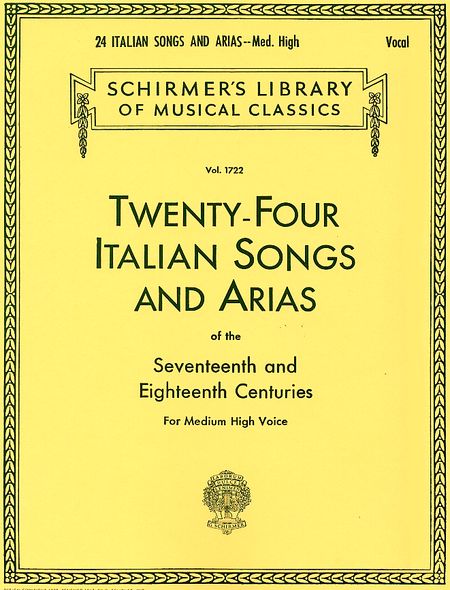
T. surprised me in our first lesson by bringing in a song he was working on on his own. Occasionally students did this, the song generally being from the Broadway repertoire. T.’s choice, however, was Robert Schumann’s “Schöne Wiege meiner Leiden.” This piece is number 5 of the Op. 24 Liederkreis, a song cycle based on poems from the Buch der Lieder of Heinrich Heine, the greatest poet of German Romanticism (and also a notable Jewish convert to Christianity, who famously declared on his deathbed in Paris: “I know that God will forgive me my sins: c’est son métier“). This was an ambitious choice. I usually started my students on one or more of the shopworn Twenty-Four Italian Songs and Arias from the Seventeenth and Eighteenth Centuries. But T.’s German was excellent, and he even directed me in how he wanted me to accompany him in the piano part; he had rather well-formed ideas and opinions about how the piece should sound, one of the hallmarks of a true musician.
“Schöne Wiege” starts off as a gently-rocking lullaby-like song (what we in the biz call a “strophic berceuse”), then turns quickly into a rhapsodic, though brief, through-composed quasi-operatic number (a “scena”), with the off-kilter rhythmic phrases and the melodic angularity typical of Schumann. Its subject, and the subject of the song cycle in which it is the pivot, is that great theme of German Romanticism: unhappy love that forces the wounded lover on a journey which, in some treatments, ends in death or madness. My translation follows:
Beautiful cradle of all my sorrows, beautiful tomb of my repose,
Beautiful city, we must part: “Farewell,” I call to you.Farewell, you holy threshhold where my beloved wanders;
Farewell, sacred spot where I first saw her.And had I never seen you, beautiful queen of my heart,
The wretchedness I now endure would never have befallen me.I did not wish to touch your heart; I did not seek your love —
I wished only to live a quiet life near the place where your breath flutters.But you yourself drive me from here; your mouth speaks bitter words.
Madness takes hold of my mind, and my heart is sick and sore.And I drag my weary, weakened limbs away, leaning on my wanderer’s staff,
Until the time I might lay by tired head in some cool, far-off grave.
I was astonished by T.’s innate feeling for this difficult piece, and we quickly came to the point where I felt like I was serving him badly by accompanying him on the piano myself. I hired a student accompanist, an excellent pianist from Sweden, to come to our lessons, paying her out of pocket. Once out from behind the piano, I could work with T. more intensely on his breath and his phrasing. This ushered in one of the most thrilling times I’ve ever had as a teacher. Working on “Schöne Wiege” in the studio with T. and the accompanist, I felt as if we were riding a cresting wave together as three musicians. T. achieved moments in which there was a synergy between his vocal line and the equally important piano part, and when not only the melody and the meaning of the text, but even the sounds of the words themselves created multiple layers of meaning in his performance. Especially stunning was the way that he was able to sing each repetition of “Lebewohl!” (farewell!) differently, drawing one out with rubato, clipping another. I would leave these lessons feeling elated, as if I had finally found what I was meant to do with my life.
T. wanted to audition for the B.M. degree at CUNY, a more prestigious program than the B.A. he was pursuing, so we started working on an audition program. I gave him an Italian piece, a piece by French late-Romantic composer Gabriel Fauré, the aching tenor showpiece “Lonely House” from Kurt Weill’s 1947 American opera Street Scene (often performed by university music departments because of its plethora of ensemble roles), for which Langston Hughes wrote the libretto:
And, finally, “Der Lindenbaum,” the best-known piece from Franz Schubert’s great song-cycle Winterreise. “Der Lindenbaum” (The Linden Tree) also treats the theme of being made to leave home forever, driven on by the unforgettable pain of love gone wrong, and it has become a kind of folk-song in the German-speaking lands:
In one stanza of “Der Lindenbaum,” the narrator describes how, in the course of his journey, the cold wind has blown his hat away, and yet he does not stop. T. mentioned something that I hadn’t considered: that in Europe in the 1820s, a man outdoors without his hat would have been committing an unthinkable social transgression; the fact that the narrator doesn’t turn back for his hat, T. suggested, showed the desperation of his plight, and was a clear foreshadowing of the madness into which he almost willfully descends at the end of the song cycle. I realized that T. was the kind of student I had dreamed of teaching, one who gave serious thought to the meaning of the text and the music, and to the reasons composers might have had for writing as they did.
When the time for T.’s audition came around in the spring, he clutched. I had instructed him to start the audition–at which I was not allowed to be present–with one of his best pieces, the Weill or the Schubert, but he second-guessed the audition committee and decided that they would probably want to hear the Italian piece first. A mistake. He wasn’t admitted, and the following year switched his major from voice to music composition.
Near the end of the school year, I organized a recital for my students. T. was to sing “Lonely House” and “Lindenbaum.” He rushed in just as the recital was starting with an etiolated, sickly-looking man whom I realized was his boyfriend in tow. He told me at the intermission that he almost hadn’t come. His beloved cat was near death, and he was beside himself. He got through his pieces, though he didn’t shine.
This made me think about all the dreadful times in my life when I had kept on singing. There was simply nothing else to do; many times singing had seemed the only thing left to me. In our next lesson, one of our last, I mentioned obliquely some of these occasions in my own life, which included abortion and divorce. An artist, I explained, has to be cool-headed even in the face of great personal suffering. C’est son métier. It’s her job to sublimate her suffering into a balm that might touch those who hear her, and give them the healing that she seeks for herself. Arising out of our nonetheless-shared western cultural heritage, classical music is a gift to us twenty-first century Americans across race and class, and, in some small way, those who practice it can use this gift — the gift of beauty — to transform our own suffering, as well as the suffering of others.
I never saw T. again after that, except once by chance, as I was heading to a pub in Midtown to meet my boyfriend. He still had a CD I lent him, the wonderful Tryout, which features recordings of Kurt Weill singing and playing his own songs in rehearsal for the Broadway shows he wrote.
For a final treat, here’s an excerpt from that CD, Kurt Weill singing a snatch of his famous song “Speak Low” from the 1947 musical “One Touch of Venus,” for which American poet Ogden Nash wrote the lyrics. In Weill’s performance, the great tradition of the German art song — the tradition of “Schöne Wiege meiner Leiden” and “Der Lindenbaum” — meets the race-and-class-fraught American popular music scene; the song became a beloved standard, and was sung by the great jazz triumvirate of Billie Holiday, Ella Fitzgerald, and Sarah Vaughan, among others. Here, Weill’s fragile-sounding vocal delivery and heavy German accent embody the world-weary European composer (Weill was a refugee) delivering himself into the capable and vital hands of a musical culture built by immigrants and former slaves.


Share this:


Current Top Posts





April 2021

January 2020

November 2019

October 2019

August 2019

April 2014

November 2017

March 2015

December 2017

October 2015
 Sounding Out!
Recent Comments