
Becoming Sound: Tubitsinakukuru from Mt. Scott to Standing Rock

In the Numu tekwapuha, the Comanche language:
Haa ma r
uawe, haa nuhaitsi. Nunahnia tsa Dustin Tahmahkera.
In this post, I talk about the phrase “becoming sound,” and also gesture to several examples across Indi’n Country to encourage us to listen for aural affirmations and disavowals of indigeneity and encourage active reflection on the roles of sound in becoming and being indigenous, now and in the future. By “becoming sound,” I’m interested in the interdependent relations between emitting sound as the formations of sonic vibrations in the air and becoming sound as a method toward restoring good health through cultural ways of listening and healing.
While the former use of sound gets situated more in sound studies, the latter sense of “sound” is evoked more by the medical humanities, such as when saying someone is “of sound mind,” though we know from the history of perceptions of mental illness that what constitutes a “sound mind” is not resoundingly agreed upon. For example, the U.S. heard the Paiute Wovoka’s visionary Ghost Dance and singing for peace and “becoming sound” again as “savage” and “insane,” and sent the 7th Cavalry to massacre Lakota children, women, and men in response. The misdiagnosis of “savage” has instilled a puritanical, restrictive worldview of what “being sound” means, and it’s been abused and amplified all the more in the metaphorically schizophrenic split between becoming “Indian, an unsound Indian,” and re-becoming a “sound indigenous human being.”
My thoughts here echo an epistemology of sound and being by the late John Trudell. In Neil Diamond’s 2009 documentary Reel Injun, Trudell theorizes on collisions between schizophrenic-like identities located in an expansive soundscape. He says:
600 years ago, that word ‘Indian,’ that sound was never made in this hemisphere. That sound, that noise was never ever made … ever. And we’re trying to protect that [the Indian] as an identity. … we’re starting not to recognize ourselves as human beings. We’re too busy trying to protect the idea of a Native American or an Indian, but we’re not Indians and we’re not Native Americans. We’re older than both concepts. We’re the people. We’re the human beings.
Following Trudell’s call for becoming the people again, and for resisting what he calls the genocidal “vehicle [that tries to erase] the memory of what it means to be a human being,” my attention, my ear bends toward asking about the roles of sound in human being-ness and toward the roles of listening in that ongoing process of becoming sound human beings, a process cognizant of the “cacophonies of colonialism,” as sounded forth by Jodi Byrd in The Transit of Empire: Indigenous Critiques of Colonialism, and a process also grounded in indigenous sonic traditions and modernity.
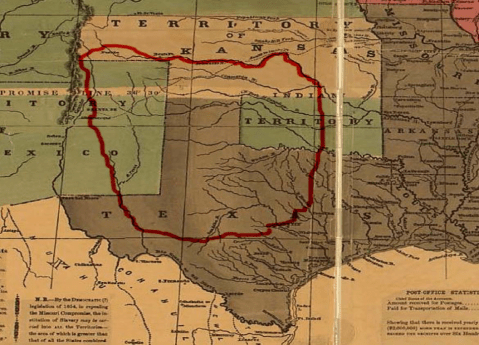
What I’m sharing is in support of an emerging multimedia research lab, podcast, and book project I call Sounds Indigenous, a title which affords considerable space in sonic clashes between how indigeneity gets heard and unheard, how it is sounded and unsounded. Sounds Indigenous involves listening for sonic sovereignty in indigenous borderlands. For me, it’s particularly located in the Wichita Mountains in Oklahoma and elsewhere in the 240,000 square miles of Comanche homelands known as la Comanchería.

As for method, Sounds Indigenous practices tubitsinakukuru, our word for listening carefully.
As I recently wrote elsewhere in a special indigenous-centric issue of Biography, “Nakikaru means listen, but to practice tubitsinakukuru is to listen closely and engage with the speakers and sounds, be they familiar or foreign, friendly or fierce, fictive or factual, or sometimes, in the eccentricities of humanity, all of the above.” It goes back to one’s beginning. As Muscogee Creek artist Joy Harjo says in her co-edited collection Reinventing the Enemy’s Language: “We learn the world and test it through interaction and dialogue with each other, beginning as we actively listen through the membrane of the womb wall to the drama of our families’ lives” (19).
In the context of colonialism, this project is about listening, too, through sonic dissonance. From the Latin word for “not agreeing in sound,” dissonance represents the disharmonius, that which lacks in agreement. But more importantly, it’s about using, not disavowing, the dissonance as audible ground from which to reimagine indigenous futures toward becoming sound. In an indigenous sound studies context, it means listening through Byrd’s “cacophonies of colonialism,” through ear-splitting “discordant and competing representations” of Indianness and indigeneity (xxvii). We know that what sounds indigenous often becomes sites of debate and critique, such as when hearing what Phil Deloria calls “the sound of Indian” (183) in Indians in Unexpected Places, be it the boisterous nonsensical grunts and ugs in cinema, the cadence of the tomahawk chop at sporting events, the clapping hand-to-mouth of cowboys-and-Indians televisual and school playground lore, or early ethnologists’ mis-hearings of indigenous songs across Indian country, all the performative made-up stuff of non-Native imaginaries that all too often makes up the popular “sonic wallpaper” of Indianness (222).

Harley Davidson “Indian” Motorcycles, Parked atop Mt. Scott, Image by Author
At the same time, Sounds Indigenous is also about the soundscapes, the sonic formations, of Comanches and other Natives. It’s about indigenous auditory responses, which includes not only the vocalized, the heard, but also sampling the “certain quality of being” that Africana Studies scholar Kevin Quashie calls “the sovereignty of quiet” in his study of the same title. Sounds Indigenous is about those auditory responses and expressive ways of sounding indigenous that reverberate through and against what my Mapuche colleague Luis Carcamo-Huechante calls acoustic colonialism, and what Ronald Radano and Tejumola Olaniyan call the “audible empire” (7): “the discernible qualities of [what] one hears and listens to—that condition imperial structurations.”
With that said, this is a nascent mix and remix of words in an always already failed search of communicating the ineffable: these are words in search of communicating holistically about sonic affect. Sonic affect is about far more than just “sound” or just “listening.” Sonic affect is also not just about the subjectivity of how certain sounds make us feel certain ways, but rather it is what deeply makes soundings possible and brings forth our expressions of and feelings about sound. Affect is not just emotion; affect is what allows us the capabilities to feel emotion.

The road to Mt. Scott, Image by author
Yet even with the ineffability of affect, “every word,” Trudell tells us, “every word has power” as we turn each word “into sound … into the world of vibration, the vibratory world, the vibration of sound. It’s like throwing a pebble,” he says, “into the pond. Something happens.” The “something” from words and other sounds may not be fully communicable in sonic expressions, but I’d like to think we know of the something when we hear it and feel it as human beings, even if it’s a recognition of seemingly unknowable mystery, especially in moments of what media scholar Dominic Pettman calls “sonic intimacy,” a process of “turning inward…to more private and personal experiences and relationships” in Sonic Intimacy: Voice, Species, Technics (or, How To Listen to the World), (79), such as seen and heard in this personal video I took with my phone during a sunset in early 2014 while sitting with my son Ira atop Mt. Scott, the tallest peak in the Wichita Mountains.
For me, Mt. Scott has long been one of the most remarkable sites in the world, a sacred site carrying a long history with Comanches but that for many may be just another tourist destination.
As a Comanche born in Lawton, Oklahoma, who grew up mostly just south of there in the Wichita Falls, Texas, area, I have crossed the Pia Pasiwuhunu, the Red River, innumerable times and visited nearby Mt. Scott, climbing its boulders with friends or driving on the roadway that snakes around it to the top.Once at the top, I, like my g-g-g-grandfather Quanah Parker, the most famous of all Comanches, have sat there: observing, listening, exploring, and praying. But as you may have heard from other folks’ voices in the background of the video with my son, it can be difficult these days to “get away” on Mt. Scott. You may hear tourists laughing, loud talking on cell phones, rocks being thrown, and the revving of Harley Davidsons or, better yet, Indian motorcycles in the now-spacious parking lot at the top.
The loudest noise, though, comes from nearby Fort Sill. Named after Joshua Sill who died in 1862 in the Civil War, it began in 1869 as an outpost against Comanches, Kiowas, and other Native Peoples. Now a military base that has been known to sometimes still go against us, Fort Sill is known for its Field Artillery School and, for those in the Wichita Mountains and Lawton where the base is located, known for its sonic booms of artillery testing, guns, bombs, missiles, and tanks as seen here in an old Fort Sill training film.
Over the decades, it’s become what some might consider elements of a naturalized and normalized soundscape. As long as I can remember, the sounds of artillery have been there, somewhere, in experiences of being in the Wichita Mountains; but not everyone interprets those sounds similarly. The author of the 2001 LA Times article “Military Booms Are Boon to Okla. Base’s Neighbors” claims you “would be hard-pressed to find anyone who doesn’t welcome the disruption.” They quote local residents saying things like “We do live with the boom-boom-boom of artillery fire 24 hours a day, but it’s very interesting about living here, you just don’t hear it anymore.” One former Fort Sill general-turned local banker says, “That’s the price you pay when you live in a community like this. To us, it is oddly comforting. It’s the sound of a healthy economy and a viable place to live.” Another Ft. Sill general adds, “At times the noise is bothersome. But it’s proof positive that we are still conducting our mission here. And the people of Lawton derive comfort from that.” A former mayor of Lawton says, “When I hear those guns out there popping, that’s the sound of freedom ringing in my ears …That’s the freedom bells ringing. Those are the guns that are going to be fired if we have to defend the United States of America.” Such rhetoric, spoken in the 21st-century, sounds rather reminiscent of Fort Sill’s origins in defense against the indigenous.
 Still, it’s complicated, to be sure, made even more so by the fact that I come from a strong military family–of all Comanche families, Tahmahkeras rank second in having the most veterans and I’m proud of that, I’m proud of my relatives. Still, there’s something about the blasts hovering through the air and over our homelands. There’s a reminder, of imagined sonic memories of weaponry used against our Comanche ancestors, like “the world’s first repeating pistol, the” “‘Walker Colt’ .44 caliber revolver” that the Comanche Paul Chaat Smith says was “designed for one purpose: to kill Comanches.” As a Comanche elder recently told me in response to Fort Sill’s artillery explosions, “it’s not easily something you can overcome because it brings back the memories of over 150 years ago,” of what happened to the people.
In response to the militarized sonic booms, I’m intrigued by an idea sounded forth by four-time Comanche Nation chairman Wallace Coffey. In the early 1990s, Coffey wrote a letter to then-Secretary of Defense Dick Cheney at a time when the U.S. Government was shutting down Army bases. In a 2010 interview with Coffey recalls telling Cheney “to close Ft. Sill down and give it back to the Comanches, and we will heal it. Instead of bombing this land, we will heal it.” As he told me in a conversation in the Wichita Mountains in June 2017, “We may not be the titleholders [over all our homelands now], but we are still the caretakers.”
It brings to mind an old story from the late 1860s, that illustrates how one culturally-informed Comanche back then listened to militarized sounds. As Chickasaw citizen and retired Ft. Sill Museum director Towana Spivey recounted in his email to me on June 10, 2017: when generals Sheridan, Grierson, and Custer went “to the Medicine Bluffs area,” long held as a sacred site but also is where Ft. Sill is now located, “the soldiers gathered to explore the imposing bluffs along the creek” and “noticed the echo effects when shouting or discharging their weapons in the basin in front of the steep bluffs.
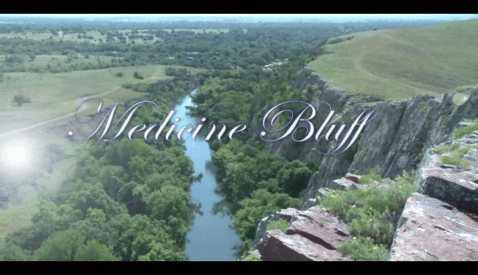
They continued to fire their weapons to create a corresponding echo.” In response, Asa-Toyet, or Gray Leggings, a Comanche scout who accompanied them, “was,” Spivey says, “particularly horrified with their antics in this sacred place.” To Asa-Toyet’s hearing and sensibility, those “antics” may suggest what I’d call sonic savagery on the part of the soldiers. They wanted him to climb to the crest with them, but he told the soldiers he was not sick, thus “reflecting the traditional [Comanche] belief that there was no reason to access the crest unless you were suffering from some malady.”
Medicine Bluffs is sacred for many Comanches, such as our current tribal administrator Jimmy Arterberry who says, “Medicine Bluffs is the spiritual center of my religious beliefs and heart of the current Comanche Nation.” You can imagine, then, the opposition to when the U.S. Army, in 2007, sought to build a $7.3 million warehouse for artillery training. When they proposed building it “just south of Medicine Bluffs,” in which certain views would be obstructed and Comanche ceremony disrupted, word eventually got to Towana Spivey who curiously had been left out of communications. As detailed in Oklahoma Today, “The Guardian,” Spivey, a cultural intermediary and longtime educator to Ft Sill leadership about practically anything indigenous, intervened immediately. He talked with Comanches who were obviously against the proposed warehouse. He also tried to talk with certain army officials; but for that, he received a loudly written order that read, and I quote, “Do Not Talk to the Indians,” a blatant attempt to try to silence the indigenous who gets reduced to that category of Indian that Trudell critiques. The Comanche Nation soon sued the Army, and the Comanches won, thanks in part to Spivey, who had been “subpoenaed to testify for the plaintiff.” U.S. District Judge Tim DeGiusti ruled that the U.S. Army failed to consider alternate locations and that “post officials” had “turned a deaf ear to warnings” from Spivey. Those warnings, I’d add, were indigenous-centered by a Chickasaw and U.S. ally of the Comanches who recognizes us as Trudell calls forth: as human beings.
In the audible imaginary of sonic duels and dissonance between the Indian and the people/human beings, the list grows elsewhere in Indi’n Country. Consider when Greg Grey Cloud was arrested in 2014 for singing an honor song (not chanting, as some media outlets reported), but an honor song “to honor,” he says, “the conviction shown by the senators” “who voted against the Keystone XL pipeline, Grey Cloud sings even as self-identifying Cherokee, Senator Elizabeth Warren, calls for order.
Or consider, too, when just last year, indigenous honor song singers and their handdrums at Standing Rock were met by LRADs, Long Range Acoustic Devices, among other weapons.
The LRAD Corporation boldly claims its device “is not a weapon,” with the “not” in bold typeface, underlined, and italicized as if that makes it true. They prefer the description “highly-intelligible long-range communication device.” Following echoes of Indian hating from the so-called “Indian wars” of history, reports came in of police confiscating handdrums, suggestive of fearing the sounds and songs they do not recognize. Laguna Pueblo journalist Jenni Monet quoted Arvol Looking Horse who said police “took … [ceremonial pipes]” and “called our prayer sticks weapons.” Ponca activist and actress Casey Camp-Horinek was there, too, singing while surrounded by other elders, a circle of human beings. She later reflected that “I’ve never felt so centered and grounded and protected as I did at that particular moment.”

Image by Flickr User Dark Sevier, Standing Rock, 4 December 2016, (CC BY-NC 2.0)
“Even the noise cannon,” she adds, “didn’t effect me.”
In closing, the sonic dissonance reverberates between sites such as indigenous honor songs in support of tribal and planetary well-being, and the militarized sonic responses—from artillery testing near Mount Scott in Comanche country to sound cannons and the confiscation of sacred drums in Standing Rock—that attempt to silence indigenous soundways. But no one can silence us, including, for example, the Kiowa Zotigh singers here and their honor song for Standing Rock. No one can fully silence us from sounding forth, in efforts toward becoming not unsound Indians but becoming sound human beings.
And by the way, the next time that Ira and I travel to the top of Mt. Scott, we will listen again … we may hear artillery explosions and other sonic reminders of colonialism, but what we’ll also hear are ourselves, breathing, sounding, and becoming Comanche, becoming Numunuu, as we call to the mountain in taa Numu tekwapuha, in our Comanche language. Remember, Mt. Scott is the colonizer’s name. . .but we also have our own names for it, names that historically sustained us as being sound human beings speaking the Numu tekwaphua, and names that can continue to help us become sound now and in the future. Udah, nu haitsi. Thank you.
—
Featured Image: Greg Grey Cloud escorted from the Senate gallery, image from the Indoan Country Media Network
—
Dustin Tahmahkera, an enrolled citizen of the Comanche Nation of Oklahoma, is a professor of North American indigeneities, critical media, and cultural sound studies in the Department of Mexican American and Latina/o Studies at the University of Texas at Austin. In his first book Tribal Television: Viewing Native People in Sitcoms (University of North Carolina Press, 2014), Tahmahkera foregrounds representations of the indigenous, including Native actors, producers, and comedic subjects, in U.S., First Nations, and Canadian television from the 1930s-2010s within the contexts of federal policy and social activism. Current projects include “The Comanche Empire Strikes Back: Cinematic Comanches in The Lone Ranger” (under contract with the University of Nebraska Press’ “Indigenous Films” series) and “Sounds Indigenous: Listening for Sonic Sovereignty in Indian Country.” Tahmahkera’s articles have appeared in American Quarterly, American Indian Quarterly, and anthologies. At UT, he also serves on the Advisory Council of the Native American and Indigenous Studies program.
—
 REWIND! . . .If you liked this post, you may also dig:
Sounding Out! Podcast #40: Linguicide, Indigenous Community and the Search for Lost Sounds–Marcella Ernst
The “Tribal Drum” of Radio: Gathering Together the Archive of American Indian Radio–Josh Garrett Davis
Sonic Connections: Listening for Indigenous Landscapes in Kent Mackenzie’s The Exiles–Laura Sachiko Fugikawa
Share this:

“Don’t Be Self-Conchas”: Listening to Mexican Styled Phonetics in Popular Culture*

*Dedicated to the love we hear in our mothers’ accents. This post is co-authored by Sara V. Hinojos and Dolores Inés Casillas
The Cinco de Mayo season showcases troubling instances of Spanish being mocked. Corporate ‘merica profits from Drinko de Mayo when menus advertise “el happy hour”; words like “fiesta” and “amigo” are overused; and Spanish hyperanglicized for laughs (one of the worst: “COM-PREN-DAY”). These acts of linguistic privilege, according to Jane Hill, elevate whiteness in public spaces. What is heard as playful for the dominant ear is simply an acoustic representation of the racist appropriation of mustaches, sombreros, and sarapes.
CinKO de Mayo(naise)
Fiesta like there’s no mañana
Said no Juan ever
That said, bilennials have struck back.
Last year, the Latino digital platform, we are mitú, published a list that resonated with its young, bicultural readers, those long accustomed to hearing Spanish Accented English (SAE) as part of their everyday speech: 17 Popular Brand Logos If They Looked The Way Your Parents Pronounce Them. This humorous phonetic play in the face of complaints about foreign accents being unintelligible or moral indignation over immigrants who do not learn English with native-like proficiency re-directs our attention to digital, engaged Spanish-English bilingual communities. Like Chicana/o listening practices, these digital memes, gifs, and lists embrace how these accents invoke sounds of survival, solidarity and place making.
Con Fleis (Corn Flakes)
Gualmar (Wal-Mart)
Feisbu (Facebook)
Cosco (Costco)
The witty Buzzfeed-ish list re-spelled English-language global logos in Mexican, immigrant styled phonetics to reflect how said stores, brands, and social media sites are heard within Spanish-dominant or bilingual speaking communities. The absence of letters (Cosco) and/or the substitution of letters (Gualmar) induce an “accented” non-English dominant speech, dislodging standard rules about English-language spelling and pronunciation. Readers chuckled at seeing immigrant, ESL (English as a Second Language), phonetic speech in print – a tactic Sara V. Hinojos refers to in her media writings as a visual accent, or a visual vocabulary based on sound.
In order to “get” the humor behind the wave of memes and gifs that use Spanish Accented English (SAE), Chicana/o readers rely much more on their listening ears than their eyes to understand how these accents are voiced in print. Here, listening to accents operates as a popular form of literacy, one that registers the audible, racialized experiences of Spanish-speaking immigrants. Of course, the use of creative, rasquache forms of humor have long been a hallmark aspect of Chicana/o humor. Yet listening to these digital literacies, especially within the contemporary “build the wall yet eat the taco” era, help make these accents legible.
Estop (Stop)
Eschool (School)
Espray (Sprite)

Certainly, some vocal accents are audibly more patent to select ears than others. Accents work to socially and geographically locate speakers; for instance, often racially indexing Spanish Accented English speakers as Mexican (regardless of nationality), immigrant (regardless of citizenship), and/or poor (regardless of occupation). Sociocultural linguists remind us that accents, word choice, vocal tone and other sound qualities of language are a part of a larger Bourdieu-ian rubric of linguistic capital. Social psychologists consistently demonstrate that listeners make “moral, intellectual, and aesthetic judgments of others based on language use and accent alone.” For scholars of race and sound, accents comprise part of a sonic color line; a socially constructed aural boundary that aligns accented English speech as non-white and non-accented (or Midwestern) English as white. Vocal neutrality, like whiteness itself, operates invisibly as privilege usually does.
Jess (Yes)
Brefas (Breakfast)
Effectively “reading” a visual accent does not privilege a bilingual speaker but rather an accented listener, one raised or surrounded by immigrant speakers. The humorous phonetic play of a visual accent symbolically challenges the capitalist logic that a “neutral accent” or non-accent in English holds immense Western value. For those of us with accented speakers in our families and communities, accents function as emotional markers; vocal or vernacular archives that trace an individual or family’s migration, travels and/or histories. As Denice Forham shares poetically about her Puerto Rican mother’s accent, “even when her lips can barely stress themselves around English, her accent is a stubborn compass, always pointing her towards home.” For our families, accents evince the affective labor entailed in retraining tongues, in learning new idioms, and general struggles to converse in Inglish.

(when your grandmother wants to motivate you)
Using the name of a popular Mexican sweet bread (conchas) as a substitute for “conscious” upsets Western, phonetic understandings of “scious” in favor of a phonetic, Mexican stand-in. Concha, a sea shelled shaped sweet bread, associated with female genitalia and used in digital Latino communities has become a symbol for body positive inclusion; an insistence to not feel “self conchas” when eating (see Nalgona Positivity and SOMAR ATX). These memes privilege an accented listener, a feminist sensibility, as well as a panadería connoisseur.
The mega-for-profit-English-teaching-colonial organization, known as Teaching English as a Foreign Language (TEFL), explains that the lack of distinction in the Spanish language between a short and long vowel – for instance ship/sheep – causes miscomprehension for assumed-yet-never-named native English listeners. Those learning English as a Second Language are encouraged to first reorient their own ears to listen to the subtlety between pull/pool before grasping the complexities of yacht/jot. The communicative burden lies on the accented speaker rather than the non-accented listener. The visual accent places the onus on the English-dominant listener, effectively excluding them.
Trico Tri, Japi Jalogüín!
(Trick or Treat, Happy Halloween!)
Despite the fact that the United States represents the second largest Spanish-speaking country in the world, Spanish maintains a racialized, classed and “second-tiered” status within the United States imaginary (see Bonnie Urciuoli; Jane Hill; Jonathan Rosa; and D. Inés Casillas). These disparaging attitudes are evident when Spanish is prohibited in work places; when bilingual education and English Language Learner (ELL) programs are eliminated at ballot boxes; or when public school teachers are removed from posts based on their “heavy accents.” Institutional efforts to tame bilingual, accented tongues are less about speech and much more about accommodating the dominant, white listening ear.
According to Jennifer Stoever, the listening ear refers to dominant listening practices. Listening, she argues, is an embodied cultural practice that influences one’s position to power. “As the dominant ‘listening ear’ is disciplined to process white male ways of sounding as default—natural, normal, and desirable—alternate ways of listening and sounding are deemed aberrant and, depending upon the historical context, as excessively sensitive, strikingly deficient, or impossibly both.” Therefore the dominant listening ear not only tunes out “other” sounds but also treats them as illegitimate because they deviate from what sounds “normal” (read: white).

Cálmate Carnal, Tey Quirisi
(Relax Friend, Take it easy)
Gail Shuck found that white, native English-speaking college students construct an ideological distinction between Us and Them; gesturing to a sonic color line. Compellingly, she reported how American tourists in Mexico would describe native Spanish speakers as “heavily accented.” Yes. The communicative proficiency of Spanish by Mexicans in Mexico continued to be scrutinized by native English-language listeners.
Cinco de Mayo has versed us too well on the visual markers of racism like oversized sombreros, felt mustaches, and cheap beer pursuits, all a part of the commercial exploitation of Mexican communities in the U.S. But then phrases such as “Grassy Ass” or “No Problem-o” are heard bitterly as recurrent reminders that our language and accents are policed with the same fervor as our bodies. The inventive use of the visual accent archives how we listen, privileging the accented ear. The loving jest that enwraps these digital literacies reminds us to never lose our accents.
—
—
REWIND! . . .If you liked this post, you may also dig:
Chicana Radio Activists and the Sounds of Chicana Feminisms— Monica De La Torre
Could I Be Chicana Without Carlos Santana?— Wanda Alarcon
Speaking “Mexican” and the use of “Mock Spanish” in Children’s Books (or Do Not Read Skippyjon Jones)— Dolores Inés Casillas
Share this:


Current Top Posts





April 2021

January 2020

November 2019

October 2019

August 2019

April 2014

November 2017

March 2015

December 2017

October 2015
 Sounding Out!
Recent Comments