
Como Now?: Marketing “Authentic” Black Music
DOI: https://doi.org/10.59350/53zey-6kc46
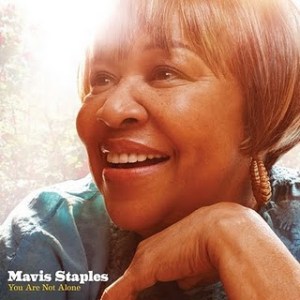
With all the excitement over the new release of Mavis Staples’s You Are Not Alone (Anti-, produced by Wilco’s Jeff Tweedy), I can’t help but be skeptical of the outpouring of Indie love for the album, even as I have been spinning (and enjoying) it myself. It isn’t the positive reaction to Staples’s talent that is surprising—at 70-plus years, Mavis has been exquisite for quite some time now—but rather the way in which critics have freighted her newest record with the “uplift” (AV Club) of a whole lot of souls that haven’t ever been to church (at least not in a good long while). Her voice is described as alternately “raw” (Paste) and full of a “depth, power, and warmth that seem increasingly rare in music today” (hear ya); Consequence of Sound, who cites Tweedy’s hand at the boards as the reason for all the current music blog attention, calls her voice “empathetic. . . powerful. . .soulful. . .touching” and “wise.” If the blogosphere is to be believed, Staples’s voice, “as authentic as it gets” (buzzine), could really save us all in these tough times. Come to think of it, the fervor of (white) faith in “authentic” black music shouldn’t be that surprising either, given the way in which race has always been entangled with popular music history in the United States.

Authenticity and the immediacy of experience it implies, have had a long history in the music industry—especially in reference to black artists—stemming back at least to the Fisk Jubilee Singers in the 1870s, an all-black acapella troupe celebrated for powerful live performances whose breakthrough concert also happened to be for a crowd of hipsters: the wealthy congregants of Henry Ward Beecher’s Brooklyn church in 1871. Beecher gave the band his enthusiastic support, namely because he felt their sound gave listeners direct access to “the inner lives of slave hearts expressed in music” even after slavery had formally ended.
While the sound of You are Not Alone differs greatly from the Jubilee Singers, the reviews of the record belie and inflame a similar desire for unmediated access to the emotive qualities (a)historically associated with black life and sound in the U.S.: namely suffering, faith, and catharsis. And Staples’s record is indeed not alone in this. Many of the sentences from the Staples reviews could easily have been lifted from those of another recent gospel record to capture the indie imagination, Daptone Records’s 2008 release Como Now. Starkly different from the breezier, countrified sounds of You Are Not Alone, Como Now is an acapella gospel recording made in a small town in Panola County, Mississippi. The record was a risky release for Daptone, a Brooklyn-based label that has consistently produced new funk and soul records since its inception in 2002 by the likes of Sharon Jones and the Dap-Kings and The Budos Band. Although old school sound has always been a part of the label’s ethos—its engineers use primarily analog equipment, for example, a major reason Amy Winehouse recorded her throwback Back in Black album at Daptone studios in 2006—marketing stripped-down gospel to its audience of predominately white hipsters would nonetheless prove a daunting task. Treating Como Now as a labor of love and a paying of dues, Daptone attempted to spark interest in the release by relying on the familiar marketing strategies of immediacy, authenticity, and nostalgia.
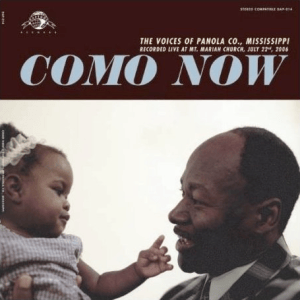
While Como Now’s tagline boldly proclaims that the music was “Recorded Live at Mt. Mariah Church on July 22, 2006”—and, thus, emphasizing the Now of the title—the cover’s vintage civil-rights era design evokes the Como of yesterday, or more accurately, encourages listeners to hear Como now and Como yesterday as one and the same through the vehicle of “raw gospel testimony.” Como Now’s depiction of the sounds of the past as echoes within the present is as ambiguous as it is uncanny, a sonic window thrown open to simpler times happening somewhere out there, “deep in the heart of Mississippi” right now.
The introductory promotional video from Como Now’s website (also uploaded on Youtube) represents the record as an aural time machine to a land and a people isolated from and largely unchanged by technology, modernity, and history.
Producer Michael Reilly’s voiceover locates rawness, emotional release, and “real religion” in the sound of black voices, in no small part because the video places his measured Yankee pacing in sonic tension with the song that accompanies it, Mary Moore singing “When the Gates Swing Open.” Over Moore’s impassioned singing, Reilly assures listeners in a muted deadpan that they will hear “no pretty piano playing or clever guitar picking, just voices. Pure soul stirring fire from the heart.” Reilly’s sentiments not only evoke the gushing Jubilee Singers’ press, but also the ethos of the infamous folklorist John Lomax, who made field recordings in Southern prisons in the 1930s because he sought “negro singers untainted by white musical conventions” (as he wrote in 1934’s “Sinful Songs of the Southern Negro”); singers in Como were actually recorded by John’s son Alan in the 1940s. Reilly’s voiceover goes on to frame the Como singers as practitioners of what the senior Lomax called “the real art of simplicity,” as stripped-down, natural singers who are artful mainly in their artlessness. While Reilly’s webcopy mentions how “children and grown folks alike have been living and breathing gospel for as long as they can remember,” for example, he fails to mention how the residents of Como have also been writing, rehearsing, and performing it.

Thus, Como Now’s marketing disavows the real artistry of the Como singers, even as it seeks to celebrate it. The simple, natural quality endowed to the singers of Como is visually accentuated by stark imagery representing the town as a down-at-the-heels, living museum of the black life of yesteryear. In the youtube clip, Moore’s soaring and spirited singing animates stills of blooming cotton fields, vintage RCA microphones, and splintering upright pianos. Save for the album cover and one blurry still of a child, there are no shots of the people of Como in the introductory promo, effectively isolating Moore’s voice from her corporeal and historical body. This isolation allows listeners to supply their own fantastic imagery and forces them to rely on historical stereotypes about the naturally sonic qualities of black people. By choosing to disembody Como’s voices, the promotional video represents the album’s music as emanating from, and even haunting, Panola County’s lush green fields and battered strip-malls rather than showing it to be a hard-fought creation of the residents themselves. To quote Lomax again: “[The Negro’s] songs burst from him, when in his own environment, as naturally as those of a bird amid its native trees.”
Although the impulse to make the album reflects a progressive desire to respectfully pay tribute to the black gospel tradition in American popular music—and to provide quality artists like The Como Mamas with critical renown and monetary compensation—Como Now relies on well-worn racial tropes to do so. It also points to the continued presence in American culture of an essentialized “black voice” that is naturalized as more emotive, truthful, and soulful than other voices. While this phenomena is socially constructed and the sounds thought of as “black” have shifted considerably—when I play early recordings of the Jubilee Singers my students consistently tell me that they sound “white” like a “glee club”—I find it fascinating that the language used to describe them has largely remained the same. While Como Now’s producer at least acknowledges that, in Como, “no one has to pick up cotton anymore, thankfully,” the marketing trades on the possibility that, while slavery and sharecropping have ended, its sonic labors have not only endured, but are readily available for download.
—
Jennifer Lynn Stoever
—
Share this:

Closing Time, or What’s In a Song?
DOI: https://doi.org/10.59350/k88zb-hvp37
Ever since the Chicago Cubs installed an organ at Wrigley Field in 1941, music has been a part of the baseball ballpark experience. Unlike basketball, hockey or football, baseball doesn’t have non-stop action, and its frequent periods of inaction give an organist or stadium DJ a broad canvas on which to improvise. Initially, ballpark music was strictly organ music, as organs were present at every ballpark by the middle of the 20th century. Starting in the 1960s and 1970s, the organist was complemented by the stadium DJ, who played recorded music over the stadium sound system. Gradually, the DJ overtook the organist and many stadiums no longer play live organ music; a little less than half of the 30 ballparks that host Major League Baseball games today don’t employ an organist.
As technology improved, allowing stadium DJs to play music on the computer rather than on the record or 8-track player, teams began allowing baseball players to choose the music they wanted to hear. And, in the 1990s, the phrase “walk-up music” entered the sports fan’s vernacular. Position players chose songs for the stadium DJ to play when they walked from the on-deck circle to the batter’s box. Pitchers picked music to be played while they warmed up at the start of their outing.
Players select their music in a variety of ways. Some pick a song from their favorite artists, artists that often originate from their corner of the world (e.g. a lefthanded pitcher from Texas warming up to country music or Southern hip-hop; a utility infielder from the Dominican Republic opting for a merengue or bachata tune). Others will choose music they feel helps motivate them to perform better on the field, choosing a new song whenever they enter a slump. Some players will even allow the stadium DJ to pick their music. In 2007, New York Mets third baseman David Wright gave the fans the opportunity to vote for his walk-up song online, giving them list of 50 of his favorites to choose from (the fans choice: “Me & U,” the only hit by Cassie, a hip-hop artist).
While almost every baseball player has walk-up music, only a handful of players have had their music become an iconic part of their image and legacy. The best example of a player who’s become closely identified with his entrance music is New York Yankees pitcher Mariano Rivera.
Rivera has been the Yankees’ closer for more than a decade and a half, called upon to get the last three outs in the ninth inning when the Yankees are ahead by a handful of runs. The closer’s role is one of the most pressure-packed in all of team sports. Do it well, and your opponents often feel defeated as soon as you come into the game. Do it poorly, and you’ll frustrate your teammates, your manager and your team’s fan base. After all, nothing’s more demoralizing than losing a game you’ve all but won, and a closer’s job is to turn almost-certain wins into definite victories. Rivera is arguably the best closer in baseball history, an integral part of a Yankees team that’s won five championships and advanced to the playoffs in all but one of his 16 seasons.
During Rivera’s rise to prominence in the late 1990s, the DJ at Yankee Stadium, his home ballpark, began playing “Enter Sandman” by Metallica when Rivera came into the game. To a certain extent, “Enter Sandman” seems like a strange choice for Rivera’s entrance. While it does start off softly before building to a eardrum-thumping crescendo of guitars, “Enter Sandman” is a loud, heavy-metal song. Rivera, the most reserved of the Yankees superstars developed over the last two decades, is serene and soft-spoken. To the untrained ear, “Enter Sandman” sounds arrogant and boastful, two words that have never been used to describe Rivera.
However, in many ways, “Enter Sandman” does compliment Rivera. Its lyrics, about a child battling nightmares as he tries to sleep, are a perfect metaphor for Rivera, whose job is to gives opposing hitters nightmares while trying to put the game to bed in the Yankees’ favor. Rivera, a deeply religious man by all accounts, probably approves of the song’s encouragement to “Say your prayers little one” and its recitation of a classic children’s bedtime prayer (“Now I lay me down to sleep/Pray the Lord my soul to keep…”). In addition, Rivera may also get a kick out of the idea of opposing hitters saying their prayers before facing the dancing and darting fastballs that he throws with ruthless efficiency and pinpoint accuracy.
It also helps that Yankee Stadium is one of the loudest outdoor venues anywhere. Its combination of rabid fans and their New York-style obnoxiousness and hubris combined with an ear-splitting sound system that could wake the dead already makes the Bronx, NY stadium one of the toughest venues for visiting teams to compete. Combine those elements with a song that’s loud, even before you raise the volume, being played while an indomitable closer jogs to the pitcher’s mound from the bullpen behind the outfield fence and makes his warm-up throws and it isn’t hard to understand why many enemy teams are mentally vanquished before they even take their cuts against Rivera, whose entrance routine serves to both whip the Yankee Stadium crowd into a frenzy and intimidate opponents.
Would Rivera be as dominant without such scene-setter is a legitimate question. While baseball is a very technical sport, requiring precision whether you’re fielding a ground ball or laying down a bunt, emotion and superstition has a prominent place in the sport. Yankee Stadium is already one of the most hostile stadiums for opponents; throw in a great closer coming out to a ominous, foreboding song and it’s understandable how an opponent’s anxiety would be heightened. You could also argue that, Rivera is so good, what’s playing over the sound system is immaterial. After all, Rivera does play half his games on the road, away from Yankee Stadium and “Enter Sandman,” and he has managed to excel in those contests as well.
Rivera is now 40 years old and still among the best at an age when most baseball players are retired or on the downward slope. Upon retirement (and the requisite five-year waiting period), Rivera will almost certainly be enshrined in the National Baseball Hall of Fame with the other greats. And, while “Enter Sandman” hasn’t been the sole reason for his success, it will always be an indelible part of Rivera’s legacy.
Share this:




Current Top Posts





April 2021

January 2020

November 2019

October 2019

August 2019

April 2014

November 2017

March 2015

December 2017

October 2015


Recent Comments