
Springtime in KC: Soundwalk #2
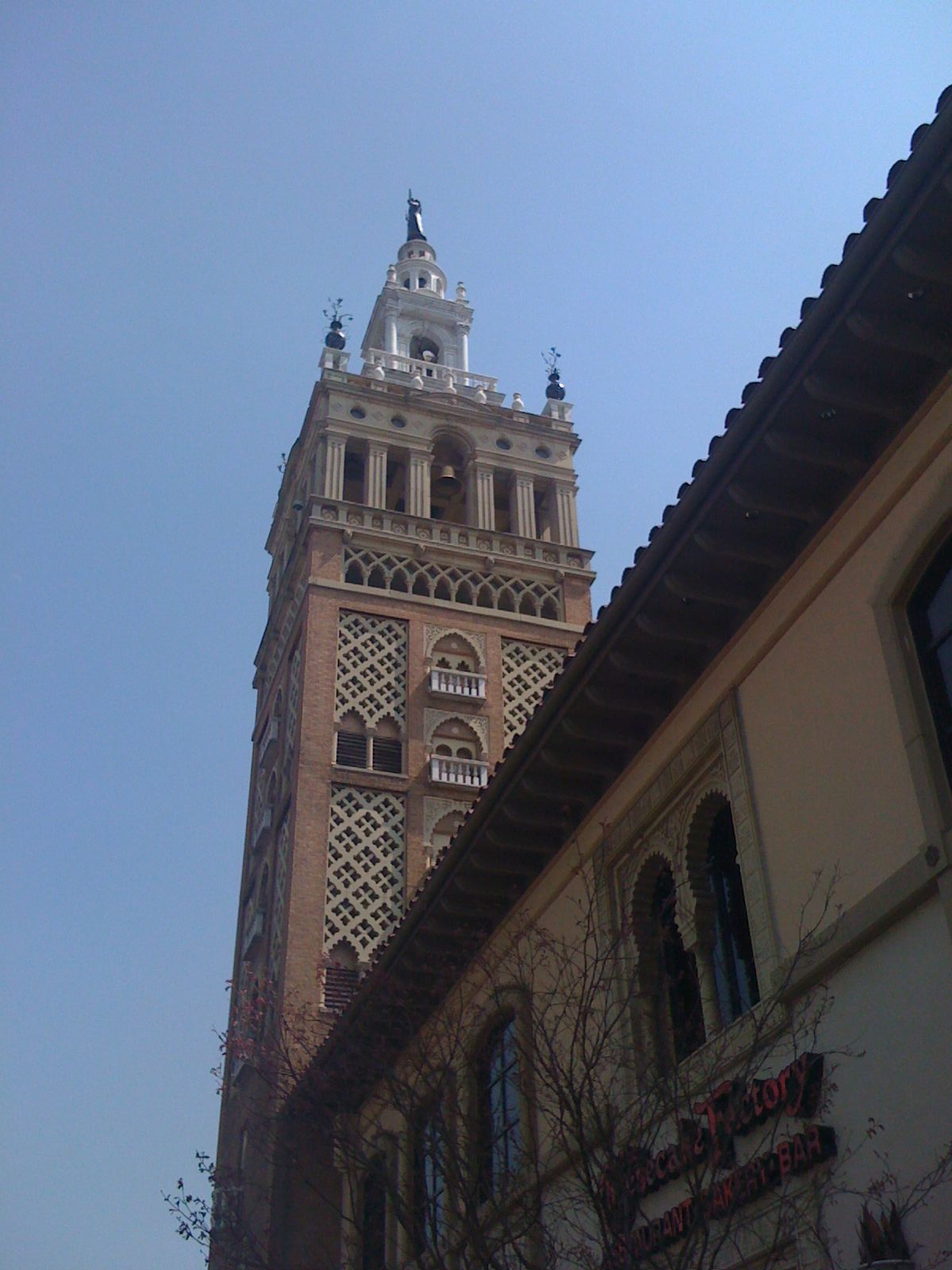
The bell tower (source of the recorded bell chimes you hear on the Plaza) at the corner of 47th Street and JC Nichols Parkway--also known as the bell tower of the Cheesecake Factory
Since spring has sprung in Kansas City, I decided to do another soundwalk as my post for the month of April. It seemed timely and appropriate. (And for those of you who have yet to receive the spring in your neighborhood, I hope the sounds of spring in this post will warm you up.)
Before I moved to Kansas City, I did not know much about the area. So my past few months in my new home have been full of little discoveries. One of the things I like about Kansas City is walking around the Country Club Plaza area in Midtown KCMO. The Country Club Plaza (or known among residents simply as “The Plaza”) is a shopping district and residential area. Tourists flock there because of the number of shops and outlets along its streets, but it is also a nice place to just take a stroll on a weekend. My boyfriend lived there before Miss E and I relocated to Kansas City, and I have fond memories of being pregnant and walking to the Plaza for gelato while he was at work.
Oftentimes I will go there with my daughter to just walk around and window shop. It is always abuzz with people and sounds. Street performers abound, as do outdoor eateries. Last weekend it was our first warm weekend out here, and I decided it was a shame for Miss E and I to stay indoors. So I packed up our things and drove us to the Plaza.
The Plaza was awash in sounds. Spring brings out not just our shorts and sunglasses, but also sounds. In winter, our doors and windows are closed. When we drive, we don’t open the windows (because it’s too cold to do so). Hence, winter seems to be a quieter season than spring. And although summer is noisy as well (when I think of summer I think of beaches, ballparks and terraces), spring stands out because it is set against winter. Summer is an extension of the sounds of spring. But spring heralds the return of warmer temperatures with a cornucopia of sound, like the sounds of birds that have returned from their winter retreats—or Top 40 music blaring from cars with the windows rolled down.
For this soundwalk I walked along 47 Street, the main thoroughfare of The Plaza.
I started at Summit Street, off of 47th, and made my way to JC Nichols parkway (at the end of 47th, where it turns into Emmanuel Cleaver Blvd). I chose this route because it is the busiest; also, it is the route I usually take when I go on my strolls with my daughter. I used my iPhone to record the sounds on my soundwalk, particularly the Voice Memo app.
Saturday was full of sounds, which is one of the things I enjoy about the Plaza so much. There is so much life on the street. The sounds bring the warmth of the human element that was missing in winter. However, many of the sounds are not necessarily organic, “human”; there were plenty of industrial, “created” sounds. In my recordings you can hear people singing, people talking, my daughter cooing, birds chirping, and the wind blowing. But you can also hear (recorded) bells ringing at the top of the hour, crossing sound-boxes at intersections, music coming from cars, and even the click of my phone’s camera.
I was surprised that this is not what came out on the recordings. In fact, I was disappointed to hear a “click click click” where I heard a smooth “grrrrrrrr” of the wheels of my baby’s stroller. What seemed like a cornucopia of sound comes off as humming, barely audible. (Your best bet to listen to my on-field recordings is to listen to them at full volume or to listen to them with headphones on. When I listened to the recordings a second time, this time with headphones, I grasped a lot of sounds that I didn’t when I simply played the recordings on my laptop.) Initially I was annoyed because I hoped these recordings would render the full spectrum of sounds I encountered, as I encountered them.
It could be that my problem is simply a matter of hardware (my iPhone) or software (my iPhone’s Voice Memo app). Perhaps my smartphone is unsuitable for the task of recording a soundwalk. To a lesser extent, this also makes me think about what hardware or software we use to record soundwalks, and I’d love to hear from our readers who have done these. But this leads me to another question: is accuracy important when recording a soundwalk? Will my recordings ever accurately portray my listening experience, or will there always be something missing? Ultimately, is this ideal recording a figment of my sonic imagination?
All in all, it was a day that was full of sound and commotion. Perhaps you needed to be there to hear it.
Tracks:
4_9_2011 1_26 PM Getting ready to start soundwalk: birds chirping
4_9_2011 1_28 PM Parking garage-as-echo chamber
4_9_2011 1_40 PM Eastbound on 47th Street; keep an ear out for the voice of a man begging for change at 4:55. Street band playing at 5:30. Also, drumline toward last minute of recording.
4_9_2011 2_00 PM Westbound on 47th Street, heading back home; check out the countdown at the crosswalk at 9:40 mark.
Bonus tracks:
4_9_2011 1_50 PM Drumline at JC Nichols fountain


Share this:

Listening to Robots Sing: GarageBand on the iPad
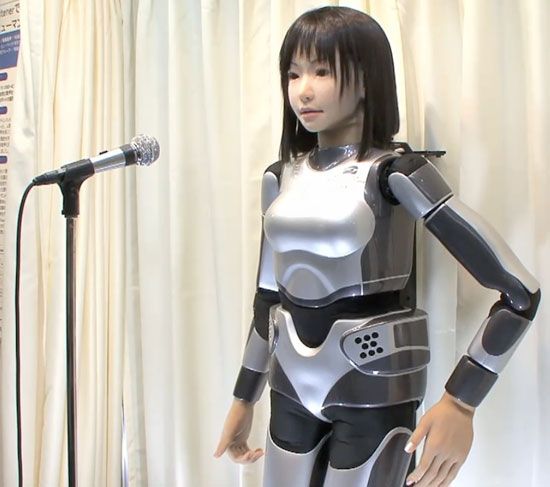 I recently had the opportunity to fool around with the iPad2’s new GarageBand suite. Enticed by the intuitive touch interface I soon found myself lost within the device’s labyrinthine architecture. Every poke, prod and press brought me to a new screen with a bevy of exciting options. A touch to create a drum loop, a tickle to evoke some reverb, and a brush to strum a guitar. I was one with the machine; it was a truly cybernetic, kinesthetic moment. This may sound naïve, but I had never realized how many tools were available to electronic musicians, or how intuitive using these tools could be. As digital tools to create music become more accessible and more intuitive, what is the role of the human in understanding their use? Further, what strategies can we adopt when listening to these creations?
This question may seem a bit outdated to those who have been researching post-humanist phenomena since the digital boom in the mid-nineties. Often conflicting perspectives regarding the negotiation of the human and the digital have been considered in the last decade or so. Some like Donna Haraway, Pierre Lévy, and even Ray Kurzweil offer particularly optimistic readings of the post-human (although for radically different reasons). While scholars like Nancy Baym and Jaron Lanier have offered decisively more sober readings of the problematic. They argue that splits between the human and post-human, or analog and digital are false dichotomies. Truth be told, none of the theorists above adequately address my feelings on this topic. Producing music with a digital audio suite makes me defensive of my humanism and it is by its very nature a project of preservation.
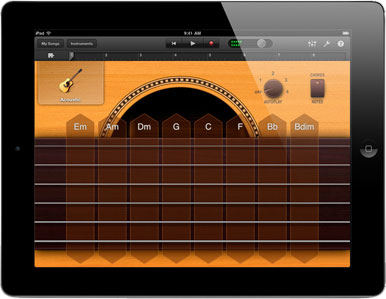 The algorithmic tools packaged within digital audio suites encourage a sense of aesthetic preservation. Tools like GarageBand’s Smart Guitar, Smart Drums, Smart Bass, various arpeggiators and Appleloops encourage the user to program music on a high level where the nuance of serendipity and improvisation play second fiddle to the overall sonic contours of a piece. Although the user is provided the tools to intervene and program music in a very specific way, it is by default a distinctly different experience than that of playing a guitar or piano. The ghost of the algorithm haunts such performances; reminding the user that these acts of spontaneous creation are no longer the default but deliberate…. This sense of deliberate improvisation forces me into a reflexive space where I am acutely aware of the mediations occurring within my performance. Succinctly, I must defend a sense of self within my creation. If I yield to the algorithms that seek to help me compose, I destroy all sense of the human within my work. Simply turning on robots and watching them sing.
For this reason, I propose an aesthetic of preservation as a way to understand the ways in which we listen to works created by digital audio suites. As algorithmic aids become more advanced and commonplace in music, the human becomes a less essential aspect of the form. Understanding what has been deliberately included in spite the seductive algorithmic environment is ultimately a project that seeks to recover the human in the machine; perhaps even, a project doomed from the start, as we grow ever closer to the means of our artistic production.
AT
Magnasanti – Check out the results of my collaboration with Colin Germain on GarageBand!

Share this:


Current Top Posts





April 2021

January 2020

November 2019

October 2019

August 2019

April 2014

November 2017

March 2015

December 2017

October 2015
 Sounding Out!
Recent Comments