
Singing The Resistance: January 2017’s Anti-Trump Music Videos

 SO! Amplifies. . .a highly-curated, rolling mini-post series by which we editors hip you to cultural makers and organizations doing work we really really dig. You’re welcome!
—
The US presidential campaigns in 2016 were escorted by a number of songs regarding the person who was recently inaugurated as president. These songs served mostly as a kind of dystopic, fear-indulging, angsty “comedy music”—to reference Frank Zappa’s 1971 “Dental Hygiene Dilemma”—with a perverted thrill, or functioned in the retro manner of balladesque storytelling in songform. Performance art band Pussy Riot’s rather blunt “Make America Great Again” falls in the former category, while many examples from the brave and radiating 30 Days, 30 Songs project fall in the latter, summoning indie-rock icons as Death Cab For Cutie, R.E.M., Bob Mould, EL VY, Jimmy Eat World and Franz Ferdinand.
Lesser known tracks like “Trump,” produced by German DJ and producer WestBam, used a collage with sampled footage organized on a 4/4-beat to uncover Trump’s lies and remodel them into articulations of the vocal intentions of this subject: “We need drugs. We need crime.” However, as horrific and uncanny as this video seems, this subject as head of government then figured only in an unthinkable, impossible world.
In June 2016, Los Angeles rappers YG and Nipsey Hussle apparently sensed the horrible threat so creepily approaching the Oval Office, releasing “Fuck Donald Trump,” which produced a long string of versions, extensions, and new parts in the months afterward: “Don’t let Donald Trump win, that nigga cancer / He too rich, he ain’t got the answers / He can’t make decisions for this country, he gon’ crash us / No, we can’t be a slave for him.” In this song, before the votes were cast, the rappers and the Angelenos in the video address the urgency of a pending openly white supremacist government and the need to publicly resist it. For very good reasons, these musicians did not put the subject now in power into the box of a neglectable funny weirdo candidate. They recognized the threat as being as serious and imminent as it really was. “Fuck Donald Trump / Fuck Donald Trump / Yeah, nigga, fuck Donald Trump/ Yeah, yeah, fuck Donald Trump.”
In the week before the inauguration, artists released a string of music videos that struck very different tones from 2016. A comedy? No more. A gruesome, colorful story to tell? Too vague, too meek. “Hallelujah Money,” sings Benjamin Clementine in the song by the ever-so dystopic anime-band Gorillaz. The new song—the band’s first release in almost 7 years—is a freaked out lament, engendering bewilderment and prayer, taking on a sonic persona that cries out to The One & Only God Of Mammon – the lyrical subject is here the governing subject: “And I thought the best way to perfect our tree / Is by building walls / Walls like unicorns / In full glory / And galore.” In the video, the KKK marches along, the pigs in George Orwell’s animal farm blare, a lone and deathstruck cowboy meditates on the horizon behind Clementine, swinging in distorted rhythms and harmonies. In the end, Clementine burns his hair in a gigantic megaton-explosion while praying for money, praying for the last credible authority: “Hallelujah money (Past the chemtrails) / Hallelujah money (Hallelujah money).”
An angered, revolutionary will also stokes the song “Smoke ’em Out,” released on Jauary 17th, 2017 by a feminist trio consisting of sisters Sierra Casady & Bianca Casady (known as CocoRosie) and transgender singer Anohni (also known as the lead singer for Antony and the Johnsons). The song matches solid beats with serene pizzicatos, creating a surprisingly catchy melody of intriguing courage and uplifting collective resistance: “Burning down the house / The dead girl shouts / Smoke em out!”
Rhythmically demanding and just as sonically unforgiving comes “I Give You Power” by the Arcade Fire featuring Mavis Staples, an amalgamation of anger and the will to move ahead, to transcend current limitations of micro politics into a desired and imagined near future. The song opens with a flat electronic beat that builds up to a fat bulldozing bass sequence with added effects over which Mavis Staples’s multiplied voices lament and demand and call out in grief and angry bewilderment. The song merges disco, soul and funk with traditions of protest chanting, topped off with church organ chords. The music video reveals nothing beyond an older analog mixing desk operated now and then with calm sensitivity and deep knowledge of how this production tosses and turns: bright and glaring lights flicker over the image of the desk.
The Brooklyn-based Sateen, in contrast, perform “Love Makes The World” in a lavish scenery replete with luxurious flashing red gowns of large ruffles. They sing in the woods and in a brick underpass, while joined and complemented by a series of queer singers, dancers & personae presenting themselves, their love and their resistance in public and in private situations. Angelic voices sing over the cycling and motorized club beats, providing electronic sounds of hope whose joyful alien flavors are often in tension with the song’s lyrics: “How can we progress: / When we’re ruled by racists?”
The first music video, however, that drew my attention to this prolific phenomenon of songs against the US’s new governing subject was a cover of Morrissey’s “Interesting Drug” (1989), released by the notorious OK Go:
This time OK Go does not flatter us with their usual acrobatic and meticulously choreographed video performance, but rather present plain white-on-black-text between brief seconds of footage and screenshots of “the bad people on the rise” now in charge of the US, images ready to become the memes and gifs of a resistance movement. The music video ends with an explicit call to action–“It’s a difficult time but fear and anger aren’t the answer. Work to make a better world” followed by a list of five civil rights organizations including the American Civil Liberties Union, the Immigrant Defense Project and Planned Parenthood, headed by an unmistakable imperative: “Volunteer and donate.”
Discovering this song and video, I soon stumbled across yet another song that struck me first of all as a very clever and all too obvious marketing move, Green Day’s “Troubled Times,” which of course resonates with the band’s hit record “American Idiot” about the George W. Bush presidency.
“What good is love and peace on earth / When it’s exclusive.” In the visual style of traditional black and white newspaper collages—with splashes of red that summon Schindler’s List–the band animates the contemporary pandemonium of hatred, racism, sexism and plutocratic sadism to stage yet another traditional Green Day pop punk song, though one with a rather less disruptive, and much more forlorn note. I have to note a ertain awkwardness here, as the business model of lining up with this protest movement seems rather obvious, and many sections of these lyrics and the video’s imagery seems more cliché than genuine. Are these times really only structurally and anonymously “troubled? Are there no actual wrongdoers, criminals and hatemongers to be named, accused, and condemned? Roger Waters truly unexpected—and much more direct—recent live performance of “Pigs” in Mexico City in October 2016 comes to mind, with its massive projection of KKK & TRUMP-imagery as icons of hate – reinvigorating the political urgency present in a song from 1977.
Still, the song by Green Day might get airplay on nationwide rock radio unlike many of other songs of resistance, and by this it could actually succeed in its overstated mission.
The most aggressive and decidedly agitprop-productions come from Moby and Fiona Apple. Collaborating with Michael Wahlen, Apple recorded a chant for the massive Women’s March on Washington (and the many simultaneous marches occurring across the US and the world) the day after the inauguration:
With lines like “We don’t want your tiny pants / Anywhere near our underpants” Wahlen and Apple revive the protest chant traditions of the 1960s with its mean, challenging, and unforgiving humor. Late last year Apple already released a joyful yet sadistic little piece in the style of a sentimental Christmas carol that keeps “Trump’s nuts roasting on an open fire (…) Merry Christmas, Merry Christmas: Donald Trump, fuck you.”
In contrast, Moby merges his 1990s rave skittishness with an unrepentant love for precisely-targeted guitar punk riffs in “Erupt & Matter.” Original footage of demonstrations, resistance gatherings, and a selection of the absurd and terrifying authoritarian and nationalist figures of our time – first Erdoğan, Farage, Assad, then Duterte, Trump, Wilders, Le Pen, Petry, Hofer and many more – alternate with classic performance shots of Moby and his band The Void Pacific Choir, generating a sentiment of accelerating urgency: “WE DON’T TRUST YOU ANYMORE. WE DON’T TRUST YOU ANYMORE.”
But the anger against sclerotic oligarchies and a condescending establishment is ironically mimicked by exactly the most unsettling and authoritarian protagonists of various nationalist parties worldwide. Even as Moby’s aggressive protest chant becomes an infectious and intriguing earworm, does he render such a revolutionary impetus dubious? Pondering this reminded me of the Atari Teenage Riot line from 1995: “Riot sounds produce riots.” (Atari Teenage Riot 1995)
In the first few weeks of January alone, several consortiums have launched protest song campaigns to ensure that songs like these will just keep coming. On inauguration day, the platform “Our First 100 Days” was launched. Here, one new protest song will be released on every day for the first one hundred days of the current president’s administration, with all profits raised from the sales of songs by groups such as PWRBTTM going, as their website states, “directly to organizations working on the front lines of climate, women’s rights, immigration and fairness.” Paste Magazine expanded its “30 Days, 30 Songs” campaign for the long haul, offering up to 1000 Songs in 1000 Days— one song a day for every weekday of Donald Trump’s term.
However, as I write these last lines, the global public is remixing the resistance in its own lightning-fast ways. The recent public sucker-punch of white supremacist neo-Nazi Richard Spencer has already become a legendary object of meme culture. Folks have synched this clip to multiple—and diverse—soundtracks that invite repeated viewings, from Celine Dion’s “My Heart WIll Go On,” Bruce Springsteen’s “Born In The USA,” Queen’s “We Will Rock You,” Gwen Stefani’s “Hollaback Girl,” Pharrell Williams’s “Happy,” The Notorious B.I.G.’s “Hypnotize” to Frank Zappa’s “Black Page #2”. . .and the list continues.
Singing the resistance in the 21st century poses a truly complex task. Artists must sonically navigate a wide array of musical aesthetics—some geared toward more immediate public appeal, while others evoke more erratic and dissonant affects—and keep an eye toward combining sound with impactful media events and artifacts, while never forgetting to consider the critical question “How Does it Feel?”
This blogpost has its own playlist: click here
—
Holger Schulze is full professor in musicology at the University of Copenhagen and principal investigator at the Sound Studies Lab. His research focuses on the cultural history of the senses, sound in popular culture and the anthropology of media. Recent book publications are: American Progress (2015), Sound as Popular Culture (2016, ed.) and Krieg Singen: Singing The War (2017, ed.).
—
 REWIND!…If you liked this post, you may also dig:
On Ventriloquism, Dummies, and Trump’s Voice – Sarah Kessler
À qui la rue?: On Mégaphone and Montreal’s Noisy Public Sphere – Lillian Radovac
The Noise of SB 1070: or Do I Sound Illegal to You? – Jennifer Stoever
Share this:

SO! Amplifies: The Women in L.A. Punk Archive

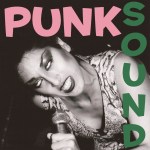
Image of Alice Bag used with her permission (thank you!)
For full intro and part one of the series click here. For part two, click here.
Our Punk Sound series implicitly argues that sound studies methodologies are better suited to understanding how punk works sonically than existing journalistic and academic conversations about musical genre, chord progressions, and/or genealogies of bands. Alexandra Vasquez’s sound-oriented work on Cuban music, for example, in Listening in Detail (2014) opens up necessary conversations about the “flashes, moments, sounds” in music that bear its meanings and its colonial, raced, classed, and gendered histories in material ways people can hear and feel. While retaining the specificity of Vasquez’s argument and the specific sonic archive bringing it forth, we too insist on “an ethical and intellectual obligation to the question: what do the musicians sound like” (12) and how do folks identifying with and through these musical sounds hear them?
In this series, we invite you to amplify varied historicized “details” of punk sound–its chunk-chunk-chunk skapunk riffs, screams, growls, group chants, driving rhythms, honking saxophones–hearing/feeling/touching these sounds in richly varied locations, times, places, and perspectives: as a pulsing bead of condensation dripping down the wall of The Smell in Downtown LA (#savethesmell), a drummer making her own time on tour, a drunk sitting too near the amp at a backyard party, a queer teenager in their bedroom being yelled at to “turn it down” and “act like a lady[or a man]”. . .and on and on. Today’s entry is done in conjunction with our SO! Amplifies series. . .a highly-curated, rolling mini-post series by which we editors hip you to cultural makers and organizations doing work we really really dig. Today we round out our series on punk by diving into Alice Bag’s archive of interviews with women in the L.A. punk scene.
SOUND!
–Aaron SO! (Sounding Out!) + Jenny SO! (Sounding Out!)
—
 Alice Bag’s Women in L.A. Punk Archives is a treasure trove of interviews that she has conducted with women in the L.A. punk scene. Today we share with you some of the most insightful and exciting gems we curated from her amazing archive. We encourage you to hear punk in a new way, and to explore her archive for yourself.
***

Joanna Spock Dean of Backstage Pass
[Excerpt from an interview on March, 2006]
Alice Bag: What was/is your contribution to the punk community?
Joanna Spock Dean: I was the ONLY bass player in Backstage Pass (since we had more rotating members than any other band!), and one of the singer/songwriters. I always felt that Backstage Pass was one of the first bands to come out of the Punk Scene (which we loved, of course), and move into the poppier “New Wave” scene, and others were able to do the same thing. We also were unapologetic groupies, and I think the fact that that was a big part of us, and that we were proud of it, added to the band.
AB: Do you have any funny or interesting stories to share?
Joanna Spock Dean: I [do] remember one. We were in San Francisco @ The Mabuhay, maybe opening for Devo, so it was a 2 night thing. The first night, I remember walking into the bathroom, and finding some girl harassing Genny and Marina, and I told her to leave them alone. (I was always the ‘leader’ in that way.) The second night, the same girl comes up to the stage, and starts screaming and throwing popcorn at me as we’re onstage – hey, she probably just thought it was a ‘punk’ thing to do. Well, I exploded. I threw off my bass, jumped off the stage and started pummeling her – I heard that Rod came flying over the top of his drum kit to pull me off. I do remember that as I’m swinging away, she’s yelling “I changed my mind, I changed my mind, I love your band, I love your band!”

Penelope Houston of The Avengers
[Excerpt from an interview on June 2007]
AB:What was/is your contribution to the punk community?
Penelope Houston: As singer/lyricist of the Avengers in the late 70’s and now again leading the band to play all over the world.
PH: What was the role of women in the early punk scene?
Penelope Houston: It seems like there was more freedom and fewer rules in 1977-79, before hardcore took over the mantle of punk. The early scene embraced all comers, be they female, gay, non-white or even older. There was no dress code. Women were pioneers along with everyone else involved. I noticed no separation. I knew women who were musicians, bookers, managers, photographers, visual artists, film makers, journalists, label owners… etc.
***

Heather Valiant Ferguson, scenemaker, style breaker and hairdresser
[Excerpt from an interview on November 2009]
AB:What was/is your contribution to the punk community?
Heather Valiant Ferguson: My name is Heather Ferguson. I now go by the first name Valiant. I became a hairdresser at age 18 and went to San Francisco to work for Vidal Sassoon. I did a lot of free hair for a lot of fellow punks, including The Avengers, The Cramps, The Ramones, Belinda C., The Dils, etc.
AB: Which artist, band concert and/or show had the most impact on your life?
Heather Valiant Ferguson: I lived in Pacific Heights on Broadway and Laguna. It was around 1974-75. The punk rock scene was making its way over the waves from Britain through Sassoon’s. At the very place in time that punk rock came streaming into consciousness, I was hanging around with some very dark and edgy people like myself. We used to go to a place in North Beach and I would smoke Black Sobranie cigarettes in a short black cigarette holder. I wore black clothing and Hats with veils. I was dating a musician lead singer named Bobby Death. He kept crooning on about this band from New York called ‘THE RAMONES’. One night he got tickets to their SF debut at a place called the Savoy Tivoli. Well, he disappeared somewhere, but I didn’t care…..WOW, who were these brilliant moptops?? Beat on the brat, with a baseball bat, Oh yeah, yeah, oohh oohhh. I was in my version of Nirvana. I felt something growing inside me and it wasn’t a baby. It was life alright, but they just knocked me out. Bobby appeared near the end to tell me that he had invited them over to my apartment for champagne and coke……WOW again. We stayed up all night long telling each other all our stories. That was too kewl for words. So that show was me plugging into me, plugging into the whole synchronistic punk scene. I moved to Hollywood a year later to work at Sassoon’s there.
***

Connie Clarksville, a Blackette with Black Randy & The Metro Squad
[Excerpt from an interview on January 2008]
AB: What was/is your contribution to the punk community?
Connie Clarksville: When I moved to Hollywood from Orange County in 1972, I moved into the Canterbury Apartments. Back then it was full of drag queens and pimps and gays. I was a Bowie fan and liked the array of different people. After (the era of) Glitter, Rodney Bingenheimer’s (English Disco), The Real Don Steele Show, The Rainbow, disco and hanging out on Sunset, I went to a show at Larchmont Hall one Saturday afternoon. There was a show at the Whiskey where I met Bruce (Moreland) who would become Bruce Barf (of the Weirdos) later. He told me how this guy named Brendan Mullen was wanting to open a place where we could hang out and bands would play in the basement of the Pussycat Theatre on Hollywood Blvd. He took me over to this mess of a basement where I met Brendan. I loved his accent and had a crush on him rite away. He said he’s naming this mess “the Masque.” I loved the idea and wanted to do something to help so I hauled trash out of the basement. There was a small, cut-out room in the middle, so when bands started playing and people started showing up, I decided to ask Brendan if I could sell sodas. He said, “sure, Clarksville.” Nobody had ever called me that before, so I got used to the name. Brendan was really the only person who called me that.
Soon after, I met this girl named Sheila (Edwards) and we needed a place to stay. I was going to beauty school and had a little money and with her half (of the rent), I suggested the Canterbury. It was close to school and the Masque. Soon after, many bands moved in: The Bags, Nicky Beat from the Weirdos, The Germs, Geza X lived across the hall… so, so many to list.
***

Debbie Dub, scenemaker, producer, management and booking
[Excerpt from an interview on July 2011]
AB: What was/is your contribution to the punk community?
Debbie Dub: In the early days, I think just being part of the scene was a huge contribution. There weren’t very many of us, and we were just making it up as we went along – which means I helped create it! Producing the first Negative Trend single is one of my lasting contributions. The record is famous now but we couldn’t give them away at the time.
AB: Are there any punk women from the early scene that you feel have not been adequately recognized?
Debbie Dub: All of them. I don’t think you can underestimate the impact that women had on the scene. We were equals in standing but also in numbers. When you think about it, for a phenomenon filled with such over the top aggressive music and attitude, it’s amazing how many women played vital roles in shaping the scene. I don’t think there had ever been anything like it before in terms of women’s participation.
Read More in the Women in L.A. Punk Archives
–
All text and images reproduced with the permission of Alice Bag. The featured image is of the Bags Live at the Mabuhay Gardens, January 1978.
–
Alice Bag is a punk rock singer, musician, author, educator and feminist archivist. Alice was lead singer and co-founder of The Bags, one of the first wave of punk bands to form in the mid-1970’s in Los Angeles, CA.
Her first book, Violence Girl, East LA Rage to Hollywood Stage is the story of her upbringing in East LA, her eventual migration to Hollywood and the euphoria and aftermath of the first punk wave. Violence Girl reveals how domestic abuse fueled her desire for female empowerment and sheds a new perspective on the origin of hardcore, a style most often associated with white suburban males.
An outspoken activist, feminist and a self-proclaimed troublemaker, Alice has remained active in music since the late 1970’s and published her second book, Pipe Bomb for the Soul in 2015. The ongoing influence of Alice’s style can be seen in the traveling Smithsonian exhibition, American Sabor. She has been profiled by PBS, AARP and has been an invited speaker at colleges including Stanford, Wellesley and USC. Her memoir, Violence Girl, is now required reading in gender and musicology courses throughout the country.
—
REWIND!…If you liked this post, you may also dig:
SO! Amplifies: Ian Rawes and the London Sound Survey–Ian Rawes
SO! Amplifies: Cities and Memory–Stuart Fowkes
SO! Amplifies: #hearmyhome and the Soundscapes of the Everyday–Cassie J. Brownell and Jon M. Wargo
Share this:




Current Top Posts





April 2021

January 2020

November 2019

October 2019

August 2019

April 2014

November 2017

March 2015

December 2017

October 2015
 Sounding Out!
Recent Comments