
Listening to Robots Sing: GarageBand on the iPad
 I recently had the opportunity to fool around with the iPad2’s new GarageBand suite. Enticed by the intuitive touch interface I soon found myself lost within the device’s labyrinthine architecture. Every poke, prod and press brought me to a new screen with a bevy of exciting options. A touch to create a drum loop, a tickle to evoke some reverb, and a brush to strum a guitar. I was one with the machine; it was a truly cybernetic, kinesthetic moment. This may sound naïve, but I had never realized how many tools were available to electronic musicians, or how intuitive using these tools could be. As digital tools to create music become more accessible and more intuitive, what is the role of the human in understanding their use? Further, what strategies can we adopt when listening to these creations?
This question may seem a bit outdated to those who have been researching post-humanist phenomena since the digital boom in the mid-nineties. Often conflicting perspectives regarding the negotiation of the human and the digital have been considered in the last decade or so. Some like Donna Haraway, Pierre Lévy, and even Ray Kurzweil offer particularly optimistic readings of the post-human (although for radically different reasons). While scholars like Nancy Baym and Jaron Lanier have offered decisively more sober readings of the problematic. They argue that splits between the human and post-human, or analog and digital are false dichotomies. Truth be told, none of the theorists above adequately address my feelings on this topic. Producing music with a digital audio suite makes me defensive of my humanism and it is by its very nature a project of preservation.
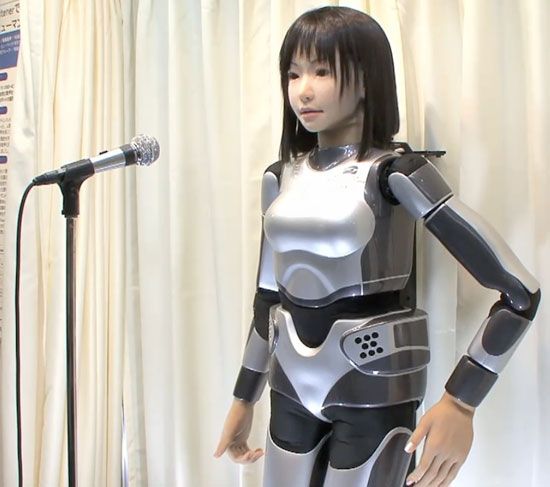
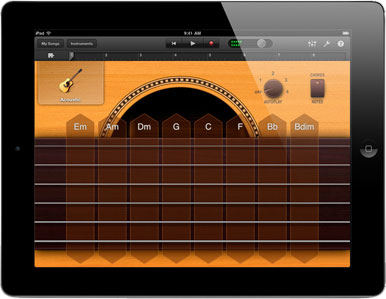 The algorithmic tools packaged within digital audio suites encourage a sense of aesthetic preservation. Tools like GarageBand’s Smart Guitar, Smart Drums, Smart Bass, various arpeggiators and Appleloops encourage the user to program music on a high level where the nuance of serendipity and improvisation play second fiddle to the overall sonic contours of a piece. Although the user is provided the tools to intervene and program music in a very specific way, it is by default a distinctly different experience than that of playing a guitar or piano. The ghost of the algorithm haunts such performances; reminding the user that these acts of spontaneous creation are no longer the default but deliberate…. This sense of deliberate improvisation forces me into a reflexive space where I am acutely aware of the mediations occurring within my performance. Succinctly, I must defend a sense of self within my creation. If I yield to the algorithms that seek to help me compose, I destroy all sense of the human within my work. Simply turning on robots and watching them sing.
For this reason, I propose an aesthetic of preservation as a way to understand the ways in which we listen to works created by digital audio suites. As algorithmic aids become more advanced and commonplace in music, the human becomes a less essential aspect of the form. Understanding what has been deliberately included in spite the seductive algorithmic environment is ultimately a project that seeks to recover the human in the machine; perhaps even, a project doomed from the start, as we grow ever closer to the means of our artistic production.
AT
Magnasanti – Check out the results of my collaboration with Colin Germain on GarageBand!


Share this:

Listening to Interiors, Silo #5
 Early in Jonathan Sterne’s (2003) book The Audible Past he writes, “hearing is concerned with interiors, vision is concerned with surfaces” (p. 15). This binary is in many ways gospel in sound studies. Martin Jay (1993) has established in his work, Downcast Eyes, a similar division between observations, the ocular, and listening, the speculative (p. 85). Most other literature takes a similar perspective – the sonic interior is a main methodological praxis of sound studies. When deciphering the speculative, listening is still the first, best tool, for interpreting an interior. I wonder, what it means to extend this metaphor into space. What does it mean, interpretively, for a sound wave to ricochet through a reverb spring, to yell in a claustrophobic hallway, or to listen with headphones instead of speakers. What is the culture of the interior, and how is it heard?
One place to look is the fantastic but infrequently publicized (although it has gotten some notable press) Silophone. An abandoned grain silo in Montréal, Silophone has been wired to serve as a medium of anonymous communication, and reverberation since November 2000. It’s easy to reach too, just call 514-844-5555. After the second ring, you are patched in to Silo #5, where your words are broadcast to ricochet around the abandoned building. Contributing to a participatory soundscape where several voices contribute to an ever changing, echoing interior. Silophone is definitely art, it is intrinsically technological, certainly audible, and it is almost social.
One striking question about Silophone is what exactly it means, what are the cultural stakes of an anonymous and collective interior? Can it be read as a critique of the ambiguity of network society, the futility of translation in an increasingly global culture? As the sounds refract against the walls of the silo and compete against one another, it is hard to decipher a clear signal, let alone consider a dialect or source. Conversely, Silophone also represents the possibilities of a network commons. Even though one sound rarely emerges as dominant, this relates to the counter-hegemonic aspects of the interior. Inside, hearing privileges proximity, and quiet. The less participants, and the closer your receiver is to a speaker, the more likely you are to hear a sound. Though this is a similar to the listening politics of everyday life, it should be noted that the silo is an experiment of space; the dynamics of its audible space emulates a virtualization of voices unprecedented in non-abstract spaces.

Listening to an interior is an important way to consider the politics of specific objects and architectural configurations. It is a way to render and think through the spatial configurations of space-less phenomenon: sounds, ideology, opinions and ephemera all belong to the interior, and it is important to develop tools for discussing them in a way which is not degraded to mere speculation. Silo #5, once a hub of cacophonous conversation, is now silent, somewhat forgotten and out of vogue. Does this reflect a social shift away from telephone-mediated relations, a societal shift in the practice of hearing? Although the interior of the silo models an anonymous and semi-random collective, other interiors may model other things. What do the interiors of computers, subways or classrooms model? Further, with listening as a method, can we begin proximate our interior selves?
AT


Share this:


Current Top Posts





April 2021

January 2020

November 2019

October 2019

August 2019

April 2014

November 2017

March 2015

December 2017

October 2015
 Sounding Out!
Recent Comments