
‘Corn-ing’ the Suburbs on Halloween, a Sonic Trick and Treat

DOI: https://doi.org/10.59350/vyrdf-50936
It was a crisp Saturday night in late-October. I was probably seven or eight. My brother and I were sitting on the couch watching “It’s the Great Pumpkin, Charlie Brown” for the zillionth time.
And then we heard it.
To our stunned ears, it seemed as though my parents’ bay window, situated directly behind us, had shattered to pieces. But, mysteriously, it was still there, in tact.
Our tiny nervous systems were not prepared for this sonic assault, especially because it didn’t make sense. We stared in disbelief at the window for a minute, waiting for it to spill its shards. When we got enough courage to get up and peer out the front door, we saw the lanky silhouettes of teenagers running away into the dark of the trees. Piles of dried out corn kernels were scattered all over the porch like empty shells. We had been corned.
“Corn-ing,” a longstanding Halloween tradition in the suburbs of western Pennsylvania, is a popular prank in which kids sneak up to houses after dark and throw pre-hardened corn kernels at their windows, producing a truly startling sound effect. Corn-ing’s treat lies in the sonic trick—corn is able to convincingly sound like something else entirely. Thinking back on my experiences as both a victim of and participant in corn-ing, it occurs to me that this prank is sonic through and through—from listening for farmers in the corn fields before snatching husks from their crops, to locating one’s corn-ing partners in pitch black environments by the sound of the kernels bouncing rhythmically in their backpacks.
When early October rolled around each year, it was like an alarm went off in the heads of the kids that lived in my neighborhood. October meant it was time to procure ears of corn from the farms located on the outskirts of our Wonder-Years-ish suburb. In the days before we had our drivers’ licenses, this was an arduous task. We’d have to ride our bikes on the hilly back roads in mid-day (night time was too scary after we’d seen Children of the Corn), ditch them in the woods near the fields, and listen carefully for any signs of life in the corn—farmers, animals, blood-thirsty fundamentalist Christian children named Malachi, etc.
We couldn’t rely on our sight in these instances because the corn was so tall. We had to stop filling our backpacks every so often and listen for sounds of danger—for the rustles and crunches of stalks.
After our backpacks were filled to the brim, the preparation process began. The corn would sit for weeks in our garage, getting harder and harder. Once it became pebble-like in consistency, we’d shuck it back into our backpacks, listening to the pinging sound as it accumulated. On Friday afternoons, anxiously waiting for the sun to go down, we’d talk strategy. We decided that corning old people was out of the question. Even in our pseudo-delinquent state, we realized that sound had consequences—that spooking someone could give them a heart attack. So we mostly stuck to mean neighbors like old man Haybee, who was notorious for the unsightly cursive green “H” that was bolted to his chimney like a garish fast food sign. He never gave out candy to trick or treaters, so he was basically asking for it. Once a plan of attack was developed, it was time to suit up in all-black clothing and put on our packs. As soon as the streetlights came on, we were off.
My memories of these adolescent adventures are predominately sonic—the crunch of the fallen leaves, pounding hearts and nervous breathing, barely muffled laughter, and of course the sound of corn making contact with glass. Indeed, the success of the prank was measured in sound. The louder the sound the corn produced, the louder the aftermath tended to be. It was a true victory if dogs barked, or if people came out of their houses to yell. “You damn kids better run!” they would scream, sometimes only half seriously. And we did. We ran for our lives, despite the oppressive weight of the corn on our backs.
Click for the sound of sorn-ing: corn-ing
I wanted to capture the sounds of a real corn-ing experience to include here, but I quickly realized what an incredibly stupid idea that would be (what you heard, by the way, was the sound of me and my neighbor corning our own apartment building). As an almost 30-year-old Pittsburgher living in a fairly rough neighborhood, sneaking up to people’s houses at night in order to produce startling noises would most likely result in an encounter with police or violence of some kind. In the suburban environment of my adolescence, the sound of corn-ing was associated with a silly prank. Neighbors came to expect (and even get a kick out of) this Halloween tradition. In an urban environment in which the corn-ers are no longer in their teens, however, the sound of corn-ing would most almost certainly be interpreted as an aggressive or threatening act.
This just goes to show that different configurations of sound, spaces, and bodies (particularly raced and classed bodies) can result in vastly different understandings about what it means to share sound in a community. In Pittsburgh, I find myself constantly bombarded with the sounds of emergency and panic—police and ambulance sirens, firetrucks, helicopters. In my community’s soundscape, loud, startling noises are definitely not associated with fun and folly. Rather, they are a constant reminder of the looming danger that apparently surrounds me, as well as the incessant surveillance and policing of the city. This does not leave much room for sonic play.
This is not to say that there was no danger in corn-ing the burbs. For instance, this recent tragedy, in which a corn-er accidentally was hit by a car, happened in a suburb not far from the one where I grew up. Back when I was pitching corn, my best friend Courtney was once tackled by a man who thought she was slashing the tires of his truck (she was really just hiding behind a tire with a fistful of corn). And my brother Matt and I often found ourselves taking cover in the neighbors’ shrubbery waiting for the town patrolman to finish his watch. But I’d imagine that these war stories would not even come close to the dangers of corn-ing in the city. It is clear that the effectiveness of corn-ing as a prank is contingent upon the specific time, season, location, and culture in which its sounds occur.
Perhaps the real trick of sound, then, is that the context of its sounding can completely transform its effects and affects. But if you can get the sounds in sync with the right context, well, then you’ve got yourself a real treat.
—–
Steph Ceraso is a 4th year Ph.D. student in English (Cultural/ Critical Studies) at the University of Pittsburgh specializing in rhetoric and composition. Her primary research areas include sound and listening, digital media, and affect. Ceraso is currently writing a dissertation that attempts to revise and expand conventional notions of listening, which tend to emphasize the ears while ignoring the rest of the body. She is most interested in understanding how more fully embodied modes of listening might deepen our knowledge of multimodal engagement and production. Ceraso is also a 2011-12 HASTAC [Humanities, Arts, Science, and Technology Advanced Collaboratory] Scholar and a DM@P [Digital Media at Pitt] Fellow. She regularly blogs for HASTAC.
—
Share this:

Only the Sound Itself?: Early Radio, Education, and Archives of “No-Sound”
DOI: https://doi.org/10.59350/yrhx9-55e65
Early cinema scholars are faced with statistics that suggest that possibly eighty percent of moving pictures produced in the first thirty years of their existence are lost—that is, they were thrown away because they were no longer profitable, or destroyed through fire or overuse. Likewise, radio historians researching early radio programming formats are confronted with a daunting inability to listen to many of the programs we write about. What does it mean to write about sound without being able to listen to the sounds firsthand? Where can radio scholars like myself track down sound in other places besides recorded media? Must we have to access “the sound itself” in order to be able to write about and understand it? While missing or incomplete sound archives in some ways narrow the depth and breadth of the historical inquiries possible, I find that these gaps of “no-sound” open up other possibilities for examining the material that does remain, in the form of station records, document archives, and programming notes.
For example, my research examines the discourse around the multifaceted campaigns for the classroom and living room educational use of (old) new media, specifically film in the 1910s, radio in the 1920s, and television in the 1950s. Often I find that the discourse around proposed and actual programs details their content quite specifically, including how these shows planned to address their audiences. But sometimes what I am looking for is a paper trail of sorts that will help me visually recreate the missing audio of these lost programs.
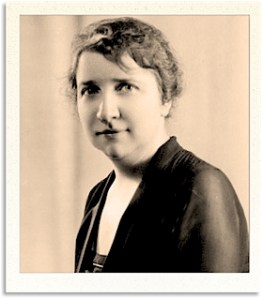
In this regard, as I delved into the events around early radio and education, I became interested in Judith Waller, whose “accidental” radio success began in Chicago in 1922 as programming manager at WMAQ and continued as the Educational/Public Service Director for NBC’s Central division. At WMAQ in the 1920s, Waller helped craft a number of educational programs, including a joint venture between the Chicago Public Schools that successfully connected city-wide special exhibits and the Chicago Daily News into an audio/visual/experiential learning experience.
However, by the 1930s Waller had grown disillusioned with “educational radio.” In 1934 Waller gave an address titled “Achievements of Educational Radio,” where she spoke of her “pessimism” at what she felt was the lack of accomplishments and advancements in education by radio. She felt that most listeners were “frankly bored” by educational radio and that it only appealed to those who wanted to “appear to be very highbrow before their friends and associates.” One of her chief complaints was that many educational programs were “usually a dull and stupid reading of a prepared geography, history, or arithmetic lesson.” Besides further experimentation, she suggested a name change, from “educational” radio to “public service” broadcasting. This superficial remedy seemed like an ideal first step in reclaiming the types of programs that had elements worthy of larger audiences, but that had largely been ignored. This name change did little to suggest, however, any actual changes that might benefit the construction of educational programming.
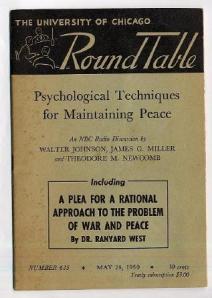
I use this example for the sheer fact that I would very much like to listen to these “dull” programs in order to examine what Waller perceived to be their fatal flaws. Now, some of the programs that Waller created and produced do still exist. The University of Chicago Round Table, for example, was a popular public service program Waller worked on for many years—which has an extensive archive of transcripts, although not recordings. In terms of other educational programming, some of the more prominent commercial network programs like the American School of the Air appear to have some availability. The programs I am interested in hearing, however, used the radio, a program guide, the newspaper, and local city events to weave an intricate educational lesson. Were programs like this, so seemingly well crafted and specifically engineered, really as “boring” as Waller lamented? Would it be clear to me, as a listener nearly a century removed, that there are clear issues or faults with their presentation of educational lessons? Or would Waller’s problems with these programs stem from more complex issues, involving her own personal ideals of what education by radio constituted and how it should be conceived?
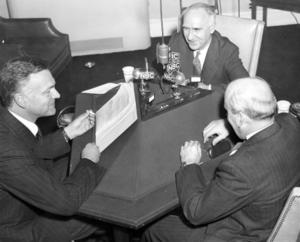
Regardless of the answerability of these questions, they are still worth thinking about in order to understand as much as possible about these missing programs in the context of their “no-sound” status. Not having these sounds to refer to forces us to pose different questions, while tougher to address, that force us to look beyond the audio text to understand what exactly about these programs produced their contemporary reactions. Reading what Waller wrote may supplant the need to hear these programs, but it does not necessarily replace our innate curiosity about them.
The discourse around these “no-sound” programs gives historians a particular reception, in this case, a critical perspective from one radio producer. However, Waller’s public disavowal of educational radio cannot speak to the private consumption of these programs, which may or may not have produced the same negative reaction. Really, then, the Waller example suggests two avenues of inquiry, both equally difficult—a full understanding of what these programs sounded like and contained, and how other listeners felt about them. At the very least, a record of these programs and a selected set of reactions lives on in the print media that avidly reported on and debated so many facets of radio programming.
—
Sate a little of your curiosity and hear Waller speak in this October 2000 re–broadcast of a 1948 interview she gave on the early days of WMAQ, from broadcaster/historian Chuck Shaden’s “Those Were the Days” radio program.
—
Amanda Keeler (Ph.D., Indiana University, 2011) is a Visiting Assistant Professor at Bucknell University. She teaches courses in film and media studies. Her current research focuses on historical emergent film, radio, and television; media history; media industries; and contemporary television.
—
Share this:




Current Top Posts





April 2021

January 2020

November 2019

October 2019

August 2019

April 2014

November 2017

March 2015

December 2017

October 2015


Recent Comments