
The Magical Post-Horn: A Trip to the BBC Archive Centre in Perivale

Suddenly we heard a Tereng! tereng! teng! teng! We looked round, and now found the reason why the postilion had not been able to sound his horn: his tunes were frozen up in the horn, and came out now by thawing, plain enough, and much to the credit of the driver. —The Adventures of Baron Munchausen, 1865
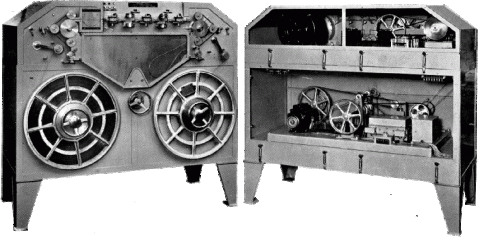
At the BBC Archive Centre in Perivale, London, the proverbial “weight of the past” becomes literal for researchers of sound history. Housed in a massive, unattractive hangar-like building in an industrial park to the northwest of London, the archives suit their environment, one which speaks of practical and solid shapes far more than the lyrical, dainty ivory tower. And by weight, I mean by serious, and sometimes dangerous, poundage: the very first machine created to record off of radio, invented around 1930, was a steel pedestal with bus wheel-sized reels on either side. Audio Coordinator of the BBC Archives, John Dell, explained that not only was this machine laborious to load, but it used magnetic steel tape as its recording surface, which could come free from the reels and lacerate incautious operators as it unspooled and bunched.
The weight of these objects, however, is also metaphoric. The earliest recording in my personal audio drama library, sourced off the invaluable Archive.org, is a 1933 episode of Front Page Drama, a dramatized version of an American Weekly Hearst publication. The past stands monumentally huge if this type of machine, the Marconi-Stille Wire Recorder, was the apparatus that allowed those 15 minutes of 1933 to be captured and, eventually, fed into my 2015 headphones as an MP3.
I listen to much of my audio drama, whether old and crackling like Front Page Drama, or new and podcast-y, while commuting, usually on the London Underground. The episode of Front Page Drama in question I heard during a marathon session when I knew very little could or would interrupt me: on an twelve-hour transatlantic plane ride. I quite like the audio-visual play between listening to audio drama that is new to me versus the familiar but never identical sights of the commute; as Primus Luta remarked in 2012, it’s rare for us to engage our full attention on the aural medium.
While listening to Front Page Drama and episodes of Lum and Abner on that flight, I had to wonder how I was prioritizing my listening time. Who had recorded these episodes from the 1930s? Who had later taken the trouble to digitize them and upload them to Archive.org? Why, for example, were these particular recordings freely available yet I couldn’t find an MP3 anywhere of texts I wanted to share more widely, such as Don Haworth’s On a Summer’s Day in a Garden (1975) or Angela Carter’s Come Unto These Yellow Sands (1978)? Both of these recordings are in the BBC back catalogue; I know, because the BBC supplied them to me—but only the basis of a visit to the archive.
Archive.org is bountiful and accessible, the Perivale archives much more exclusive, but both seem to lack curation. The only hope for accessing things like Haworth or Carter outside the British Library’s Sound and Moving Image Archives is that someday a rogue MP3 or BitTorrent will show up online. The archive does seem, in Neil Verma’s words, then, “transformed before dispersing in space, plucked from the air and mineralized like fossils” (Theater of the Mind, 227); like Primus Luta’s weighty but playful experiment, Schrödinger’s Cassette, which suspended music in concrete to be risked, or remain aurally untouched forever. This seems too often to be the impossible choice.
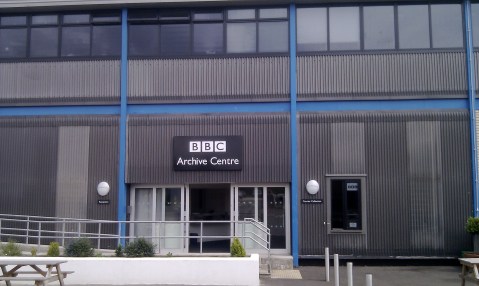
BBC Perivale Field Trip, Image by Flickr User Hatters! (CC BY-NC 2.0)
The BBC archive storage is eclectic and generally arranged for access by BBC staff rather than for researchers. The BBC Written Archives at Caversham are restricted to academics, and likewise, the speed of gaining access to sound files from Perivale is predicated on the amount of time BBC staff have to devote to it—naturally, the BBC’s own departments have priority, such as BBC Radio 4 Extra, the archival digital radio station, whose backlog of requests for digitised material from the Perivale archive apparently covers 20 pages. The sound collections consist of commercial recordings on shellac (90 RPM records) and vinyl (78 RPMs) as well as impressively dinner-plate sized compilation transcriptions which require a special turn-table on which to play and digitize them. The BBC Sheet Music archive is in Perivale, as well, with original handwritten scores filling shelves.
The second half of the British and Irish Sound Archives conference 2015 afforded a privileged glimpse of the archive storage and technical facilities housed on site. Most of my fellow attendees were archivists of one sort or another, asking detailed questions about transcription devices, fidelity, and storage. Having recently completed my PhD from Swansea University in English in radio drama, I had made countless requests to this very facility through the British Library’s Sound and Moving Image request service; now I, at long last, hoped to see where my digitised sound files were coming from. However, we weren’t shown any recordings made on tape cassette or CD but instead Betamax audio-only. Unseen, too, were the data banks holding all the digitised content, but what myself and my fellow archivists had mainly come to see were the tangible objects making this content possible.

78s at BBC Perivale, Image by Flicker User Hatters! CC BY-NC 2.0
In the physical copies of the Radio Times of the 1940s and ‘50s, also housed at the British Library at St Pancras (and now available, like all of the Radio Times up to 2009, on BBC Genome), there can be found a little asterisk in the listings for drama, which signifies that the drama was broadcast from a recording, rather than live. The later recording machines of the ‘30s through ‘50s, upon which these recordings would have been made, did not decrease appreciably in size, though perhaps in weight. “If I were to drop this,” Dell told us as he carefully handled a dark blue celluloid tube, about the size and circumference of a toilet paper roll, “it would bounce. I’m not going to drop it,” he added. Then the magic began: via a custom-made device, we heard a few bars of a music hall song from circa 1900. The recording was surprisingly clear. It was agonizing when Dell turned it off after only a few seconds.
There is something incredibly seductive about old recordings. In “The Recording that Never Wanted to Be Heard and Other Stories of Sonification,” from The Oxford Handbook of Sound Studies, Jonathan Sterne and Mitchell Akiyama question the desire for “sonification” of ever-older recordings, especially when such desires manifest in the creation of a digital sound file in 2008 for “the world’s oldest recording,” a phonoautogram from 1860, which was nevertheless never intended to be played back—the phonoautograph was intended as a device to make the aural visual (555). Radio drama writer Mike Walker really summed up the seduction of old recordings for me in his 2013 BBC Radio 4 ghost story The Edison Cylinders, with a character who is seduced as a scholar and as a participant in a time-traveling mystery by old recordings: a sound engineer in need of money, she agrees to digitize what seem like boring diary entries from a British imperialist, only to be intrigued by his Victorian domain beyond her rather empty modern existence. Unfortunately for her, these particular recordings are reaching beyond the grave to try to kill her.

Edison Cylinder Exposed, by Flickr User fouro boros, CC BY-NC 2.0
Although they do reach out from the grave, most early sound recordings aren’t out to kill you. They do however, present common and vexing issues of authenticity. By this, I mean specifically the provenance of the recording—is the recording of who or what it says it is? On the first day of the conference, Dell regaled us with tales of two cylinder recordings surfacing in the mid-twentieth century, of William Gladstone giving a speech. The words of the speech were identical, but the voices were completely different. Who was the real Gladstone? How could you authenticate the voice of a dead person? Dell further deepened the mystery by telling us the tale of two boxes of wax cylinder recordings in the Perivale archive, whose provenance is torturously (and tantalizingly) unclear. We glimpsed these mysterious, yellow-cream-colored cylinders, somewhat wider and fatter than the celluloid tubes, in situ, but were they original Edison cylinders from the 1880s? The piercing desire to believe these cylinders might contain the voices of Gladstone, the future Edward VIII, or even Henry Irving, are potentially “perils of over-optimism,” as Dell puts it.
All the archivists at this event referred to the serendipity of discovering surprises on recordings. Simon Elmes, whose official title reads “Radio Documentarist, Creative Consultant, and Former Creative Director, BBC Radio Documentaries,” made this manifest as he discussed a subject treated in his documentary from 2005, Ambridge in the Decade of Love. The Archers—an exceptionally long-running BBC radio soap which conjures up visions of rural Englishness and persists among a very dedicated, though mostly older, fan base—like much radio drama and emblematic of gendered attitude toward radio soaps, was not recorded in its first few decades.

Empty Shelves at BBC Perivale, Image by Flickr User Bill Thompson, Image cropped by SO!, (CC BY-NC-ND 2.0)
Likewise, anyone researching radio drama before the 1930s is playing a game of roulette; whether any scripts survive will depend entirely on the literary reputation of the author who may have had enough clout to publish them in book form. Even in the case of Lance Sieveking, the acknowledged creative aesthete behind early BBC radio drama, we lack concrete evidence of his most important work, The End of Savoy Hill (1932). And The Truth About Father Christmas (1923), the first original drama written specifically for British radio? Forget about it—it was made for children’s radio.
To return to The Archers, though daily 15-minute scripts were being churned out by Ted Kavanagh from the first years of the 1950s, the broadcasts themselves went missing into the ether (after all, no one suspected the show would still be going after sixty years). Transcription discs, meant for an overseas market, were found in a box in the BBC Archives, giving a reasonably complete overview of The Archers during the 1950s and ‘60s. Elmes was ebullient about this discovery.
While I got the general sense that the other archivists at the conference were amused but indifferent toward this particular trove, to me it was inspiring. I believe the future of audio drama will rely more and more on serials, so the rediscovery of these Archers episodes epitomizes to me the past, present, and future of audio drama in that it speaks of audience involvement and even audience interaction or co-production, which seems key for audio drama going forward, and the aspect of serialization which has vastly overtaken the single drama on television if not on radio.

Harry Oakes as Dan Archer and Gwen Berryman as Doris Archer, 1955.
Nevertheless, even if pursuit of these aural rainbows is a foolish one, such desire also enables scholarship. The hope of finding “originals” inspired me personally to discover the birth of what can conceivably called audio drama. Having researched audio drama from the first known broadcast dramas in English (the adaptations: 2LO London’s Five Birds in a Cage in 1922, WGY Schenectady’s The Wolf in 1922, British Broadcasting Company’s Twelfth Night in 1923; original drama: WLW Cincinnati’s When Love Awakens in 1923, British Broadcasting Company’s Danger in 1924), I was astounded to learn that listeners from World War I might have enjoyed short, dramatized stories on the celluloid tubes (according to Tim Crook, the first audio drama of this nature is a war drama from 1917). While archives such as the Cylinder Preservation and Digitization Project of the University of California at Santa Barbara care for these recordings in the same way they do for musical and speech recordings, there is a significant lack of scholarship on them.
If commentary on specific pre-radio audio drama is scarce, it is heartening to read dissections of the performative aspects of “actuality,” such as Brian Hanrahan’s anatomy of Gas Shell Bombardment, 1918. Wonderfully, in discussing the “staging” of this war-time recording, Hanrahan brings in traditions from theatre and silent film in addition to the phonograph. Professor David Hendy has persuasively argued that some of the organizing tenets behind the British Broadcasting Corporation, whose management was by and large made up of ex-soldiers, was predicated on a desire for silence and calm, ordered, managed sound after the cacophony of war. Perhaps “cylinder” drama, then, is not really of its time and properly belongs to earlier, or later, cultural milieux.

Wax cylinder playback at BBC Perivale, Image by Flickr User Hatter! CC BY-NC 2.0
The ephemera of the medium presents a recurring problem in radio drama studies, a weighty feeling of doom. With the future of the BBC’s existence currently perilous, one wonders what the consequences will be for archives like those housed at Perivale. If the internal function of the archives (for the BBC to make use during Radio 4 Extra broadcasts, for example) disappears, will the archives be opened to wider use? Or will material without commercial potential simply be discarded? Who would make the decision as to what was commercially viable and how would they make such decisions?
And the problem with the medium seemingly begins with wax cylinders. A beautiful, lyrical story from Baron Munchausen—alias Rudolph Erich Raspe, a German author who created a fictional travel writer and chronic teller of tall tales based on a real nobleman infamous for his boasting—cited by many of those fascinated with sound recordings is worth repeating here: the Baron is traveling in Russia in a snowy landscape and desires the postilion to blow his horn to alert other travellers that their sleigh will be coming around the bend. Unfortunately, the cold makes the horn incapable of any audible sound. Disappointed, they make their way to an inn. Diedre Loughridge and Thomas Patteson cite the “Frozen Horn” from their online Museum of Imaginary Instruments: “After we arrived at the end inn, my postilion and I refreshed ourselves: he hung his horn on a peg near the kitchen fire; I sat on the other side.” Warmed by the fire, the horn now begins to play its reserved tunes.
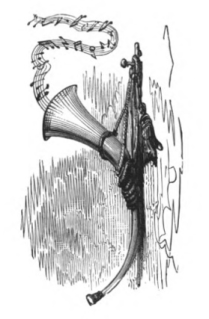
Illustration by Gustave Doré, 1865. Listen to ABC radio feature on the “Frozen Post Horn” and the Museum of Imaginary Instruments here
With a little leap of the imagination, it’s not difficult to see the parallels with the reality of sound recording limitation. The wax cylinders could only be played a few times before the sound degrades completely. Tin cylinders are not much better. This is the reason why the two Gladstone voices could be both “real” and “fake.” Celluloid is more durable, yet witness the reluctance of Dell to play one for longer than a few seconds, for preservation reasons.
Sound recordings are only as good as the medium on which they are recorded, a fact that surprisingly holds true even today. We were told by our BBC hosts that discs of shellac, vinyl, and acetate whose contents have already been digitised will not be discarded—digital recordings are ultimately taken from these physical originals.
In the future, we might invent means of reproduction and playback which could provide more fidelity to the original event lifted from the physical recording, in which case it will be the MP3s that will be redundant. There’s something both very modern and very old-fashioned about this. Once at a dinner party, I launched full-force into my postdoctoral rant about the eventual possible degradation of the MP3 as a recording format, that it was not infallible as we had been led to believe. I was surprised that I was wholly believed; furthermore, the older people participating in the conversation rued the disappearance of their CDs, tape cassettes and, vitally, their LPs, for the oft-cited reasons (which Primus Luta distills as the pricelessness of old recordings to one’s personal history, and the “fuller” sound ans weighty materiality, one resonating with one’s emotional past).

Vinyl at BBC Perivale, including a lot of John Peel’s old records. Image by Flickr User Hatter! (CC BY-NC 2.0)
I admit, before I came to the UK and experienced the never-perfect but always interesting presence of BBC Radio, I treated radio as a background medium. I suppose recorded sound had always interested me, and I had had a strong relationship with local, classical music radio (Classical KHFM Albuquerque). However, I could not have predicted ten years ago that I would become a passionate proponent of audio drama and sound studies more generally. I’m almost embarrassed now at my excessive love of audio drama; I make almost no distinctions between “high” art like Samuel Beckett and Tom Stoppard and fan fiction radio serials like Snape’s Diaries as produced by Misfits Audio: I listen to almost anything.
And, truly, the future of audio drama is only assured if people keep listening. The digitisation and availability of cylinder recordings makes study of them more accessible, so the way is paved for further studies of the earliest audio drama. It is imperative that researchers continue to request sound recordings from the BBC, even if they have to use the relatively inconvenient system currently available.
There are signs that things are improving and that more people than ever before want to access such materials. As Josh Shepperd puts it brilliantly, “Sound trails continue where paper trails end.” As Director of the Radio Preservation Task Force at the Library of Congress, his efforts have underlined the fact that often it is the local and the rural whose radio or audio history vanishes more quickly than the national or the metropolitan. This would historically be the case with the BBC as well, which for a long time privileged London sound above regionalism (and, some would argue, still does). Since 2015, the British Library (and the Heritage Lottery Fund) have invested significantly in the Save Our Sounds campaign, positing that within 15 years, worldwide sound recordings must be digitized before recordings degrade or we no longer have the means to play the material.
Out of curiosity, I downloaded the more than 600-page listing, the Directory of UK Sound Collections, assembled rather hastily through the Save Our Sounds project in 20 weeks, and comprising more than 3,000 collections and more than 1.9 million objects. This document makes for fascinating and eclectic reading, ranging as it does between a Sound Map of the English town of Harrogate to the archives of the Dog Rose Trust, which mainly provides recorded tours of English cathedrals for those who are blind. Undoubtedly, there are wodges of local or forgotten drama in these archives, too. The linking up of these archives and making them more widely accessible suggests how important sustained, collective effort is to unfreezing radio’s archival post-horn, delivering more of its unique tunes.
—
Featured Image: “The Route to Open Data” at BBC Perivale, Image by Flickr User Hatter! (CC BY-NC 2.0)
—
Leslie McMurtry has a PhD in English (radio drama) and an MA in Creative and Media Writing from Swansea University. Her work on audio drama has been published in The Journal of Popular Culture, The Journal of American Studies in Turkey, and Rádio-Leituras. Her radio drama The Mesmerist was produced by Camino Real Productions in 2010, and she writes about audio drama at It’s Great to Be a Radio Maniac.
—
 REWIND!…If you liked this post, you may also dig:
Only the Sound Itself?: Early Radio, Education, and Archives of “No-Sound”–Amanda Keeler
“Share your story” – but who will listen?–Fabiola Hanna
SO! Amplifies: Indie Preserves
The Sound of Radiolab: Exploring the “Corwinesque” in 21st Century–Alexander Russo
Share this:

Listen to the Sound of My Voice
Betrayal
I first realized there was a problem with my voice on the first day of tenth grade English class. The teacher, Mrs. C, had a formidable reputation of strictness and high standards. She had us sit in alphabetical order row after row, and then insisted on calling roll aloud while she sat at her desk. Each name emerged as both a command and a threat in her firm voice.
“Kelly Barfield?”
“Here,” I mumbled quietly. I was a Honor Roll student with consistent good grades, all A’s and one B on each report card, yet I was shy and softspoken in classes. This was an excellent way to make teachers amiable but largely go unnoticed. The softness of my voice made me less visible and less recognizable.
Mrs. C repeated my name. Caught off guard, I repeated “here” a little more loudly. She rose to her feet to get a better look at me. I knew what she saw: a petite girl with long ash blonde hair, big brown eyes, and overalls embroidered with white daisies on the bib. When her gaze finally met mine, Mrs. C frowned at me and cleared her throat loudly. I curled into my desk, hoping to disappear.

“Lincoln High School 9-16-2007 008” by Flickr user Paul Horst, CC BY-NC 2.0
“Miss Barfield, did you hear me call your name twice? In this class, when I call roll, you respond.” I gave a quick nod, but Mrs. C wasn’t finished: “We use our strong voices in here, not our girly, breathy ones.” My cheeks flushed red while Mrs. C droned on about confidence and classroom expectations.
“Do you understand me?”
I stammered a “yes.” Mrs. C turned her attention back to the roll call. Her harsh words rang in my ears. I sank low in my chair, humiliated and angry. I couldn’t help that I sounded girly: I was, in fact, a girl. This was the way my voice sounded. It was not an attempt to sound like the dumb blonde she appeared to think I was.
That day I decided that I would never speak up in her class. Forget the Honor Roll. If the sound of my voice was such a problem, then my mouth would remain firmly shut in this class and all of my others. I would never speak up again.

“Listen” by Flickr user lambda_x, CC BY-ND 2.0
My vow to stop speaking lived a short life. I enjoyed Mrs. C’s serious fixation on diagramming sentences and her attempts to show sophomores that literature offered ideas and worlds we didn’t quite know. At first, I spoke up with hesitation and fear of the inevitable dismissal, but I continued to speak. Becoming louder became my method to seem confident, even when I felt anything but.
Throughout high school, my voice emerged again and again as a problem. Despite the increased volume, my voice still sounded tremulous, squeaky, hesitant, and shrill to my own ears. Other girls had these steady, warm voices that encouraged others to listen to them. Some had higher voices that were melodic and lovely. I craved a lower, more resonant voice, but I was stuck with what I had. In drama club, our director scolded me with increasing frustration about my tendency to end my lines in the form of a question. My nerves materialized as upspeak. The more he yelled at me, the more pronounced the habit became. He eventually gave up, disgusted by my inability to control my vocal patterns.

By Dvortygirl, Mysid [GFDL (http://www.gnu.org/copyleft/fdl.html) or CC-BY-SA-3.0 (http://creativecommons.org/licenses/by-sa/3.0/)%5D, via Wikimedia Commons
Meanwhile, at a big state university in my native Florida, I learned quickly that a Southern accent marks you as a dumb redneck from some rural town that no one had heard of. Students in my classes asked me to say particular words and then giggled at my pronunciations. “You sound like a Southern belle,” one student noted. This was not really a compliment. According to my peers, Southern belles didn’t have a place in the classroom. Southern belles didn’t easily match up with “college student. As a working-class girl from a trailer park, I learned that I surely didn’t sound like a college student should. I worked desperately to rid myself of any hint of twang. I dropped y’all and reckon.
I listened carefully to how other students talked. I mimicked their speech patterns by being more abrupt and deadpan, slowly killing my drawl. When I finally removed all traces of my hometown from my voice, my friends both from home and from college explained that now I sounded like an extra from Clueless. My voice was all Valley girl. I was smarter, they noted with humor, than I sounded and looked. My voice now alternated between high-pitched and fried. Occasionally, it would squeak or crack. I thought I sounded too feminine and too much like an airhead, even when I avidly tried not to. I began to hate the sound of my voice.
My voice betrayed me because it refused to sound like I thought I needed it to. It refused to sound like anyone but me.
When I started teaching and receiving student evaluations, my voice became the target for students to express their displeasure with the course and me. According to students, my voice was too high and grating. Screechy, even: one student said my voice was at a frequency that only bats could hear. In every set of evaluations, a handful of students declared that I sounded annoying. This experience, however, was not something I alone faced. Women professors and lecturers routinely face gender bias in teaching evaluations. According to the interactive chart, Gender Language in Teaching Evaluations, female professors are more likely to be called “annoying” than their male counterparts in all 25 disciplines evaluated. The sound of my voice was only part of the problem, but I couldn’t help but wonder if how I sounded was an obstacle to what I was teaching them.
Once again, I tried to fix my problematic voice. I lowered it. I listened to NPR hosts in my search for a smooth, accentless, and educated sound, and I attempted to create a sound more like them. I practiced pronouncing words like they did. I modulated my volume. I paid careful attention to the length of my vowels. I avoided my natural drawl. None of my attempts seemed to last. Some days, I dreaded lecturing in my courses. I had to speak, but I didn’t want to. I wondered if my students listened, but I wondered more about what they heard.
Sound
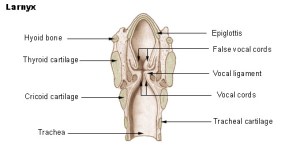
Public Domain, https://commons.wikimedia.org/w/index.php?curid=1393933
The sound of your voice is a distinct trait of each human being, created by your lungs, the length of your vocal cords, and your larnyx. Your lungs provide the air pressure to vibrate your vocal cords. The muscles of your larnyx adjust both the length and the tension of the cords to provide pitch and tone. Your voice is how you sound beyond the resonances that you hear when you speak. It is dependent on both the length and thickness of the vocal cords. Biology determines your pitch and tone. Your pitch is a result of the rate at which your vocal cords vibrate. The faster the rate, the higher your voice. Women tend to have shorter cords than men, which makes our voices higher.
Emotion also alters pitch. Fright, excitement, and nervousness all make your voice sound higher. Nerves would make a teenage girl have an even higher voice than she normally would. Her anxious adult self would too. Her voice would seem tinny because her larnyx clenched her vocal cords tight. Perhaps this is the only sound she can make. Perhaps she is trying to communicate with bats because they at least would attempt to listen.
Biology, the body, gives us the voices we have. Biology doesn’t care if we like the ways in which we sound. Biology might not care, but culture is the real asshole. Culture marks a voice as weak, grating, shrill, or hard to listen to.
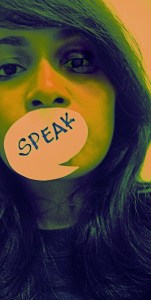
“Speak” by Flickr user Megara Tegal, CC BY-NC-ND 2.0
My attempts to change my voice were always destined to fail. I fought against my body and lost. I couldn’t have won even if I tried harder. My vocal cords are determined that my voice would be high, so it is. The culture around me, however, taught me to hate myself for it. Voice and body seem to cast aspersions on intelligence or credentials. It’s the routineness of it all that wears on me. I expect the reactions now.
I wonder if I’m drawn to the quietness of writing because I don’t have to hear myself speak. I crave the silence while simultaneously bristling at it. Why is my voice a problem that I must resolve to placate others? How can I get others to hear me and not the stereotypes that have chased me for years?
Fury
My silence has become fruitful. The words I don’t say appear on the page of an essay, a post, or an article. I type them up. I read aloud what I first refused to say. I wince as I hear my voice reciting my words. I listen carefully to the cadence and tone. This separation of words and voice is why writing appeals to me. I can say what I want to say without the sound of my voice causing things to go awry.
People can read what I write, yet they can’t dismiss my voice by its sound. Instead, they read what I have to say. They imagine my voice; my actual sound can’t bother them. But, they aren’t really hearing me. They just have my words on the page. They don’t know how I wrap the sound around them. They don’t hear me.
Rebecca Solnit, in “Men Explain Things to Me,” writes “Credibility is a basic survival tool.” Solnit continues that to be credible is to be audible. We must be heard to for our credibility to be realized. This right to speak is crucial to Solnit. Too many women have been silenced. Too many men refuse to listen. To speak is essential “to survival, to dignity, and to liberty.”

“Listen” by Flickr user Emily Flores, CC BY-ND 2.0
I agree with her. I underline her words. I say them aloud. The more I engage with her argument, the more I worry. What about our right to be heard? When women speak, do people listen? Women can speak and speak and speak and never be heard. Our words dismissed because of gender and sound. Being able to speak is not enough, we need to be heard.
We get caught up in the power of speaking, but we forget that there’s power in listening too. Listening is political. It is act of compassion and empathy. When we listen, we make space for other people, their stories, their voices. We grant them room to be. We let them inhabit our world, and for a moment, we inhabit theirs. Yes, we need to be able to speak, but the world also needs to be ready to listen us.
We need to be listened to. Will you hear me? Will you hear us? Will you grant us room to be?
When I think of times I’ve been silenced and of the times I haven’t been heard, I feel the sharp pain of exclusion, of realizing that my personhood didn’t matter because of how I sounded. I remember the burning anger because no one would listen. I think of the way that silence and the policing of how I sound made me feel small, unimportant, or disposable. As a teenager, a college student, and a grown woman, I wanted to be heard, but couldn’t figure out exactly how to make that happen. I blamed my voice for a problem that wasn’t its fault. My voice wasn’t the problem at all; the problem was the failure of others to listen.
“listen” by Flickr user Jay Morrison, CC BY-NC-ND 2.0
Loss
While writing this essay on my voice, I almost lost mine, not once but twice. I caught a cold and then the flu. My throat ached, and I found it difficult to swallow. A stuffy nose gave my voice a muted quality, but then, it sounded lower and huskier. I could hear the congestion disrupting the timber of my words. My voice blipped in and out as I were radio finding and losing signal. It hurt to speak, so I was quiet.
“You sound awful,” my husband said in passing. He was right. My voice sounded unfamiliar and monstrous. I tested out this version of my voice. It was rougher and almost masculine. I can’t decide if this is the stronger, more authoritative voice I wanted all along or some crude mockery of what I can never really have. I couldn’t sing along with my favorite songs because my voice breaks at the higher register. I wheezed out words. I croaked my way through conversations. “Are you sick?” my daughter asked, “You don’t sound like you.”
Her passing comment stuck with me. You don’t sound like you. Suddenly, I missed the sound of my voice. I disliked this alien version of it. I craved that problematic voice that I’ve tried to change over the years. I wanted my voice to return.
After twenty years, I decided to acknowledge the sound of me, even if others don’t. I want to be heard, and I’m done trying to make anyone listen.
—
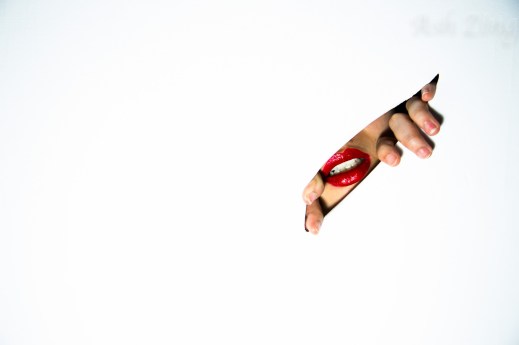
Featured image: “Speak” by Flickr user Ash Zing, CC BY-NC-ND 2.0
—
Kelly Baker is a freelance writer with a religious studies PhD who covers religion, higher education, gender, labor, motherhood, and popular culture. She’s also an essayist, historian, and reporter. You can find her writing at the Chronicle for Higher Education‘s Vitae project, Women in Higher Education, Killing the Buddha, and Sacred Matters. She’s also written for The Atlantic, Bearings, The Rumpus, The Manifest-Station, Religion Dispatches, Christian Century’s Then & Now, Washington Post, and Brain, Child. She’s on Twitter at @kelly_j_baker and at her website.
—
 REWIND!…If you liked this post, you may also dig:
Vocal Gender and the Gendered Soundscape: At the Intersection of Gender Studies and Sound Studies — Christine Ehrick
On Sound and Pleasure: Meditations on the Human Voice– Yvon Bonefant
As Loud As I Want To Be: Gender, Loudness, and Respectability Politics — Liana Silva
Share this:


Current Top Posts





April 2021

January 2020

November 2019

October 2019

August 2019

April 2014

November 2017

March 2015

December 2017

October 2015
 Sounding Out!
Recent Comments