
“Everyone I listen to, fake patois. . .”

DOI: https://doi.org/10.59350/56gj9-qgs22
It may seem a little crazy to take Das Racist seriously. Their songs are deep in the realm of the ridiculous, but I can’t help but feel that “Combination Pizza Hut/Taco Bell” is a commentary on how the compression of urban space is shaped by our relationship to consumption. Close-reading of their songs provide repeated evidence for the underlying tenor of seriousness in that absurdity—even if they’re being playful about it. As one of my favorite Das Racist songs says, “we’re not joking / just joking / we are joking / just joking / we’re not joking.” (For those who need help parsing, no, they are in fact, not joking). Take for instance Das Racist’s “Fake Patois” off of their free downloadable “mixtape” Shut Up, Dude! (2010). This satirical and intelligent exploration of the sounds of authenticity and their relationship to the reggae-hip hop dyad uses fake patois itself, working off an ironic tension that is as troubling as it is funny—and it’s also a banging song.
The “patois” used in American hip hop is clearly meant to be Jamaican-sounding, mixing elements of Jamaican creole language with a generous sprinkling of terms specific to Rastafarian English. The sounds of “fake patios” are a stylistic choice, reinforced through a dancehall reggae cadence of rapid-fire clipped words, rapped melodically. “Fake Patois” recalls the role of reggae in identifying an authentic origin for hip-hop. And certainly the connection cannot be denied. That Kool Herc brought Jamaican DJ culture with him to the Bronx is originary, and Run D.M.C brought it up in 1984’s “Roots, Rap, Reggae” (featuring Yellowman). If you want a more detailed mapping of a particular reggae meme’s journey through hip hop, check out Wayne Marshall’s fantastic essay on the subject, which demonstrates that even when contemporary artists think they are paying homage by imitating their rap fore-bearers they are also unknowingly paying homage to the influence of Jamaican music on American rap.
.

Das Racist’s “Fake Patois” speaks with a deep awareness of this tradition in rapping, but what may on the surface seem like an indictment of the “fake” nature of the adopted style is actually an example of what George Lipsitz called “strategic anti-essentialism” in Dangerous Crossroads. While critical of reckless appropriation of various ethnic musics by western whites, Lipstiz nevertheless sees this music as a way for individuals to express their identity through solidarity, sharing a respect for that music’s history as it is embedded in a framework of power. The song shows this respect through its knowledge, but also immediately calling out artists that have used the “fake patois,”—respected ones like KRS-One, but also “My man Snow,” a white Canadian performer of dancehall reggae. Snow is probably the quintessential example of the “fake patois,” as his 1993 break-out hit, “Informer” was for much of white America the first exposure to the sounds of dancehall reggae. Snow withstood attacks on his authenticity throughout his career and tried to shore it up through his incarceration narratives and associations with blacks of Caribbean descent.
Das Racist doesn’t limit their list to musicians, and their choices highlight the different ways patois is put to work. For example, they mention Miss Cleo of psychic phoneline fame, who claimed to be from Jamaica, but is an actress and playwright from Seattle. Through her patois the Miss Cleo character sold the authentic origins of her mystic powers. Das Racist seems to be suggesting that the use of the patois sound in songs is selling something as well, even as they use it to sell their own song.
.
Similarly, the lyric, “Even Jim Carrey fuck with the patois,” makes reference to the actor’s parody of Snow’s “Informer.” While “Imposter,” is clearly meant to call out Snow’s lack of ‘blackness,’ Carrey’s mocking “Day-O” and his characterization of dancehall lyrics as “gibberish” also underlines a disdain for the music form itself. While potentially problematic, Snow’s performance is clearly born of an earnest appreciation of dancehall reggae. The parody, on the other hand, despite its comedic intent, does not have the performer’s genuine affect to mitigate its buffoonish mimicry.
Das Racist’s song also reveals a degree of comedic intent. The use of autotune highlights the artificiality of the sung patois. Their straight delivery of ridiculous references (“Crunch like Nestle. . .Snipe like Wesley”) and their use of repetition to re-emphasize the absurdity of their performance is funny. They revel in the dumb fun of referencing Half-Baked—when Dave Chappelle, posing as a Jamaican, is asked what part of Jamaica he is from and he replies “right near the beach.” Das Racist’s demonstrated mix of absurdity and awareness destabilizes their position as a means to open up a field of possibilities. It does not set limits by associating authenticity with a singular origin, but rather to establish it as a connection with an ongoing tradition.
The song continues to question the stability of the authentic by calling out two singers with a “real” patois, Shabba Ranks and Cutty Ranks, for their past homophobic songs and comments. Das Racist sings, “Your M.O. Is ‘mo / Me say no thanks.” That “’mo” is short for “homo,” and that “no thanks”serves to distance them from the popular examples of male Jamaican artists whose homophobia has been linked with a hypermasculine ideal played out through violent fantasy—whether it’s Shabba’s defense of Buju Banton’s “Boom Bye Bye” or Cutty’s “Limb By Limb.” Their apologies attempted to connect their bias with their “culture,” trying to excuse their ideas in terms of how they authentically inform their problematic songs. In this lyric, Das Racist is implicitly rejecting homophobia as a litmus for authenticity, while playing with a homophobic term. In other words, for artists like Shabba and Cutty to defend homophobia in reference to a “realness” in their music is suggesting that bias against gays is a precondition for making “real” music.
For me, the broader question that emerges from this interrogation of “fake patois” is: to what degree can a variety of popular music sound choices (singing style, melodic influence, etc that are associated with a particular culture or nationality) be similarly destabilized or revealed as “fake”? The Beatles sang like fake Americans, imitating their favorite (mostly black) artists, and Green Day have sounded like fake Brits, identifying with some authenticating element found in the sound of English punks. What ground does this destabilization open up? What possibilities for connection does it provide and what framework can we use to discuss it when the results seem problematic?
Lipsitz writes, “In its most utopian moments, popular culture offers a promise of reconciliation to groups divided by power, opportunity and experience,” and Das Racist certainly seems to be doing their best to critically fulfill that promise. Their self-conscious undermining of their position and their willingness to simultaneously suggest that there may be something problematic with mimicking patois–while highlighting that so-called authentic identities are sutured together into a particular kind of sounded performance–articulates a bond through an identification, not a singular origin. In doing so, Das Racist suggest a network of identities bound by points of solidarity, making room for South Asia in the Black Atlantic by way of the Caribbean.
—
Osvaldo Oyola is a regular contributor to Sounding Out! and ABD in English at Binghamton University.
—
Share this:

In Defense of Auto-Tune

DOI: https://doi.org/10.59350/r613a-h0071
I am here today to defend auto-tune. I may be late to the party, but if you watched Lil Wayne’s recent schizophrenic performance on MTV’s VMAs you know that auto-tune isn’t going anywhere. The thoughtful and melodic opening song “How to Love” clashed harshly with the expletive-laden guitar-rocking “John” Weezy followed with. Regardless of how you judge that disjunction, what strikes me about the performance is that auto-tune made Weezy’s range possible. The studio magic transposed onto the live moment dared auto-tune’s many haters to revise their criticisms about the relationship between the live and the recorded. It suggested that this technology actually opens up possibilities, rather than marking a limitation.
Auto-tune is mostly synonymous with the intentionally mechanized vocal distortion effect of singers like T-Pain, but it has actually been used for clandestine pitch correction in the studio for over 15 years. Cher’s voice on 1998’s “Believe” is probably the earliest well-known use of the device to distort rather than correct, though at the time her producers claimed to have used a vocoder pedal, probably in an attempt to hide what was then a trade secret—the Antares Auto-Tune machine is widely used to correct imperfections in studio singing. The corrective function of auto-tune is more difficult to note than the obvious distortive effect because when used as intended, auto-tuning is an inaudible process. It blends flubbed or off-key notes to the nearest true semi-tone to create the effect of perfect singing every time. The more off-key a singer is, the harder it is to hide the use of the technology. Furthermore, to make melody out of talking or rapping the sound has to be pushed to the point of sounding robotic.
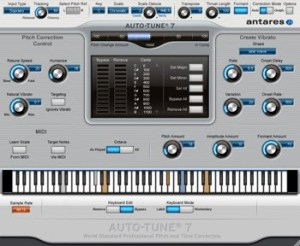
The dismissal of auto-tuned acts is usually made in terms of a comparison between the modified recording and what is possible in live performance, like indie folk singer Neko Case’s extended tongue-lashing in Stereogum. Auto-tune makes it so that anyone can sing whether they have talent or not, or so the criticism goes, putting determination of talent before evaluation of the outcome. This simple critique conveniently ignores how recording technology has long shaped our expectations in popular music and for live performance. Do we consider how many takes were required for Patti LaBelle to record “Lady Marmalade” when we listen? Do we speculate on whether spliced tape made up for the effects of a fatiguing day of recording? Chances are that even your favorite and most gifted singer has benefited from some form of technology in recording their work. When someone argues that auto-tune allows anyone to sing, what they are really complaining about is that an illusion of authenticity has been dispelled. My question in response is: So what? Why would it so bad if anyone could be a singer through Auto-tuning technology? What is really so threatening about its use?
As Walter Benjamin writes in “The Work of Art in the Age of Mechanical Reproduction,” the threat to art presented by mechanical reproduction emerges from the inability for its authenticity to be reproduced—but authenticity is a shibboleth. He explains that what is really threatened is the authority of the original; but how do we determine what is original in a field where the influences of live performance and record artifact are so interwoven? Auto-tune represents just another step forward in undoing the illusion of art’s aura. It is not the quality of art that is endangered by mass access to its creation, but rather the authority of cultural arbiters and the ideological ends they serve.
Auto-tune supposedly obfuscates one of the indicators of authenticity, imperfections in the work of art. However, recording technology already made error less notable as a sign of authenticity to the point where the near perfection of recorded music becomes the sign of authentic talent and the standard to which live performance is compared. We expect the artist to perform the song as we have heard it in countless replays of the single, ignoring that the corrective technologies of recording shaped the contours of our understanding of the song.
In this way, we can think of the audible auto-tune effect is actually re-establishing authenticity by making itself transparent. An auto-tuned song establishes its authority by casting into doubt the ability of any art to be truly authoritative and owning up to that lack. Listen to the auto-tuned hit “Blame It” by Jaime Foxx, featuring T-Pain, and note how their voices are made nearly indistinguishable by the auto-tune effect.
It might be the case that anyone is singing that song, but that doesn’t make it less bumping and less catchy—in fact, I’d argue the slippage makes it catchier. The auto-tuned voice is the sound of a democratic voice. There isn’t much precedent for actors becoming successful singers, but “Blame It” provides evidence of the transcendent power of auto-tune allowing anyone to participate in art and culture making. As Benjamin reminds us, “The fact that the new mode of participation first appeared in a disreputable form must not confuse the spectator.” The fact that “anyone” can do it increases possibilities and casts all-encompassing dismissal of auto-tune as reactionary and elitist.
Mechanical reproduction may “pry an object from its shell” and destroy its aura and authority–demonstrating the democratic possibilities in art as it is repurposed–but I contend that auto-tune goes one step further. It pries singing free from the tyranny of talent and its proscriptive aesthetics. It undermines the authority of the arbiters of talent and lets anyone potentially take part in public musical vocal expression. Even someone like Antoine Dodson, whose rant on the local news, ended up a catchy internet hit thanks to the Songify project.
Auto-tune represents a democratic impulse in music. It is another step in the increasing access to cultural production, going beyond special classes of people in social or economic position to determine what is worthy. Sure, not everyone can afford the Antares Auto-Tune machine, but recent history has demonstrated that such technologies become increasingly affordable and more widely available. Rather than cold and soulless, the mechanized voice can give direct access to the pathos of melody when used by those whose natural talent is not for singing. Listen to Kanye West’s 808s & Heartbreak, or (again) Lil Wayne’s “How To Love.” These artists aren’t trying to get one over on their listeners, but just the opposite, they want to evoke an earnestness that they feel can only be expressed through the singing voice. Why would you want to resist a world where anyone could sing their hearts out?
—
Osvaldo Oyola is a regular contributor to Sounding Out! He is also an English PhD student at Binghamton University.
—
Share this:




Current Top Posts





April 2021

January 2020

November 2019

October 2019

August 2019

April 2014

November 2017

March 2015

December 2017

October 2015
 Sounding Out!
Recent Comments