
Heads: Reblurring The Lines

I don’t intend to discuss the “Blurred Lines” case in this post. There are plenty of folk already committing thoughts on the ruling. While the circumstances of the recent Thicke/Williams/Gaye case are not explicitly about sampling, they are indicative of the direction sample/copyright litigation can go in the future. When samples from a composition infringe upon the copyrights for the song, it is dangerous territory. Rather than focus on those dangers however, I’d like to exemplify possibilities of a more open (and arguably the intended) interpretation of copyright laws, by doing something I should have done seven years ago – put out my project Heads (dropping on April 1st, 2015).
My position has not changed from previous writings on sample laws – transformative sampling produces original work. My intent here is to present an artist’s statement on Heads that illustrates how transformative sampling and derivatives of it require broader interpretation; they should be legally covered as original compositions.
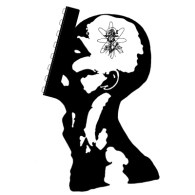
Cover art for Proto-Heads project from 2009
I’ve kept Heads in the vaults since 2007 while continuing from its artistic direction, all the while doing little tinkerings to convince myself it wasn’t done yet (it was). I had been pursuing analog technologies I swore would be the finishing touches it needed, to convince myself it wasn’t ready yet (it was). Then I lost 4TB of files in a quadruple hard drive killer power surge. The last Heads masters were among the 500GB that survived.
The project was born in response to comments made by Wynton Marsalis, dismissing hip-hop and denying its connection to the legacy of black music.
It’s mostly sung in triplets. So what? And as for sampling, it just shows you that the drummer has been replaced by a loop. The drum – the central instrument in African-American music, the sound of freedom – has been replaced by a repetitive loop. What does that tell you about hip-hop’s respect for African-American tradition? – Wynton Marsalis
I was offended as both a hip-hop and jazz head, so I set out to produce a body of work that showed the artistic originality of sampling and tied the practice to black musical traditions.
Prior to the analog experiments, I was modeling a series of digital Open Sound Control (OSC) instruments based on the monome, starting with a sampler but expanding into drum machines synthesizers and other noise makers. Together I called them the Heads Instruments. 95% of the composition work on Heads began with these instruments, all of which were built around the concept of sampling.
The title Heads, comes from the musical head, which is a fundamental part of the jazz tradition. The head is the thematic phrase or group of phrasings that signify a song; heads can be comprised of melody, harmony and/or rhythm. Jazz musicians use the head as a foundation for improvisation, a traditional form including the alternating of head and solo improvisations . Often times in jazz, the head comes from popular songs re-envisioned through improvisation in a jazz context, such as John Coltrane’s famous refiguring of “My Favorite Things” from The Sound of Music. In addition to being covers, these versions are transformations of the original into a different musical context. The Heads Instruments were designed specifically as instruments that could perform a head in a transformative manner.
Hip-hop attacks itself. It has no merit, rhythmically, musically, lyrically. What is there to discuss? – Wynton Marsalis
Tony Wynn
I was a bit annoyed at Marsalis, just how much is illustrated by the opening track of Heads, “Tony Wynn,” eponymously named after the contemporary jazz saxophonist, who, like Marsalis, feels that hip hop is not music. In it a character berates his friend for bringing up Wynn’s position. On the surface the song talks trash, but musically it makes layers of references.
First, the song’s format (down to the title) is a nod to the Prince tune “Bob George.” In his song, Prince parodies a character berating a girlfriend for being with Bob George. The voice of the character in “Tony Wynn” and some of his comments come straight from Prince’s song, but the work as a whole is not a direct cover of “Bob George.”

“Tony Wynn” is undeniably influenced by the Minneapolis sound, that eclectic late 1970s and early 80s scene that blend of funk, rock, and synthpop, but how the track arrives there is complicated. It does contain a Prince sample, but not from “Bob George.” The sample is played in a transformative manner, chopping a new riff different from the source material. It also includes a hit from another song, a sample of only one note, yet one identifiable as signature. The drums are ‘played’ in what could be described as the Minneapolis vibe. You can also hear a refrain that mimics yet another song. All of these sampled parts create a new head, to which I added instrumental embellishments with co-conspirator Dolphin on bass, synth, and the killer Prince-esque guitar solo.
The track represents a hodgepodge of Prince influences, but because those influences are so varied, none can be individually identified as the heart of “Tony Wynn.” Furthermore, at the bridge all of the samples get flipped on each other, some re-sampled and performed anew. Nothing can be pinned down as an infringement on technicalities, without taking into account the full context of the transformation. While “Tony Wynn” is heavily influenced by Prince, it is not a Prince song.
Rap Rap Rap
The second track on Heads,”Rap Rap Rap,” features Murda Miles and Killa Trane. I chose its title and head to reference the 1936 Louis Palma song “Sing Sing Sing,” made popular by the Benny Goodman Band. Coming out of the big band era, the song is closer to a traditionally composed Western standard, the heavy percussions however distinguish it. While you will find no samples of sound recordings from any version of “Sing Sing Sing” in “Rap Rap Rap,” it still represents the primary sample head used.
The opening percussive phrases are influenced by rhythmic hand games—an important but often overlooked precursor to hip hop discussed in Kyra Gaunt’s The Games Black Girls Play: Learning the Ropes from Double-Dutch to Hip-Hop. Here the rhythm sets the pace before charging into the head with a swing type of groove as the two featured artists, Murda Miles on trumpet and Killa Trane on sax, call out the head. What distinguishes these horns however, is that they are both sample based.
The song’s head is still based on “Sing Sing Sing,” but for the dueling horn parts the samples come from the recordings of Miles Davis and John. While Davis and Coltrane played together at a fair number of sessions, these samples come from two divergent sources from their individual catalogs. I chopped, tuned and arranged them for performance so that they could play in tune with the head.
The opening half of “Rap Rap Rap” sees both sticking to the head with little flourishes, but at the half way mark, the accompaniment changes to a distinct hip-hop beat still firmly rooted in the head. The two horns shift here as well, trading bars in a way that nods to both jazz and rap. The phrasing of the sample performance itself mimics a rapping cadence here, bridging the gap between the two traditions.
La Botella
The head for next track “La Botella” (The Bottle), uses a popular salsa motif as the head, accentuated by a son influenced percussive wall of sound. The percussions vary from live tracked percussions to percussion samples to percussive synthesis. I performed many of the percussive sounds utilizing the Heads Instruments sequencer, which lends itself to the slightly off—while still in the pocket—swing.
The format of this particular head allowed for an expanded arrangement, through which I nod to the Afro-Cuban influence in the African American tradition, from jazz to hard soul/funk to rock and roll. Son evolved from drumming traditions that have their own forms of the head. There is a duality in these two traditions that pairs a desire for tightness with a looseness in spirit, and this tension continues into musics influenced by them. The percussions on “La Botella” carry that duality. The collective drums sound as an instrument, while each individual drum can be aurally isolated.
The actual samples in the song come from vocal bits of The Fania All-Stars, but the true Fania mark I emulate on “La Botella” is the horn section. They sound nowhere near as good—let’s just get that out of the way—but the role they play comes directly from the feel of a classic Fania release. Could the horns actually be attributable to a single source? I doubt it, but more importantly, they operate only as a component of the song itself, placing this inspiration in a different musical context.
Sound Power
“Sound Power” fully embraces ‘sound’ as a fundamental musical object. Sounds in and of themselves can be understood as heads. The primary instrument I used on “Sound Power” is the sound generator of the 4|5 Ccls Heads Instrument. 4|5 Ccls is an arpeggiator modeled after John Coltrane’s sketches on the cycle of fifths. I tend to think of such sounds in relationship to the latter Coltrane years when he was using his instrument as a sound generator, clustering notes together and condensing melody.
Similarly, arpeggiators group notes into singular phrases which can be interpreted as heads. The head on “Sound Power” does not push the possibilities to the extreme, as Coltrane did; it remains constrained within a rhythmic framework. However, it shows the power of sound as fundamental. All of the drums, percussive elements, bass and harmonies flow from the head, accentuated by heavyweight vocal chops from the Heads Instrument scratch emulator.
Come Clean
The intro to “Come Clean” marks a turning point in the album. The first four tracks present are technical feats to illustrate the point. “Come Clean” doesn’t slack off. Musically this track is the closest to the “Blurred Lines” case; notably, other than the intro, it contains no sample. It’s head, however, comes from the Jeru the Damaja song “Come Clean” produced by DJ Premier. I did an extensive breakdown on the technical details of “Come Clean” on Avanturb a few years ago; my online installation shows how (and for how long) I have been contemplating this track. But to paraphrase the sample here, the true power of music is helping the listener realize the breadth of their own existence in this universe. My use of the song is very intentional, and I deliberately change its themes for the album.
For “Come Clean,” I worked with percussionists Zach and Claudia who studied in the Olatunji line of drumming. They noted the physical timing challenges getting used to the song’s unique head, but, once they locked in, the head held its own. That exemplifies the power of this means of composing – new original ideas which can push music’s possibilities.
As an artist, I advocate for the interpretation of copyright laws so that someone cannot sue because three notes of a song appear in one they own, or because a sound from the recording the record company convinced the artist to sign over to them for pennies was repitched and played into a melody. I know that arriving to music via these methods can push the traditions further, everything copyright laws were written to encourage. If we don’t change the way we think about copyright, the ability to create in this manner will be lost in litigation.
Heads comes out on April 1, 2015
—
Primus Luta is a husband and father of three. He is a writer and an artist exploring the intersection of technology and art, and their philosophical implications. He maintains his own AvantUrb site. Luta was a regular presenter for Rhythm Incursions. As an artist, he is a founding member of the collective Concrète Sound System. Recently Concréte released the second part of their Ultimate Break Beats series for Shocklee.
—
 REWIND!…If you liked this post, you may also dig:
“SO! Reads: Jonathan Sterne’s MP3: The Meaning of a Format”-Aaron Trammell
“Remixing Girl Talk: The Poetics and Aesthetics of Mashups”-Aram Sinnreich
The Blue Notes of Sampling– Primus Luta
Share this:

I Can’t Hear You Now, I’m Too Busy Listening: Social Conventions and Isolated Listening

 Editor’s Note: I hate to interrupt our busy readers, but I just wanted to mention that today’s post by Osvaldo Oyola marks our last entry in SO!‘s July Forum on Listening. For the full introduction to the World Listening Month! series click here. To peep the previous posts, click here. Also, look for our #Blog-O-Versary 3.0 post coming up on July 27th, a multimedia celebration of three years of Sounding Out! awesomeness (complete with a free, downloadable soundtrack compiled by our editors and writers for your listening pleasure). Now for some pure, uninterrupted reading (we hope!).–JSA
—-
In calling attention to listening as an activity, July 18th’s World Listening Day made me think about our social conventions around listening. While it is not uncommon for folks to pay lip service to listening’s value, this ignores the variety of ways that listening is actually socially prioritized (and the multiple meanings housed in the term “listening”). Case in point, the officiant at my recent wedding exhorted my about-to-be-wife and me to listen to each other: “listen for what is consistent and familiar, but also for what is new, emergent, even sweetly radical in your partner.” When used in this sense, listening refers to a focused attention to the meaning of sound, particularly language. His words suggest that our relationship would be strengthened by listening’s ability to convey interpersonal knowledge.
While listening is certainly crucial to social bonds, my own experience as a careful and engaged listener of music suggests that some of the most crucial listening we do happens as an isolated–and isolating experience–especially when listening involves recorded sound. However, its importance to our individual well being often seems directly inverse to the (lack of) seriousness other people seem to give it. Not my now-wife, of course, but uninterrupted musical listening was not an official part of our vows, either. There is an inherent tension between social and isolated forms of listening.
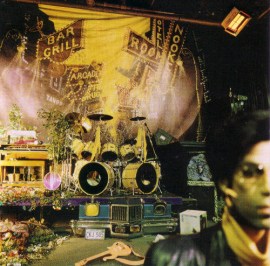
Sign o’ the Times, still my fave 25 years later.
As a teenager, for example, whatever my arguments with my mom might have really been about, a frequent instigator of a blow-up was her reaction to my annoyance when she’d interrupt my listening at her whim. I’d be sitting in my room listening in anticipation for what I have often called my favorite recorded human sound–that moment in Prince’s “Adore” on Sign o’ the Times around 2:55 (music nerd correction: on the album version it is actually at 2:48) when Prince makes a little moan before the second time he sings “crucial”–and mom would burst into the room to ask me a question, giving no heed to the stereo. I often responded to this in the same way: “If I were reading or watching TV, you’d say ‘excuse me,’ to get my attention, just like you always taught me a polite person should do. But when it is music you just go ahead and interrupt as if I weren’t doing anything, but I am doing something. I’m listening to music. It’s an activity.” (Of course, you have to imagine that response laden with all the snottiness only a teenager could muster). You would’ve thought she’d understand, since my obsessive love of music was influenced in no small part by her huge collection of salsa records, but my mom’s listening is mostly predicated on embodying the music through dance. This kind of listening is not so much about close attention to the details of the sound, but rather on a visceral reception of its physicality. Again, like listening to speech, the form of listening given to dance commonly reinforces social bonds—between dance partners, among dancers in a crowd, between dancers and DJ or band.
The kind of listening I am describing cuts us off from the immediate social world. It requires that people who want your attention must rudely interrupt your listening pleasure or ask forgiveness for the interruption. Theoretically, they could wait patiently, but this rarely happens, so the listener often feels forced to downplay the annoyance that comes along with interruption, lest they break a social bond and/or belie how important this kind of listening really is to them.
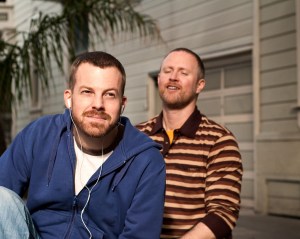
“Tuning Out” by Flickr User CarbonNYC
Of course, the ubiquity of headphones suggests that there are many people who want to be focused enough on their listening as to avoid interruption. (Though, that may be a chicken-and-the-egg situation, as I can’t help but wonder to what degree the headphones become an excuse for social disengagement.) Either way, it is noteworthy that the wearing of headphones become a visual clue for a desire to be isolated in the listening practice, even when in an otherwise public environment. If you are going to ask a stranger on subway for directions, you are less likely to choose the person with headphones on, and if you do choose to ask them, the headphones direct the form of social action required to get their attention and ask. It calls for a visual signal, like a gesture to remove the headphones, or even polite physical contact, like a tap on the shoulder—but you certainly would not pull the headphones off their ears and just start talking at them, as you might talk at someone listening to music through speakers if you happen to walk into the room. The invention of things like the Doffing Headphone handle, which allows headphone listeners to greet others by “doffing” their headphones like one used to do with a hat, arises from the need for isolated listeners to interact with the social world even while enmeshed in their portable bubble of personal space. However, be that as it may, the handles have not exactly caught on.
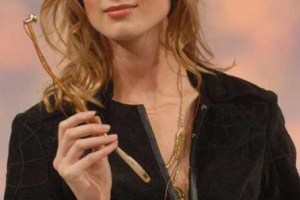
Doffing Headphones
Perhaps headphones are the just the logical evolution of crafting a listening space. They are certainly much more feasible than the ‘Yogi Enclosure’ Kier Keightley discusses in his article “’Turn It down!’ She Shrieked: Gender, Domestic Space, and High Fidelity, 1948-59.” The “Yogi enclosure” was High Fidelity magazine’s tongue-in-cheek (and highly gendered) 1954 solution to a man’s inability to enjoy his hi-fi in a space where he is likely, the article suggests, to be harangued by his wife and annoyed by his children. This masculinizing of listening speaks to the social contours of what is ostensibly an individual practice. In the case of my teenaged self and my mother, I wanted my 1000th listen to Dark Side of the Moon to dictate her behavior in the way that other individual activities in a shared space dictate behavior through social conventions. Looking back, I was also trying to claim space in her home. I never considered how as a mom she was expected to always be available, never free from interruption no matter what she was doing. Keightley’s article demonstrates this through explaining the construction of listening technologies as a domain of men that requires women and children to be quiet in order to allow him the pleasure of his equipment. I could imagine my right to be uninterrupted, for my listening to be taken seriously, considered a productive activity, by virtue of my gender and my youth. While, now that I think of it, even the majority of my mom’s record-listening and salsa dancing accompanied household chores that fierce adherence to gender roles demanded time she might have preferred to dedicate to listening alone.
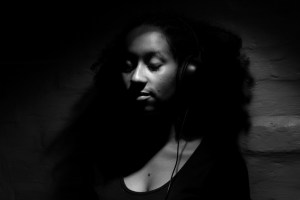
Listening by Flickr User Alessandra Luvisotto
While gender politics have changed significantly since 1954, careful music listeners of any gender still seek to define the use of space through the use of sound, intentionally or unintentionally. There is a satisfaction that comes with filling a space with sound that I feel cannot be matched by even the highest quality noise-canceling headphones. Sound emerging from speakers and moving through the air creates a presence. It demands attention. It dictates behavior. It is a kind of power.
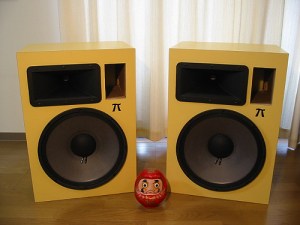
Image by Flickr user Ken Schwatz
Another case in point: I can remember my college roommate and I (the same fellow who’d end up being the officiant at my wedding, coincidentally enough) traveling from store to store to try out different stereo speakers, carrying a CD copy of This Mortal Coil’s Filigree & Shadow and getting salesmen to play the soft sounds on tracks like “Thias (II),” as a test. These were the days before online comparison shopping, so in order to achieve this idealized listening experience–which for us meant the loudest and softest sounds were equally clear–we had to annoy salesmen with our self-important discussion of miniscule differences in sound quality and failure to actually purchase the costly speakers we were trying.
.
What I am trying to convey with this anecdote is that, while the idealized listening experience we imagined was an isolated one (probably something involving staring at the glow-in-the-dark star stickers on the ceiling of our darkened dorm room), it was born of the sociality and power I mentioned above. We were exercising a form of privilege (or at least practicing for an imagined future masculine power over the domestic sphere). This imagined idealized listening not only required a developed understanding of what we were listening for, but a shared sense of the ideal circumstances for those focused, uninterrupted, close listening sessions. And those ideal circumstances required a freedom from the responsibilities of social bonds, that we, as young men, never doubted we could access. There is no part of listening (as opposed to merely hearing) that isn’t social, and both isolated and more explicitly interpersonal forms of listening feed each other, but only when both are valued, nurtured, and made possible.
I thought by exploring these isolated listening experiences that I might come closer to understanding the primacy of the visual in the social etiquette of interruption, but I am no closer. Instead, I am left to consider the dynamics of power that (dis)allow that space for close listening. All I have learned about the matter since those teenaged arguments with my mom is that, if I plan to do some real listening, I either need to be alone in the house or that the onus is on me, the listener, to make an announcement: “I will be listening to music now.” Still, more often than not, I put on my headphones. The fact remains that without the visual signals that let others know that listening is occurring–headphones, dancing–listening as a solo activity is so often devalued and interrupted. Sound alone is not enough.
Now if you’ll excuse me, I just got Jonathan Lethem’s book on Fear of Music, and I plan on closely listening to each track of the Talking Heads’ record before and after the associated chapter in Lethem’s book. Let’s hope I won’t be interrupted.
—
Osvaldo Oyola is a regular contributor to Sounding Out! and ABD in English at Binghamton University.
Share this:


Current Top Posts





April 2021

January 2020

November 2019

October 2019

August 2019

April 2014

November 2017

March 2015

December 2017

October 2015
 Sounding Out!
Recent Comments