
Sounding Out Podcast #36: Anne Zeitz and David Boureau’s “Retention”

It’s an all too familiar movie trope. A bug hidden in a flower jar. A figure in shadows crouched listening at a door. The tape recording that no one knew existed, revealed at the most decisive of moments. Even the abrupt disconnection of a phone call manages to arouse the suspicion that we are never as alone as we may think. And although surveillance derives its meaning the latin “vigilare” (to watch) and French “sur-“ (over), its deep connotations of listening have all but obliterated that distinction.
In the final entry to our series on Sound and Surveillance, sound artist Anne Zeitz dissects the theory behind her installation Retention. What are the sounds of capture, and how do the sounds produced in and around spaces of capture affect our bodies? Listen in to find out. -AT
—
CLICK HERE TO DOWNLOAD: Anne Zeitz and David Boureau’s “Retention”
SUBSCRIBE TO THE SERIES VIA ITUNES
ADD OUR PODCASTS TO YOUR STITCHER FAVORITES PLAYLIST
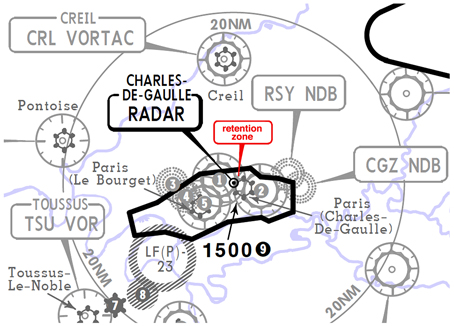
This podcast presents Retention, a quadriphonic sound installation made with David Boureau. It considers the sounds of surveillance, detention and migration. Retention concentrates on the “soundscape” of the Mesnil Amelot 2+3 detention center for illegal immigrants situated to the North of Paris just beside the Charles de Gaulle airport. This center constitutes the largest complex for detaining “illegal immigrants” in France, with 240 places for individuals and families. Approximately 350 airplanes pass closely above the center over a 24 hours time span, creating intervals of very high sound levels that regularly drown out all other ambient sounds. Retention uses quadrophonic recording technology to capture and diffuse a live transmission of communication between pilots and the Charles de Gaulle control tower. The work also integrates recordings from inside the center made by communications via mobile phones. In the short intervals of silence (always implying sounds of some sort), the atmosphere seems suspended. This suspension is paradigmatic for the clash between the local and the global, between those who are trapped in a state of detention before being expulsed by the engines moving over their heads and those who circulate freely (nonetheless under surveillance) in our global society. Retention exhibits a changing sonic space in order to consider how “waiting zones” and processes of mobility meet.
–
Featured Image (c) Anne Zeitz and David Boureau, Retention, 2012.
–
Anne Zeitz is a researcher and artist working with photography, video, and sound media. Born in Berlin in 1980, she lives and works in Paris. Her research focuses on mechanisms of surveillance and mass media, theories of observation and attention, and practices of counter-observation in contemporary art. Her doctoral thesis (University Paris 8/ Esthétique, Sciences et Technologies des Arts, dissertation defence November 2014) is entitled (Counter-)observations, Relations of Observation and Surveillance in Contemporary Art, Literature and Cinema. Anne Zeitz was responsible for organizing the project Movement-Observation-Control (2007/2008) for the Goethe-Institut Paris and collaborated on the exhibition and conference Armed Response (2008) at the Goethe-Institut Johannesburg. She is a former member of the Observatoire des nouveaux médias (Paris 8/Ensad) and of the research project Média Médiums (Université Paris 8, ENSAPC, EnsadLAB, Archives Nationales, 2013/2014). Her most recent research concentrates on the work of the American artist Max Neuhaus with the publication of De Max-Feed a Radio Net (2014), part of the Média Médiums book series. She is the artist of this year’s Urban Photo Fest and participated at the Urban Encounters / Tate Britain in October 2014.
—
 REWIND! . . .If you liked this post, you may also dig:
Toward a Civically Engaged Sound Studies, or ReSounding Binghamton – Jennifer Stoever
Sounding Out! Podcast #34: Sonia Li’s “Whale”-Sonia Li
Playing with Bits, Pieces, and Lightning Bolts: An Interview with Sound Artist Andrea Parkins – Maile Colbert
Share this:

“Sound Studies: A Discipline?”: Sound Signatures Winter School, Amsterdam, January 2014
Has the ever-nascent field of sound studies finally “grown up”? After years of intellectual development and a constantly growing body of work, including quite a few classic texts and books, it has been rapidly establishing an identity of its own, independent from the many “parent” disciplines from which it originated. As with any teenager, this process of maturation comes with a dose of self-searching and, indeed, some navel-gazing. But are we ready to acknowledge sound studies as its own discipline?
At the first conference of the European Sound Studies Organization (ESSA) in Berlin in October 2013, a heated debate followed an otherwise routine announcement. The preliminary title for the second installment of the conference: “Sound Studies: A Discipline?” was not going to make it to Copenhagen in June 2014. Although the question mark suggested playfulness, many audience members either did not like the idea of an entire conference devoted to the meta-discussion on the pros and cons of interdisciplinarity or were not prepared to consider sound studies as a discipline at the first place.
Eventually, the Copenhagen conference was safely re-named “Sound Studies: Mapping the Field.” The discussion in Berlin however, continued at the opening session of the Sound Signatures Winter School in Amsterdam in early 2014. Co-organizer Mara Mills asked whether the publication of such anthologies as The Sound Studies Reader in 2012 and The Oxford Handbook of Sound Studies in 2013 meant that sound studies was a proper discipline. Is it, she asked, moving away from its roots as an interdisciplinary field consisting of displaced scholars formerly unable to tackle questions of sound within the confines of their traditional disciplines? The ensuing five days of the Winter School answered Mill’s question in a rather fittingly ambiguous way. The question remains: “Sound Studies: A Discipline?” Well, yes and no.

Hearing, public domain
One of the most significant conclusions of the Winter School’s thought-provoking workshops, keynotes, performances and debates was phrased by co-organizer Carolyn Birdsall during the final discussion on Friday afternoon; she had come to realize that sound studies and its older, more distinguished, but often somewhat stale brother musicology are not the adversaries one is often led to believe. A musicologist by training, I have always found sound studies’ habit of explicitly not dealing with music (in conjunction with its sometimes disproportionate focus on sound art) a little tiresome; and what these five intensive days in Amsterdam convincingly showed, among other things, was that the older brother and its younger sibling can be rather complimentary.

Manuscript of Bach’s Lute Suite in G minor, public domain
Of course, the traditional objects and methods of the discipline of musicology—in its most dusty and clichéd form studying black dots written on paper by great men—have long been what sound studies scholars avoided. In the late 1980’s, however, musicology already started moving away from this stereotype by incorporating more critical methodologies and broadening its scope. Moreover, ethno- or cultural- musicologists have been breaking the armor of Eurocentrism in mainstream musicology. Now, with the steady rise of sound studies’ academic momentum, musicology is even giving up its intellectual monopoly on determining what does and what does not count as relevant research on music. The highly interdisciplinary body of knowledge developed in this mature sound studies can indeed be very useful in more conventional musicological research; likewise sound studies benefits from work conducted within the disciplinary confines of musicology.
At the Winter School, a prime example of such an exchange was Julia Kursell’s keynote lecture “Motor Media: On Aural Feedback in the History of Musical Instrument Playing.” Focusing on the experiments of nineteenth-century French pianist and teacher Marie Jaëll, Kursell showed how, prior to the advent of recording technology, musical instruments like the piano offered valuable points of entry into the world of sound and hearing. The piano-keyboard, Kursell argued, was not just a site of aesthetic, musical development, but was also employed as an epistemological tool in itself. Moreover, studying such historical cases also opens the door for broader questions engaging musicology, sound studies and science and technology studies.This interdisciplinary overlap allows for discussions of the body politics of music teaching as well as the didactics of a specific aesthetic regime in a particular social milieu.

Frances Densmore recording Mountain Chief, 1916, public domain
Other sessions that explicitly dealt with music included Stephen Amico’s lecture combining sound studies, media studies and the “discipline formerly known as ethnomusicology” to discuss ethical difficulties facing ethnographic sound archivists. This discussion about the ownership and right of use of the recordings in such archives was among the most refreshing and timely raised through the week. On a much lighter note, Ashley Burgoyne’s Workshop “What Can You Learn from a Music Game?” represented yet another rapidly developing interdisciplinary field of music research: the study of music cognition.
Recently, after returning from the aforementioned ESSA conference in Copenhagen, Marcel Cobussen predicted in a Facebook update that “in 10-15 years from now, musicology will be a subspecies of sound studies.” He might be right, but rather than a “sub-discipline,” why not envision a continuum from “old-fashioned” musicology, via the much broader field of music studies towards the broader field of sound studies. As such, sound studies would maintain its interdisciplinary status as a field, rather than a discipline, allowing for engagement with the knowledge that has been produced and is still produced in musicology proper and music studies more generally.
It is up to a new generation, raised as sound studies natives, to further the developments toward such an exchange of scholarship. Judging by the presentations, workshops, performances, and most tellingly, student presentations, during these five days in Amsterdam, this will undoubtedly happen. Notwithstanding the very broad scope of topics and approaches, backgrounds and interests, among participants and presenters there was the tacit acknowledgement of communality in the one thing they all shared: a profound interest in sound in the broadest sense of the word that needed very little justification. Initiatives like this Winter School and its upcoming second installment in the form of a Summer School in Berlin leave one with an optimistic outset of the intellectual potential of the young field of sound studies; it forges interdisciplinary connections by virtue of the common interest in an object–sound–that is simultaneously a very specific and seemingly endless scope of scholarly possibilities.

“Sound Scape” by Flickr user Kent Yoshimura, CC BY-NC-SA 2.0
Perhaps the most telling example of this bright future was the fact that the keynote by Jonathan Sterne, without question the week’s big star, author of one of the founding books in the field, was a nice historical overview of the concept of the “soundscape,” although offering few new insights or questions. If anything, this unusually low-key performance from a very impressive scholar, underlined the most inspiring aspect of the Sound Signatures Winter School: there is still much to be done, and, as this very blog has been consistently showing since 2009, a new generation of sound scholars is already doing it. Therefore, I am looking forward to hearing our next generation of scholars weighing in on the question: “Sound Studies: A Discipline?” in the forthcoming discussion in Berlin. With an impressive, diverse and exciting program I’m sure I won’t be disappointed.
—
Melle Jan Kromhout is PhD-Fellow at the Amsterdam School for Cultural Analysis, University of Amsterdam. His research project entitled “Noise Identities” focuses on the revaluation of noise in recorded sound and music. The project aims to develop noise identities as a concept for assessing the relation between recording media and musical significance. He presented his work at conferences around the globe and published several articles including “‘Over the Ruined Factory There’s a Funny Noise’: Throbbing Gristle and the mediatized roots of noise in/as music” (2011), “As Distant and Close as Can Be. Lo-fi Recording: Site-specificity and (In)authenticity” (2012), “An Exceptional Purity of Sound: Noise Reduction Technology and the Inevitable Noise of Sound Recording” (2014) and “’Antennas Have Long Since Invaded Our Brains’: Listening to the ‘Other Music’ in Friedrich Kittler” (forthcoming, 2015). More information on www.mellekromhout.nl
—
Featured image: Carla Müller-Schulzke opening the first ESSA conference in Berlin, October 2013, by Jennifer Stoever, CC BY-SA 3.0
—
REWIND! . . .If you liked this post, you may also dig:
Functional Sound (Studies): The First European Sound Studies Association Meeting— Erik Granly Jensen
“Once the word ‘sound’ was in the title, it opened up a kind of door”: A Conversation with Eric Weisbard— Liana Silva-Ford
“Sound at AMS/SEM/SMT 2012”— Bill Bahng Boyer
Share this:


Current Top Posts





April 2021

January 2020

November 2019

October 2019

August 2019

April 2014

November 2017

March 2015

December 2017

October 2015
 Sounding Out!
Recent Comments