
Classical Singing: Cradle for Sorrow and Healing
J. Stoever-Ackerman’s recent exploration of the complicated relationship between classical music and social class in America raised some provocative questions for me personally. I am a professional classical musician with a doctorate in voice, as well as the daughter of two working-class white ethnics who became professional intellectuals. My family’s origins, curiously perhaps by today’s standards, did not place classical music out of reach on the far side of the class barrier: my father played in the legendary Hempstead High School Orchestra on Long Island, while my mother, a single teen mom, took herself to the Philharmonic for a Christmas gift every year while she worked in a factory and attended college at night (this was, however, before music instruction was gutted from the public school curriculum in the 1970s and 1980s). As a result, classical music was a very present part of my early life, and, without overstating things too much, I can realistically say that it has helped to form me as a person, and has provided me not only with bread for my body but also, and more importantly, with breath for my soul. I feel like the study and practice of classical music gave me not only my career, but even my life. Coming from this position, then, Stoever-Ackerman’s slighty gulity bemusement at her pleasure in the orchestral concert she attended, and her assertion that “where listening is concerned, resistance and subjection can never be easily separated,” sat uneasily with me.
Stoever-Ackerman’s objections to longhair music are based not only upon class affinity, but also, perhaps unconsciously, in her standpoint as a twenty-first-century American intellectual. As UCLA musicologist Richard Taruskin has noted, it has been au courant since the 1960s for intellectuals to eschew classical music in favor of the various genres of what he calls “commercial music:”
and they often seem oblivious to the very existence of other genres. Of no other art medium is this true. Intellectuals in America distinguish between commercial and “literary” fiction, between commercial and “fine” art, between mass-market and “art” cinema. But the distinction in music is no longer drawn, except by professionals. Nowadays most educated persons maintain a lifelong fealty to the popular groups they embraced as adolescents, and generation gaps between parents and children now manifest themselves musically in contests between rock styles.
If, as has already been discussed extensively at this site, pop and its various genres make up the (only?) legitimate musical repertoires of the American working classes–both white and of color–I believe it’s time for a word from the trenches of musical praxis: this is not necessarily so, nor should it be.
While earning my doctorate at the City University of New York, I taught for two years as a graduate assistant and for another two as an adjunct at two of CUNY’s senior, i.e. four-year, colleges. In the heart of an urban metropolis, I taught studio and class voice, that is to say both individual lessons and singing classes en masse. My students, with very few exceptions, were from the outer-borough working classes, traveling long distances on public transportation to attend college while working and in some cases parenting, and they represented a variety of races and ethnicities, with whites solidly in the minority. Most of my private-lesson students were older than I was, returning students who had been sidetracked by life and various dead-end jobs from finishing their bachelor’s degrees at a more usual age. Since I am a classical singer, I taught everyone the same thing: classical singing. My voice students studied classical musical practice and classical music repertoire not only because I believe that healthy classical technique is the basis of good vocal technique across genres — that is, if you can sing well in the classical style, you can sing anything well — but also because I know, in the depths of my being, that the experience of making classical music is healing and transformative for the person who undertakes it, an experience that should be denied to or refused by no one. In this sense, classical music praxis was, in my studio, a tool for self-transformation, self-empowerment, and self-expression that ignored distinctions of class and race. This might suggest that classical music is in fact a subversive practice for the working classes and people of color, and perhaps it is, though I see it more as a human right.
In teaching these diverse classes, I tried very hard to discern what sort of a person each of my students was, and to choose the right repertoire for each based not only on vocal characteristics but also on everything the student presented to me: his or her ethos, if you will. The truth is that I loved and respected my students, and I felt a heavy responsibility for making their experience as fledgling classical musicians one that would enrich their lives. They were, as I mentioned, from wildly divergent backgrounds. One was the daughter of a famous Puerto Rican bandleader who had discouraged her from a career in music, her true love; she made a living selling gloves and hats from a table outside the Metropolitan Museum of Art. One was a Haitian Seventh-Day Adventist, a highly intelligent, spinsterish woman who spoke German as well as French, and whose singing revealed hints of a magnificent natural instrument — if only she had been physically and psychically free to the point that she could have accessed it. Another was T., a shy, socially-awkward man in early middle age who worked as a paralegal, and who confided after three lessons that he was a recovering alcoholic. Many of my students, I perceived, were profoundly wounded and  heartbroken people. Though occasionally they spoke of their traumas and difficulties, words were not really necessary; the dynamic of the private voice lesson is so transparently revealing, and the rough areas in the voice provide such an accurate mirror of the catches in the soul, that I didn’t need to look hard to grasp their woundedness, if not always the nature of their wounds. This is why, as every classical singer and voice teacher know, tears are a commonplace in the voice studio. And this is why it is so essential that a voice teacher be compassionate. The voice — that intangible, ethereal instrument played by the passage of air over two threads of gristle in the throat — can be not only a diagnostic gauge of the inner singer, but also, ideally, a means of healing for both the singer and her audience.
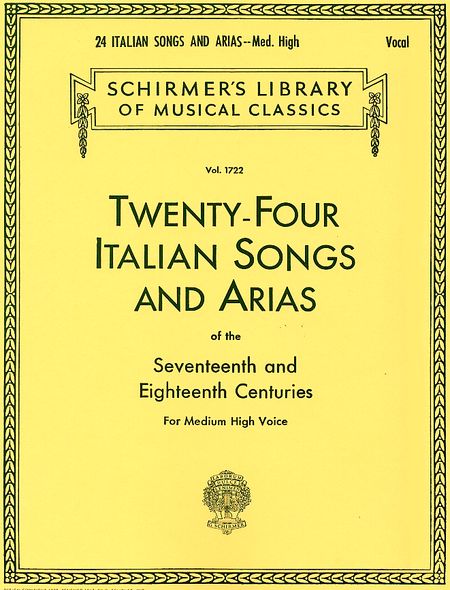
T. surprised me in our first lesson by bringing in a song he was working on on his own. Occasionally students did this, the song generally being from the Broadway repertoire. T.’s choice, however, was Robert Schumann’s “Schöne Wiege meiner Leiden.” This piece is number 5 of the Op. 24 Liederkreis, a song cycle based on poems from the Buch der Lieder of Heinrich Heine, the greatest poet of German Romanticism (and also a notable Jewish convert to Christianity, who famously declared on his deathbed in Paris: “I know that God will forgive me my sins: c’est son métier“). This was an ambitious choice. I usually started my students on one or more of the shopworn Twenty-Four Italian Songs and Arias from the Seventeenth and Eighteenth Centuries. But T.’s German was excellent, and he even directed me in how he wanted me to accompany him in the piano part; he had rather well-formed ideas and opinions about how the piece should sound, one of the hallmarks of a true musician.
“Schöne Wiege” starts off as a gently-rocking lullaby-like song (what we in the biz call a “strophic berceuse”), then turns quickly into a rhapsodic, though brief, through-composed quasi-operatic number (a “scena”), with the off-kilter rhythmic phrases and the melodic angularity typical of Schumann. Its subject, and the subject of the song cycle in which it is the pivot, is that great theme of German Romanticism: unhappy love that forces the wounded lover on a journey which, in some treatments, ends in death or madness. My translation follows:
Beautiful cradle of all my sorrows, beautiful tomb of my repose,
Beautiful city, we must part: “Farewell,” I call to you.Farewell, you holy threshhold where my beloved wanders;
Farewell, sacred spot where I first saw her.And had I never seen you, beautiful queen of my heart,
The wretchedness I now endure would never have befallen me.I did not wish to touch your heart; I did not seek your love —
I wished only to live a quiet life near the place where your breath flutters.But you yourself drive me from here; your mouth speaks bitter words.
Madness takes hold of my mind, and my heart is sick and sore.And I drag my weary, weakened limbs away, leaning on my wanderer’s staff,
Until the time I might lay by tired head in some cool, far-off grave.
I was astonished by T.’s innate feeling for this difficult piece, and we quickly came to the point where I felt like I was serving him badly by accompanying him on the piano myself. I hired a student accompanist, an excellent pianist from Sweden, to come to our lessons, paying her out of pocket. Once out from behind the piano, I could work with T. more intensely on his breath and his phrasing. This ushered in one of the most thrilling times I’ve ever had as a teacher. Working on “Schöne Wiege” in the studio with T. and the accompanist, I felt as if we were riding a cresting wave together as three musicians. T. achieved moments in which there was a synergy between his vocal line and the equally important piano part, and when not only the melody and the meaning of the text, but even the sounds of the words themselves created multiple layers of meaning in his performance. Especially stunning was the way that he was able to sing each repetition of “Lebewohl!” (farewell!) differently, drawing one out with rubato, clipping another. I would leave these lessons feeling elated, as if I had finally found what I was meant to do with my life.
T. wanted to audition for the B.M. degree at CUNY, a more prestigious program than the B.A. he was pursuing, so we started working on an audition program. I gave him an Italian piece, a piece by French late-Romantic composer Gabriel Fauré, the aching tenor showpiece “Lonely House” from Kurt Weill’s 1947 American opera Street Scene (often performed by university music departments because of its plethora of ensemble roles), for which Langston Hughes wrote the libretto:
And, finally, “Der Lindenbaum,” the best-known piece from Franz Schubert’s great song-cycle Winterreise. “Der Lindenbaum” (The Linden Tree) also treats the theme of being made to leave home forever, driven on by the unforgettable pain of love gone wrong, and it has become a kind of folk-song in the German-speaking lands:
In one stanza of “Der Lindenbaum,” the narrator describes how, in the course of his journey, the cold wind has blown his hat away, and yet he does not stop. T. mentioned something that I hadn’t considered: that in Europe in the 1820s, a man outdoors without his hat would have been committing an unthinkable social transgression; the fact that the narrator doesn’t turn back for his hat, T. suggested, showed the desperation of his plight, and was a clear foreshadowing of the madness into which he almost willfully descends at the end of the song cycle. I realized that T. was the kind of student I had dreamed of teaching, one who gave serious thought to the meaning of the text and the music, and to the reasons composers might have had for writing as they did.
When the time for T.’s audition came around in the spring, he clutched. I had instructed him to start the audition–at which I was not allowed to be present–with one of his best pieces, the Weill or the Schubert, but he second-guessed the audition committee and decided that they would probably want to hear the Italian piece first. A mistake. He wasn’t admitted, and the following year switched his major from voice to music composition.
Near the end of the school year, I organized a recital for my students. T. was to sing “Lonely House” and “Lindenbaum.” He rushed in just as the recital was starting with an etiolated, sickly-looking man whom I realized was his boyfriend in tow. He told me at the intermission that he almost hadn’t come. His beloved cat was near death, and he was beside himself. He got through his pieces, though he didn’t shine.
This made me think about all the dreadful times in my life when I had kept on singing. There was simply nothing else to do; many times singing had seemed the only thing left to me. In our next lesson, one of our last, I mentioned obliquely some of these occasions in my own life, which included abortion and divorce. An artist, I explained, has to be cool-headed even in the face of great personal suffering. C’est son métier. It’s her job to sublimate her suffering into a balm that might touch those who hear her, and give them the healing that she seeks for herself. Arising out of our nonetheless-shared western cultural heritage, classical music is a gift to us twenty-first century Americans across race and class, and, in some small way, those who practice it can use this gift — the gift of beauty — to transform our own suffering, as well as the suffering of others.
I never saw T. again after that, except once by chance, as I was heading to a pub in Midtown to meet my boyfriend. He still had a CD I lent him, the wonderful Tryout, which features recordings of Kurt Weill singing and playing his own songs in rehearsal for the Broadway shows he wrote.
For a final treat, here’s an excerpt from that CD, Kurt Weill singing a snatch of his famous song “Speak Low” from the 1947 musical “One Touch of Venus,” for which American poet Ogden Nash wrote the lyrics. In Weill’s performance, the great tradition of the German art song — the tradition of “Schöne Wiege meiner Leiden” and “Der Lindenbaum” — meets the race-and-class-fraught American popular music scene; the song became a beloved standard, and was sung by the great jazz triumvirate of Billie Holiday, Ella Fitzgerald, and Sarah Vaughan, among others. Here, Weill’s fragile-sounding vocal delivery and heavy German accent embody the world-weary European composer (Weill was a refugee) delivering himself into the capable and vital hands of a musical culture built by immigrants and former slaves.


Share this:

Como Now?: Marketing “Authentic” Black Music
With all the excitement over the new release of Mavis Staples’s You Are Not Alone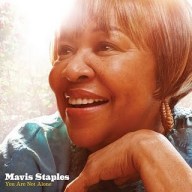 (Anti-, produced by Wilco’s Jeff Tweedy), I can’t help but be skeptical of the outpouring of Indie love for the album, even as I have been spinning (and enjoying) it myself. It isn’t the positive reaction to Staples’s talent that is surprising—at 70-plus years, Mavis has been exquisite for quite some time now—but rather the way in which critics have freighted her newest record with the “uplift” (AV Club) of a whole lot of souls that haven’t ever been to church (at least not in a good long while). Her voice is described as alternately “raw” (Paste) and full of a “depth, power, and warmth that seem increasingly rare in music today” (hear ya); Consequence of Sound, who cites Tweedy’s hand at the boards as the reason for all the current music blog attention, calls her voice “empathetic. . . powerful. . .soulful. . .touching” and “wise.” If the blogosphere is to be believed, Staples’s voice, “as authentic as it gets” (buzzine), could really save us all in these tough times. Come to think of it, the fervor of (white) faith in “authentic” black music shouldn’t be that surprising either, given the way in which race has always been entangled with popular music history in the United States.
Authenticity and the immediacy of experience it implies, have had a long history in the music industry—especially in reference to black artists—stemming back at least to the Fisk Jubilee Singers in the 1870s, an all-black acapella troupe celebrated for  powerful live performances whose breakthrough concert also happened to be for a crowd of hipsters: the wealthy congregants of Henry Ward Beecher’s Brooklyn church in 1871. Beecher gave the band his enthusiastic support, namely because he felt their sound gave listeners direct access to “the inner lives of slave hearts expressed in music” even after slavery had formally ended.
While the sound of You are Not Alone differs greatly from the Jubilee Singers, the reviews of the record belie and inflame a similar desire for unmediated access to the emotive qualities (a)historically associated with black life and sound in the U.S.: namely suffering, faith, and catharsis. And Staples’s record is indeed not alone in this. Many of the sentences from the Staples reviews could easily have been lifted from those of another recent gospel record to capture the indie imagination, Daptone Records’s 2008 release Como Now. Starkly different from the breezier, countrified sounds of You Are Not Alone, Como Now is an acapella gospel recording made in a small town in Panola County, Mississippi. The record was a risky release for Daptone, a Brooklyn-based label that has consistently produced new funk and soul records since its inception in 2002 by the likes of Sharon Jones and the Dap-Kings and The Budos Band. Although old school sound has always been a part of the label’s ethos—its engineers use primarily analog equipment, for example, a major reason Amy Winehouse recorded her throwback Back in Black album at Daptone studios in 2006—marketing stripped-down gospel to its audience of predominately white hipsters would nonetheless prove a daunting task. Treating Como Now as a labor of love and a paying of dues, Daptone attempted to spark interest in the release by relying on the familiar marketing strategies of immediacy, authenticity, and nostalgia.
 While Como Now’s tagline boldly proclaims that the music was “Recorded Live at Mt. Mariah Church on July 22, 2006”—and, thus, emphasizing the Now of the title—the cover’s vintage civil-rights era design evokes the Como of yesterday, or more accurately, encourages listeners to hear Como now and Como yesterday as one and the same through the vehicle of “raw gospel testimony.” Como Now’s depiction of the sounds of the past as echoes within the present is as ambiguous as it is uncanny, a sonic window thrown open to simpler times happening somewhere out there, “deep in the heart of Mississippi” right now.
The introductory promotional video from Como Now’s website (also uploaded on Youtube) represents the record as an aural time machine to a land and a people isolated from and largely unchanged by technology, modernity, and history.
Producer Michael Reilly’s voiceover locates rawness, emotional release, and “real religion” in the sound of black voices, in no small part because the video places his measured Yankee pacing in sonic tension with the song that accompanies it, Mary Moore singing “When the Gates Swing Open.” Over Moore’s impassioned singing, Reilly assures listeners in a muted deadpan that they will hear “no pretty piano playing or clever guitar picking, just voices. Pure soul stirring fire from the heart.” Reilly’s sentiments not only evoke the gushing Jubilee Singers’ press, but also the ethos of the infamous folklorist John Lomax, who made field recordings in Southern prisons in the 1930s because he sought “negro singers untainted by white musical conventions” (as he wrote in 1934’s “Sinful Songs of the Southern Negro”); singers in Como were actually recorded by John’s son Alan in the 1940s. Reilly’s voiceover goes on to frame the Como singers as practitioners of what the senior Lomax called “the real art of simplicity,” as stripped-down, natural singers who are artful mainly in their artlessness. While Reilly’s webcopy mentions how “children and grown folks alike have been living and breathing gospel for as long as they can remember,” for example, he fails to mention how the residents of Como have also been writing, rehearsing, and performing it.
Thus, Como Now’s marketing disavows the real artistry of the Como singers, even as it seeks to celebrate it. The simple, natural quality endowed to the singers of Como is visually accentuated by stark imagery representing the town as a down-at-the-heels, living museum of the black life of yesteryear. In the youtube clip, Moore’s soaring and spirited singing animates stills of blooming cotton fields, vintage RCA microphones, and splintering upright pianos.  Save for the album cover and one blurry still of a child, there are no shots of the people of Como in the introductory promo, effectively isolating Moore’s voice from her corporeal and historical body. This isolation allows listeners to supply their own fantastic imagery and forces them to rely on historical stereotypes about the naturally sonic qualities of black people. By choosing to disembody Como’s voices, the promotional video represents the album’s music as emanating from, and even haunting, Panola County’s lush green fields and battered strip-malls rather than showing it to be a hard-fought creation of the residents themselves. To quote Lomax again: “[The Negro’s] songs burst from him, when in his own environment, as naturally as those of a bird amid its native trees.”
Although the impulse to make the album reflects a progressive desire to respectfully pay tribute to the black gospel tradition in American popular music—and to provide quality artists like The Como Mamas with critical renown and monetary compensation—Como Now relies on well-worn racial tropes to do so. It also points to the continued presence in American culture of an essentialized “black voice” that is naturalized as more emotive, truthful, and soulful than other voices. While this phenomena is socially constructed and the sounds thought of as “black” have shifted considerably—when I play early recordings of the Jubilee Singers my students consistently tell me that they sound “white” like a “glee club”—I find it fascinating that the language used to describe them has largely remained the same. While Como Now’s producer at least acknowledges that, in Como, “no one has to pick up cotton anymore, thankfully,” the marketing trades on the possibility that, while slavery and sharecropping have ended, its sonic labors have not only endured, but are readily available for download.


Share this:


Current Top Posts





April 2021

January 2020

November 2019

October 2019

August 2019

April 2014

November 2017

March 2015

December 2017

October 2015
 Sounding Out!
Recent Comments