
Top Ten Sounding Out! Posts of 2025!

.
16 years in, we’re still here, listening hard for each thump, rasp, and rattle of the drum to amplify for our readers. Keep the pressure coming louder and louder for us to propagate, and look out for our print edition, Power in Listening: The Sounding Out! Reader to drop in August 2026 from NYU Press! –JS, Ed-in-Chief
Here, beginning with number 10, are our Top 10 posts released in 2025 (as of 12/13/25)!
—
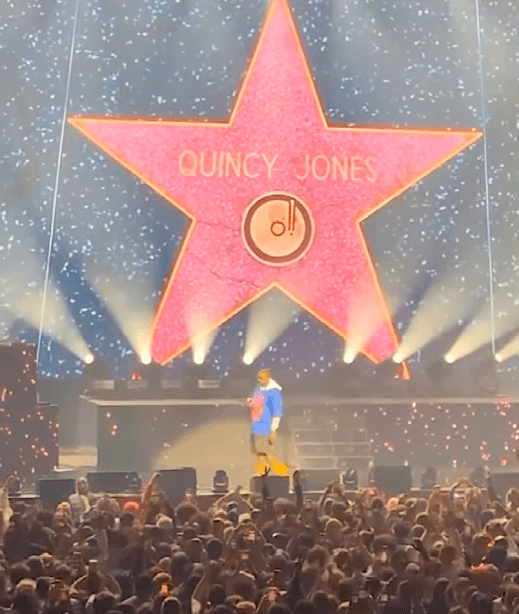
(10). The Sonic Rhetoric of Quincy Jones (feat. Nasir Jones)
By Jaquial Durham
“The passing of Quincy Jones has left a silence that feels almost impossible to fill. Every time I play Thriller at home now, it’s no longer just a celebration of his unparalleled artistry. It’s a ritual to sit with his legacy, listen more closely, and honor how his music shaped the sound of memory itself. With each spin of the record, my family and I find ourselves inside his arrangements, held by their richness, precision, and sense of story as though the music is breathing with us, speaking back across time. Jones’s work was never just production; it was communication. A language of sound connected us to melody and beat and the fuller spectrum of emotion, culture, and memory that lives in Black music.. .”
[Click here to read more]
—

(9). The Techno-Woman Warrior: K-pop and the Sound of Asian Futurism
By Hoon Lee
“As a ’90s kid, I remember too well us school kids singing and dancing to the songs at the top of the charts on music shows such as Ingigayo (인기가요) and Music Bank (뮤직뱅크). It was what one might call the “pre-K-pop” era: there were a lot of solo artists performing in various genres, and the notion of idol culture as we know it now was only fledgling. Without the mass production system or the global distribution that has come to be the norm in today’s K-pop, first generation idol groups around the new millennium—H.O.T., Fin.K.L, god, Sechs Kies, S.E.S.—not only set up these business models and standards, but also inspired the music and aesthetics of later generations. The group aespa’s cover of “Dreams Come True” by S.E.S. is an exemplar case, and NewJeans, with their unflinching Y2K aesthetics and sound, take us back to the millennial through and through. . .”
[Click here to read more]
—
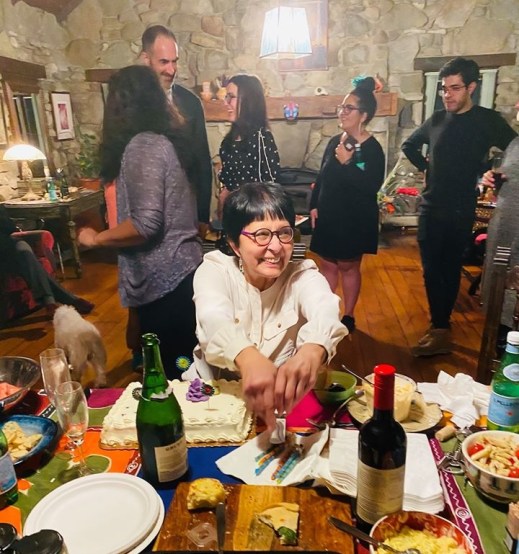
(8).Finding Resonance, Finding María Lugones
By Daimys García
“I am always listening for María: I find her most in the traces of words.
Trained as a literary scholar, I relish in the contours of stories; I savor the nuances found between crevices of language and the shades of implication when those languages are strung together. It is no surprise, then, that since the death of my friend and mentor María Lugones, I have turned to many books, particularly her book, Pilgrimages/Peregrinajes: Theorizing Coalition Against Multiple Oppression, to feel connected to her. I have struggled, though, to write about her, talk about her, even think about her for many years. It wasn’t until I found a passage about spirits and hauntings in Cuban-American writer and artist Ana Menéndez’s novel The Apartment that I found language to describe a way through the grief of the last five years. . .”
[Click here to read more]
——

(7). The Sounds of Equality: Reciting Resilience, Singing Revolutions
by Mukesh Kulriya
“When the pandemic hit the world in late 2019, the concept of lockdown ceased the social life of the people and their communities. In these unprecedented circumstances, a video from Italy took the internet. People in Italian towns such as Siena, Benevento, Turin, and Rome were singing from their windows and balconies, which raised morale. The song “Bella Ciao,” an old partisan Italian song, became an anthem of hope against adversity. This anti-fascist song was popularized during the mid-20th century across the globe as a part of progressive movements. Following this, people in many countries around the world created their renditions of “Bella Ciao” in Turkish, Arabic, Kurdish, Persian, French, Spanish, Armenian, German, Portuguese, Russian, and within India in languages such as Punjabi, Marathi, Bangla, and even in sign language renditions. It was such an apt moment that captured the idea of empathy, solidarity, and the human need for community. This moment was still resonating with me when I was approached by Goethe Institut, New Delhi, to work on music and protest, and create The Music Library. I knew what I needed to do. . . .”
[Click here to read more]
—

(6).SO! Reads: Zeynep Bulut’s Building a Voice: Sound, Surface, Skin
—by Enikő Deptuch Vághy
“Voice and sound theorist Zeynep Bulut’s Building a Voice: Sound, Surface, Skin (Goldsmiths Press, 2025) is a remarkable work that reconfigures the ways we define “voice.” The text is organized into three sections—Part 1: Plastic (Emergence of Voice as Skin), Part 2: Electric (Embodiment of Voice as Skin), and Part 3: Haptic (Mediation of Voice as Skin)—each articulating Bulut’s exploration of the simultaneously personal and collaborative ways voice evolves among various sonic entities and environments. Through analyses of several artistic works that experiment with sound, Bulut successfully highlights the social effects of these pieces and how they alter our expectations of what it means to communicate and be understood.”
[Click here to read more]
—
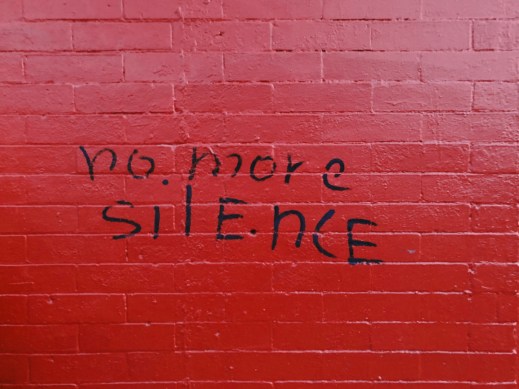
(5). Clapping Back: Responses from Sound Studies to Censorship & Silencing
by MLA Sound Studies Executive Forum
“The MS Sound Forum invites papers for a guaranteed session at the Modern Language Association’s annual conference in Toronto, Canada in January 2026. The session responds in part to the MLA Executive Council’s refusal to allow debate or a vote on Resolution 2025-1, which supported the international “Boycott, Divest, and Sanction” (BDS) Movement for Palestinian rights against the ongoing genocide in Gaza. In light of the Council’s suppression of debate, some of the Sound Forum Executive Committee members decided to resign in protest while others remained to hold the MLA accountable for its undemocratic procedures. To acknowledge and respect the decision of those who left, the remaining members chose not to immediately fill the vacancies to let the parting members’ silence speak.. . .”
[Click here to read more]
—

—(4). “Just for a Few Hours, We Was Free”: The Blues and Mapping Freedom in Sinners (2025)
by Juston Burton
“In the 2025 blockbuster Sinners, Ryan Coogler has a vampire story to tell. But before he can begin, he needs to tell another story—a blues one. Sinners opens with a voiceover thesis statement performed by Wunmi Mosaku (who plays Annie in the film—more on her below) about the work the blues can do, then rambles the narrative through and around 1932 Clarksdale, eventually settling into a juke joint outside of town. Here, the blues story builds to a frenzied climax, ultimately conjuring the vampires propelling the film’s second half. It’s those vampires that most immediately register as cinematic spectacle, but Coogler’s impetus to film in IMAX and leverage all of his professional relationships for the movie wasn’t the monsters—it was to showcase the blues at a scale the music deserves. In Sinners, the blues takes center stage as a generative sonic practice, sound that creates space to be and to know in the crevices of the material world, providing passage between oppression and freedom, life and death, past and future, and good and evil. . .”
[Click here to read more]
—

—(3). “Keep it Weird”: Listening with Jonathan Sterne (1970-2025)
by Benjamin Tausig
“Dr. Jonathan Sterne passed away earlier this year. He was, in many ways, a model scholar and colleague.
The intellectual ferment of the field now called “sound studies” is often traced to the sonic ecologists of the 1960s, but the theoretical energy of the early 2000s, generated by figures such as Ana Maria Ochoa, Alexander Weheliye, Emily Thompson, Trevor Pinch (1952-2021), and of course Jonathan Sterne, was necessary for the field to gain interdisciplinary traction in the twenty-first century. Sterne’s The Audible Past: Cultural Origins of Sound Reproduction (Duke University Press: 2003) was perhaps the single-most important book in this regard.
Trained in communications, and working in departments of communication, first at Pitt and later McGill, Sterne oriented his work toward media studies, and indeed, The Audible Past is principally about mediation. It poses questions about the role of sound in the history of mediation that earlier generations of sound studies had tended to elide, especially regarding the contingent and often cultural role of the human ear in reception. These questions opened the door for anthropologists, historians, communications scholars and ethnomusicologists in particular to think and even identify with sound studies, and many of us who were trained in the 2000s did so enthusiastically, with Sterne’s writing a lodestar.. . .”
[Click here to read more]
—

(2). Faithful Listening: Notes Toward a Latinx Listening Methodology
by Wanda Alarcón, Dolores Inés Casillas, Esther Díaz Martín, Sara Veronica Hinojos, Cloe Gentile Reyes
“For weeks, we have been inundated with executive orders (220 at last count), alarming budget cuts (from science and the arts to our national parks), stupendous tariff hikes, the defunding of DEI-anything, the banning of transgender troops, a Congressional renaming of the Gulf of Mexico, terrifying ICE raids, and sadly, a refreshed MAGA constituency with a reinvigorated anti-immigrant public sentiment. Worse, the handlers for the White House’s social media publish sinister MAGA-directed memes, GIFs across their social channels. These reputed Public Service Announcements (PSAs), under President Trump’s second term, ruthlessly go after immigrants.
It’s difficult to refuse to listen despite our best attempts.. . .”
[Click here to read more]
—
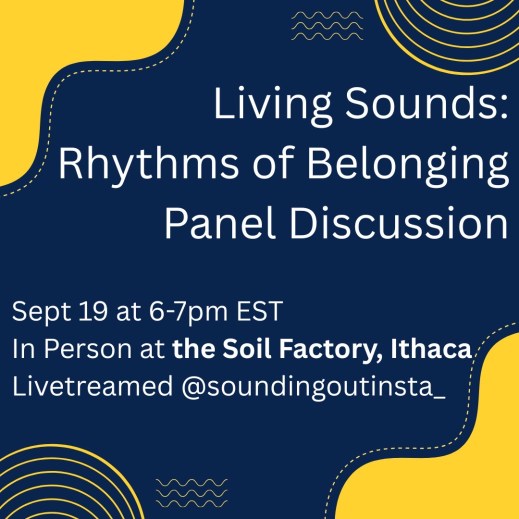
(1). SO! Podcast #82: Living Sounds: Rhythms of Belonging
“CLICK HERE TO DOWNLOAD: SO! Podcast #82: Living Sounds: Rhythms of Belonging
SUBSCRIBE TO THE SERIES VIA APPLE PODCASTS
FOR TRANSCRIPT: ACCESS EPISODE THROUGH APPLE PODCASTS , locate the episode and click on the three dots to the far right. Click on “view transcript.”
It’s been a minute for the SO! podcast but we are glad to be back–however intermittently–with a podcast episode that shares a discussion between women sound studies artists and scholars. The panel “Living Sounds: Rhythms of Belonging,” was held on September 19 at 6-7pm EDT at The Soil Factory arts space in Ithaca, New York. Moderator Jennifer Lynn Stoever, sound studies scholar and our Ed. in Chief, talks with four women sound artists about their praxis: Marlo de Lara, Bonnie Han Jones, Sarah Nance and Paulina Velazquez Solis.. . .”
[Click here to read more]
—
Featured Image: “microphone on the bass drum of the drummer for No Age” by Flickr User Dan MacHold CC BY-NC-SA 2.0
—

REWIND! . . .If you liked this post, you may also dig:
The Top Ten Sounding Out! Posts of 2024
The Top Ten Sounding Out! Posts of 2023!
The Top Ten Sounding Out! Posts of 2020-2022!
The Top Ten Sounding Out! Posts of 2019!
The Top Ten Sounding Out! Posts of 2018!
The Top Ten Sounding Out! Posts of 2017!
The Top Ten Sounding Out! Posts of 2016!
The Top Ten Sounding Out! Posts of 2015!
Share this:

SO! Podcast #82: Living Sounds: Rhythms of Belonging

CLICK HERE TO DOWNLOAD: SO! Podcast #82: Living Sounds: Rhythms of Belonging
SUBSCRIBE TO THE SERIES VIA APPLE PODCASTS
FOR TRANSCRIPT: ACCESS EPISODE THROUGH APPLE PODCASTS , locate the episode and click on the three dots to the far right. Click on “view transcript.”
It’s been a minute for the SO! podcast but we are glad to be back–however intermittently–with a podcast episode that shares a discussion between women sound studies artists and scholars. The panel “Living Sounds: Rhythms of Belonging,” was held on September 19 at 6-7pm EDT at The Soil Factory arts space in Ithaca, New York. Moderator Jennifer Lynn Stoever, sound studies scholar and our Ed. in Chief, talks with four women sound artists about their praxis: Marlo de Lara, Bonnie Han Jones, Sarah Nance and Paulina Velazquez Solis.


Bios
Marlo De Lara (they/siya) obtained a PhD in Cultural Studies (University of Leeds) and an MA in Psychosocial Studies from the Centre of Psychoanalytic Studies at Essex. Their creative practice works within the realms of sound performance, visual distraction, and film. Using found objects, installation, and various forms of amplification, environments/structures use sound to impart meaning and affect for the participant. As the child of Philippine migrants, De Lara’s unabashed feminist sociopolitical practice/research editorializes on contemporary global conditions. As an arts facilitator, using their critiques of the nonprofit industrial complex and institutional learning, De Lara aims to transgress and subvert traditional hierarchical ways of managing contemporary art spaces. In the role of community care, Marlo uses mutual aid and emergent strategies in combination with decolonial ways of nourishing equity, diversity, and inclusion practices to ensure safety and access for all. Marlo is a Certified Deep Listening Facilitator and shaping a career as Counsellor/Coach/Guide in therapeutic healing methods informed by Western psychotherapeutic/psychological, healing arts, expressive therapies, and various indigenous practices, most specifically sikolohiyang pilipino.
Bonnie Han Jones is a Korean-American improvising musician, poet, and performer working with electronic sound and text. She performs solo and in numerous collaborative music, film, and visual art projects. Bonnie was a founding member of the Transmodern Festival and CHELA Gallery and is currently a member of the High Zero Festival collective. In 2010, along with Suzanne Thorpe she co-founded TECHNE, an organization that develops anti-racist, feminist workshops that center on technology-focused art making, improvisation, and community collaboration. She has received commissions from the London ICA and Walters Art Museum and has presented her work extensively at institutions in the US, Mexico, Europe and Asia. Bonnie was a 2018 recipient of the Foundation for Contemporary Arts Grants to Artists Award. Born in South Korea, she was raised on a dairy farm in New Jersey, spent her formative years in Baltimore, Maryland and Providence RI and currently resides in Chicago, IL.
Sarah Nance is an interdisciplinary artist exploring the intersections of geologic processes and human experience in archived, constructed, and speculative landscapes. Her work has been performed and exhibited widely, at venues in China, France, Canada, Iceland, South Korea, Germany, and Italy, as well as across the U.S.
Paulina Velázquez Solís is a multimedia artist and curator from Mexico and Costa Rica. She works with installation, sound, sculpture, drawing, animation/video, and media performance. She is interested in the body and the biological and natural world in interaction with the cultural and social notions of normalcy and experiences as a multinational individual. Her work has been shown in places like Museo de Arte y Diseño Contemporáneo and TEOR/éTica in Costa Rica; Taipei Fine Arts Museum; Ex Teresa Arte Actual in México City; Casa de las Americas in La Havana, Cuba; Museo de Arte Contemporáneo in Panamá City; Museum of the Americas, Washington, DC; and Root Division and The Lab in San Francisco.
Jennifer Lynn Stoever is Associate Professor of English at Binghamton University, founding Editor-in-Chief of Sounding Out!, and author of The Sonic Color Line: Race and the Cultural Politics of Listening (NYU Press, 2016). Her research has been supported by the Whiting Foundation, the George A. and Eliza Gardner Howard Foundation, and the National Endowment for the Humanities.
Thank you to Travis Johns for the recording and mixing.
—

REWIND! . . .If you liked this post, you may also dig:
SO! Podcast #48: Languages of Exile
SO! Podcast #53: H. Cecilia Suhr’s “From Ancient Soul to Ether”
SO! Podcast #55: The New Brunswick Music Scene Symposium
Share this:


Current Top Posts





April 2021

January 2020

November 2019

October 2019

August 2019

April 2014

November 2017

March 2015

December 2017

October 2015
 Sounding Out!
Recent Comments