
Calling Out To (Anti)Liveness: Recording and the Question of Presence

DOI: https://doi.org/10.59350/0cypc-y9505
Editor’s Note: Even though this is officially Osvaldo Oyola‘s final post as an SO! regular–his brilliant dissertation on Latino/a identity and collection cultures is calling–I refuse to say goodbye, perpetually leaving the door open for future encores. He has been a bold and steadfast contributor–peep his extensive back catalogue here–and we cannot thank him enough for bringing such a whipsmart presence to Sounding Out! over the years. Best of luck, OOO, our lighters are up for you!–J. Stoever, Editor-in-Chief
—
As several of my previous Sounding Out! Blog posts reveal, I am intrigued by the way popular music seeks to establish its authenticity to the listener. It seems that recorded popular music seeks out ways to overcome its lack of presence as compared to a live performance, where a unified and spontaneous sense of immediacy seems to automatically bestow the aura of the “authentic”—a uniqueness that, ironically, live reproducibility engenders. Throughout my time as a Sounding Out! regular, I have explored how authenticity may be conferred through artists affecting an accent as a form of musical style, comparing their songs to other “less authentic” forms of music through a call to nostalgia, or even by highlighting artificiality through use of auto-tune.
One of the ways that artists and producers get past a potential lack of authenticity when recording is through call outs to “liveness.” I am not referring to concert recordings (though there are ways that they can be used), but elements like counting off at the beginning of songs or introducing some change or movement in a song. There is no practical need to count off “One, two, three, four!” at the beginning of a recording of a song if it is being pieced together through multiple tracks and overdubs. These days a “click track” or adjustment post-recording can keep all the players in time even if not necessarily playing at once; even if a song is being recorded as a kind of studio jam, the count off could be edited out. It is an artifact of the creation, not a sign of creation itself. Instead, the counting can become an accepted and notable part of the song, like Sam the Sham and the Phaorahs performing “Wooly Bully,” giving it an orientation to time—the sense that all these musicians were present together and playing their instruments at once and needed this unique introduction to keep them all in tempo.

Similarly, sometimes artists call out to other musicians, giving instructions when no instructions are needed, assuming that most popular music is recorded in multiple takes using multiple tracks. In Parade‘s “Mountains,” Prince commands the Revolution, “guitars and drums on the one!” when clearly they had rehearsed when putting together the song, and ostensibly knew when the drum and guitar breakdown was coming up. Prince, furthermore, joins artists as varied as the Grateful Dead and the Beastie Boys in mixing concert recordings with studio overdubs to capture a “live” sound on songs like “It’s Gonna Be a Beautiful Night” and “Alligator.” Even something as ubiquitous as guitar feedback is a transformation of an artifact of live performance into a sound available for use in recording—something that was purposefully avoided until John Lennon’s happy accident when in the studio to cut “I Feel Fine.” Until then, playing with feedback was a way to demonstrate performance skills through onstage vamping.
These varied calls to liveness provide a sense of authenticity to music made via the recording studio, denoting what I understand as the spontaneous sociability of music. Count-offs and studio shout-outs provide a sense of unified presence to a performance, especially if the performance has actually been constructed piecemeal and over time. This is something of a remnant of an old-fashioned notion that recorded music is measured in quality in comparison to live performance. It’s any idea that hung around both implicitly and explicitly long after bands started experimenting in the studio with effects that ranged from the difficult to the impossible to replicate on stage, and reinforced through recordings by performers who purposefully referenced their lauded live performances.
.
For example, James Brown’s “Get Up (I Feel Like Being a) Sex Machine” is built on this conceit. The entire song is a conversation, a call and response between James Brown and his band, the J.B.’s. From the opening line, Brown introduces the song as moment in time in which he is compelled to do his thing, but he demands both encouragement and cooperation from the band in order to achieve it. When Brown asks Bobby Byrd, “Bobby! Should I take ’em to the bridge?” we as listeners are invited to play along with the idea that it has suddenly came into his head to have the band play the bridge—as it might’ve happened (and thus been practiced) countless times in his legendary live shows. It suggests a form of spontaneity that the reality of recording would otherwise drain from the song. Sure, according to RJ Smith’s The One: The Life and Music of James Brown (2012), “Get Up” was recorded in only two takes–already fairly amazing–but the very nature of the song makes it sound like it was recorded in one, even if it had to be broken up into two sides of a 7-inch. That reality doesn’t matter—what matters when listening is the feeling that we, as listeners, are being allowed to partake in the capturing of what seems like one unique, and continuous, moment.
The question then arises: What about recorded music that does the opposite, that makes a point of highlighting its artificial construct—the impossibility of its spontaneous performance? While there are examples that date back at least to the 1960s, does this shift highlight a difference in aesthetic concerns by the pop music audience? If calls to “liveness” suggest a spontaneous sociability to music, what do the meta references to their songcraft suggest about what is important to music now?
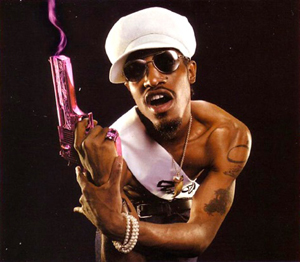
The classic example is Ringo Starr’s bellow, “I GOT BLISTERS ON MY FINGERS!” at the end of the Beatles’ “Helter Skelter,” an exclamation made after umpteen takes of the song recorded on the same day, but there are more contemporary and even more obvious examples. Near the end of Outkast’s “Prototype,” (at 4:21) Andre 3000 can be heard talking to his sound engineer John Frye about the ad libs, “Hey, hey John! Are we recording our ad libs? Really? Were we recording just then? Let me hear that, that first one. . .” There is an interesting tension here between the spontaneity of an “ad lib” and listening back to pick the best one or further develop one when re-recording, and Andre in his role as producer decided to keep it in as part of the final product. The recording itself becomes part of the subject of the song as a kind of coda. The banter is actually a brilliant parallel to the content of the song, which undermines the typical “we’ll be together forever” love song trope for one that highlights the reality of serial monogamy common in American culture and lessons each relationship potentially provides us for the next. Rather than pretend that a romantic relationship is a unique and eternal thing, the song admits the work and changes involved, just as it admits that the seemingly special spontaneity of a song is developed through a process.
Of course, hip hop as a genre, with its frequent use of sampling, tends to make its recording process very evident. While it is possible to play samples “live” using a digital sampler or isolating sections on vinyl via the DJ as band member, the use of pre-recorded fragments means that rap music relies on the vocal dynamics of rap to carry the sense of spontaneity. Yet, in 1993’s “Higher Level,” KRS-One opens with a description of the time and place of the recording—“5 o’clock in the morning” at “D&D Studios,” establishing forever when and where and thus how the recording is happening. Five o’clock in the morning places the creation of the song with a context of working and rocking all through the night to get the album completed. The song may or may not have actually been recorded last, but its placement at the end of Return of the Boom Bap, gives it a sense of a last ditch effort to complete the collection of songs. The fact that “5 o’clock in the morning” is likely also among the cheapest available studio times potentially highlights budgetary concerns in the recording itself. This is a rare thing to include in recording, though the Brand New Heavies cap off the dissolution of their 1994 track “Fake” into pseudo-jazz-messing-around with one their members chiding, “a thousand dollar a day studio!” This is a different kind of call to authenticity, as a budgetary concern is an implicit to a “realness” defined by being non-commercial.
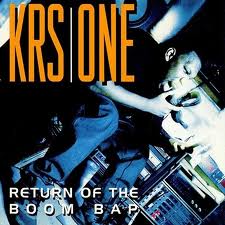
One of my all-time favorite examples is a few years older than “Higher Level”—“Nervous” by Boogie Down Production: “written, produced and directed by Blastmaster KRS-One,” which includes an attempt to explain how a song is put together on the “48-track board.” Instead of calling instructions to a band, KRS points out that DJ Doc is doing the mixing and instructs him to “break it down, Doc!” just before a beat breakdown (listen at around 1:40). He explains, “Now, here’s what we do on the 48-track board / We look around for the best possible break / And once we find it, we just BREAK,” and then the pre-recorded beat seems to obey his command, breaking down to just the bass drum and a sampled electric piano from Rhythm Heritage’s “The Sky’s the Limit.” Later, he says, “We find track seven, and break it down!” and the music shifts to just the bass guitar and some tinny synth high-hats.
.
So how does highlighting the recording circumstances, or just bringing attention to the fact that the song being listened to is a multiple-step process of recording and post-production benefit the song itself? Is it like I mentioned in my 2011 “Defense of Auto-Tune” post, that this kind of attention re-establishes authenticity by making its constructed nature transparent? I’d say yes, in part, but I also think that–through its violation of the expectation of seamlessness–the stray track or reference to recording within a song is a nod to a different kind of skillfulness. Exhortations such as “Take it to the Bridge” give an ironic nod to the extemporaneous to call attention to the diligent workmanship and dedication demanded by studio songcraft. Traditionally, live audiences may appreciate a flawless or nearly flawless performance and understand a masterful recovery from (and/or incorporation of) error as the signs of a good show, but, these moments that call attention to the recording studio situation claim there something to appreciate in the fact that Ringo Starr endured 18 takes of “Helter Skelter” until he had painful blisters, or that KRS-One and DJ Doc worked out the proper way to “feel around” the mixing board to make a grooving collage of sounds as disparate as the theme from “Rat Patrol” and WAR’s “Galaxy.”
KRS may have once admonished other MCs to “make sure live you is a dope rhyme-sayer,” but clearly he believes liveness—whether implicitly or explicitly—is not the only measure of musical ability. Rather, the highlighting of labor in the construction of a recording becomes its own kind of (anti-)vamping and demonstration of skill, and of a different kind of sociability in making music that these conversational snippets and references to other people in the studio make clear. This kind of attention to the group labor is especially important as various recording technologies become increasingly available to the wider public and allow for an isolated pursuit of recording music. Just as calls to liveness in recording engage the listener in ways that suggest participation as a live audience, calls to anti-liveness also engage the listener, but by bringing them across time and space into the studio to witness to a different form of great performance.
—
Osvaldo Oyola is a regular contributor to Sounding Out! and a PhD Candidate in English at Binghamton University working on his dissertation, “Collecting Identity: Popular Culture and Narratives of Afro-Latin Self in Transnational America.” He also regularly posts brief(ish) thoughts on music and comics on his blog, The Middle Spaces.
—

REWIND! . . .If you liked this post, you may also dig:
Evoking the Object: Physicality in the Digital Age of Music–-Primus Luta
Experiments in Agent-based Sonic Composition–Andreas Pape
Musical Objects, Variability and Live Electronic Performance—Primus Luta
—
Share this:

Sonic Brownface: Representations of Mexicanness in an Era of Discontent

DOI: https://doi.org/10.59350/seg23-f8053
In the current anti-immigrant climate, the visual, sonic, and textual modes of representation are becoming battlegrounds we must consider. Arizona, Georgia, and Alabama’s takes on immigration policy and eliminations of ethnic study course offerings from college and high school curricula, are signs of a climate fraught with discontent. However, these fights are not limited solely to the political sphere; in fact, the arena of cultural production—music, literature, theater, and film—facilitates a generalized outlook on Latinidad in the United States by representing Dreamers (the generations of children who were raised in the U.S. from a young age but are not citizens), and/or the thousands of undocumented immigrants who sustain an infrastructure of cheap labor. Within these often stereotypical representations, it is frequently sound that produces the strongest sense of social, cultural, and political difference for Latino subjects.
In this post, I analyze the 2006 film Nacho Libre, a comedy starring Jack Black as a friar who becomes a Lucha Libre fighter, as symptomatic of what I term “sonic brownface,” an aural performativity of Mexicanness. My interest on Nacho Libre is to elucidate how sonic brownface manifests on the big screen, and what is at stake through these seemingly innocent (re)presentations of Mexicanness. I characterize “sonic brownface” as a “speedification” of a Mexican accent, named after Speedy Gonzalez’ infamous call “¡Ándale! ¡Ándale! ¡Arriba! ¡Arriba! ¡Epa! ¡Epa! ¡Epa!” Although comedian Jack Black intends to present a respectful portrayal of a Mexican, his speech enables my analysis of “sonic brownface” within popular culture, a sound that reproduces ideologies about an invisible majority that is also perceived as non-American: Latinos, undocumented immigrants, and dreamers.

Voicing the Other…
The last scene of the Academy Award winning film The Artist (2011), presents why the silent film Artist was against the industry’s move toward the “talkie.” His voice collided with the visual representation of the suave debonair cosmopolitan man—and audience expectations of what such privilege sounds like. Though French actor Jean Dujardin plays the lead character in the film The Artist, it must be noted that several Mexican and Latin American actors did quite well in those early years of Hollywood cinema. Their exotic looks made them desirable and allowed audiences to fantasize about the man or woman on the screen because they could not hear them speak. Moreover, their physicality allowed some actors to “pass” as white. When talkies became the norm, Latino actors began performing now familiar stereotypical characters because in the U.S., their voices were indelibly associated with their “foreignness.”
In the realm of popular culture, both Disney and Warner Brothers created their own “Mexican” characters. In 1944, Disney introduced a Mexican and a Brazilian in the animated film Three Caballeros. Joaquin Garay was a Mexican voice actor featured in the voice of Panchito Pistoles in the Three Caballeros.
.
His accent and his singing sounded like someone who is Mexican speaking English, as oppose to an exaggerated Mexican accent heard later in the cartoon character of Speedy Gonzalez. Panchito Pistolas showcases a pride in being Mexican as heard in the singing of a ranchera and wearing his gun like the Mexican Revolutionaries of the 1910s. In the 1950s, Warner Brothers introduced Speedy Gonzales to their pantheon of animated characters, coinciding with the next wave of anti-Mexican sentiment during the campaign of Operation Wetback.
In his essay “Autopsy of a Rat,” William Nericcio posits that viewers come to recognize a series of stereotypes about Mexicans through the animated character of Speedy Gonzales. Nericcio incorporates historical references that influenced the design and creation of Gonzalez. He stipulates that this animation creates visual cues which American audiences connect as qualities of Mexicanness, “how this popular animated star comes to function in a way that reinforces politically charged, visions/versions of the ‘Mexican’ on ‘American’ soil” (212). Nericcio emphasizes the “visuo-ethnic clues” to deconstruct the Speedy Gonzales cartoon, and his definition of the stereotype helps corroborates my interest in how “sonic brownface” manifests as a “Speedification” of a Mexican accent. “Strapped for existential input as to the dynamic of Mexican subjects, we turn to stereotypes to provide us with visuo-ethnic ‘clues’ that fill in for empirical data and satisfy the lazy desire of our collective curiosity (219). Whereas Nericcio emphasizes the visual, however, I argue that sound has also held a strong purchase on the American racial imaginary in the case of Latinos. When audiences see and hear Jack Black as Nacho Libre, for example, they already recognize the accent.
Nacho Libre, sonic brownface personified
I propose the concept of “sonic brownface,” which pairs auditory with visual signs of Mexicanness as mediated in popular culture, to characterize the Mexican as a perpetual foreigner within the national imaginary. My interest in a film like Nacho Libre is to elucidate how audiences already recognize “Speedification,” a voicing of Mexicanness that manifests as a performance of “sonic brownface.” This conceptualization of “sonic brownface” is informed by Jennifer Stoever-Ackerman’s work on the “sonic color-line.” In “Splicing the Sonic Color-Line: Tony Schwartz Remixes Postwar Nueva York,” she posits that “sound is not merely a scientific phenomenon—vibrations passing through matter at particular frequencies—it is also a set of social relations … the “sonic color-line” begins to theorize the mutually constitutive relationship between sound, listening, and race.” She elaborates how “aural signifiers of race are thoroughly enmeshed with the visuality of race [because] they never really lose their ultimate referent to different types of bodies” (65). In the case of “sonic brownface,” Jack Black does not need to be a Mexican actor, he just needs to sound “Mexican” to conjure a physical referent.
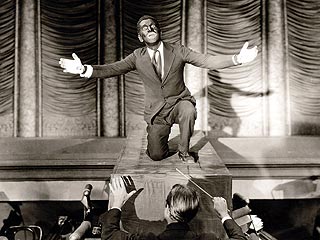
In utilizing the term “brownface,” I also reference minstrel entertainment in which blackness fetishized and simultaneously disavowed African American entertainers consequently framing racial codes onto a spectrum of racialized bodies. In his analysis of the first talkie The Jazz Singer (1927) “Blackface, White Noise,” Michael Rogin proposes that the “protagonist adopts a black mask and ventriloquiz[es]the black, sings through his mouth” (419). Through this masking, the Jazz Singer becomes Americanized through “appropriat[ing] an imaginary blackness” (421). Even as our contemporary sensibility would call out any form of contemporary blackface performance, we have yet to identify a similar masking when it occurs with Mexican or Latino characters. I contend that the models seen in blackface entertainment have already placed familiar scenarios of seeing White or Jewish actors performing an ethnic Other. When American audiences see Jack Black as “Nacho Libre,” they do not need to see him brown his skin; it is enough to hear a “speedification” of Spanish to have us entertain his believability. When “sonic brownface” occurs, it does not Americanize the performer, rather it perpetuates the Mexican and by extension Chicanos and Latinos as always already foreigners.
In order to recognize how “sonic brownface” is performed in the comedy Nacho Libre, it is also necessary to understand how its sound echoes a political climate that conflates “Mexican” with “Immigrant,” thereby representing Mexicans as undocumented people who have no right to be on this side of the U.S./Mexico border, and lumps all Latinos together as “Mexican.” The film was released a month after the nation’s largest immigrant rallies on May 1, 2006, occurring throughout many cities. The timing of the film also coincided with the first series of policy measures on immigration reform proposed by Congress. Whereas before the May Day marches, some members of congress discussed immigrants as criminals, after the big turnout Congress changed their tune, beginning to consider amnesty or easier paths to citizenship for undocumented immigrants, including generation Dreamers, already raised and finishing their schooling in the States. Cue Jack Black.
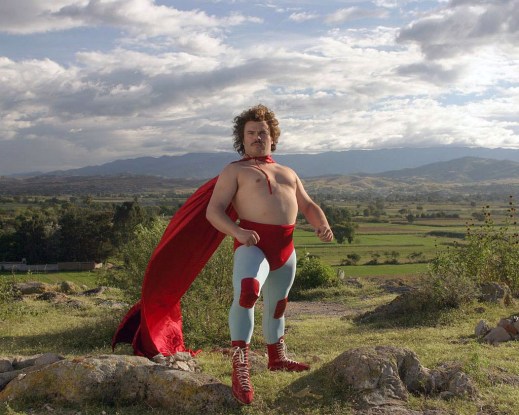
Speedification del Celluloid: “sonic brownface” in Nacho Libre
Nacho Libre, directed by Jared Hess (of Napoleon Dynamite fame) presents a comedic fictionalization of the story of Fray Tormenta, a career Lucha Libre fighter who was actually Reverend Sergio Gutiérrez Benitez. The film highlights Black’s strengths as a singer and presents him in a character that is the classic underdog trying to achieve his wrestling dream. As Nacho, the cook for the orphanage, he also wishes to provide the children a better meal, at least once in a while. I will highlight a few scenes in which Black’s sonic brownface performance stands in contrast to the other Mexican cinema actors who speak English. I will conclude with a proposition as to why sonic brownface is already so familiar to us.
From the opening sequence, we see the quaint orphanage located in a small Mexican pueblo. “Sonic brownface” is introduced in the film from Black’s first words “Be grateful Juan Pablo today is especially delicious.” In the next sequence, Hess films the Father saying mass in Spanish with no translation, or subtitles. I point this out because it sets up a type of authenticity with the Mexican orphanage, and that the film brings together both American actors speaking “Es-Pan-ish” and Mexican actors speaking in English. Ana de la Reguera, “Sister Encarnación,”–a nun who arrives to teach the children–also does not perform sonic brownface. She sounds like a Mexican actress speaking English, very much like other Mexican actors preceding her in Hollywood, adding a third later of sonic representation that actually works to heighten sonic brownface’s effects.
However, the sequence that most prominently presents the visual and auditory cues of sonic brownface appear in a twenty-minute segment when Nacho recruits his partner, Esquelito, and they transform into luchadores. In the midst of Nacho’s transformation, he must also contend with his carnal feelings for Sister Encarnación and to instruct the boys that wrestling is not good. Black goes from Italian in “taste of glory” (19:114-16); to Cuban “take it easy” (24:03); to urban Mexican American “my life is good, really good. It’s fantastic” (35:50). The sequence ends as Nacho cannot defend Sister Encarnación and blames Esqueleto for the mishap. Here sonic blackface culminates this performativity of Other with “get that corn outta my face. I looked like a fool last night. What took you so long?!” (39:54-40:29).
One could read this performativity of Otherness in the remix of accents as Black’s self-awareness that he is voicing something not of his experience. However, that he is Jewish and a comedian implies a privileged position already granted to him through blackface performances: the permission to co-opt ethnic and racial identities. When he inflects a Cubanesque accent, audiences can recall Al Pacino in Scarface, an earlier articulation of “sonic brownface.” Or the urban Chicano accent as seen in Born in East L.A. when Cheech Marin teaches the Mexicans waiting to cross the border how to blend in with Chicanos. By the time Black performs sonic blackface, as audiences we have been cued to these auditory references, thus we do not need him to alter his physicality to match the accent. It is enough to hear it to understand the referent. The sequence reaffirms Nacho as the luchador, since we also see his persona of the fighter come to life.
Rogin’s analysis can help us understand these slippages, as well as the role of “sonic brownface” in representations of Latinos by white actors. Rogin posits how Jolson’s performance in the first talkie simultaneously killed Vaudeville entertainment and reintroduced blackface into popular media (429). It is Rogin’s conclusion that it is with the appearance of “Jack Robin” in blackface, that the Jewish individual “Jakie Robinowitz” becomes white and thereby successful, mediating this success through visual codes of blackness. Similarly, in Nacho Libre, sonic brownface operates as both the visual and sonic cues of Mexicanness that enable Jack Black to become the luchador who doesn’t need to live behind a mask. As the film ends, Nacho is content, becoming a hero to the orphans who no longer bemoans his lot in life. This ending is contrary to the plight of immigrants from Latin America who must leave their home in search of better economic opportunities.
By identifying sonic brownface, we can see how American audiences fetishize the sounds of the Mexican/Latin Other yet simultaneously disavow their presence by placing non-Latino actors in these roles. Through the performativity of sonic brownface, popular media and film reify codes of Mexicanness as always foreign, silencing their accents because español is still an unwelcomed sound. Sonic brownface can also be a useful tool by which to investigate similar auditory articulations of Latino sounds. I’m thinking here of Rita Moreno in West Side Story (1961)—see Priscilla Peña Ovalle‘s Sounding Out! post “Aurally Other: Rita Moreno and the Articulation of ‘Latina-ness’” (January 2011)–George Lopez in Beverly Hills Chihuahua (2008), Wilmer Valderrama “Fez” in the television series That 70s Show, and the panoply of Latino actors in Machete (2010) by Richard Rodriguez. Given that media tends to recycle tropes and stereotypes, as audience members we have developed a keen awareness of these sonic markings of Otherness.
Most importantly, my intent in identifying sonic brownface concerns its re-appearance during another surge of anti-immigrant rhetoric. The rallies that occurred on May Day 2006 became synomous with immigrant rights. The release of Nacho Libre shortly after these rallies unknowingly silenced immigrant Spanish speaking voices in the popular imaginary until the film A Better Life (2011) staring Demián Bichir, connected undocumented immigrants with an empathetic experience. The strongest counteractions, however, have not been channeled through Hollywood. With the 2012 election, another surge of immigrant rallies happened at the Democratic National Convention with UndocuBus riders arriving in time to call attention to immigrant rights (start at 8:10-11:24).
As seen in this video clip, undocumented immigrants, Dreamers, Latina/s, and Chicana/os committed acts of civil disobedience because their voices will not be silenced.
—
reina alejandra prado saldivar is an art historian, curator, and an adjunct lecturer in the Social Science Division of Glendale Community College in Glendale, California.As a cultural activist, she focused her earlier research on Chicano cultural production and the visual arts. Prado is also a poet and performance artist known for her interactive durational work Take a Piece of my Heart as the character Santa Perversa (www.santaperversa.com) and is currently working on her first solo performance entitled Whipped!
—
REWIND! . . .If you liked this post, you may also dig:
Sound and Curation; or, Cruisin’ through the galleries, posing as an audiophiliac-–reina alejandra prado saldivar
Chicana Radio Activists and the Sounds of Chicana Feminisms–Monica De La Torre
Listening to Modern Family’s Accent–Juan Sebastian Ferrada and Dolores Inés Casillas
—
Share this:




Current Top Posts





April 2021

January 2020

November 2019

October 2019

August 2019

April 2014

November 2017

March 2015

December 2017

October 2015


Recent Comments