
SO! Reads: Isaac Weiner’s Religion Out Loud: Religious Sound, Public Space, and American Pluralism

 Calling devotees to prayer, preaching on the subway, broadcasted pre-recorded sermons from a moving car, organizing drum circles in the park, resounding church bells through the city – expressions of faith to some, a nuisance, or even a personal offense (or outright danger), to others. Must religion be so noisy? Must it also be so publicly noisy?
 Religious studies scholar Isaac Weiner portrays public loudness as but one of many exigencies of the religious worldview in his recent publication, Religion Out Loud: Religious Sound, Public Space, and American Pluralism (New York: New York University Press: 2014). Weiner argues that the substantive content of religious doctrine – moral claims, theological arguments, etc. – both constitutes and is constituted by how its ideas are given expression. This might seem unremarkable. However, the claim allows Weiner to re-frame religious pluralism as not only a “matter of competing values, truth claims, or moral doctrines, but of different styles of public practice, of fundamentally different ways of using body and space.” (200)
So, according to Weiner, yes: Some religious groups must be so noisy, and must be noisy publicly. If they weren’t, their religious beliefs and doctrines would be deprived of the expressive forms that imbue them with significance.

“Street Preacher” by Flickr user Tabitha Kaylee Hawk, CC BY-NC-ND 2.0
Weiner is Assistant Professor of Religious Studies in the Department of Comparative Studies at The Ohio State University. Weiner is not a card-carrying sound studies specialist. Nonetheless, his output is representative of a quickly accelerating interest about religion and spirituality within studies of sound and culture. Religion Out Loud is his first book, and builds from themes explored in his previous publications, including articles such as “Sound” (Material Religion 7, no. 1 [2011]: 108-115), “Sound and American Religions” (Religion Compass 3, no. 5 [September 2009]: 897-908), and “Displacement and Re-placement: The International Friendship Bell as a Translocative Technology of Memory” (Material Religion 5, no. 2 [July 2009]: 180-205). Forthcoming are several chapters and articles that closely relate to topics investigated in Religion Out Loud.
The text ranges from America’s colonial period through the early 2000s. It largely attends to legislative efforts seeking to circumscribe the practicing of what Weiner calls “religion out loud” – public, and perceivably exorbitant displays of sonic religiosity. On the other hand, Weiner also details the various ways in which religious practitioners have resisted legal containment. Weiner thus adds to an already copious literature about how contestations over sonic space reflect broader contestations over meaning and power, that includes texts such as Brandon Labelle’s Acoustic Territories: Sound Culture and Everyday Life (New York: Continuum, 2010), Karen Bijsterveld’s Mechanical Sound: Technology, Culture, and Public Problems of Noise in the Twentieth Century (Cambridge, MA: MIT Press, 2008), and other religion-related work like Philip V. Bohlman’s “Music Inside Out: Sounding Public Religion in a Post-Secular Europe” (in Music, Sound and Space, ed. Georgina Born, Cambridge: Cambridge University Press, 2013). This tension between the embodied practice and legal-discursive regulation of sonic spaces throws into relief what Weiner calls a “politics of religious sensation.” However, readers with an interest in the experiential dimensions of the “religious sensorium” should look elsewhere, perhaps the recent volume, Senses and Citizenship: Embodying Political Life, edited by Susanna Trnka (New York: Routledge, 2013). Religion Out Loud appeals more to readers with an interest in the political histories of religious rights and noise abatement policy, and the ways in which “religious sensation” has been regulated according to unstable conceptions of liberalism and pluralism in American jurisprudence.

“Preaching” by Flickr user Boston Public Library, CC BY 2.0
In order to span such a long temporal trajectory (essentially the history of the United States!), Weiner anchors Religion Out Loud in three historically disparate case studies. Each is preceded by a chapter of historical and theoretical contextualization. This forces Weiner to rapidly chronicle decades of developments in noise abatement policy. Yet he does so with both scrupulousness and concision, leaving remarkably few holes left unfilled. This gives the reader the benefit of charting the long-term effects of the policy changes that Weiner more focusedly interrogates. His approach thus differs quite markedly from some other important sound/religious studies literature, such as Leigh Schmidt’s Hearing Things: Religion, Illusion, and the American Enlightenment (Cambridge, MA: Harvard University Press, 2002), which investigates a single historical period in more concentrated fashion.
From chapter one’s onset, I was struck by the impressive depth of archival research Weiner has infused into his arguments. As a result, Weiner’s more speculative conclusions – generally modest in scope – have no shortage of evidence, and are altogether convincing. In chapter one, for instance, Weiner details shifting perceptions of church bells in colonial and postbellum America, an area well tilled in sound studies by the likes of Alain Corbin (Village Bells: Sound and Meaning in the Nineteenth-Century French Countryside, trans. Martin Thom, New York: Columbia University Press, 1998) and Richard Cullen Rath (How Early America Sounded, Ithaca and London: Cornell University Press, 2003). Weiner furthers this conversation by revealing how religious sounds such as church bells – what had receded to the background of what R. Murray Schafer called the “historical soundscape” – faced unprecedented scrutiny as the symbolic status of noise began to change. Likewise, city governments challenged congregants’ rights to occupy acoustic territory. In the burgeoning clamor of the modern city, noise meant progress and prosperity, for some listeners, but, for others, the stylized noise of religion practiced “out loud” signified a kind of regressive primitivism. Noise thus occupied both sides of the evolutionist coin that Weiner suggests ideologically underpinned religious self-understandings of the time.

“St. Mark’s Church Philadelphia” by Flickr user Library Company of Philadelphia
Weiner further explores the progressive/primitive duality in his first case study – Harrison v. St. Marks of 1877– in which Weiner quite brilliantly unravels how both perspectives were articulated in legal discourse. According to Weiner, complainants challenged the long-presumed public-acoustic prerogatives of Philadelphia’s fashionable St. Mark’s Protestant Episcopal Church. The main takeaway from the chapter is that St. Marks’s complainants voiced a formulation of suitable, modern, and thus normative religious practice as “properly disentangled from various forms of materiality and mediation, carefully circumscribed and respectful of its bounds, interiorized and intellectualized, invisible and inaudible.” (60) From the complainants’ perspective, noisy religion signified backward, immature religion. The court sided with this position, treating church bells as it would any other “extraneous” public noise. Yet in so doing, it ironically reinforced the cultural dominance of Protestantism. That is to say, by silencing St. Mark’s bells, the ostensibly secularized legal system set a precedent that legitimated the “subjugation” of all forms of religious practice to “proper modes of acceptable piety” – including “religious ‘others’” who lacked the pervasive influence that Protestantism could exercise in the public and political spheres, including the courts. (74)
In the second section, Weiner shifts his focus from acoustic territorialization to noisy religiosity as a form of dissent. He details how noise abatement legislation in the early twentieth century harkened a “new regulatory regime” that suppressed the activities of religious practitioners for whom “making noise was not merely incidental to their work; it was their work” (80). The Salvation and Army and the Jehovah’s Witnesses, Weiner shows, aggressively challenged norms of community outreach through provocative exhibitions of religious devotion in public spaces. However, while exercising freedoms of speech, religion, and public assembly, such groups turned unsuspecting citizens into “captive audiences,” and thus infringed upon rights to privacy. The style of practicing some liberties, as many scholars and critics have suggested, has throughout history limited the enjoyment of liberties by other parties.

“The Watchtower” by Flickr user Scott Kellum, CC BY-NC 2.0
Moreover, as Weiner rightly suggests in his second case study, Saia v. New York of 1946, civil liberties have always been carefully regulated by the state. Samuel Saia, a Jehovah’s Witness, drove around the city of Lockhart, NY, and used loudspeakers to broadcast inflammatory sermons from his car. He loudly exercised his first amendment rights through what Weiner calls “sound car religion.” Yet the city managed to treat the sermons’ noisiness as extraneous to Saia’s religion, rather than acknowledging the practice as partially constitutive of it. Lockhart’s noise abatement ordinance thus infringed upon his right to religious free exercise. To that end, Weiner repositions McLuhan’s famous “the medium is the message,” framing religion as media, as opposed to religion and media as separable concepts. Saia spread God’s word, and in doing so loudly fulfilled a core tenet of the Witness creed.
Throughout the case study, Weiner critiques the “liberal inclusionary ideology” that has come to characterize the Judeo-Christian tradition of American jurisprudence. But he curiously softens his otherwise pointed critique at the end of the chapter. Saia ultimately won the case, yet the Witnesses’ devotional style gradually became unmarked in the ensuing years, as they seemed to assimilate voluntarily to normative expectations of religious devotion. As such, Weiner suggests that dissenters in general often find that they can “afford to quiet down once they feel that their voices have been heard.” (135) While it is “important not to exaggerate the coercive effects of American law,” I would have nonetheless appreciated a more critical take on how the legal system had its cake and ate it too – that is, how it satisfied the demands of the Witnesses and also managed to keep them quiet. Indeed, Weiner’s mild conclusion may unsettle those readers who enjoyed the previous three chapters of incisive and nuanced analysis.

“Carillon of Peter And Paul Cathedral in Saint-Petersburg” by Wikimedia user RuED, CC BY-SA 3.0
In the last section, Weiner shows how a controversial 1990 Supreme Court decision – Employment Division v. Smith, spearheaded by Justice Antonin Scalia – enacted into law a conception of religiosity as interiorized, intellectualized, and privatized. It favored majoritarian notions of religious free exercise such that dissenting – or noisy – religious practice by minority religious subjects risked criminalization. As a result, the granting of religious exemption from preclusive noise ordinances was left not to the courts to decide, but rather to the political arena. Potentially disruptive religious free exercise was no longer constitutionally protected. It now required approval from a political body. The last case study, then, does not deal with legal proceedings. Rather, it examines the public debates and media spectacles that surrounded al-Islāh Islamic Center’s petition to broadcast the call to prayer in Hamtramck, MI, in 2004. Al-Islāh was ultimately granted exemption from the local noise ordinance. But over the course of an exasperating six months of debate, Weiner demonstrates, formerly unvoiced identity politics that residents invested into the city’s sonic territories were brought to light in highly contentious ways.
Weiner identifies three rhetorical-discursive tropes that various parties used to debate changing the city’s noise ordinance to accommodate the call to prayer. One of them, pluralism, will likely be of most interest to readers (the others are exclusivism and privatism). The pluralist debaters envisioned the public sphere as a neutral space in which the particularities of religious difference were accommodated, but only according to an ideal of “agonistic respect.” Against this idealistic backdrop, pluralists interpreted the call to prayer not as broadcasters intended it to be heard, but rather as a symbol for the “potential for interfaith harmony.” (186) Weiner argues that the hearings refigured – effaced, even – the call’s meaning, since the Muslim community’s political recognition was achievable only by way of the discourse of pluralist forms of tolerance. In other words, if pluralist discourse takes the form by which Muslim faith can express itself, then Muslim faith itself risks effacement as a result of such “accommodation.”

“Muezzin” by Flickr user colin, CC BY-NC-SA 2.0
Surprisingly, Weiner largely omits Muslim perspectives from the chapter. How did pluralist assimilation change the meanings of religious practice as the Muslim community saw it? How did the Muslims feel they had to modify their rhetoric of self-representation? Moreover, how did Muslims perceive – or perhaps even challenge – displays of Judeo-Christian devotion? Perhaps pursuing such questions exceeds the scope of Weiner’s project, as could the inclusion of many other issues that readers might think warrant consideration. For instance, Weiner gestures toward the sonic interpellation of Muslim and Christian subjectivity, but does not pursue the topic. Further analysis could productively complement recent work on religious acoustemology such as Charles Hirschkind’s The Ethical Soundscape: Cassette Sermons and Islamic Counterpublics (New York: Columbia University Press, 2006), Andrew J. Eisenberg’s, “Islam, Sound and Space: Acoustemology and Muslim Citizenship on the Kenyan Coast” (in Music, Sound and Space, ed. Georgina Born, Cambridge: Cambridge University Press, 2013), Jeanette S. Jouli’s “Beat-ification: British Muslim Hip Hop and Ethical Listening Practices,” and Ashon Crawley’s “Pentecostal Song, Sound, and Authentic Voices.” Additionally, Weiner glosses over counterculture in the 1960s. How might a treatment of the Nation of Islam, for but one example, complicate his conclusions about the accommodation of religion practiced “out loud” in the period?
That notwithstanding, Weiner accomplishes his proposed task with great nuance, insight, and lucidity. Religion Out Loud skillfully unites archival research with ethnographic methods, a history of sound with a history of ideas. It will appeal to those with an interest in the “politics of sensation,” as Weiner suggests, and even more so to readers with interests in the contradictions of noise abatement policy, the legal history of religious rights, and ways in which they have contributed to religious soundscapes in the United States. And of course, it provides an emphatic—and important—affirmative to that longstanding question “must religion be so noisy?”
—
Jordan Musser is a graduate student in the musicology program at Cornell University. He has a primary interest in the social practice of musical aesthetics, with a focus on roles of the avant-garde in popular culture. Using theoretical frameworks from media, performance, and cultural studies, his recent projects have investigated virtuosity in 19th-century Europe, musical reenactment, the sonic imaginary, and politics of musical mythologization. In 2012, Jordan earned the M.A. in the Humanities from the University of Chicago. Before arriving at Cornell, he was an editorial assistant with Grove Music Online, and held teaching positions from the early childhood to high school levels.
—
Featured image: “Microphone inside Al-Azhar Mosque” by Flickr user John Kannenberg, CC BY-NC-ND 2.0
—
 REWIND!…If you liked this post, you may also dig:
“Listen to the Word: Deafness and Participation in Spiritual Community”-Liana Silva-Ford
“I Love to Praise His Name: Shouting as Feminine Disruption, Public Ecstasy, and Audio-Visual Pleasure”-Shakira Holt
“Sounding Out! Podcast Episode #5: Sound and Spirit on the Highway”-David B. Greenberg
Share this:

SO! Reads: David Novak’s Japanoise: Music at the Edge of Circulation

We are living in strange times. Our experiences, especially our musical experiences, have become fragmented and odd. The album has been declared dead, live concerts are now silent, listened to on headphones, and some of our favorite performers exist in a faux-holographic space between life and death. The fragmentation of our musical experiences is indicative of a larger set of changes that encourage sound studies to pay attention to fragmented, outlying, and diffuse sonic phenomenon. In his new book Japanoise: Music at the Edge of Circulation, part of Jonathan Sterne and Lisa Gitelman’s “Sign, Storage, Transmission” series at Duke University Press, David Novak pays attention to one such fragmented and outlying realm, Noise music. Novak’s contribution to sound studies is to encourage us to deal with the fragmented complexity of sonic environments and contexts, especially those where noise plays a crucial part.
The past decade has seen growing public attention to noise as pollution, as problem, and as a poison. Examples of noise as a social issue needing immediate response abound, but one letter to the editor from the Wisconsin Rapid Tribune epitomizes the way that noise is sometimes read as a problem to be overcome. Novak’s book is one a few recent books, including Eldritch Priest’s Boring Formless Nonsense, Greg Hainge’s Noise Matters, and Joseph Nechvatal’s Immersion Into Noise, that complicate the idea of noise as problem. What sets Novak’s book apart from these is how his ethnographic approach allows him to approach Noise music from both the macro-perspective of its historical context and the micro-lens of his personal relationship to it.
 For Novak, Noise music is a trans-cultural, transnational interaction that is both material and abstract. His analysis of it works to blur the boundary between both large-scale networks of exchange and the highly individuated experience. Novak relates the story of Noise music as originating in Japan in the 1980s. Noise musicians working separately caught the ears of American fans. Some of these fans were well-known musicians themselves, who brought Noise recordings and eventually the performers themselves to a wider U.S. audience. At the time, Noise was generally understood as taking one of two binary positions. Either Noise music was understood as a uniquely Japanese cultural expression, or it was instead theorized as a product of the Western imaginary motivated by the production of Japan as the anti-subject within modernity (24). Novak wisely recognizes the limited nature of these two positions, and seeks a more sophisticated method of understanding the circulation that creates Noise music, contributing, ultimately, a theory of feedback. Here the transnational circulation of materials, ideas, and expressions constitutes a culture itself, one that is not distinct from either the Japanese or the U.S. manifestations of Noise music (17). This a welcome contribution to compositional and intersectional perspectives on cultural exhange.
If Noise music is a circulation, a set of experiences and contexts, flows and scapes, ecologies and environments, then genre boundaries can not adequately describe the contextual and historical exchange of sound. Though genre must be considered, Japanoise does not find Novak searching particularly rigorously. He chooses two key Noise musicians, The Nihilist Spasm Band from Canada and Merzbow from Japan and describes their historical context, reception, and influence. But other than those descriptive basics, he is unsuccessful in finding anything new to say about Noise as genre. Concluding the chapter, he casually states that the existence of Noise threatens the boundaries of other musical genres. Though this fascinating statement would have been worthy of a chapter, and certainly foundational to his central idea (that Noise music is diffuse), Novak misses an opportunity to better support these connections in his chapter on genre.
Most interesting, however, is Novak’s focus on the material conditions of the production of Noise music. In describing the diffuse flows and scapes of Noise music, he addresses a plurality of experience: from the technological to the spatial to the private dimensions of listening. These concerns put him in conversation with Louise Meintjes’ Sound of Africa and Julian Henriques’ Sonic Bodies. Like these scholars, Novak refuses to locate the material conditions of production as solely economic, technological, or cultural. Instead, Noise music results from of an assemblage of conditions and possibilities. This is best exemplified by how Novak distinguishes the live music experience from the recorded. Here, Novak resists the neat distinction, long established in musicology, that hears the live experience as collective and interactive, and recorded music as individuated and passive. Instead, Novak suggests “liveness” and “deadness.” Liveness and deadness are not bounded to the dichotomy of the live performance with the recording, but rather two qualities that float through and with both experiences. “Liveness is about the connection between performance and embodiment… deadness, in turn, helps remote listeners recognize their affective experiences…” The experience of live Noise music, according to Novak, often challenges the boundaries of what is often expected when hearing live music. I have seen this in my own experiences standing in an audience surrounded by shrieking, booming, droning noises.
Truth be known, I’m as taken with Noise music as Novak. If his book confesses to being written by a critical but vehement fan, then I ought to confess the same of the music which I love so dearly. I had the chance to see Merzbow perform in Raleigh in August. He strummed obviously homemade instruments, turned fader pots, and concentrated intently on his laptop. A fan was crawling through the crowd on their hands and knees; occasionally they stood to sway, then returned to crawling. I thought that this behavior might seem odd, but in the context of Merzbow’s performance, it was as legitimate as any other. Through these odd behaviors, the fan demonstrated Novak’s conception of individuation within Noise music. The material conditions of the performance, the screeching Noise, made it impossible for me to ask the person what they were doing or feeling. I experienced the fan and the Noise in a tension from which there is no resolution. We were both uncomfortably located in a multiplicity of experiences. These experiences don’t resolve to a whole, but rather pulsate and echo and feed back into each other, intertwining with expectations of behavior, material conditions, and embodiment(s).
Japanoise raises many important questions. What social processes lead us to foreground the sonic experiences in our lives? And further, how does a critical understanding of these processes help to advance the work of understanding the power and politics of sound? But, for me, Novak’s work serves best to remind me of how much value is found in fragmented, diffuse, outlier experiences, like Noise music. Because sound occupies a crucial role in our social and political lives, Novak encourages us not to resolve tensions, rather to exist amongst them and hear them as lively and productive.
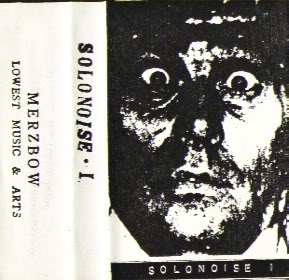
For those readers who might be unfamiliar with the music Novak describes, the book’s website has a fantastic collection of supplemental media for you to enjoy: http://www.japanoise.com/media/.
–
Seth Mulliken is a Ph.D. candidate in the Communication, Rhetoric, and Digital Media program at NC State. He does ethnographic research about the co-constitutive relationship between sound and race in public space. Concerned with ubiquitous forms of sonic control, he seeks to locate the variety of interactions, negotiations, and resistances through individual behavior, community, and technology that allow for a wide swath of racial identity productions. He is convinced ginger is an audible spice, but only above 15khz.
—
 REWIND! . . .If you liked this post, you may also dig:
Tofu, Steak, and a Smoke Alarm: The Food Network’s Chopped & the Sonic Art of Cooking–Seth Mulliken
SO! Reads: Jonathan Sterne’s MP3: The Meaning of a Format–Aaron Trammell
The Noise of SB 1070: or Do I Sound Illegal to You?–Jennifer Stoever-Ackerman
Share this:


Current Top Posts





April 2021

January 2020

November 2019

October 2019

August 2019

April 2014

November 2017

March 2015

December 2017

October 2015
 Sounding Out!
Recent Comments