
Soundscapes of Narco Silence
DOI: https://doi.org/10.59350/pkf6t-ghy89
Since the drug war began, the lives of approximately 95,000 people have been claimed, with an estimated total of 26,000 disappearances (“Continued Humanitarian Crisis at the Border” June 2013 Report). At the University of Texas, Pan American – an institution located 25 miles north of Reynosa, Mexico (a Mexican city that has been hard hit by drug violence in recent years) – I teach students who have been dramatically impacted by drug war violence. Many have close relatives affected or hear horrific stories of those who have been kidnapped by the cartels; many fear traveling to Mexico to visit loved ones as a result and, in some cases, they report having relatives involved in the drug cartel business. Dinorah Guerra, psychotherapist and head of the Red Cross in Reynosa, describes the devastating psychological and physical toll: “There is a huge risk for people’s self esteem. They cannot speak about what they have seen or what they have heard. [They] lose [themselves] and lose [their] identity” (qtd. in Pehhaul 2010).
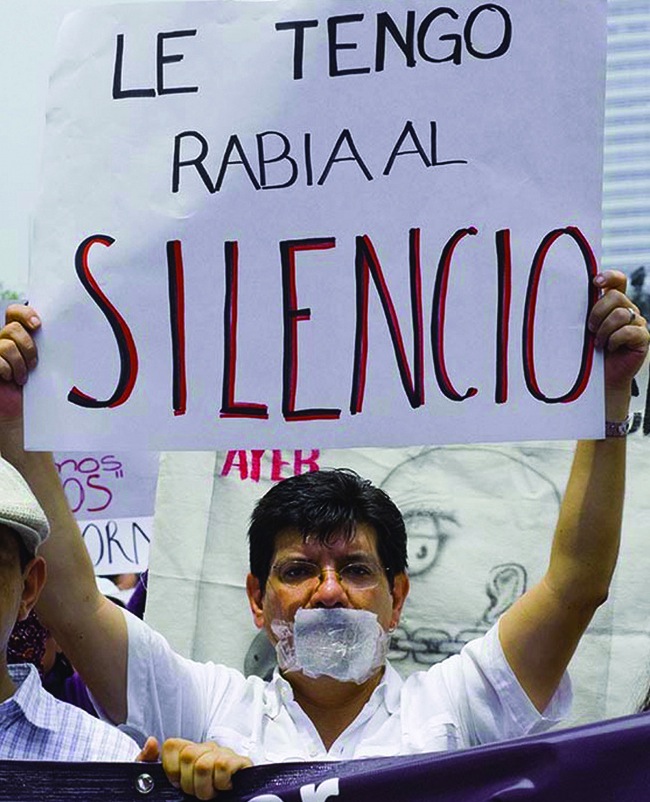
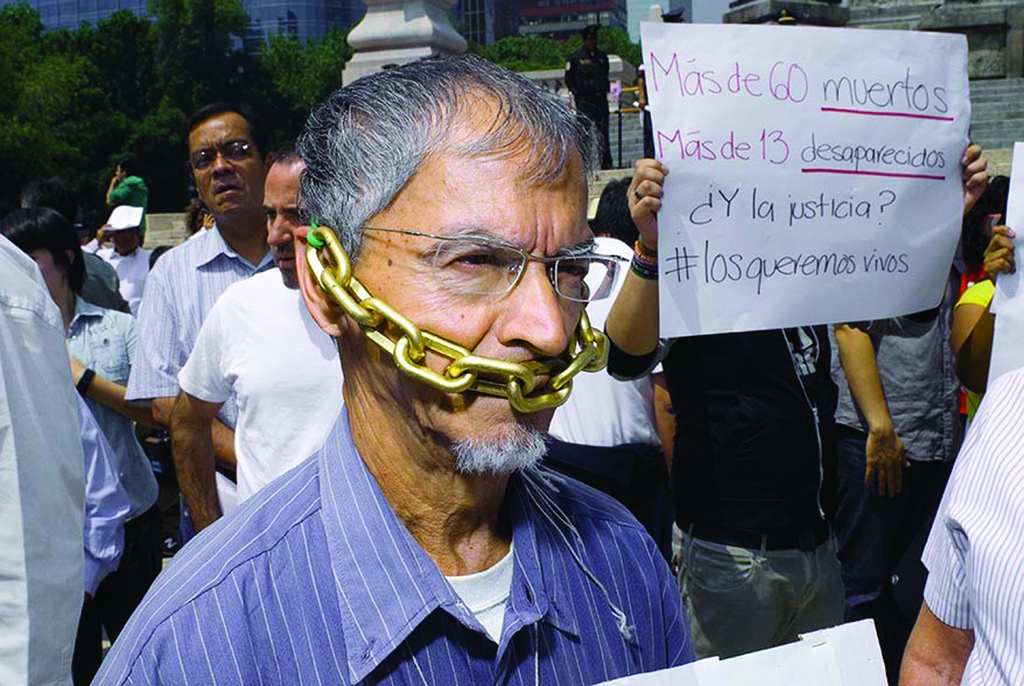
I name the space of the drug war and its resulting terror in the U.S.-Mexico border the “soundscape of narco silence.” This soundscape includes death and intimidation, from the brutal killings of news reporters by cartel members to the decapitation of citizen-activists who use online media to alert communities of narco checkpoints. It also consists of those powerful acts that call attention to silence as a tactic of terror. The Movement for Peace with Justice and Dignity, for instance, brought together tens of thousands of people in Mexico to speak out against drug violence through silent marches. Cultural productions, such as narcocorridos, or contemporary drug ballads that document the cross-border drug economy, also become part of the soundscape. The narcocorridos function as a powerful critical response to silence and fear because they enable those in Mexican society, as Jorge Castañeda, author of El Narco: La Guerra Falllida, explains, “to come to terms with the world around them, and drug violence is a big part of that world. The songs are born out of a traditional Mexican cynicism: This is our reality, we’ve gotten used to it” (Qtd. in Josh Kun 2010).
In this blog post, I focus on the role of U.S. Latina/o theater produced in the South Texas border region as it responds to the soundscape of narco silence. Building on David W. Samuels, Louis Meintjes, Ana Maria Ochoa, and Thomas Porcello’s definition of “soundscapes” in “Soundscapes: Towards a Sounded Anthropology” as “the material spaces of performance and ceremony that are used or constructed for the purpose of propagating sound” (330), I suggest that soundscapes of silence in theater function as material spaces of performance that focus the public’s attention on silence – with the intent of intervening in acts that propagate silence and fear. Soundscapes of narco silence are characterized not only by violence and terror, but by cultural productions that function as forms of critical resistance – those works that focus the publics’ attention on the economy of silence and fear that fuels the drug war, and in the process, enable communities to cope with narco violence.
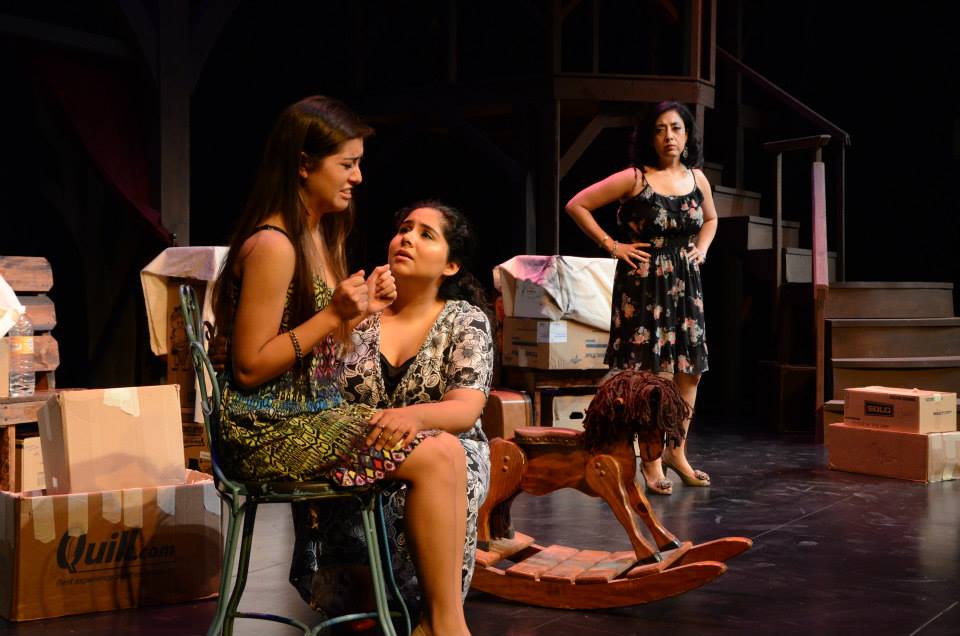
To closely listen to the soundscape of narco silence, I engage with the play script and production of Tanya Saracho’s play El Nogalar at South Texas College Theatre (STC) under the direction of Joel Jason Rodriguez in McAllen, Texas in June 2013. The play was first produced at the Goodman Theater in Chicago in April 2011, with a West Coast premiere at the Fountain Theater in Los Angeles in January 2012. I critically analyze the STC Theatre production’s incorporation of a multi-genre soundtrack that included narcocorridos, rancheras, and nortec (norteño + techno). I argue that this soundtrack focused audiences’ attention not only on the devastating effects of silence, but also the function of silence as a form of capital for those most excluded in society. I also offer a brief critical listening of the script’s rendering of silence through character dialogue and stage directions.
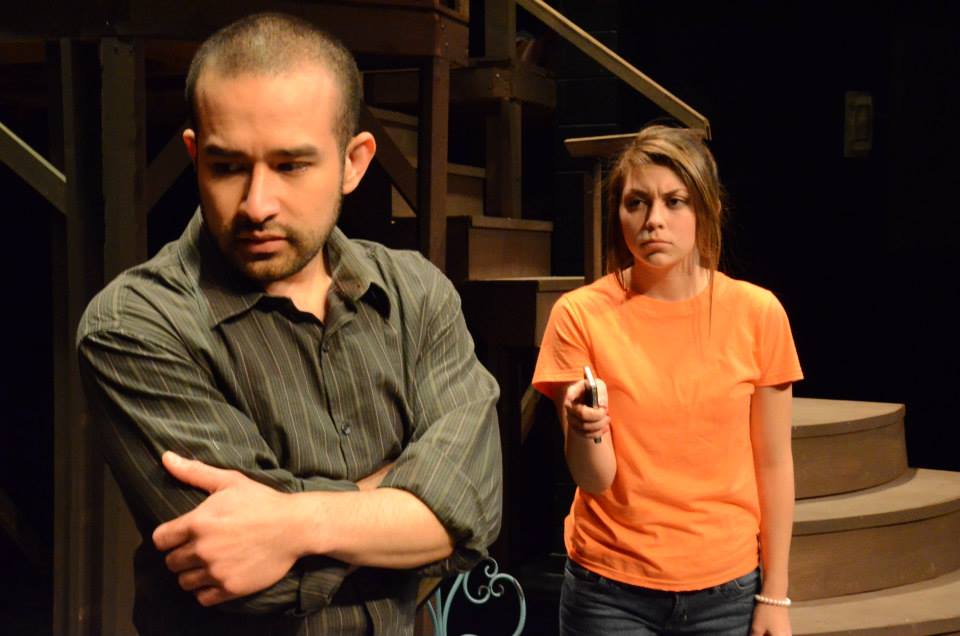
El Nogalar tells the story of an upper-class Mexican family comprised of three generations of women (Maité, Valeria, and Anita) whose land and home in the fictionalized estate of Los Nogales in Nuevo Leon, Mexico, and its adjacent nogalar (pecan orchard), are under threat by the maña (drug cartels) moving into the region. The play focuses on the women’s responses to the drug war economy as a result of their different relationships to home (both their estate and the space of Mexico). It also centers the experiences of Dunia, their maid, and López, a former field worker who now works for the maña.
Cecilia Ballí, in her article “Calderón’s War: The Gruesome Legacy of Mexico’s Antidrug Campaign,” explains the particular circumstances of marginalized men in this society: “The worst casualties of this ‘civil war’ were the estimated 7 million young men to whom society had closed all doors, leaving them the options of joining a drug gang or of enlisting in the military, both of which assured imprisonment of death” (January 2012, 48). With the characters López and Dunia, the play asks audiences then to listen to the impact of the drug war on the most vulnerable populations in Mexico and the US-Mexico border region.
The play script conveys how “narco silence” can be used by those who either seek to preserve traditional class hierarchies (the story of the matriarch Maité) or to survive and profit in the new drug economy (the story of López). “Narco silence,” a term coined by reporter Jonathan Gibler in his book To Die in Mexico, refers to “not the mere absence of talking, but rather the practice of not saying anything. You may talk as much as you like, as long as you avoid the facts. Newspaper headlines announce the daily death toll, but the articles will not tell you anything about who the dead were, who might have killed them or why. No detailed descriptions based on witness testimony. No investigation” (2011, 23). In an early exchange between López and Dunia, López defends “narco silence” as a strategy of survival:
DUNIA: Why are you the only one they leave alone, Memo?
LÓPEZ:….
DUNIA: All the men your age. Killed. Why Memo? (Beat).
LÓPEZ: Because I know when to keep my mouth shut which is not something I can say for you….
DUNIA: So that’s all it takes to be best of friends with the Maña? That doesn’t seem so hard to do? (American Theatre Magazine July/August 2011, 74).
Later in the play, Dunia, heeding López’s advice, offers a powerful observation of how “narco silence” enables her community to cope with death: “We all just walk around like we’re a movie on mute. You can see people’s mouths moving but all you hear is the static (my italics)” (American Theatre Magazine July/August 2011, 73-74).
The STC Theatre production enhanced the script’s soundscape of narco silence through its sound design, with a soundtrack that included rancheras, narcocorridos, norteño and nortec. This music provided audiences with a connection to the world of Los Nogales and captured each character’s process of coping with narco violence. For example, Maité’s soundtrack consists of several rancheras, such as Lola Beltran singing “Los Laureles” and Chavela Vargas’s powerful rendition of “Que te vaya Bonito.” Beltran’s “Los Laureles” – a cancion ranchera that includes Beltran’s powerful female vocals and mariachi orchestra instrumentation – invites audiences to hear Maité’s nostalgia and desire for an idealized Mexican society and her wish to preserve traditional class hierarchies.
.
Vargas’s powerful rendition of “Que te vaya Bonito” captures Maite’s pain and suffering as she loses her home to the cartels. In Vargas’s version of “Que te Vaya Bonito” – a song about love and abandonment – audiences hear Vargas’s choking and sobbing voice, accompanied by a single guitar.
.
Vargas’s voice conveys, what Lorena Alvarado powerfully argues, is “the body’s dilemma between the hysteria of sobbing and the intelligibility of words, between resignation and retribution” (2010, 4). Vargas’s powerful singing also conveys, as Alvarado further describes, “un nudo en la garganta,” a common expression in Spanish that describes “the knot in the throat, when one cannot speak because words will not come out, but the desperate, or quiet, breath of tears” (Alvarado 2010, 5).
To sonically register the drug cartel economy and lifestyle underlying the “new” Los Nogales, the soundtrack also included narcocorridos. The first sounds we hear in the play are from the narcocorrido “El Carril Número Tres” – which includes two acoustic guitars and an electric bass – by Los Cuates de Sinaloa.
.
“El Carril Número Tres” – tells the story of a secret “lane number three” that allows a Mexican drug lord to freely go back and forth between the US and Mexico because he makes a deal with the CIA and DEA. With this focus on the US government’s involvement in the drug trade, the song centers how silences north of the US-Mexico border have perpetuated drug violence.
The music also included nortec, with songs by the Mexican Institute of Sound, particularly the track “Mexico,” which is a critique of the Mexican government’s complicity with the narcos.
.
With “Mexico,” audiences hear a fusion of norteño, electronic, and hip-hop with lyrics that use the symbols of Mexican national identity and culture to focus the public’s attention on violence and terror. With the lyrics “green like weed, white like cocaine, red your blood” (referencing the Mexican flag) and “at the sound of the roar of the cannon” (alluding to the national anthem), the song powerfully invokes the visual and sonic soundscape of violence that terrorize Mexican residents. With this charged critique of government corruption, “Mexico” momentarily interrupts the soundscape of narco silence rendered in the play script and rest of the soundtrack.
Ultimately, the production’s combination of rancheras, narcocorridos, and nortec captured the class tensions in Mexican society and emphasized the play’s critique of class structures that have enabled drug war violence to persist. With this range of music, the director explains he wanted to “maneuver between the [various] aspects of [the story]: the nostalgia, the corridos, the narcocorridos, and also this fusion of saying ‘we want something more,’ and so that was the whole aspect of it; the blending of the old, the new, and what the present is” (Interview with author July 2013).
The production also deliberately incorporated the sound of silence, particularly in the final scene. By the end, López buys the Los Nogales estate, thereby increasing his class status and social power. Saracho’s stage directions in this final moment indicate “an interpretive sound of trees falling. Now don’t go cueing chainsaws because it’s not literal. Just make me feel trees are falling. Along with the upper class” (87). The play’s reference to the staging of “an interpretive sound of trees falling” brings to mind the philosophical question: “If a tree falls in a forest and no one is around to hear it, does it make a sound?” We might then interpret the final sounds of El Nogalar as inviting audiences to listen attentively to the soundscape of narco silence, implicating audiences as social actors in the politics of the drug war that continue to devastate Mexican society.
—
Featured Image: Journalists Protest against rising violence during march in Mexico, Courtesy of the Knight Foundation
—
Marci R. McMahon received her Ph.D. from the University of Southern California with affiliations in the Department of American Studies and Ethnicity. She is an assistant professor at the University of Texas, Pan American, where she teaches Chicana/o literature and cultural studies, gender studies, and theater and performance in the Departments of English and Mexican American Studies. She is the author of Domestic Negotiations: Gender, Nation, and Self-Fashioning in US Mexicana and Chicana Literature and Art published by Rutgers University Press’ Series Latinidad: Transnational Cultures in the United States (May 2013). Her essays on Chicana literature and cultural studies have been published in Aztlán: A Journal of Chicano Studies; Chicana/Latina Studies: The Journal of MALCS; and Frontiers: A Journal of Women’s Studies. Her second book project, Sounding Latina/o Studies: Staging Listening in US Latina/o Theater explores how contemporary Latina/o drama uses vocal bodies and sound to engage audiences with recurring debates about nationhood, immigration, and gender.
—

REWIND! . . .If you liked this post, you may also dig:
Listening to the Border: “’2487’: Giving Voice in Diaspora” and the Sound Art of Luz María Sánchez–D. Ines Casillas
Quebec’s #casseroles: on participation, percussion and protest–Jonathan Sterne
Deejaying her Listening: Learning through Life Stories of Human Rights Violations— Emmanuelle Sonntag and Bronwen Low
—
Share this:

Hello, Americans: Orson Welles, Latin America, and the Sounds of the “Good Neighbor”
DOI: https://doi.org/10.59350/2rdy5-n1z19

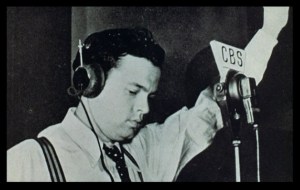
And now, we interrupt this broadcast for a message from Guest Editor Neil Verma: At 9:00 pm on July 11, 1938, the Columbia Broadcasting System unfurled a plush Tchaikovsky concerto to welcome 23 year-old wunderkind Orson Welles and his Mercury Theater troupe to national airwaves for a show destined to become the most famous dramatic radio anthology ever aired.
The Mercury Theater on the Air came with hype. Welles was fresh off a streak of innovative stage adaptations of Shakespeare’s “Julius Caesar,” Shaw’s “Heartbreak House,” and Marlowe’s “Doctor Faustus,” pledging in a New York Times article to “treat radio with the intelligence and respect such a beautiful and powerful medium deserves.” A jab at his rivals? Maybe. Legends tell of 17-hour writing sessions, of rows minutes before airtime between Welles, producer John Houseman and composer Bernard Herrmann, of sound men abusing baskets, watermelons, toilets, lawnmowers to make audio. Time described Mercury’s ambition as “bounded north and south by hope, east and west by nerve.”
Welles was by then a radio veteran, the hero of The Shadow and impersonator of newsmakers from Sigmund Freud to Fiorello laGuardia on The March of Time. Hundreds of extant recordings link Welles to rousing Norman Corwin pageants, Columbia Workshop experiments, strident war shows like Ceiling Unlimited, buffoon turns on the Jack Benny and Fred Allen Shows, picaresque Harry Lime adventures, dense thrillers on Suspense, romances on Lux Radio Theater, diplomacy on Hello Americans, and on and on. Welles gave radio new forms, as radio informed his filmmaking profoundly – the sound of Citizen Kane (1941) the characters in Mr. Arkadin (1955), the vocals in Touch of Evil (1958) the theme of F is for Fake (1974). Welles invented a cinema that is, among other things, a kind of radio play you can see.
Mercury (and the Campbell Playhouse it became) undertook plays like “Dracula,” “Treasure Island,” “The 39 Steps,” “Rebecca,” “Jane Eyre,” and “The Magnificent Ambersons” and dozens of others. But none would be remembered were it not for the “War of the Worlds,” adapted from H.G. Wells’s novel by Howard Koch. In October of 1938, WOTW aired to six million listeners, hundreds of thousands of whom misheard it as news. The “Panic Broadcast” became a series of fables: listeners treated for shock in Newark; families on Boston rooftops watching the fires of New York in the distance; an Indianapolis church service interrupted by a parishioner telling congregants “you might as well go home to die;” bomb threats and a police raid on CBS headquarters. Three quarters of a century later many agree with the New York Tribune’s Dorothy Thompson, who declared the Invasion “one of the most fascinating and important events of all time,” but the meaning of that event also feels unclear, growing more ambiguous with time. Today, the alien invasion is itself increasingly alien.
To confront that issue and to open Mercury to new kinds of critical practices in sound studies, Sounding Out! is partnering with Antenna over the next six months to bring you a 12-part series entitled From Mercury to Mars: Orson Welles on Radio after 75 Years. I’m honored to serve as Sounding Out!‘s Guest Editor. We’ll be bringing you authors who engage aesthetic, historical and political aspects of Welles’ radio work with a depth and intensity unusual in Welles studies.
That’s especially true of this inaugural post by Cornell Comparative Literature Professor and SO! contributor Tom McEnaney, who has been working on a book project involving radio and the “neighborhood” of the Americas. I’m thrilled welcome Tom’s nuanced and provocative take on Welles’s adaptation of Joseph Conrad’s Heart of Darkness and his Hello, Americans program, and I hope it will encourage you to stay with us as the series unfolds.
Like Welles, we’ve got a few tricks up our sleeve. Stay tuned. — nv
—
When WNYC’s Radiolab aired their live celebration of War of the Worlds five years ago, the odd laugh line was reserved for a moment at the start of the radio play when an announcer interjects “now we return to the music of Ramón Raquello and his orchestra.”
Raquello, as the Radiolab team makes clear, didn’t exist, and his “orchestra” was just an anonymous phonograph recording of the famous tango “La cumparsita.” Welles apparently chose the song for its “tedium,” hoping it would make believable the lunacy to come. That the music of the Southern Cone set up listeners in the United States for the greatest hoax in history might have been yet another of the inside jokes Welles left us to listen for.
The sounds of Ramón Raquello and the settings of some of Welles’s most famous films—The Lady From Shanghai (1947); Touch of Evil (1958)—remind us how Latin America, and its relationship to the United States, fascinated Welles in the late 30s and 40s. Five years after War of the Worlds, he began the final episode of his CBS program Hello Americans by recalling the show’s mission: “It is important for the people of this hemisphere to get better acquainted, and the Mercury [Theater] has been given the job of helping out with the introductions.”
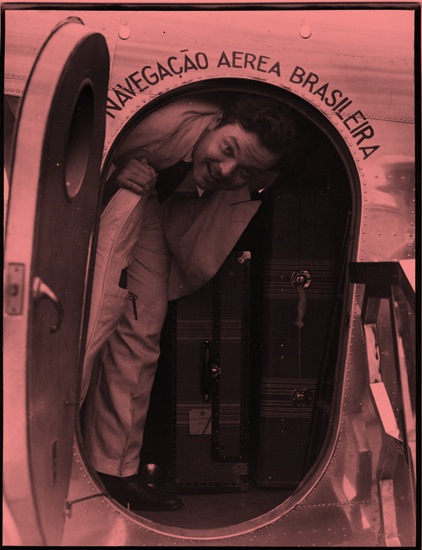
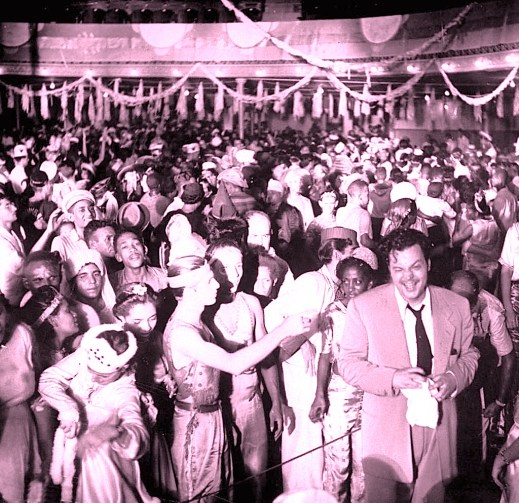
An artful propagandist, Welles told Nelson A. Rockefeller, FDR’s head of Inter-American Affairs and Welles’s boss at RKO studios, that radio and film were the best way “to sell South America to North America.” Between 1938 and 1943 his technical innovations in film and radio, in addition to a 1942 stint as a “good will ambassador” to Latin America, created for him by Rockefeller, were meant to convince U.S. audiences of FDR’s claim in his first inaugural that the United States should follow the policy of the “Good Neighbor.” Whether listening, watching, or reading his work during World War II, Welles’s U.S. audiences were constantly reminded that they were residents of the Americas, rather than an exceptional and isolated America.
To assess the aesthetics and politics of Welles’s engagement with Latin America, it’s worth returning to the October 30, 1938 broadcast of War of the Worlds. Presented as a live news report of an alien invasion on the East Coast of the United States, War of the Worlds sent its mass audience into hysterics, proving to Marshal McLuhan that radio was “a tribal drum,” capable of calling forth the “archaic forces” of “the resonating Africa within” (301). The primitivist and racist logic in McLuhan’s Understanding Media (1964) sought to explain away the irrationality he (and his Frankfurt School forebears) identified as the enlightenment’s dialectical twin by exiling it to Africa. In this, he might have merely followed Welles’s Mercury Theater, which aired a production of Joseph Conrad’s Heart of Darkness a week after War of the Worlds, thus linking an allegory about fascism (and radio’s dangerous complicity with irrational politics) to a Conrad adaptation that critic Michael Denning calls “a fascist parable” exalting “power for power’s sake” (376).
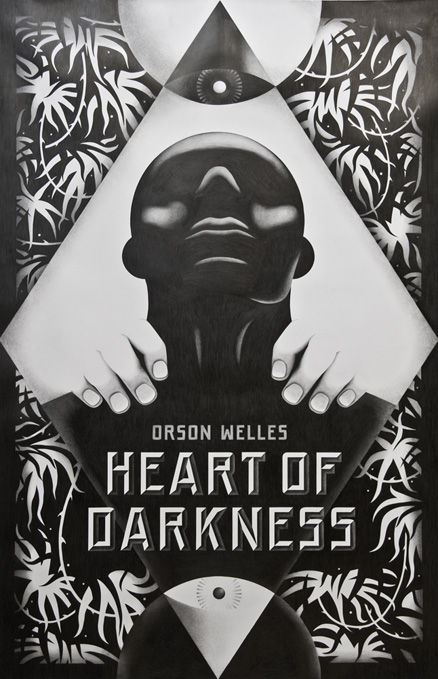
Yet these radio works concern themselves with fascism from very different narrative and social positions. While War of the Worlds depicts an alien invasion, his Heart of Darkness describes a journey towards the alien racial Other, presenting listeners with what had become by 1938 the more mundane miracle of radio—to bring them close enough to hear Kurtz’s haunting repetition: “the horror, the horror.”
Welles, who plays both Kurtz and Marlow in the conversation that leads up to these climactic lines, depicts here the seductive power of his own voice, able to encapsulate the story’s most important characters, and, as Kurtz, to impress even himself, as Marlow.
“Mr. Kurtz,” Marlow / Welles says with awe, “is a remarkable man.” Repeating a line heard throughout the play, Marlow’s words are slyly deflated when they are echoed, with a tone of critical distance, in the voice of one of the ivory company’s employees, a voice that stands in for the listening audience, and encourages their own distrust of Marlow’s naïve faith in Kurtz’s lust for power.
Meanwhile, the play tells a complimentary story of proximity and distance: as the boat moves back down the river, the music shifts from tribal drums to spiritual laments to a meandering jazz saxophone, tracing, in basic and exoticist fashion, a capsule history of African diasporic music.
One year later, Welles also attempted to adapt Heart of Darkness as his cinematic directorial debut for RKO, shifting the frame narrative to New York City, while planning to shoot on location in Panama, where expansion had begun that year on the Panama Canal to allow for the transportation of US warships. For this project, Welles planned a first-person camera technique, mimicking his radio work with first person address. The Mercury Theater’s program, originally named “First Person Singular,” placed listeners on the scene. In film the technique became even more immersive, plunging the audience into uneasy, inescapable identification with Marlow’s point of view.
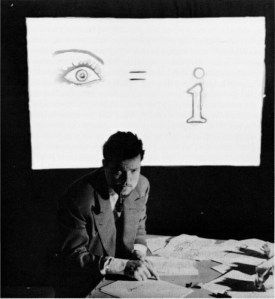
The first person in Welles’s screenplay combines Heart of Darkness’ journey into alien territory with War of the Worlds’ alien invasion—the sense that the audience was under attack. Forced to look out through the eyes of the imperialist adventurer Marlow, the audience surprisingly became the object that everyone in the film watches. The technique could prove threatening to the predominantly white and male movie audiences in the United States of 1940, as Welles planned to enlist 3,000 African American actors to play the so-called natives on the shores of the river—2500 more black extras than worked in Hollywood at the time. When the audience fell under the black gaze in the Canal Zone, where African American men increasingly worked as part of the defense industries, the story’s imperialist theme would have pointed back to the United States’ own racist working conditions, revealing the nation’s complicity and subordination to the imperialist pursuit whose destiny is the primitivist conditions it creates.
RKO rejected Welles’s screenplay, as they did his later documentary project, It’s All True, which sought to transform his 1942 trip throughout Latin America into a tale that fused “the story of samba” with “the story of jazz” to situate African American and Afro-Brazilian musical cultures at the heart of Pan-American culture. Welles soon repurposed the material from It’s All True for a radio program entitled “Hello Americans” that attempted to complete the shift in representation towards a more lateral and dialogic notion of adjacency, positioning U.S. and Latin American culture on the same plane. The means to make these introductions included interviews with and recordings by musicians from Cuba, Brazil, and Mexico, historical tales about Montezuma, Toussaint L’Ouverture, Benito Juárez, Atahualpa and others.
In the show’s most experimental section, Welles simultaneously reinforces and mocks the idea that radio’s ability to collapse distances and transcend borders makes it the medium to communicate the idea of neighborliness.
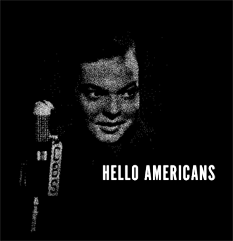
Transporting his audience to “a clay hut somewhere in South America,” Welles introduces a small family in which the son, Juan, builds radios at a new factory, and his father, José, listens to the device. Once the broadcast begins, the listening audience within the frame—Juan, José and his mother—share the same space as the audience listening to “Hello Americans.” All listen together as a broadcast voice introduces Roosevelt’s inaugural address, then Roosevelt’s recorded voice announces his policy of the Good Neighbor, and finally static interrupts Roosevelt’s voice, and a German accented voice takes over to complain about “the republic of the Jew Franklin Roosevelt.” When José comments that the broadcast seems strange, his son Juan answers, “Oh no, they’re all like that. Señor Schmidt at the factory told us it’s uh, it’s because we’re closer to Germany.” Then, a musical curtain falls and Welles returns to reassure his audience that “Juan has learned. Today he works in another factory and he’s a member of the Latin American Confederation of Workers.”
The passage distinguishes between voices—José, Juan, the US broadcaster, Roosevelt, and the German propagandist—and reflects the imagined proximity implicit in Roosevelt’s idea of the Good Neighbor. But the technique also reveals how “Señor Schmidt” and his countrymen take advantage of the geographical confusion made possible by radio’s transcendence of borders to imply that Germany is actually more of a “neighbor” than the United States. These types of confusion between imagination and reality had once launched listeners into panic, but now Welles steps in to calmly and condescendingly reassure the audience that Juan “has learned.” Learned, that is, to join the left leaning Confederation: an untenable statement on US radio less than a decade later.
And yet, the unnamed obstacle impeding both foreign transmissions is language itself. Because everything filters through English, with accents marking the space between Spanish and German, Hello Americans imagines Pan-Americanism through one language alone. Radio’s monolingualism highlights one of the medium’s limitations. Whereas It’s All True could employ subtitles, and allow audiences to listen to a subject’s voice while reading what they said, radio faltered on its most medium-specific component – words.
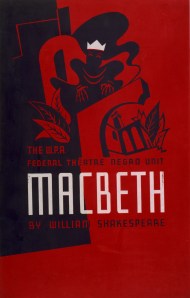
Furthermore, while Welles imagines a “neighborhood” for all Americans, listeners lose the more radical racial politics he had once placed at the center of his Haitian Macbeth (1936), Heart of Darkness (1938), his theatrical production of Richard Wright’s Native Son (1941) and It’s All True (1942). Together these works place the African diaspora at the center of U.S., Pan-American, and world culture. They insist that the attack on fascism abroad must include a change in race relations at home. More ambivalently, they reveal Welles participating in acts of love and theft – a New Deal Kurtz, he draws the power to criticize fascist power from exoticized images of Afro-Caribbean, Afro-Brazilian, and African American cultures, supporting and appropriating the art and struggles of the African diaspora to bill himself as the cultural leader of, not just the ambassador for, Pan-Americanism.
—
Tom McEnaney is an Assistant Professor of Comparative Literature at Cornell University. His work focuses on the connections between the novel and various sound recording and transmission technologies in Argentina, Cuba, and the United States. He is currently at work on a manuscript tentatively titled “Acoustic Properties: Radio, Narrative, and the New Neighborhood of the Americas.”
—
REWIND! . . .If you liked this post, you may also dig:
DIANE… The Personal Voice Recorder in Twin Peaks—Tom McEnaney
On the Lower Frequencies: Norman Corwin, Colorblindness, and the “Golden Age” of U.S. Radio–J. Stoever
The Sound of Radiolab: Exploring the “Corwinesque” in 21st Century Public Radio— Alex Russo
—
Share this:




Current Top Posts





April 2021

January 2020

November 2019

October 2019

August 2019

April 2014

November 2017

March 2015

December 2017

October 2015


Recent Comments