
Could I Be Chicana Without Carlos Santana?

DOI: https://doi.org/10.59350/8h53d-7nr15
This may be a given but I have to ask: Why is the music of Carlos Santana considered “Chicano music?”
It’s true; I am a fan. And as a fan I never question why I love the music, but I often ask myself what it is specifically about the music that resonates so strongly with me. I could say that I love Santana because I love a soulful electric guitar voice, because I admire the musicianship of the band, because I feel the “sabor” they sing about, because I’ve always loved Santana. But these parts surely do not make up a satisfying the “whole.” There is something else, something about listening to the music that amplifies my sense of identification as a Chicana with other Chicanos and Mexicanos. This happens whether I’m among raza, in the various communities I call home, or whether I find myself feeling very far from Aztlán. I’ve witnessed the effect of the music – maybe you have too – when it comes on the car radio, at backyard family BBQs, and friend’s living room dance floors, the music gets your body up and connects you to your Chicano roots.
In this sense, Santana is forever part of the Chicano sounded imaginary. For Chicanos, identifying with the music of Carlos Santana may have a special meaning that has something to do with a particular Chicano/Mexicano subjectivity. Yet, for non-Chicanos, Santana still retains their quintessential American rock band status. Most of their airplay is on mainstream radio, rarely if ever on Spanish-language stations. So Santana can be thought of at once as “puro” Chicano or “classic rock,” except that Santana is a straight up fusion band. This is why I have to ask, is the music of Santana “Chicano” music? And I further wonder, could I be Chicana without Carlos Santana?
…Oye Como Va…
Before the Rob Thomas & Carlos Santana collaboration on the Grammy award-winning album Supernatural (1999), before the phenomenon of “Smooth,” there was classic Santana. The Santana that produced the self-titled debut album Santana (1969) and Abraxas (1970). The songs “Evil Ways,” “Black Magic Woman,” and “Oye Como Va” from these two albums are on constant rotation on “classic rock” stations well after forty years since they first hit the airwaves. Even if you’re not a fan or a music connoisseur, when listening to “Oye Como Va” or “Smooth” it’s easy to recognize a distinct “Latin-ness” about them. In part, this is because of the fusion of Spanish and English lyrics with rock, blues, jazz, and Afro-Latin musical styles. For Chicanos, this particular fusion of language and sound might also resonate as something familiar and close to home – if sound can be a home. A quick search on YouTube will lead you to the classic 2000 Grammy Awards Performance of “Smooth” and a wealth of competing claims by fans (and foes) in the comments section.
Fan 1: “SANTANA ERES LO MAXIMO, VIVA MEXICO!!!!!!!!”
Fan 2: “Salsa baby, Oye Como Va is universal, Carlos is the man!!!!”
This was a special and high-profile performance so these comments are exceptionally spirited. But, YouTube is full of spontaneous, impassioned, (albeit anonymous) examples like this on any given day. I highlight these two as sort of placeholders for the idea of how sound and music mighty carry significant meaning toward subject formation in an everyday sense. These fans claim Santana both for Mexico and for the world, respectively, because they reflect a strong sense of Mexican or Chicano pride. In the first comment, the very enthusiastic fan could easily be a Mexico City native, maybe a Chicano wanting to sound like a Chilango –“ERES LO MAXIMO” is not a Chicano Spanish expression. The second fan’s comment is all in English and could be Chicano simply based on that—but those are slightly secondary points. As I suggested earlier, for Chicanos, Santana’s music has the potential to reflect a sense of ethnic history and culture. Sound can be a home. After all, the first comment claims Santana’s music for a whole country with “VIVA MEXICO!” helping to affirm the feeling that this fan and Carlos are Mexicanos together, across time and place.
When I was studying music in college, Mexican, Chicano, or Latino music was not part of the curriculum. Instead, in my private piano lessons, I would gravitate toward pieces by Spanish or Latin American composers as a sort of “good enough” way to stay in touch with my latinidad. This helped, but the fact is that Latin American art songs have much more in common with the Western musical canon than they do with my experiences and Chicana consciousness. In other words, it was a reach to identify with these composers solely because we shared a language. What would I miss in a too quick move to identify with the Latin-ness of Santana’s music this way? Would I hear only the Spanish spoken in the song? If so, then gaining a sense of my Chicana/o subjectivity by claiming “Oye Como Va” (for Aztlán?) relies on partially subsuming the specific Caribbean contexts and poetics of the song. Is this song originally Cuban, Puerto Rican? It’s really just a party song. “Oye como va, mi ritmo, bueno pa’ gozar, mulatta” Eso! Does it really matter now if Santana’s version has re-defined it for all time?
In a way, the second fan expresses a more complex desire: “Oye Como Va is universal.” Everyone knows that Carlos Santana is Mexican, some know that he is also an immigrant, and still others may have read that he grew up in Tijuana. As part of American rock music history, Santana’s roots are firmly planted in San Francisco and the Bay Area and it is well known that Santana played at the historic Woodstock Festival of 1969. Clearly, amongst other identities, Santana is a classic American rock band with long and wide appeal. But from the beginning, along with creative fusions of rock, jazz, blues, and salsa, it has been the distinctly Afro-Latino percussion core that defines their emblematic sound. And this is exactly how and why dwelling on these details in the sound of Santana matters. If Santana comes to mean or signify something like “pur0 Mexicano” or “pur0 Chicano” (in a brown pride or brown power sense) then that purity is already so productively and interestingly troubled because there is nothing remotely “pure” about Santana’s music.
Therefore, to identify with the music means confronting those complex fusions of language, race, and music that make up the Santana “sound.” To partly answer my earlier question, “Oye Como Va” is a composition by the renowned Puerto Rican timbalero and band leader Tito Puente, but the musical form, a basic cha-cha-cha, is Cuban. The song has other authors as well, that both Santana and Puente name. But ultimately, this song and indeed much of Santana’s music, comes in wake of much older histories of African diaspora, migration, colonization, artistry and spirituality.
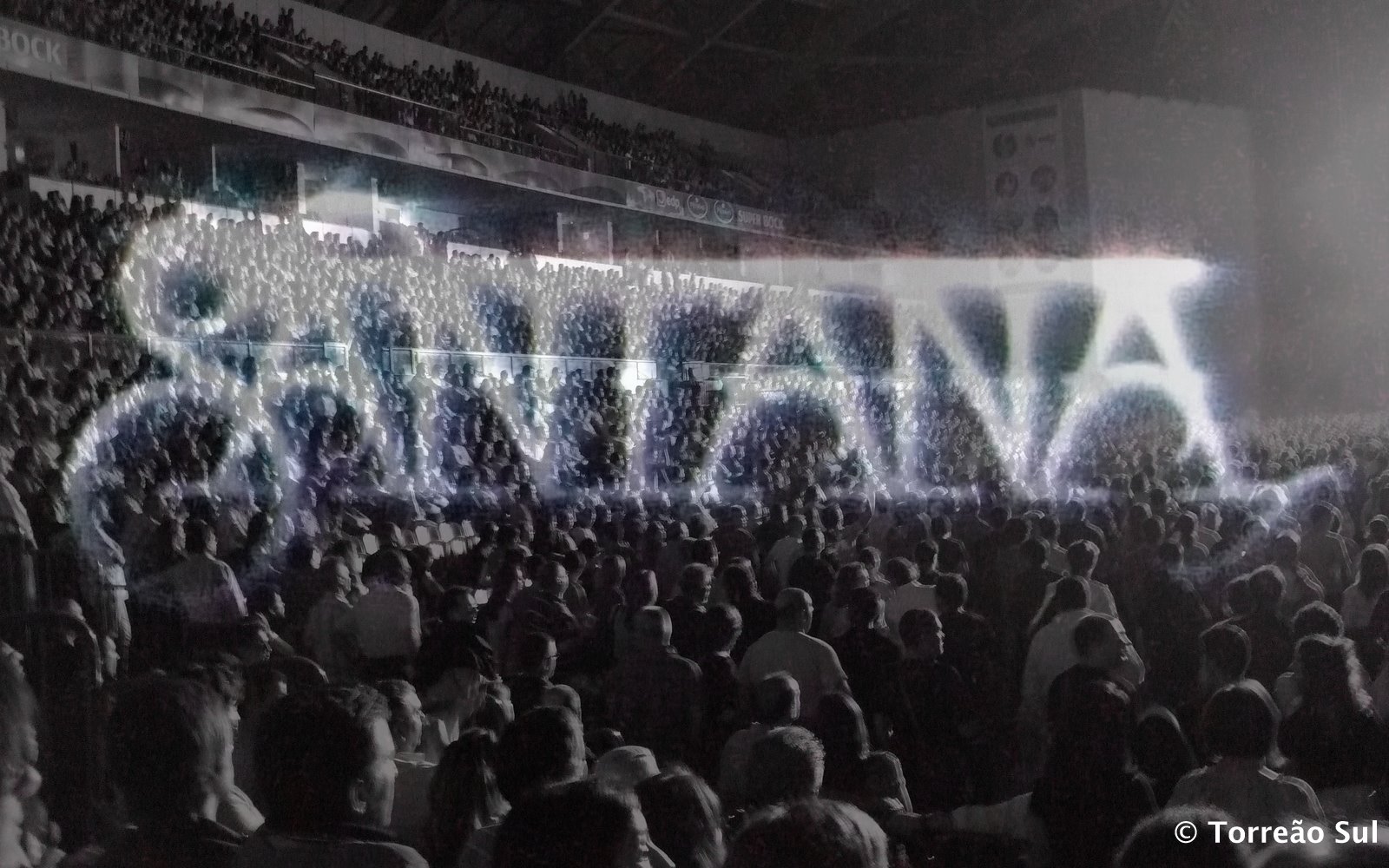
…Sounding Home…
In a way, I’ve always felt that Santana’s music was making a black/brown connection, that racial boundaries were necessarily crossed or brought together because of the many histories that flow through the music. As a child of Mexican immigrant parents, I grew up listening to a wide repertoire of Afro-Latino music – elegant danzónes, romantic boleros, joyous cumbias, mad mambos, as well as more traditional Mexican music. Maybe that is also part of why listening to Santana reminds me of home. But this is perhaps too simple a response.
Santana’s music and popular image has been engaged in positive but also problematic ways in Chicana/o cultural production. Most recently, I noted this in a performance of the play New Fire, by Cherrie Moraga, in San Francisco. At a critical point in the drama, the evocative love song “Samba Pa’ Ti” is used to introduce a male character and a difficult, sexually violent scene. Moraga’s larger critique is of violent Chicano patriarchy and masculinity. The play is offered as a healing ceremony. But the association of this song, which features a famous guitar solo, with that specific scene is profoundly jarring. My sense was that Moraga selected Santana for the play’s soundscape it served as a shorthand for “Chicano.” Here, it was made to bear the history of violence of brown men against brown women and girls. This made it difficult for me to identify as a Chicana–queer and feminist–with Carlos Santana at that moment, and some time after. Surely this is also part of what “home” means.
Santana’s music interests me for these reasons, which go beyond the sounded Chicano imaginary in my headphones. What I find worthwhile in thinking further about Santana’s “sound” is how in the many acts of claiming Santana for oneself, one’s country, or one’s community, I can trace the way in which Chicano and Caribbean histories, both racialized and gendered, touch and cross in the music. That is, I see this as an invitation for the listener to reimagine notions of race, nation, gender, and sexuality even while dancing and singing along. In these ways, I see meaningful possibilities for imagining Chicana/o as a sounded subjectivity. I am certain that my sense of who I am, how I think, and how I walk in the world has been shaped by a life-long relationship with music and sound. And although being “Chicana” to me is not the same for anyone else, Santana’s music helps me to imagine a connection, a musical lineage I can trace and take part in. Santana is not my parent’s music. It’s not even my generation’s music. And, it’s not my only musical identity. But, even so, I couldn’t imagine being Chicana without Carlos Santana. Because when I listen, I do hear it, I hear how it all goes, together, and that is so, so good. “Give me your heart, make it real, or else forget about it!”
—
Wanda Alarcón is a PhD student in Ethnic Studies at UC Berkeley where her research involves reading Chicana and Caribbean “stories” together in a decolonial feminist vein. When she’s not living the glamorous grad student life she likes to make zines about po’try, learning new songs on her childhood piano, cooking for her loved ones, and exploring NorCal with her main squeeze. A native Los Angelena, she is beginning to appreciate thinking and writing about her beloved hometown from afar. Music helps bridge that distance. So do the trees and ocean breezes. She lives and loves kibbutz-style in Santa Cruz with her partner por vida, Cindy, their two sassy cats Lucy & Mona, and dear housemate, Ella.
—
Share this:

Listening to the Border: “’2487’: Giving Voice in Diaspora” and the Sound Art of Luz María Sánchez

DOI: https://doi.org/10.59350/dabyt-ma826
Statistics of death can startle a reader. As tidy yet powerful numeric representations statistics are often used as tools of persuasion, cited routinely by journalists and politicians alike to strengthen or belittle a political objective. According to professors from Wharton’s School of Business, statistics are also gaining in importance as our society attempts “to make sense of an increasingly large and complex barrage of information.” Many have argued, quite provocatively, of the gendered and racialized nature of statistics as objective, “hard,” facts. In “2487: Giving Voice in Diaspora,” the artist Luz María Sánchez uses sound-based art to trouble a statistic brought on by institutional violence on the U.S./Mexico border.
In 2006 Luz María Sánchez used a lone statistic from 2004 – 2487, the number of bodies found dead throughout the border region of the U.S. and Mexico – to create a sound-based art installation for the San Antonio Artpace (now available as an online exhibit). The museum invited audiences to sit in sparsely furnished rooms with strategically placed speakers in order to experience the exhibition. The online access, however; makes certain the exhibit travels beyond the geographical boundaries of Texas, bellowing from the private devices of laptops. Seemingly simple, the crux of the project involves the artist stating each of the 2487 names. Its complexity, as mentioned below, lies in the actual organization of the names. The voice of Luz María Sánchez within this artistic expression reminds us, as Brandon LaBelle states, that sound “leaves a body and enters others” and is never merely a “private affair.” The use of sound forces spectators to listen closely to a statistic and in doing so, directs attention towards the parts of the sum.
The topic of immigration has become a staple of news network channels. Its somewhat mundane presence has served to lump immigrants together into one sound bite: “them” sapping social services; “them” taking away our jobs; or “them” having those anchor babies. The reporting of immigrants as a block serves to dehumanize and delegitimize intentions of family reunification held by many immigrants. Indirectly, “2487” tackles the verbal “them” head on.
Buried within discussions of immigration policy and arguments for increased border enforcement on the U.S./Mexico border are the statistics of those who have died crossing the treacherous dry desert. A series of shifts in immigration policy and increasingly anti-immigrant public sentiment have produced record setting budgets that intensified efforts to beef up border control. The once urban points of crossing in Tijuana or Juarez are now heavily discouraged; the visual yellow and black warning of a family running an insignia of those times. Many immigrants take greater risks as they walk through the Sonoran desert in southern Arizona, now considered the busiest gateway for immigrants where temperatures easily mount well into the 100s.
Within 2487, it is not merely the statistic that serves to astound, it’s the ingenuous yet powerful act of listening to the full name of each body that can engulf the listener.
José Salomon López
Francisco Torres Santiago
Leticia Torres Solis
Adolfo Sánchez
Enrique Soto Pacheco
Guadalupe Valdez Sandoval
Antonio Sánchez Morales
Juan Antonio Sánchez Reyes
Patricia Trinidad
Narrated by the artist herself, each name is voiced individually with a dignified, strong tenor. The text itself – the names – mark this sound piece as solemn. It’s as if one is listening to an obituary read out loud, a roll call with no response, or – a tradition many Latinos identify with – a rosary in honor of the dead. Despite studies that explain a Latina’s public wail as a sign of pain and grief, this piece in its parallel focus of honoring the dead stands out as the artist’s female voice never quivers, trembles, or abandons its strength. In naming each person, listeners may not necessarily focus on their death – represented numerically in 2487 – but may also find themselves imagining their risk as they hear each name. Under the website’s database tab, lies a detailed chart of each name, the location of their body, presumable age, known origin, and the cause of death. Many of the columns are listed with a tag of “unknown” or left blank except for their names.
It’s a forced, almost-awkward, tension-laden, and heavy listening experience. Sánchez makes certain that any semblance of passive listening is disrupted, disturbed, and therefore nearly impossible since the names voiced do not follow a pattern or rhythm. The eight piece sound compilation offers no sense of monotony since it is played continuously and at random. Pauses are sometimes short, long, pensive, and altogether distressing. Names are voiced either in isolation or in an overlapping manner, said to model the “organic patterns of migration itself”; an audible gesture towards the word “diaspora” itself. Because of the deliberate variation of the names, the listener can make out the names of some yet not detect the names of others.

Even as Sánchez gives voice and dignity to a statistic based on dead bodies, the topic of death certainly is not easy to translate. Regina Marchi’s “Day of the Dead in the USA” argues that the public commemoration of death by Latino communities has slowly begun to transform American Culture’s views of death. According to Marchi, Americans tend to be “removed from death” or lack positive modes of relating to those deceased. A popular case in point is the plethora of euphemisms used to characterized death: moved on, no longer with us, watching over us now, passed away. Día de los Muertos or Day of the Dead (on November 1) has become a multicultural method of publically viewing and even embodying death as different communities construct altars, dress as the dead, and openly pay tribute to those who have died. The use of art galleries, the mass media, and community centers have become public venues for these celebrations since their inception by Chicano artists in 1972.
Despite, or (perhaps more precisely) because, honoring the dead is so frequently a visual custom these sonic remembrances are that much more significant. A politicized eulogy for immigrants who have died while crossing the border merits the weight of listening. The 2487 statistic encompasses two thousand and eighty seven bodies and each, according to Luz María Sánchez, had a name that deserves our listening attention.
—
Dolores Inés Casillas, UCSB
—
Share this:




Current Top Posts





April 2021

January 2020

November 2019

October 2019

August 2019

April 2014

November 2017

March 2015

December 2017

October 2015


Recent Comments