
The Sound of Feminist Snap, or Why I Interrupted the 2018 SEM Business Meeting
I begin this essay with an apology, addressed to the Society for Ethnomusicology President Gregory Barz:
I am sorry that I interrupted your opening remarks at least year’s SEM Business meeting. In the moment that I chose to make my intervention, I underestimated the pain that it has clearly caused you. Furthermore, I have come to realize that it was unskillful of me to locate my frustration and anger with you as an individual. The affective release of my voice in that moment could have been better directed towards positive change in a time of great need for many of us. I fully intend to work towards doing better in the months to come, urging anyone who occupies the office of President of this organization to use the power and standing inherent in this position office to take direct steps to address the harms many of its members are experiencing.
Because my intervention arose so quickly and unpredictably—for readers outside of the Society for Ethnomusicology who may not know, I stood up and yelled “You’re a hypocrite!” then left the meeting—it seems worthwhile to explore my actions in a more thoughtful space of written discourse. I want to clarify that my sonic interruption was not premeditated; as I explain below, it arose out of a deep anger and longing for justice. As SEM 2019 convenes in November in Bloomington, Indiana on November 7th, I hope that my disruptive event can be better understood as a call to collective inquiry into the structural factors that constrain our Society from functioning in a healthy way.
Indeed, I am already encouraged by steps that have been taken since the meeting—by President Barz and others—to address some of these concerns. And in the aftermath of this intervention, I have been heartened by the positive and supportive responses I have received from friends and colleagues. Although I had to leave the room in that moment, something meaningful remained just outside.
***
Some backstory: This was the first time I had attended a business meeting; at previous conferences, they had always seemed like a formality that did not concern me. Serving on the Committee for Academic Labor, the Ethics Committee, and as Chair of the Improvisation Section, however, helped me to understand the importance of these formal structures and rituals for the health of our Society. I attended in 2018, therefore, with a sense of curiosity and a longing for positive change, particularly in regard to some of the work coming out of the committees on which I was serving. This longing also arose from a sense of frustration at the lack of receptivity to new ideas by Board leadership—as experienced through a pattern of poor communication around implementation of this work between committees and Board—as well as what I perceived to be a lack of transparency and accountability among Board leadership.
Much of this frustration stemmed from the Board’s failure to implement a minor procedural proposal put forward by the Ethics committee nearly two years prior: that the committee be restructured to be elected rather than appointed. After the first deadline to put the amendment to the full membership passed without comment from the Board, we had to expend a great deal of energy even to receive acknowledgement that our proposals had been received. By the time the committee met again, we had been through over a year of exhausting back-and-forth by email with nothing actually getting done.
Then, in the weeks leading up to the 2018 meeting, a member publicly came forward about experiences of sexual abuse by a now-deceased ethnomusicologist who had served as a senior member of SEM during his lifetime. As a member of the Ethics Committee, I witnessed the email exchange in which her requests for space to address this at the 2018 meeting were first accommodated, then revoked at the last minute; she was finally allowed space to speak in a confusing, unmoderated, ad-hoc session to which the Board assented only after the conference was already underway.
So, when President Barz chose to begin his opening remarks with a paean to civility, lamenting how conflict over social media was causing us to lose our ability to engage in healthy discourse as a unified Society, I became concerned. Many in the audience were aware that both the sexual assault allegation and another credible allegation of ethical misconduct by SEM leadership had been circulating on Facebook in previous months. I heard President Barz’s remarks as a use of his prominent position in SEM to categorize these complaints as “noise.” As Mark Brantner points out in his thoughtful critique of John Stewart’s 2010 “Rally to Restore Sanity,” the idea that sanity operates through “indoor voices” is a deeply ingrained assumption for many.
But in the wake of recent upheavals in the status quo, catalyzed by movements like #blacklivesmatter and #metoo, many hear these “indoor voices” as signifiers of an oppressive status quo. Others have written about the problems inherent in invoking civility in the face of dissent: In a recent piece for The Atlantic, Vann Newkirk argues that in many cases, “the demands for civility function primarily to stifle the frustrations of those currently facing real harm” (2018). In Vox, Julia Azari points out that “Civility is not an end on its own if the practices and beliefs it upholds are unjust” (2018). In these cases, calls for civility came in response to calls by those whose voices are met with silence by the prevailing order.
And allow me to state in no uncertain terms: many of us in the field are currently facing real harm. Since earning my doctorate in Ethnomusicology just over a year ago, I spent eight months without health insurance and now qualify for the federal Supplemental Nutrition Assistance Program. I’ve strongly considered leaving the Society many times over the past year.

“snapped stick” by Flickr user masterbutler (CC BY 2.0)
I’m also aware that my personal experience is only the tip of the iceberg: so many peers and colleagues have left the Society altogether because of sexual harassment, abuse of power by senior members or advisors, and economic precarity, experienced alone or in horrific combination. These harms are also compounded for my peers who do not share my positionality as a heterosexual, cisgender, white-presenting man with a U.S. passport and a bourgeois class background.
As President Barz continued to speak, my concern—which had lodged itself as a feeling of discontent somewhere in my stomach area—began to rise into my chest as anger, particularly when President Barz began to invoke his authority as a champion of democratic practice within the Society to justify his call to civility. If he truly believed in consensus-building and democracy, I thought, certainly he wouldn’t have opposed an effort to increase democratic accountability on the Ethics Committee. This contradiction generated my experience of what woman of color feminist Sara Ahmed calls “feminist snap” in 2017’s Living a Feminist Life. She described “feminist snap” like this in a May 2017 blogpost:
It is only when you seem to lose it, when you shout, swear, spill, that you have their attention. And then you become a spectacle. And what you brought out means you have to get out. When we think of such moments of snap, those moments when you can’t take it anymore, when you just can’t take it anymore, we are thinking about worlds; how worlds are organised to enable some to breathe, how they leave less room for others. You have to leave because there is nothing left; when there is nothing left.
In other words, I noticed that I seemed to be losing it. In that moment, I drew on my background as an improvising musician to decide how to relate to this intense energy. After exchanging incredulous glances with two colleagues sitting nearby, I decided that I couldn’t sit quietly and let my toxic feeling fester throughout the meeting—I needed to leave, but I didn’t want to leave without registering to people in the room why I had to leave, and there was no space in the official meeting to do so. At the same time, I was aware of the risks inherent in this strategy—especially because I have witnessed how the sound of my voice—a man’s—snapping like this can itself be a trauma trigger for anyone who has been shouted down in a meeting, or otherwise. Thus, the material nature of the spectacle here was different from that described by Ahmed in that it carried with it a timbre of patriarchal violence. Oddly enough, the worlds that I felt were being organized to make it difficult to breathe still afforded me the air for this particular form of breathed expression: a fiery shout. And that sound brought unintended consequences.

“break” by Flickr user David Lenker (CC BY 2.0)
I had wanted there to be no doubt that my departure was a response to President Barz’s remarks, but the power arrangement in the room meant that it would have been difficult to offer a lengthy articulation of my reasoning, given that any utterance would have been received as disruptive and that I did not have access to sound amplification in the large room. (I am reminded here of R. Murray Schafer’s point in The Soundscape : “A man with a loudspeaker is more imperialistic than one without because he can dominate more acoustic space” (1977:77). Schafer’s sexist assumption that only men speaking through loudspeakers is worth noting—as I see it, both men’s and women’s voices could transmit imperialistic sound in this way, but a “snap response” would also be gendered.)
Within a few seconds, I settled on the form my move would take: stand up, shout something concise, and leave the room. The words “You’re a hypocrite!” flowed spontaneously from there—words grounded in my direct experience of the disconnect between Dr. Barz’s present remarks and previous actions. Immediately upon leaving the room, an adrenaline rush flowed out of my body and I staggered towards a nearby bench, where I collapsed to catch my breath.
Again, I regret that these remarks focused on President Barz as an individual. Had I more time to think through what I would have stated, perhaps “This is unacceptable,” “These actions are hypocritical,” or “Please don’t ignore us” would have been what came out. And yet, by this point, the sound of this intervention had already been determined by the immediate constraints of the situation: had I chosen to sound in a way that was coded as “civil”, I literally would not have been heard by more than a few people in the room.

“broken cedar” Image by Flickr user Erik Maldre (CC BY 2.0)
Even after this intense incident, my experience of the conference in Albuquerque was very positive overall. SEM is full of brilliant emerging scholars asking extremely important questions; it was especially encouraging to see more attention being brought to the imperatives of decolonization and anti-racism. At the same time, in order for these inquiries to be truly productive, we still need to turn our analysis towards the ways in which the status quo of our governance practices unintentionally reproduce systems of oppression and create harm. Tamara Levitz, in her recent article “The Musicological Elite,” sheds light on how this has been the case within an adjacent academic organization, the American Musicological Society. She writes, “My premise is that musicologists need to know which actions were undertaken, and on what material basis, in building their elite, white, exclusionary, patriarchal profession before they can undo them.” (2018:43). Despite some evident wishful thinking to the contrary, SEM reproduces harm in similar ways and would benefit from similar institutional self-reflection.
By yoking itself to the project of the North American university system, the Society for Ethnomusicology has created strong incentives for members to go along with what Abigail Boggs, Eli Meyerhoff, Nick Mitchell, and Zach Schwartz-Weinstein call the “Modes of Accumulation” of these institutions. We must urgently turn towards critical institutional self-examination to consider how we can change our practices to resist complicity with these forms of professionalized domination and control.
In order to do so, we need better mechanisms for dissent and communication, especially when we have the rare opportunity for face-to-face communication. We must address what seems like an increasing tension between preserving the institutions of tenure-track music academia and the broader needs of the Society’s full membership. Crucially, Ahmed turns to listening as a key methodological practice for locating “feminist snap”:
To hear snap, one must thus slow down; we also listen for the slower times of wearing and tearing, of making do; we listen for the sounds of the costs of becoming attuned to the requirements of an existing system. To hear snap, to give that moment a history, we might have to learn to hear the sound of not snapping. Perhaps we are learning to hear exhaustion, the gradual sapping of energy when you have to struggle to exist in a world that negates your existence. Eventually something gives.
In this case, listening for the silences—and silencing—that preceded this instance of “snap”may be useful. To my ear, they index the “sound of not snapping”: the unanswered emails, averted eye contact, unreturned phone calls—these are the sounds of a snap to come. These silences are empowered by our collective reliance on a discourse of “civility,” propped up by formal procedures like Robert’s Rules of Order, that deems certain types of sounds and communication to be out of bounds. Indeed, as Hollis Robbins has observed, “Under Robert’s Rules, silence equals consent.” Listening for feminist snap would require a commitment to naming these silences—and allowing space for them to be spoken into.

I sincerely hope that my moment of becoming a spectacle can spark more productive conversations and deeper listening. Still, the magnitude of the challenges that we face to align our governance practices with shared institutional values will require creative solutions. I am confident that our experience and training as listeners can bring us to a fuller engagement with democratic processes—and that this can lead us towards productive solutions. This work is already being done by many groups and individuals within the Society, such as the Committee for Academic Labor, the Crossroads Committee, the Disability and Deaf Studies Special Interest Group, the Diversity Action Committee, the Ethics Committee, the Gender and Sexualities Task Force, the Gertrude Robinson Networking Group, the Section on the Status of Women, and many others. I am confident that members of these groups are actively working to build spaces that allow for us to listen into the structural and cultural changes we desperately need.
In the meantime, I remain committed to seeking out collaborative solutions to the challenges we face. Please feel free to reach out to me by email with any feedback you feel compelled to share. Furthermore, if you would like to contact the Ethics Committee about any issues of ethical import to the Society, you may do so here. Anonymous submissions are also possible through this portal.
I’d like to close this essay with an apology, as well—addressed to all of my peers who have experienced harm or abuse through their involvement with SEM: I am truly sorry that I have not done more to work towards redress for the harms that you have experienced. I am also deeply sorry that I have not done more to examine how my own desire to see projects through in this community has led me to ignore signs of harm taking place. I’ve had the good fortune of being able to express this to a few of you in person, and I am tremendously grateful for the opportunity. For anyone else who would like to reach out, I will commit to listening. For us to do better, I need to do better.
Thank you for taking the time to read this statement—I look forward to continuing our work together to create a sustainable future for the practice of ethnomusicology.
—
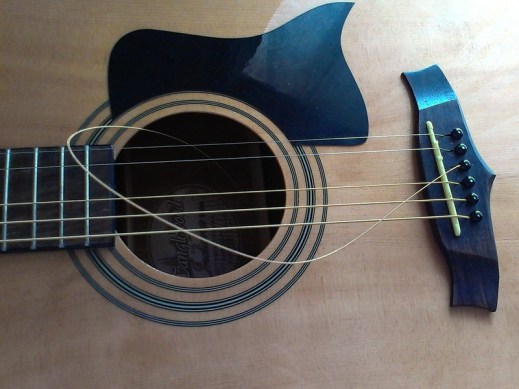
Featured Image: “I Broke a String” by Flickr User Rowan Peter (CC BY-SA 2.0)
—
Alex W. Rodriguez is a writer, improviser, organizer, and trombonist. He holds a PhD in Ethnomusicology from UCLA, where his research was based on fieldwork conducted in Los Angeles, California from 2012-2016, Santiago, Chile from 2015-2016, and Novosibirsk, Siberia in fall 2016. Alex is currently based in Easthampton, Massachusetts, USA.
—
 REWIND! . . .If you liked this post, you may also dig:
My Music and My Message is Powerful: It Shouldn’t be Florence Price or “Nothing” –Samantha Ege
becoming a sound artist: analytic and creative perspectives–Rajna Swaminathan
Sounding Out Tarima Temporalities: Decolonial Feminista Dance Disruption–Iris C. Viveros Avendaño
On Whiteness and Sound Studies–Gustavus Stadler
Canonization and the Color of Sound Studies –Budhaditya Chattopadhyay
Share this:

“KASPLASH! SLURPLOP… KPLUNK!” Charles Mingus’s Sound Effects and the Politics of Humor

 In his autobiography, Beneath the Underdog, jazz musician Charles Mingus recounts his hatred of being ignored during his bass solos. When it was finally his turn to enter the foreground, suddenly musicians and audience members alike found drinks, food, conversations, and everything else more important. However, this small, and somewhat ironic, anecdote of Mingus’s relationship with the jazz community has now become a foreshadowing of his current status in sound studies–but no longer! This series re/hears, re/sounds and re/mixes the contributions of Mingus for his ingenious approach to jazz performance and composition as well as his far-reaching theorizations of sound in relation to liberation and social equality, all in honor of the 60th anniversary of Mingus’s sublimely idiosyncratic album Mingus Ah Um this month. In the third piece of this series, Jessica Teague grapples with Mingus’s 1957 Atlantic recording of “The Clown.” Her analysis reveals one of Mingus’s most critical questions: Is the only way to escape exploitation to exploit another, or worse yet, yourself? You can catch up with the full series by clicking here. –Guest Editor Earl Brooks
When jazz bassist and composer Charles Mingus first set out to write his memoirs in the mid-1950s he told his wife Judy that he “wanted a chance to write about the true jazz scene that has made our masters millions and taken the most famed to their penniless graves as the only escape from the invisible chains on black jazz as an art” (Santoro 175). By the time Beneath the Underdog saw publication nearly two decades later in 1971, it was considerably slimmed down from the 800+ page manuscript Mingus had produced. Financially strained and evicted from his downtown loft, Mingus hoped that the book would be a best seller and offer economic freedom from the music industry.
But as many have noted, Beneath the Underdog is not your typical jazz autobiography (see Krin Gabbard, Nichole Rustin-Paschal, Gene Santoro, and Daniel Stein). Here, Mingus rejects standard notions of the self declaring in the first sentence of his book: “In other words, I am three.” By writing in a mode that wavers between the lurid world of popular pulp-heroes and psychological high-modernism, Mingus’s autobiography (like his music) treads a slender line between clowning and critique.
In one of the most infamous scenes from Beneath the Underdog, Mingus hyperbolically describes having intercourse with twenty-three prostitutes over the course of one night in Tijuana, Mexico. The incident follows the breakup of his marriage with his first wife Barbara and his affair with Nesa Morgan, the wife of a club owner. Recounting his superhuman exploits in the language of the comic book, Mingus turns what might have been a display of his sexual prowess into a clowning circus act, complete with zany sound effects and an off-kilter sense of rhythm. It’s a scene that simultaneously reinforces the stereotype of the African American male’s hypersexuality and deflates it with comedy:
KASPLASH! SLURPLOP!
“Me, señor!”
KPLUNK!
“No! Me, sir!”
SPLATT
“You like fooke?”
“Seventeen, eighteen, nineteen, twenty!”
SPASHOOSH!
“Two dollars, sir!”
(Beneath the Underdog 176-177)
There is a certain ambiguity to the poolside scene. Mingus the narrator is notably absent and the action proceeds without any visual clues—he gives the reader only fragments of dialogue that alternate between the prostitutes selling their wares and the side conversation between Mingus and his friend Hickey, who comments upon his sexual performance. What is more, the onomatopoetic sound effects employed are demonstrably silly and absurd. There are no moans or sighs of ecstasy here—each act is punctuated by a “BLAM! BLAM!” (178). Sex is transactional and performative for Mingus, but not pleasurable.
The pulpy, comic book quality of the Tijuana scene makes Mingus a superhuman like a character from The Fantastic Four, but it also makes him into a two-dimensional cartoon. This undercutting of the self and the performative body characterizes Mingus’s concept of the fractured self of the black jazz musician—a theme he takes up in his music as well as his writing (e.g. “Self-Portrait in Three Colors” from Mingus Ah Um). Interestingly, Mingus’s affinity for comics would surface again and in 1966 he collaborated with African American illustrator Gene Bilbrew to create a comic strip-style advertisement for the Charles Mingus Record Club that appeared in the Village Voice.

Cropped image from Dangerous Minds via Stupefaction. Click there for full strip.
Biographers have argued that Mingus included these likely fictionalized sex scenes as a way to sell more books and evade the exploitative economics of the music industry. However, the comic book sound effects that render Mingus’s sexuality humorously exaggerated comes at the expense of Latinx women. Despite having grown up in a multi-ethnic community in Los Angeles, his representation of the voices of the Mexican prostitutes flattens their identities and plays upon ethnic stereotypes. With each “Sí señor,” the women are presented as both sexually promiscuous and submissive. Mingus’s relationships with women were fraught, and his anxieties about his own sexuality were inevitably tied up with race. His tendency to treat women as sex-objects is similarly on display in the comic strip above, in which a suggestively-attired white female hipster acts as a narc, exposing a bootleg record dealer. “Uh, you got anything by Charlie Mingus? Uh-h, y’know, like uh… under the counter?” she asks, dripping innuendo.
And yet, these cringe-inducing scenes are often complicated by Mingus’s use of pimping and prostitution as metaphors for exploitation throughout his Beneath the Underdog. At various points he portrays himself as both prostitute and pimp, both masculine and feminine. When his friend Hickey seems to question Mingus’s extreme behavior, he responds: “In this white man’s society what else have I got” (178). Even in moments that indulge in humor, such as the Tijuana scene, Beneath the Underdog darkly implies a pimp or be pimped world.
Mingus would become known for writing music with a political edge—one might think of “Fables of Faubus” from Mingus Ah Um (1959)—but perhaps the closest musical relative to the satirical Tijuana scene is Mingus’s 1957 Atlantic recording of “The Clown.” In the liner notes for the album, penned by Nat Hentoff, Mingus describes that as he wrote the tune, he realized that it had two parts, and started to imagine it as the story of the clown. He then told the story to radio celebrity Jean Shepherd and allowed Shepherd to improvise the telling of the story during the recording. As Mingus described it to Hentoff, the story was
…about a clown, who tried to please people like most jazz musicians do, but whom nobody liked until he was dead. My version of the story ended with his blowing his brains out with the people laughing and finally being pleased because they thought it was part of the act. I liked the way Jean changed the ending; leaves more up to the listener.
Like the Tijuana story, “The Clown” also incorporates sound effects, and it opens with the hollow laughter of men and women in a nightclub. As auditory phenomena, sound effects are especially interesting because of their artificiality—they are performances of sound. In a cinematic or radio context, sound effects typically amplify an action. Even when sounded, rather than written, they seem to act onomatopoetically. Thus, the addition of the laugh track on “The Clown” is both performance and commentary.
But part of the genius of Mingus’s composition is the way he incorporates the logic of the sound effect into the music itself. The vocal quality of his bass, the wah-wahs of the horns, and the rim shots on the drums are but one piece of this totalizing sonic landscape. “The Clown” borrows stylistic elements from other recognizable genres (like, circus music) to evoke the playfully comedic and absurd, but a second, more serious and ironic story of exploitation runs concurrently and undercuts the first narrative’s simplicity. On the one hand, we hear the more jaunty, carnivalesque melody of the trombone (Jimmy Knepper) and the tenor saxophone (Shafi Hadi) that lilts in 6/8, but that melody is punctuated by moments of dissonance and free playing under the narration—stretching the space between comedy and tragedy. The question he seems to ask in both the Tijuana story from Beneath the Underdog and in “The Clown” is essentially the same: Is the only way to escape exploitation to exploit another, or worse yet, yourself?

Close up from the cover of Charles Mingus – The Black Saint and the Sinner Lady (1963)
Black musicians who pushed back were often called “angry,” even as music didn’t always sound that way. One might think of the contrast between seemingly jaunty, upbeat rhythm of Nina Simone’s “Mississippi Goddam” and its devastating lyrics. It is the sound of political and existential crisis. Both “The Clown,” and the Tijuana scene indicate Mingus’s heightened awareness that, as much as he was known for his music, he was also known for his explosive behavior at performances—the “angry man of jazz.” As Eric Porter has pointed out, Mingus’s “irrational behavior appealed to audiences at a moment when many members of American society (of whom Beat writers were emblematic) were looking to the oppositional aspects of black culture for solutions to their dissatisfaction with consumerism, conservative politics, repressed sexuality, constrictive gender roles, and other social ills” (130-131). 1957, the year Mingus recorded The Clown, was the same year that Norman Mailer published his infamous essay “The White Negro” and Jack Kerouac published On the Road. It was also the year that Governor Faubus of Arkansas attempted to halt the integration of Central High School in Little Rock.
Subtle they may be, but the use of comic sound effects in works like Beneath the Underdog and “The Clown” highlight the absurdity of the roles black jazz musicians had come to play within American culture. In worrying the line between the comic and the tragic, the explosive and the reflective, Charles Mingus refused to concede to the identity that had been shaped by the music industry, by the press, and by institutionalized racism.
—
Featured Image: Charles Mingus 1976, Courtesy of the Wikimedia Commons, Colorized by SO!
—
Jessica Teague is an Assistant Professor of English at the University Nevada, Las Vegas (UNLV) and specializes in 20th and 21st-century American Literature and Sound Studies. The intersections between literature, sound, and technology are the focus of her research, and her book, Sound Recording Technology and American Literature: from the Phonograph to the Remix, is under contract with Cambridge University Press. Her work has been published in journals such as American Quarterly and Sound Studies, and she has also been the recipient of research fellowships from the ACLS and the Harrison Institute at the University of Virginia. (PhD, MA, Columbia University; BA, UCLA)
—

REWIND! . . .If you liked this post, you may also dig:
SO! Amplifies: The Blues and Jazz Dance Book Club–Chelsea Adams
On Ventriloquism, Dummies, and Trump’s Voice–Sarah Kessler
Afrofuturism, Public Enemy, and Fear of a Black Planet at 25–André Carrington
Share this:


Current Top Posts





April 2021

January 2020

November 2019

October 2019

August 2019

April 2014

November 2017

March 2015

December 2017

October 2015
 Sounding Out!
Recent Comments