
“Sensing Voice”*
*a longer version of this piece is forthcoming in Senses & Society 6 (2), July 2011.

Bathroom Recital 2007
In 2007, I received an invitation to a recital that would take place in my bathroom; the artist offered to present an underwater concert in my tub. My reaction? “Crazy,” I thought. “Why go to the trouble of singing in an element so far from ideal?” After a year of mulling it over, though, I finally realized that what I had dismissed for its hopeless impracticality might—precisely because it was impractical—offer fresh perspectives on singing and listening by resituating these familiar activities in vastly unfamiliar territory.
The underwater singing practiced by contemporary American soprano and performance artist Juliana Snapper challenges audiences to confront their unexamined assumptions about the relationships between the voice and materiality, the sensed and the singular. How do the physical and sensory properties of singers’ and listeners’ bodies affect and participate in the music we create and the sounds we hear? How do the physical space within and the matter through which sound travels shape what we hear? And how do the relations between these aspects affect what it feels like to sing, and what it is possible to hear?

The rooftop bar at the Standard Hotel, downtown LA
During the spring of 2010, while I was working on an article about Snapper’s project and teaching a seminar on the multi-sensory aspects of music, Snapper offered to mount a participatory version of her project for my class. She took us through some exercises in a large swimming pool in downtown Los Angeles. The first exercise paired us up; one person gently held the other under water, while the person underwater made sounds. I was paired with Natalia, who shouted––but with my ears above the water I couldn’t hear her voice.

The author with Natalia Bieletto (under water). Aquaopera #4/Los Angeles, 28 April 2010.
So we tried another strategy: one person made sounds underwater while the rest of us put our heads and ears in – and then we could hear her. We found that the deeper into the water we descended, the more difficult it was to sing high notes. Fast tempi were also difficult to maintain; Natalia’s attempt resulted in muddled sounds.
We found that the deeper into the water we descended, the more difficult it was to sing high notes. Fast tempi were also difficult to maintain; Natalia’s attempt resulted in muddled sounds. Surprisingly, while sung sounds didn’t seem very loud, small internal throat sounds were incredibly powerful. These exercises demonstrate how much the medium through which sound waves flow affects their characteristics: their speed, direction and so on. It also shows that in order to register sound, the listening body (including the head) must be immersed in the material through which the sound flows.

The next exercise linked the six of us together
The next exercise linked the six of us together by the arms; three participants stood in a line, with their backs against three others. We sang in a drone-like manner, playing with our voices above the water, at its surface, and then slowly sinking into it. We felt the sonic vibrations largely through direct contact with each other’s bodies. Of course sound also passed through the air and water, but because the most immediate path was from one body to another, this was the sensation that overpowered us.
At the end of the day, gathered around the poolside fireplace, we discussed how different singing felt in a liquid environment. We’d discovered that aural experience is predicated on physical contact with sound waves through shared media, in this case water and air, flesh and bone. We noted that the shared medium makes a great differenceto how we experience the voice, and that the sound we ultimately hear depends partly on what is sung, and partly on the medium through which it passes (and how our bodies interact with that medium). In other words, in Snapper’s workshop we discovered that sound is a multi-sensory experience, tactile as well as aural. It also became clear that sound and music involve much more than traditional theories and notation can capture. (For a more thorough discussion of the differences between singing and sound underwater and in air, please see my forthcoming article.)
-

- At the Standard poolside fireplace.
-

- Hyunjong Lee and Zachary Wallmark.
-

- Sam Baltimore and Alexandra Apolloni.
-

- Jill Rogers.
I would like to underscore here that the character of a given sound source is not stable. Instead it is dependent on specific material conditions, and on particular relationships between the elements involved. A sound signal will move with a given speed depending on the material––air, water, metal, glass, etc.––through which it is propelled. As humans register the sound it will move more or less directly through the ear drum or bones (and then transfer to the inner ear) depending on the relationship between the material through which it is propelled and the materiality of the ear. The part of the body that registers sound also plays a role in its apparent directionality.

Juliana Snapper.
For example, our ability to hear in “stereo”––two distinct signals, left and right––is the result of sound entering our bodies from two directions (two ears). Because we most frequently deal with sound as it is propelled through air, we take this as a given and adjust our musical and acoustic research (and thus our concert halls and (performance spaces accordingly).
By highlighting the material aspects of sound and their reception, Snapper reminds us that what we hear depends as much on our materiality, physicality, and cultural and social histories as it does on so-called objective measurements (decibel level, soundwave count, or score), which are themselves mere images. Our experience of sound is a triangulation of events in which physical impulses (sonic vibrations), our bodies’ encultured capacity to receive these vibrations, and how we have been taught to understand them are at constant play, and subject to negotiation. In the experience of sound, what becomes clear is not a stable explanation of what sound or music is. Instead we are led to understand that each such account is a composite manifestation of our perception of sound at a given moment in time and place.
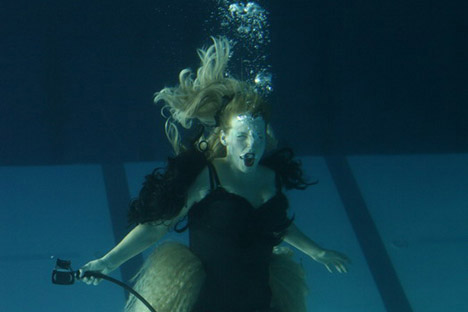
Juliana Snapper
Share this:

What We Talk About When We Talk Girl Talk

DOI: https://doi.org/10.59350/fc10y-ezd16
Gregg Gillis, the mash-up artist who records and performs as Girl Talk, is always being talked about by someone. My co-author, Kembrew McLeod, and I risked adding to the overexposure by featuring Girl Talk as the star in the introductory section of our new book, Creative License: The Law and Culture of Digital Sampling (Duke: 2011). And yet, I still have more to say about Girl Talk. His latest release, All Day (2010), came out too late for us to cover in our manuscript, but it reflects some aesthetic and legal developments that are worth understanding. But first, I should explain sampling, mash-ups, and what makes Girl Talk so musically and legally interesting to talk about.
Sampling means using existing sound recordings as part of new sound recordings. I leave musical quotation, allusion, and other forms of musical borrowing (or appropriation, if you prefer) out of this definition. In other words, sampling means using sound waves recorded at an earlier time—perhaps (1) editing or manipulating them, (2) combining snippets of multiple existing recordings, and/or (3) adding sounds generated by the sampling artist herself—but using the literal sound waves as basic material nonetheless.
Mash-ups, in my parlance anyway, are a sub-category of sample-based music. A mash-up artist usually does not distort the samples too much; mash-up artists tend to combine just two or three samples at any one point in time—the samples remain recognizable to the listener. And mash-up artists tend to add very few (if any) sounds generated originally by themselves.
Many mash-ups juxtapose only two or three existing recordings for the duration of a typical pop song. Some versions of this approach involve a comical or unexpected juxtaposition, like Britney Spears versus Metallica. Other versions of this approach sound like the sort of thing you’d hear at a club; in other words, it describes something live DJs have done for a long time. Mash-up artists The Hood Internet, for instance, recently released a mash-up of rap artist Nicki Minaj and indie-dance group Hercules and Love Affair by DJ STV SLV (pronounced “deejay steve sleeve,” which I’m pointing out because I think it’s fun to say).
What is unique about Girl Talk is that each of his tracks involves a string of overlapping samples. In an average song like “Like This” from Feed the Animals (2008), he moves from group to group of sampled sources, from Beyonce versus LL Cool J versus Soul II Soul, to the Jackson 5 versus the Beastie Boys, to Pras (featuring Mya and Ol’ Dirty Bastard) versus Yo La Tengo, and so on. Girl Talk’s live performances feature Gillis with his laptop in the middle of an insanely sweaty dance floor. A friend who recently caught a Girl Talk set noted that sweat was condensing on the ceiling of the venue and then dripping back onto the crowd. In short, Girl Talk is high-energy club music.
After the release of Feed the Animals, Village Voice reviewer Tom Breihan famously labeled Girl Talk as “music for people with such severe ADD that they get bored listening to thirty-second song-samples on iTunes.” Breihan also denied that Girl Talk’s music had any “internal dynamics,” which I take to mean that Breihan thinks the music has no narrative arc of, say, loud versus soft or intense versus calm. In both these statements, Breihan’s position is that the samples that make up Girl Talk’s music are disconnected from each other. The samples provide amphetamine doses of nostalgia or energy, but they have no intertextuality or deeper meaning. Girl Talk’s samples are just rapid-fire collections of pop-culture references. Call this line of argument as the name-that-tune critique.
My view, however, is that there are patterns and meaning in Girl Talk’s selection and arrangement of samples. He consistently pairs rap vocals with retro music of the 60s, 70s, 80s and 90s, along with the occasional indie-rock and/or iTunes-commercial hit. Why are his groupings of samples interesting?

One answer is that the backing tracks in hip-hop songs have become stale. In the commercial music industry, sample licensing is required but prohibitively expensive. So Girl Talk is creating a collage in the background with the samples that rappers’ labels wouldn’t pay for or, even more likely, couldn’t have licensed from the copyright owner. This effect of copyright law on creativity is something that Kembrew and I detail in our book, especially Chapters 5 and 6.
Another answer is that Girl Talk finds the lyrical content of hip-hop far more interesting (or at least more provocative) than what’s being said in the classic-rock song. A similar point would apply to The Hood Internet, too, whose twist is that their pairing is almost always very contemporary hip-hop vocals mashed up with very contemporary indie rock. I can’t help thinking that one thing The Hood Internet is suggesting with their compilations is that some hip-hop backing tracks are too boring and some indie-rock vocalists have poor voices or nothing to say—so let’s mash-up the best parts of both.
So what to make of Girl Talk’s hallmark freneticism, the jumping from one group of samples to another group roughly every 20 or 30 seconds? No matter what, the point is that meaning—an argument over interpretation—emerges from the groupings of juxtaposed samples. First of all, meaning emerges when the transitions happen more slowly. The new album, All Day, begins with a two-minute-long pairing of Black Sabbath’s “War Pigs” against Ludacris’s “Move Bitch” (featuring Mystikal and I-20) and a few short snippets of various Jay-Z raps. The extra time to digest what’s happening tells the listener that the new album is more relaxed, at least at the start. Rather than a sprint, the new album has a longer narrative arc. Gillis may be responding to the name-that-tune critique, adding another dimension to the mathematical complexity of his recordings by varying the speed of his transitions.

More than a response to critics like Breihan, my observations about selection and arrangement as the source of Girl Talk’s musicality relate to his legal stance with respect to using unlicensed samples. Girl Talk and his label, Illegal Art, assert that using samples, transforming them, and placing them in a new context is “fair use.” Briefly, fair use is a doctrine in copyright law that allows certain uses without permission. For instance, a book reviewer can quote from a book without infringing copyright, at least up to a certain amount. Educators can use at least some portion of copyrighted works in the classroom. Transformative use is yet another category of fair uses. We know this category includes parody, thanks to a 1994 Supreme Court decision involving 2 Live Crew’s parody of Roy Orbison’s “Pretty Woman.” But the courts haven’t told us what else the “transformative” category includes. This is why Girl Talk and Illegal Art garner so much attention from the copyright law community.
The website for the new album has the following legal language at the bottom of the page:
All Day by Girl Talk is licensed under a Creative Commons Attribution-Noncommercial license. The CC license does not interfere with the rights you have under the fair use doctrine, which gives you permission to make certain uses of the work even for commercial purposes. Also, the CC license does not grant rights to non-transformative use of the source material Girl Talk used to make the album.
Creative Commons licenses are ready-made online licensing contracts. A Creative Commons license is a deal creators choose to make with the public, in which the creator gives the public certain freedoms but also requires certain responsibilities. It represents a less generous choice than simply leaving something in the public domain, no strings attached. But it is much more generous choice than asserting one’s copyrights in full.

So what can other people do with Girl Talk’s music under the particular flavor of a Creative Commons license? The short answer is that they can share and remix whatever he owns without getting advance permission. But wait a second. If Gillis’s music is comprised almost entirely of samples of other people’s music (which themselves can be sample-based)—in copyright-speak, if it is a “derivative work”—what exactly is he licensing to the public?
Derivative works created without permission, without being fair use, or without avoiding infringement through some other copyright exception, give their creator no copyright in the parts of the derivative work that include illegally used material. Section 103 of U.S. copyright law punishes people who make unlawful derivative works by denying them any rights. By asserting a compilation copyright, Girl Talk and his label are expressing confidence in their fair use argument. They are at least acting as though they would not be subject to the punishment of Section 103 because they claim copyright for All Day via compilation: Girl Talk’s particular selection and arrangement of samples. Compilations are a special type of derivative work. In other words, compilation copyrights inhere in the “thin slice” layer of creativity that represents the ordering, grouping, and timing of the music.
Meanwhile, Girl Talk is sampling hugely high-profile artists, and listing them on the website: the Beatles, Prince, U2, all of whom are known for asserting their copyrights. Take this together with Girl Talk’s confidence that he won’t lose his “thin slice” copyright under Section 103. We can see that Girl Talk is aggressively claiming fair use. He’s daring people to sue him. And this strategy seems to have made copyright owners less likely to sue.
Interestingly, the “thin slice” the law is concerned with is the same thin slice music critics worry over. My closing point is that the copyright analysis of Girl Talk’s work depends heavily on interpretation of his selection and arrangement of samples. Humanists, including those in sound studies, have a great deal to offer to this discussion. Does Girl Talk’s selection and arrangement rise to the level of “transformative” work? Do we need to settle the debate of the aesthetic value of Girl Talk’s “thin slice” before we can answer the legal question of fair use?
Consider the meta-observation that there are plenty of arguments to be made back and forth about whether Girl Talk’s selection and arrangements are good or bad, original or unoriginal, and so on. Does that observation in and of itself mean that something transformative has occurred? Or is that too cute—setting up a test that no mash-up could ever fail, since it takes only two listeners to have an argument over the quality of a piece of music?
It is a truism that copyright law fails to mesh well with creative practices. But copyright isn’t going away anytime soon. I hope this brief discussion has illustrated how crucial it is to have a continuing conversation among legal scholars and humanists.
Peter DiCola will be reading at RiverRead Books in Binghamton, NY (5 Court Street in Downtown) on Thursday, 4/21 at 6:30 p.m. in support of Creative License. Following DiCola’s reading there will be a roundtable conversation featuring several Sounding Out! writers: Jennifer Stoever (Editor in Chief), Andreas Pape and Osvaldo Oyola along with Daniel Henderson.
—
Peter DiCola
—
Share this:




Current Top Posts





April 2021

January 2020

November 2019

October 2019

August 2019

April 2014

November 2017

March 2015

December 2017

October 2015
 Sounding Out!
Recent Comments